
Every generation of collector car has a single model year that gets talked about more than the rest, and for the first-generation K5 Blazer, that year is 1972. Ask a handful of longtime owners which model year they would buy if price were no object, and 1972 comes up again and again. Understanding k5 blazer 1972 why sought after actually is requires looking past the obvious answer, "it's the last one," and into what GM actually refined across four short model years before the platform was redesigned for 1973.
Car Features
6 min read
Why 1972 Is the Most Wanted First-Gen K5 Blazer
1972 closed out the K5 Blazer's original removable-top design with four years of running refinements built in, and collectors have priced that combination accordingly.
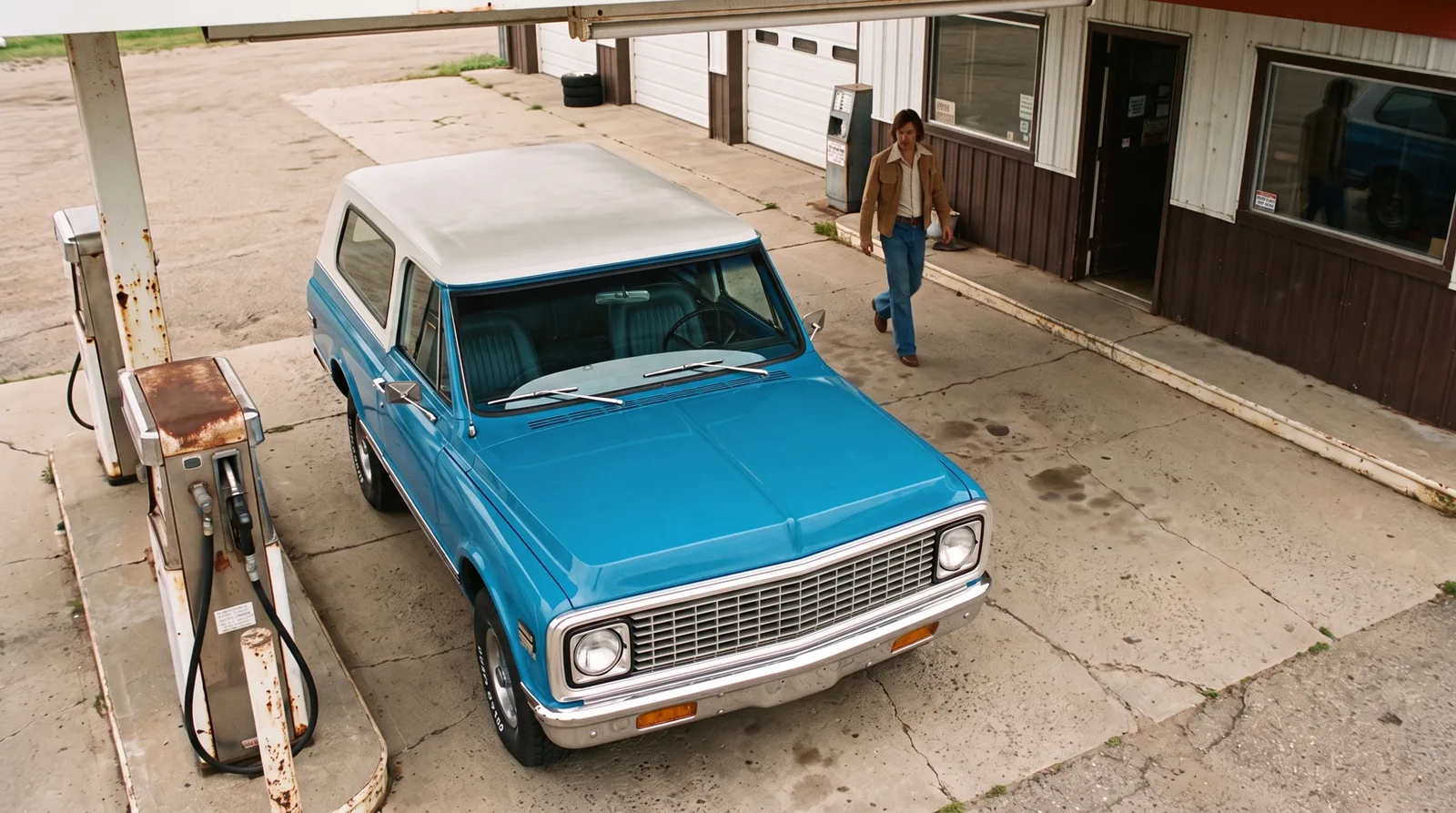
The last year before a total redesign
The K5 Blazer launched for the 1969 model year with a distinctive removable hard top and half-cab body construction, a design that let buyers run the truck as an open-air off-roader or a fully enclosed vehicle depending on the day. That formula lasted exactly four model years. For 1973, GM redesigned the truck around a full-length cab structure with a fixed roof, sharing far more sheet metal with the C/K pickup line and moving away from the original half-cab layout entirely. That makes 1972 the final model year of the "original" K5 concept, the last chance to buy the truck as its designers originally envisioned it before the squarebody era took over. For readers who want the complete picture of that model year, from spec sheets to production context, 1972 k5 blazer history covers the full story in depth.
Four years of quiet refinement
What often gets lost in the "last year" narrative is that 1972 was not simply a carryover of the 1969 truck with a different date stamp. GM used the four-year run to work out early bugs, expand engine options, and broaden the trim lineup considerably. By 1972, buyers could option a K5 with a stronger V8, better trim packages including the CST comfort-and-style option, and a more resolved overall package than the truck GM had rushed to market in 1969 to answer Ford's Bronco and the International Harvester Scout. In practice, that means a 1972 model represents the most developed version of the first-generation formula, combining the open-top design collectors love with four years of running production improvements baked in.
Scarcity compounds the appeal
Early K5 Blazers were not built in huge numbers to begin with, and four decades of use, rust, and attrition have thinned the surviving population considerably, particularly for trucks that still wear their factory soft top or hard top setup rather than a later replacement. Because 1972 sits at the tail end of a comparatively short four-year window, and because buyer demand specifically targets that final year over the earlier three, clean surviving 1972 trucks are harder to find and command a real premium over comparable 1969 or 1970 examples in similar condition. That scarcity is not artificial or manufactured by the collector market. It is simply the arithmetic of a short production run combined with decades of attrition working against every early K5 that has not been carefully preserved.
| Factor | Why it matters for 1972 |
|---|---|
| Final year of first-gen design | Last removable-top, half-cab K5 |
| Refined trim options | CST and other packages fully developed by this point |
| Engine lineup | Broader V8 options than the 1969 launch year |
| Surviving population | Smaller pool than later squarebody-era trucks |
| Collector demand | Concentrated on this specific final year |
What buyers are actually paying for
When a serious buyer chases a 1972 K5 Blazer specifically, they are usually paying for a combination of three things: the open-top body style, the most refined version of that body style GM ever built, and the knowledge that the design simply does not exist in later model years. That third point matters more than people sometimes give it credit for. A 1973 or later squarebody K5 is a genuinely great truck in its own right, and often a more practical daily driver, but it cannot offer the specific removable-top experience that defined the model's first four years. For buyers who want that experience without settling for an earlier, less-developed truck, 1972 is the obvious answer, and the market has priced it accordingly.
"When people ask me which year to chase, I tell them the same thing every time. If you want the original concept done right, you want 1972. Everything before it was GM still figuring out what the truck should be."
- Tom Ramirez
The market has noticed, and prices reflect it
The premium collectors pay for a documented 1972 K5 Blazer over an earlier first-gen truck is not a recent phenomenon, but it has grown more pronounced as the broader classic truck market has matured over the past decade. Auction results and private sale data both point in the same direction: clean, unmodified 1972 examples consistently outperform 1969 and 1970 trucks in comparable condition, sometimes by a wide margin depending on options and originality, though the exact size of that premium varies significantly by sale venue, region, and documentation, so buyers should compare recent completed auction results directly rather than rely on a single published figure. That gap tends to widen further for trucks that retain their original hard top, since so many early Blazers lost or damaged their removable tops over decades of use and storage. Buyers entering the market now should expect that premium to persist, and likely grow, as the pool of genuinely original 1972 trucks continues to shrink.
How 1972 compares to its closest competition
Within the first generation itself, 1972 has close competition from 1971, which shares most of the same refinements and options but lacks the specific distinction of being the final year. Buyers deciding between the two model years are often really deciding how much of a premium they are willing to pay for that final-year status versus a nearly identical truck at a lower price point. Readers weighing that exact question should look at a related story covering the differences in more detail, since the distinctions between the two years are subtler than most buyers expect going in.
For a deeper comparison of how the final two model years actually differ, a related story breaks down the CST package and trim details that separate them.
Buyers ready to start shopping should know that clean, documented 1972 trucks move quickly once they hit the market. Anyone serious about finding one should look at K5 Blazers for sale now and be prepared to act when a genuinely original example turns up.
Sources and notes
Related Reading


About the author
Tom Ramirez
Corvette researcher and historian based in Bowling Green, Kentucky. Two decades documenting Corvette production history from original factory records.
Related Listings - Chevrolet Blazer



Comments
Be the first to comment on this article.