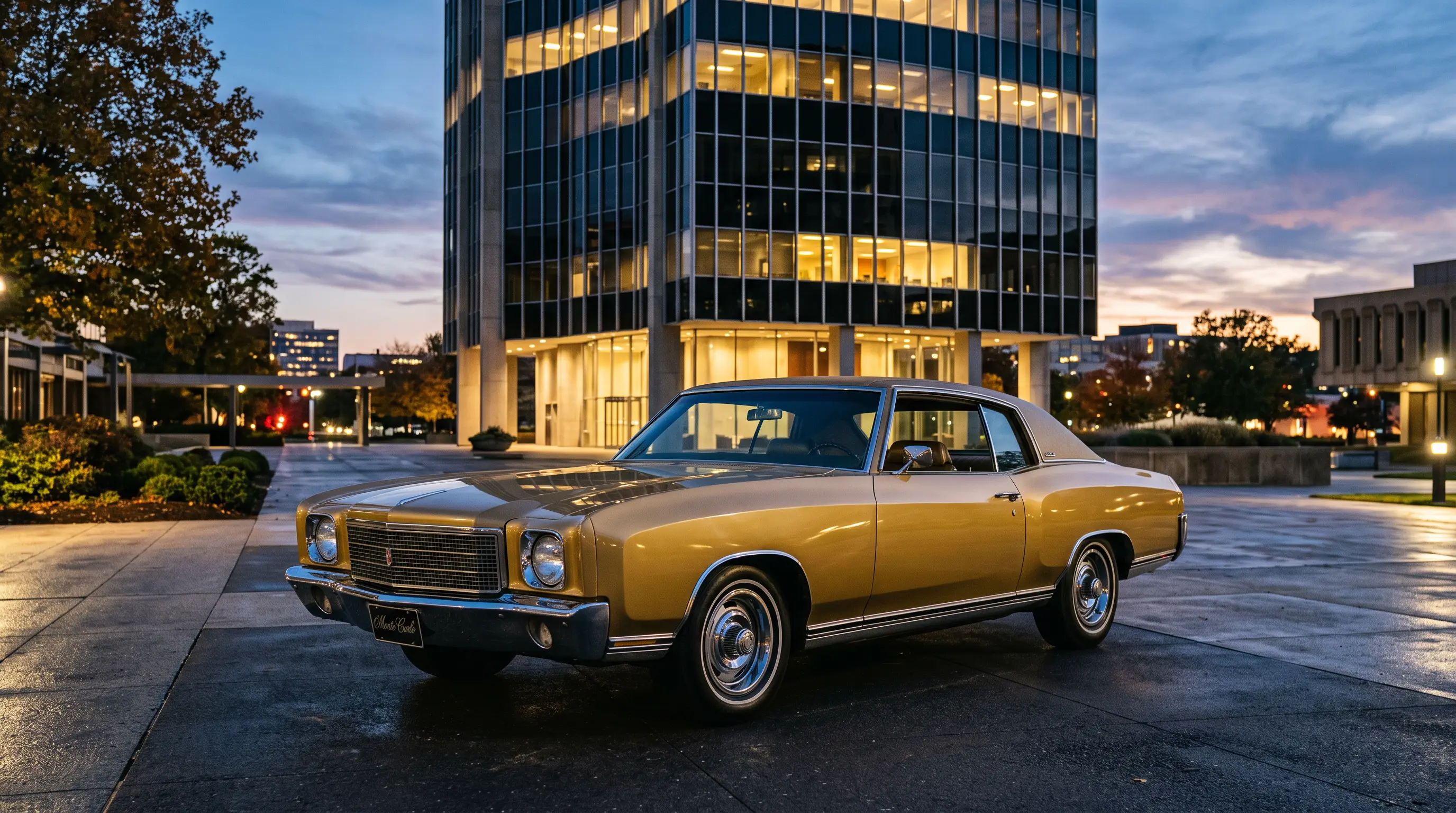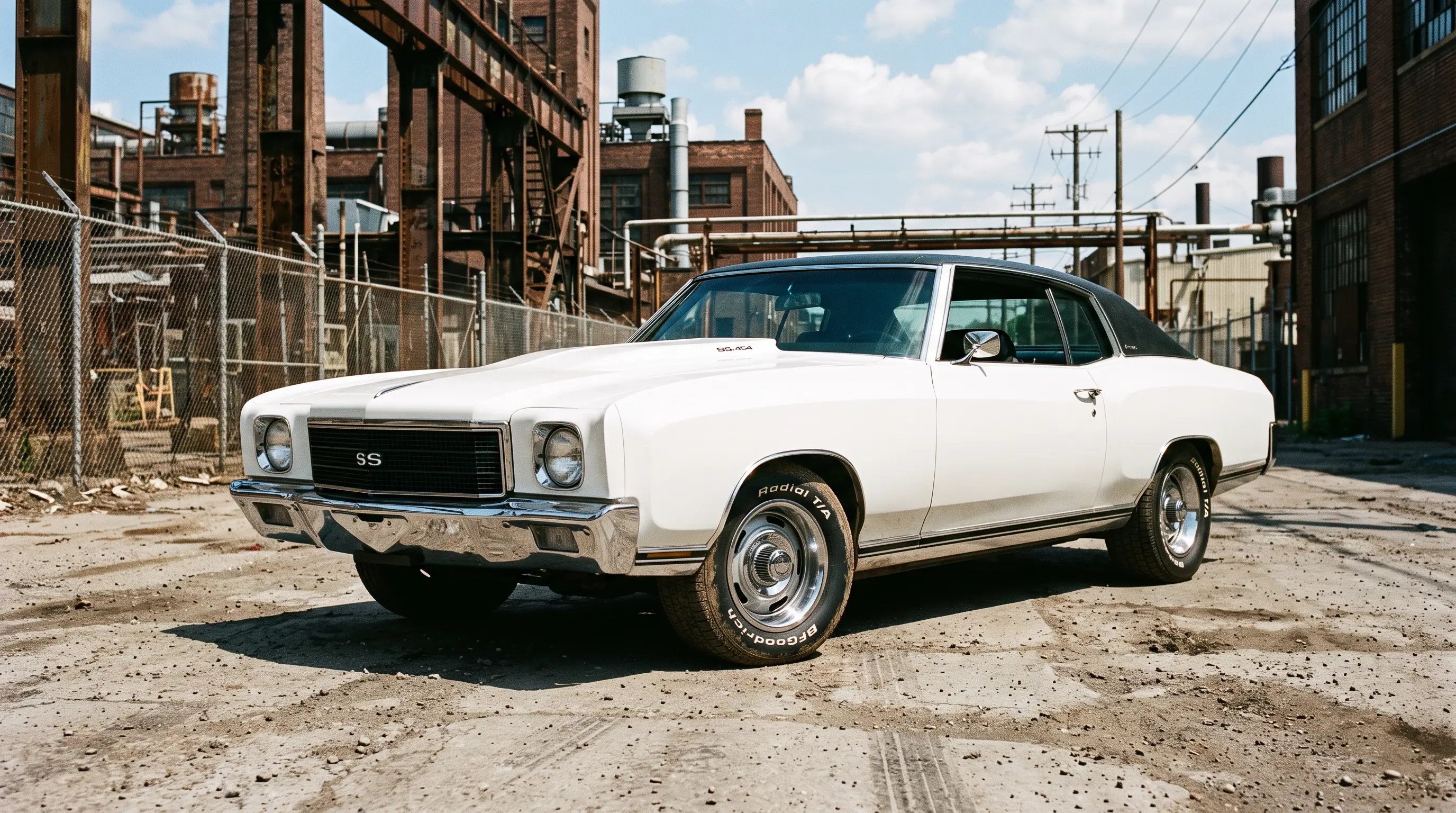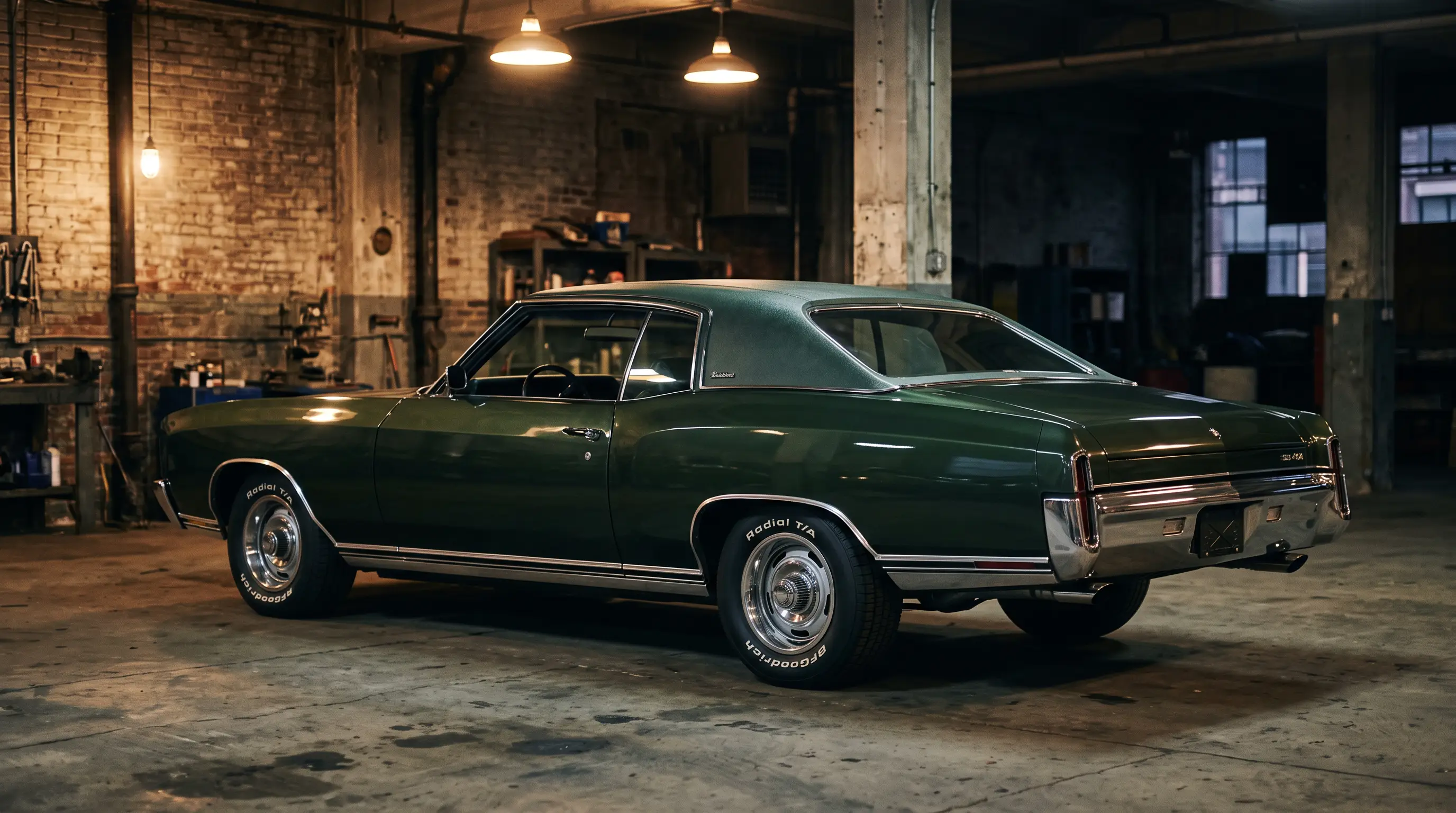
I have stood next to a lot of long-hood coupes at shows over the years, and the 1970 Monte Carlo still stops people mid-sentence the way it did the day it hit showrooms. That hood is not an accident of proportion. Anyone digging into monte carlo 1970 design elwood engel knudsen questions eventually lands on the same conclusion I did after years of stripping paint off these cars down to bare metal: the long-hood, short-deck formula that defines the 1970 Monte Carlo did not spring from nowhere, and understanding where it came from changes how you look at every panel gap on the car.
The Chevrolet exec who wanted this car years earlier
Elliott "Pete" Estes ran Chevrolet as general manager in the years leading up to 1970, and he championed a Chevy entry into what the industry called the personal luxury coupe segment, the space Ford and Pontiac were already carving out with the Thunderbird and Grand Prix. Estes and GM design chief Bill Mitchell reviewed the early proposal together, and it was that pairing, Estes pushing for the car inside Chevrolet and Mitchell's studios shaping it, that carried the Monte Carlo into production for 1970, built on a stretched Chevelle A-body chassis rather than a clean-sheet platform, which kept tooling costs sane while still delivering the long-hood look buyers wanted.
Where the Elwood Engel comparison actually comes from
Elwood Engel never worked on a Chevrolet product. He ran design at Chrysler, and his signature move, first on the 1961 Lincoln Continental and later across Chrysler's Imperial and full-size lineup, was the long-hood, short-deck, flat-side formula that made a car look important without adding a single inch of usable interior space. By 1970 that formula had become an industry-wide shorthand for "personal luxury," and Chevy's studios were not immune to studying what the competition was doing. The Monte Carlo's proportions echo that same math, hood length pushed forward of the cowl, deck kept short and clean, character line running the length of the body, but that is convergent design thinking born of a shared market brief, not a hire or a direct hand. Anyone telling you Engel personally sketched a Monte Carlo panel is repeating a myth that has drifted around forums for years. The honest version of the story is that Estes wanted the segment, Mitchell's studios built the car, and the whole industry, Chevy included, was borrowing the same proportional trick Engel had already proven sold cars.
What that long hood actually costs you in the shop
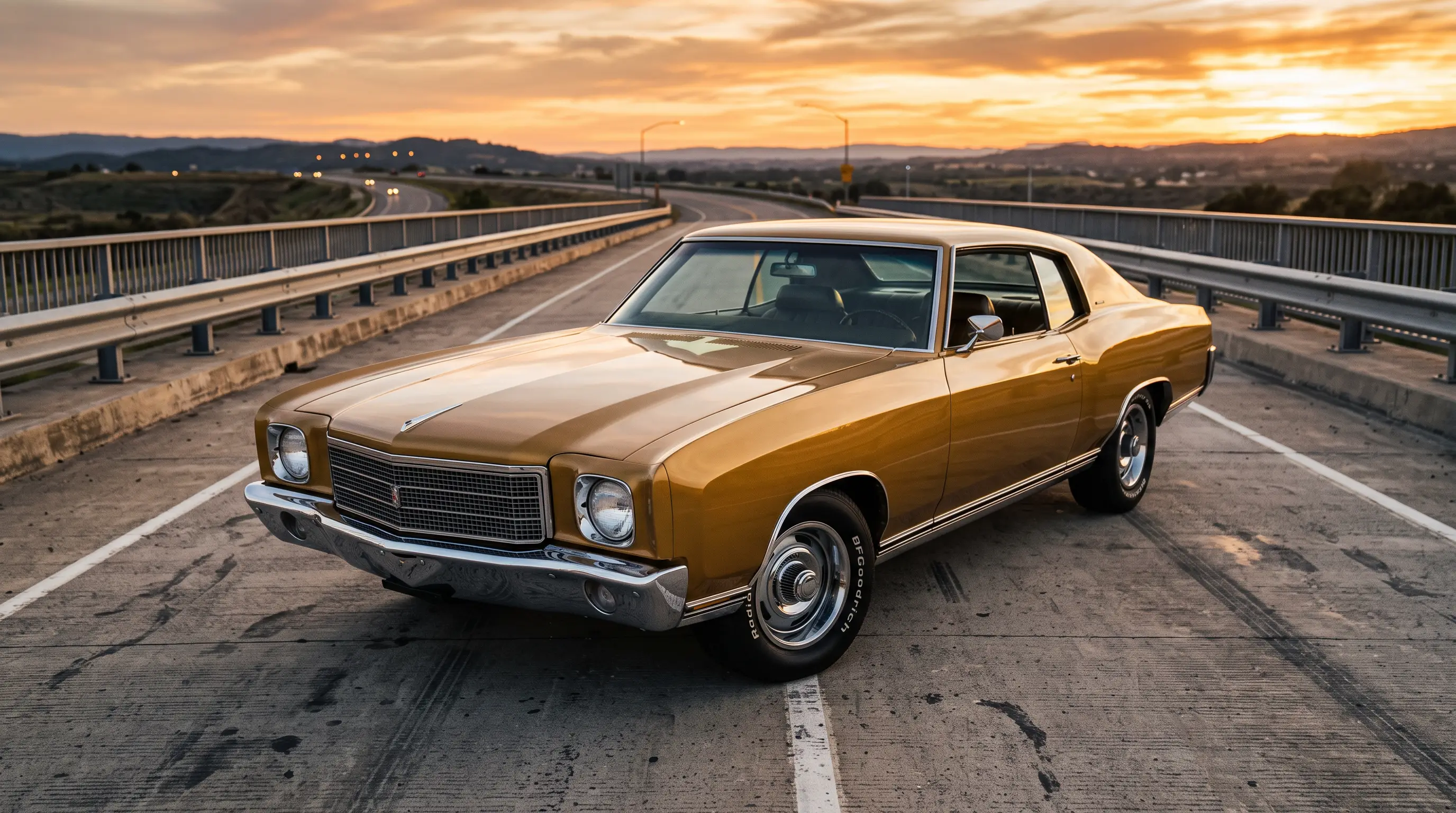
Here is the part nobody mentions in the marketing copy. That long hood is a single stamped panel, heavy, prone to stress cracking at the hinge mounts on a car that has seen forty-plus winters, and murder to source in good condition because so many donor cars got parted for their small blocks and left the sheet metal to rot in a field. When I am evaluating a 1970 Monte Carlo for a repaint, the hood and the front fenders get inspected before I even open the door, because a car with a straight, rust-free hood is worth real money over one that needs a reproduction panel or a donor swap. The character line running back from the headlights has to stay crisp too. Round that edge off with a bad block-sanding job and the whole silhouette goes soft, and a trained eye spots it from thirty feet away at a show.
Spotting a period-correct front end versus a poseur
Reproduction hoods, fender extensions, and grille shells have flooded the market for decades now, and most of them are good enough to fool a casual buyer at a cruise night. What they usually get wrong is the exact stamping depth of the character line and the fitment tolerance around the headlight bezels, details a factory press tool nailed every single time and an aftermarket panel often does not. I always tell people shopping for a restored car to run a hand along that body line with their eyes closed. If it feels uneven under your fingers, something has been replaced or filled, and that is a conversation to have with the seller before money changes hands, not after. A car wearing every original body panel from that stretched-hood design, even with honest paint wear, is worth more to a serious buyer than a glossy repaint sitting on filler.
"Estes wanted the segment, Mitchell's studios built the car, and every long-hood coupe from that era, Chevy included, was borrowing the same proportional trick. That is not plagiarism, that is just how Detroit worked in 1970."
- Jim Vasquez
The grille and taillight details that get overlooked
Everyone talks about the hood, but the front and rear caps carry just as much of the design's identity and get replaced with more mismatched parts than any other section of the car. The split grille with its heavy chrome divider was designed to visually anchor that long hood at the front, giving the eye a stopping point instead of letting the whole nose read as one undifferentiated slab of sheet metal. Around back, the wraparound taillight treatment was Chevrolet's answer to keeping the short deck from looking chopped off, using horizontal chrome trim to widen the visual stance of a trunk lid that, in reality, holds very little cargo. Both ends were engineered by stylists thinking purely in terms of proportion tricks, the same discipline Engel had already proven at Chrysler, applied here with Chevrolet's own grille language and Chevrolet's own budget constraints. A shop doing a proper restoration treats these trim pieces as seriously as the hood itself, because a car with the wrong-year grille insert or a taillight lens swapped from a later trim level breaks the illusion just as badly as a soft body line does.
Why this history still matters at the workbench
Knowing where the proportion came from changes how you approach a restoration. If you understand that the hood length exists purely to sell a silhouette, not to house anything mechanically necessary, you stop being surprised by how much dead air sits under it once the big block or small block is in place, and you stop assuming every gap or rattle is a mechanical problem when it is really just sheet metal doing its job of looking important over an ordinary Chevelle chassis underneath. Readers who want the full production story behind that debut year, engine codes and all, should check 1970 monte carlo history before diving into a purchase. For the SS454 flagship that sat under some of these same long hoods, a related story covers what Chevrolet put behind that grille. And if this history has you wanting to put one of these in your own garage, Monte Carlos for sale now is the honest next step, cowl tag in hand.