
Production numbers only tell part of the story of any first-year car. What happened to those cars over the following five decades tells the rest, and the monte carlo 1970 notable survivors that remain today fall into a few distinct categories worth understanding on their own terms, from documented low-mileage originals to SS 454 cars whose build sheets settled long-running arguments about what they actually left the factory carrying.
Car Features
7 min read
Notable Surviving 1970 Monte Carlos and Their Stories
From low-mileage originals to documented SS 454s, the surviving 1970 Monte Carlos that matter most to historians are the ones whose paperwork still backs up the claims.
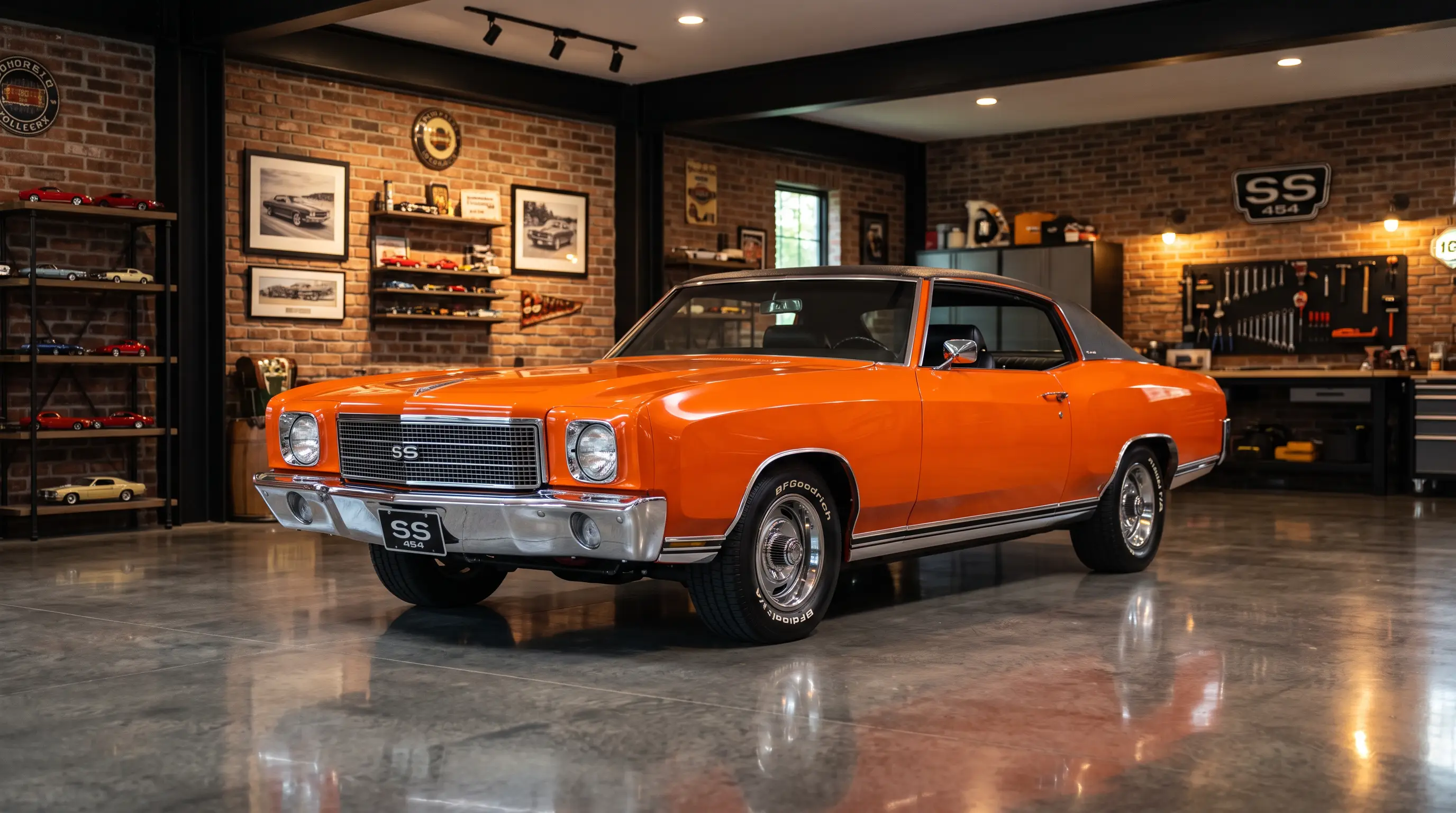
Setting the baseline: how many were built
Chevrolet built 145,976 examples of the Monte Carlo in its debut year, an immediate commercial success that validated the personal luxury bet the division had made. Within that total, the SS 454 package was a distinct minority, ordered on just 3,823 cars, which is exactly why surviving, documented SS 454 examples carry outsized attention today relative to their share of original production. Most 1970 Monte Carlos left the factory as base or mid-trim cars with small-block V8 power (the Monte Carlo was never offered with a six-cylinder engine), and it's those more common cars, when they survive in genuinely unmolested condition, that historians increasingly value as baseline reference points for what an average buyer actually drove home.
Low-mileage originals as a survivor category
A meaningful category of notable 1970 survivors consists of cars that were simply driven very little and stored carefully, often by an original owner who kept the car for decades rather than trading it in. These low-mileage originals matter to historians for a reason that has nothing to do with rarity of options, they preserve details that restored cars inevitably lose or alter, correct factory paint texture and overspray patterns, original hose clamps and fastener finishes, the untouched underside of a console that's never been removed and reinstalled. When a documentation question comes up about how a particular assembly plant finished a detail, a low-mileage survivor is frequently the most reliable source available, more reliable in some respects than the assembly manual itself, since manuals occasionally describe intended process rather than what actually happened on a given day at a given plant.
These cars rarely carry the SS 454 badge that draws headline attention, but among people who study the model seriously, an honest, unmolested base car with 20,000 original miles can be more historically valuable than a restored SS 454 with an uncertain past.
SS 454 survivors and the documentation that defines them
The SS 454 survivor category is where cowl tags and build sheets do the most work. Because the option was comparatively rare and because SS badging has been added to non-SS cars more than once over the decades, either honestly during a later restoration or dishonestly to inflate a sale price, a documented SS 454 survivor with its original build sheet, a matching cowl tag, and continuous ownership history carries a weight that an undocumented car claiming the same badge simply cannot match. Some of the most discussed surviving SS 454 examples in enthusiast circles are notable specifically because an owner or subsequent researcher tracked down the original invoice or dealer paperwork decades after the sale, resolving what had been an open question about the car's original specification.
This is also where the restoration and preservation communities occasionally disagree. A heavily restored SS 454 with debated originality can look more impressive on a show field than an unrestored survivor with worn paint and a slightly tired interior, but among people who prioritize documentation over appearance, the unrestored car with solid paperwork usually wins the historical argument even if it loses the concours trophy.
| Survivor category | What makes it notable |
|---|---|
| Low-mileage original | Preserves factory finish details lost in restoration |
| Documented SS 454 | Build sheet and cowl tag confirm rare original specification |
| Continuous single-ownership car | Unbroken history reduces documentation gaps |
| Museum or collection-held example | Preserved specifically for historical reference rather than daily use |
Why documented survivors shape how the whole model is understood
Every notable survivor that turns up with intact paperwork adjusts, in some small way, how historians describe the 1970 Monte Carlo as a whole. A build sheet that confirms an unusual color and option combination expands what's understood to have actually left the factory that year. A well-preserved interior settles a question about trim material that reproduction parts suppliers had been guessing at for years. This is part of why period road tests and factory documentation matter so much alongside the surviving cars themselves, since one source alone rarely tells the complete story. For the reviews and impressions written when these cars were new, a related story covers what period journalists actually said about driving one off the showroom floor.
Anyone researching a specific 1970 Monte Carlo today, whether hunting for its own history or simply trying to place it within the broader survivor landscape, benefits from starting with the model's 1970 monte carlo history before drawing conclusions from a single car's paperwork in isolation.
Regional and marque-specific registries have slowly started closing some of the gaps in what's known about surviving 1970 production, though the effort remains smaller and less centralized than registries built around better-documented nameplates. Volunteers compiling these lists typically rely on owners coming forward voluntarily with build sheets, cowl tag photographs, and ownership history, which means the known survivor count almost certainly understates the true number of well-preserved and documented cars still out there, simply because not every owner has connected with the research community tracking them.
This slow, voluntary documentation process is also why historians tend to treat any claimed production or survivor figure for this model with appropriate caution. Numbers repeated confidently online sometimes trace back to a single unverified source repeated enough times to feel authoritative. Where possible, cross-referencing a specific claim against original Chevrolet documentation or a recognized registry remains the more reliable path, even when it takes longer than accepting the first figure that turns up in a search.
There's also a category of survivor worth mentioning that rarely gets the same attention as a documented SS 454 or a pristine low-mileage original, the honest driver-condition car that's simply been used and maintained continuously across five decades without ever being fully restored or fully preserved as a showpiece. These cars carry accumulated repairs, replaced trim, and inconsistent paint history, but they also carry an unbroken record of use that a barn find or a trailer-only survivor cannot offer. For historians studying how these cars actually held up under real-world ownership rather than under museum conditions, that continuous-use record has its own kind of value, even when it doesn't photograph as well for a magazine feature.
"A car's paperwork tells you what the factory actually did. Everything else, badges, stories, even memory, is secondary to that until proven otherwise."
- Tom Ramirez
For collectors and researchers hoping to add their own chapter to this survivor record, the search for a genuinely documented example starts the same way it always has, patient comparison across available cars. Current Monte Carlos for sale now is the place to begin that comparison against everything laid out here.
Sources and notes
Related Reading
Have a
Chevrolet Monte Carlo
for Sale?
Reach thousands of serious classic car collectors across the US.
Sell It Here →
Are You a Classic Car Dealer?
List your full inventory and connect with targeted classic car buyers.
Join as a Dealer →
#classic car history
#factory documentation
#survivor cars
#chevrolet monte carlo
#ss 454
#1970 monte carlo

About the author
Tom Ramirez
Corvette researcher and historian based in Bowling Green, Kentucky. Two decades documenting Corvette production history from original factory records.
Related Listings - Chevrolet Monte Carlo




Comments
Be the first to comment on this article.