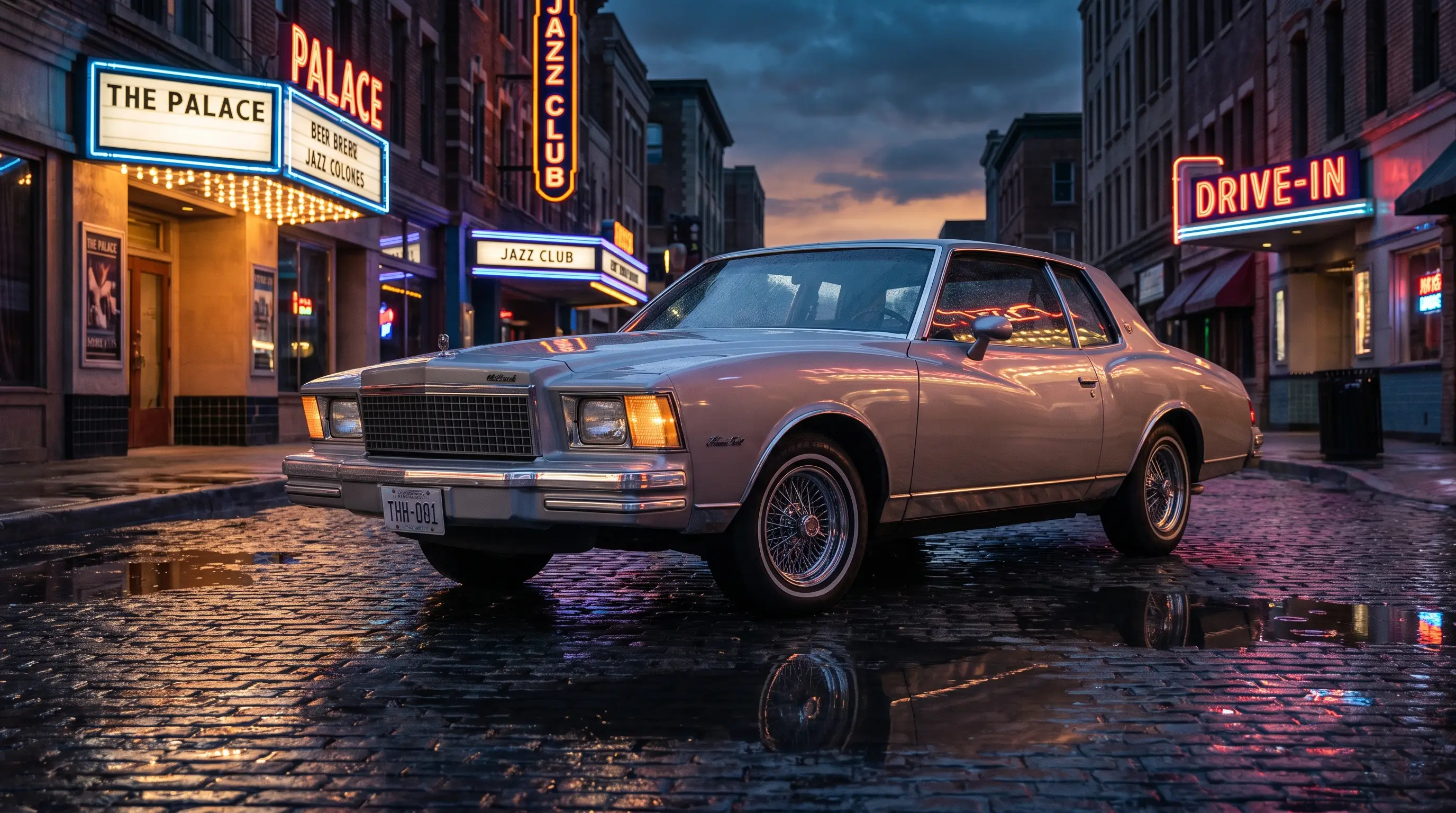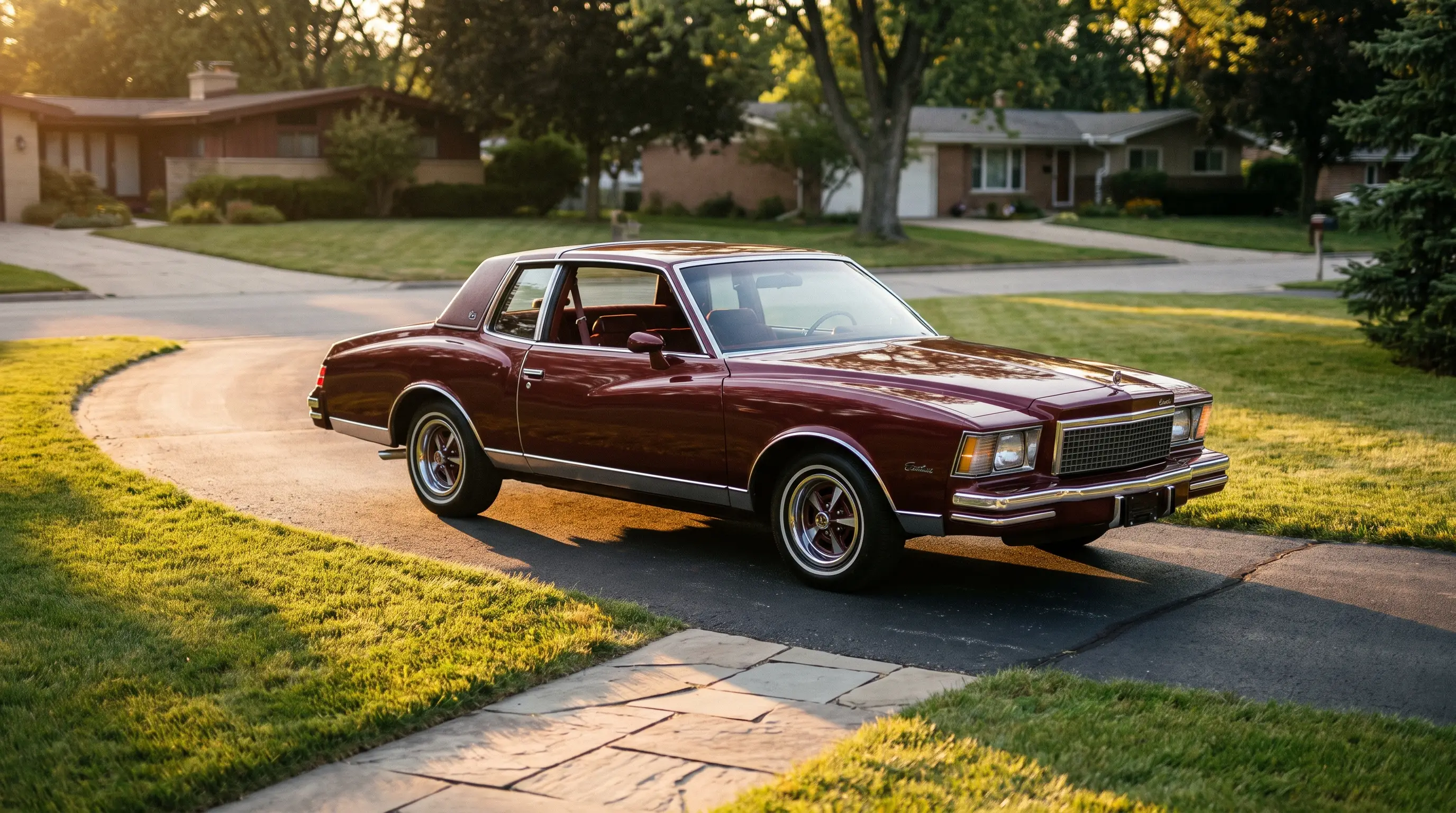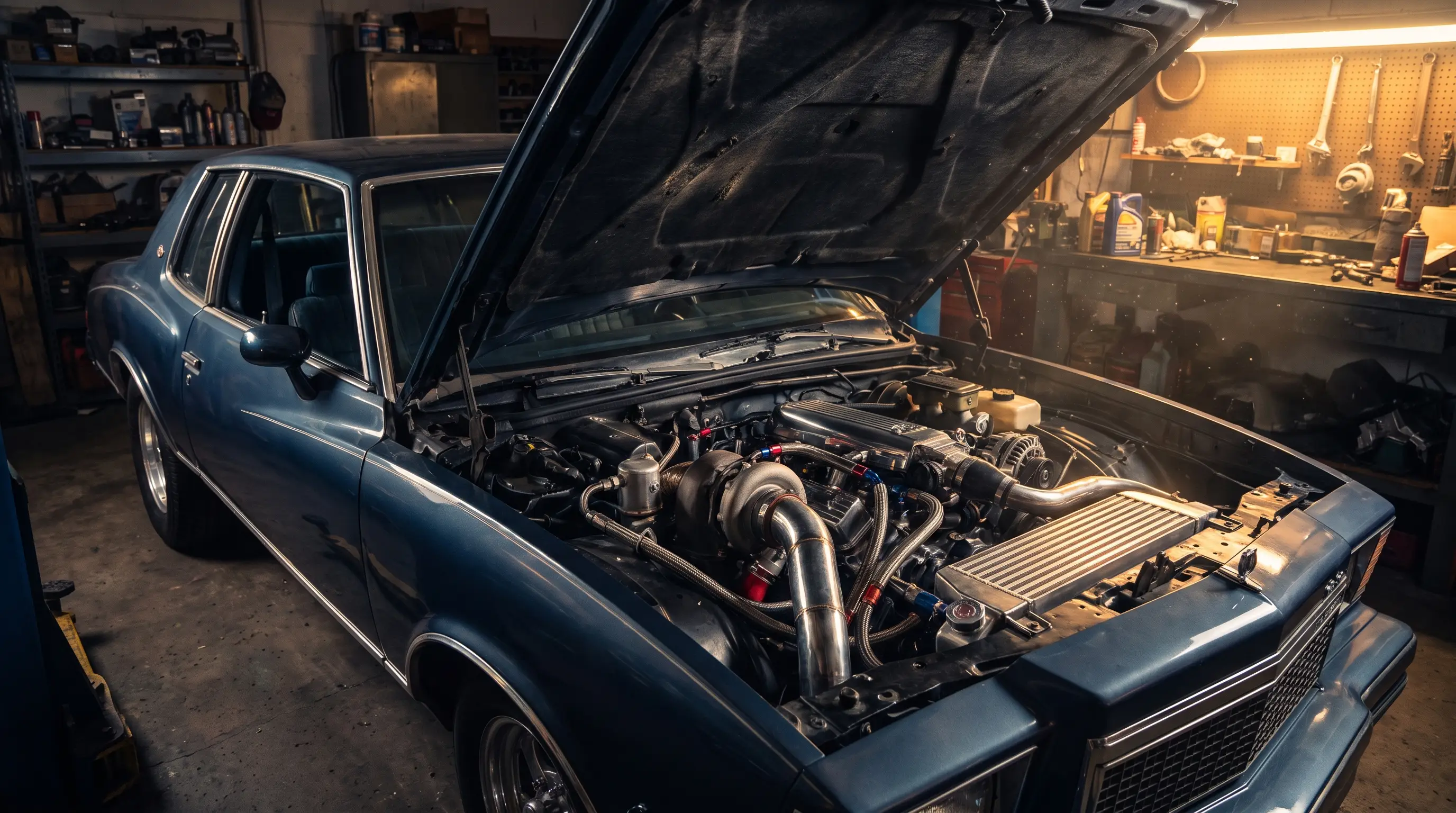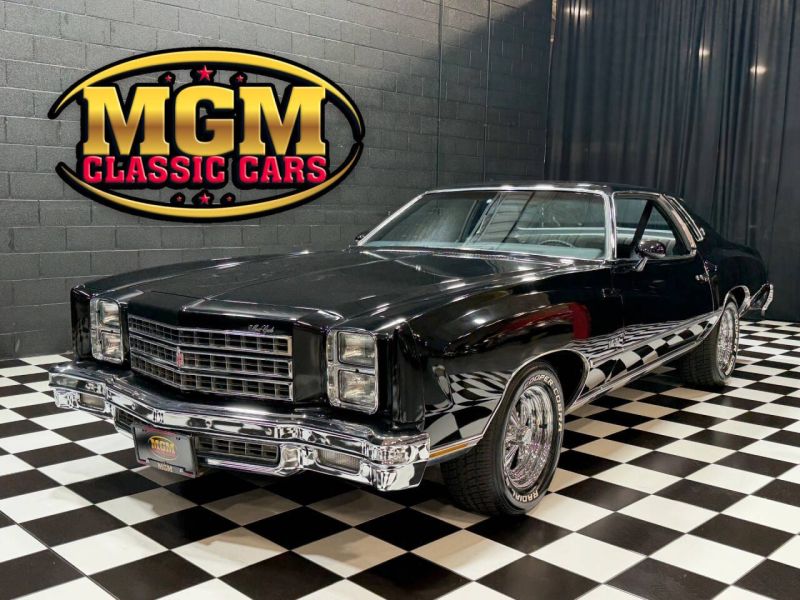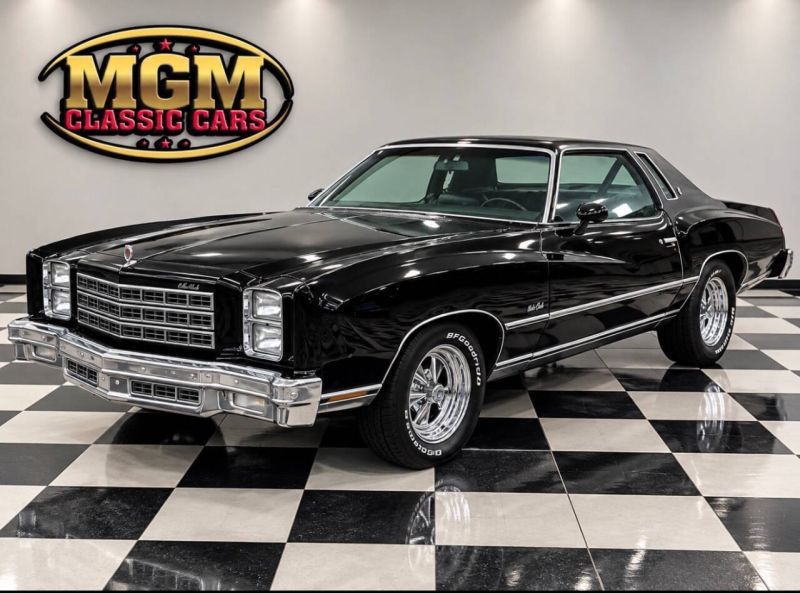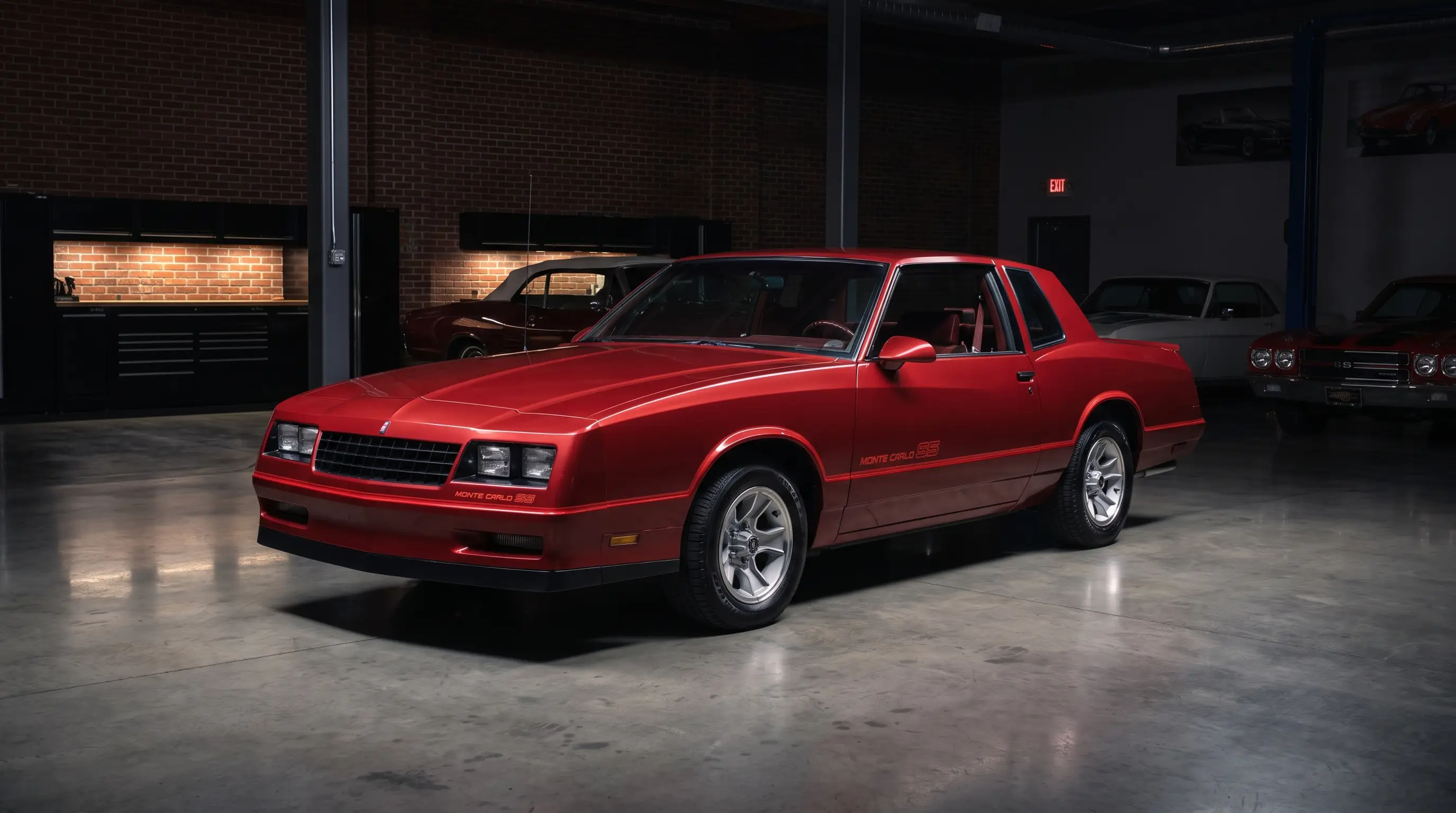
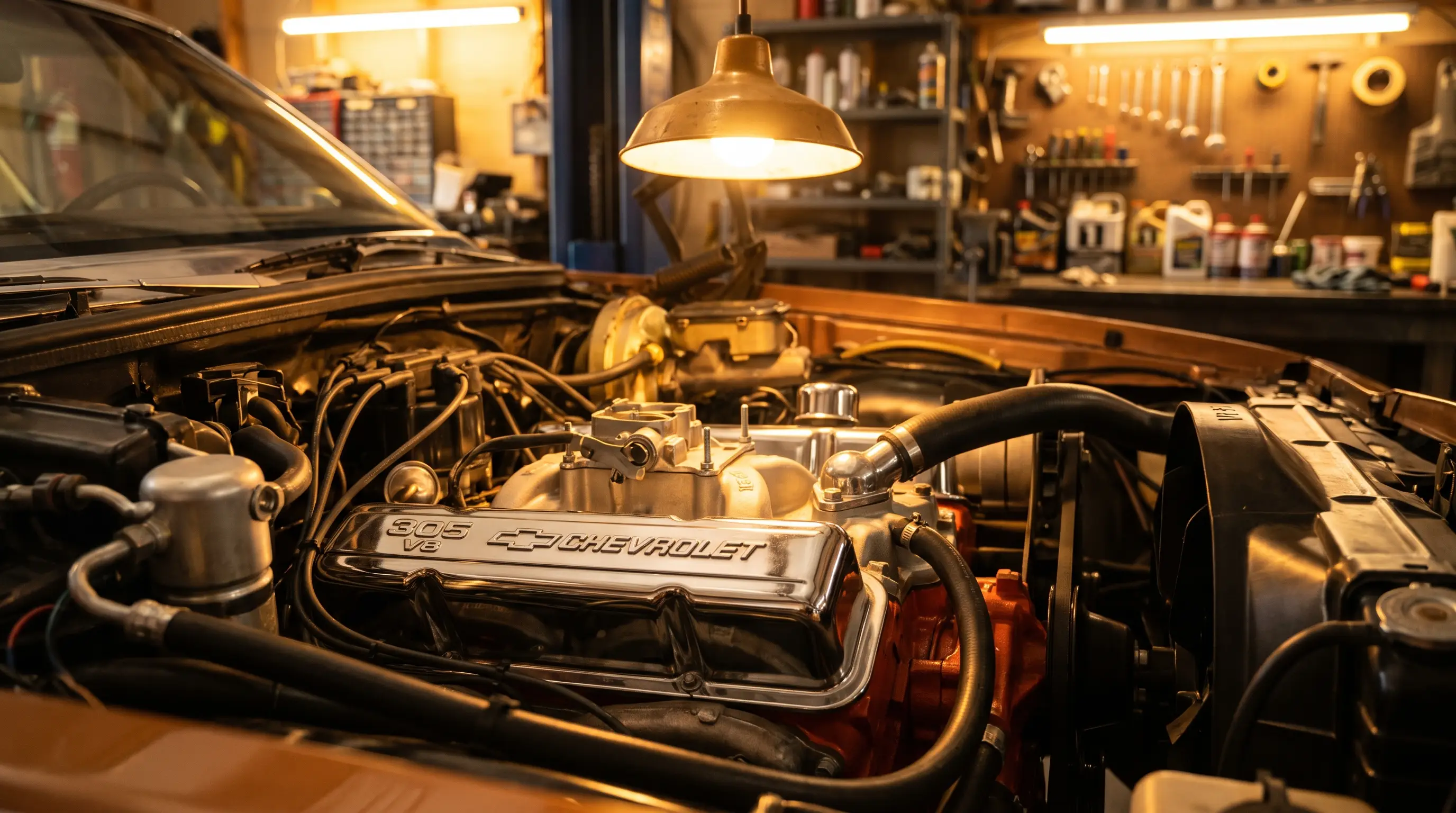
The 1978 Monte Carlo lost nearly 700 pounds overnight, and the engines under its hood had to answer a blunt question: how do you move a smaller, lighter car without the big-block muscle Chevrolet had leaned on for a decade. The answer was two small-displacement V8s, the 305 and the 267, and neither one gets the credit it deserves for keeping the Monte Carlo moving through the fuel-economy panic of the late seventies. This is the monte carlo 1978 305 267 engine story, and it is not a glamorous one. It is a story about compromise, and compromise sold well.
The numbers, not the nostalgia
Start with what actually shipped. The 1978 Monte Carlo came standard with a 200 cubic inch V6 rated around 94 to 95 horsepower, a figure so modest that most buyers stepped up immediately. The 305 cubic inch (5.0 liter) small-block V8 was the volume seller, rated at 145 horsepower with a two-barrel carburetor. That is not a fast number by any measure, classic or modern. It is a number built for a specific job: idle smoothly, meet emissions, get 18 to 20 miles per gallon on the highway, and do it for 100,000 miles without drama.
The 267 cubic inch (4.4 liter) V8 arrived a year later, in 1979, as Chevrolet's answer to an even tighter economy target. It shared the 305's block architecture but ran a shorter stroke, dropping displacement and output to about 125 horsepower. Chevrolet built it to slot between the underpowered V6 and the adequate 305, and buyers largely treated it as what it was: a stopgap. Independent shops and Chevrolet dealers alike will tell you the 267 was never loved. It was tolerated.
Why Chevrolet needed a small V8 at all
Corporate Average Fuel Economy standards did not care that Monte Carlo buyers wanted a personal luxury coupe with some shove behind it. CAFE rules, phased in starting with the 1978 model year, forced every General Motors division to average fleet fuel economy across the lineup or pay penalties. A big-block Monte Carlo, the kind that had roamed showrooms in 1973 with a 454, was no longer a viable volume product. Chevrolet's engineers needed something that could sit in a personal luxury coupe, pull an automatic transmission and full accessory load, and still post numbers regulators would accept. The 305 and 267 were that something.
You can see the compromise in how Chevrolet marketed the cars. Brochures leaned hard on ride quality, cabin materials, and the formal roofline rather than 0 to 60 numbers, because 0 to 60 numbers were not going to sell anyone on horsepower alone. The 305 needed roughly 10 to 12 seconds to reach 60 in period road tests, and the 267 was slower still. Chevrolet was not hiding this. It simply was not the story it wanted to tell.
Living with the small-block today
For an owner shopping the used market now, the distinction between a 305 car and a 267 car matters more than most people assume. Parts support for the 305 is deep, because the same basic architecture powered Camaros, Caprices, and full-size trucks well into the 1990s. A 267, by contrast, is a narrower slice of Chevrolet's small-block family, and while it shares many internal components with its bigger sibling, some 267-specific parts are harder to source secondhand. If you are cross-shopping two otherwise similar 1978 to 1980 Monte Carlos, engine displacement is a legitimate tiebreaker, not a footnote.
Neither engine rewards a heavy right foot. Both respond to a straightforward tune, fresh vacuum lines, and a carburetor that has actually been rebuilt rather than just cleaned. Owners who complain about sluggish performance are more often describing decades of deferred maintenance than an honest reflection of what these engines could do when new.
Compression numbers tell part of the story too. Emissions-era small-blocks ran lower compression ratios than their sixties ancestors, typically in the 8.3 to 8.6 to 1 range, which is one reason neither the 305 nor the 267 responds well to cheap fuel or a neglected timing chain. A tired timing set retards effective ignition timing just enough to turn an already modest engine sluggish, and that single, inexpensive fix accounts for a surprising share of the complaints owners bring to independent shops. Before assuming an engine is simply weak by design, rule out the boring stuff first: fuel delivery, spark, and compression, in that order.
Swaps are common in this generation, and it is worth knowing what you are looking at before you buy. A 305 that has been pulled and replaced with a later fuel-injected version, or a 267 that has quietly become a 305 somewhere along the way, is not automatically a problem, but it changes the car's numbers-matching status and its value story. Ask for documentation, check casting numbers against the build sheet if one survives, and treat a mismatched engine as a negotiating point rather than a dealbreaker.
"People want the 305 to be a muscle engine because it wears a Chevrolet small-block badge. It is not. It is a fuel-economy engine that happens to be reliable, and that is a perfectly good thing to be."
- Dan Reeves
The bigger picture for 1978
If you want read the background on why the Monte Carlo shrank in the first place, the downsizing story explains the platform decisions that made a small-block V8 the only sensible option. The 305 and 267 were never going to be the reason someone bought a 1978 Monte Carlo. The styling, the ride, and the badge did that work. The engines just had to keep the car legal and affordable to run, and on that count, they did their job.
There was a third engine option floating around this era too, a turbocharged six that Chevrolet flirted with rather than fully committed to, and that story is worth a look too if you want to see how close GM came to a very different Monte Carlo powertrain lineup.
What this means for a buyer
None of this should scare anyone away from a 1978 to 1980 Monte Carlo. A well-maintained 305 car with a rebuilt Quadrajet and a fresh timing set will run for decades. The 267 asks a bit more patience and a bit more parts hunting, but it is not a dealbreaker either. What matters is going in with correct expectations. These are not performance cars. They are comfortable, reasonably efficient personal coupes that happened to arrive during the least horsepower-friendly stretch in Chevrolet's history, and they did the job they were built to do.
If you are ready to look past the horsepower numbers and evaluate one of these cars on its own terms, you can shop classic Monte Carlo listings and compare 305 and 267 cars side by side before you commit.
Sources and notes
- Automobile Catalog: 1978 Chevrolet Monte Carlo full range specs
- Automobile Catalog: 1979 Chevrolet Monte Carlo 4.4L (267) V-8 specs
- Wikipedia: Chevrolet Monte Carlo
- Motogallery: 1978-1980 Chevrolet Monte Carlo Base, 3rd Gen Buyer's Guide
- Ate Up With Motor: Disco-Era Darling, The Chevrolet Monte Carlo