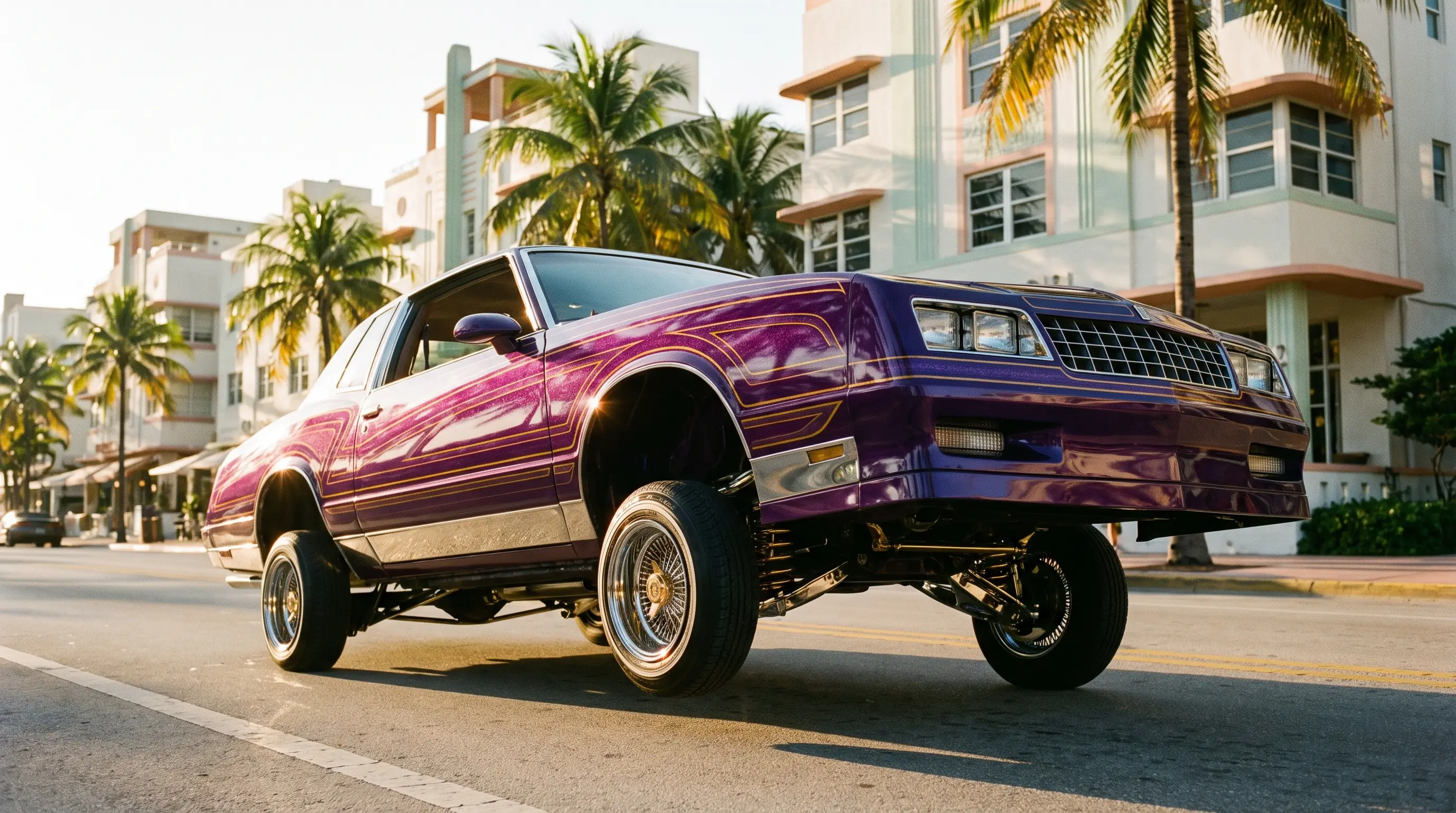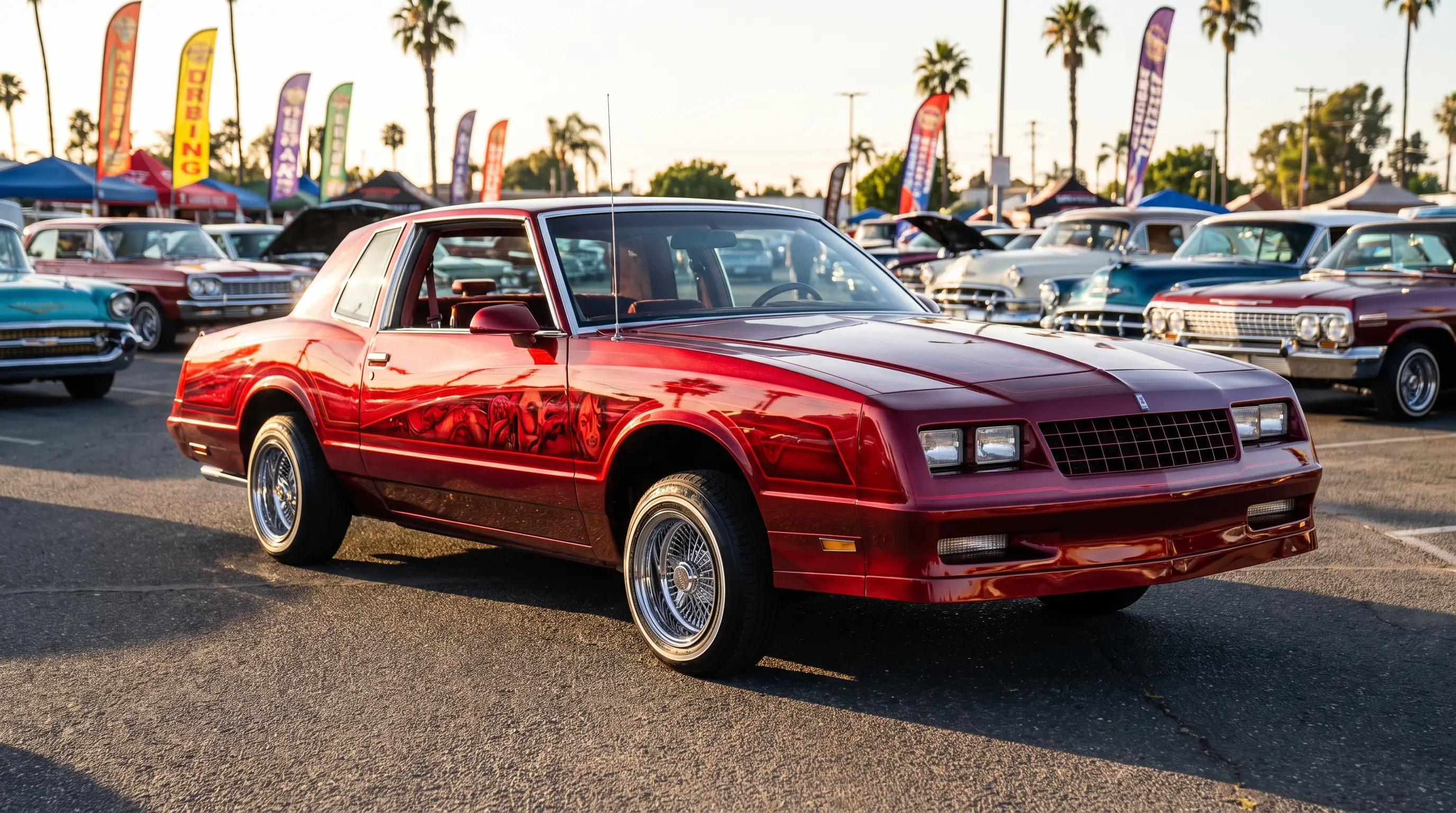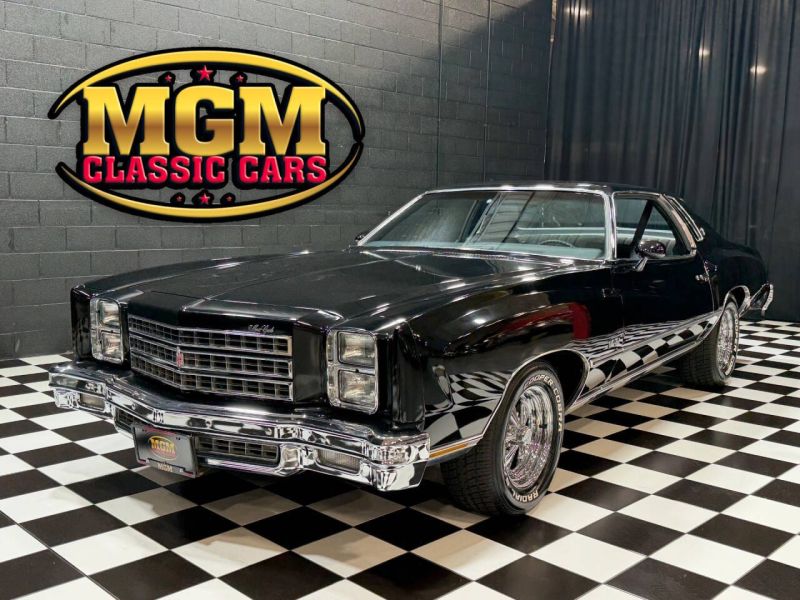
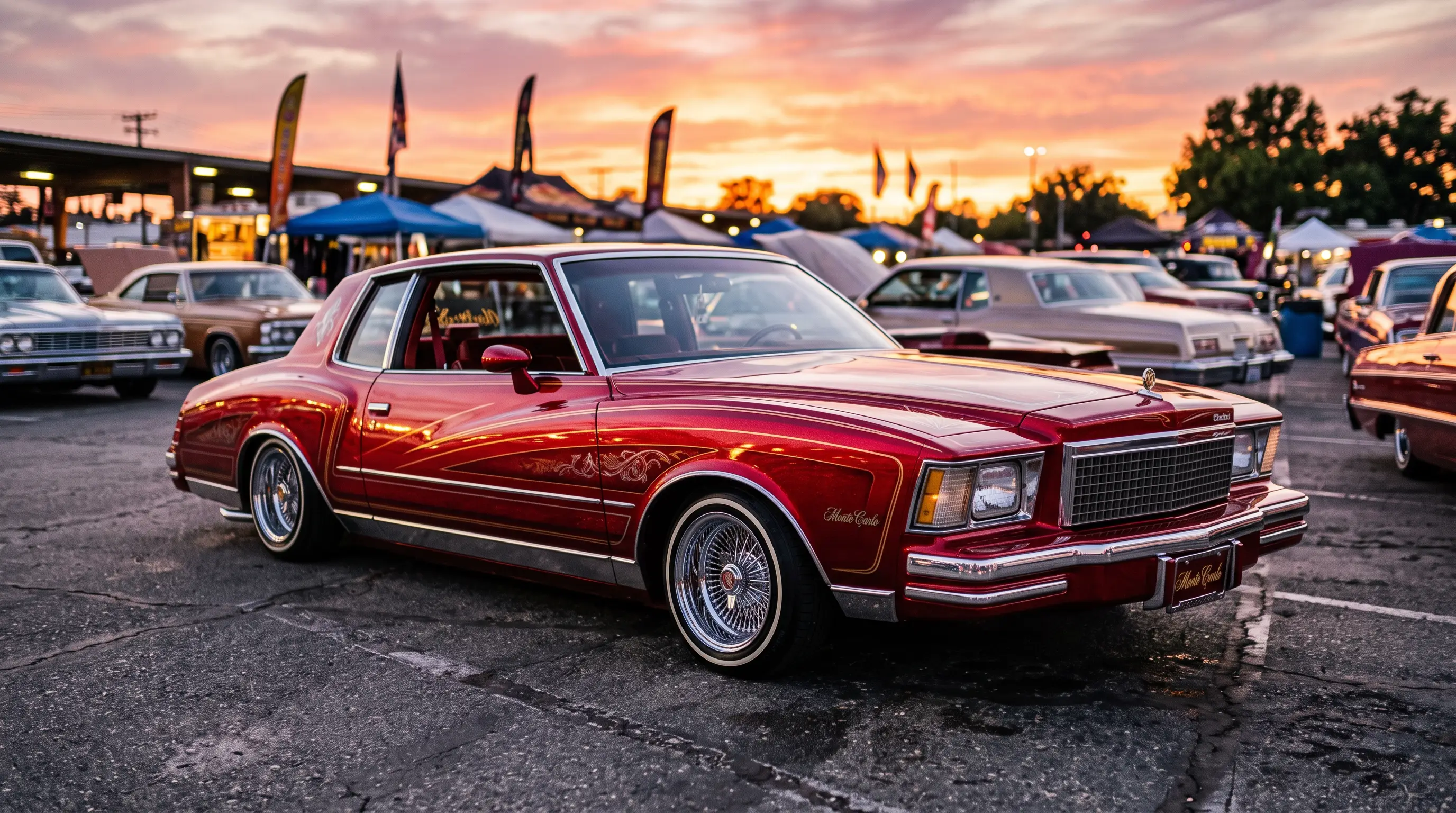
Every few years somebody declares the Monte Carlo's lowrider legacy played out, replaced by whatever platform is trending that season, and every few years the car proves them wrong. The monte carlo lowrider legacy why it endures question comes up a lot at shows, usually from someone who is genuinely surprised that a car built between 1970 and 1988 is still drawing crowds and still commanding respect from builders who could pick anything they wanted. We think the answer is simpler than people expect.
It was built for exactly this job
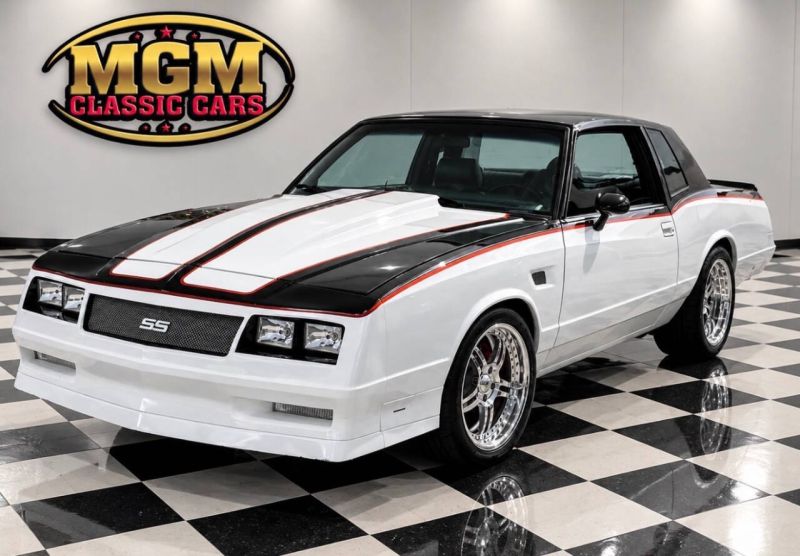
The Monte Carlo's original design brief was a personal luxury coupe with presence, long hood, formal roofline, a body that looked more expensive than its price tag suggested. That same design brief happens to describe exactly what a lowrider builder wants to work with. Nobody had to force the Monte Carlo into this role. Its proportions, especially in the G-body years, were already doing half the work before a single modification got made.
Compare that to platforms that get customized despite their original design intent rather than because of it, and you can see why the Monte Carlo has such staying power. A car that fights its customizer never looks as convincing on the block as one that was already halfway there.
The community never really left
Trends come and go in every corner of car culture, but the Monte Carlo's core community of builders, painters, and club members never fully disbanded even during the years when other platforms got more attention. That continuity matters enormously. Knowledge about paint techniques, hydraulics setups, and body work specific to this car stayed alive because people kept practicing it, even in smaller numbers, through every dip in broader popularity.
That is a very different situation from a platform that gets abandoned entirely and has to be rediscovered from scratch. The Monte Carlo's community acted like a pilot light. It never went out completely, and that made it easy to reignite whenever interest picked back up.
The parts and the platform still make sense
Practical realities matter as much as sentiment here. The G-body Monte Carlo shares a huge amount of mechanical common ground with other GM cars from the same era, which means suspension components, drivetrain parts, and hydraulics hardware remain far more available than they would be for a rarer or more exotic platform. A builder working on a Monte Carlo is not fighting a parts shortage on top of everything else, and that practical accessibility keeps the car a realistic choice for builders at every budget level.
The car's relatively affordable entry price compared to full-size Impalas or Cadillacs from the same decades also keeps new builders coming into the scene through this specific nameplate. A first build does not have to be a financial disaster, and that lowers the barrier for the next generation to get involved at all.
"This car endures because it never asked us to choose between beautiful and buildable. Most platforms make you pick one. The Monte Carlo gives you both, and that is rarer than people think."
- Hector Morales
The shows keep proving the point
Attend enough lowrider shows across enough years and you start to notice something the casual observer misses. Trends in wheel style, paint technique, and even hydraulics setups shift noticeably from one decade to the next, but the Monte Carlo's presence in the winner's circle does not fluctuate the way those trends do. Judges who have scored these shows for twenty or thirty years will tell you a well-built Monte Carlo consistently competes at the top of its class regardless of whatever else is fashionable that particular season, and that consistency is not an accident. It reflects a platform that photographs well, displays well, and holds up under close inspection in a way that flashier but less substantial builds sometimes cannot match.
That same consistency shows up in how often the Monte Carlo gets referenced by builders working on entirely different platforms. A painter developing a mural technique for a Cadillac build will sometimes credit a Monte Carlo they studied years earlier as the reason they understood how to use flat panel space effectively in the first place. The car has become a kind of unofficial training ground for techniques that get applied well beyond its own body style, and that influence extends the platform's relevance far past whatever direct following it maintains on its own.
What keeps the next generation invested
Legacy alone does not keep a scene alive. What keeps the Monte Carlo relevant is that every generation of builder gets to make it their own rather than simply preserving what came before. Paint schemes evolve, hydraulics technology improves, and each era's club puts its own stamp on the platform while still respecting the history underneath it. That balance between reverence and reinvention is exactly what a living tradition needs, and it is a balance the Monte Carlo scene has managed better than most.
If you want the full arc of how this platform earned its lasting place in the culture, where this started lays out the history from the first customized cars through today's builds. And if this legacy has you wanting to be part of the next chapter rather than just reading about the last one, you can go find a classic Monte Carlo and start the conversation with your own build.
A platform that ages without losing relevance
Most customized platforms have a shelf life tied to when they were new, a window during which the car feels current before it starts reading as dated. The Monte Carlo has managed to avoid that fate largely because its lowrider identity was never really about looking modern in the first place. It was about looking deliberate, and deliberate craftsmanship does not age the way trend-chasing styling does. A well-executed G-body build from the 1980s and a well-executed G-body build finished last year can sit next to each other at a show and both look completely credible, because neither one was ever trying to look like whatever was fashionable at the moment it left the shop.
That timelessness is probably the deepest reason behind the car's staying power. Trends fade because they are built to be replaced by the next trend. The Monte Carlo's lowrider identity was built around fundamentals, proportion, craftsmanship, and community, and fundamentals do not go out of style the way a paint fad or a wheel trend eventually does.
The scene keeps proving the same point every year. This is not a car people are nostalgic about in the passive sense of the word. It is a car people are still actively choosing, deliberately and repeatedly, and that is a very different and much stronger thing for any platform's long-term legacy.