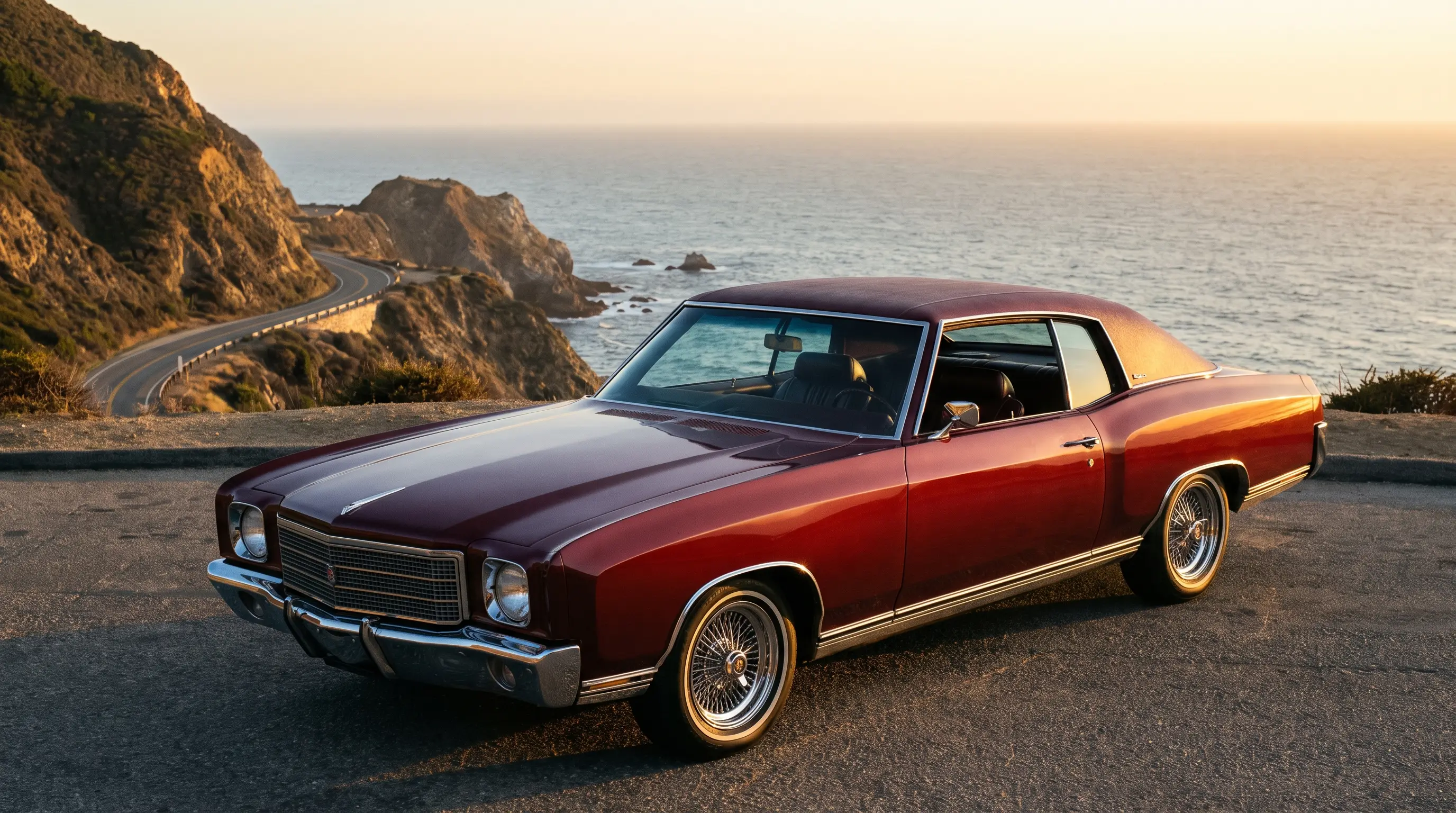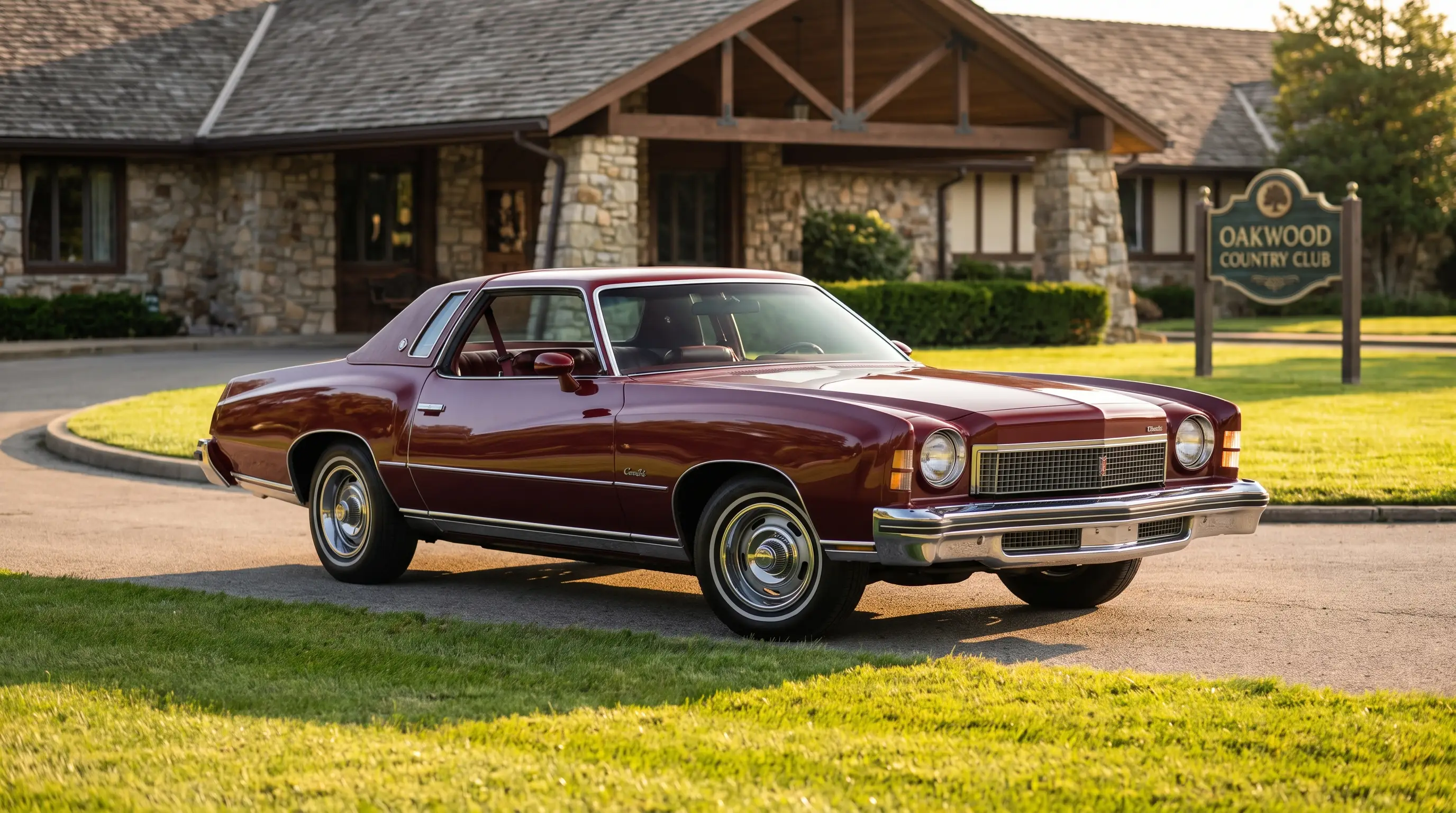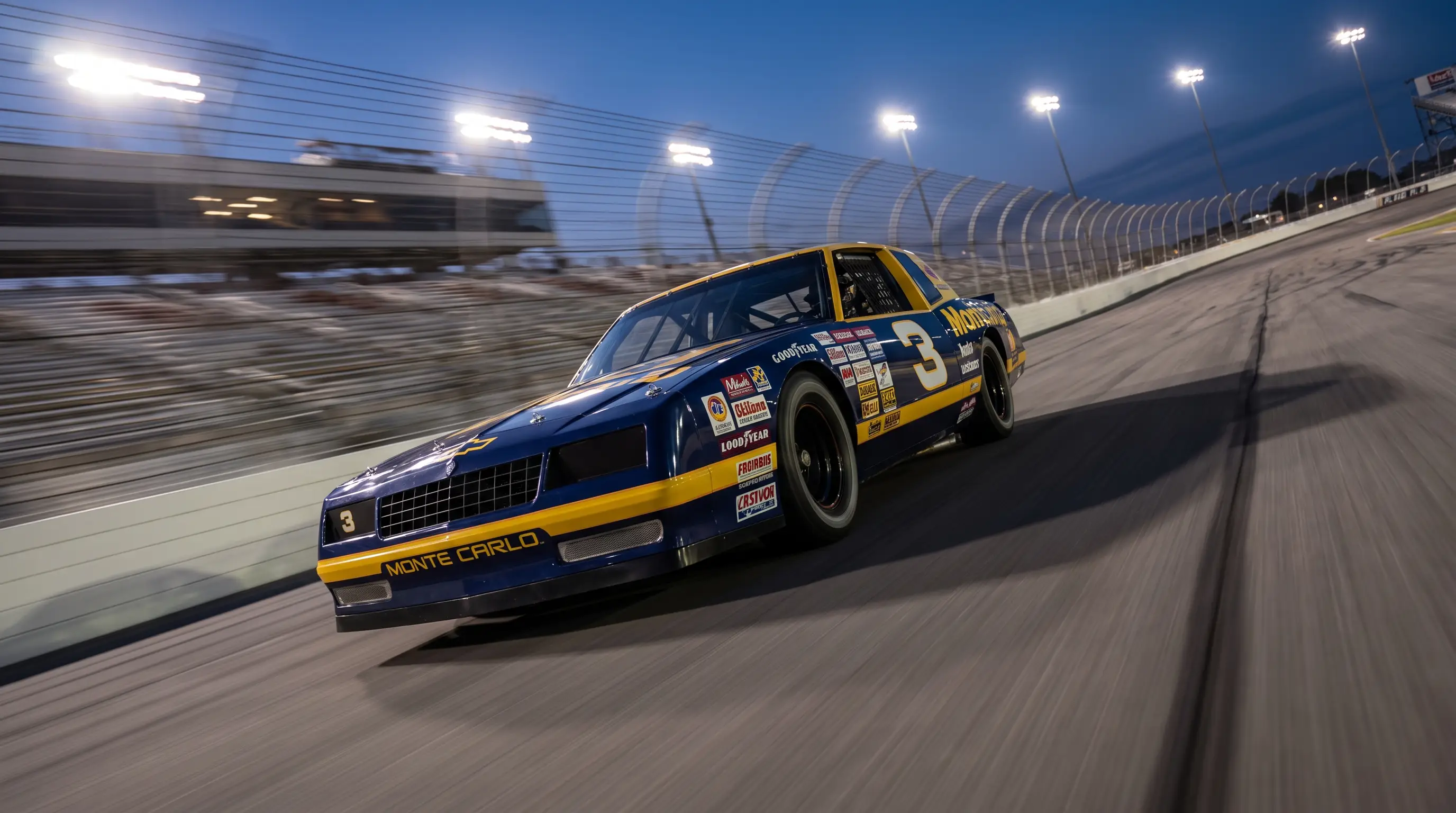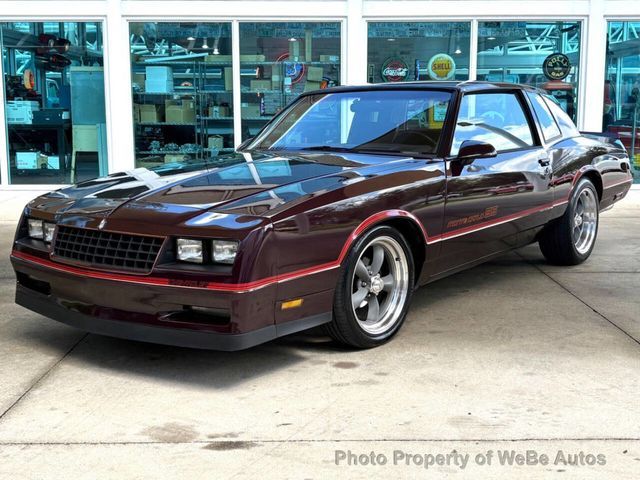
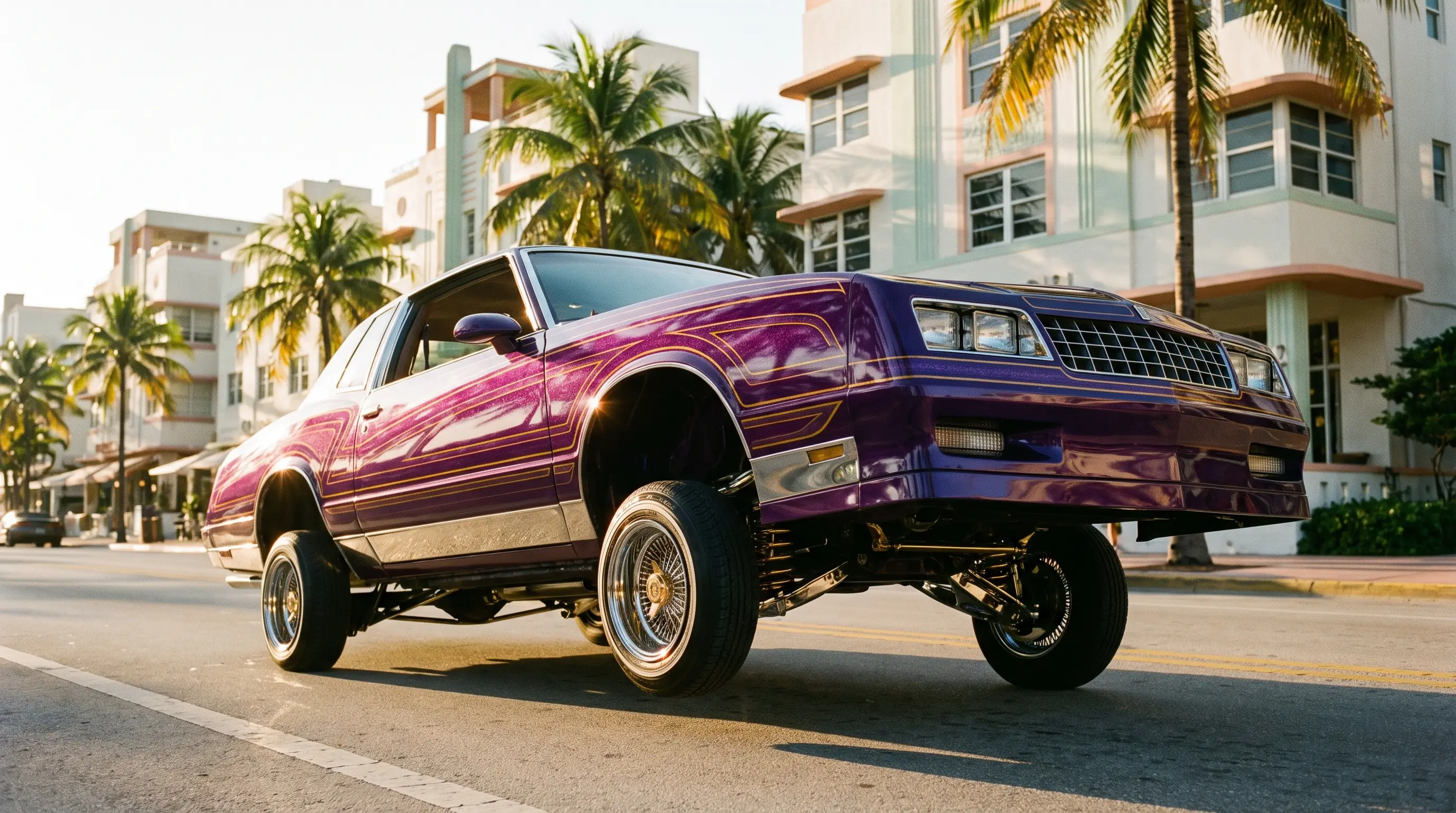
Ask anybody who grew up around the culture and they will tell you the same thing: the Monte Carlo lowrider is not just a car, it is a member of the family. We watched these coupes roll slow down the boulevard on a Sunday evening, candy paint catching the streetlights, and we knew somebody had put a whole winter of weekends into that finish. The Chevrolet Monte Carlo, especially the boxy G-body years, became one of the most beloved platforms our community ever adopted, and the reasons run deeper than looks.
This is a story about people as much as it is about a car. It is about tios and primos in a driveway, about club plaques bolted proud in the rear window, about a craft passed from one generation to the next. The Monte Carlo happened to be the canvas. What we painted on it was belonging.
Why the Monte Carlo, and not something else
There were plenty of cars to choose from, so people ask why this one earned such a place. Part of it is proportion. The 1978 through 1988 Monte Carlo has a long hood, a formal roofline, and clean body sides that give a builder room to work. A straight panel takes candy and flake and pinstriping the way a canvas takes paint. The shape is calm and confident, and that suits a car meant to be admired at low speed.
Part of it is availability. These were built by the hundreds of thousands and sold all over the Southwest and California, so they were within reach for a working family. You could find one, you could keep it running, and you could dream on it a little at a time. A car that regular people can actually own is a car a whole community can build around, and that is exactly what happened with the Monte Carlo.
And part of it, honestly, is heritage. The Chevrolet name already meant something in our neighborhoods, from the Impalas of the 1960s onward. The Monte Carlo carried that trust forward into the 1980s. If you want the full family tree of the model, from the muscle years to the personal-luxury era, our our chevrolet monte carlo retrospective lays it all out.
The craft behind a clean ride
People outside the culture see the finished car and miss the labor. We do not. Every one of these builds represents a set of skills that took years to earn. The bodywork has to be arrow-straight before a drop of color goes down, because candy paint hides nothing and forgives less. The upholsterer who stitches a diamond-tuck interior is an artist working in vinyl and thread. The striper who freehands a design across a hood does it with a steady wrist and no eraser.
Then there is the stance, the whole reason the style got its name. Getting a Monte Carlo to sit low and ride right, to lay a body panel close to the ground and still drive to the show, is its own discipline. We are not going to walk through how any of that is done here, because that knowledge belongs to the builders who earned it and lives in the garages where it is taught hand to hand. What matters for the story is respect. Behind every Monte Carlo lowrider is a person who mastered a trade.
Rolling on the boulevard, and on the screen
The Monte Carlo did not stay in the neighborhood. It rolled into the wider culture through music and film. Through the golden age of West Coast hip-hop, lowriders bounced through album art and music videos, and the Monte Carlo was often the star of the frame. For millions of people who never set foot on Whittier Boulevard or Crenshaw, that was the first time they saw what we had been building all along.
Movies did the same work. Set a scene in Los Angeles in the 1980s or 1990s and a clean Chevrolet coupe gliding by tells the audience where they are without a word of dialogue. The car became visual shorthand for a place and a people. We felt proud of that, and a little protective too, because it is easy for outsiders to borrow the image without honoring the work and the families behind it.
"We never saw the Monte Carlo as just metal. We saw a way to say who we are, out loud, in candy paint and chrome, and to hand that pride down to the kids coming up behind us."
- Hector Morales
| Cultural element | What it meant to us |
|---|---|
| Preferred years | 1978 to 1988 G-body Monte Carlo |
| Body appeal | Long hood, straight panels, formal roof |
| Signature finishes | Candy paint, metalflake, hand pinstriping |
| Interior craft | Diamond-tuck and button upholstery |
| Community anchor | Car clubs and club plaques |
| Wider stage | Music videos, film, magazine features |
Every generation found its favorite
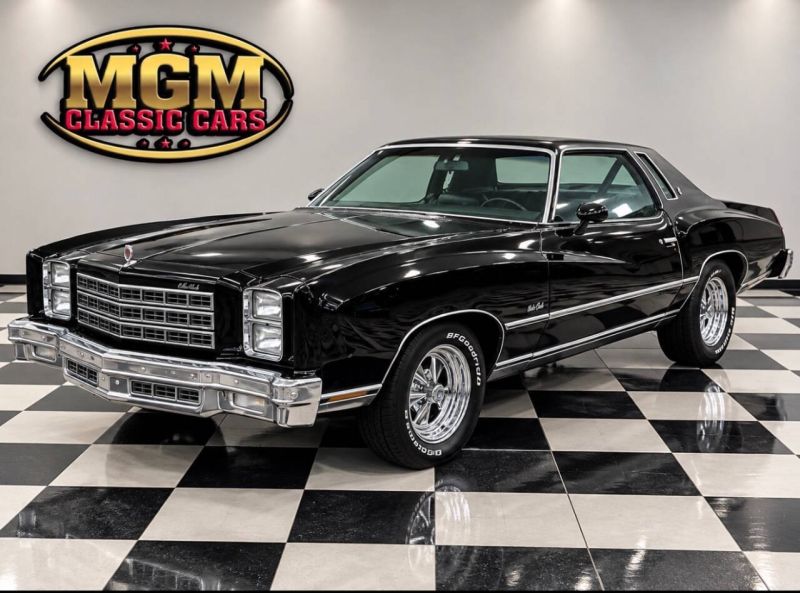
One thing outsiders miss is that we never treated the Monte Carlo as a single car. Each era gave the culture something a little different, and builders had their loyalties. The Colonnade cars of the mid-1970s, with their long, curved bodies, made beautiful cruisers and took a mural across the hood like few other canvases. Plenty of the elders in our clubs still swear by those years, and you can see why the moment one rolls up clean.
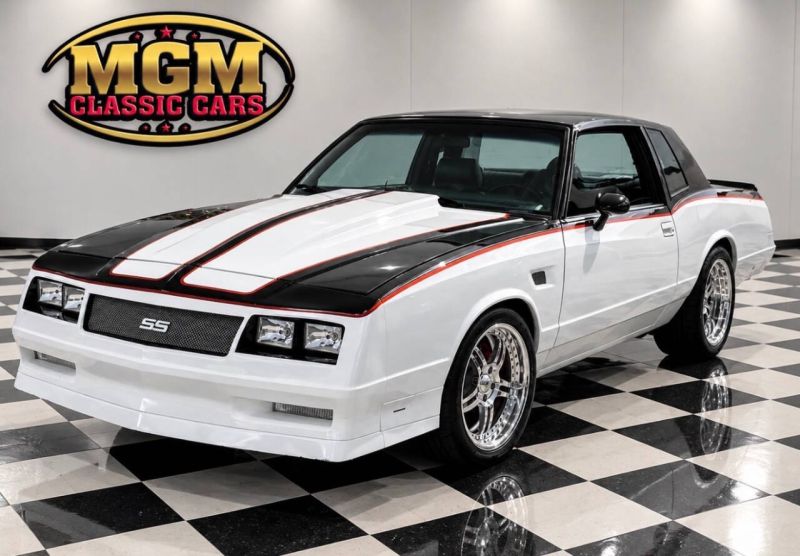
Then came the boxy G-body cars of the 1980s, and for a lot of us that is the Monte Carlo we picture first. The crisp lines and the flat panels suited the style perfectly, and there were so many of them that a young builder could actually get his hands on one. That accessibility is a big reason the 1980s cars became the backbone of the scene. A kid could start with a plain coupe and, over years of weekends, turn it into something that stopped traffic.
What ties all the years together is the attitude. Whether it is a 1976 with a candy mural or a 1985 sitting on wire wheels, the goal is the same: take a car anybody could buy and make it unmistakably yours, unmistakably ours. The Monte Carlo let every generation do that in its own way, and that flexibility is part of why the love never faded from one decade to the next.
The club is the heart of it
None of this happened alone. The car club is where the Monte Carlo lowrider truly lives. A club is a family you choose, a place where an older builder shows a younger one how it is done, where the tools get shared and so does the pride. The plaque in the back window is not decoration. It is a signature and a promise, a way of saying this car and this person belong to something.
Shows and cruises are the gatherings where it all comes together. We line the cars up, we walk each other's builds, we trade stories about the winter it took to get a panel straight or the deal that finally landed the right car. Younger folks watch and learn, and that is how the tradition keeps breathing. If you enjoy how this culture connects to the wider Monte Carlo story, you might keep exploring a very different corner of the same nameplate.
What people from outside sometimes do not realize is how much these clubs give back. A lot of them run toy drives at Christmas, raise money for a family that lost somebody, and show up when the neighborhood needs them. The cars get the attention, but the club is doing quiet good work behind the shine. That is part of the pride too. When we roll a clean Monte Carlo into a community event, we are saying this culture is something to respect, not something to fear, and the cars open that door better than any speech could.
The tradition also crosses borders now. What started in the barrios of California has family all over the world, from Japan to Brazil to Europe, where builders study the old Lowrider Magazine issues like scripture and put their own spin on a G-body Monte Carlo. It humbles us, honestly, to see something our people created being loved that far from home. The car became a language, and folks who do not speak a word of English understand exactly what a candy-painted Monte Carlo on wire wheels is saying.
Keeping the tradition alive
Times change and good cars get harder to find. A clean, un-rusted G-body Monte Carlo is not as common as it was, and prices have climbed as a new generation discovers what we knew all along. That makes the surviving cars more precious, and it makes the knowledge of how to build them more valuable too. We tell the young ones to learn the craft, not just to buy a finished car, because the skill is the real inheritance.
For anyone looking to start their own chapter, patience is everything. A solid base car is worth waiting for, and the community is generous with advice when you show up with respect. You can classic Monte Carlo for sale and see what is out there, but the best builds usually start with a car somebody found through the club, from a friend of a friend who knew it was straight.
More than a car
When we look at a Monte Carlo lowrider, we see a story we helped write. We see the family that built it, the club that stood behind it, the boulevard it rolled down on a warm Sunday night. The Chevrolet Monte Carlo gave our community a canvas, and we filled it with color and pride and a tradition that keeps passing down. That is why this car matters to us, and why it always will.
Ask an old-timer in one of these clubs what the car means and he will not talk about horsepower or numbers. He will talk about the summer he built it with his brother, the show where his daughter first rode with him, the friends who stood by him through a hard year. The Monte Carlo lowrider is a scrapbook you can drive. Every panel holds a memory, and every cruise adds another. That is a kind of value no auction block ever measures, and it is the kind that lasts the longest.
The metal is beautiful, sure. But the real thing being preserved every time somebody brings one of these back to life is a way of belonging. Long after the last factory Monte Carlo rolled off the line, our hands keep the story going, one clean ride at a time.