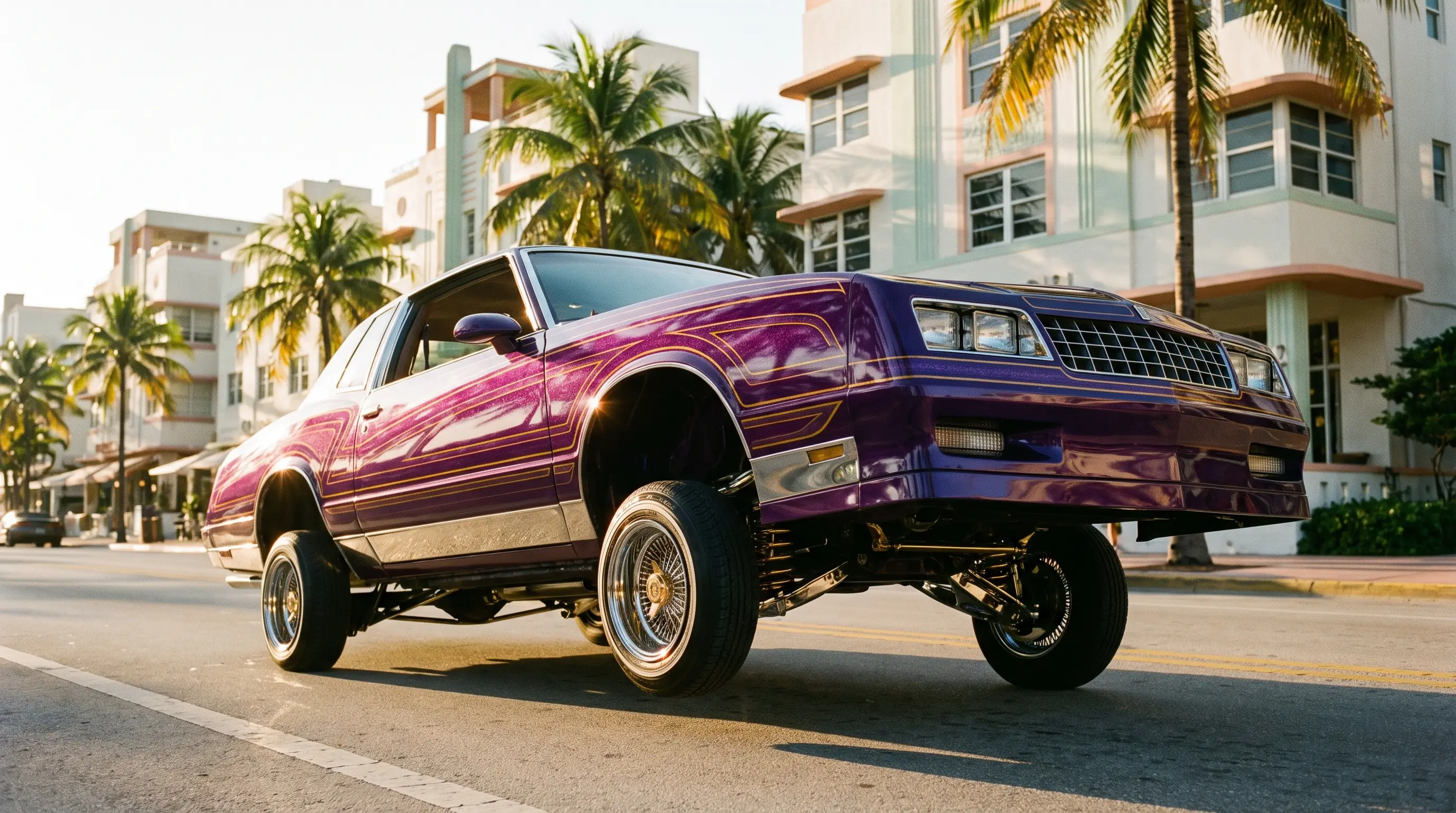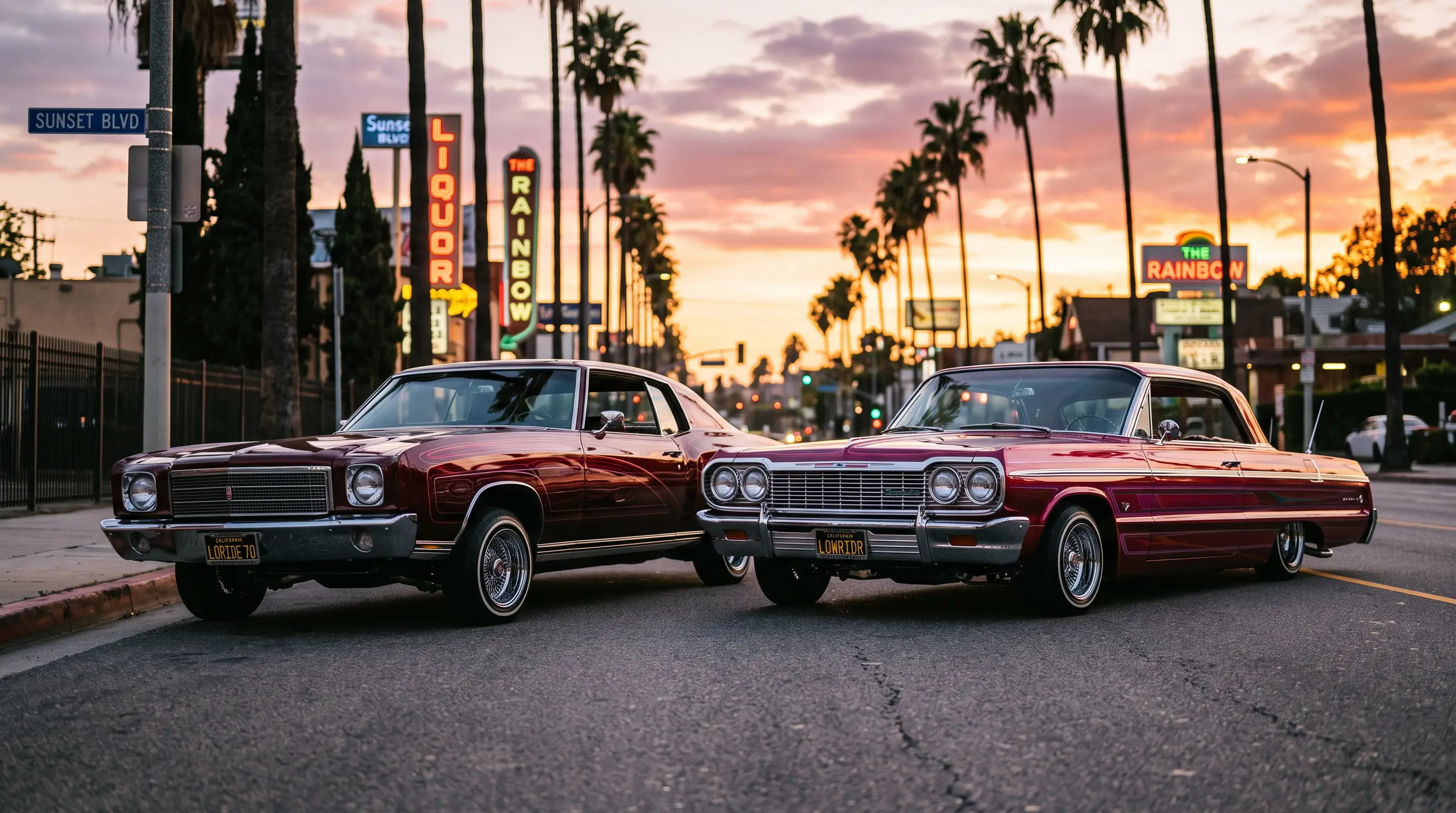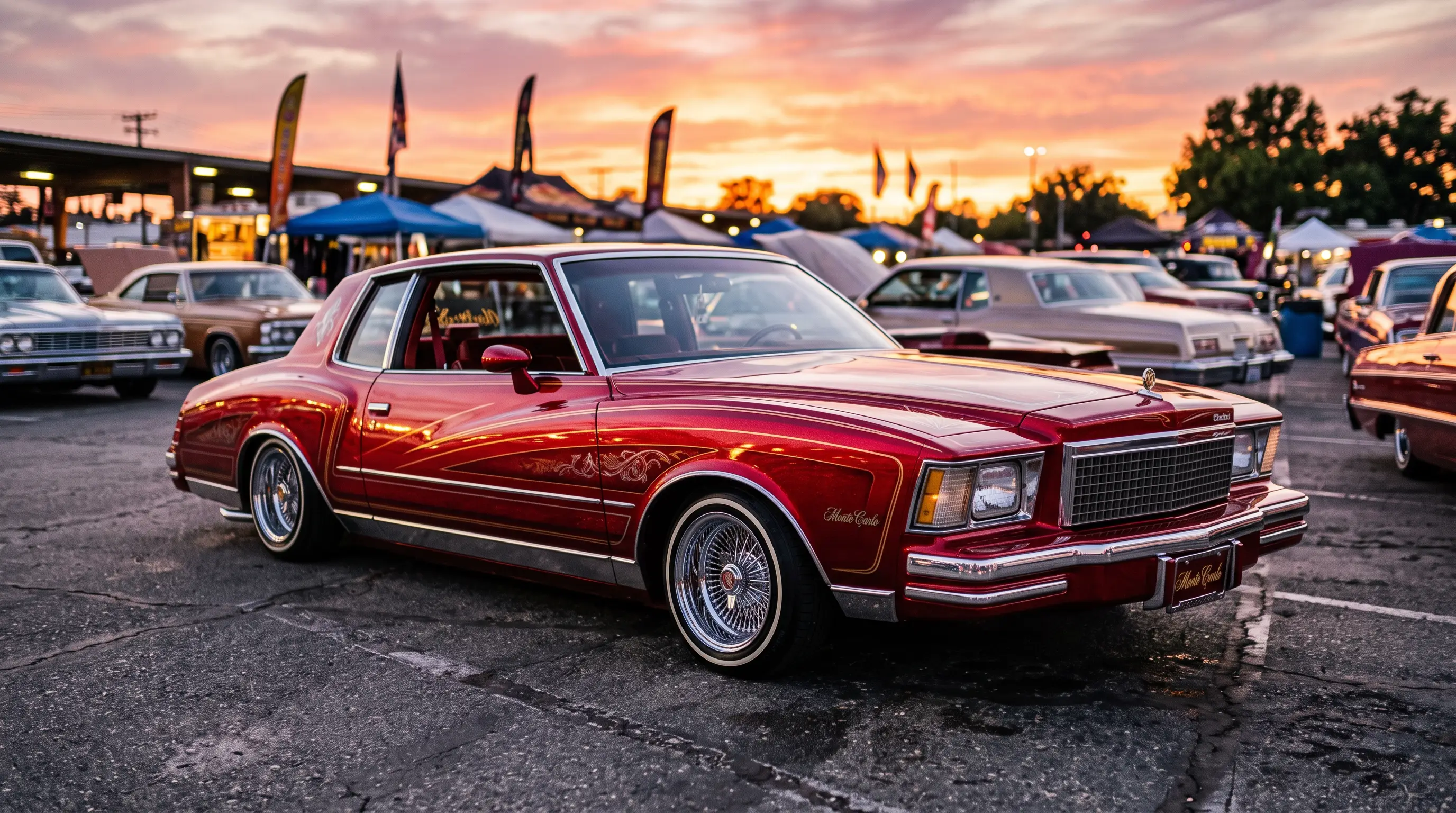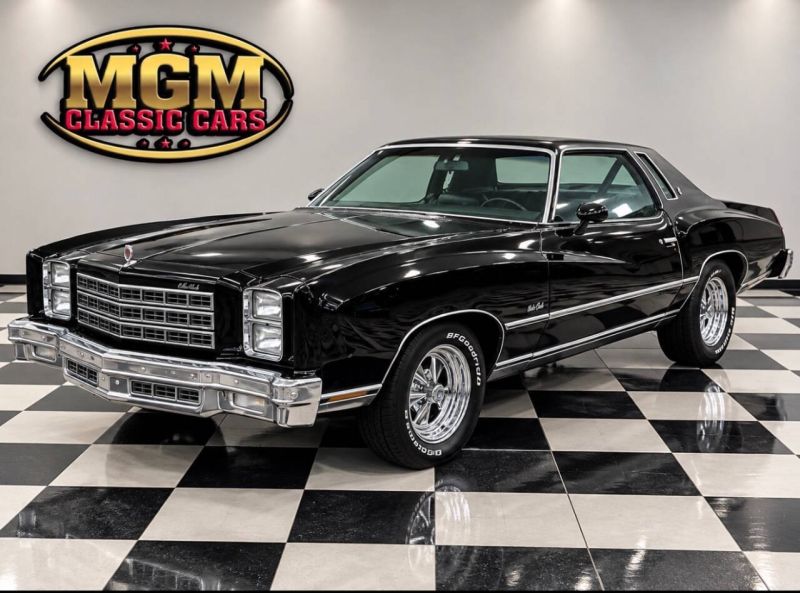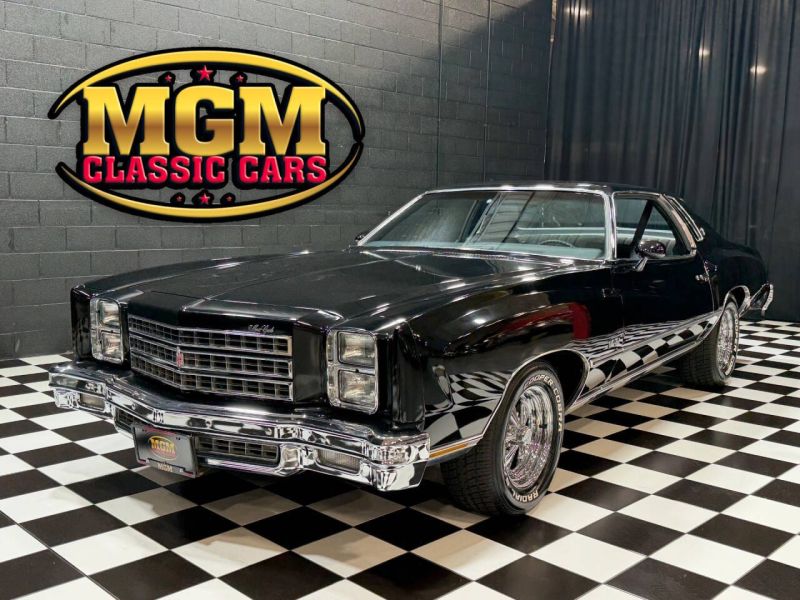
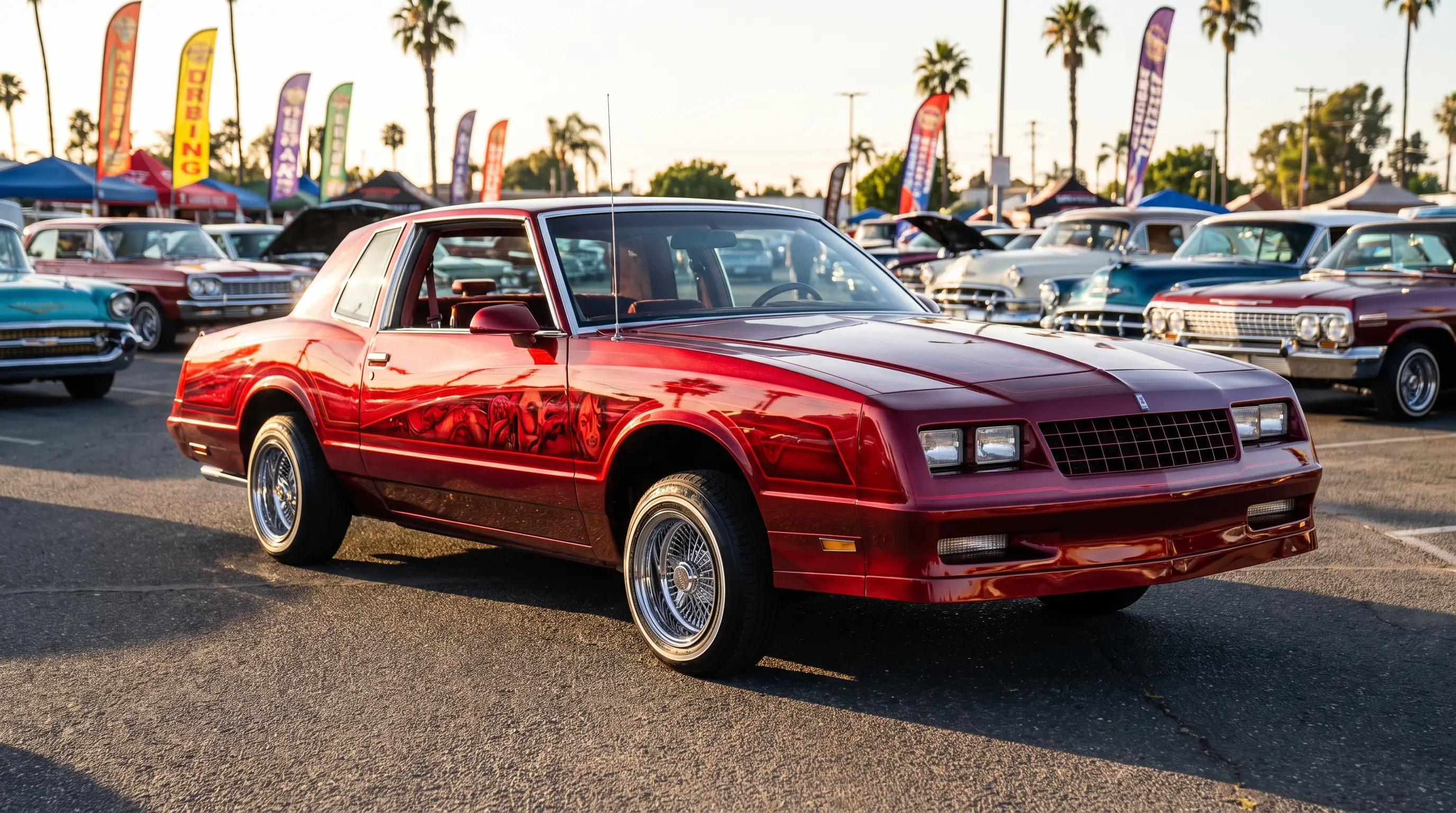
The monte carlo lowrider modern revival scene did not spring up overnight, and it did not spring up because of nostalgia alone. It grew because a new generation of builders looked at the G-body cars their parents and grandparents built in the 1980s and decided those cars still had something to teach a scene that had, for a while, drifted toward newer platforms. We have watched that shift happen over the last several years, and it has changed who shows up to the shows and what they bring.
Why the G-body came back into fashion
For a stretch in the 2000s and early 2010s, a lot of lowrider attention moved toward Cadillacs and newer body styles, and the classic G-body Monte Carlo took a back seat at a lot of major shows. That started reversing as parts availability improved and as younger builders realized how much cheaper it still was to find a solid G-body shell compared to the increasingly scarce full-size cars from earlier decades. A Monte Carlo bought as a rough project car became a realistic entry point for someone starting their first build, and that accessibility mattered more than any single design trend.
Social media accelerated the swing further. Builders posting progress photos of Monte Carlo restorations found an audience that had never seen the car built up properly, and that exposure pulled in people who might otherwise have defaulted to whatever platform was already popular online.
New builders, old rules
What is notable about the current revival is how closely new builders study the original era's techniques rather than reinventing the look. Paint schemes, patterns, and even specific mural styles from the 1980s get referenced directly, sometimes down to the exact color codes used by the original shops. There is a real respect in this current wave for doing things the way they were done the first time, rather than modernizing the look just because newer paint technology allows it.
At the same time, the mechanical side of the hobby has modernized considerably. Hydraulics setups today are more reliable and more precise than what was available in the eighties, and builders use that improved equipment to execute the same visual language with fewer breakdowns. The look stays period correct even as the underlying components get better.
The role of documentation in the revival
A big part of what makes the current revival feel substantial rather than superficial is how much documentation now exists around these builds. Original owners and their families have been more willing to share photos, receipts, and stories as interest in the platform has grown, and that has given new builders a much clearer picture of what an authentic period build actually looked like versus what internet folklore claims it looked like. This matters because a revival built on accurate history holds up differently than one built on vague impressions of an era nobody bothered to research properly.
We have seen builders track down the original painter of a specific car from the 1980s just to ask questions about technique, and more than one of those retired painters has come out of retirement, at least informally, to consult on a modern build. That kind of continuity between generations is rare in most corners of the car hobby, and it is one of the things that makes this particular revival feel earned rather than manufactured.
"The kids building these cars now are not copying a trend. They're finishing a conversation their grandfathers started, and most of them know it."
- Hector Morales
Events that brought the scene back together
Regional car shows have played a bigger role in this revival than most people give them credit for. A handful of shows that had shrunk to a fraction of their original size through the 2000s started seeing G-body Monte Carlos entered again in meaningful numbers around the same time interest picked back up online, and organizers who had been running smaller local meets for years suddenly found themselves fielding entries from builders who had traveled hours to be part of it. That kind of turnout does not happen from social media alone. It takes a critical mass of people deciding, independently, that the platform is worth showing up for again.
Some of those same shows have started adding categories specifically for lowrider Monte Carlos rather than lumping them into a broader custom car class, which is itself a sign of how much the entry numbers have grown. A dedicated class means judges and organizers expect enough quality entries to justify separating them out, and that expectation would have seemed optimistic even a decade ago.
What the revival means for the cars themselves
All of this renewed attention has had a direct effect on the cars. Values for clean G-body Monte Carlos have climbed as demand from serious builders has grown, and rough project cars that would have been scrapped a decade ago are now getting picked up specifically for restoration into lowrider builds. That demand cuts both ways. It is good for owners sitting on a solid example, and it makes finding an honest, unmolested car harder for someone just getting started.
If this current wave has you curious about where it all began, our monte carlo lowrider retrospective traces the scene back to its roots. And if the revival has you looking to join in rather than just watch from the sidelines, there are usually a handful of Monte Carlos for sale now that would make a solid foundation for a build of your own.
The younger crowd bringing new energy
What separates this revival from a simple nostalgia cycle is the age of the people driving it. A meaningful share of the builders showing up to these events are young enough that they were not alive when the G-body Monte Carlo was new, and their interest did not come from personal memory. It came from seeing the finished product, whether at a show, on social media, or parked outside a family member's house, and deciding they wanted to learn how to build one themselves. That kind of interest, chosen rather than inherited, tends to be more durable than nostalgia alone, because it is not dependent on an aging generation staying active in the hobby.
These younger builders are also more willing to document their process publicly than earlier generations were, posting build threads and video updates that make the whole restoration visible step by step. That transparency has become its own recruiting tool, since a viewer who watches an entire build unfold online often comes away wanting to attempt one themselves rather than just admire the finished car from a distance.
What strikes us most about this moment is how little convincing anybody needs anymore. The cars sell the revival themselves, one clean build at a time.