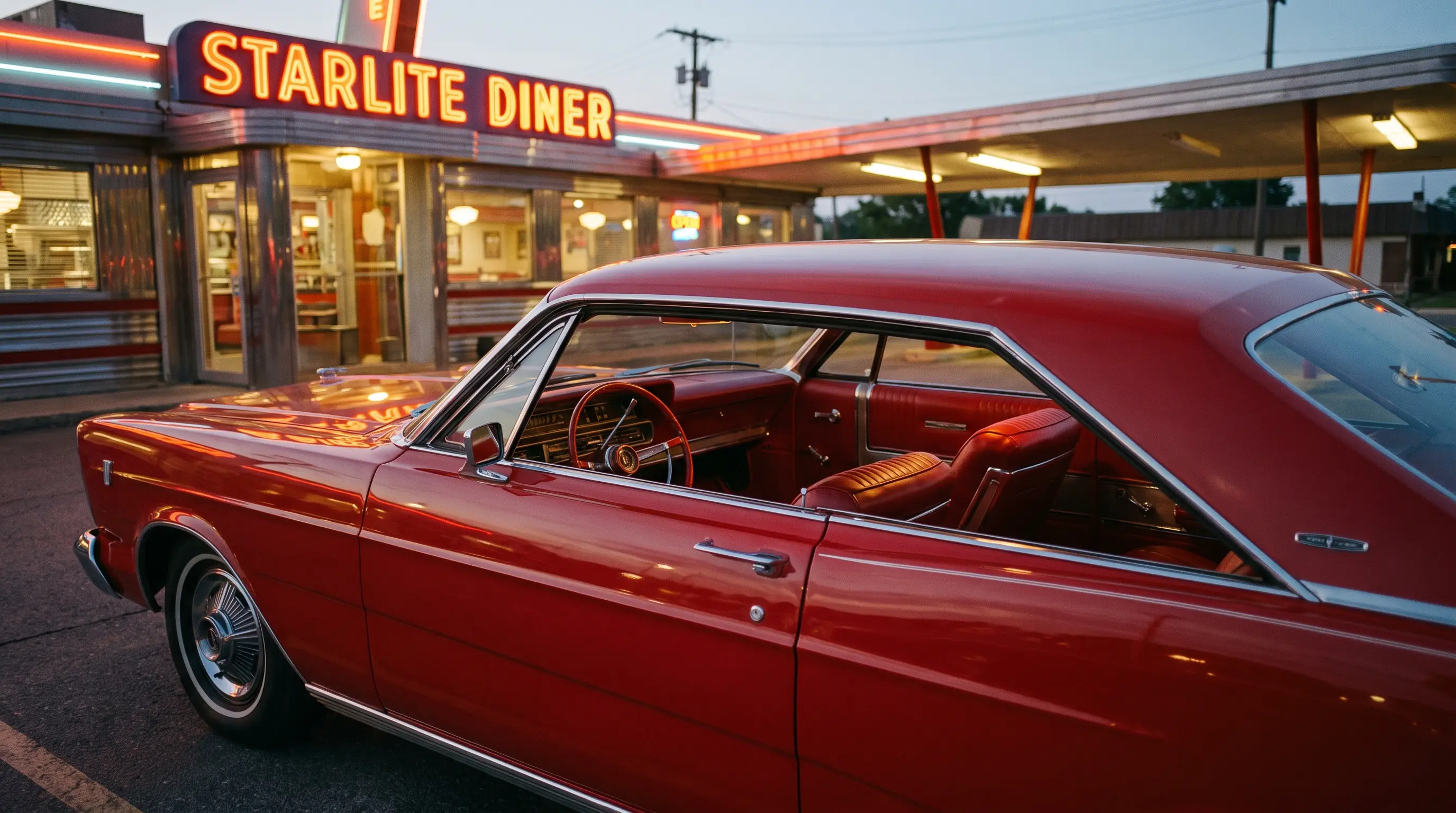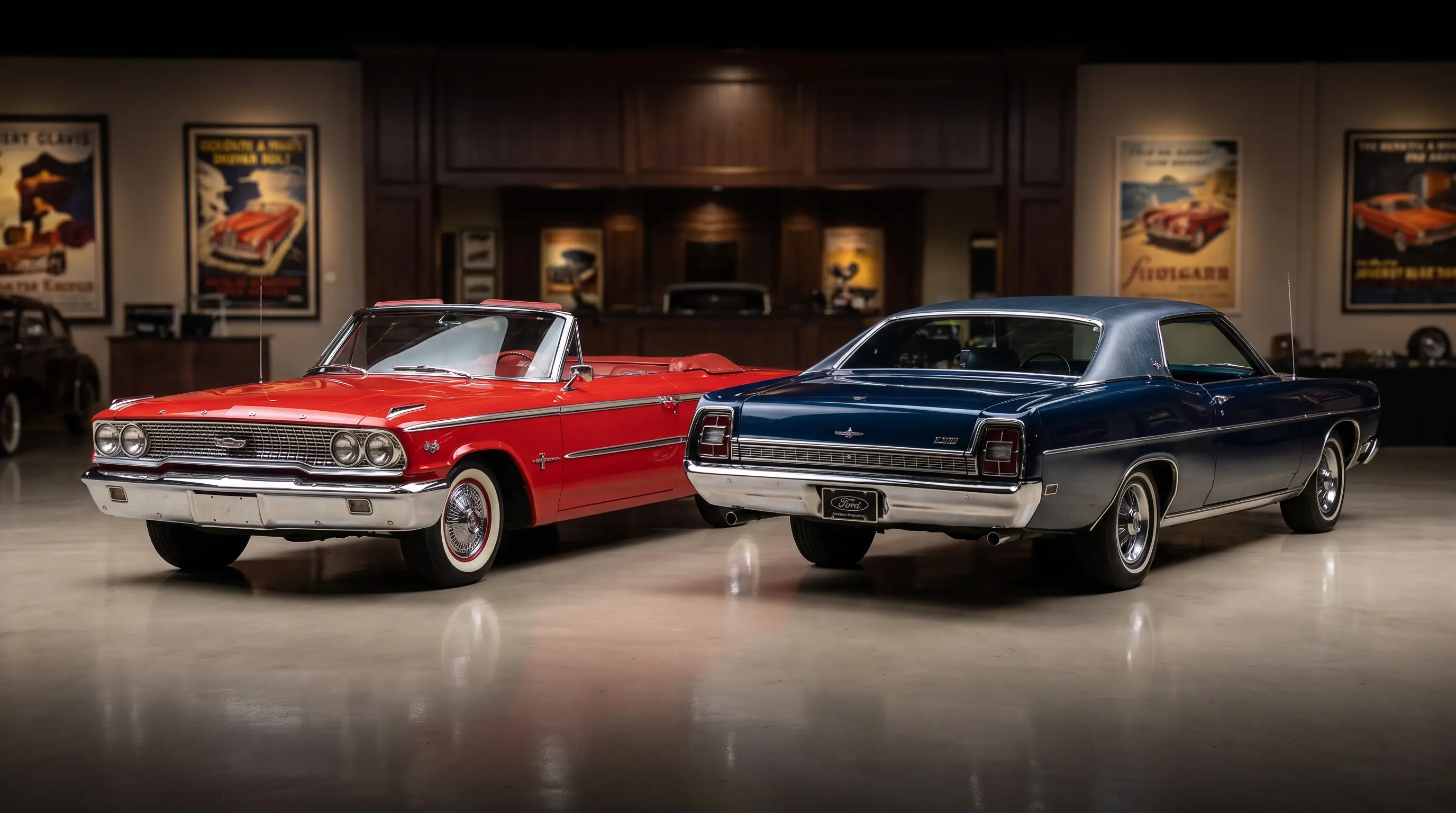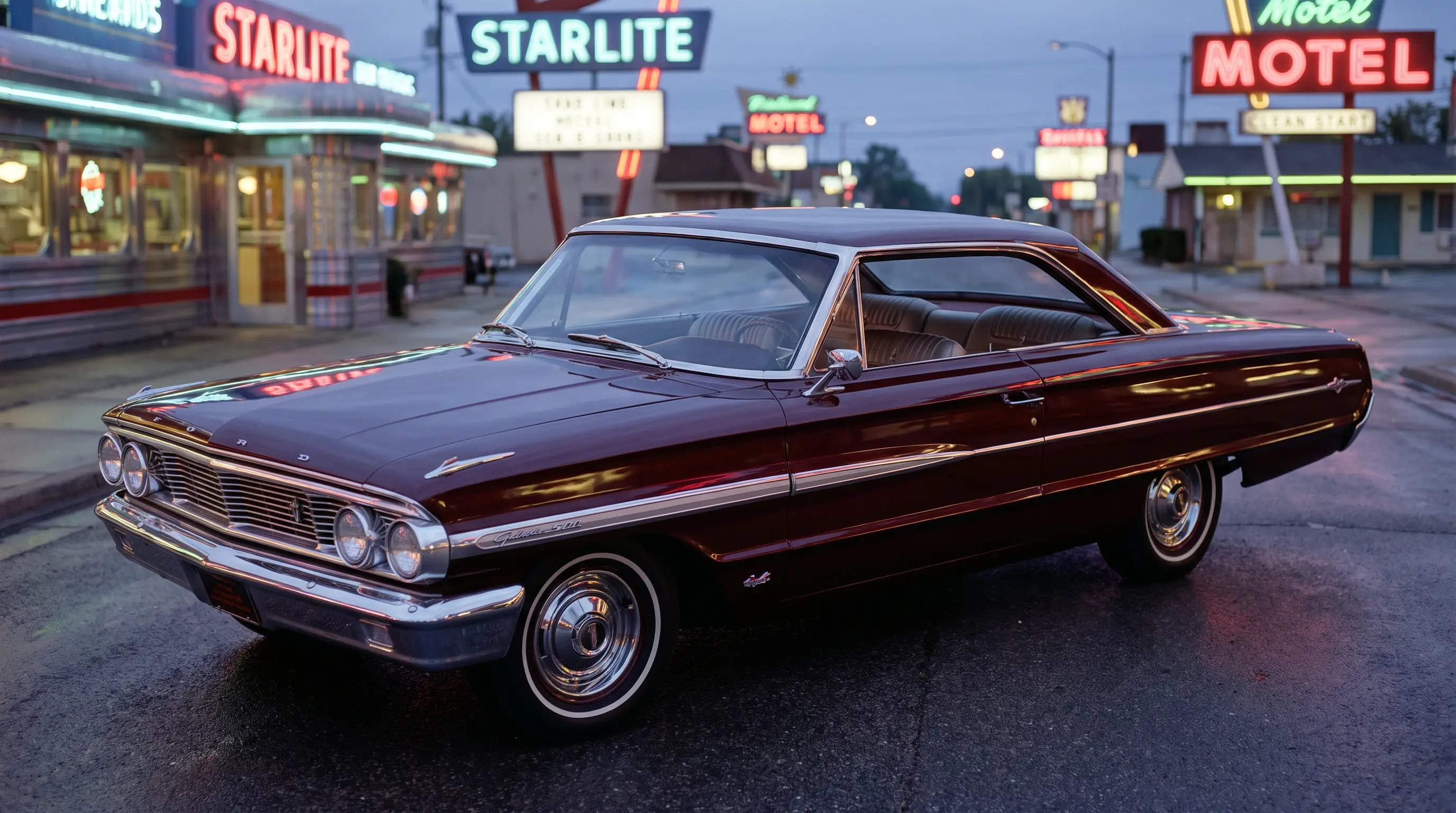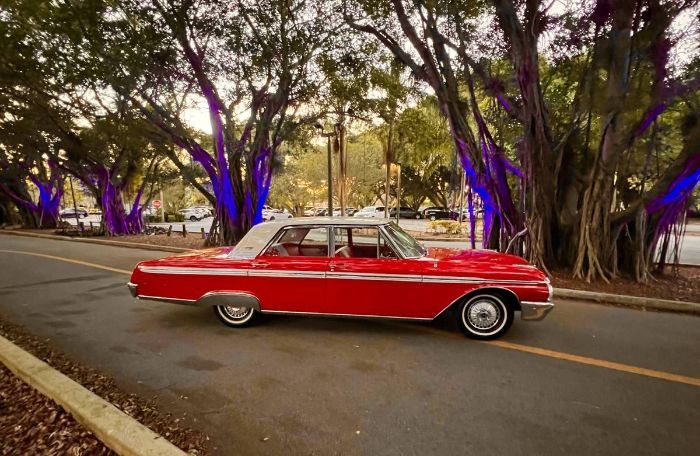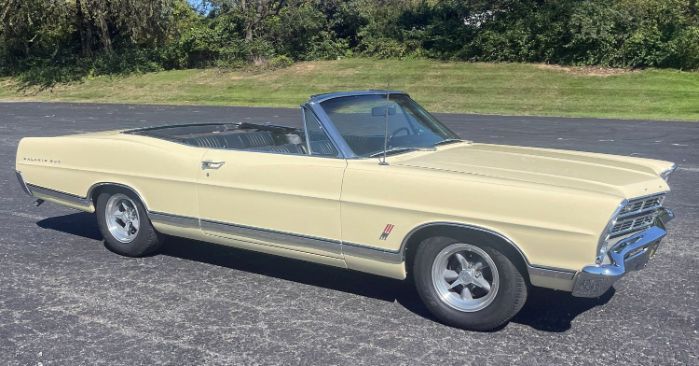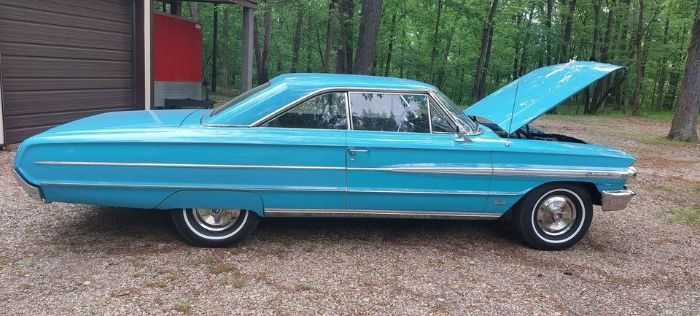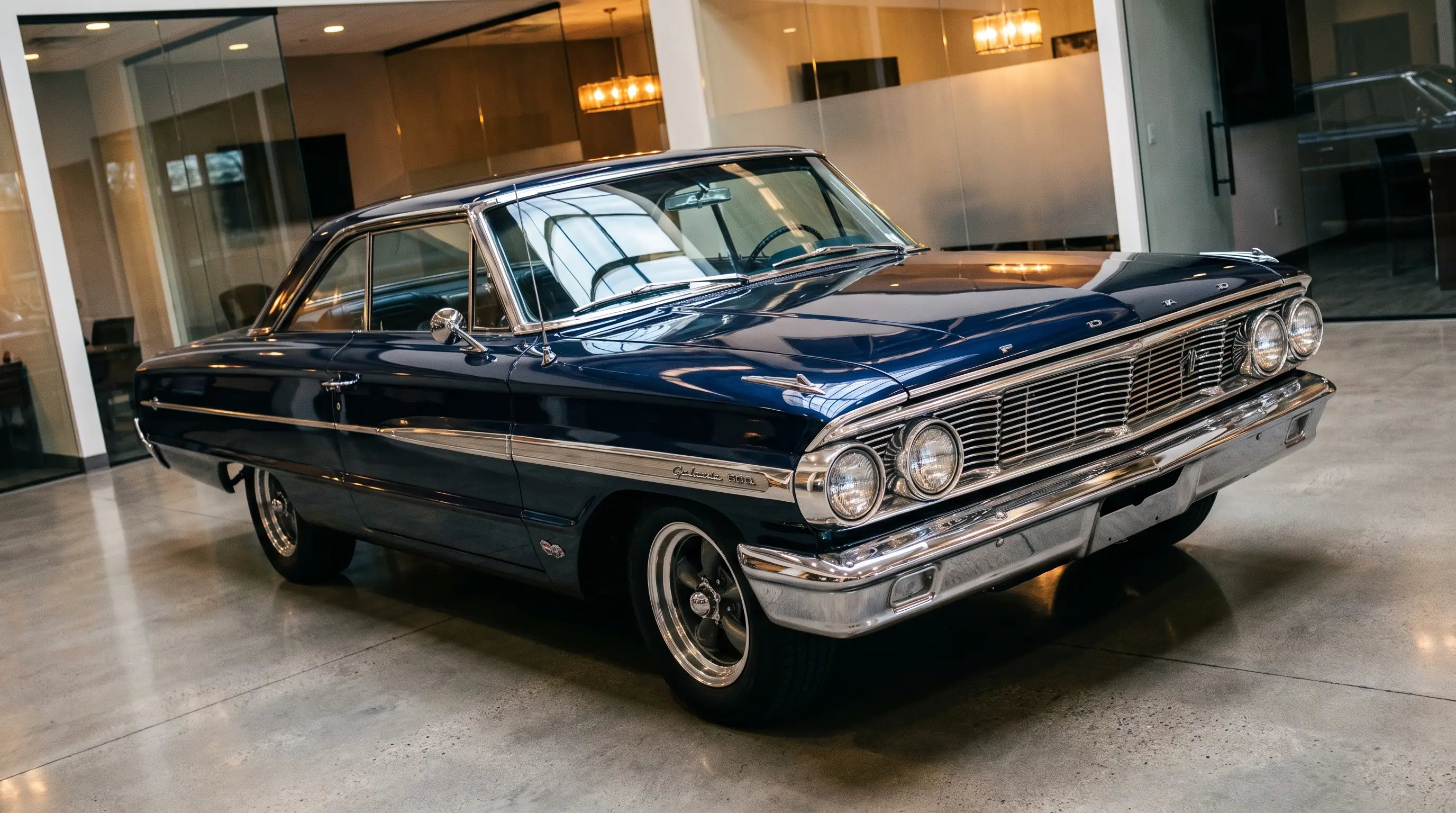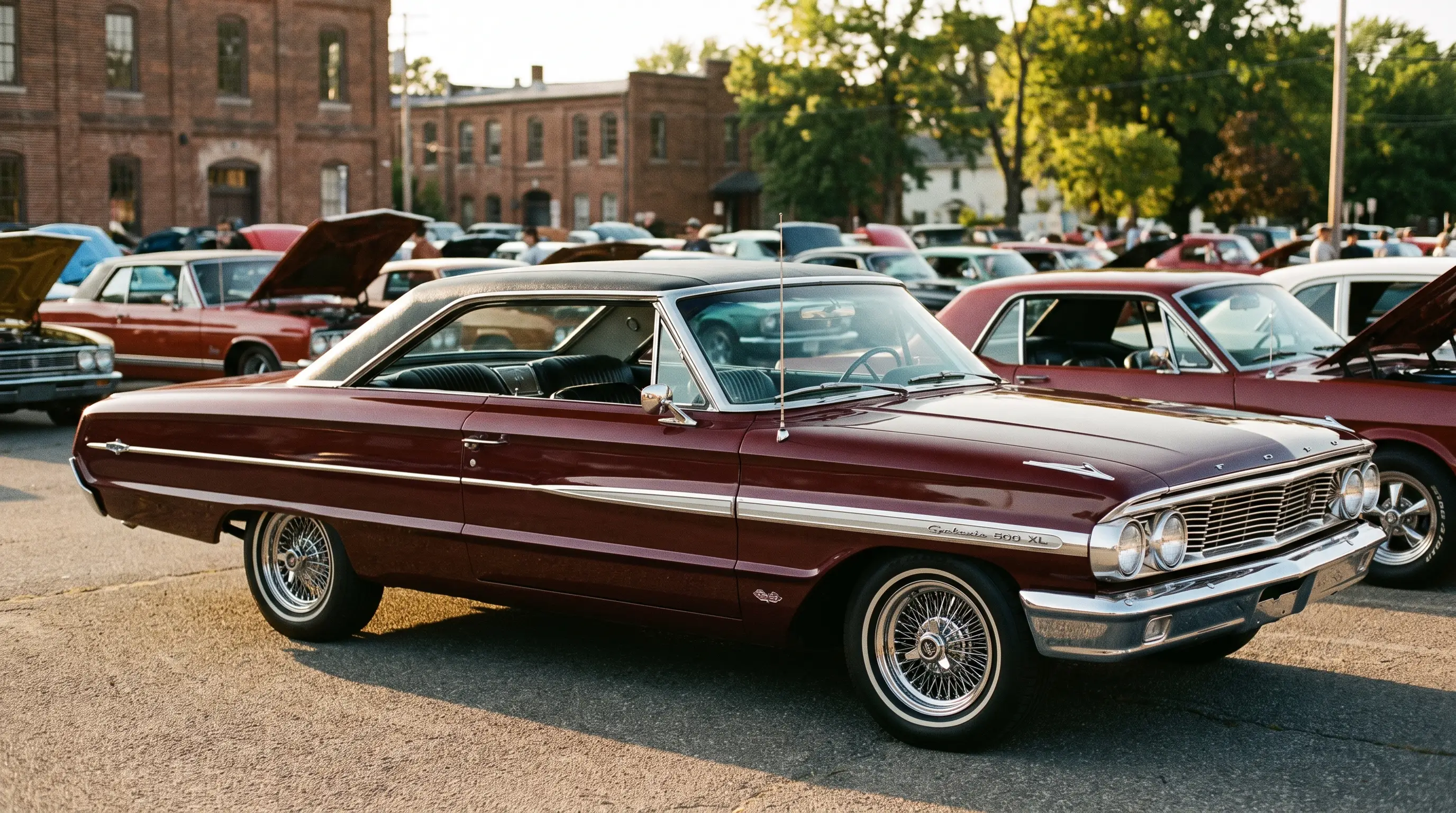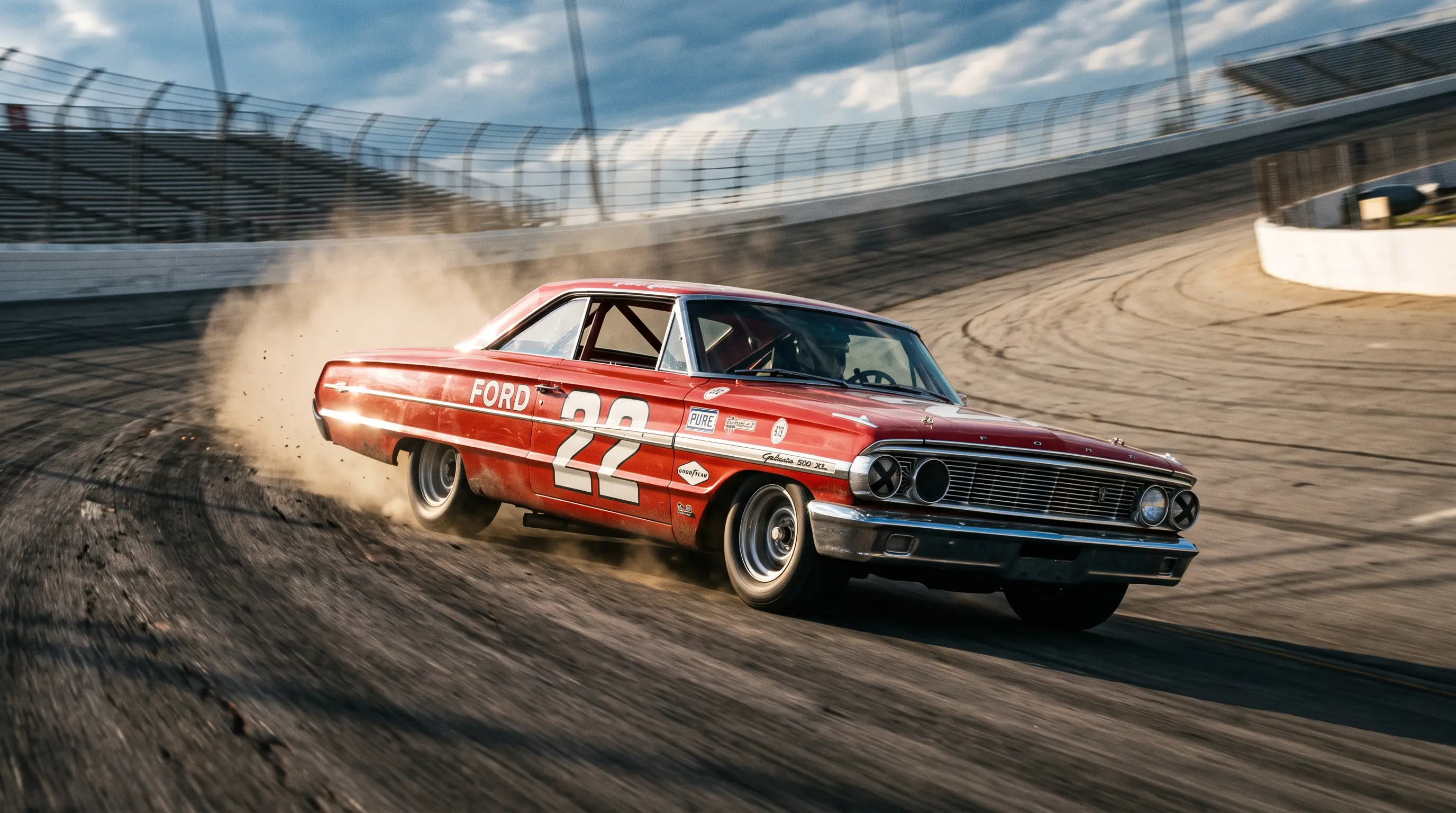
Nobody at a stock car track in 1963 was racing a bucket-seat interior. But the ford galaxie 500 xl nascar image halo worked anyway, and it worked because Ford understood something car companies still bank on today: a win on Sunday sells a car that never sees a checkered flag. The 500 XL sitting on a suburban driveway had nothing under its hood in common with the 427 R-code Galaxies tearing around Daytona, but the showroom car got to borrow every bit of that racing glow regardless.
Total Performance and the halo effect
Ford launched its Total Performance push in the early 1960s, a company-wide commitment to racing across NASCAR, drag strips, and eventually endurance road courses, all built on the idea that competition success would translate directly into showroom traffic. The full-size Galaxie was Ford's primary NASCAR weapon through the early and mid part of the decade, and drivers like Fred Lorenzen and Marvin Panch put those cars into victory lane often enough that Ford's advertising department barely had to embellish anything. The 500 XL, as the sportiest trim in the full-size lineup, absorbed the bulk of that reflected glory even though the actual race cars were stripped-down, purpose-built machines that shared little more than sheet metal shape with what a buyer drove home.
That's the nature of a halo effect. It doesn't require the showroom car to match the race car spec for spec. It requires the buyer to feel a connection, however loose, between the trophy in the newspaper and the car in their own driveway.
How the racing connection actually reached buyers
Ford's advertising leaned hard on this. Print ads for the 500 XL frequently referenced NASCAR wins in the same breath as consumer features, blending racing credibility with everyday selling points like bucket seats and available four-speed transmissions. Dealers sometimes displayed racing memorabilia or photos of Ford's NASCAR stars right next to showroom XL models, collapsing the distance between Victory Lane and the sales floor into a single glance. It's a marketing move that looks almost quaint now, but it worked precisely because the racing wins were real and frequent enough that Ford didn't need to stretch the truth much.
Local dealers played their own part too. A Ford store in a town with a nearby short track would often sponsor a local racer running a Galaxie body, sometimes not even a full-size car in the strictest sense, and use that connection in newspaper ads for the whole showroom lineup. It didn't matter that the local short track hero was three tiers removed from Fred Lorenzen at Daytona. The visual shorthand, a Ford badge, a checkered flag graphic, a photo of a car crossing a finish line, did the persuasive work on its own. Buyers walking into that dealership were primed to see the 500 XL sitting nearby as part of the same winning lineage, whether or not the connection would hold up to close scrutiny.
National magazines amplified the effect further. Enthusiast publications covering NASCAR results in the early 1960s ran alongside road tests of showroom Fords in the same issues, and editorial coverage often name-checked the same drivers and the same wins that Ford's own advertising leaned on. Readers absorbed the racing narrative from multiple directions at once, the manufacturer's ad copy, the magazine's race report, and the dealer's local promotion, until the connection between track success and showroom XL felt less like marketing and more like simple, obvious fact.
Specific wins that built the reputation
Some victories did more heavy lifting than others. Fred Lorenzen's run of wins in the early 1960s put the Galaxie name in front of a national audience repeatedly, and his reputation as a clean, methodical driver gave Ford a spokesman-adjacent figure without ever having to pay for a formal endorsement campaign. Tiny Lund's 1963 Daytona 500 win, driving the Wood Brothers' Galaxie after regular driver Marvin Panch was injured before the race, added another data point buyers could point to when explaining why they chose Ford over Chevrolet or Chrysler in the driveway argument that seemingly every neighborhood had at some point in the decade. Each individual win mattered less than the accumulation. By the middle of the decade, Ford's NASCAR success wasn't a single headline, it was a running total that made the 500 XL's sporting pretense feel earned rather than invented.
The gap between what raced and what sold
This is where the halo effect gets a little dishonest, and it's worth saying plainly. The overwhelming majority of 500 XL buyers never came close to a 427 R-code engine. Most drove home with a mild-mannered V8 more suited to commuting than qualifying laps. The marketing didn't lie outright, but it let the buyer's imagination do a lot of the heavy lifting, letting the racing wins imply a performance connection that the actual production car rarely delivered in full.
Collectors chasing the full story on this car eventually run into that same gap, a beautifully sorted 500 XL with a modest engine underneath, wearing all the visual language of a race-bred machine it was never actually built to be.
"You could buy the whole feeling of a Daytona win for the price of a bucket seat option and a four-speed. Most buyers never got within a hundred horsepower of the actual race car, and most of them never cared."
- Patrick Walsh
Why the halo still shapes collector value
Decades later, that same racing connection still colors how people value a 500 XL. Cars with documented performance options, four-speed manuals, higher-output engines, and factory sport equipment carry a real premium over comparably conditioned cars with base drivetrains, precisely because that halo never fully faded. The racing pedigree Ford built in the early 1960s is baked into how this car gets talked about at shows and auctions even now, sixty years removed from the actual competition.
If that racing connection is part of what draws you to this car, it's worth looking closely at drivetrain documentation before you fall for the badge alone. There are usually a few genuine performance-spec examples among the classic Galaxie for sale listings worth cross-checking against a car's original build sheet, since the halo effect that sold these new is just as capable of inflating an asking price today.
What makes this particular halo interesting sixty years on is how honestly it's aged. Ford wasn't inventing race wins that didn't happen, and it wasn't dressing up a race car as a showroom model either. It simply let a genuine competition record color the reputation of a much tamer production trim, and buyers were happy to let it happen. That's a more durable kind of marketing than most manufacturers manage, because there's no lie to eventually get caught in, just an association that a new generation of collectors can still trace back to an actual finish line.