
Picture Talladega in 1983, the cars streaming down the back straightaway in a pack so tight that a driver could reach out and touch the roof of the machine next to him. Somewhere in that pack is a black and silver Monte Carlo. Somewhere close behind it is a red and white Thunderbird. For most of the decade, that image, two American nameplates trading paint at 190 miles an hour, was NASCAR's biggest storyline, and it was also a fight that started years earlier in a wind tunnel nobody was watching.
Car Features
7 min read
Monte Carlo vs Thunderbird - The Aero Wars
Ford's aero Thunderbird forced Chevrolet's hand on the superspeedways, and the Monte Carlo Aerocoupe was the answer. Here is how the two cars fought it out through the 1980s.
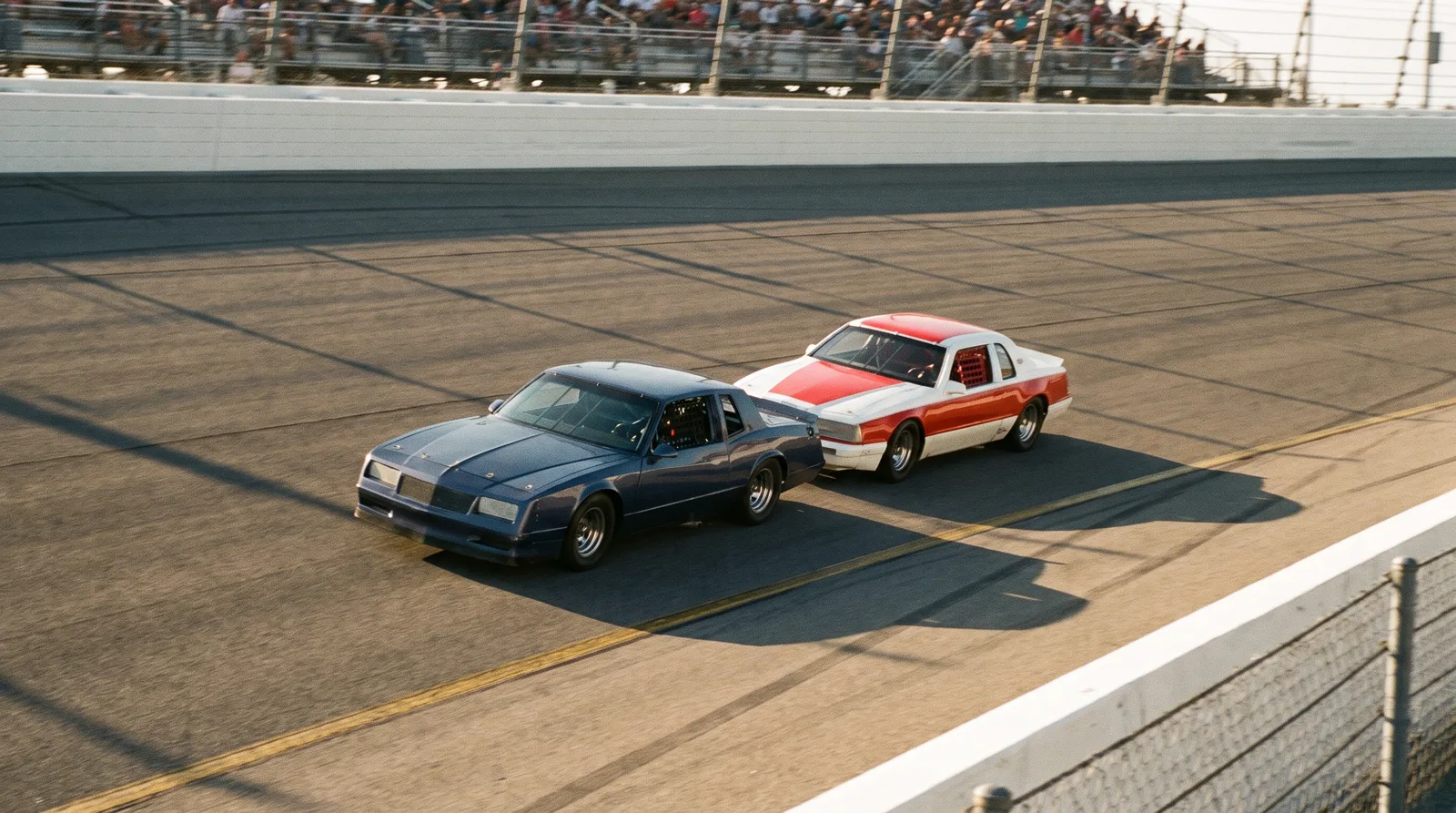
The Chevrolet Monte Carlo nascar vs Thunderbird rivalry was not really about which car looked better, though fans certainly argued that point in every diner and parking lot in the Southeast. It was about aerodynamics, and it changed both cars forever.
How the fight started
Ford brought the aero-optimized Thunderbird to NASCAR in the early 1980s with a sloped nose and a fastback profile built specifically to cut drag at superspeedway speeds. General Motors, still running boxier Monte Carlos with a more upright rear window, found itself losing the aero battle even when the horsepower numbers were close. A stock car race at Daytona or Talladega is decided as much by how cleanly air moves over a body as by what is under the hood, and by 1983 the Thunderbird had the clear edge.
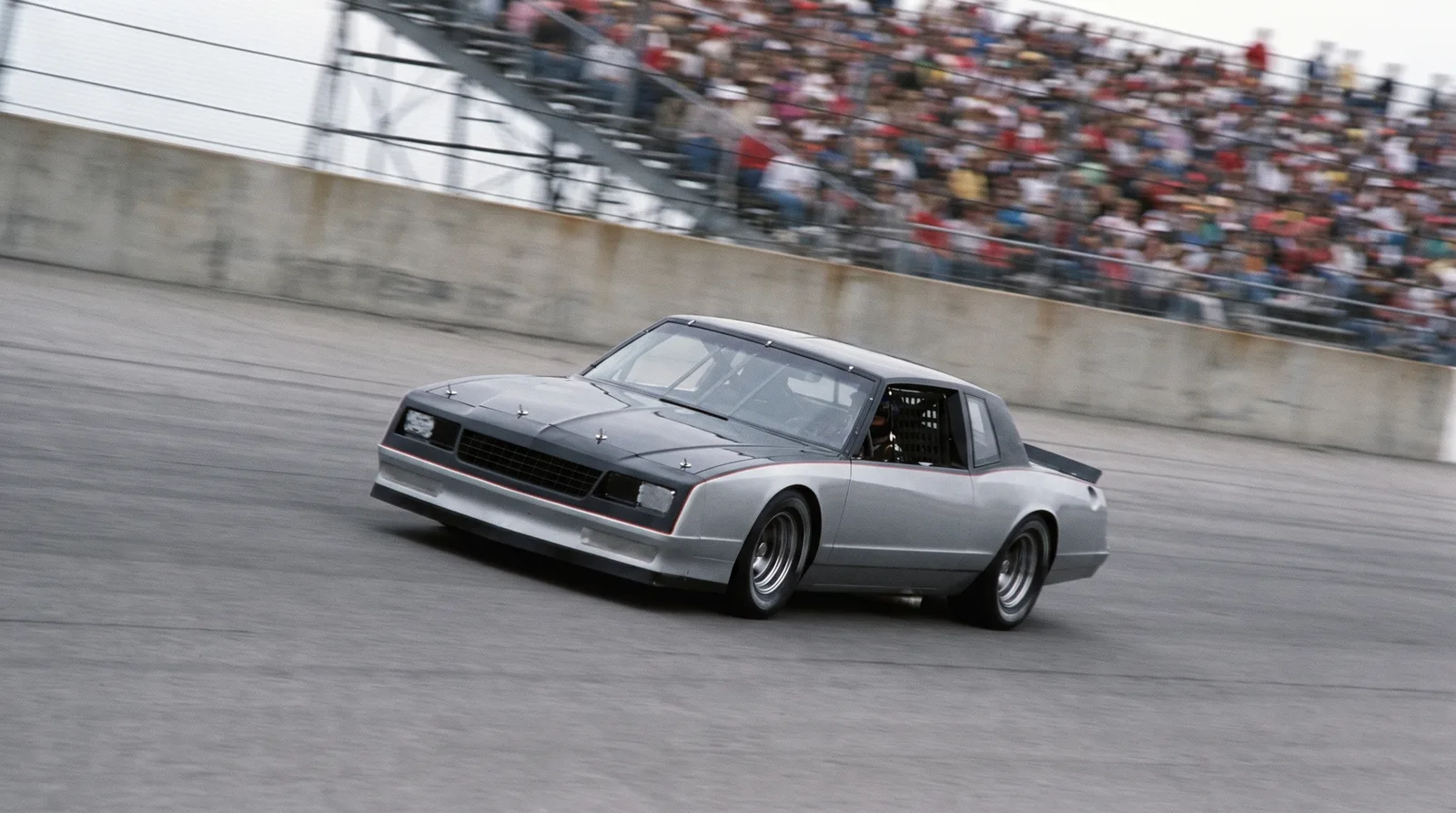
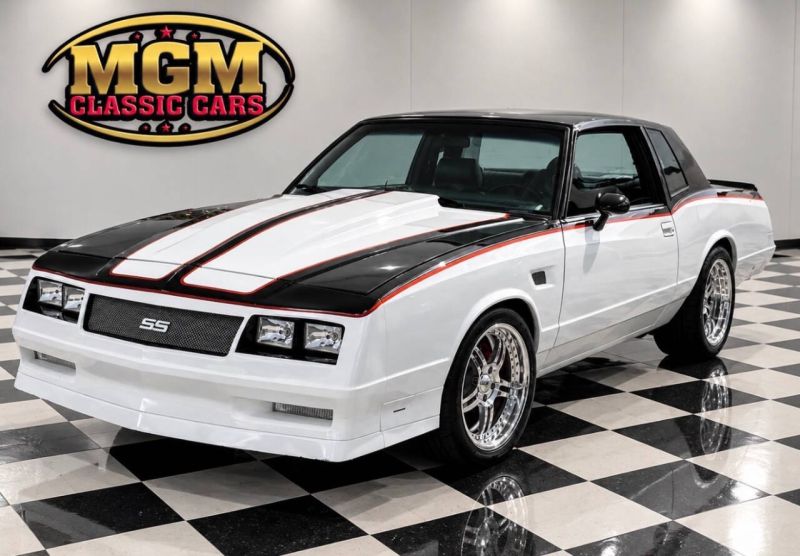
Junior Johnson's team and others running Chevrolet pushed hard for a response, and Chevrolet listened. The result arrived in 1986 as the Monte Carlo Aerocoupe, with a stretched, sloped rear window that mimicked a fastback without touching the doors or the rest of the body structure GM had already tooled for production. It was a compromise, cheaper than a full body redesign, but it worked well enough on the track to matter.
The Aerocoupe answers back
The numbers tell part of the story. Aerocoupes were built in small runs, 200 for the 1986 model year and 6,052 for 1987, largely to satisfy NASCAR's homologation requirement that a certain number of street versions exist for a body style to race. Most buyers who owned one probably had no idea their car existed because of a rules fight with Ford. They just liked the shape.
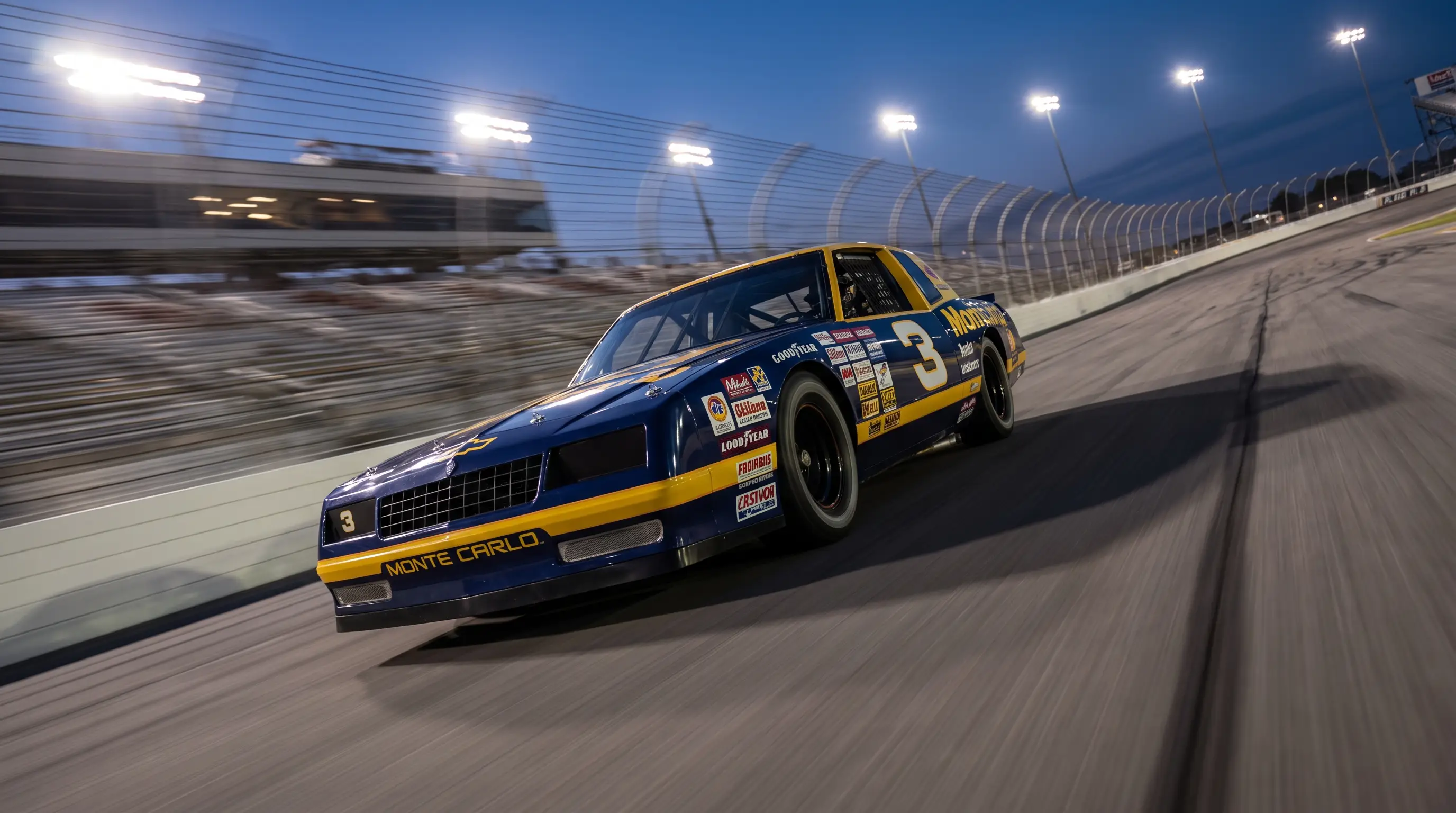
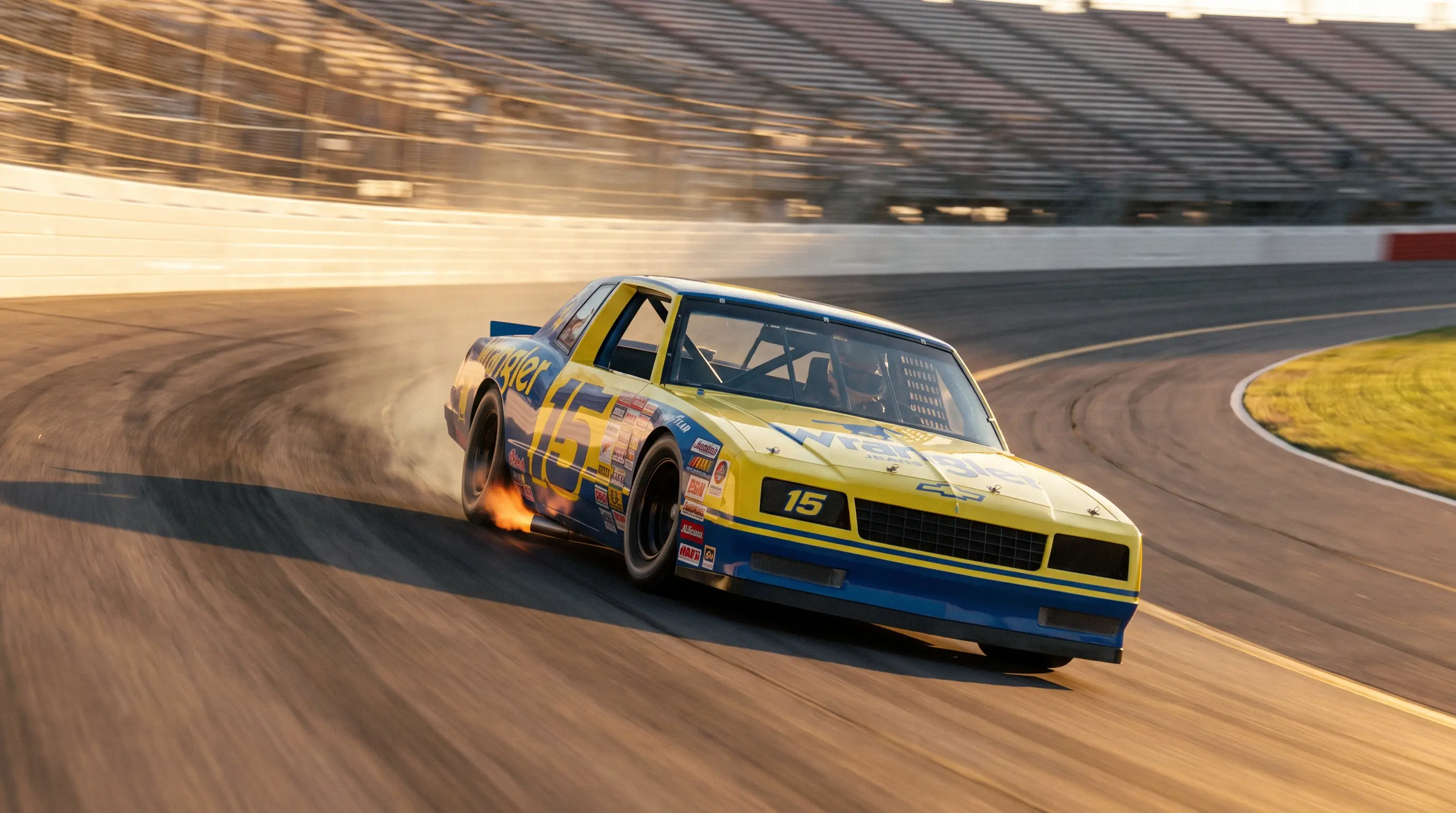
On track, the Aerocoupe closed the gap. Dale Earnhardt's Wrangler and later GM Goodwrench Monte Carlos ran competitively against Bill Elliott's Thunderbirds through the back half of the 1980s, and the racing between the two cars, and the two teams, produced some of the most talked about finishes of the era. Elliott's Thunderbird was blazingly fast in a straight line, fast enough to earn him the nickname Awesome Bill from Dawsonville. Earnhardt's Monte Carlo was not always the fastest car in a straight line, but it was often the best handling car in traffic, and Earnhardt used every inch of that advantage.
Two philosophies, one era
What made the rivalry compelling was that the two cars represented genuinely different approaches. Ford chased pure aerodynamic efficiency and built a car that excelled at Daytona and Talladega, the two fastest tracks on the circuit, where a slippery shape is worth more than almost anything else. Chevrolet answered with a car that split the difference between aero gains and handling balance, and that trade-off showed up at the shorter, more technical tracks where the Monte Carlo held its own even when it gave up a little top speed.
Fans picked sides the way people pick sides in any regional sports rivalry, often for reasons that had nothing to do with engineering. Ford families stayed Ford families. Chevy families stayed Chevy families. But the engineers on both sides were watching the stopwatch, not the badge, and the back and forth pushed both manufacturers to build better cars than either would have built alone.
"You could feel the difference between the two cars from the grandstands before you understood a word of the aerodynamics. The Thunderbird looked like it was already moving standing still. The Monte Carlo looked like it was ready to fight you for the spot. That contrast is why people still argue about this stuff forty years later."
- Patrick Walsh
The teams behind the machines
No rivalry runs on cars alone. Junior Johnson's operation, which fielded Monte Carlos for Darrell Waltrip before shifting support toward other Chevrolet teams, understood the aero fight better than almost anyone in the garage, and Johnson's crew chiefs spent as much time in the wind tunnel as they did in the shop. On the Ford side, the Wood Brothers and later the Elliott family operation built a reputation for pure speed that made their Thunderbirds the cars to beat at Daytona qualifying almost every February.
Richard Childress Racing, running Earnhardt's Monte Carlo through the back half of the 1980s, took a different approach again, favoring a chassis setup that gave up a little top end for stability in traffic, a trade that paid off on the tighter mile and a half tracks that made up most of the schedule. Watching how three different teams solved the same aerodynamic problem in three different ways is part of what makes this era rewarding to study, long after the cars themselves stopped racing.
The rivalry also spilled into the showroom in ways buyers noticed at the time. Chevrolet dealers leaned hard on the Monte Carlo SS and Aerocoupe's NASCAR connection in advertising through the late 1980s, and Ford did the same with Thunderbird Turbo Coupe and later Super Coupe models. Neither manufacturer was shy about reminding customers that the car in their driveway shared a body style, if not an engine, with the one on television every Sunday afternoon.
Why the rivalry still resonates
Today the Monte Carlo Aerocoupe and its Thunderbird rival are both legitimate collector cars in their own right, and the story behind them is a big part of the appeal. A stock Monte Carlo SS from this period is a good looking, reasonably quick American coupe on its own merits, but knowing it exists because Chevrolet needed an answer to Ford's aero package on the superspeedways adds a layer that a plain spec sheet never captures. If you want the full monte carlo nascar history, the Aerocoupe chapter is where this rivalry really lives, and it connects to a related story about why the car's racing pedigree still matters to buyers who never watched a single lap.
These days plenty of enthusiasts want one of these cars specifically because of the Ford and Chevrolet fight that built them. If that is you, you can find Monte Carlos for sale now and see how many genuine SS and Aerocoupe examples have survived. The rivalry ended when NASCAR eventually pushed both manufacturers toward more restrictive body templates in the 1990s, but for a few years in the middle of the 1980s, a Chevrolet coupe and a Ford coupe fought over inches of drag coefficient, and both got better for it.
Sources and notes
Related Reading
#ford thunderbird
#stock car racing
#NASCAR history
#chevrolet monte carlo
#aerocoupe
#dale earnhardt

About the author
Patrick Walsh
Automotive journalist covering classic car shows, events, and the enthusiast community across North America.
Related Listings - Chevrolet Monte Carlo

Comments (1)
R
Rick Fontaine
1 week ago
Gonna disagree here. Watched Elliott put that Thunderbird on the pole at Talladega in '87 at over 212, and nobody in the stands thought the Monte Carlo handled better. Earnhardt was the better driver. Put somebody else in the Wrangler car and see how much that rear glass helps.