
Picture a basement in the late 1970s: a folding table, a long-armed stapler, a stack of freshly printed pages waiting to be folded into a club newsletter. That is where early issues of Mustang Times came together, in the home of Jack E. Yeager, one of the founders of the Mustang Club of America. Any honest account of Mustang Club of America history starts there, with volunteers and paper cuts, long before the speedway infields and the museum galleries.
Car Features
8 min read
The Mustang Club of America, the Big Shows and the Museums
Mustang Club of America history from a 1976 basement newsletter to judged shows, the 50th at Charlotte and the museums where Mustangs rest.
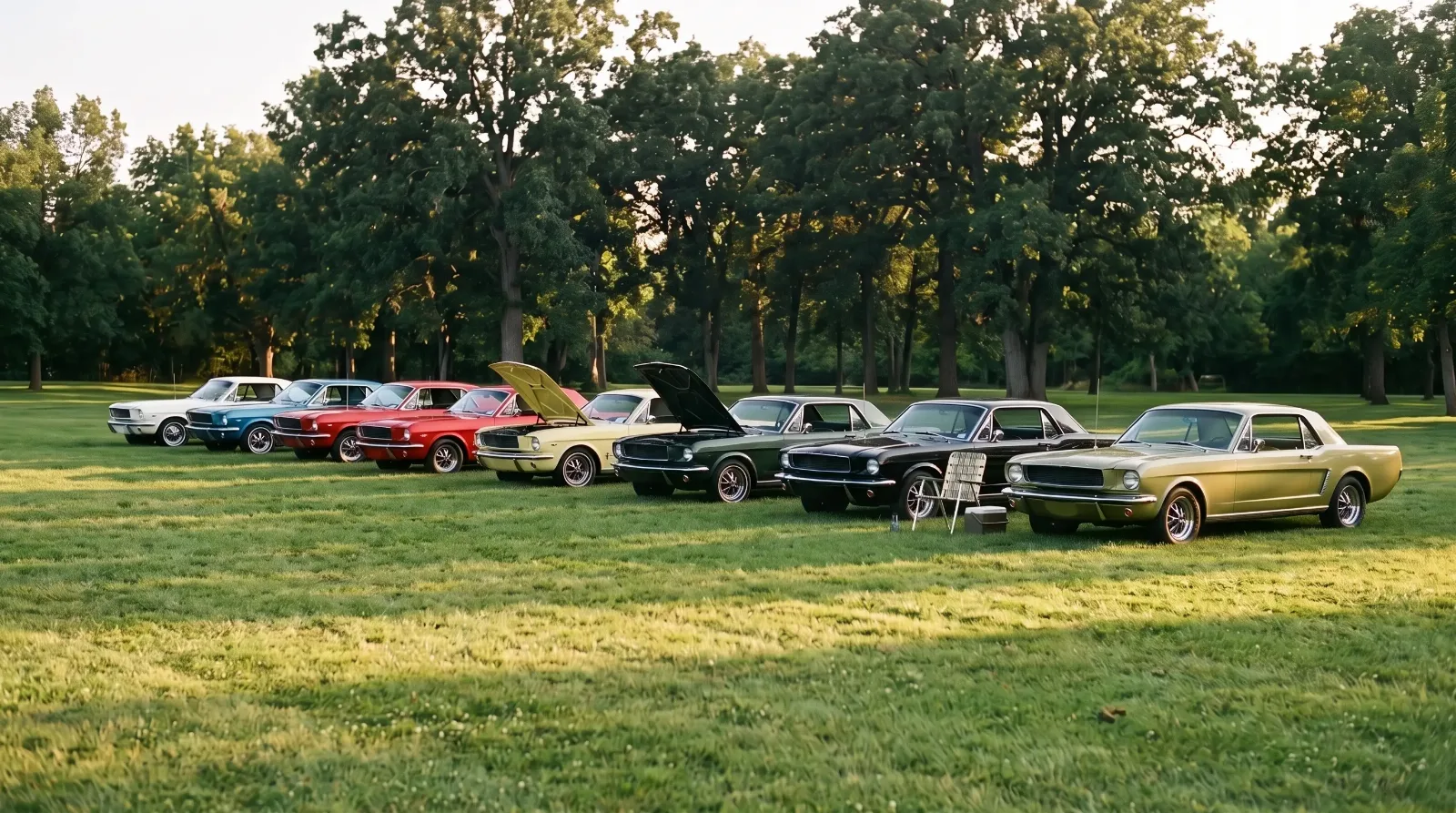
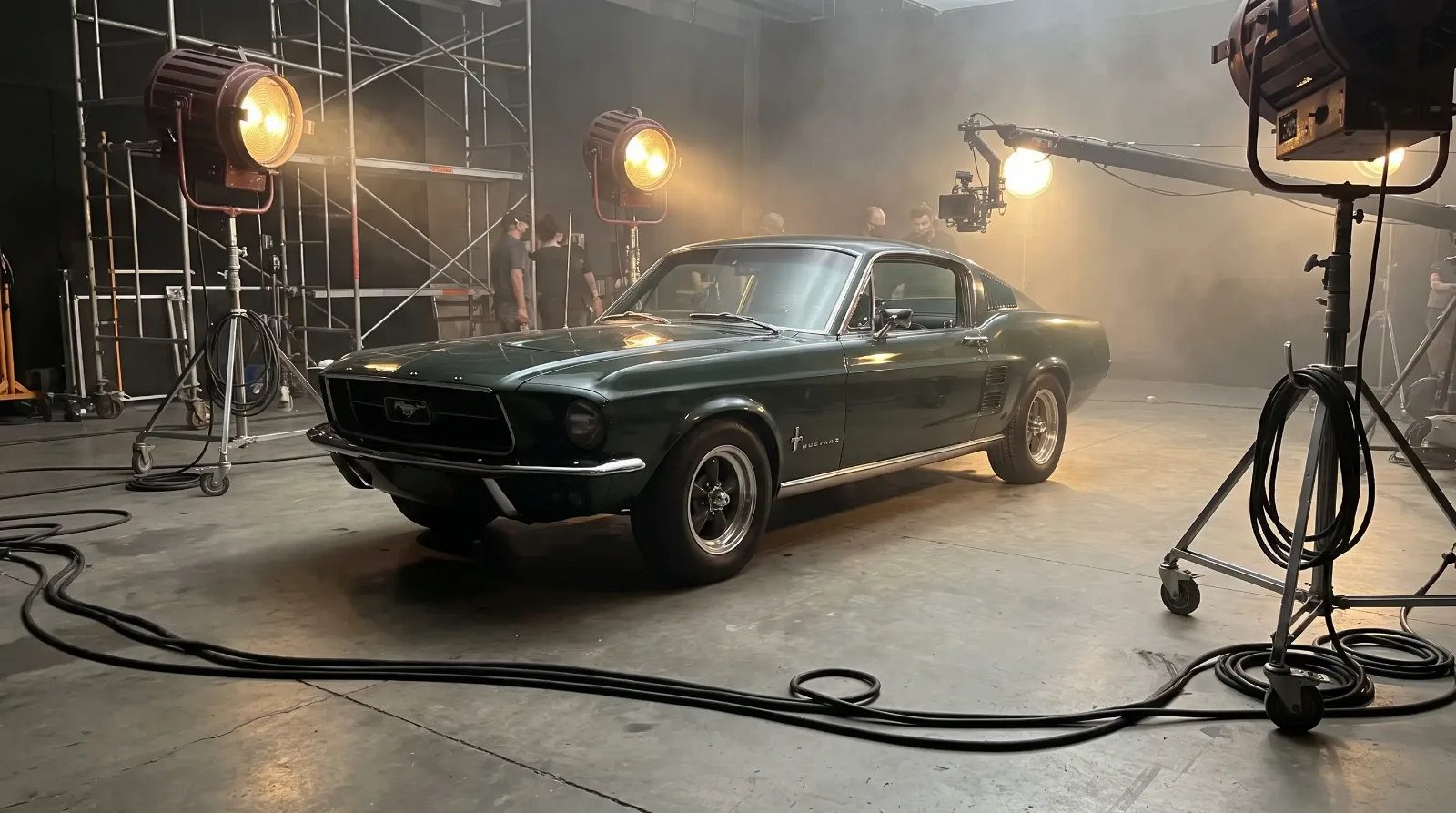
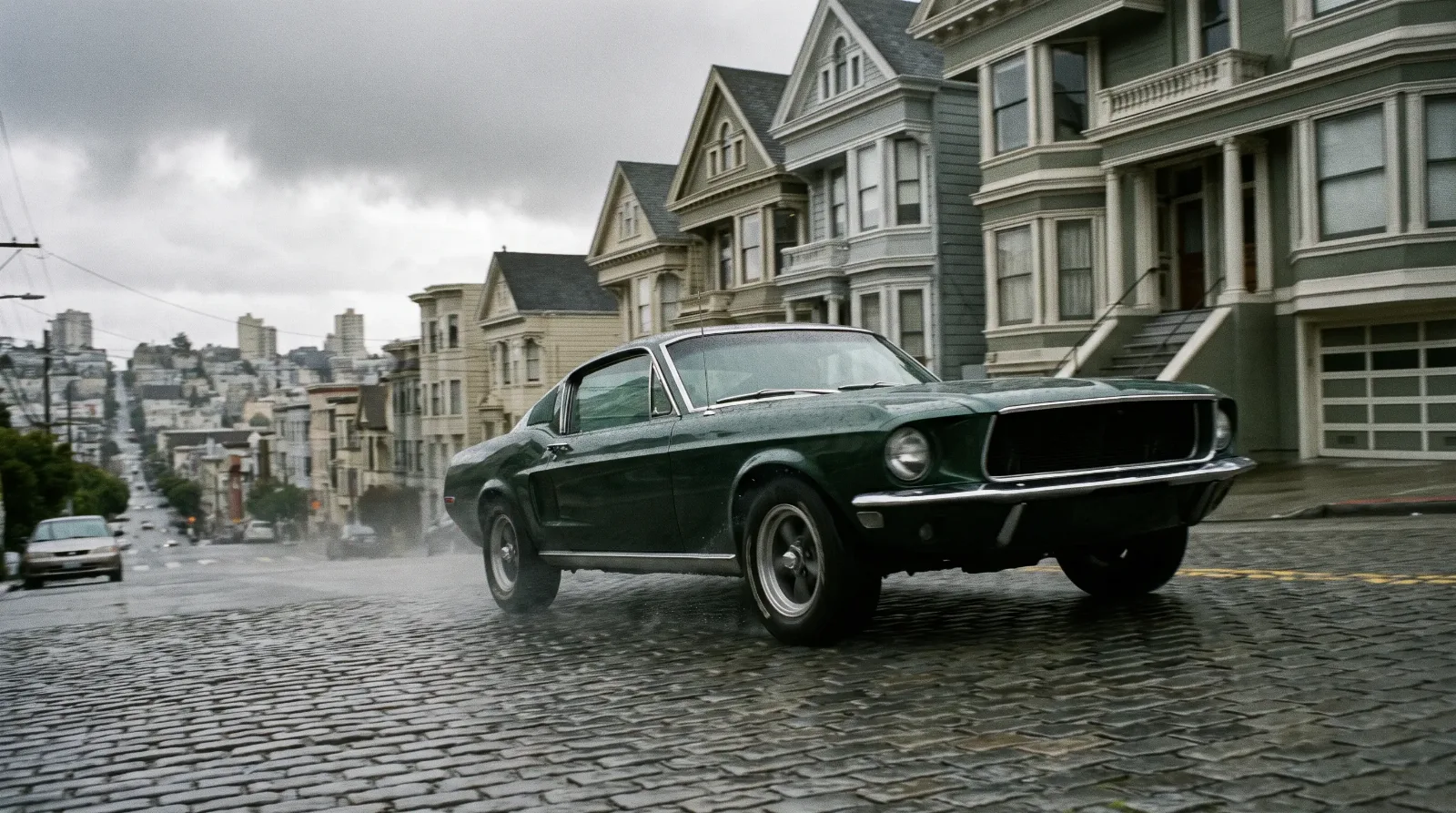
The cars that fill those galleries are the same cars you know from the screen, and the famous Mustangs story covers the films, the stunt doubles and the auction headlines. This piece is about the other half of the Mustang's public life: the people who gathered around it on weekends, kept records, judged each other's work, and eventually built places where the cars could rest.
Mustang Club of America history: by-laws, a newsletter and a judging sheet
The club was founded in 1976 in the Atlanta area. About 30 enthusiasts answered a newspaper ad for a meeting at the Antique Car Museum in Stone Mountain, Georgia, that April, and 13 Mustangs turned up. In 1976 the car in showrooms was a compact Mustang II and the original 1960s cars were still cheap used transportation for most people who owned one. That timing matters. The founders were not protecting a blue-chip investment. They were protecting a car many people were already throwing away. For its first decade the club looked after the 1965 to 1973 cars only, and it opened its doors to every Mustang in the mid-1980s.
Two names run through the early record. Jim Osborn was a founder who went on to hold almost every title the club had to offer, the kind of member who answers the phone at nine at night because someone has a question about a gas cap. Jack Yeager helped write the original by-laws and became the first person in charge of MCA judging. Those two jobs, the rules and the judging, tell you what the club was for. It existed to agree on what a correct Mustang looked like, and then to hold cars against that standard in public.
The newsletter carried the conversation between meets. Before forums and phone cameras, a member in one state learned what a member three states away had discovered about a factory finish or a date code by reading it in print. The issues stapled in Yeager's basement were the first thread in a long tangle of shared knowledge.
"Every club like this starts the same way: someone loves a car more than is strictly reasonable, and then finds out they are not the only one."
Nora Beckett
The judging field: what a show actually is
Walk onto a judged show field early in the morning and the scene is almost domestic. Owners wipe dew off fenders with soft towels. Hoods stand open like mouths at a dentist's office. Someone kneels on a square of cardboard, shining a flashlight up into a wheel well. A judge with a clipboard moves slowly down the row, and conversations go quiet as the clipboard approaches.
That ritual traces straight back to Yeager. As the club's first National Head Judge he helped write the first judging rules, and the Thoroughbred classification he recommended is still in use. A show is not just a parking lot full of nice cars. It is a structured argument about authenticity, conducted one car at a time, with points awarded and points taken away. The owner learns what is wrong. The judge learns what the owner found. The next restoration gets a little more accurate because of both.
The anniversary gatherings
Every five years or so the Mustang throws itself a birthday party, and the club has been in the middle of several of them. Gatherings on this scale are less a car show than a migration: trailers on the interstate, convoys of the same body style rolling in together, hotel parking lots that look like a dealer's back lot in 1966.
Osborn chaired the Mustang 30th Anniversary event in 1994, the year the new SN95 car arrived. Fifteen years later, Ford and the MCA co-hosted the 45th anniversary celebration in 2009. The 50th, in April 2014, was a twin party hosted by the MCA with Ford at Charlotte Motor Speedway and Las Vegas Motor Speedway at the same time. At Charlotte alone more than 4,000 Mustangs registered and the estimated economic impact on the area reached $8.3 million. Imagine the grandstands looking down on a speedway infield filled not with race cars but with a half-century of pony cars, parked in rows by year.
| Year | Milestone | Detail on record |
|---|---|---|
| 1976 | Mustang Club of America founded | Atlanta area; Jim Osborn and Jack E. Yeager among the founders |
| 1994 | Mustang 30th Anniversary event | Chaired by MCA founder Jim Osborn |
| 1995 | First Hall of Fame class | Boddie, Coletti, Shinoda, Trotman |
| 2009 | 45th anniversary celebration | Co-hosted by Ford and the MCA |
| 2014 | 50th anniversary at Charlotte and Las Vegas | Over 4,000 Mustangs registered at Charlotte |
| 2019 | Mustang Owner's Museum opens | April 17, Concord, North Carolina |
A Hall of Fame for the people behind the car
Clubs usually honor cars. The MCA also decided to honor people, and its Hall of Fame reads like a family album of the Mustang's working life. The first class, inducted in 1995, was Will Boddie, John Coletti, Larry Shinoda and Alex Trotman: two engineers and managers who pushed the 1994 car into existence, the designer who styled the Boss 302, and the executive who said yes. In 1996 came Carroll Shelby and Steve Saleen, the two names most closely tied to fast Mustangs built outside Ford's own walls. In 1997 the club inducted Lee Iacocca and Bunkie Knudsen, the men who launched the car and then made it bigger.
Later classes reached into the racing world and the boardroom. Jack Roush went in for 2002. William Clay Ford Jr. was inducted in 1999, and his entry carries a detail that makes him easy to like: his first car was a Mustang.
Where the cars rest: the museums
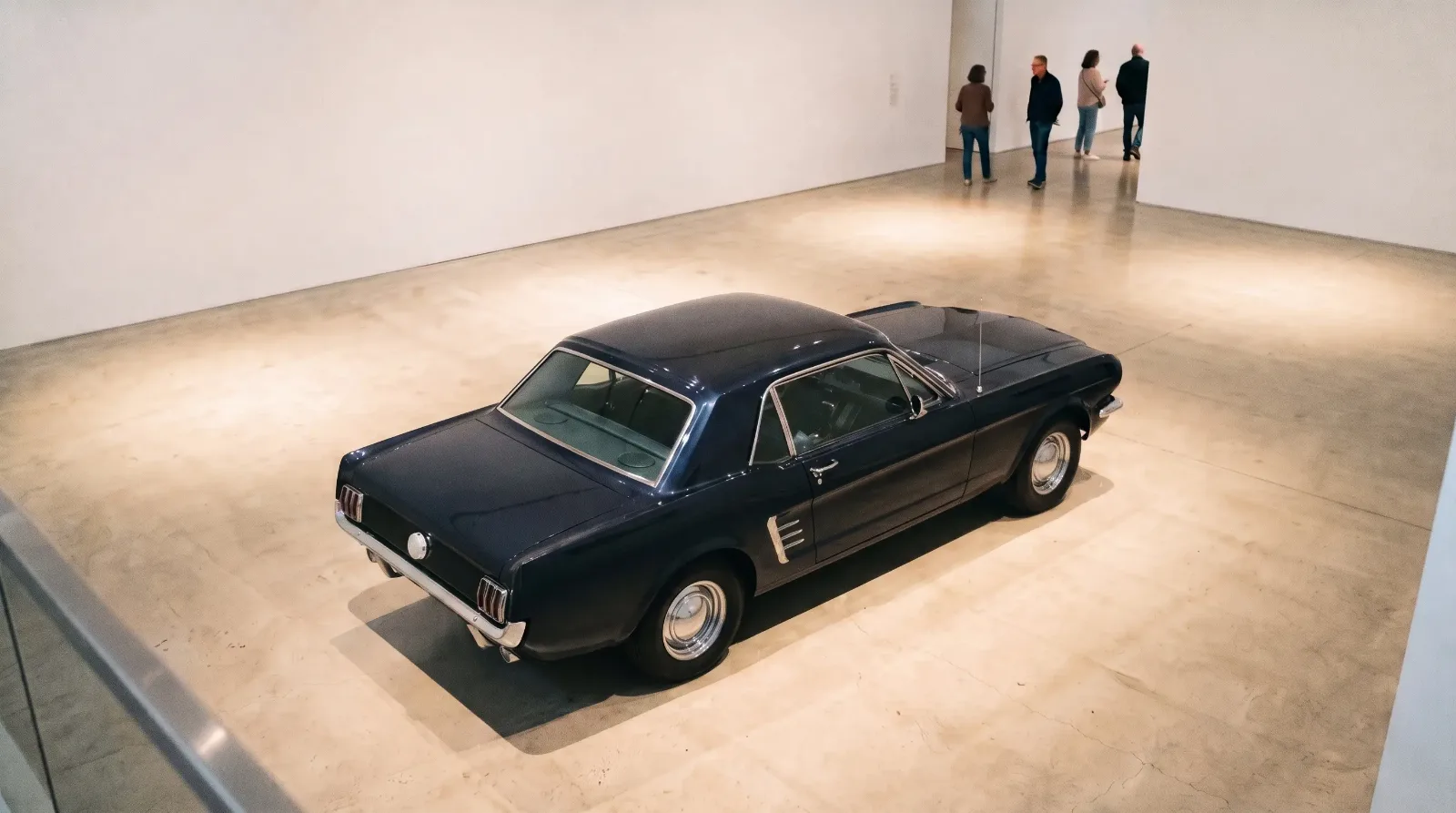
Eventually a car outlives its owners, and the question becomes where it goes. Some of the most important early Mustangs answered that question long ago. The Henry Ford in Dearborn holds Serial Number One, the Wimbledon White convertible that airline pilot Stanley Tucker bought in Newfoundland in April 1964 and later traded back to Ford for the one millionth Mustang. The same institution keeps the 1962 Mustang I concept, a gift from Ford Motor Company in 1974, in its Driving America exhibit. Stand in front of that small open two-seater and you are looking at the name before it belonged to the car everyone remembers.
The newest home is the Mustang Owner's Museum in Concord, North Carolina, announced in May 2016 and opened on April 17, 2019, the car's 55th anniversary. It shows more than 25 Mustangs in rotating exhibits, and the MCA is a listed sponsor. Rotating is the right word for a club-backed museum: a return visit can show a different slice of the hobby than the last one.
Smaller places carry their own weight. Gale Halderman, whose sketch led to the original design, is remembered at the Halderman Barn Museum in Tipp City, Ohio. Drag racer John Force keeps a 1965 Mustang in his museum in Yorba Linda, California. And not every famous car goes behind a rope at all: the Bullitt Mustang spent decades with one family, out of public sight, before it crossed the auction block in January 2020.
That is the quiet thread connecting the basement stapler to the museum gallery. A club keeps the knowledge, a show keeps the standard, and a museum keeps the car. All three depend on someone who cared enough to show up on a Saturday morning with a towel and a flashlight.
Sources and notes
- Mustang Club of America: Mustang Hall of Fame inductees
- Supercars.net: Mustang Club 40th Anniversary at Indy (founding meeting, 1976)
- The Henry Ford: 50 Years of Mustang, a birthday bash fit for an American icon
- The Henry Ford: Stanley Tucker and Ford Mustang Serial Number One
- Mustang Owner's Museum, Concord, North Carolina
- Wikipedia: Ford Mustang (50th anniversary and museum)
Related Reading
Have a
Ford Mustang
for Sale?
Reach thousands of serious classic car collectors across the US.
Sell It Here →
Selling a classic? Here's how: compare the places to sell classic cars
Are You a Classic Car Dealer?
List your full inventory and connect with targeted classic car buyers.
Join as a Dealer →
#Ford Mustang
#Mustang in pop culture
#Mustang Club of America
#Mustang car shows
#Mustang museums
#Mustang Hall of Fame
#Mustang Owner's Museum

About the author
Nora Beckett
Automotive features writer and photographer who tells the human stories behind the cars, from show fields to cross-country road trips.
Related Listings - Ford Mustang

More in Car Features
Comments
Be the first to comment on this article.