
Spend enough Saturdays at club meets and you will hear the story. It starts with "my uncle bought it new from a little dealer out in..." and it ends with a car nobody else on the lawn has ever seen. The trouble with Mustang regional special editions is that the true ones and the tall ones sound exactly alike over a cooler of soft drinks. Ford's district sales offices invented a string of local promotions in the late 1960s and kept poor track of how many they sold. What follows is the short list the paperwork supports, with a couple of misfiled years put right.
Car Features
9 min read
Twister, Cardinal, Rainbow of Colors: The Regional Mustang Specials
Ski Country, Cardinal, Rainbow of Colors, Twister and Sidewinder: the district-sold Mustangs, the years put right, and how to prove one.
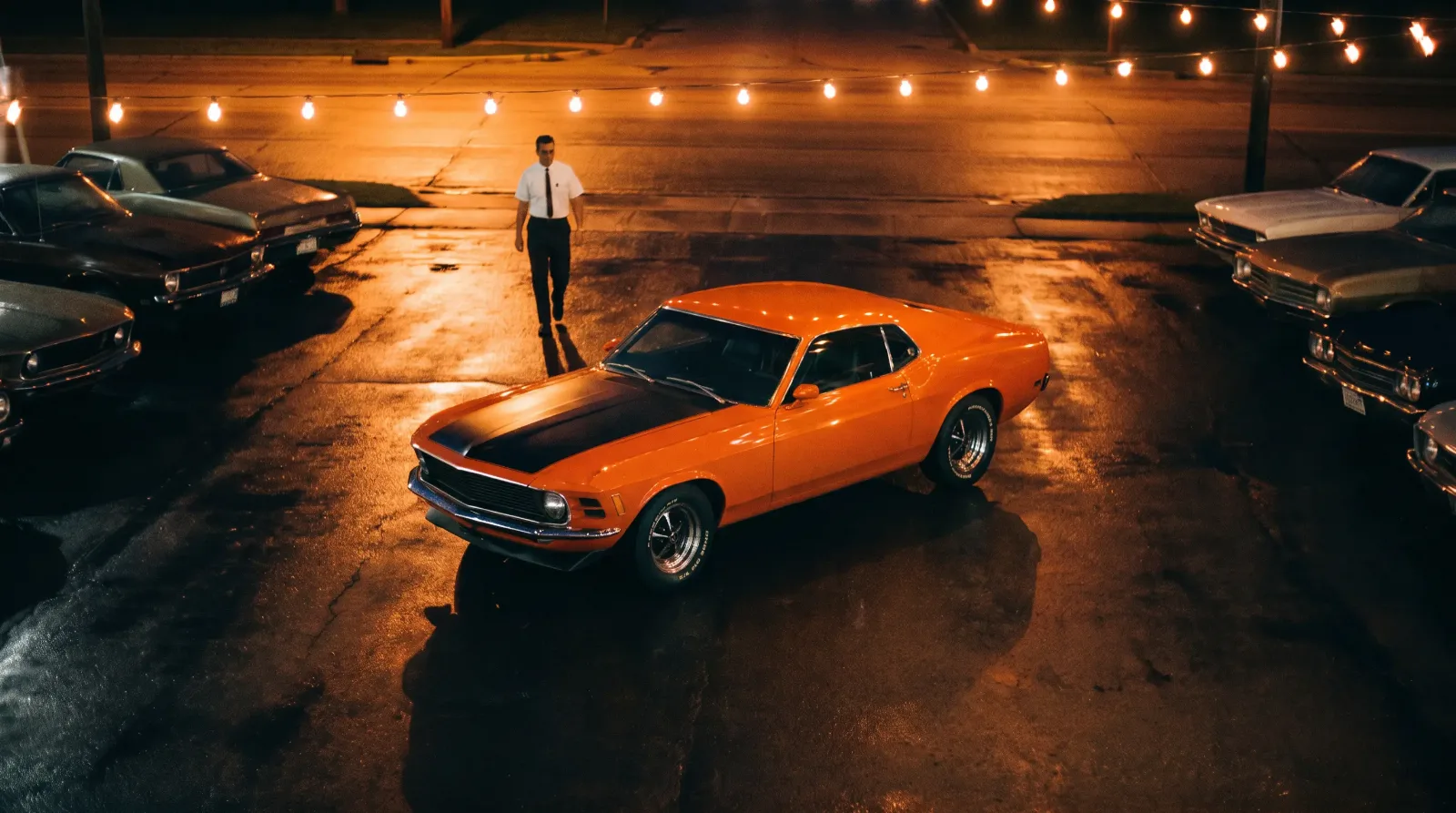
Every one of them belongs to the first Mustang generation, and almost all were ordinary Mustangs underneath. A regional special changed the paint, the trim and the name in the newspaper ad. It rarely touched the drivetrain, and the one time it did, the result became the most famous of the bunch.
How Mustang regional special editions came about
In the 1960s Ford sold its cars through district sales offices, and each district carried a numbered code. Denver was 51. Richmond, Virginia, was 25. Kansas City was 53. Each had a sales manager with a quota and, now and then, ideas of his own.
The district code went onto the data plate of every car ordered for that district, and that small number is the reason any of these promotions can be traced today. A manager could order a batch of cars in a set color, add a decal or a stripe, buy space in the local paper and give the whole thing a local name. The California Special and Denver's High Country Special have their own histories. The smaller programs are where the arguments start.
1967: ski racks, snow tires and four pastel colors
Denver kept its sales office busy with ideas. Alongside its High Country cars, it ran a winter promotion for 1967 called the Ski Country Special, advertised in the Rocky Mountain News between December 8 and December 15, 1966. A Ski Country car came with a ski rack, a limited-slip axle and two snow tires, which tells you exactly who Ford had in mind. The colors were named for Colorado ski towns: Aspen Red, Vail Blue, Winter Park Turquoise, Loveland Green and Breckenridge Yellow.
Nobody has turned up a production count for the Ski Country cars, so when an owner says his is one of so many, ask politely where the number came from.
The same district produced something smaller and stranger. One Denver dealership, William Goodro Inc., sold 48 Mustangs in four pastel shades, 12 each in Evening Orchid, Bermuda Sand, Autumn Smoke and Limelite Green. The idea is credited to Ann Goodro, and the cars have since picked up the name "She Country" Special. Forty-eight cars, one store. That is about as regional as a regional special gets.
1968: the Cardinal Special and a Rainbow of Colors
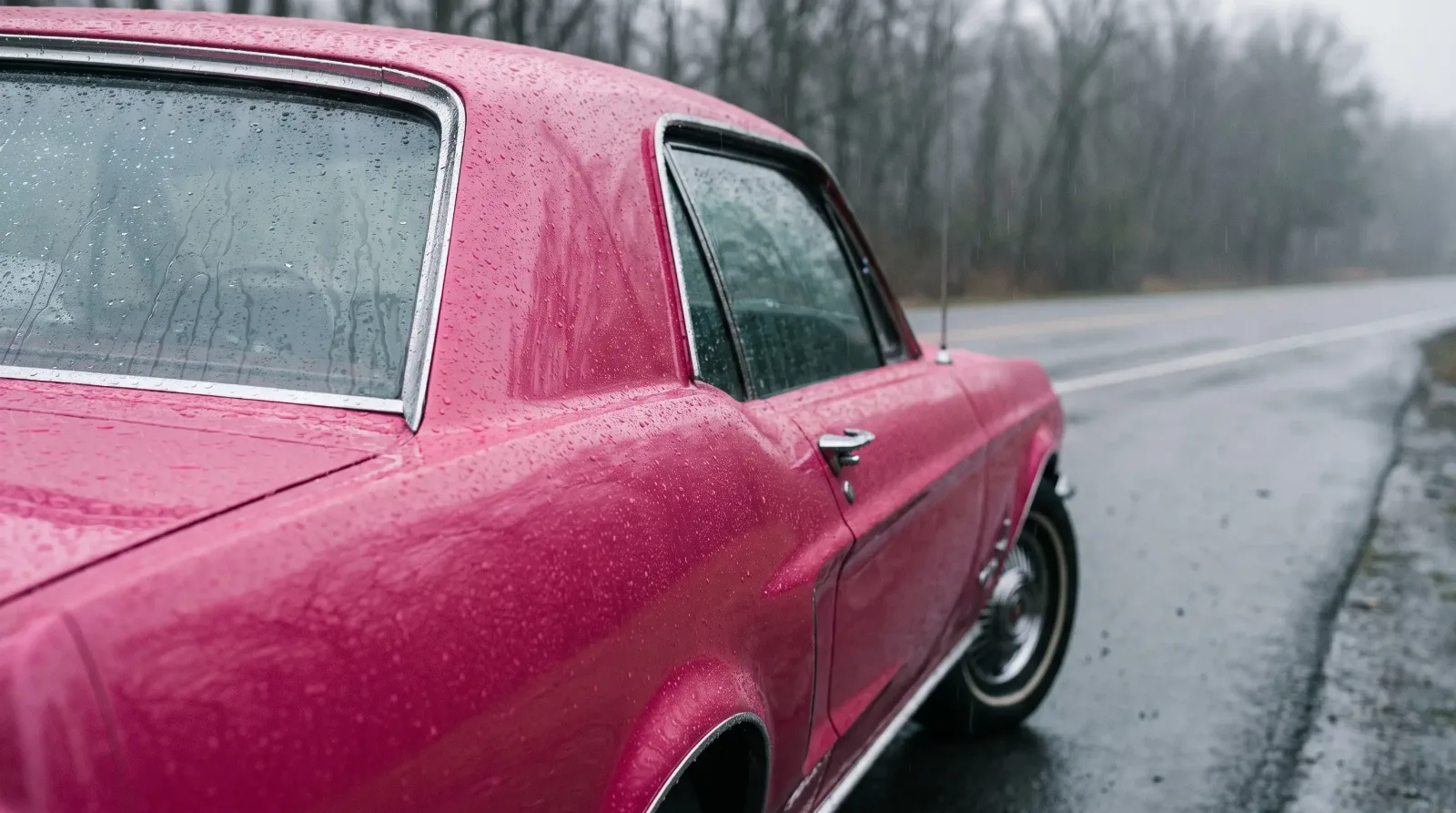
The Cardinal Special is often called a 1969 car. It was a 1968. Officially it was the Virginia Ford Dealers Special, run out of the Richmond district and sold in Virginia and North Carolina. Every one was a hardtop, painted Candy Apple Red or Wimbledon White, with a cardinal-head medallion on the C-pillar. Underneath it carried the Sprint A equipment Ford was selling nationally that spring, which meant the C-stripe, wheel-lip moldings, full wheel covers and a pop-open gas cap. The ads featured the 200 six, though cars with the 289 two-barrel V8 have been reported. No production count has surfaced.
The other 1968 program was about paint rather than badges, which makes it harder still to pin down. Ford's western districts ran a "Rainbow of Colors" promotion. Enthusiast research built from period ads places it in Los Angeles, San Jose, Honolulu and Salt Lake City between February and June 1968. Buyers could special-order a Mustang in a color outside the regular chart, and the cars were built at San Jose, so their VINs carry the 8R prefix. Ford's ads named 10 special colors, while a PPG Ditzler paint bulletin lists 13 codes. Both appear to be right: a paint bulletin and a dealer ad were not counting the same thing.
One of those colors had a second life. Passionate Pink is listed as Ford's Color of the Month for February 1968, and enthusiast researchers tie the same paint code, WT9036, to pink Rainbow cars built at San Jose. Ford's own paperwork for either program has yet to surface. You will also see the program dated to 1966, but the evidence points only to 1968.
1970: the Twister Special and the Sidewinder
The Twister Special has the best story of the lot. It began with a pace-car design Ford drew up for American Raceways Inc., a racing outfit that went bankrupt before its cars were delivered. Ford's Kansas City district, which covered Kansas, Missouri and the northwest corner of Arkansas, reused the design for a promotion of its own. You will read that the pace cars themselves became Twisters. MustangSpecs, which has dug deepest, says they did not: the Twisters were a separate batch.
There were 96 of them, every one a 1970 Mach 1, the SportsRoof model that had arrived with the 1969 restyle, and every one painted Grabber Orange. A tornado decal on the rear fender read "Twister Special." They were built at Dearborn in early to mid October 1969, with VINs in the 118,000 range, and striped in the lot at the Kansas City plant in Claycomo.
The plan called for all 96 to get the 428 Cobra Jet. Ford ran short of 428s, so the run split down the middle: 48 cars with the 428 Cobra Jet and the Drag Pack, and 48 with the 351 Cleveland four-barrel, rated at 300 hp. Whether you call the big-block cars Super Cobra Jets or R-code Cobra Jets, it is the same engine: a Cobra Jet ordered with the Drag Pack got the Super Cobra Jet hardware. About half had the C6 automatic and 48 had a four-speed. The only comfort options were an AM radio and tinted glass.
The cars made their public debut at a "Total Performance Day" held by the Kansas City district sales office on Friday, November 7, 1969. Ford brought 90 Torino Cobra Twisters to the same event, so yes, the Twister Torino is real too.
"I have watched a dozen grown men argue about a Twister for the better part of an afternoon. The argument ended the way they all do. Somebody walked over, opened the door and read the district code off the data plate. Stripes can be bought. That little number is a lot harder to fake."
Wayne Coburn
The Omaha district ran its own 1970 program, the Sidewinder Special. These cars were built at Dearborn and sold in Iowa and Nebraska, with their stripes riding in the trunk for the dealer to apply. That matters to anyone trying to prove one today, because a dealer-installed stripe leaves no factory trace. Every Sidewinder was a SportsRoof with the 351 four-barrel. The figure usually quoted is about 40 cars, which enthusiasts treat as an estimate rather than a count.
Proving a regional special today
Every regional special shares one weakness: what made it special was usually paint or a decal, and a plain Mustang can be given either in a weekend. Documents separate the real car from the tribute, and the district code is where they start.
| Edition | Model year | Sold through | What set it apart | Built |
|---|---|---|---|---|
| Ski Country Special | 1967 | Denver district (51) | Ski-town colors, ski rack, limited-slip axle, two snow tires | No count found |
| Goodro pastel cars | 1967 | One Denver dealer | Four pastel colors, 12 cars each | 48 |
| Lone Star Limited | 1967 | Dallas district | Bluebonnet blue hardtop, Texas-shaped medallions | About 175 |
| Cardinal Special | 1968 | Richmond district (25) | Red or white hardtop, cardinal medallion, Sprint A trim | No count found |
| Rainbow of Colors | 1968 | Western districts | Special-order colors, San Jose built | No count found |
| California Special (GT/CS) | 1968 | California districts (71 and 72) | Shelby-style decklid and side scoops | 4,118, including 251 High Country Specials |
| Limited Edition 600 | 1969 | Philadelphia district (16) | Flower Power Red or Groovy Green, hood scoop, stripes | 503 or 508, short of 600 |
| Twister Special | 1970 | Kansas City district (53) | Grabber Orange Mach 1, tornado decal | 96 |
| Sidewinder Special | 1970 | Omaha district | Dealer-applied stripes, 351 four-barrel SportsRoof | About 40 (estimate) |
A Twister should show the Kansas City district, a Mach 1 body, a Dearborn VIN in the 118,000 range and one of the two correct engines. A Cardinal should be a Richmond-district hardtop in red or white. A Rainbow car should be San Jose-built with a paint code that matches one of the special colors. None of those details proves a car on its own. Together, backed by a dealer invoice or an original buyer's order, they make a case that holds up.
Two names that get dismissed as tall tales turn out to have paper behind them. The Lone Star Limited, also called the Bluebonnet Special, was a 1967 hardtop sold through the Dallas district in a special-order blue picked to match the Texas state flower, with Texas-shaped medallions on the fenders. The usual count is 175, though one source says 50. The Limited Edition 600 was a spring 1969 promotion from the Philadelphia district: hardtops and SportsRoofs in Flower Power Red or Groovy Green, with a hood scoop, stripes and their own fender emblems. Ford wanted 600 and came up short, at 503 or 508 depending on whose count you trust. Both carry their district code on the door data plate, which is where any check should begin.
The best-documented regional Mustang is the California Special, and it gets the longer story in its own piece. The rest are murkier, which is why the data plate gets read before anybody finishes telling the story.
Sources and notes
Related Reading
Have a
Ford Mustang
for Sale?
Reach thousands of serious classic car collectors across the US.
Sell It Here →
Selling a classic? Here's how: compare the places to sell classic cars
Are You a Classic Car Dealer?
List your full inventory and connect with targeted classic car buyers.
Join as a Dealer →
#Ford Mustang
#1968 Mustang
#regional special editions
#Twister Special
#Cardinal Special
#Ski Country Special
#1970 Mach 1

About the author
Wayne Coburn
Longtime Corvette owner, judge and club figure who knows the cars, the records and the people behind them.
Related Listings - Ford Mustang
Comments
Be the first to comment on this article.