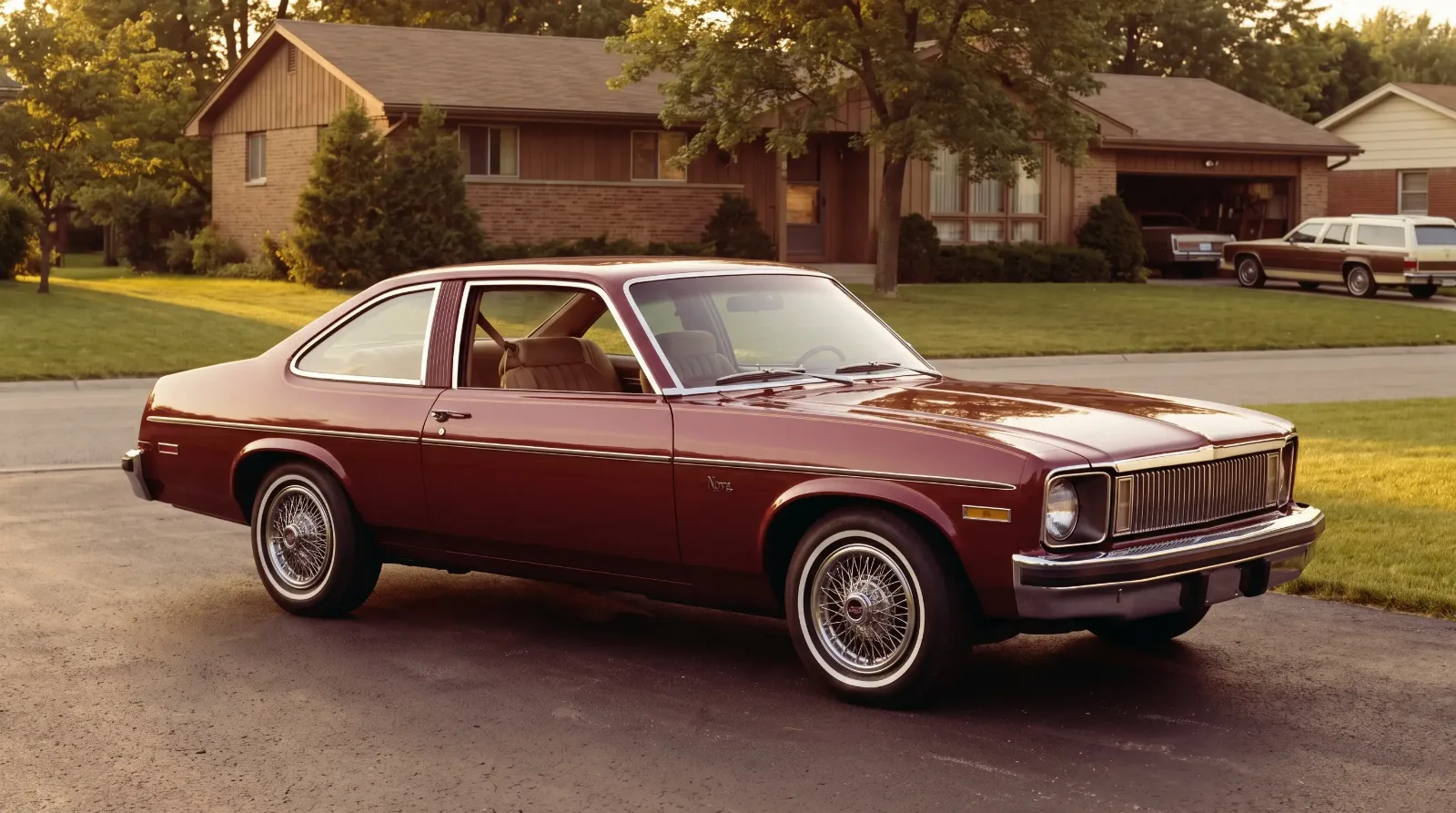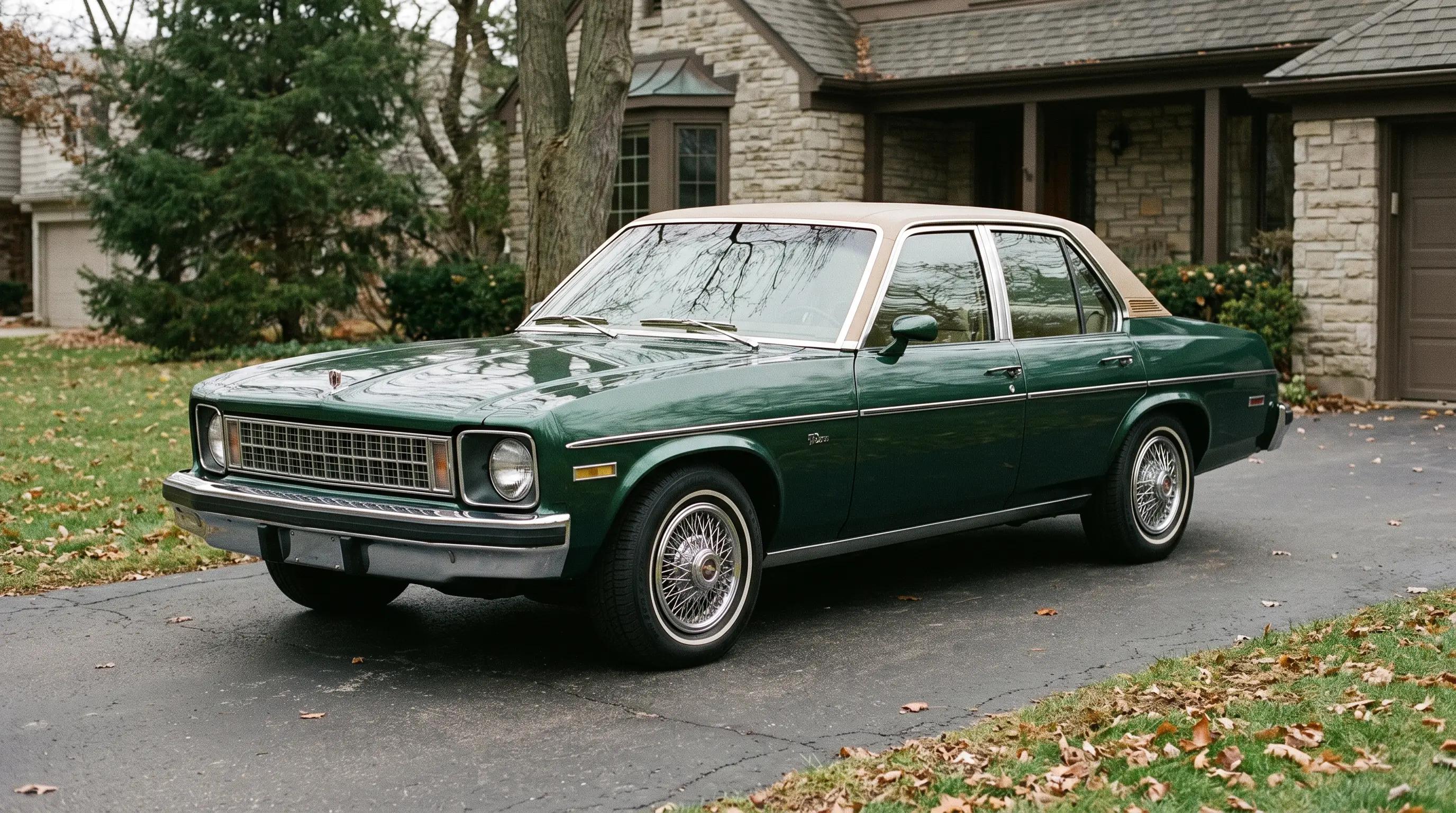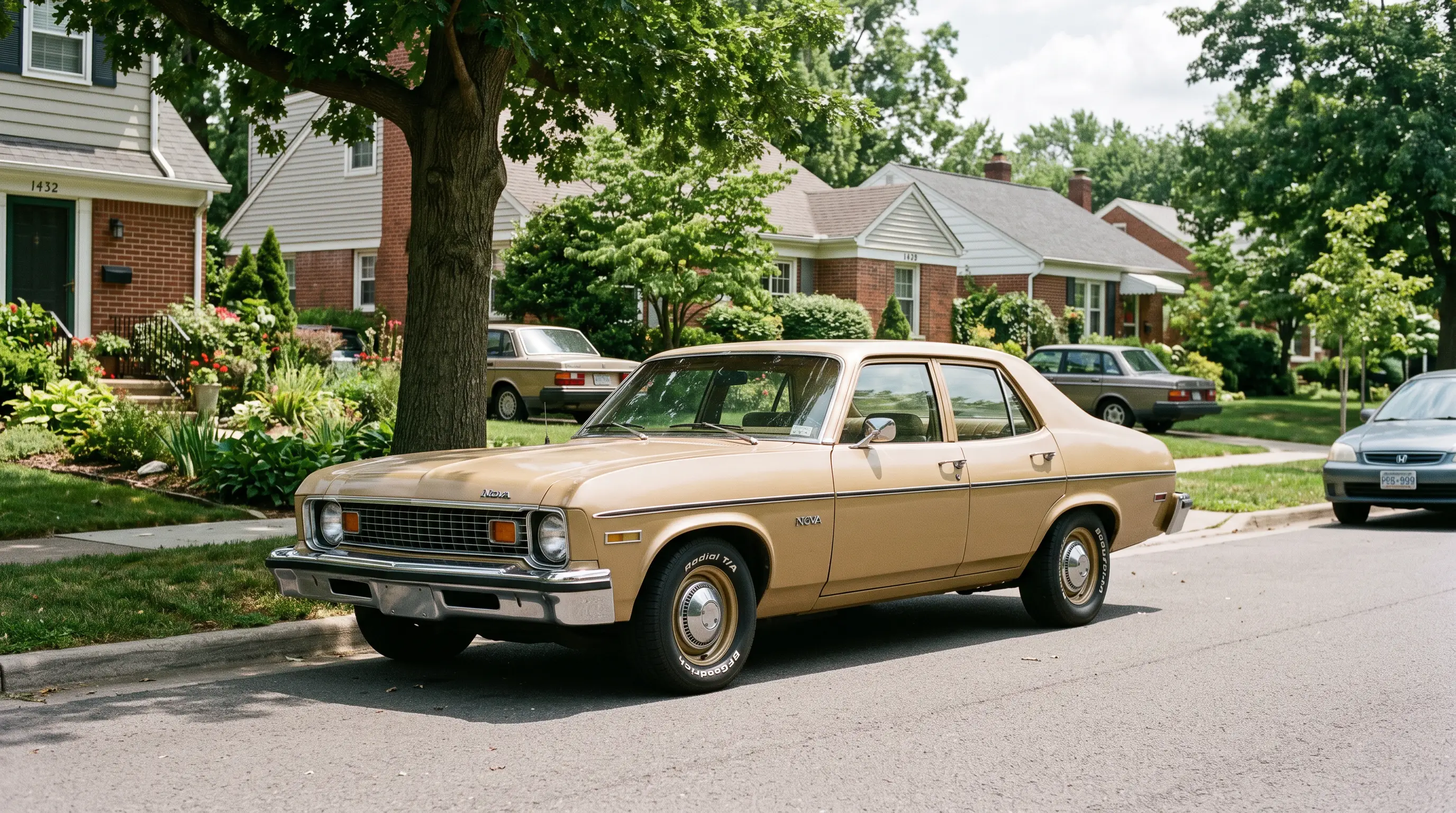
There's a guy at every Nova meet who won't talk about the 1975 Nova without somebody rolling their eyes, and I've never understood why. He drove one home from the dealership the winter it came out, kept it through three kids and two moves, and he still shows up every year ready to argue its case against the muscle-era cars everybody else brought. He usually loses that argument on horsepower. He usually wins it on the facts, once the tank sticker and the build records come out, because the 1975 chevy nova was a much bigger deal to Chevrolet than the enthusiast crowd tends to give it credit for.
A new car wearing a familiar name
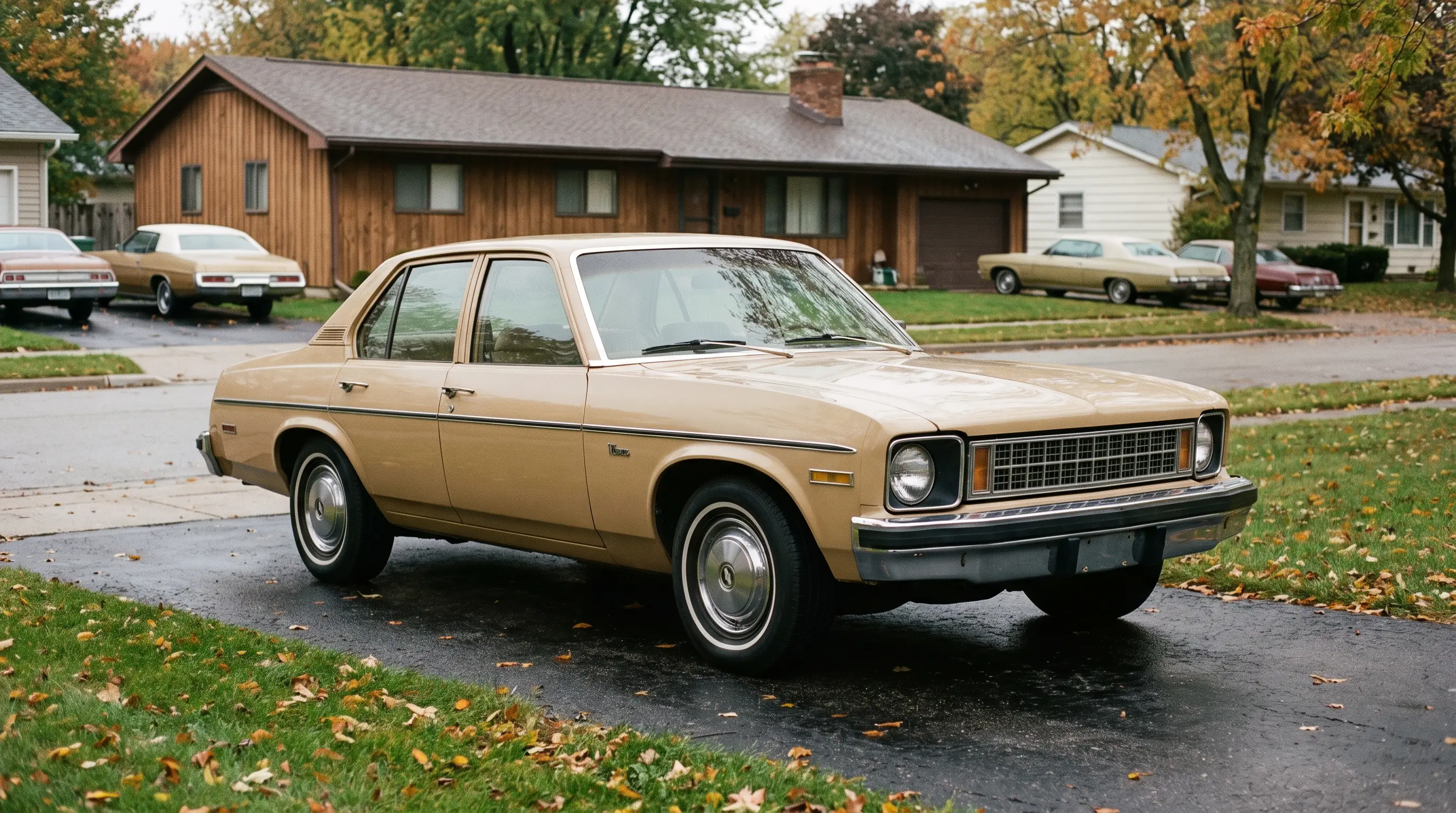
For 1975, Chevrolet gave the Nova its first real sheet metal update since the 1968 redesign, even though the underlying platform carried forward. New front and rear styling arrived, along with a quad-headlight treatment on some trims that gave the car a noticeably different face than the 1974 model it replaced. Chevrolet also introduced the Nova LN as a plusher trim level, aimed squarely at buyers who wanted a smaller, more efficient car with a bit more comfort than the base model offered, a clear signal of where the market was heading after the fuel crisis of the early 1970s reset what American buyers wanted from a compact.
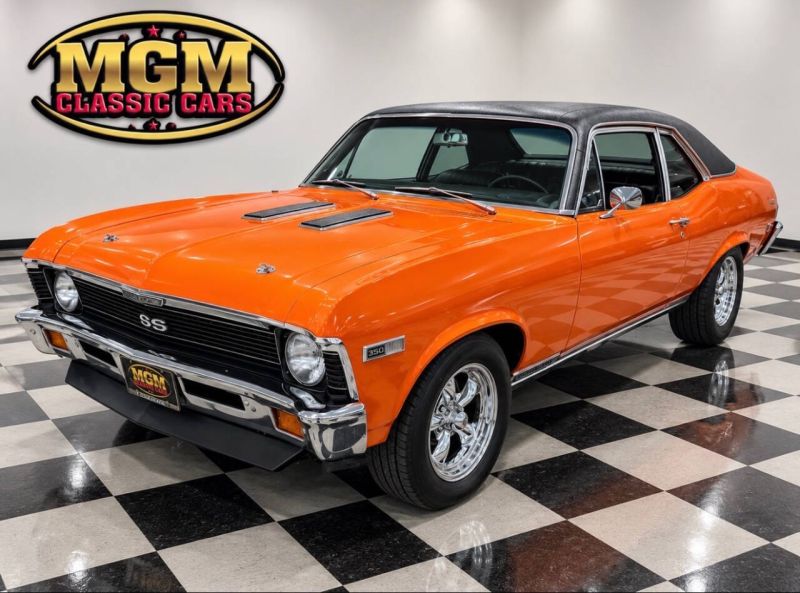
The SS package did carry over, technically. Chevrolet kept the badge alive through the 1976 model year as an appearance and handling package built around a black grille, Rally wheels, and heavy-duty suspension, rather than any dedicated performance engine, before finally dropping it for 1977 in favor of a Rally trim. By 1975 the Nova's positioning had already shifted decisively toward economy and everyday usability rather than performance, and the SS buyers could still order traded almost entirely on looks and handling rather than horsepower. That's not a knock on the car. It's just a different assignment than the one the 1968-74 generation had been built for.
The regulatory story behind the redesign
1975 was also the year catalytic converters became standard equipment across most of the domestic industry, the Nova included, which meant the car needed to run on unleaded fuel for the first time. That single change reshaped a lot of what buyers experienced day to day: different fuel filler restrictions to prevent leaded gas from being pumped into the tank, revised engine tuning to work with the converter, and an overall character that leaned further into smoothness and reliability rather than outright output. The 1975 lineup ran from a 105 net horsepower 250 cubic inch inline six, up through a one-year-only 262 cubic inch V8 rated around 110 horsepower, to a 350 four-barrel making roughly 155 net horsepower at the top of the range. Buyers coming out of a 1973 or 1974 Nova into a new 1975 model noticed the difference immediately, the same way owners had noticed the compression cuts a few years earlier.
None of this happened in isolation. Every domestic automaker was working through the same regulatory calendar at the same time, and the Nova's 1975 changes track closely with what Ford, Chrysler, and American Motors were doing with their own compact and mid-size cars that year. The Nova wasn't singled out. It was simply one car moving through an industry-wide transition.
What the guy at the meet is actually right about
Here's where his argument holds up. A well-kept 1975 Nova, especially a documented low-mileage example, is a genuinely rare survivor today. Everybody kept the SS396 cars. Nobody kept the base LN sedan their aunt drove to church for a decade, because nobody thought it was worth keeping. That's exactly why so few clean examples exist now, and why the ones that do turn up tend to draw more attention from serious collectors than their modest original sticker price would suggest. Rarity through neglect is still rarity, and the market has started to notice.
He's also right that the story of this generation matters to understanding the whole Nova nameplate. You can't tell the complete story of the car without explaining why Chevrolet moved away from performance in 1975 and what that decision meant for the buyers who came after the muscle era crowd had moved on to other cars entirely.
| What changed for 1975 | Detail |
|---|---|
| Sheet metal | First major styling update since the 1968 redesign |
| Trim lineup | Nova LN introduced as a plusher, comfort-focused option |
| Performance package | SS badge continued as an appearance/handling package through 1976, then dropped for 1977 |
| Emissions hardware | Catalytic converter standard, unleaded fuel required |
If you want the fuller arc of what came after this redesign, the late Nova story picks up right where this one leaves off. There's also a companion piece worth reading if you're curious how these later cars are judged and preserved today. And for the whole nameplate from the first Chevy II through the final year, the complete Nova saga is the place to see how the 1975 redesign fits into the bigger picture.
"Everybody at the club had a theory about which Nova mattered, and it was always the muscle cars getting the attention until somebody pulled out a documented 1975 LN with fourteen thousand original miles on it. Nobody at the table had ever seen one that clean, and the bench racing stopped pretty quick after that."
— Wayne Coburn
A quieter chapter that still counts
The 1975 chevy nova doesn't get invited to the same conversations as its big-block predecessors, and I understand why. It wasn't built to win those conversations. It was built for a country that had just lived through a fuel crisis and wanted something dependable, efficient, and reasonably comfortable instead of something quick. Judged against that assignment rather than the one its ancestors carried, it did its job well, and the surviving examples deserve more credit from the hobby than they usually get. If this era of the Nova has you curious, you can find classic Chevy Novas for sale spanning both the muscle years and this later, quieter chapter, and comparing the two side by side tells you more about the car's whole story than either generation does on its own.