Somebody always asks it at the swap meet table, usually while running a hand along a brushed aluminum dash applique: "What actually made this one a Concours?" It is a fair question, because the badge on the fender does not tell you much by itself. The chevy nova concours package arrived for 1976 as the car's new top trim, replacing the short-lived Nova LN, and by the time it left just two seasons later, it had quietly become one of the more argued-over details in Nova club circles. Not because it was rare. Because nobody at the meet ever agrees on exactly what came standard which year, and the only way to settle it is to go pull the original window sticker.
A trim level born out of a shuffle
For 1975, Chevrolet had introduced the Nova LN, short for Luxury Nova, as a new top-shelf trim dressed up to compete with the Ford Granada and the badge-conscious buyers Buick and Oldsmobile were courting on other GM platforms. It carried plusher seats, body-color wheel covers, nicer interior materials, and special badging for roughly $700 over a standard Nova. For 1976, Chevrolet rebranded that same top trim as the Concours, and the name carried real intent. It borrowed a word associated with polish and presentation, and it was meant to make the Nova feel like a car somebody chose rather than settled for.
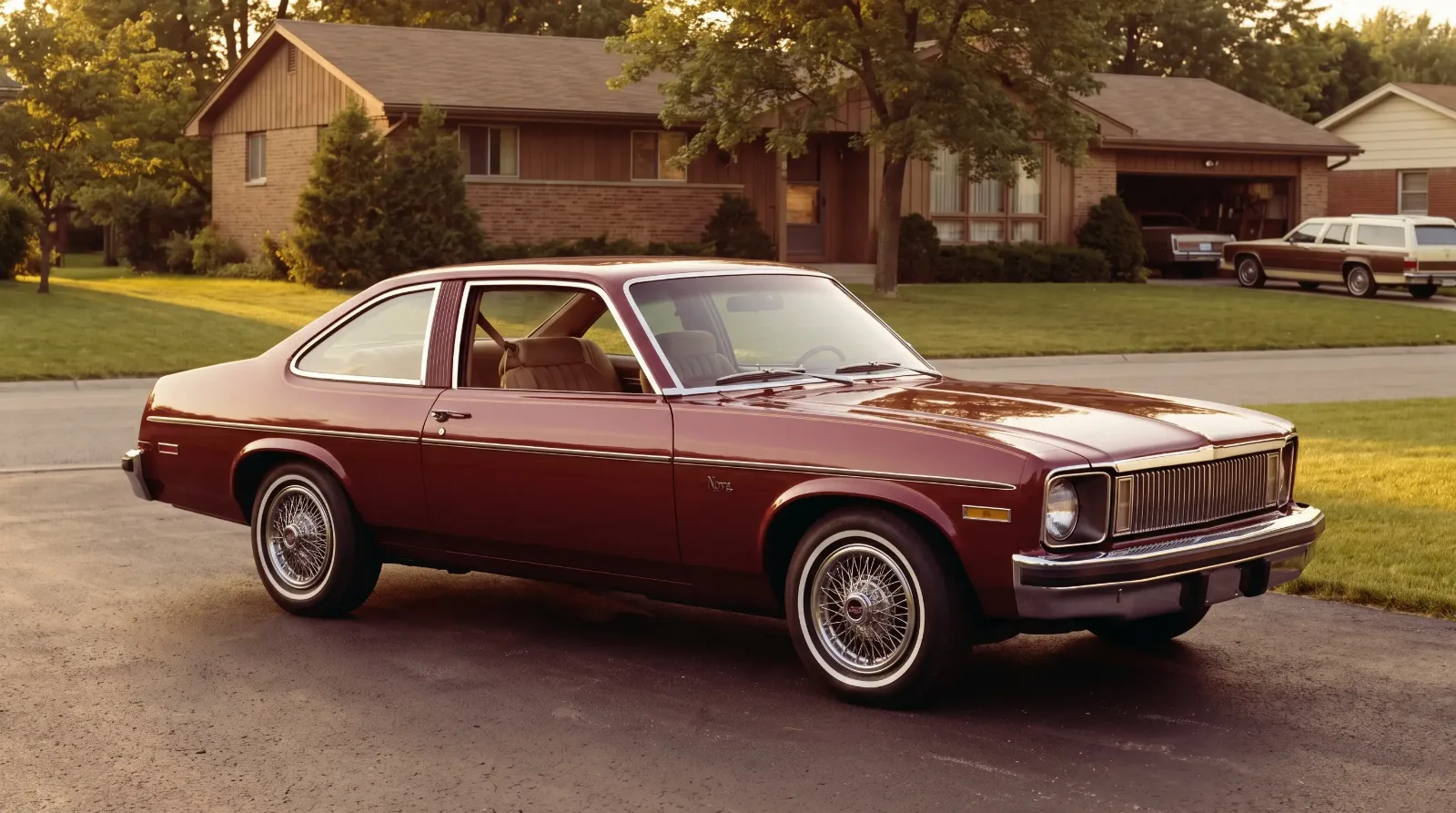
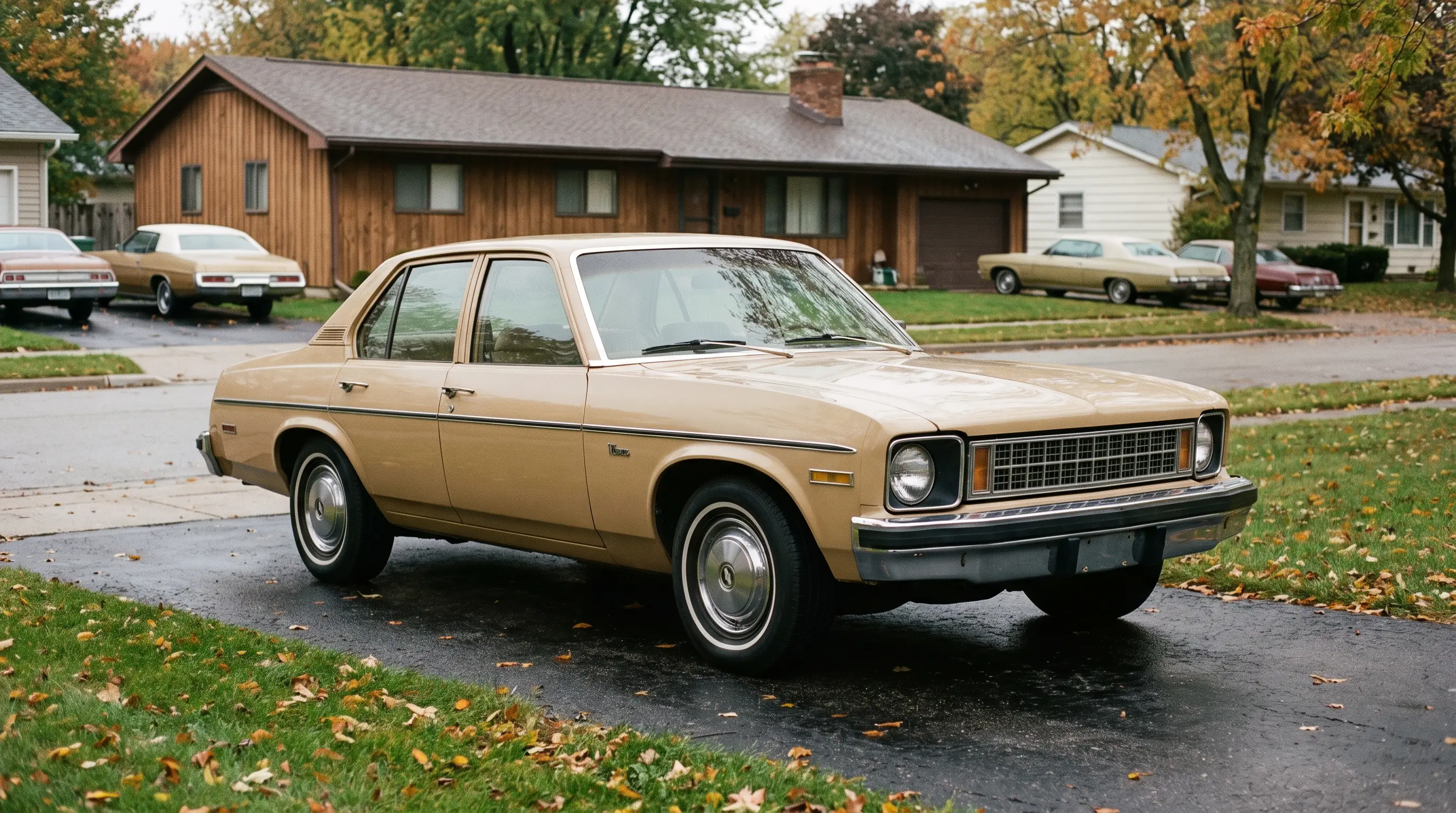
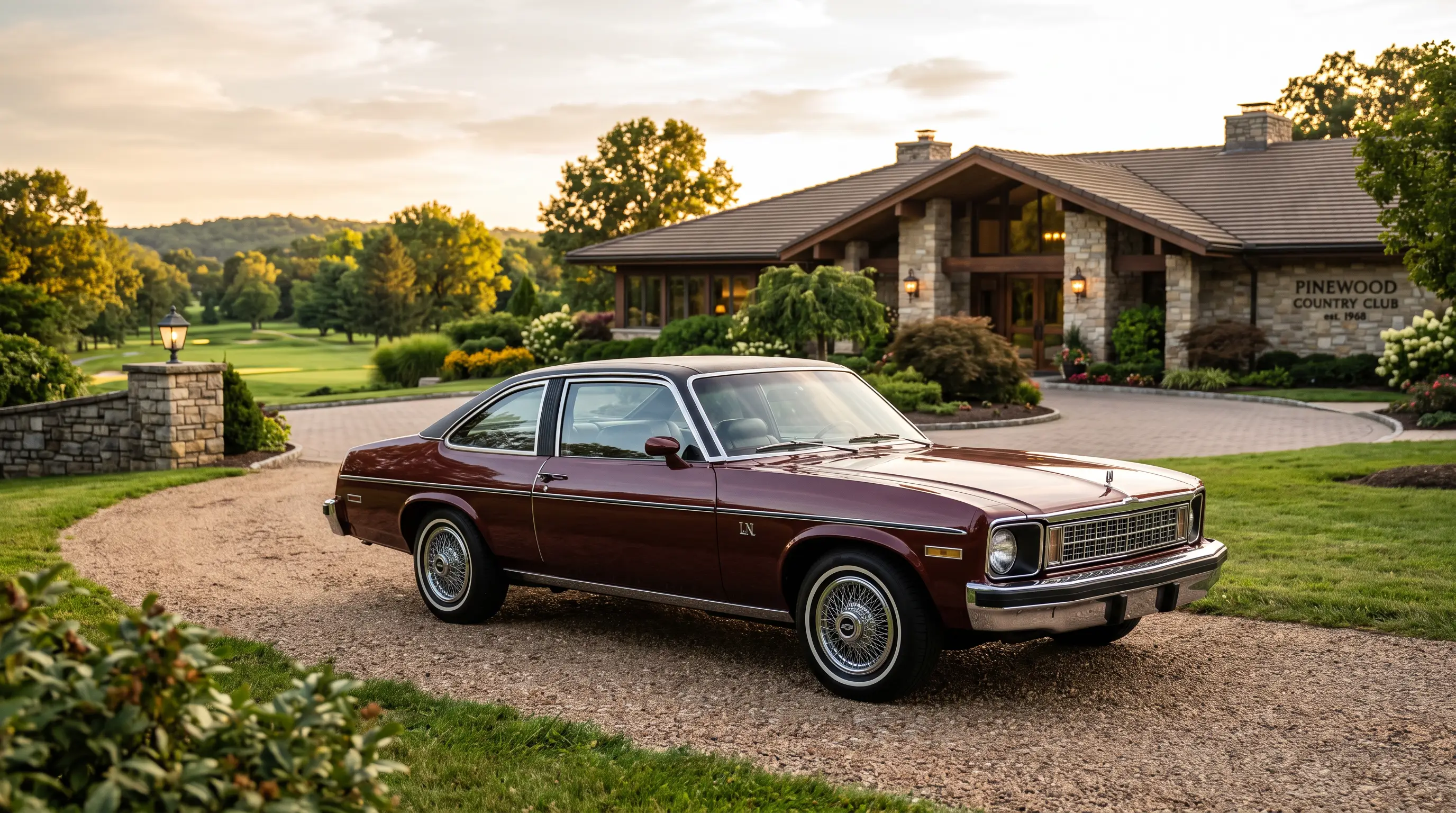
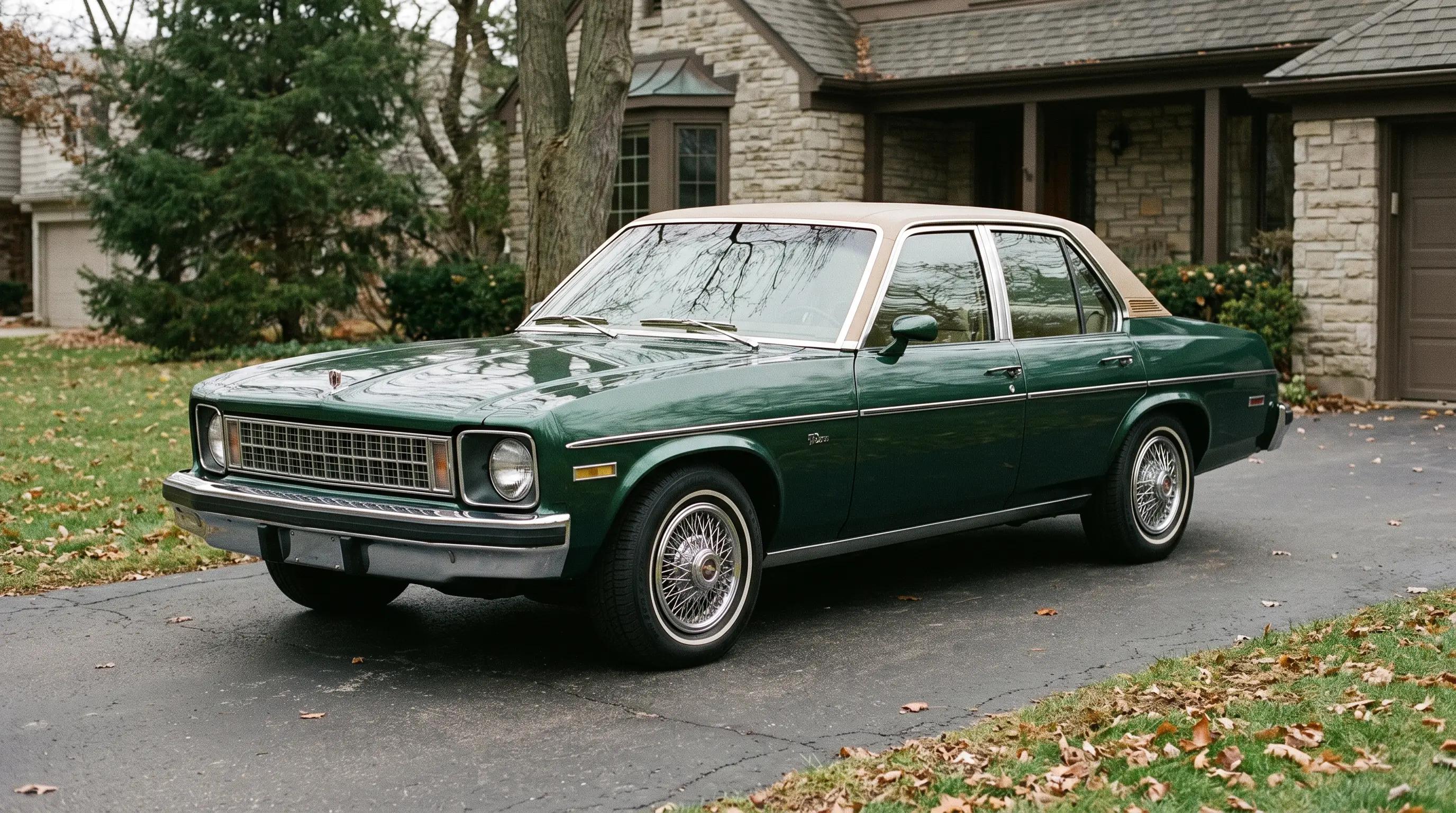
The Concours arrived on the same body shells as the base Nova and the Nova SS: coupe, hatchback, and four-door sedan. What separated it was trim and content, not sheet metal. Chevrolet gave it a revised grille and tail lamps, brighter moldings around the wheel openings, a distinctive stand-up hood ornament, dual horns, and a woodgrain-look (Chevrolet called it rosewood grain vinyl) dash appliqué that a base Nova simply did not get. Inside, the seat fabric and door panels stepped up a level, with expanded color choices and, on the coupe, an available white interior.
What actually came on a Concours, year by year
This is where the 1970s Nova gets confusing fast, because the Concours name only lasted two model years before Chevrolet moved the top trim on again, and dealers were not always consistent about which options got bundled into the package versus sold separately.
- 1975: Not yet a Concours. This was the Nova LN's only year, the precursor trim with plusher seats, body-color wheel covers, and special badging that Chevrolet would rebrand the following year.
- 1976: First year as Concours. Added the rosewood-grain dash appliqué, bright wheel opening moldings, dual horns, a stand-up hood ornament, revised grille and tail lamps, and expanded interior choices including a white coupe interior. Available on coupe, hatchback, and sedan.
- 1977: Final year as Concours. Content carried over largely unchanged. The Concours coupe proved genuinely popular this year, with roughly 1 in 5 Novas sold wearing the badge and total Concours coupe production landing around 28,600 units.
- 1978: The Concours name was dropped to clear the way for the newly downsized Malibu. The Nova Custom became the new top trim, inheriting most of the Concours' exterior finery but losing the stand-up hood ornament.
- 1979: The final year for the Nova nameplate before Chevrolet moved to the front-wheel-drive Citation for 1980. The Custom carried on as the top trim; there was no Concours this year.
| Model year | Top trim name | Notable content |
|---|---|---|
| 1975 | Nova LN | Precursor trim: plusher seats, body-color wheel covers, special badging |
| 1976 | Nova Concours | Rosewood-grain dash trim, bright moldings, stand-up hood ornament |
| 1977 | Nova Concours | Carryover content; roughly 28,600 Concours coupes built |
| 1978 | Nova Custom | Concours dropped; Custom inherits most trim, no hood ornament |
| 1979 | Nova Custom | Final year of the Nova nameplate; Custom remained the top trim |
Where the Concours sat next to its siblings
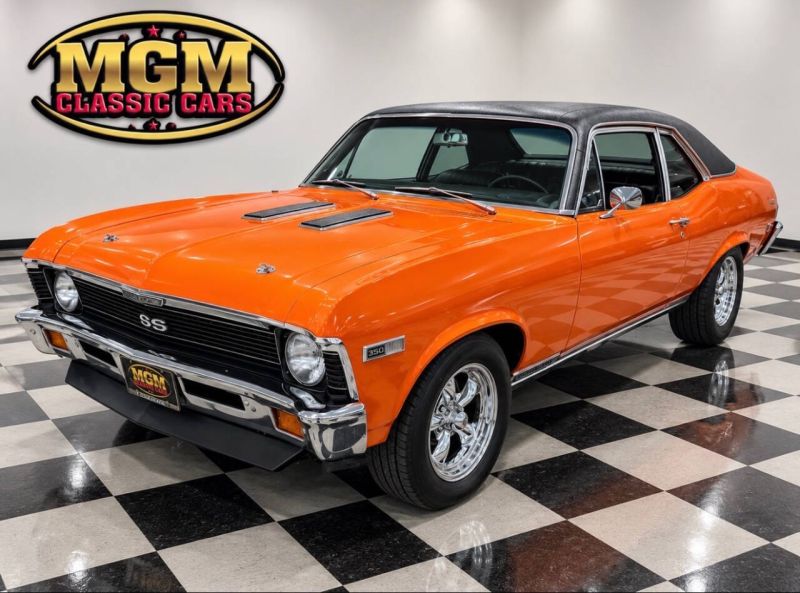
In its two model years, a buyer walking into a Chevrolet store could choose a base Nova, a Nova Custom, the Concours on top, and an SS if they wanted the handling package instead of the luxury one. The Concours was never the top of the pyramid for long. Once the downsized Malibu arrived for 1978, Chevrolet folded the top-trim role back into the Custom, and the Concours name disappeared after just two seasons. That short run is exactly why it gets overlooked today. It was never the special one. It was the good one, briefly.
The engine lineup underneath a Concours ran whatever the Nova offered that year, from the standard inline six up through a 350 cubic inch V8, with output figures that had dropped hard from the muscle-car era. A four-barrel 350 in a Concours-era Nova was making something in the neighborhood of 155 net horsepower in 1975 climbing to 165 to 170 net horsepower by 1976 and 1977, depending on emissions equipment, nowhere near what the same displacement produced a few years earlier. The Concours was never sold as a performance trim, so nobody at the time much minded.
"Every club meet has a guy who swears his 1976 came with the woodgrain and the bright trim as one option code, and another guy who swears it was two separate boxes on the order sheet that year. The window sticker settles it every time, and it's never as simple as either guy remembers."
— Wayne Coburn
What a buyer should verify before paying up
The Concours trim leaves a trail on paper even when the car in front of you has been repainted, reupholstered, or otherwise touched up over five decades. The build sheet, if it survived under a seat or in a glovebox, will spell out the exact option content ordered that day. The door tag carries the trim code that ties the car to its original configuration. Neither of those documents cares what somebody added or removed later, which is exactly why they matter more than a fender badge that anyone can bolt on.
A buyer chasing a genuine, numbers-correct Concours should treat the woodgrain dash appliqué and the specific brightwork as the two most telling details, since those are the pieces most often missing, mismatched, or substituted with parts from a different model year. A car wearing 1978 trim on a 1976 body, or the reverse, is not necessarily a fraud. It usually just means somebody made a practical repair decades ago with whatever parts were on hand at the time. It still changes what the car is worth to a buyer chasing originality.
Why the Concours still gets collected
Nobody chases a Nova Concours for investment upside the way they chase an SS from the muscle years. What draws people to it now is completeness. A Concours in original condition, with its trim intact and its interior unmolested, represents exactly what a mid-1970s Chevrolet dealer floor actually looked like, and that has its own kind of value at a show field full of restored SS cars and clones. Parts support is thinner than it is for the SS, particularly the specific woodgrain appliqué and some of the trim-specific brightwork, so a straight, unmodified survivor is worth more effort to keep original than to restore from a rough shell.
If this one has you curious about where it fits in the bigger story, a companion piece covers the LN trim that came before it, and the two are worth reading together. The Concours was never the headline. It was the car that made the rest of the range look better by comparison, and thirty years on, that is still a fine thing to be.
Sources and notes
- Chevrolet Nova Concours: The Baby Brougham, Old Motors
- Try Not to Call It a Nova: The 1976-77 Chevrolet Concours, Mac's Motor City Garage
- 1977 Chevrolet Concours: "It's Just a Nova!", Hagerty
- Curbside Classic: 1977 Chevrolet Nova Concours
- NovaResource Nova Engine Statistics
- Chevrolet Chevy II / Nova, Wikipedia