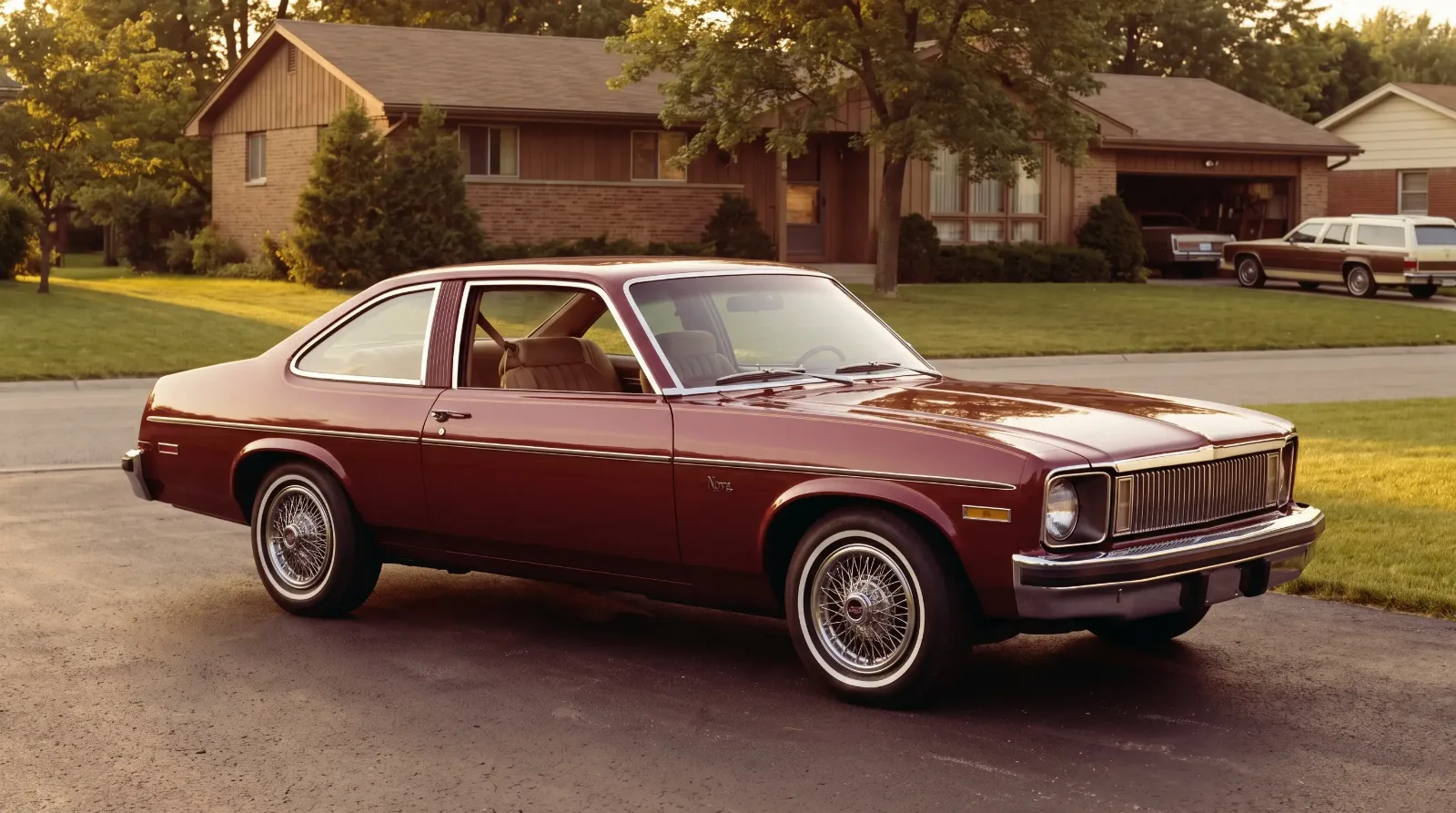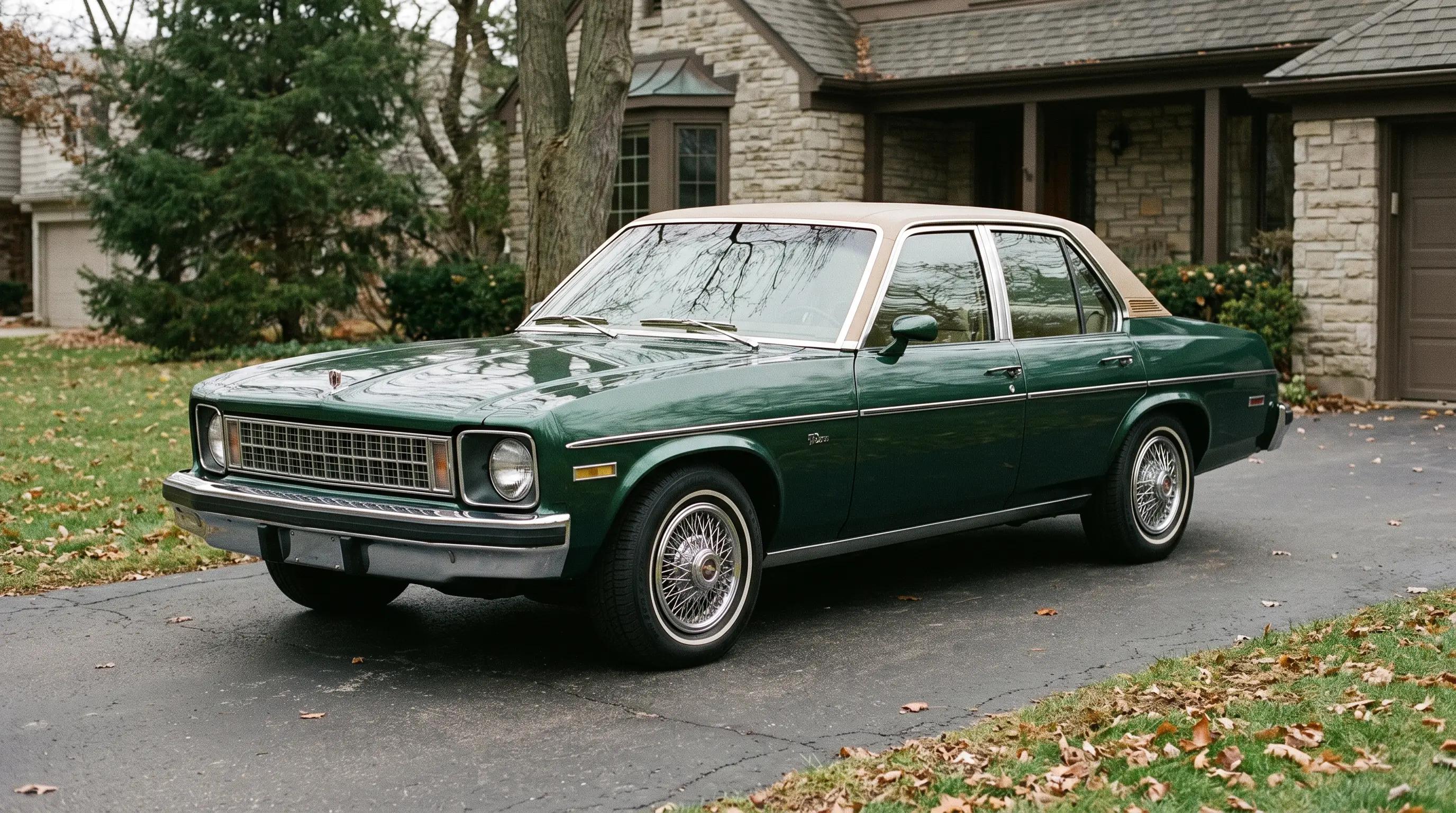
Every club has a car that shows up at a meet and gets the same question three times in an afternoon: "What is LN supposed to stand for?" The chevy nova ln badge never got much explanation from Chevrolet at the time, and the honest answer club members have settled on after years of comparing notes is Luxury Nova. It arrived for the 1975 model year as Chevrolet's first genuine flagship trim on the compact platform, and it is one of the quieter footnotes in the fourth-gen Nova story, mostly because it only wore the LN name for a single year before Chevrolet renamed it.
A flagship trim that lasted one model year
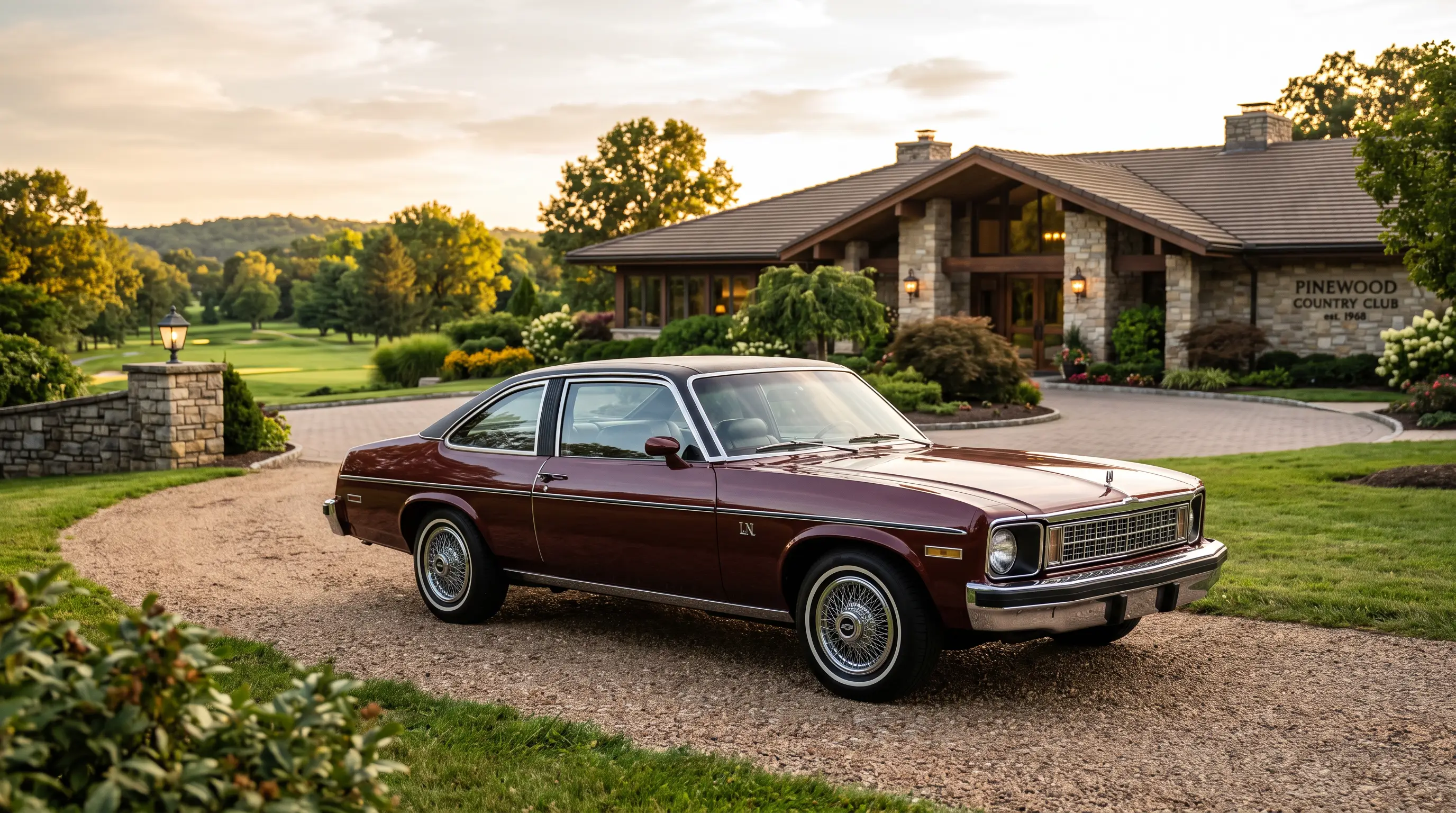
For 1975, Chevrolet's Nova lineup ran base, Custom, and the new LN sitting above both. The LN pushed further into content a buyer would normally expect on a mid-size Malibu or a full-size Impala: reclining front seats trimmed to feel closer to lounge chairs, richer upholstery choices, more brightwork outside, and standard equipment that stayed optional on lesser trims. It carried the highest base price of any Nova to that point, and some period reviewers framed it as Chevrolet's answer to the smaller European luxury imports gaining ground with compact buyers.
The LN name did not survive past that first year. For 1976, Chevrolet rebranded the same top-trim Nova as the Concours, a straight rename rather than a new tier added above it, and gave the car a more expensive-looking grille, tail lamps, and wheel covers to go with the new badge. The LN and the Concours were never sold side by side in the same model year; the Concours simply replaced the LN name for 1976 and carried on through 1977 before the range settled back down to Custom as the top trim for 1978. That distinction matters to buyers today, because a genuine 1975 LN with its factory badging and interior intact is a different car than a 1976-77 Concours, even though both descend from the same flagship idea.
What made an LN an LN
Documentation on exact standard content by model year is thinner for the LN than for the Concours, since it sold in smaller numbers and fewer original build sheets have surfaced. What club research has established with reasonable confidence:
- Upgraded upholstery beyond what the Custom trim below it offered, in cloth and vinyl combinations not shared with lower trims
- Additional brightwork and trim pieces distinguishing it visually from a Custom at a glance
- LN identification on the exterior, which is the fastest way to confirm a genuine 1975 example versus a later Concours wearing added trim
For its single model year, the LN's production does have a documented split: Chevrolet built roughly 1,138 six-cylinder LN coupes, 11,395 V8 LN coupes, 1,286 six-cylinder LN sedans, and 8,976 V8 LN sedans for 1975, a total in the neighborhood of 22,800 cars. That single-year window is a large part of why the model rewards patient research over quick assumptions; anyone quoting LN production numbers for 1976 or later is describing Concours cars, not genuine LN-badged Novas.
| Trim | Position in lineup | Typical buyer |
|---|---|---|
| Base Nova | Entry level | Value-focused, fleet, first car |
| Nova Custom | Mid-level, dressed up | Buyer wanting a nicer compact without a big premium |
| Nova LN (1975) / Concours (1976-77) | Top trim, same flagship idea under two names | Buyer who wanted the compact platform with more content |
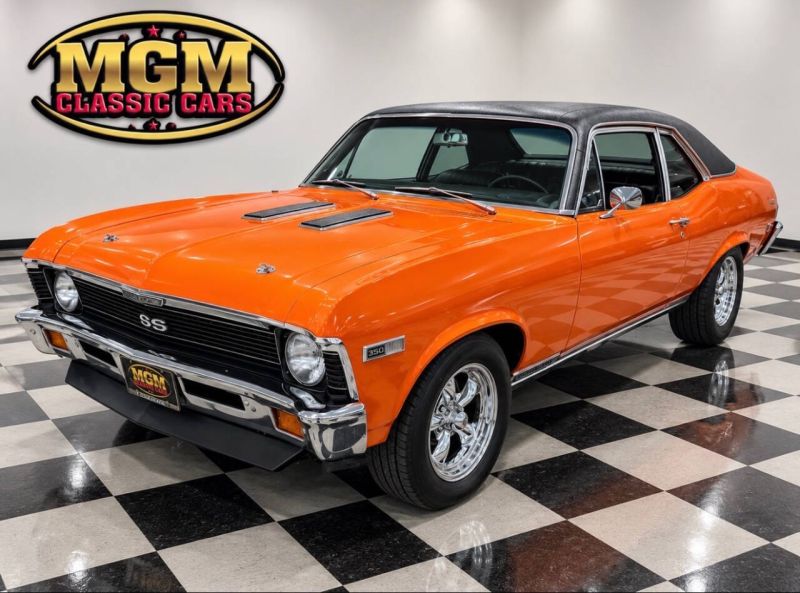
| Nova SS | Appearance and handling package | Buyer who wanted the sportier look, not necessarily more power |
Why it is scarce at shows now
The LN never carried the cachet of an SS and never got chased for investment the way an early Nova or a big-block Chevelle did, so a lot of them lived ordinary lives and were scrapped or parted out without anyone thinking twice. What survives tends to be cars that spent decades in a single owner's garage rather than cars somebody deliberately preserved because they knew what they had. That is a pattern the club sees over and over with mid-1970s luxury trims across the whole industry, not just at Chevrolet. The plain, honest survivor is worth more today than the flashy one that got driven hard and discarded.
Finding parts specific to the LN, particularly interior trim and badging, is harder than finding Concours parts, simply because fewer were made and fewer people went looking for them over the decades. A buyer chasing a numbers-correct restoration should expect to source trim pieces well before committing to tear a car down, because the wrong assumption here costs real time.
"I had a guy at a meet swear up and down his car was an LN because somebody told him so twenty years ago. We pulled the trunk badge, checked the door tag, and it was a nicely kept Concours the whole time. Nobody's lying on purpose. The trims just got confused a long time ago and the confusion stuck."
— Wayne Coburn
What to check before calling it a genuine LN
The safest way to confirm a real LN is the same method that settles every other Nova trim argument: pull the trunk lid tag or the door jamb data plate and read the trim code directly rather than trusting badges alone. Badges get swapped at swap meets more often than anyone likes to admit, usually by an owner trying to make a plain Concours look like something rarer without any intent to deceive. A trim code on the data plate does not care what somebody bolted on later.
Interior fabric is the second tell. The LN's upholstery choices were distinct from the Concours in both pattern and material, and a car with the wrong seat fabric for its claimed trim level is worth a closer look before any money changes hands. Anyone shopping for one of these should also expect thinner parts support than a Concours enjoys, since fewer LNs were built and fewer suppliers bothered to reproduce trim pieces that a small fraction of the hobby ever asks for.
Where the LN fits in the bigger picture
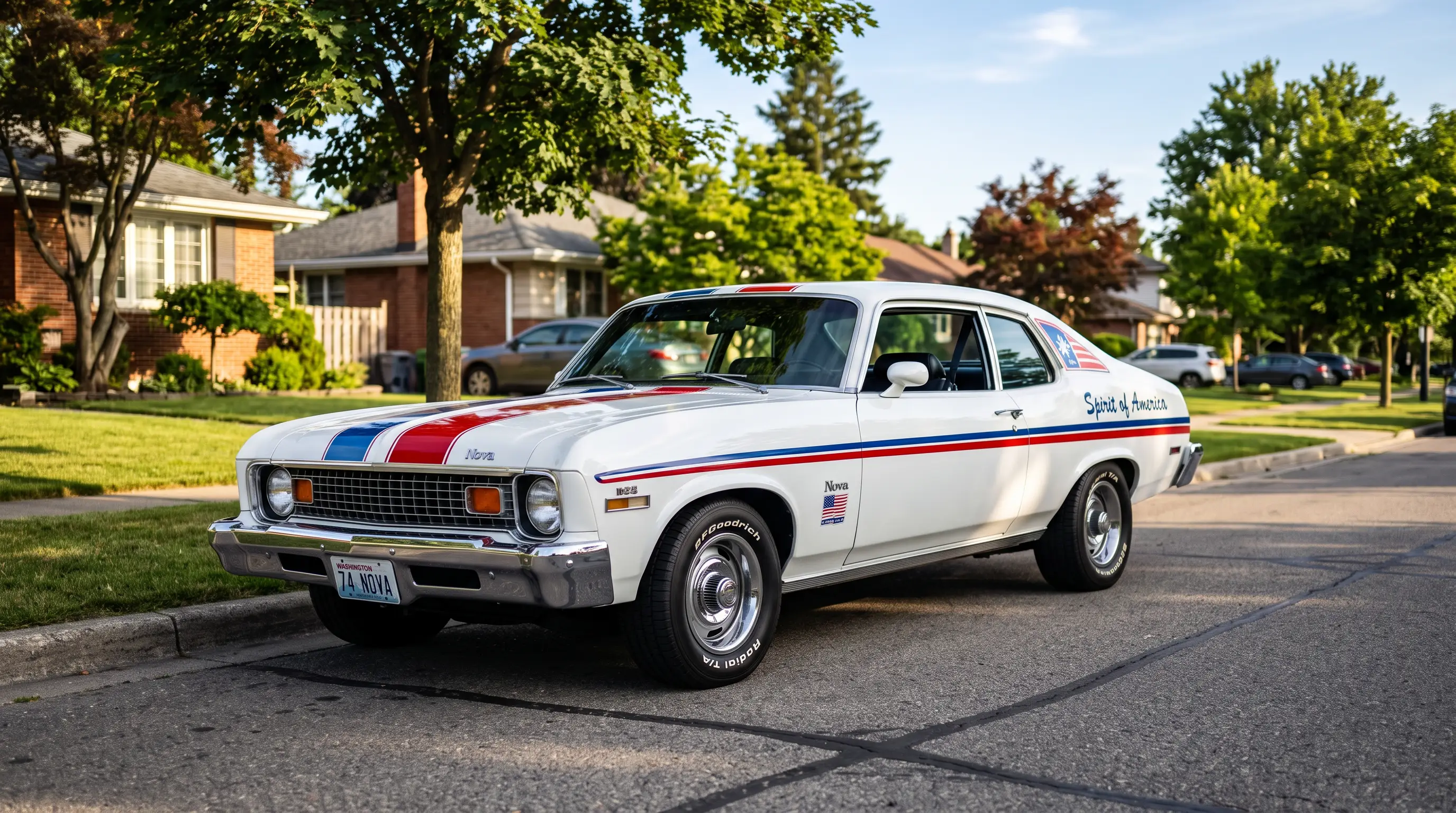
The Nova LN is best understood as Chevrolet testing how much luxury a compact buyer would actually pay for in the middle of the 1970s, a period when gas prices and downsizing were pushing buyers toward smaller cars without necessarily giving up creature comforts. It is not a car people restore for bragging rights at a national show. It is a car people restore because they found one, liked what it represented, and wanted to keep an honest piece of a trim level that most of the hobby has forgotten existed. For a look at one of the more colorful special editions from this same stretch of the Nova's history, a companion piece covers the Bicentennial-era package Chevrolet built around the same time.