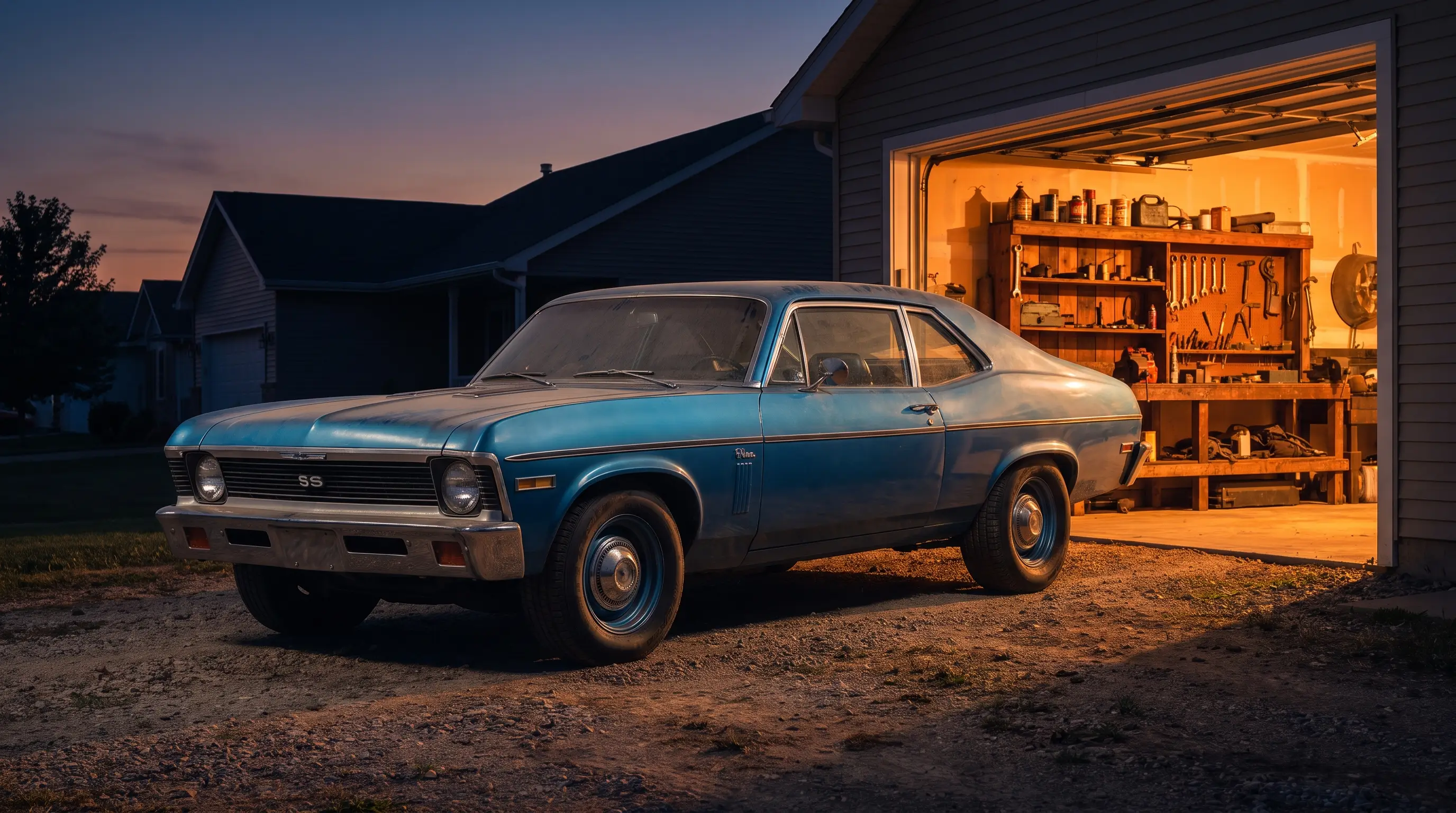
Ask ten Chevy Nova owners what makes their car special and you'll get ten different answers, because the Nova has quietly worn more identities than almost any other Chevrolet nameplate. These chevy nova facts tend to surprise even people who've owned the car for years, mostly because the Nova spent five decades doing its job well enough that nobody bothered to make a fuss about it.
The name almost didn't survive a rumor
There's a persistent story that Chevrolet struggled to sell the Nova in Spanish-speaking markets because "no va" translates roughly to "doesn't go." It's a great anecdote and it shows up in marketing textbooks to this day, but automotive historians have largely debunked it. Sales data from Latin American markets doesn't support any meaningful dip tied to the name, and Chevrolet never renamed the car for those markets in a way that would suggest the company took the concern seriously. The rumor persists anyway, which says more about how good a story travels than how the car actually performed.
It was never supposed to be a muscle car
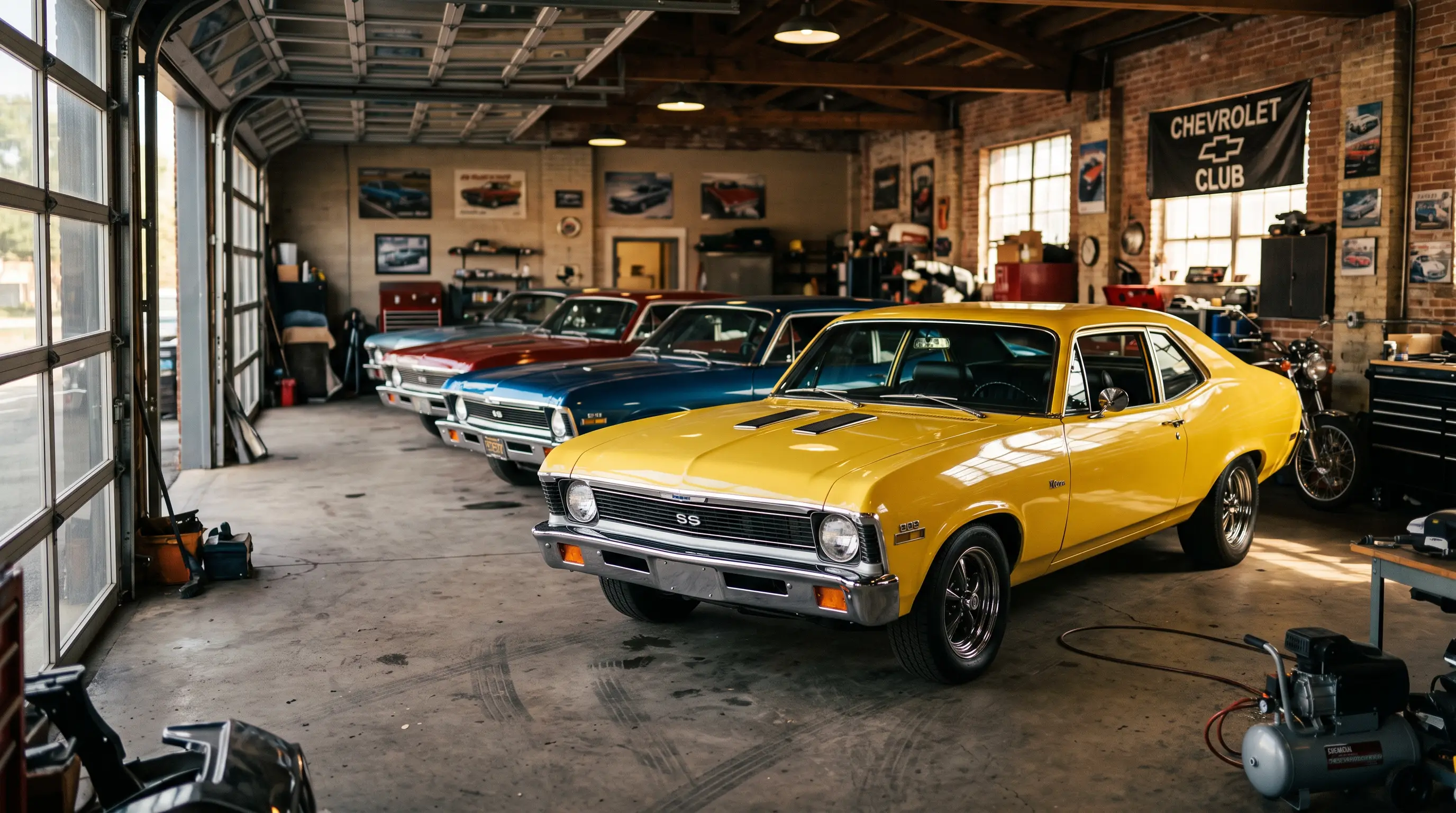
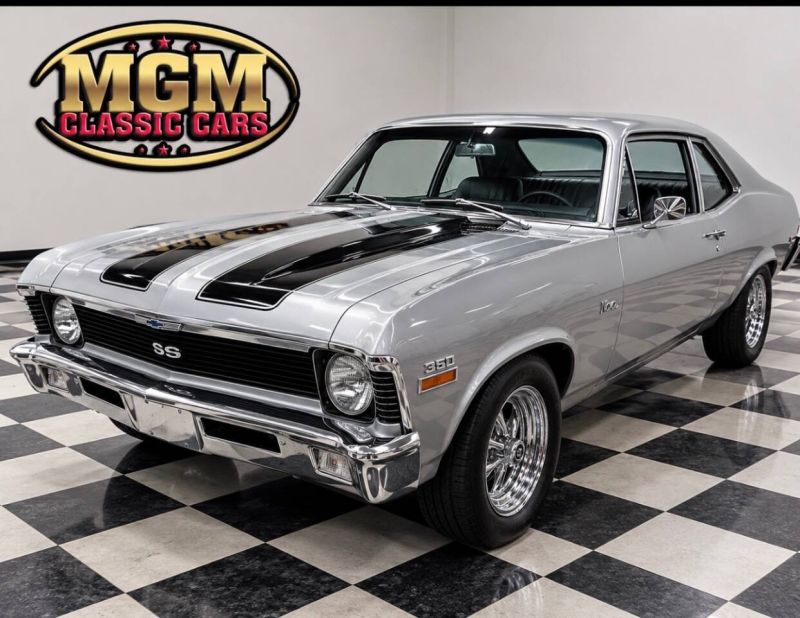
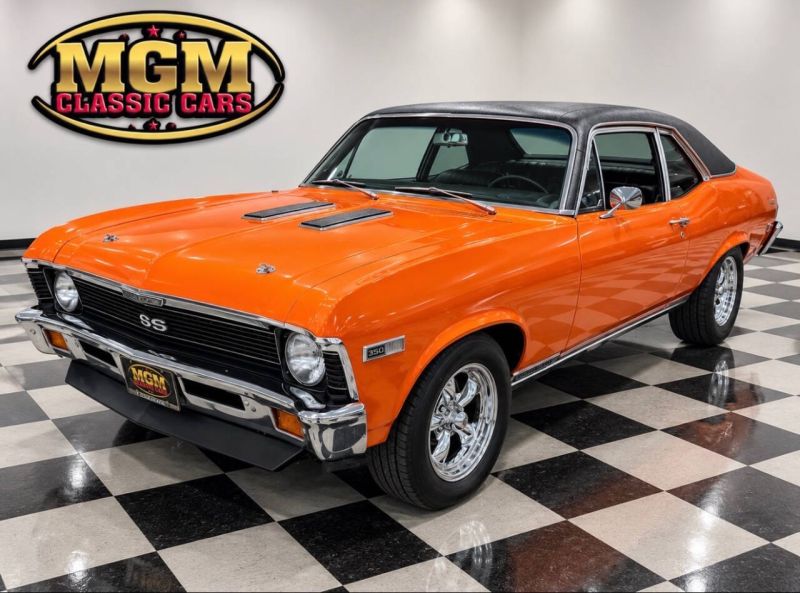
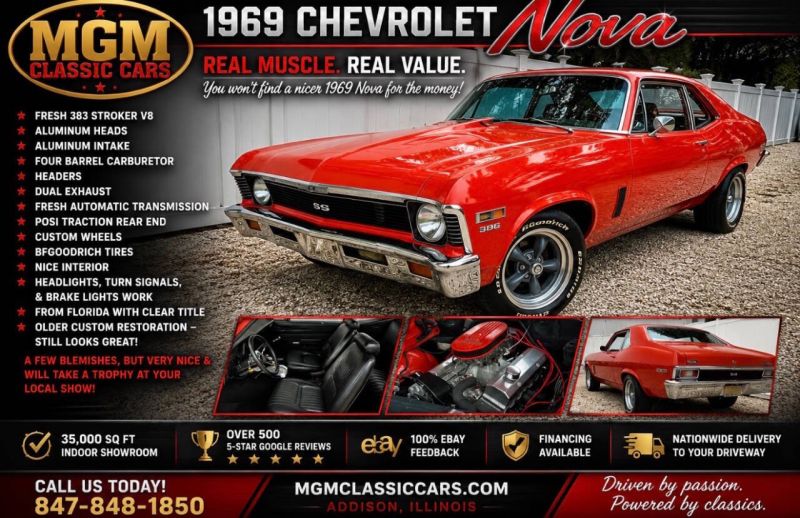
When the Nova launched for 1962 as the top trim of the Chevy II line, it was Chevrolet's answer to compact competition, built to be cheap, practical, and unremarkable. Nobody at Chevrolet in 1962 was thinking about quarter-mile times. That changed gradually through the decade as buyers discovered you could option a small, light Chevy II with an increasingly serious V8, and by 1968 Chevrolet made that relationship official with big-block SS packages available in a body that started life as an economy car. The Nova's muscle car reputation was essentially a happy accident of parts-bin engineering rather than a planned strategy.
The Nova quietly spanned four decades and four generations
Most casual fans think of the Nova strictly as a late-1960s and early-1970s muscle car, but the nameplate actually ran from 1962 through 1979, then briefly returned from 1985 to 1988 as a rebadged Toyota Corolla built through the Chevrolet-Toyota joint venture known as NUMMI. That second life as a front-wheel-drive economy sedan built alongside Corollas in Fremont, California is almost never mentioned in the same breath as the muscle car years, and most enthusiasts are surprised to learn both cars share a name at all.
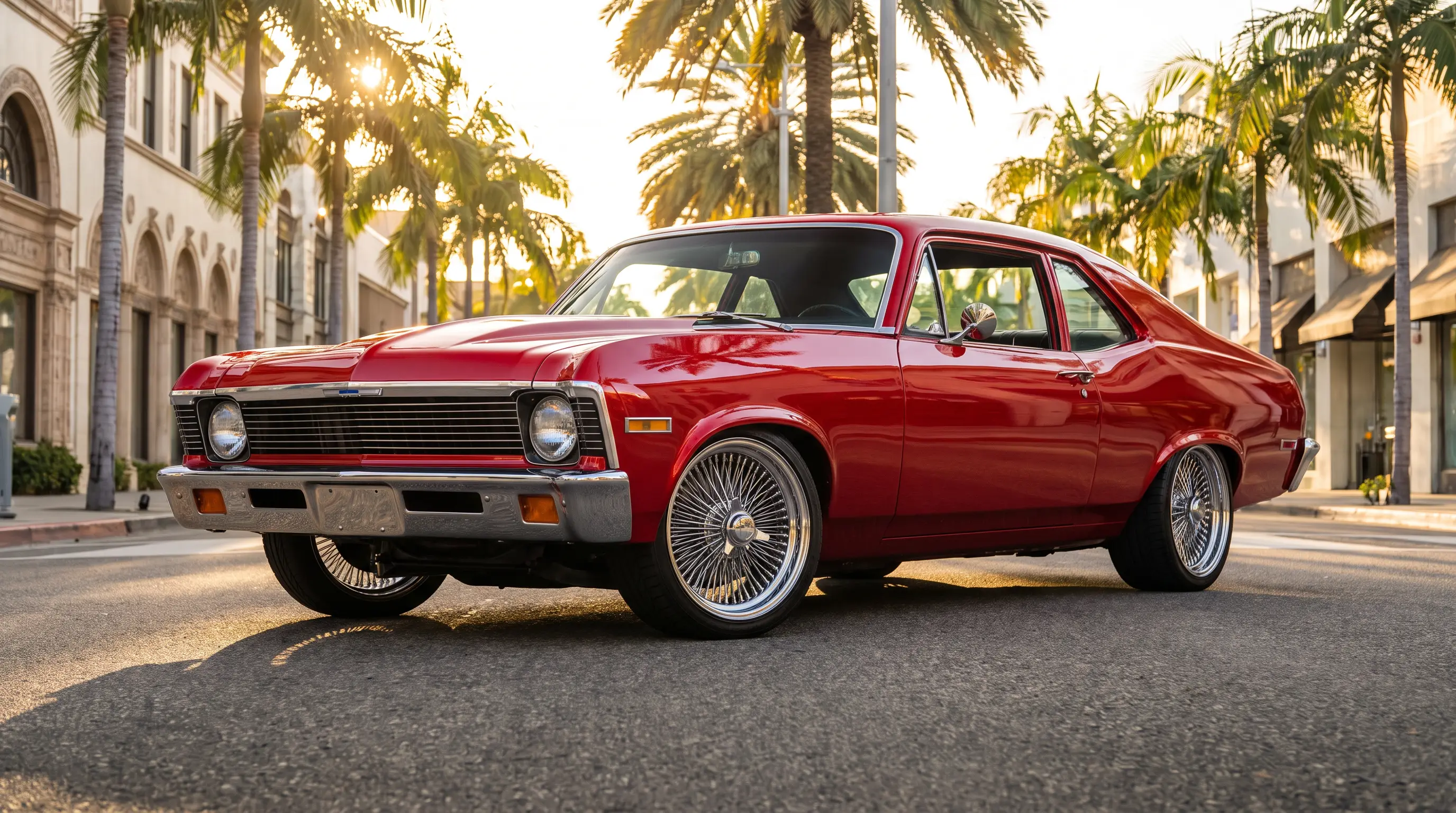
Across those decades the Nova existed as a two-door coupe, a four-door sedan, a wagon, and even a hatchback in some model years, a versatility that gets lost once the muscle car version becomes the only one anyone remembers. That range is part of why the Nova had such staying power. It was never locked into one body style or one buyer.
The mid-1980s NUMMI-built Nova is genuinely strange to think about next to a 1970 SS 396, and that's exactly why it's worth knowing. The joint venture plant in Fremont brought Toyota's production discipline into a facility Chevrolet had previously operated on its own, and the resulting Nova sedan shared engineering and reliability with the Corolla far more than with anything wearing the Nova badge a decade earlier. Enthusiasts who only know the muscle car years are often stunned to learn the name survived that transition at all.
A few numbers worth knowing
- Total Chevy II/Nova production across its original 1962-1979 run topped five million units, making surviving examples far more common than a Chevelle or Camaro from the same era.
- The Nova shared its platform with the Chevy II through the mid-1960s before Chevrolet consolidated the naming entirely under Nova starting in 1969.
- Yenko Chevrolet, better known for Camaros, also built a small number of dealer-modified Novas, making surviving Yenko Novas a genuine rarity among collectors.
A quieter kind of racing legacy
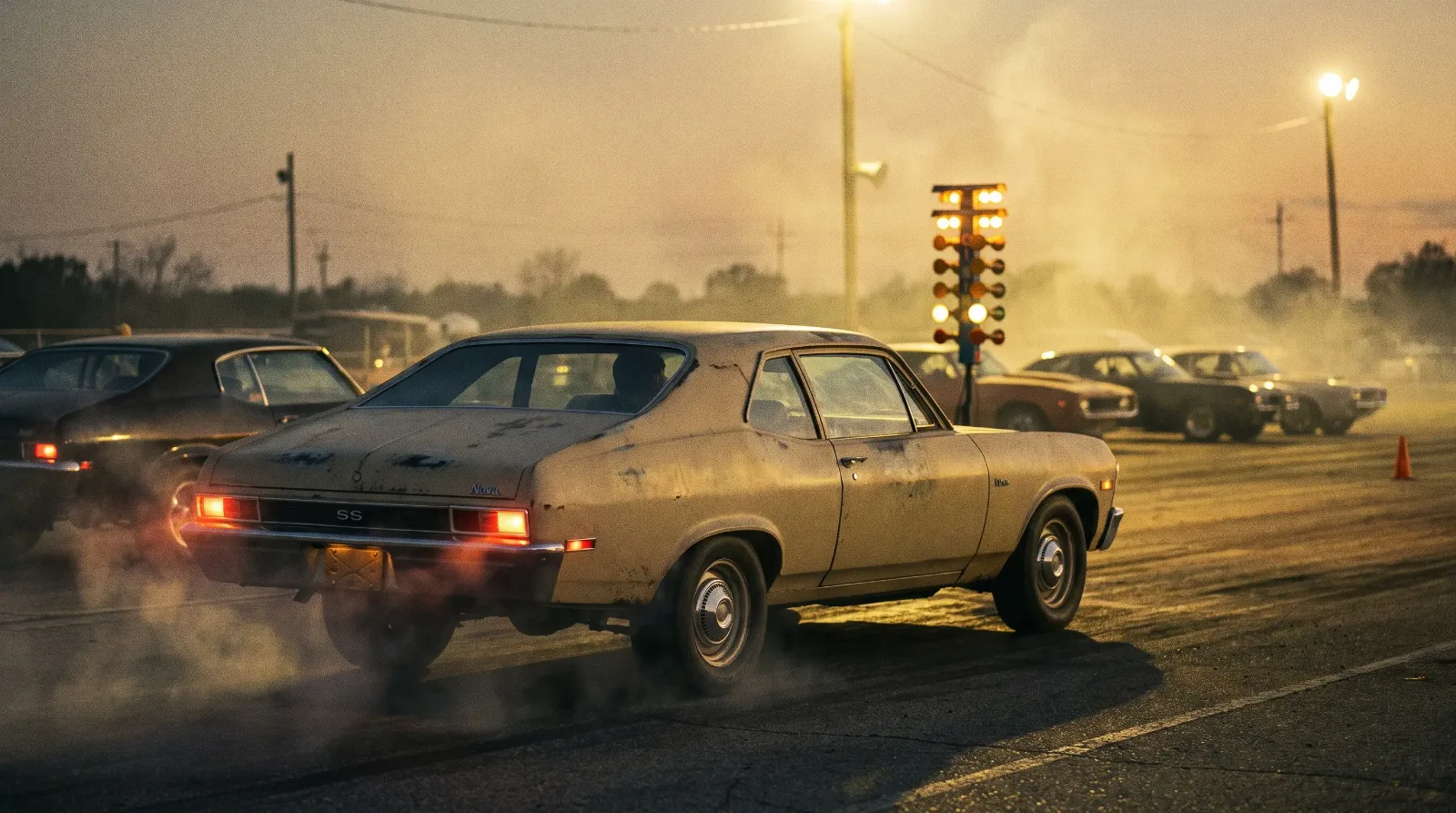
The Nova's drag racing pedigree rarely gets the attention that a Chevelle or a Camaro's does, but it was a legitimate NHRA competitor through the late 1960s and 1970s in Stock and Super Stock classes, where its light weight and available big-block power made it a genuine threat against cars with far more reputation behind them. Racers who understood the weight-to-power math were quietly running Novas against Camaros and Mustangs and coming out ahead often enough that the car earned real respect inside the drag racing community, even while the broader public never fully caught on.
Some of that racing pedigree traces back to dealer-level involvement most fans never hear about. A handful of dealerships across the Midwest offered performance packages and factory-adjacent tuning on Novas ordered specifically for competition, in the same spirit as the better-known Yenko and Nickey Chevrolet programs built around Camaros. Those cars rarely survive today in original form, which makes the ones that do turn up at auction genuinely significant finds rather than routine restorations.
"Everybody remembers the Camaro's racing history because somebody wrote it down properly. The Nova's history is just as good. It just never had a publicist."
— Patrick Walsh
Why these facts matter to owners today
Knowing the Nova's full, unglamorous, occasionally strange history changes how you look at the car in a driveway or at a show. It's not just a muscle car with a badge on the fender. It's a compact economy car that stumbled into performance credibility, spent time as a Japanese-built sedan under a familiar name, and quietly outlasted flashier competitors by never being locked into a single identity. That's part of why the Nova endures as a favorite among people who value substance over spectacle, and it's a theme worth carrying into the next story in this set, which picks up where the Nova's identity took an entirely different cultural turn.
The Nova never asked to be famous. It just kept being useful, kept being fast when it needed to be, and kept finding new owners decade after decade who discovered these facts for themselves, usually the same way I did, standing in a parking lot listening to someone who already knew.