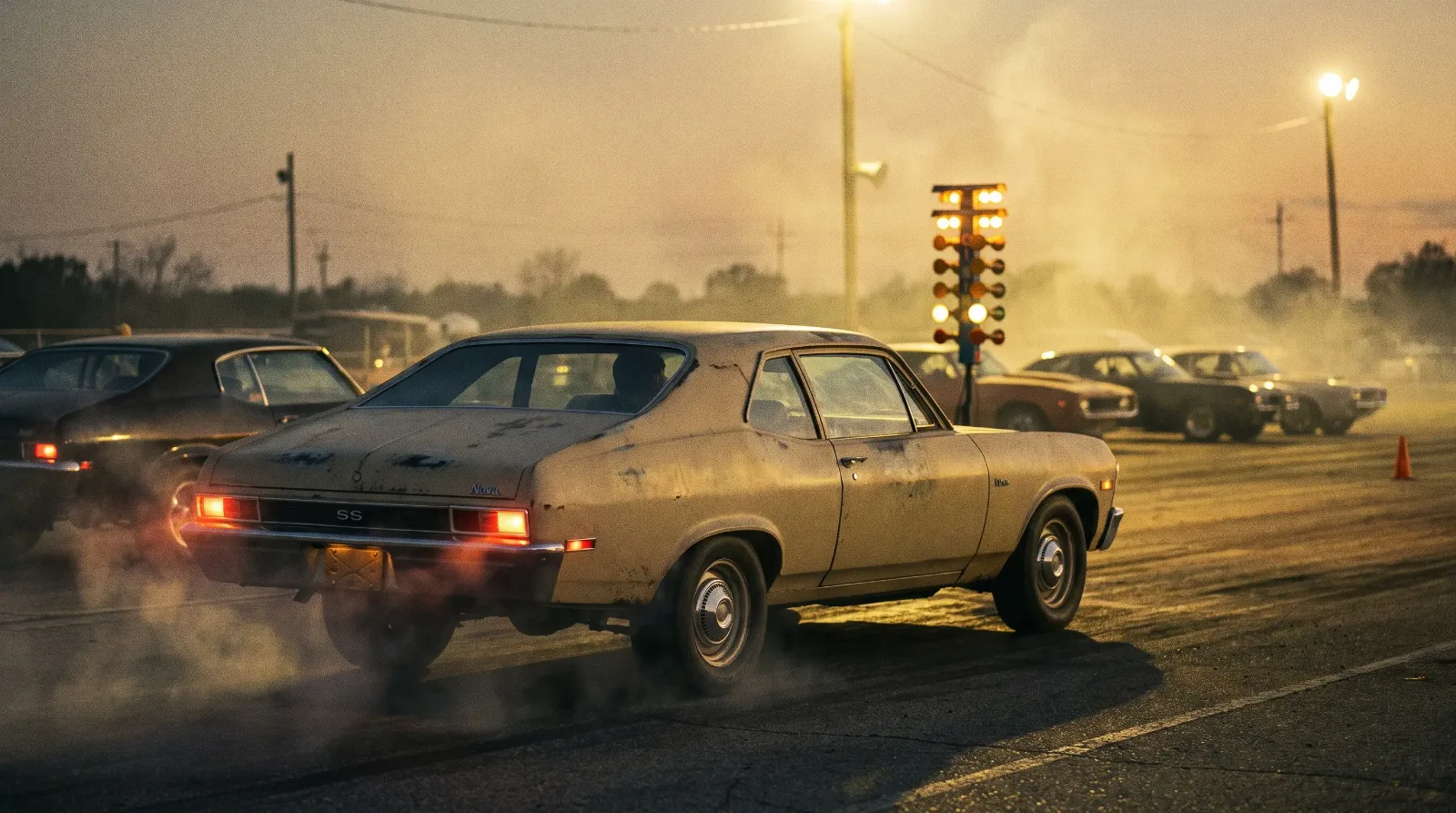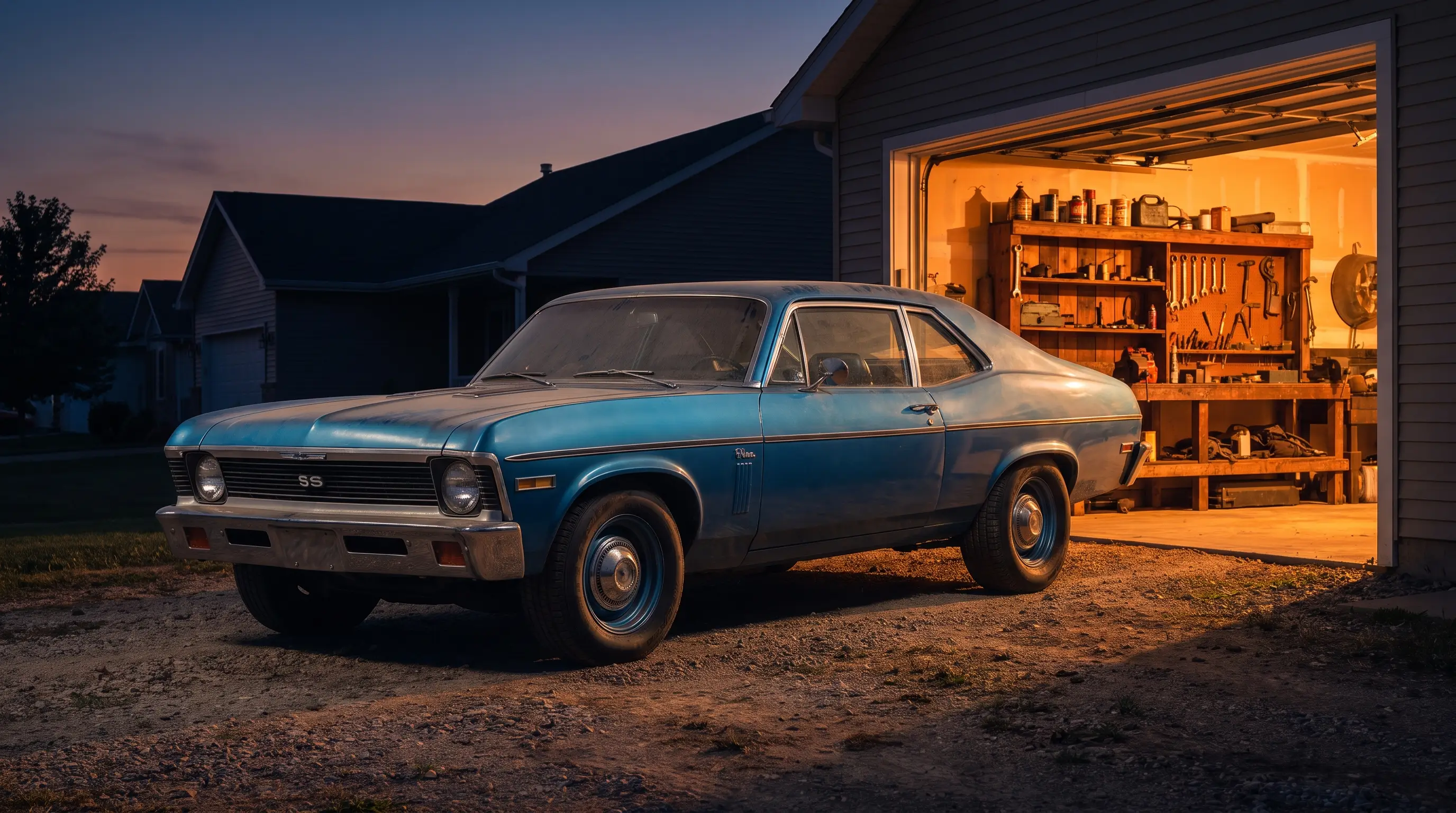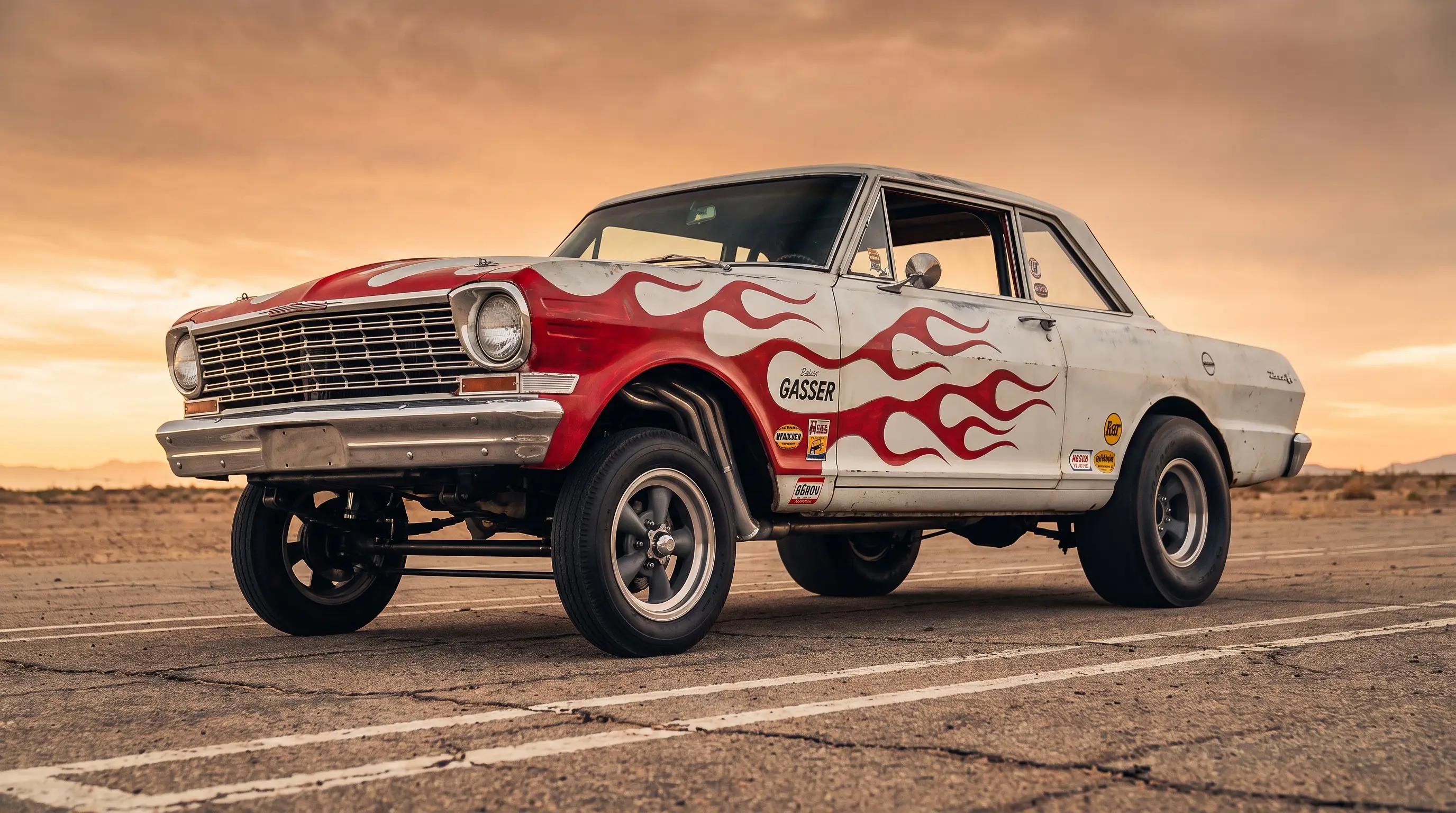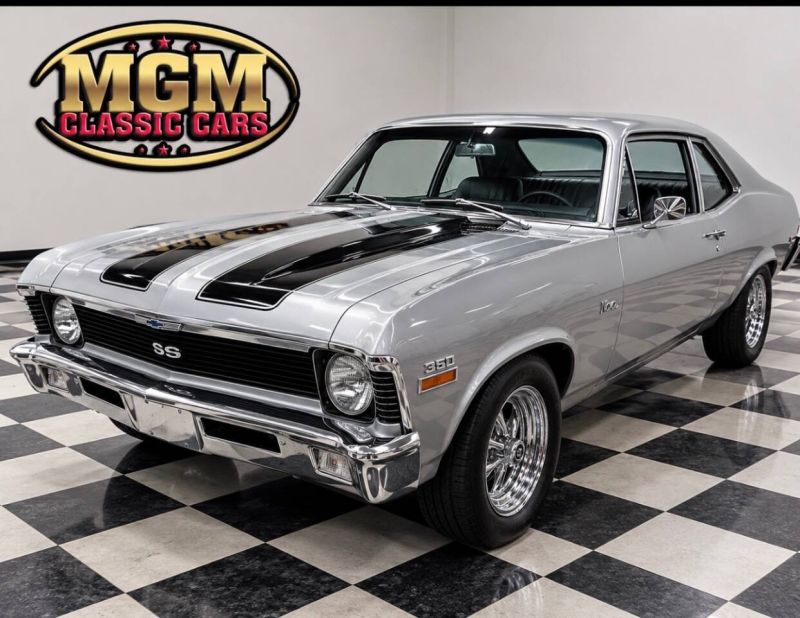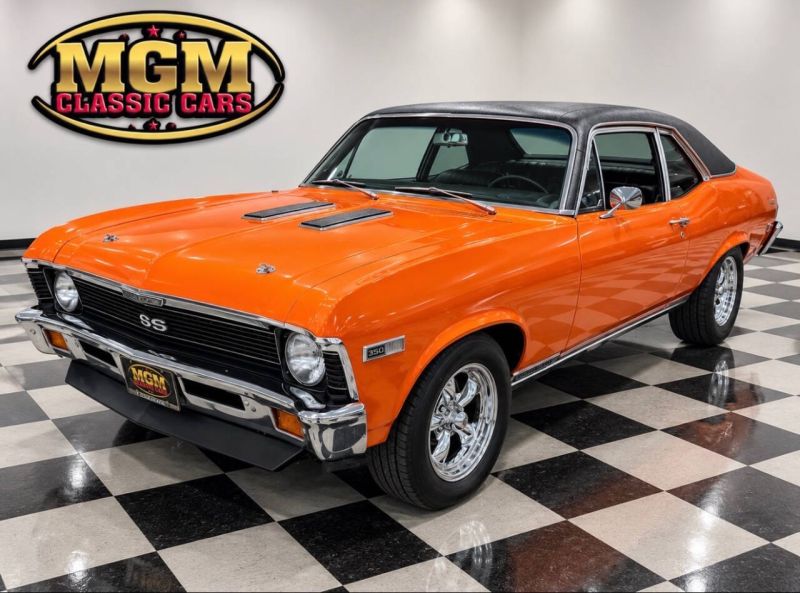
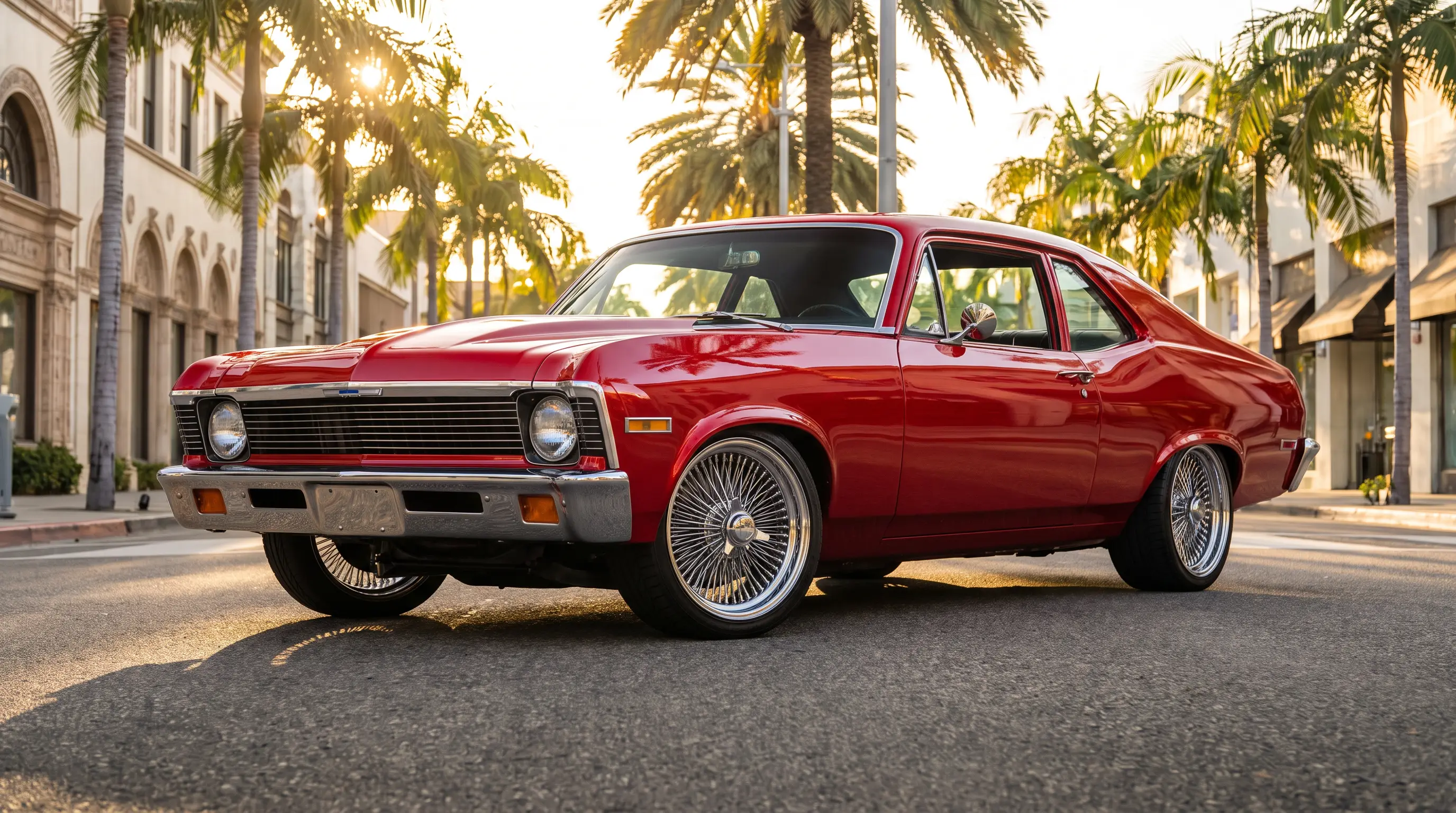
On a Sunday afternoon on Whittier Boulevard, the low, patient rumble that turns heads isn't always a big-block Impala. Sometimes it's a Chevrolet Nova, riding three inches off the pavement, chrome spokes flashing, paint laid on so deep you can see your reflection standing in a parking lot. The Nova was never supposed to be a showpiece. Chevy built it as a cheap, honest compact for people who needed a car, not a statement. That's exactly why lowrider builders in Los Angeles, San Antonio, and Albuquerque adopted it so completely: it was affordable, plentiful, and structurally simple enough to cut apart and rebuild around a hydraulic system without a factory engineer weeping.
Why the Nova fit the culture so naturally
Lowriding grew out of Mexican-American communities in Southern California in the late 1950s and early 1960s, and it was never about horsepower. It was about control, presence, and slowing a car down to a walking pace so everyone on the sidewalk could see it. Big Detroit sedans, Impalas and Monte Carlos especially, became the movement's signature cars because their frames were generous and their sheet metal offered a wide, flat canvas. The Nova came at it from the budget end. A high school kid or a young father working two jobs could find a 1968 or 1972 Nova for a few hundred dollars, something a fresh-off-the-showroom Impala never was by comparison.
The compact platform also meant a tighter, more agile lowrider once hydraulics went in. Where a full-size Chevy floats and rolls through a hop, a Nova snaps. Builders who wanted a car that danced rather than lumbered gravitated toward it for that reason alone, and it built a reputation inside club circles as the scrappy little brother that could still out-hop a bigger car on a good day.
From daily driver to rolling canvas
A lowrider Nova build starts unglamorously: strip the interior, drop the fuel tank, and get the frame on a rotisserie. Builders reinforce the frame around the trunk to handle the weight of batteries and hydraulic pumps, because a stock Nova chassis was never engineered to hold six or eight deep-cycle batteries and a bank of solenoids. From there it's paint, and this is where the Nova stops being a Chevy and becomes someone's signature. Candy paint, patterns, pinstriping, sometimes murals depicting family, faith, or the neighborhood itself. The car becomes a rolling document of who built it and what mattered to them.
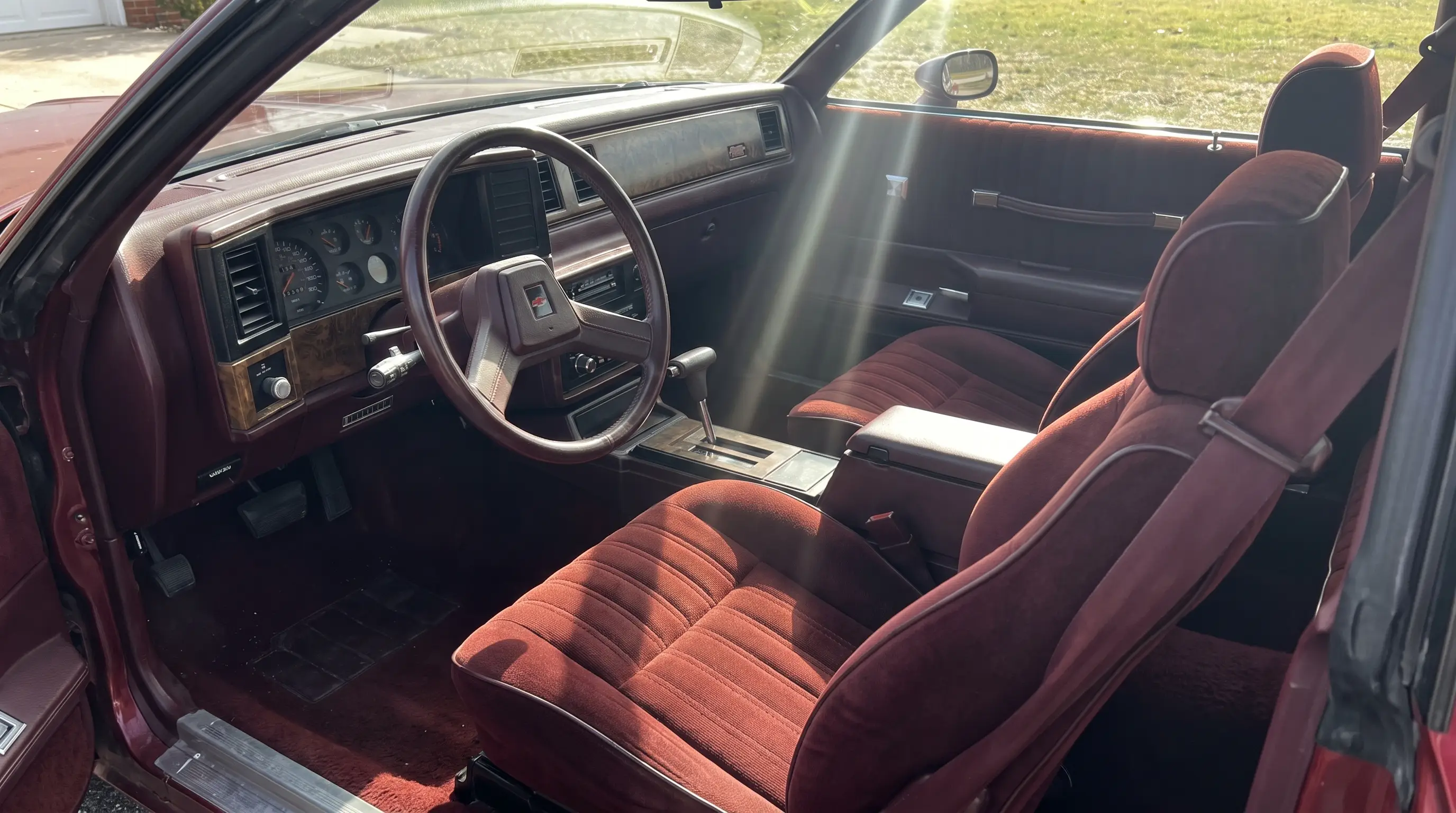
Interior work runs just as deep. Crushed velour, tuck-and-roll upholstery, wood-grain steering wheels, and dash plaques with a club name or a dedication to someone's mother are standard, not showing off. A finished show-quality Nova can represent thousands of hours across paint, upholstery, chrome plating, and hydraulic tuning, most of it done by hand, in home garages, on weekends.
The club system and what it means to belong
A lowrider Nova rarely belongs to just one person. It belongs to a club, and the club has rules, dues, a hierarchy, and a calendar of cruises and shows. Clubs like Dukes, Groupe, and Lifestyle built national reputations partly because members held each other to a standard: a car in the lineup had to be finished, clean, and represented properly at a show or it didn't roll with the group that weekend. That discipline is part of why so many Novas from this scene survive in excellent condition today. They were maintained obsessively, not just built once and neglected.
"People assume lowriding is about looking flashy. It's really about patience. A Nova sitting on a trailer wasn't rushed. Somebody spent a decade getting it right, and that shows the second you see it roll off the ramp."
— Patrick Walsh
Where the scene stands today
Interest in the Chevy Nova lowrider hasn't faded, it's shifted generational. Younger builders are restoring cars their fathers or grandfathers drove on the boulevard decades ago, sometimes tracking down the exact car through old club photos and DMV paper trails. Documentaries and museum exhibitions over the last several years have pushed lowrider culture into a broader collector conversation, and Novas built in this style now draw genuine interest at shows that once ignored the compact altogether.
Read the culture chapter for the wider story of how the Nova earned its place across so many different corners of American car culture, or look at the build style from another angle entirely on the drag strip side of things. For the full model history from Chevrolet's first compact to the last of the line, the complete Nova saga lays it out year by year.
If a project like this appeals to you, there are still solid, unmolested project cars out there. Browsing classic Chevy Novas for sale is the fastest way to find a straight body and a clean title before someone else does.
A compact car that earned its place
The Chevy Nova lowrider never had the size or the factory glamour of the cars people usually associate with the scene, and that's precisely the point. It proved that presence isn't about displacement or trim level. It's about what someone is willing to put into a car, and for six decades, builders across the Southwest have kept proving that with a compact Chevrolet that GM never designed to be beautiful.