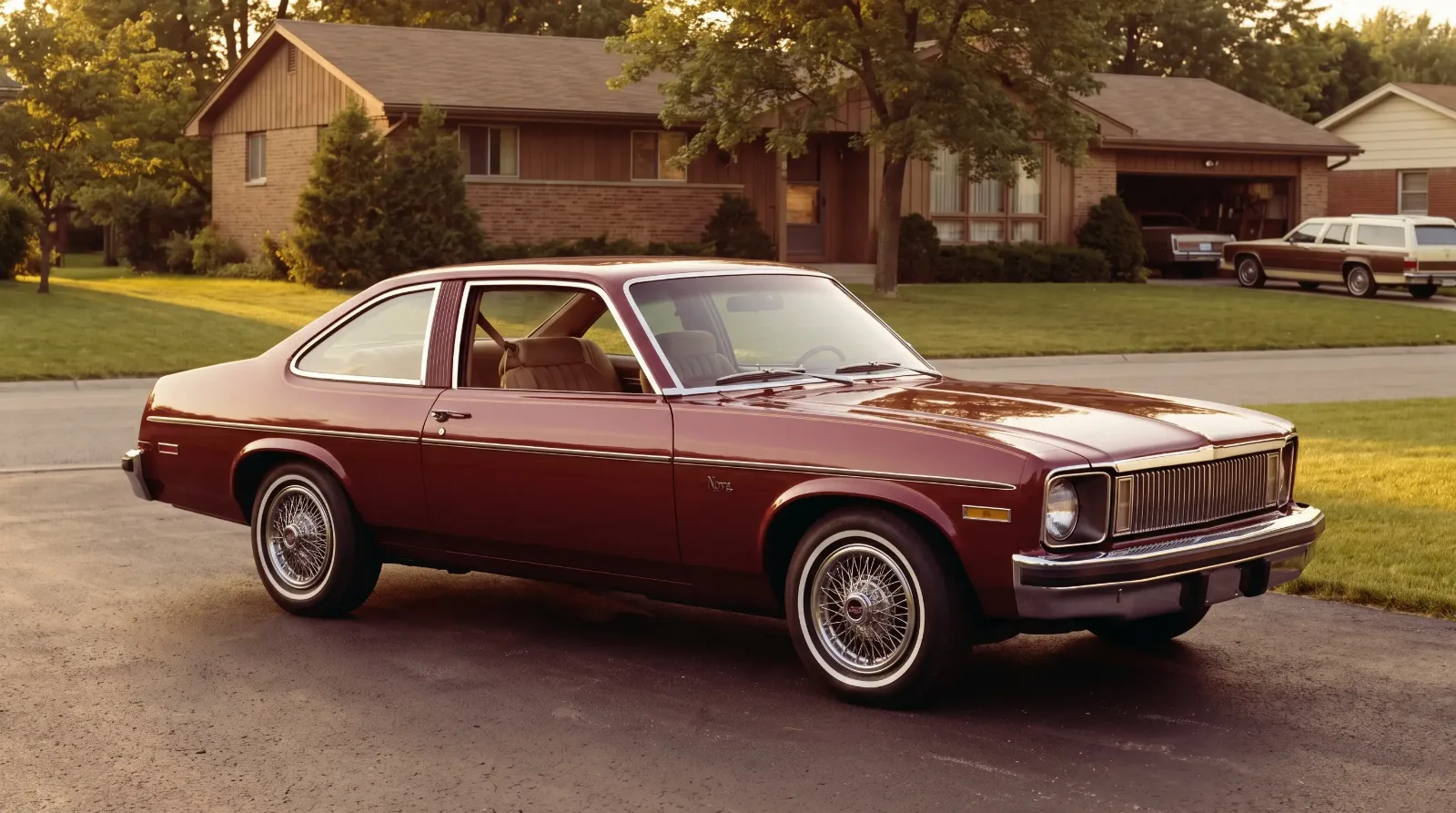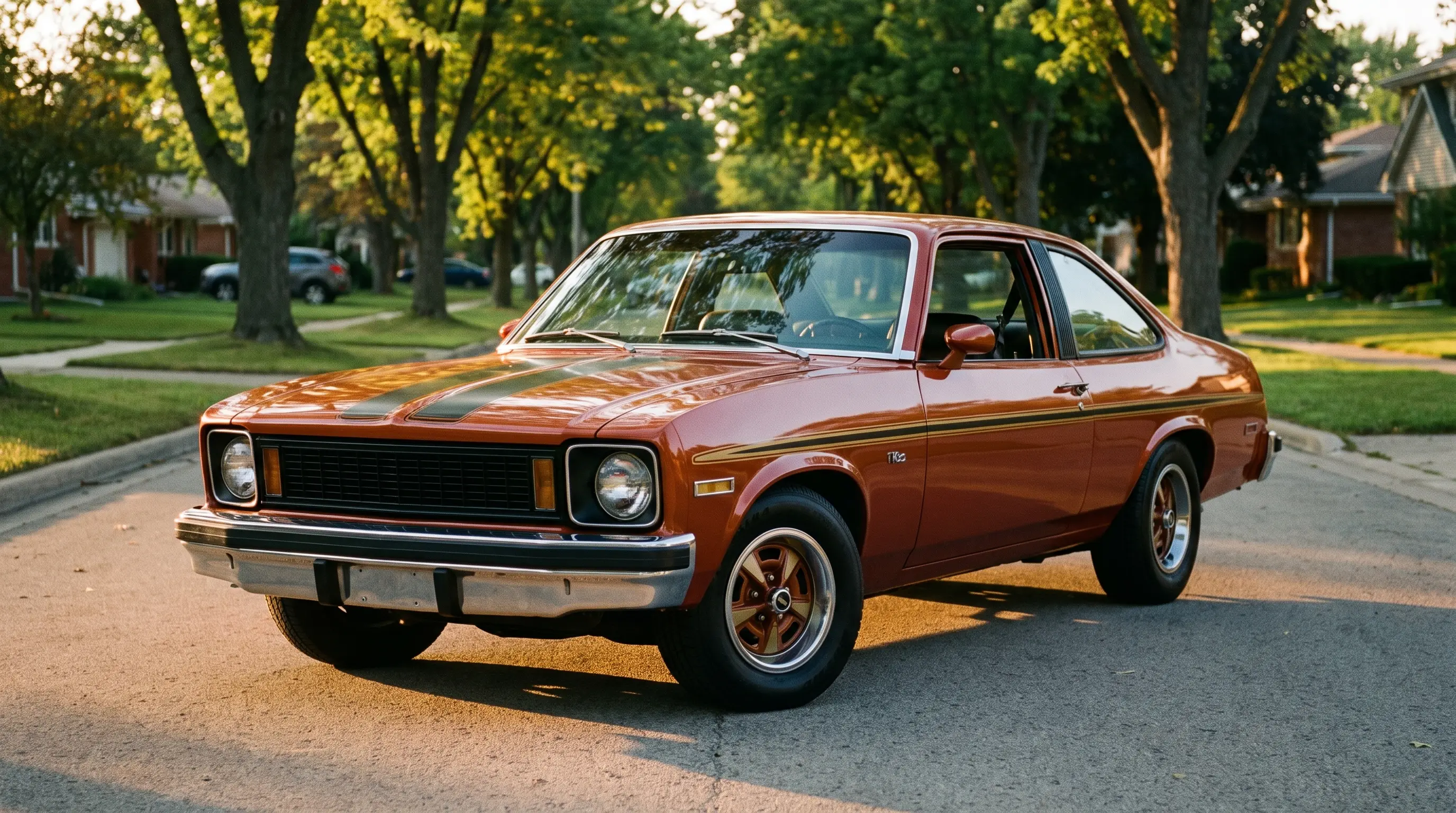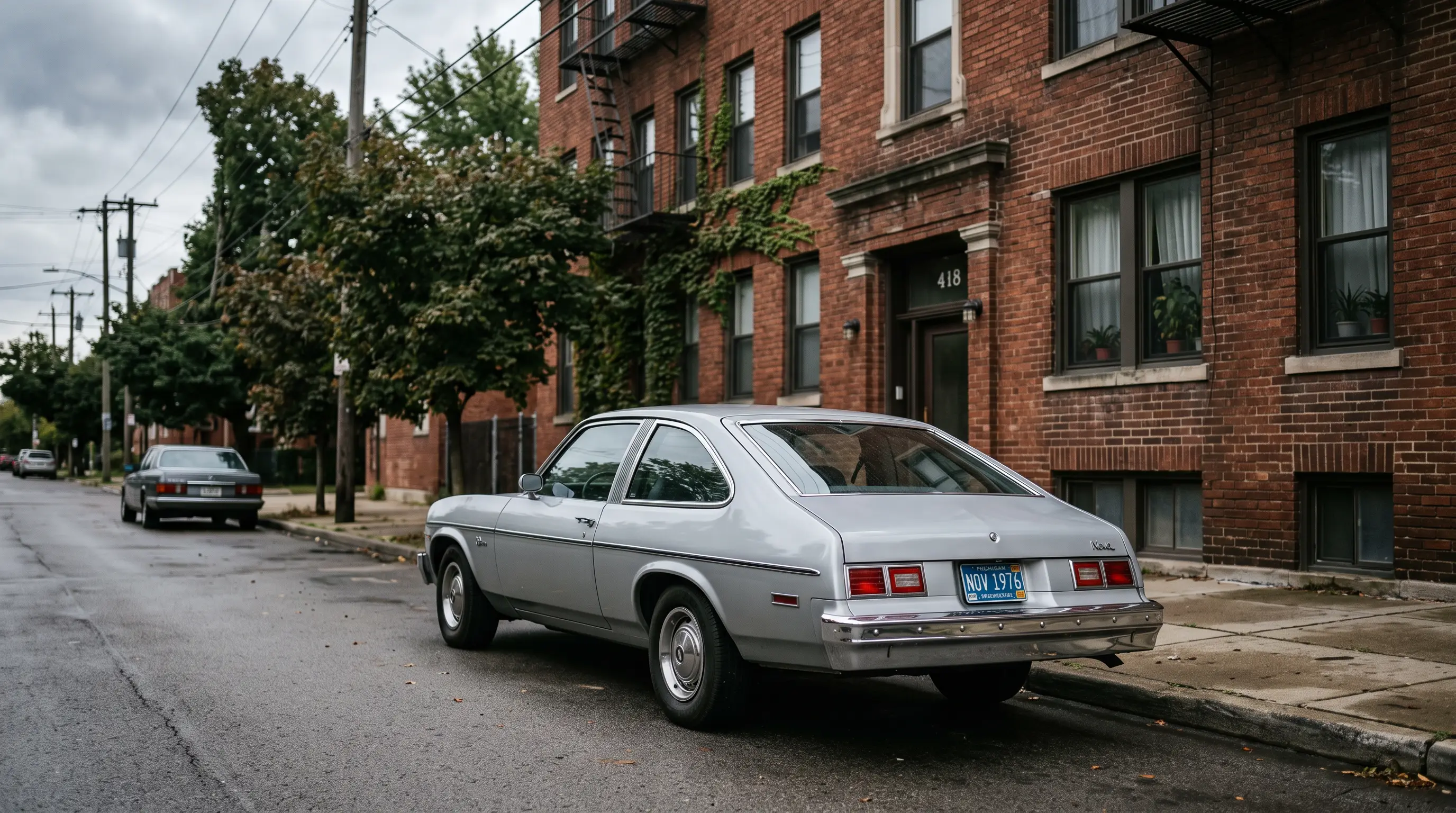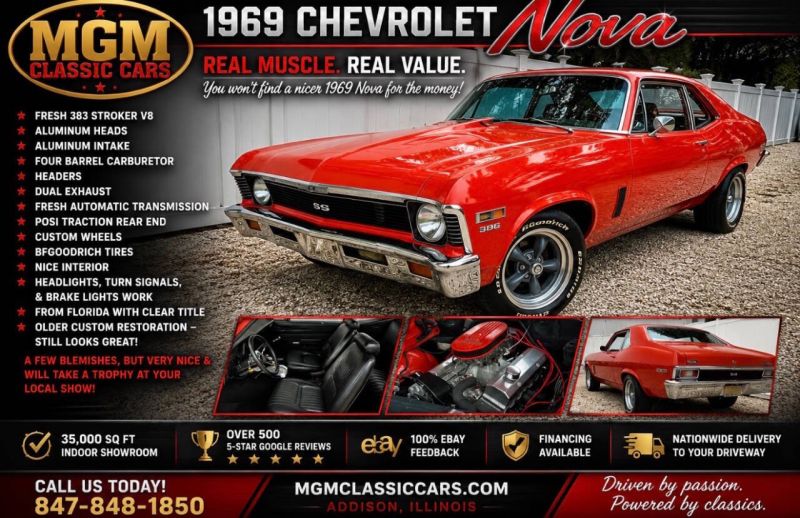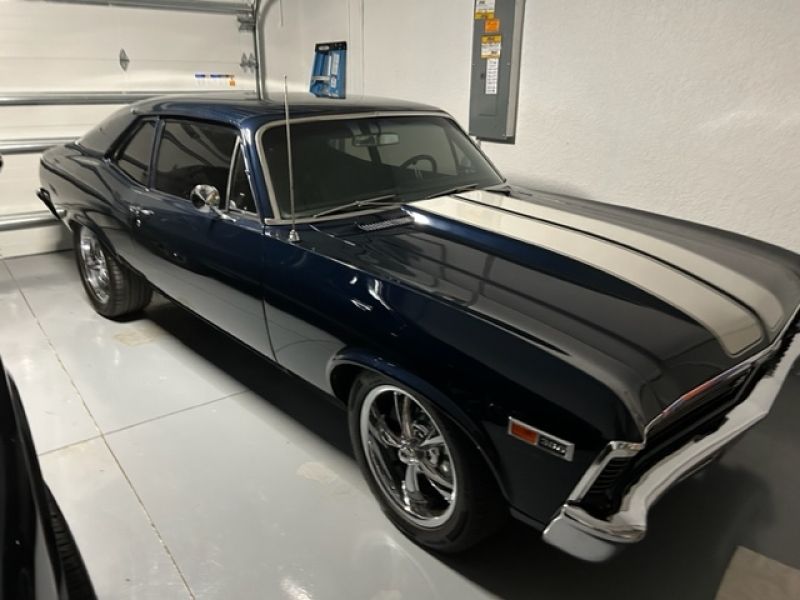
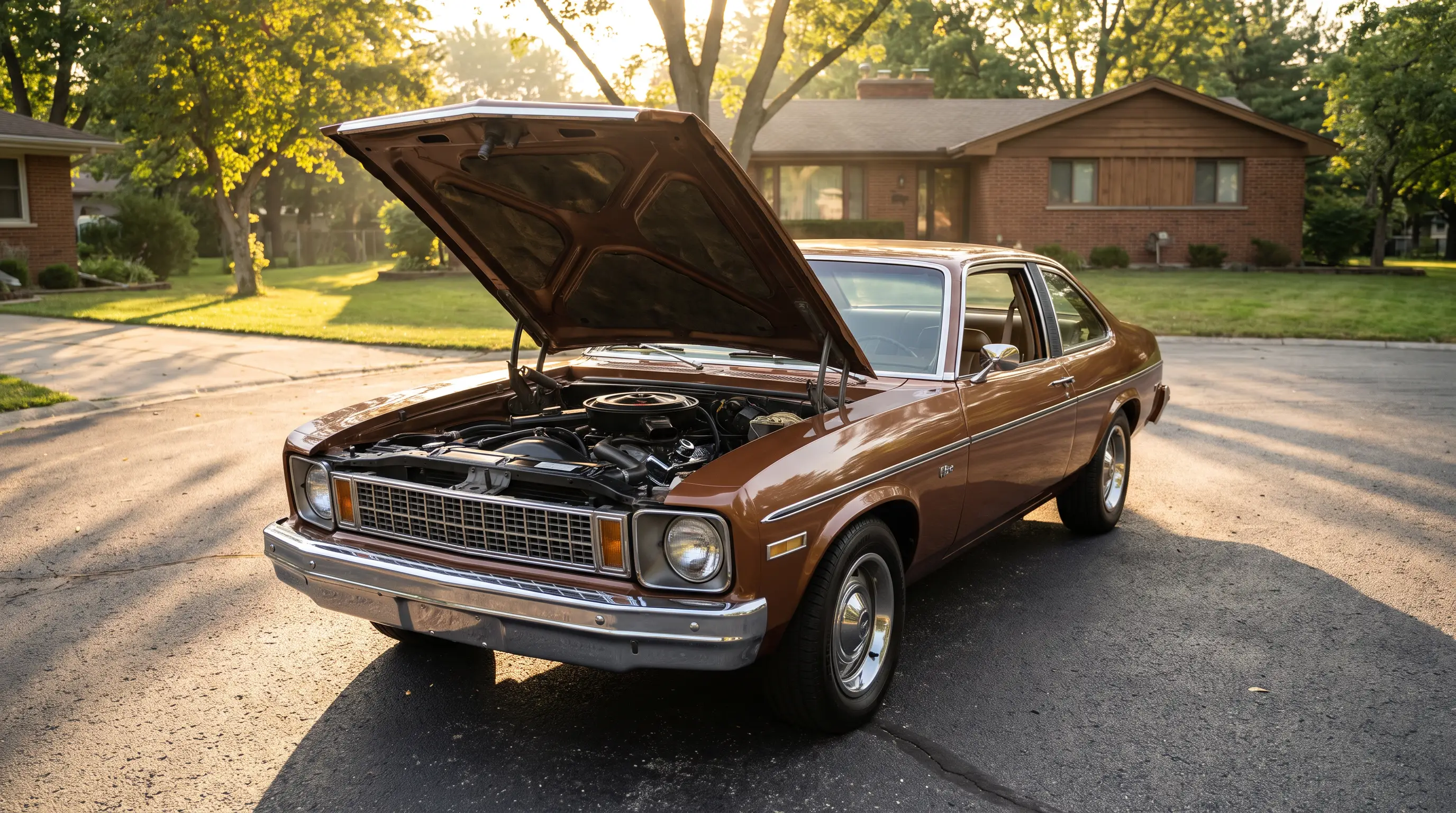
The 305 gets an unfair reputation in Nova circles, and I have made it my business over the years to correct people about it whenever the subject comes up at a show. Ask the wrong crowd and you will hear that the 305 cubic-inch small-block was a compromise engine, a downsized stopgap dropped into the Nova once emissions rules and the fuel crisis made the bigger V8s politically unpopular. There is truth buried in that story, but it skips over what actually happened under the hood of the fourth-generation Nova between 1975 and 1979, and that whole period deserves a straighter accounting than it usually gets.
The lineup, year by year
The base engine across most of this run was an inline six-cylinder, either the 250 cubic-inch unit or a smaller displacement depending on the model year and market, built for economy and simplicity rather than performance. It was the engine most Novas actually left the factory with, since the six-cylinder cars were cheaper to buy, insure, and fuel during years when gas lines and rising prices were reshaping what compact-car buyers actually wanted.
Above the six sat a run of small-block V8 options that shifted meaningfully across the generation. In 1975 alone, Chevrolet offered a 262 cubic-inch V8, the smallest small-block it ever put into production, alongside a 350 for buyers who wanted more; the 262 was dropped after that single year and replaced for 1976 by the 305 cubic-inch V8, which then ran alongside the 350 through the rest of the run, a shift driven by tightening emissions standards and corporate fuel-economy pressure rather than any engineering failure of the larger engines. By the back half of the decade, the 305 had become the small-block most buyers actually drove home, and it deserves to be judged on what it was built to do in that context, not measured against a 1970 396 that never had to survive the same regulatory environment.
| Engine family | Displacement | Role in the lineup |
|---|---|---|
| Inline six | 250 cid | Standard engine across the run, most common configuration sold |
| Small-block V8 (1975 only) | 262 cid | One-year-only base V8, replaced by the 305 for 1976 |
| Small-block V8 (1976-1979) | 305 cid | Volume V8 option as emissions rules tightened |
| Small-block V8 (1975-1979) | 350 cid | Upper performance option all five years; California and high-altitude markets only by 1979 |
What emissions rules actually did to these engines
This is the part of the story that gets flattened into a punchline, and it deserves better. Catalytic converters became standard equipment on most GM cars starting with the 1975 model year, which meant every Nova built from that point forward ran unleaded fuel and carried emissions hardware that earlier small-blocks were never designed around. Compression ratios came down across the board industry-wide through the mid-1970s to accommodate lower-octane unleaded fuel and tightening federal standards, and horsepower ratings shifted accordingly: the six-cylinder was rated at 105 hp for 1975-76 and rose to roughly 110 hp for 1977-79, the 305 came in at 140 hp in its 1976 debut and around 145 hp from 1977 on, and the 350 ranged from 155 hp in 1975 to roughly 170 hp by 1977-79 as engineers refined the emissions calibrations, a pattern that played out across every domestic manufacturer, not just Chevrolet. The 305 was not a punishment handed down to Nova buyers. It was Chevrolet's answer to a regulatory and economic environment that had genuinely changed, an engine sized to deliver reasonable performance within the fuel-economy and emissions constraints that governed everything built in Detroit during those years. Judged against a 1970 396, it looks small. Judged against what every other manufacturer was fielding in a compact car in 1977, it holds up fine.
Why the 305 still has defenders
Talk to enough people who actually drove these cars new, rather than people who only read about them later, and the story softens considerably. A well-maintained 305-powered Nova from the late 1970s was a perfectly capable daily driver, competitive with what most compact and mid-size domestic cars offered at the time, and considerably more durable over high mileage than its reputation suggests. The engine family that includes the 305 went on to power millions of GM vehicles well into the following decades, which is not the resume of a failed design.
"Somebody at every meet wants to tell you the 305 killed the Nova. I tell them the 305 kept the Nova on the road through years when plenty of other compacts just disappeared from the lineup entirely."
— Wayne Coburn
Transmissions paired to the lineup
The engine story does not stand alone, and I bring this up because buyers fixate on displacement and forget the gearbox behind it. The three-speed manual was standard equipment with the six-cylinder, with a four-speed manual and a three-speed automatic offered as options across the engine lineup, six or V8. In practice, six-cylinder cars mostly stayed with the standard three-speed or moved up to the automatic, while V8-equipped cars more often left the factory with the automatic, reflecting the daily-driver character most buyers actually wanted from a compact sedan by the mid-1970s. The four-speed manual remained available on V8 combinations for buyers who still wanted to row their own gears, though it was very much the minority choice by the back half of the decade.
None of this should surprise anyone who understands what the compact-car market had become by 1977. The muscle-car buyer chasing a stick-shift big-block had largely moved on to other platforms or other decades entirely. The Nova buyer of this era wanted a car that started reliably, ran on pump gas, and got them to work, and the engine and transmission choices Chevrolet offered reflect that reality honestly.
What this means for buyers today
If you are shopping the back half of the gen4 chapter of Nova production, understanding which engine you are actually looking at matters more than the badge on the fender. A documented 350 car from an earlier model year in this run is a different proposition, and usually a different price, than a 305 car from a later year, even though both wear the same basic bodywork and both are honestly representative of what Chevrolet built during this period. Neither is a lesser car once you understand what each was designed to do.
Verify the engine against the VIN and any surviving build documentation before you buy, since engine swaps were common enough over five decades that badges and underhood appearance alone tell you little. If the body style interests you as much as the drivetrain does, a related deep-dive covers how these same engine choices played out in the hatchback body, where weight and intended use shifted the calculus slightly compared to the coupe and sedan.