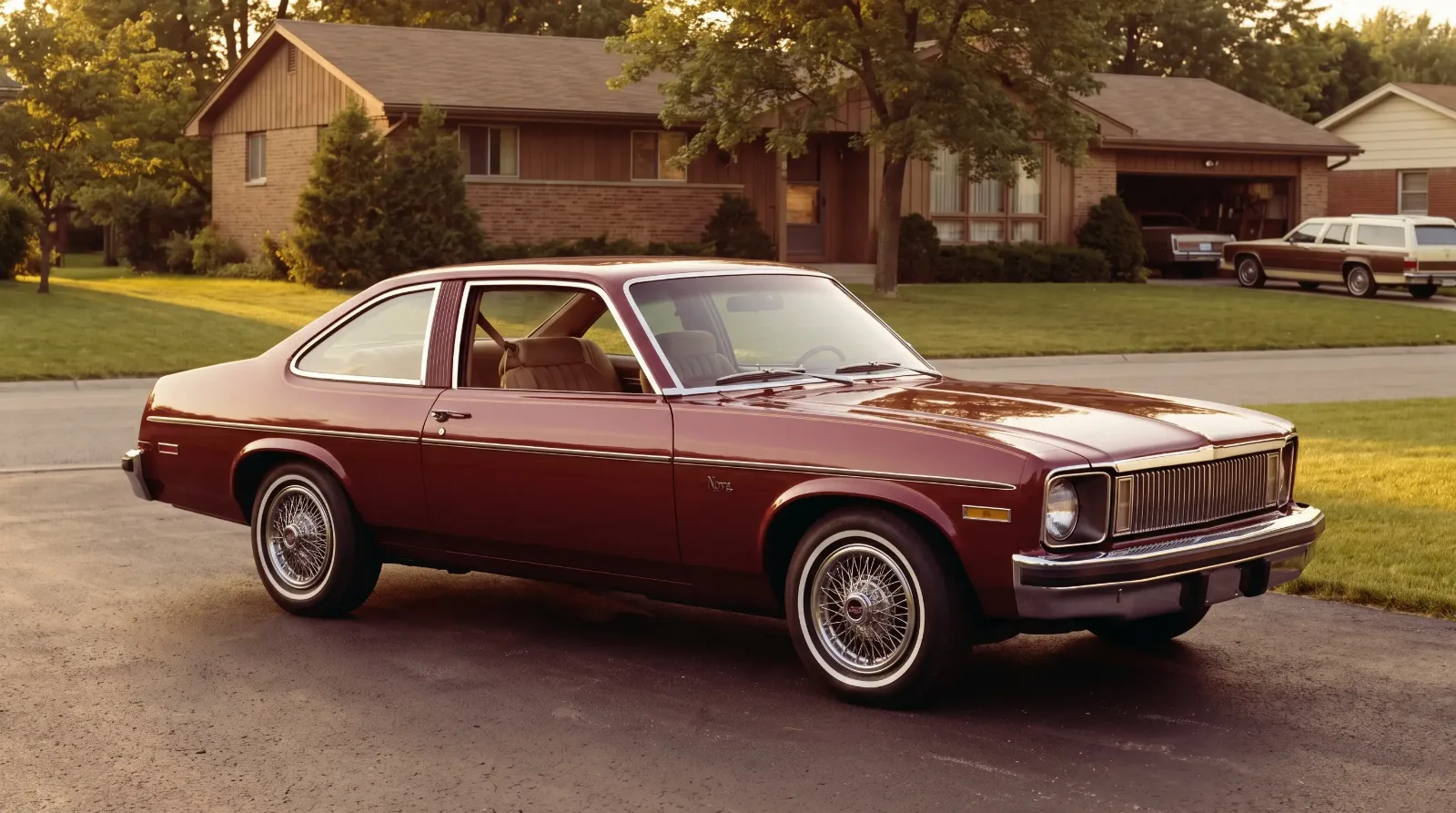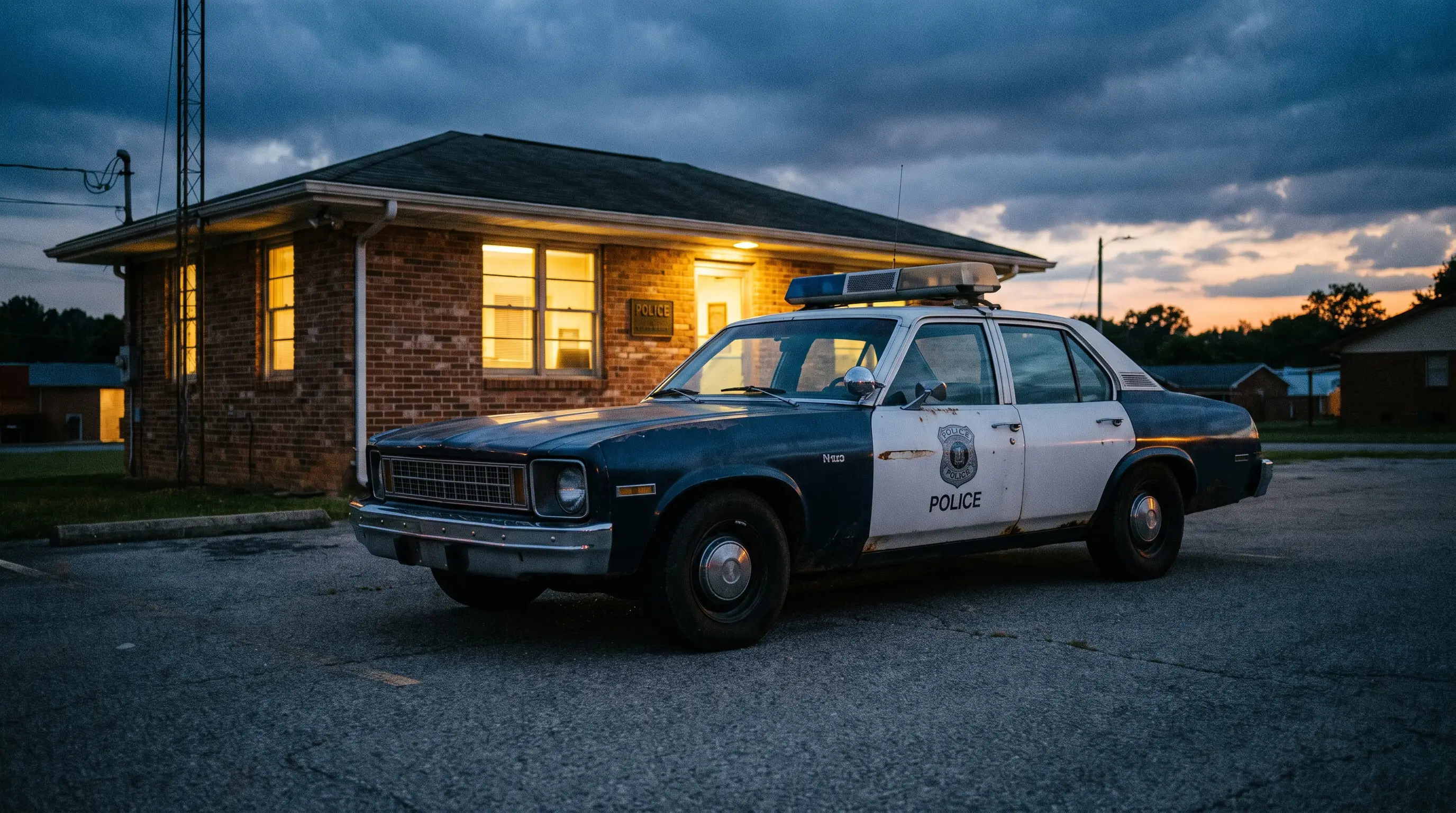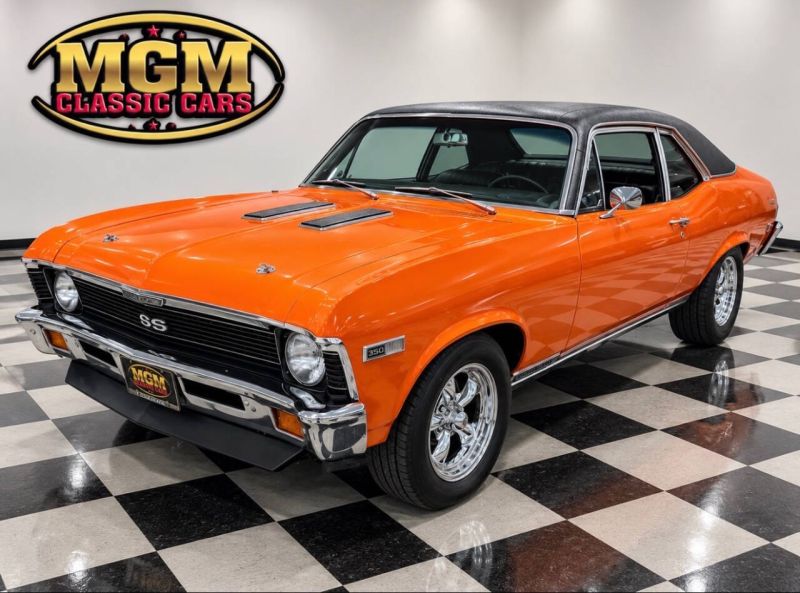
Ask a room full of Nova people what the best-looking 1970s Nova is, and you will get an argument, but the Rally package always comes up in the first five minutes. Not because it was the fastest car Chevrolet built on that platform between 1975 and 1979, it was not, but because it was the one that looked like it meant business without anybody having to check an engine code to believe it. Blacked-out trim, styled wheels, a sport suspension that actually did something, and a name that promised more than most of these cars delivered under the hood. That gap between the promise and the reality is exactly why the Rally Nova still gets talked about at every meet where somebody parks one.
What the Rally package actually was
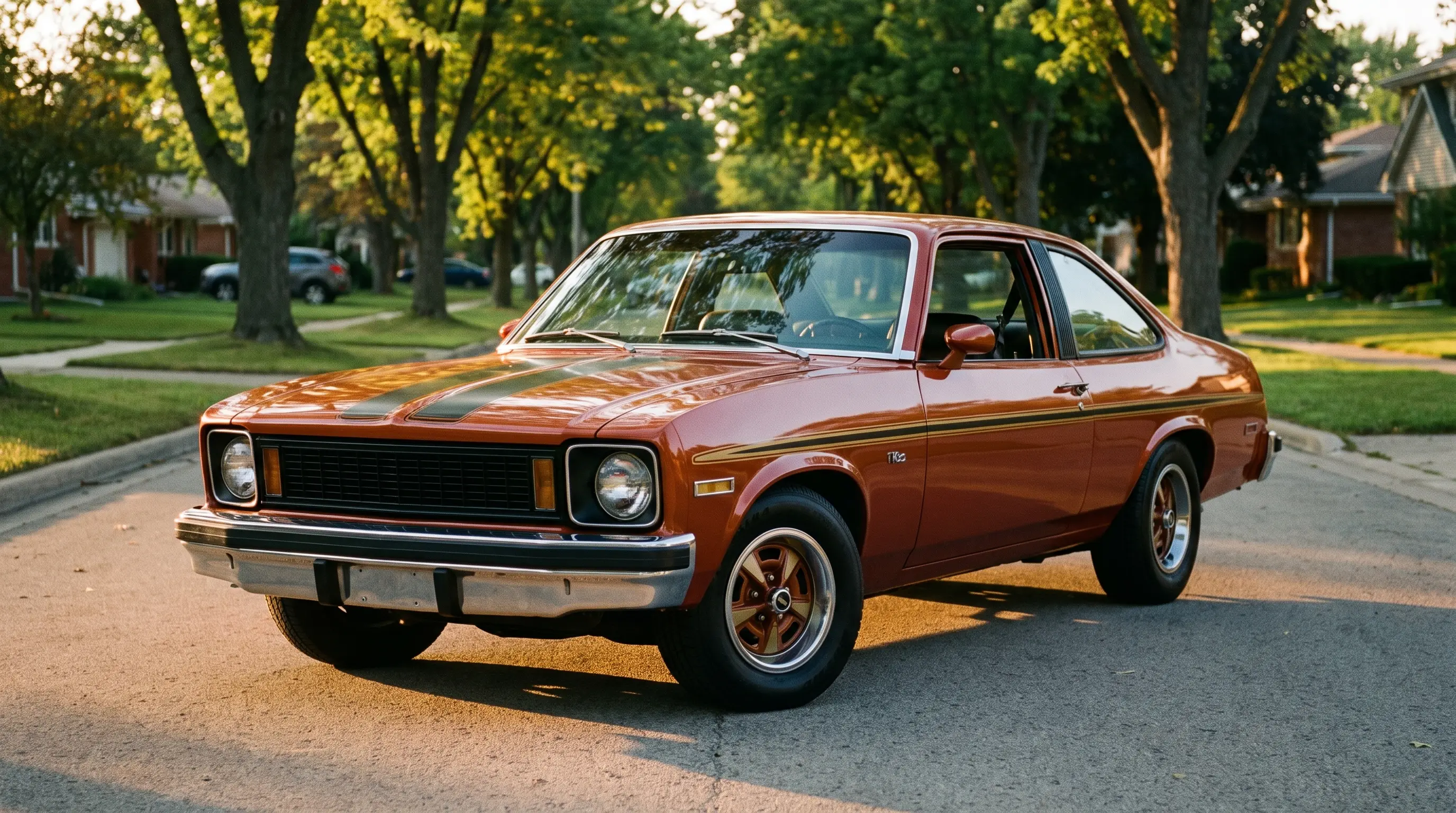
The Nova Rally appearance and handling package arrived for 1977, replacing the SS as the sportiest visual option on the lineup, and ran through the end of fourth-generation production in 1979, three model years rather than the full five. It landed on coupe and hatchback bodies more often than the sedan. Chevrolet's approach was consistent with what other divisions were doing across the mid-to-late-1970s lineup: give a mainstream car a visual identity borrowed from the performance world, without necessarily backing it with the drivetrain that identity implied. Blacked-out grille and headlight bezels, black or contrasting accent stripes running the length of the body, styled steel or Rally wheels, and in most years a firmer suspension tune than the standard Nova rode on.
That last part matters more than the stripes. A Rally-equipped Nova with the handling suspension option actually cornered differently than a base car, with firmer springs and revised shock valving that took some of the float out of the standard ride. It was not a sports-car transformation. It was a compact American sedan that finally felt like the driver was steering it rather than suggesting a direction and hoping the car agreed.
Engines behind the stripes
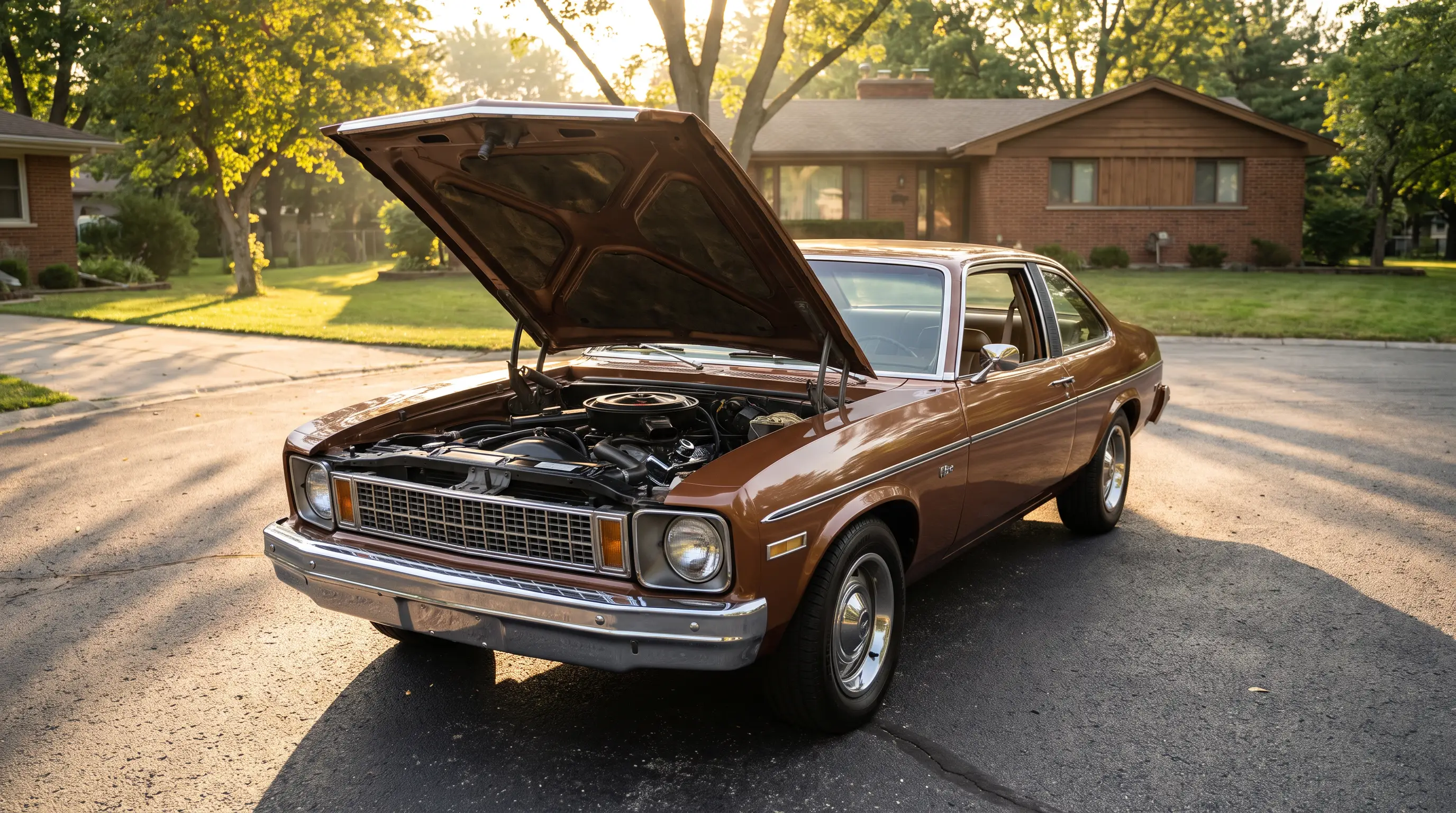
Here is where the Rally package earns its reputation as more style than substance, and where I want to be careful not to oversell it. Through the package's whole three-year run, the six-cylinder was standard equipment even on Rally-optioned cars, with V8 power available as an option rather than standard. Buyers who wanted the look without paying for the small-block underneath could and did order it that way, and plenty of surviving cars reflect that choice. The available V8s were the 305 and 350 cubic-inch small-blocks, rated at roughly 145 and 170 horsepower for most of the package's run, with the 350 restricted to California and high-altitude markets by the final 1979 model year as emissions rules tightened further.
This is not a knock on the package. It is a reminder of what the mid-1970s American market actually rewarded, which was the appearance of performance dressed over whatever powertrain a buyer could afford and whatever the emissions rules of a given model year allowed. A Rally Nova with the six-cylinder and a three-speed is a genuinely different ownership experience than one with a V8 and a four-speed, and both wore the same stripes leaving the factory.
| Rally package element | What it changed |
|---|---|
| Exterior | Blacked-out grille and trim, body-length accent stripes, Rally or styled steel wheels |
| Suspension | Firmer springs and revised shock valving on cars ordered with the handling option |
| Standard engine | Inline six-cylinder |
| Optional engine | 305 cid V8 (roughly 145 hp) or 350 cid V8 (roughly 170 hp); 350 limited to California/high-altitude cars by 1979 |
| Body styles | Most commonly coupe and hatchback, less often sedan |
The stories these cars carry
I have heard the same conversation play out at three different shows now, always some version of a guy explaining that his dad or his uncle bought the Rally Nova specifically because it looked like the muscle cars from a few years earlier without costing anywhere near as much to insure. That was the real market this package served. A young driver in 1977 or 1978 could not touch the insurance premium on a genuine big-block car from 1970, but a Rally-badged Nova with a small V8 got him something that looked the part at a fraction of the cost, and the six-cylinder version got him the look at an even lower price, insurance included.
That is the honest legacy of this package, and it is not a small one. These were the cars a whole generation of drivers actually owned and drove daily, not the ones they read about in magazines. The ones that survive tend to have been someone's first car, kept because it meant something, restored decades later for the same reason.
"Somebody always shows up with a Rally car and swears it had the 350 from new, and half the time the build sheet says six-cylinder. Doesn't make it a lesser car. Just makes it an honest one."
— Wayne Coburn
Inside the Rally cabin
The visual theme carried inside the car too, and this is the detail that gets overlooked when people focus entirely on the stripe kit. Rally-optioned interiors typically added a sportier steering wheel, additional gauges or a gauge package on some years, and upholstery patterns distinct from the base cloth or vinyl offered on standard trims. None of it turned the cabin into something resembling a genuine performance car of the period, but it reinforced the same message the exterior was sending: this was the version of the Nova built to feel a step above ordinary transportation, even when the drivetrain underneath said otherwise.
Production numbers for the Rally package specifically are harder to pin down than they should be, since Chevrolet's fleet and retail sales data from this era rarely broke out appearance packages the way it tracked engine and transmission combinations. What survives are dealer order guides and the honest recollections of people who worked the sales floor at the time, which is enough to confirm the package was a genuine volume seller through these years without giving anyone an exact production count to cite with confidence.
Buying one today
The market for Rally Novas has warmed up in the last several years alongside broader interest in the gen4 chapter of Nova production, but it remains a genuinely accessible entry point into 1970s Chevrolet ownership compared to earlier Nova generations. Condition and originality of the stripe and trim package matter more to value than the engine underneath, which surprises buyers coming from the muscle-car side of the hobby where displacement drives everything.
Before buying, get the build sheet or broadcast sheet checked against the car if either survives, confirm the suspension package matches what the seller claims, and budget for stripe and trim replacement since original decals have not aged well on most surviving cars. If the drivetrain story matters as much to you as the look does, it is worth reading another angle on what actually powered these cars through the back half of the decade, since the engine bay rarely matches the aggression of the stripe kit on top of it.