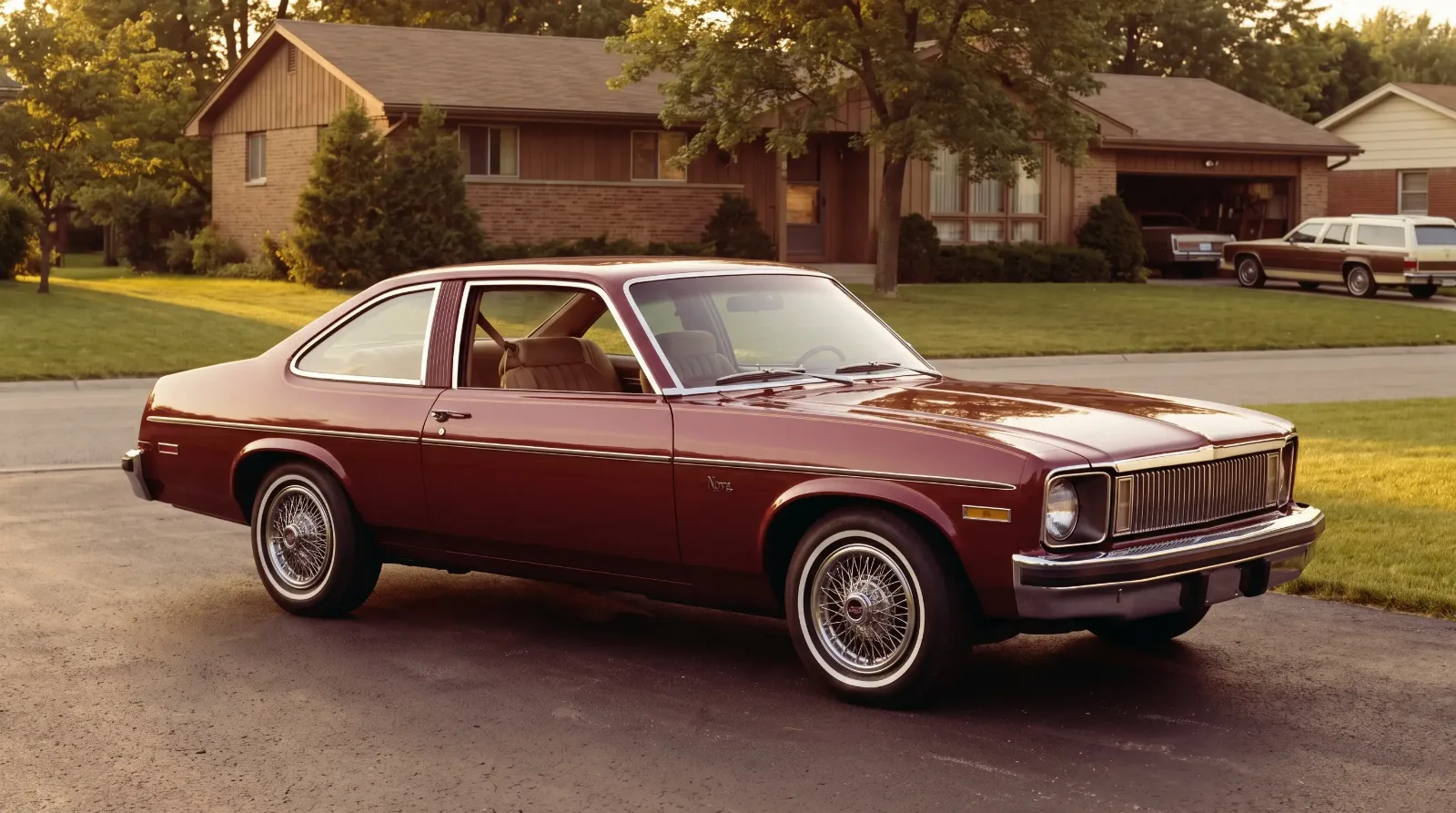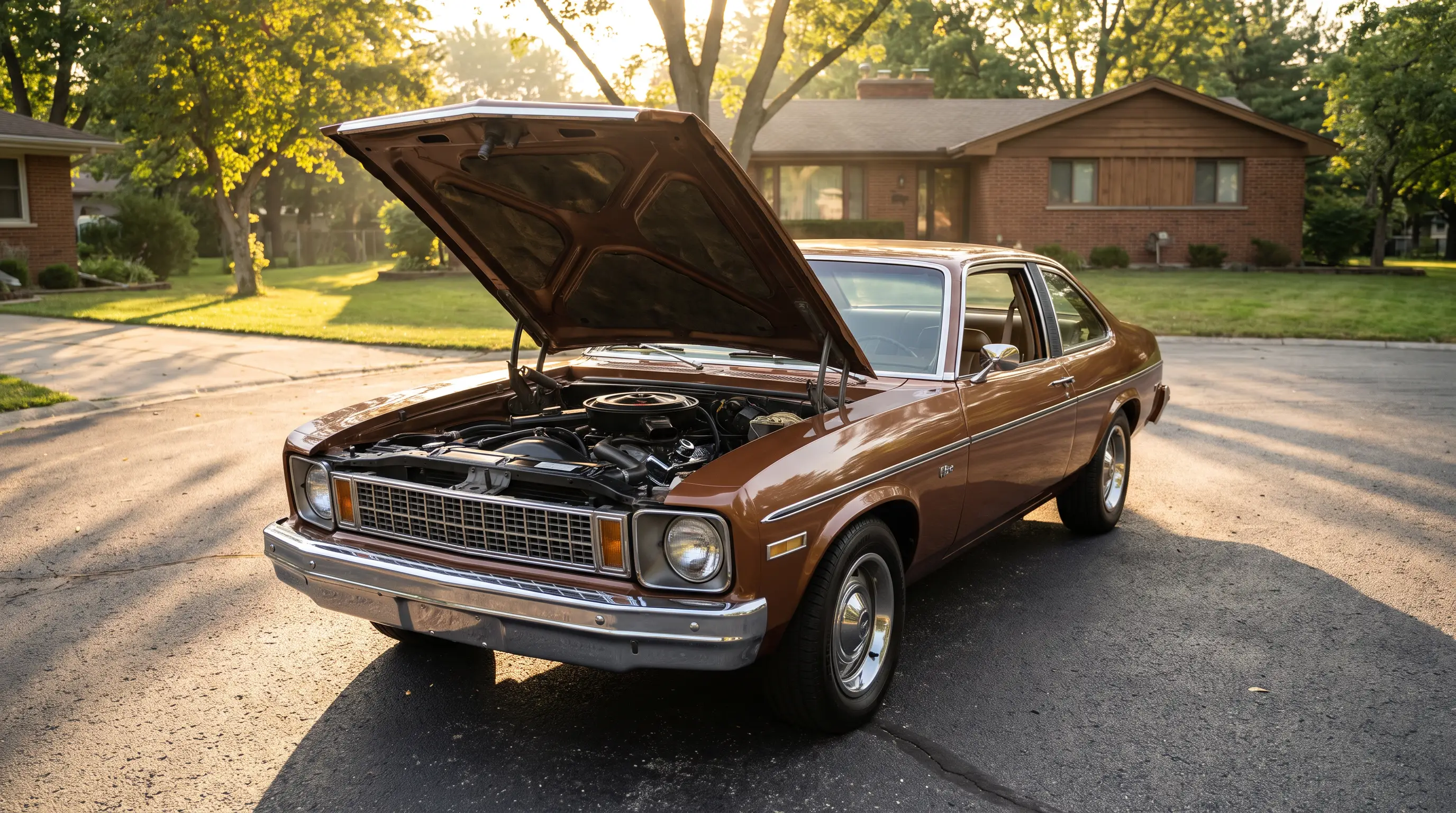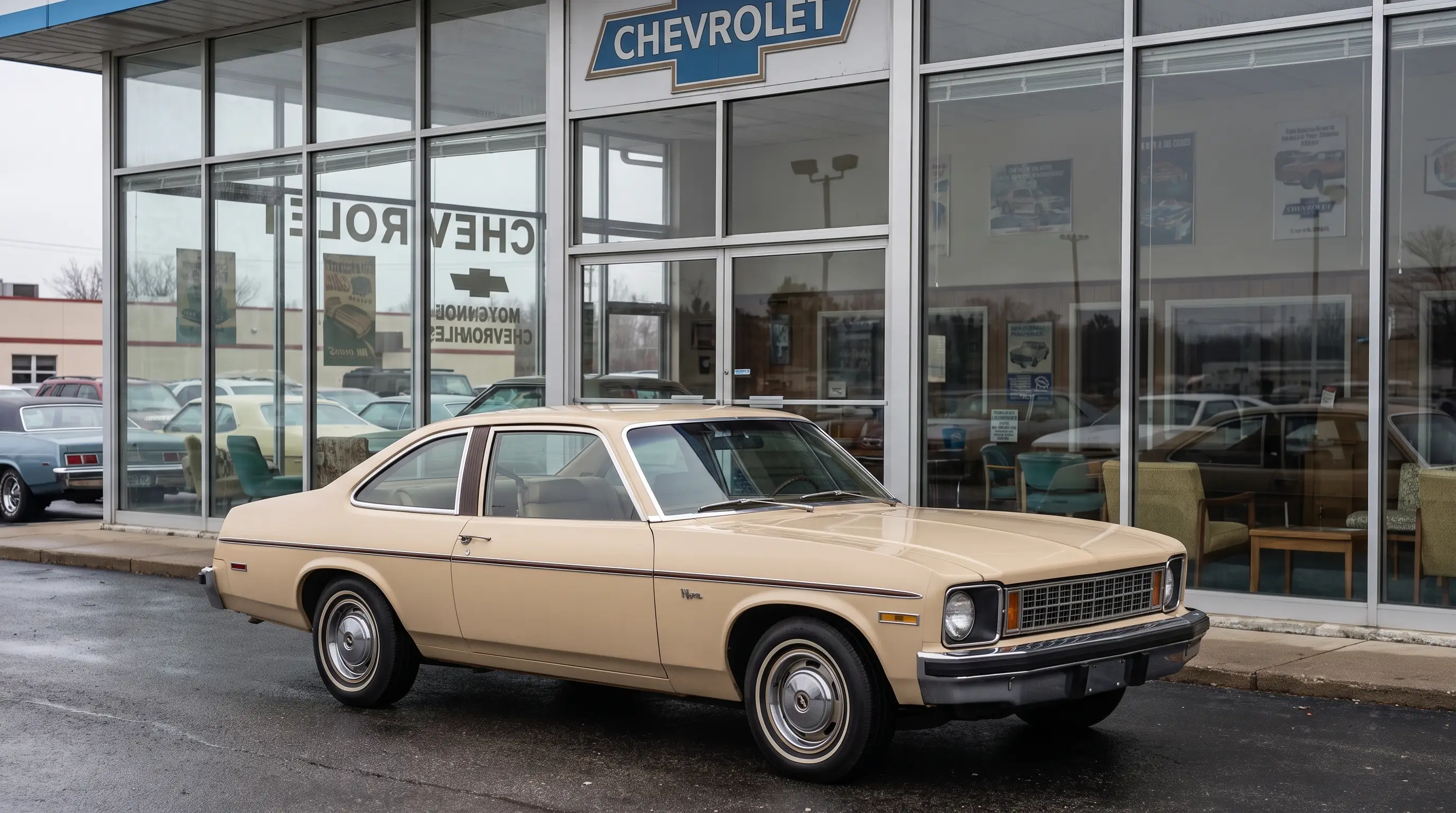
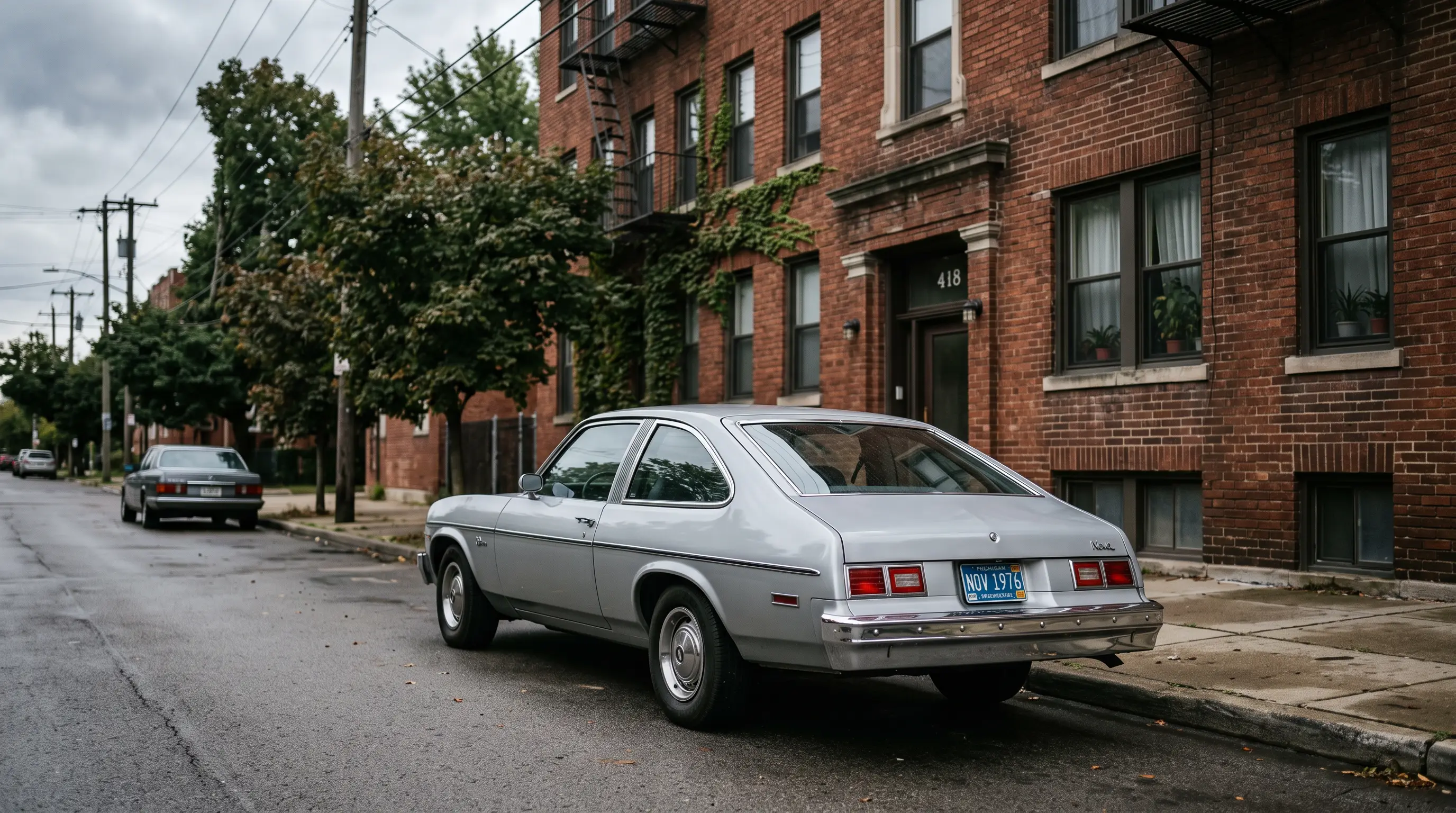
Nobody at a Nova show gets excited about a hatchback the way they get excited about a coupe with a big-block under the hood, and I understand why. But every so often a plain three-door hatchback rolls in and somebody who actually owned one back in the day walks over, and the conversation that follows is always better than the one happening around the flashier car parked next to it. The gen4 hatchback Nova was never the star of the lineup. It was the practical answer to a question a lot of buyers were actually asking in the back half of the 1970s.
Why Chevrolet added a hatchback body
The hatchback body actually predates this generation. It joined the Nova lineup back in 1973 as a two-door option alongside the coupe and sedan, and when the redesign that opened the fourth generation arrived for 1975, Chevrolet carried the hatchback forward rather than dropping it, keeping a third body option in the lineup through the back half of the decade. The reasoning behind adding it in the first place was straightforward and reflected where the compact-car market was actually heading. Buyers wanted cargo flexibility without stepping up to a full-size wagon, and the domestic manufacturers were watching import competitors capture exactly that customer with small, practical hatchback designs. Chevrolet's answer on the Nova platform was a rear hatch that opened onto a flat load floor with the rear seats folded, turning what was otherwise a conventional compact coupe into something genuinely useful for hauling.
The styling and engineering work needed to make this happen was more involved than it looks from the outside, and most of the hard problems were solved for that original 1973 introduction rather than invented fresh for the 1975 redesign. The rear roofline, quarter panels, and taillight treatment all had to be reworked to accommodate the hatch mechanism and the necessary structural reinforcement around the opening, since a hatch removes a fixed rear window and trunk lid that would otherwise contribute to body rigidity. Carrying the hatch into the redesigned 1975 body meant adapting that same reinforcement to new sheet metal rather than solving the problem from scratch, and Chevrolet's engineers managed it without turning the Nova into a visibly compromised design, which is more than can be said for some of the era's hastily converted hatchbacks from other manufacturers.
Living with one
Ask an owner who actually used the hatchback for what it was designed for, hauling gear, moving apartments, carrying tools, and the appeal becomes obvious fast. The flat load floor with the rear seats down handled cargo that would have needed a wagon or a truck in most other compact cars of the period. That utility came with tradeoffs. Rear visibility suffered compared to the sedan, and the added structure around the hatch opening added weight that the standard six-cylinder engine felt more than the available V8 did.
For daily drivers who never asked the car to be anything more than transportation with a useful trunk, none of that mattered much. For buyers cross-shopping against a coupe, the hatchback asked them to trade a small amount of style and rear-seat headroom for real cargo capacity, and plenty of buyers made that trade happily.
Where they stand in the collector market now
Hatchback Novas from this era have spent decades as the least collected body style from the fourth generation, and that has produced an odd effect on the surviving population. Coupes got restored or hot-rodded. Sedans got driven into the ground as basic transportation and scrapped. Hatchbacks, less glamorous than either, often got kept around as a second car or a project that never quite happened, which means a meaningful number of low-mileage, largely original examples are still out there, overlooked precisely because nobody was competing to buy them.
That is starting to change as interest in the late Nova story broadens beyond the obvious performance variants. Buyers who want an honest, unmodified example of what Chevrolet was actually building and selling in volume during these years are increasingly looking at hatchbacks specifically because they were left alone for so long. A hatchback with its original interior, original stripe kit if so equipped, and honest mileage is a genuinely rare find in a hobby where most surviving coupes have been modified, restored, or both at least once.
| Consideration | Hatchback Nova |
|---|---|
| Cargo capacity | Flat load floor with rear seats folded, best in the lineup |
| Rear visibility | Reduced versus coupe and sedan |
| Structural reinforcement | Added around hatch opening to offset lost trunk-lid rigidity |
| Collector market status | Historically overlooked, growing interest among originality-focused buyers |
"A guy at the club still has the hatchback his mother drove him to school in every day through high school. Nobody ever wanted to buy it off him, so it just sat there being original for forty years. Now it's the most honest car in the lot."
— Wayne Coburn
How it compared to the competition
The Nova hatchback did not arrive in a vacuum. By the mid-1970s, buyers cross-shopping a practical compact had a growing list of hatchback options from both domestic and import manufacturers, and Chevrolet's own lineup included other hatchback-bodied compacts competing for the same customer. The Nova's advantage in that comparison was less about outright cargo volume and more about the familiarity of the platform underneath, the same proven six-cylinder and small-block V8 options buyers already trusted from the coupe and sedan, wrapped in a body style that finally answered the practicality question directly.
That familiarity mattered to a buyer who wanted the flexibility of a hatchback without gambling on an unfamiliar import brand's parts availability or dealer network. Whatever the hatchback gave up in outright style compared to the coupe, it made back in the confidence that any Chevrolet dealer in the country could service it.
What to check before buying
The hatch mechanism itself is the first thing to inspect, since worn hinges and deteriorated weatherstripping are common after decades of use and can let water into the cargo area, accelerating rust in the rear floor pan and wheel wells. Check the structural reinforcement around the hatch opening for rust, since this area sees more stress and more water exposure than a comparable trunk lid seam.
Beyond the body-specific concerns, the buying advice is the same as for any surviving gen4 Nova: verify the engine and options against the VIN, check for honest documentation of ownership history, and budget realistically for trim and weatherstripping that has not aged gracefully. For the fuller arc of what led to this generation of car, how the Nova legend began is worth reading, and for a different underappreciated corner of this same era, a companion piece covers ground the hatchback story only touches on here.