
Gross vs net horsepower is the argument that explains why a 1971 Nova SS looks weaker on paper than a 1970 model with the same engine, and why that difference has nothing to do with the engine actually losing power overnight. Chevrolet did not detune the small-block between those two years. It changed how the number got measured. That single change confuses Nova buyers and sellers to this day, and it deserves a straight answer instead of another vague explanation.
Car Features
6 min read
Gross vs Net Horsepower in the Nova
Gross vs net horsepower explains why a 1971 Nova and a 1972 Nova with the same engine show wildly different numbers. The engine did not weaken. The measurement changed.

What gross horsepower actually measured
Through the 1960s, Chevrolet and every other domestic manufacturer rated engines using the SAE gross standard. That test ran the engine on a stand with no accessories attached. No alternator, no power steering pump, no smog pump, no full exhaust system, often with an open header instead of the actual factory exhaust. The engine also ran with optimal timing and a tune that a real car on the road would rarely match exactly.
None of that was dishonest by the standards of the time. Every manufacturer used the same gross method, so a Chevrolet buyer comparing a Nova to a Ford Falcon or a Plymouth Valiant was at least comparing numbers measured the same way. The problem only shows up decades later, when someone tries to compare a gross number from 1969 against a net number from 1973 without knowing the rules changed in between.
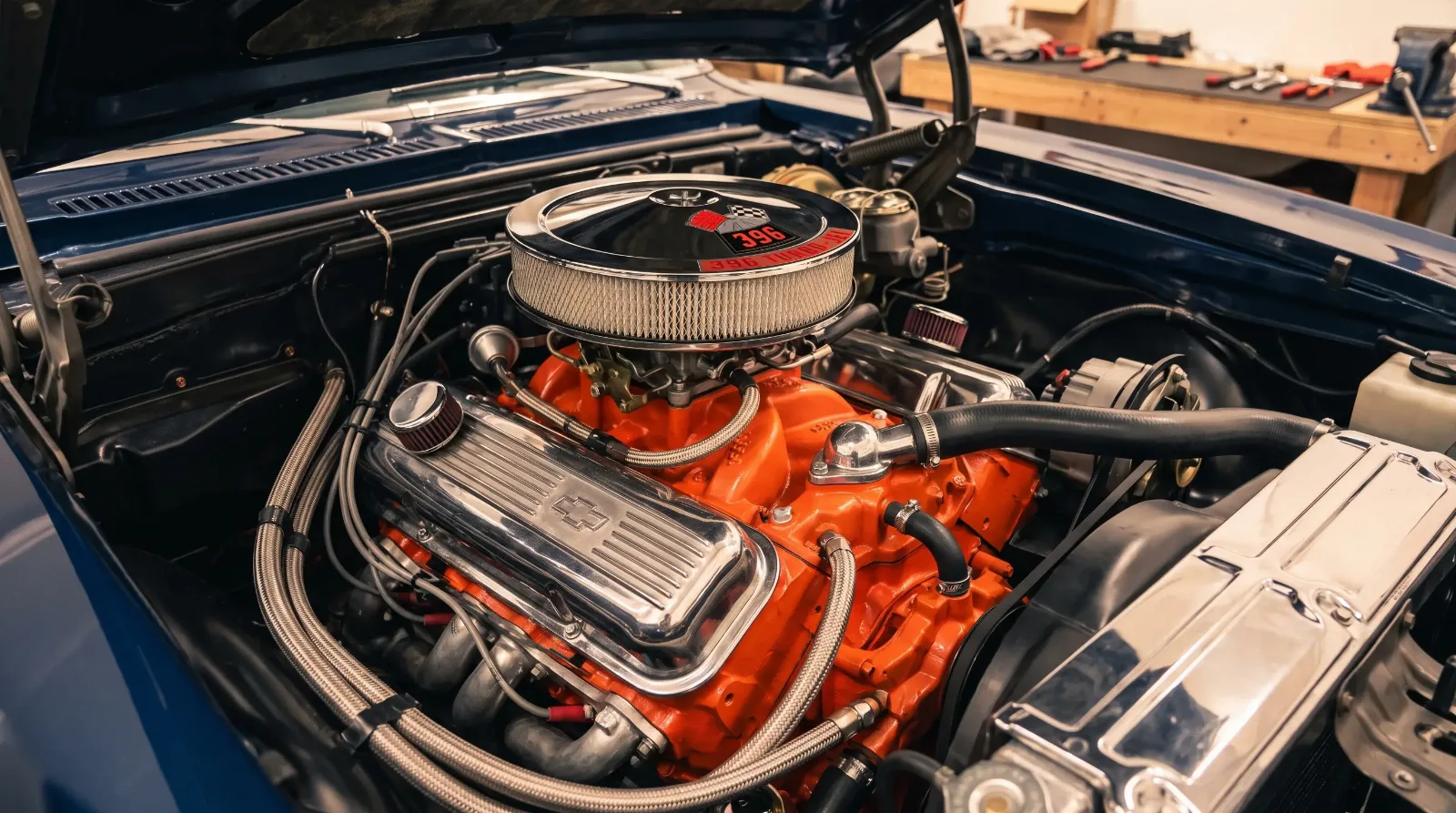
A 1969 Nova SS with the 350 cubic inch V8 and four-barrel carburetor carried a gross rating of 300 hp under that system. That number was real, in the sense that the engine could produce it on a stand under those specific conditions. It was not the number the engine made once it was bolted into a car with a fan, an alternator, a muffler, and a driver who was not a dyno technician.
Why the switch to net happened
Starting with the 1971 model year and fully standard by 1972, manufacturers switched to the SAE net rating. Net horsepower is measured with the engine dressed the way it actually sits in the car: accessories attached, full exhaust in place, production air cleaner installed, production ignition timing. That is a more honest number. It is also, by definition, a lower number, because every accessory and every foot of exhaust pipe costs the engine some power.
The timing was not an accident. Emissions regulations tightened through the early 1970s, and manufacturers were adding smog pumps, EGR valves, and leaner carburetor calibrations at the same time the rating method changed. So a 1972 Nova engine lost power from two directions at once: real reductions from emissions equipment, and an honest measurement that stopped flattering the number.
| Engine | Gross HP (pre-1972) | Net HP (1972+) | Notes |
|---|---|---|---|
| 250 cid six | 155 hp | 105-145 hp | Same basic architecture; net figure fell further through the decade as emissions rules tightened |
| 307 cid V8 | 200 hp | 130 hp | Discontinued in the Nova lineup after 1973 |
| 350 cid V8 | up to 300 hp (4-bbl SS) | 145-175 hp | Range depends on carb and compression |
Why this trips people up when buying a Nova
A seller advertising a "300 horsepower" 1969 Nova SS and a "165 horsepower" 1973 Nova with what looks like the same 350 are not describing two different engines with a 135 hp gap. They are describing similar engines measured two different ways, on top of some real emissions-driven losses. Treating those two numbers as directly comparable is the single most common mistake I see buyers make when cross-shopping Nova model years.
The fix is simple. Do not compare a pre-1972 gross number against a 1972-or-later net number and draw conclusions about which car is actually faster. Compare compression ratio, carburetor size, and factory documentation instead, or find a period road test that timed both cars in the real world.
Compression ratio is probably the single best shorthand available. A pre-1971 350 typically ran compression in the 9 to 10.25 to 1 range depending on the specific option code, while the same displacement engine after the switch to lower-octane, emissions-friendly fuel dropped to around 8.5 to 1. That drop in compression is a real, physical change that affects how the engine breathes and how it responds under load, independent of whatever number ends up printed on the window sticker. If you want a rough sense of an engine's real output before you trust any advertised figure, start there.
Quarter-mile times from period and modern performance estimates are another honest cross-check, since a stopwatch does not care which rating system a manufacturer used that year. A 1970 Nova SS with the 300-hp 350 and a four-speed ran the quarter in the mid-14-second range in most contemporary estimates, and comparing that actual, measured performance against a later car's own road test numbers tells you far more than stacking two advertised horsepower figures side by side ever will.
"People see a big number drop between 1971 and 1972 and assume Chevrolet broke something. Nothing broke. The ruler changed. Learn the ruler before you argue about the number."
Dan Reeves
What documentation to ask for
When you are looking at a Nova and the seller quotes a horsepower figure, ask which year and which rating system that figure comes from before you accept it as a selling point. A factory build sheet, a fender tag, or an original window sticker will tell you the engine code, and from there you can look up exactly what Chevrolet published for that specific combination in that specific year. That is a far more useful data point than a verbal claim, and it protects you from paying a premium for a number that does not mean what you think it means.
Original owner's manuals and factory service manuals from the correct year are also worth tracking down, since they list the compression ratio and carburetor specification alongside the horsepower rating. Cross-referencing all three numbers against what is actually sitting in the engine bay is the only reliable way to confirm a car is what a seller says it is, rather than a later engine dropped in and described loosely.
The bigger picture across the Nova's engine lineup
This rating change touches every engine Chevrolet put in the Nova, not just the V8s. For the full breakdown of every four, six, and V8 offered across the car's production run, the engine chapter lays it out side by side. And if you want to see exactly how horsepower numbers moved, year by year, across the Nova's whole run, keep reading the series for the full timeline.
Gross vs net horsepower is not a trick question once you know which system a given year used. It is just two different rulers measuring the same engines, and only one of them tells you what the car actually did on the road.
Sources and notes
Related Reading

Have a
Chevrolet Nova
for Sale?
Reach thousands of serious classic car collectors across the US.
Sell It Here →
Are You a Classic Car Dealer?
List your full inventory and connect with targeted classic car buyers.
Join as a Dealer →

About the author
Dan Reeves
Performance engine builder from North Carolina's motorsports corridor, focused on swaps, forced induction and making real, repeatable power.
Related Listings - Chevrolet Nova





Comments
Be the first to comment on this article.