
Nova horsepower by year is not a straight line. It goes up through the 1960s, spikes hard around 1970, then falls off a cliff by the mid-1970s. If you are shopping a Nova and only looking at the horsepower number on a spec sheet, you are going to make a bad call unless you know which year you are actually looking at. I have been elbow-deep in enough of these engines to tell you the number on paper and the number you feel from the driver's seat are two different conversations.
Car Features
6 min read
Nova Horsepower by Year
Nova horsepower by year climbs from a mild 90 hp four-cylinder to a 375 hp big-block, then falls hard through the emissions era. Here is the real timeline, year by year.
The early years: 1962 to 1967
The first Chevy II Novas were not built to be fast. Base power came from a 153 cubic inch four making around 90 hp, and the step-up engine was a 194 cubic inch six around 120 hp. Even the early V8 option, a 283 small-block added in 1964, only made around 195 hp in its mildest tune. Nobody was racing a 1964 Chevy II at the strip and expecting to win. These were commuter cars with an optional V8 for people who wanted a little more shove getting onto the highway.
The muscle years: 1968 to 1970
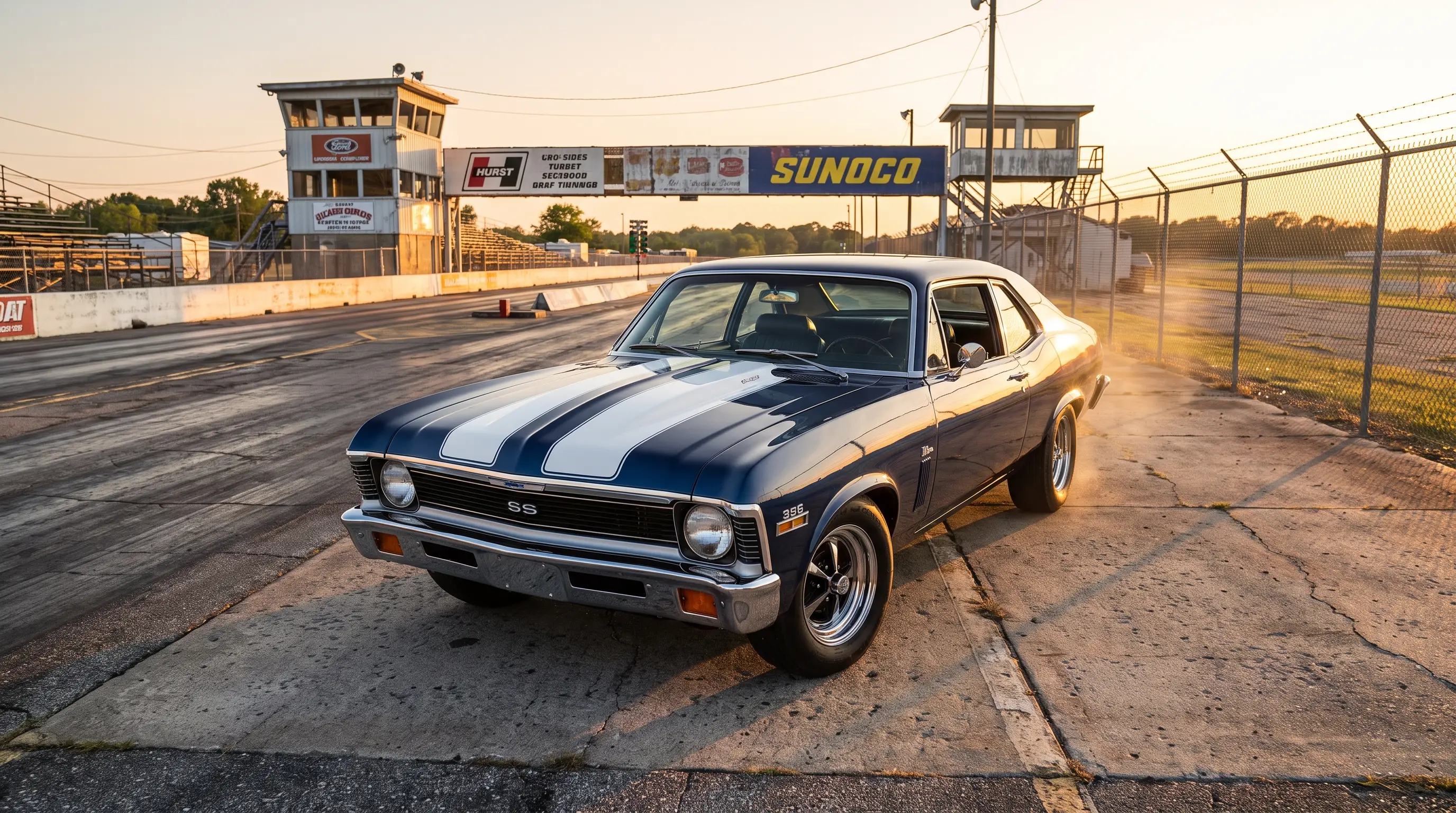
This is where the numbers actually get interesting. The Nova SS package brought real engine options to the table, and by 1970 you could order a Nova with a 396 cubic inch big-block rated at 375 hp gross. That is a legitimate number for the era, and it is the peak of the whole Nova horsepower story. A 350 small-block in the same year, in its hottest factory tune, sat around 300 hp gross.
I want to be blunt about something here. These are gross ratings, measured without accessories bolted on. They are real numbers for what the engine could make on a stand, but they are not what the same engine made sitting in a running car with a fan belt and a full exhaust attached. Do not compare a 1970 gross number directly to a 1973 net number and assume the newer car is half as strong. It is not that simple, and that whole argument gets its own treatment elsewhere.
| Year | Top Engine Option | Peak Rated HP |
|---|---|---|
| 1964 | 283 cid V8 | 195 hp gross |
| 1968 | 350 cid V8 | 295 hp gross |
| 1970 | 396 cid V8 | 375 hp gross |
| 1972 | 350 cid V8 | 165 hp net |
| 1975 | 350 cid V8 | 145 hp net |
| 1979 | 305 cid V8 | 130 hp net |
The drop-off: 1971 to 1975
By 1971 the big-block was gone from the Nova options list entirely. By 1972 every remaining engine got a net horsepower rating instead of gross, which alone made the numbers look worse even before you account for real losses. Emissions equipment tightened every year after that. Compression ratios dropped to run on lower-octane unleaded fuel. Carburetors got recalibrated leaner. A 350 that made close to 300 hp gross in 1970 was down in the 145 to 165 hp net range by the mid-1970s, and some of that drop is real, not just a measurement change.
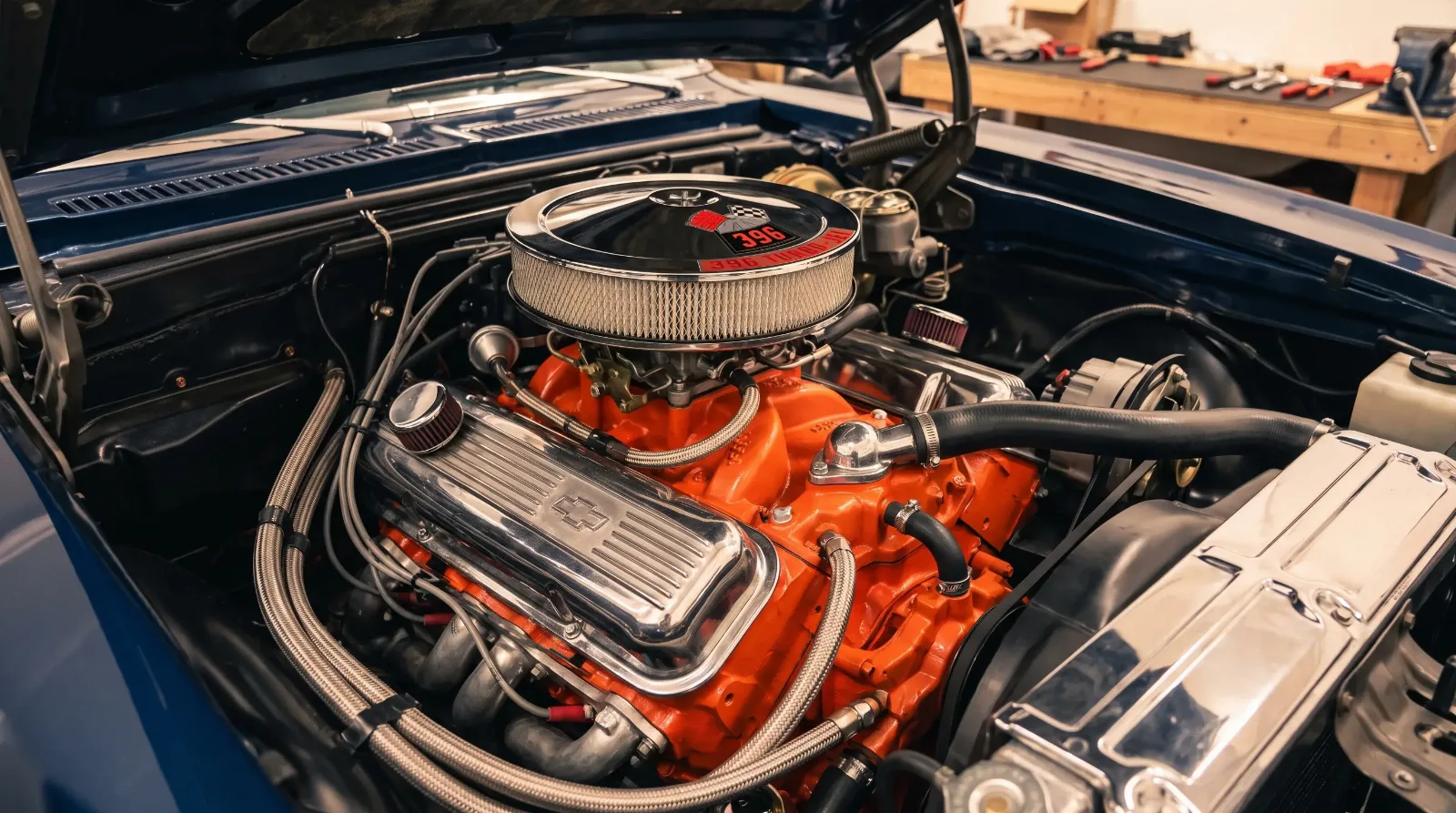
I have pulled valve covers off both versions of that engine. The 1970 heads and the 1975 heads are not the same casting, and the compression is not the same either. This was not marketing. This was a real engine getting real changes to meet real regulations.
The 307 cid V8, a small-block variant unique to this window, tells the same story on a smaller scale. It arrived in 1968 as a step between the 283 and the 350, made a respectable 200 hp gross in its early years, and quietly disappeared from the lineup after 1973 once tightening regulations made it hard to justify keeping a mid-size small-block around when the 305 and 350 covered similar ground with better parts commonality. Most shops today do not stock much for the 307 specifically, which is worth knowing if you are shopping one of these years.
Transmission choice matters here too, and it gets overlooked in most horsepower conversations. A four-speed manual Nova from 1970 puts every one of those gross horsepower numbers to the ground more directly than a Powerglide automatic does, and a Turbo-Hydramatic 350 automatic splits the difference. Two Novas with the same engine and the same year can feel meaningfully different depending on what is bolted behind the engine, which is one more reason a spec sheet number only tells you part of the story.
The last years: 1976 to 1979
By the back half of the 1970s, the Nova's strongest engine was a 350 V8 making around 170 hp net at best, and most buyers were ordering sixes or the smaller 305 V8 that showed up in 1976. Catalytic converters arrived across the board by 1975, and that added another layer of restriction on top of everything else. This was not a bad car. It was just not the same performance story the 1970 SS 396 told.
"I don't care what the brochure says. Put it on the dyno, or at least put your hand on the valve covers and feel how it's running. The paper number is a starting point, not the truth."
Mike Sullivan
If you want the full engine-by-engine rundown behind these numbers, Nova power explained breaks down every four, six, and V8 Chevrolet ever put in this car. And if you are chasing the single strongest Nova ever built from the factory, another angle on that question is worth your time too. Nova horsepower by year is really the story of one car living through a decade that changed what horsepower even meant, and that is worth knowing before you buy one based on a number alone.
Sources and notes
Related Reading
Have a
Chevrolet Nova
for Sale?
Reach thousands of serious classic car collectors across the US.
Sell It Here →
Are You a Classic Car Dealer?
List your full inventory and connect with targeted classic car buyers.
Join as a Dealer →

About the author
Mike Sullivan
Detroit-area muscle car enthusiast and restoration specialist with three decades of hands-on experience working on American iron.
Related Listings - Chevrolet Nova




Comments
Be the first to comment on this article.