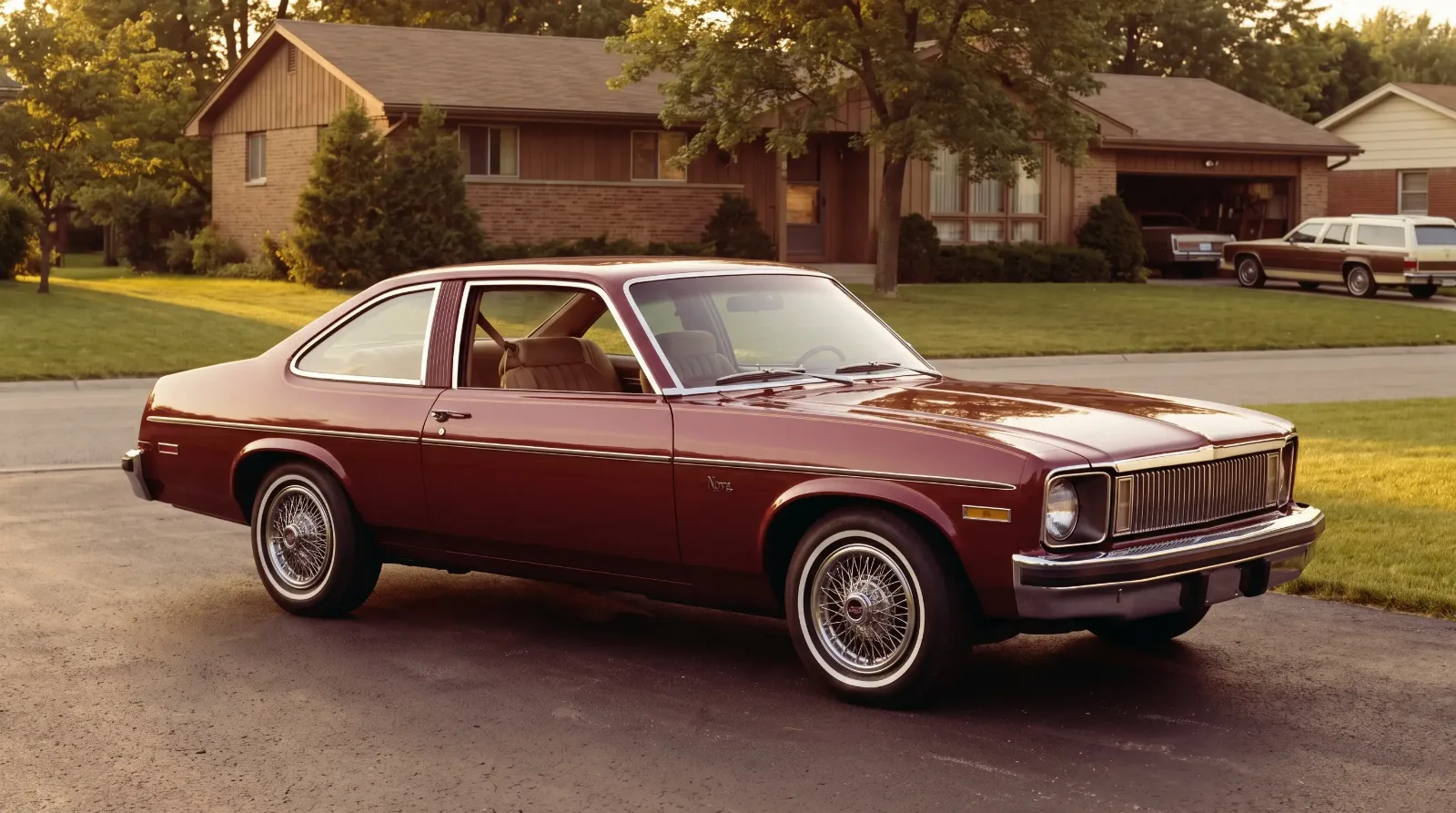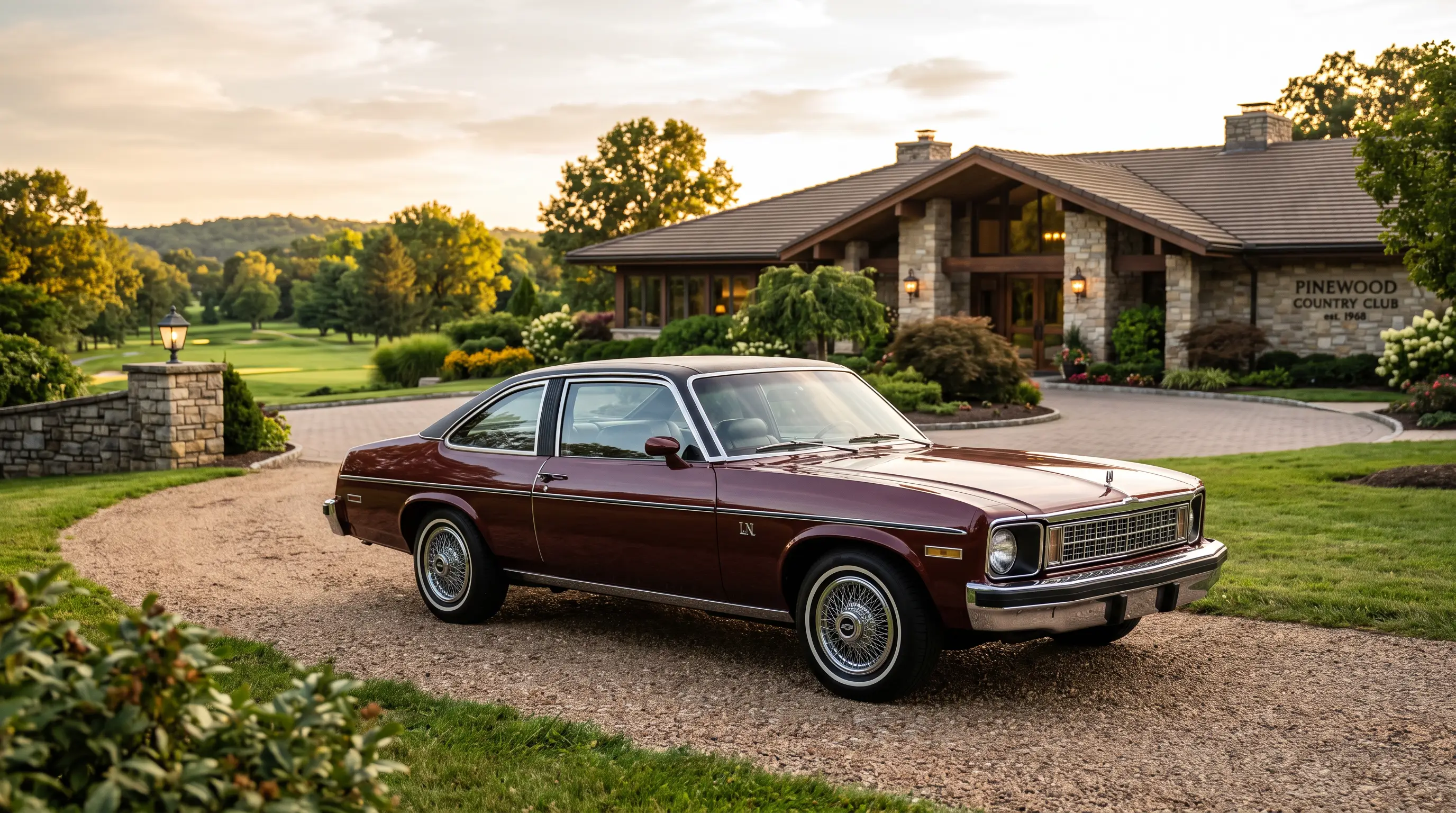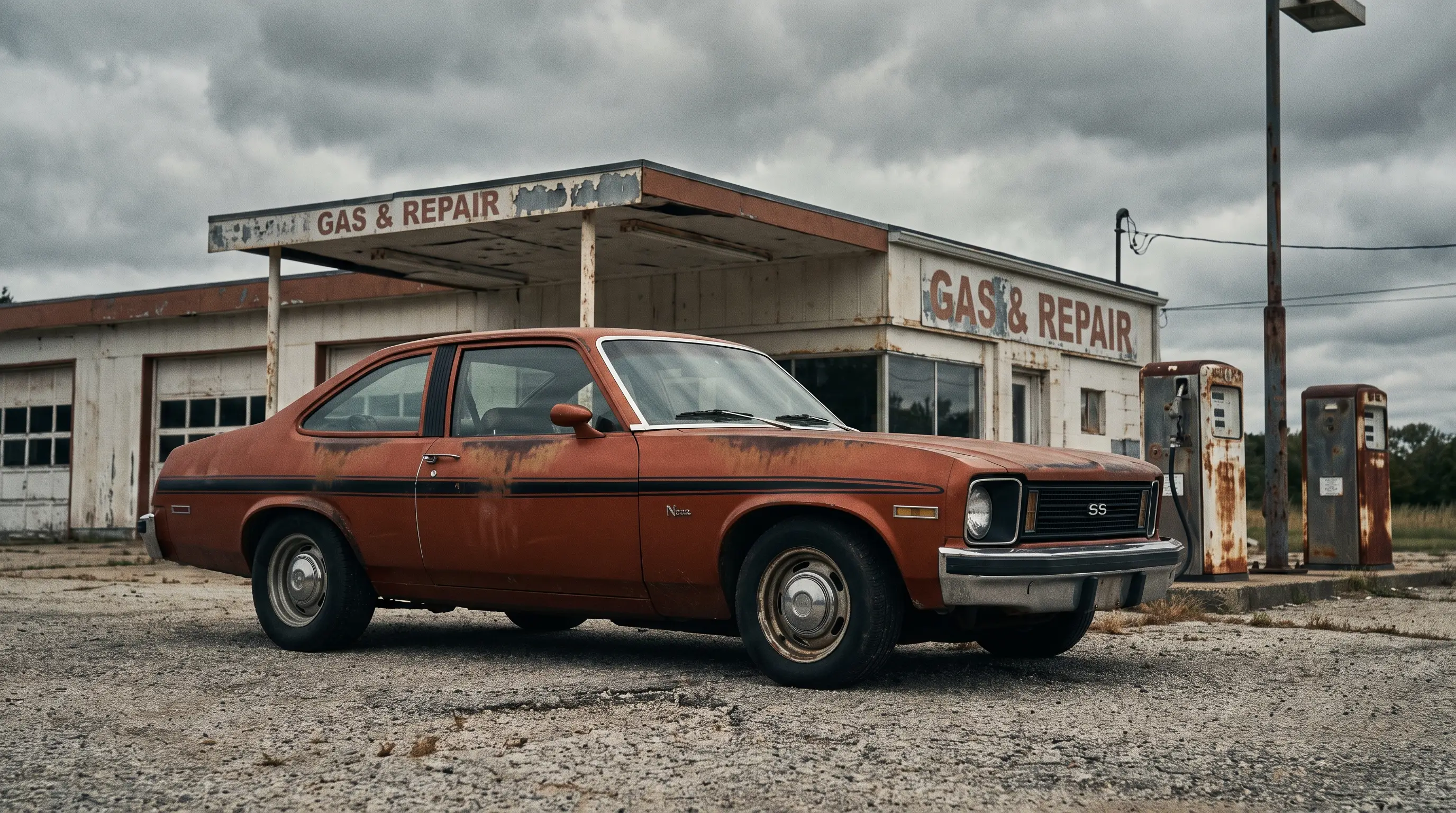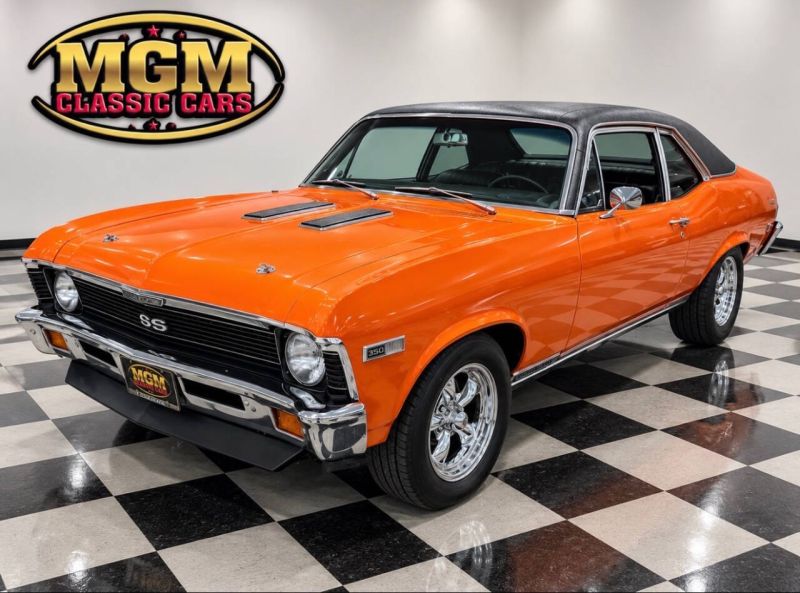
Two years before the country's Bicentennial actually arrived, Chevrolet already had a car in showrooms wearing the colors, and on the compact side of the lineup that car was the spirit of america nova. It showed up for 1974 as a dress-up option package rather than a mechanical special, and it has become one of those cars that pops up at a swap meet table wrapped in more legend than documentation. Every club has a member who says they know exactly how many were built. Almost none of them are working from the same source.
A Bicentennial package, not a new model
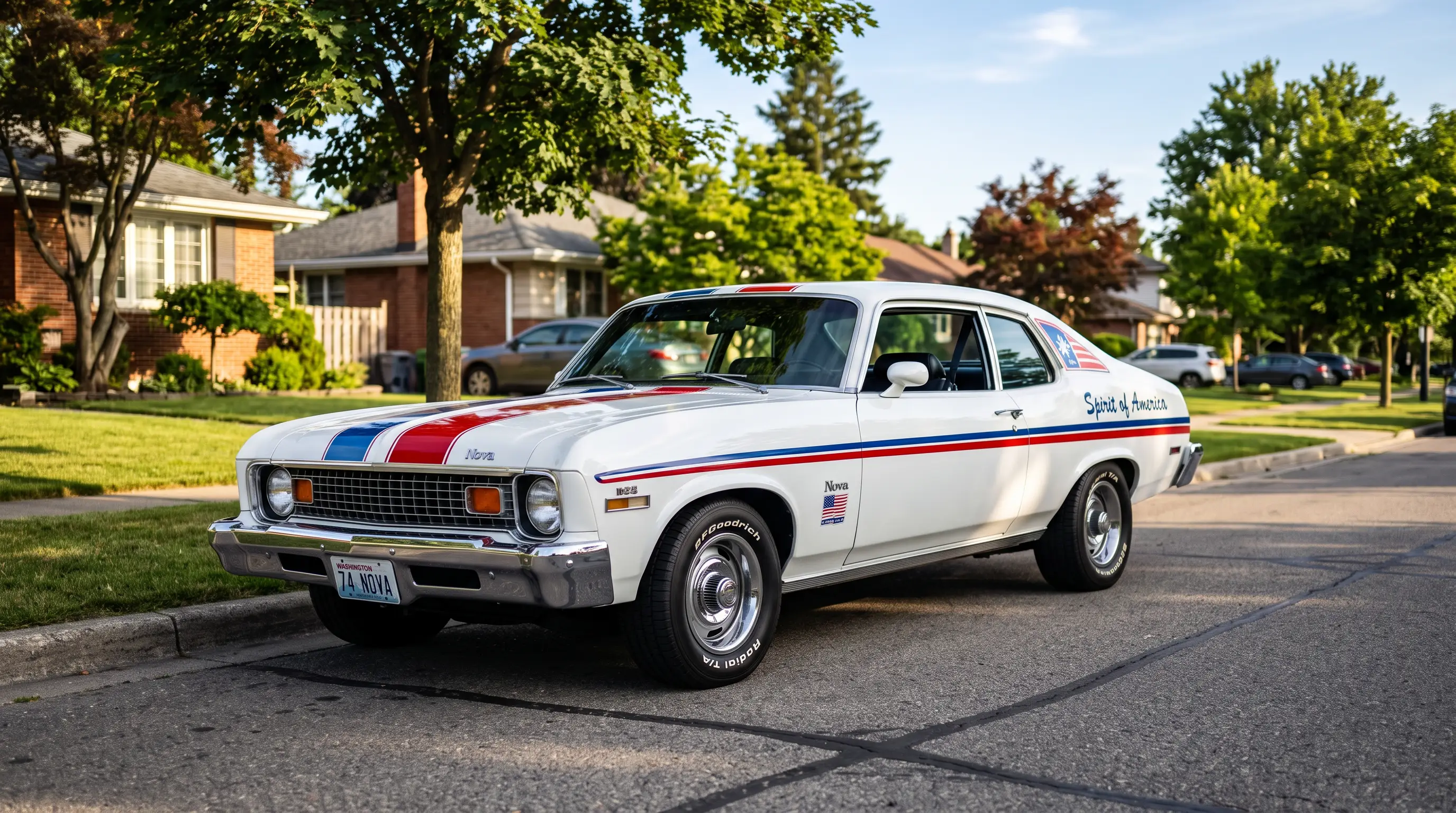
The Spirit of America was an appearance option (RPO Z51) on the regular 1974 Nova rather than a standalone model with its own body or engine. A buyer ordered it as a package: white paint, red and blue accent striping running the length of the car, and styled Rally wheels with patriotic hub cap inserts that set it apart from a standard Nova at a glance. It was offered only on the Custom hatchback body style, so underneath the stripes it was whatever engine and drivetrain the buyer chose from the six-cylinder and V8 range, but the body itself was fixed.
That is worth stating plainly because a lot of casual conversation treats the Spirit of America as if it were its own performance trim the way the SS was. It was not. It was patriotic dress-up sold two years ahead of the country's two-hundredth birthday, alongside matching Spirit of America packages Chevrolet built for the Vega and the Impala that same model year. The Nova version simply happened to land on a car that was already selling well in a shrinking compact segment.
What survives and what does not
Production records put the Spirit of America package at 14,463 units for 1974, out of roughly 390,000 Novas built that model year, a modest slice of total production. Even with a documented figure like that, exact numbers get repeated so often without a citation that anyone quoting a precise total should still be asked where it came from. What is not disputed is that stripe kits deteriorate or get removed over decades of ownership by people who did not know or care what they had.
That combination, a genuinely limited option and a graphics package that fades or peels, means a documented survivor with its original striping and badging intact commands real attention at a Nova-focused show today. A repainted or restriped car built to look like a Spirit of America is common enough that buyers need to verify the option through the build sheet or dealer paperwork rather than take the stripes at face value.
| Feature | Spirit of America content |
|---|---|
| Exterior paint | White base |
| Graphics | Red and blue accent striping |
| Wheels | Styled wheels or wheel covers distinct from standard Nova |
| Drivetrain | Same range as any 1974 Nova, buyer's choice of six or V8 |
| Body styles | Custom hatchback only (model 1Y17) |
"Somebody always says theirs is one of maybe a couple hundred left, and I always ask the same question: left out of how many, according to what paper? Half the time the answer is a forum post from fifteen years ago. Find the build sheet first. Then we'll talk numbers."
— Wayne Coburn
Confirming the option before paying a premium
Because the Spirit of America rode on the regular Nova hatchback's sheet metal with a paint and graphics package rather than a unique VIN sequence, the only reliable way to confirm the option is factory paperwork. A dealer invoice, a build sheet, or a documented option code on the paperwork carries far more weight than stripes and wheel covers that any competent shop can reproduce today. Reproduction stripe kits exist, and they are good enough that a casual buyer at a swap meet cannot tell the difference by eye alone.
A buyer should also check the wheels and wheel covers against period photography and factory literature, since substitutions from other 1976 Chevrolet packages sometimes get swapped onto a car being represented as a Spirit of America. None of this means the car in front of you is dishonest. It usually means fifty years of ownership changes have blurred details that were never meant to be permanent in the first place.
Sources and notes
- RPO Z51 Spirit of America Nova, NovaResource
- Ever Hear About Chevy's 1974 Spirit of America Special Edition Cars?, OnAllCylinders
- Curbside Classic: 1974 Chevy Nova Spirit of America
- Patriot Game: 1974 Chevrolet Nova Spirit of America, Barn Finds
- The 1976-77 Chevrolet Concours, Mac's Motor City Garage
Why buyers still look for one
Part of the appeal is simply the story. A car built ahead of the country's Bicentennial carries a different kind of interest than a plain trim upgrade, even when the mechanical content underneath is identical to any other Nova that left the same factory that year. Buyers who grew up around the mid-1970s, or who collect Bicentennial memorabilia more broadly, see the Spirit of America as a rolling piece of that lead-up rather than just another compact Chevrolet.
The practical advice from the club floor has not changed in years: buy the car underneath the stripes first. A tired six-cylinder sedan wearing fresh reproduction graphics is not worth chasing at a premium over a clean standard Nova of the same year, no matter how good the stripe kit looks. A genuinely documented example with its factory paperwork intact is a different conversation entirely, and those cars do not come up for sale often.
Where it sits in the Nova timeline
The Spirit of America belongs to the late Nova story, the stretch of the model's life when Chevrolet was leaning on trim and appearance packages rather than performance to keep the compact interesting to buyers. It arrived a year before the LN luxury trim and two years before that trim was rebadged Concours, part of the same broader shift toward comfort and dress-up options that had almost nothing to do with the muscle-car Novas that came before it. If you want to keep tracing that stretch of the car's history, keep reading the series on what happened to the SS badge during those same years, or start from the full Nova story for the whole run from 1962 to 1979.