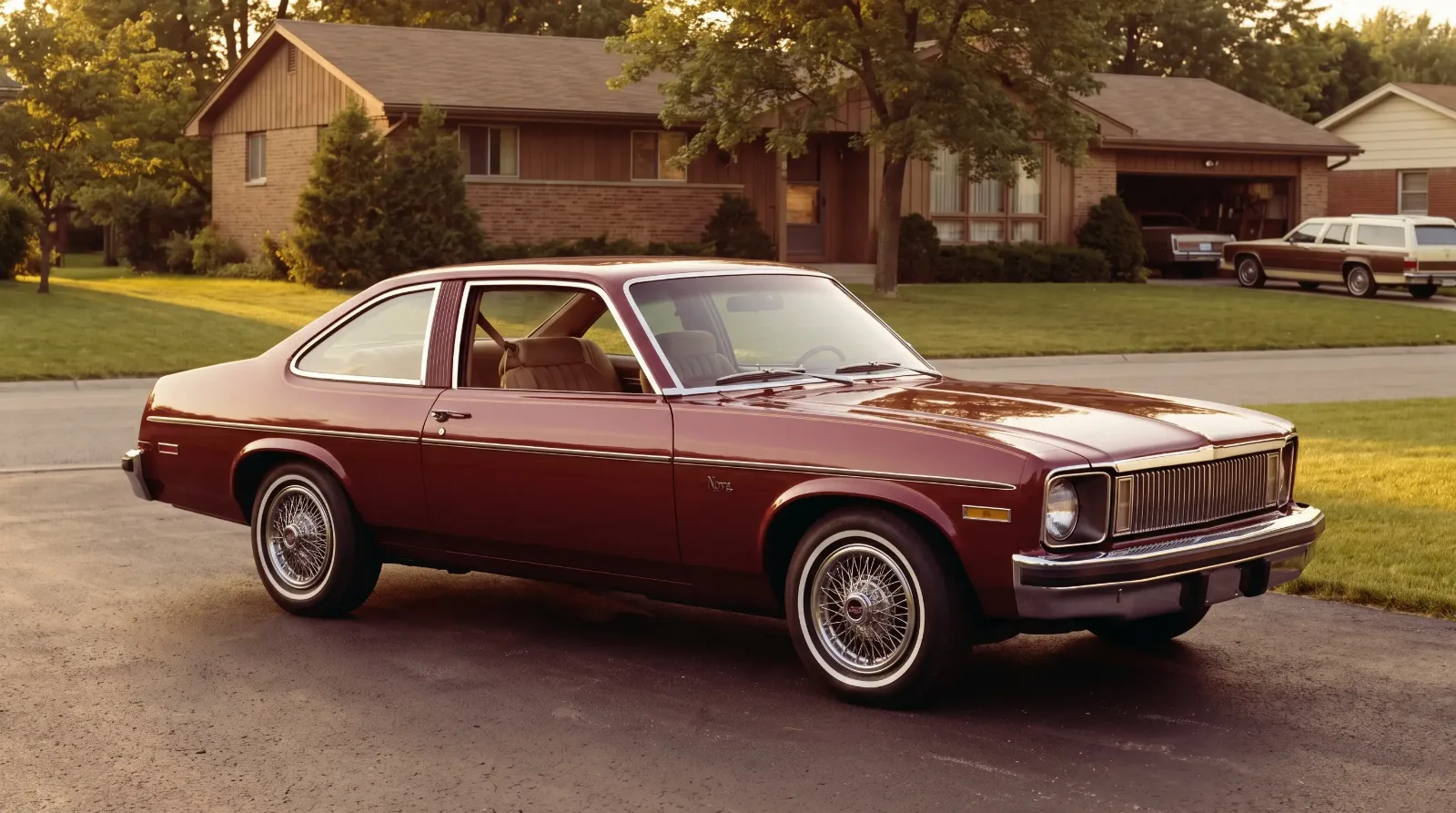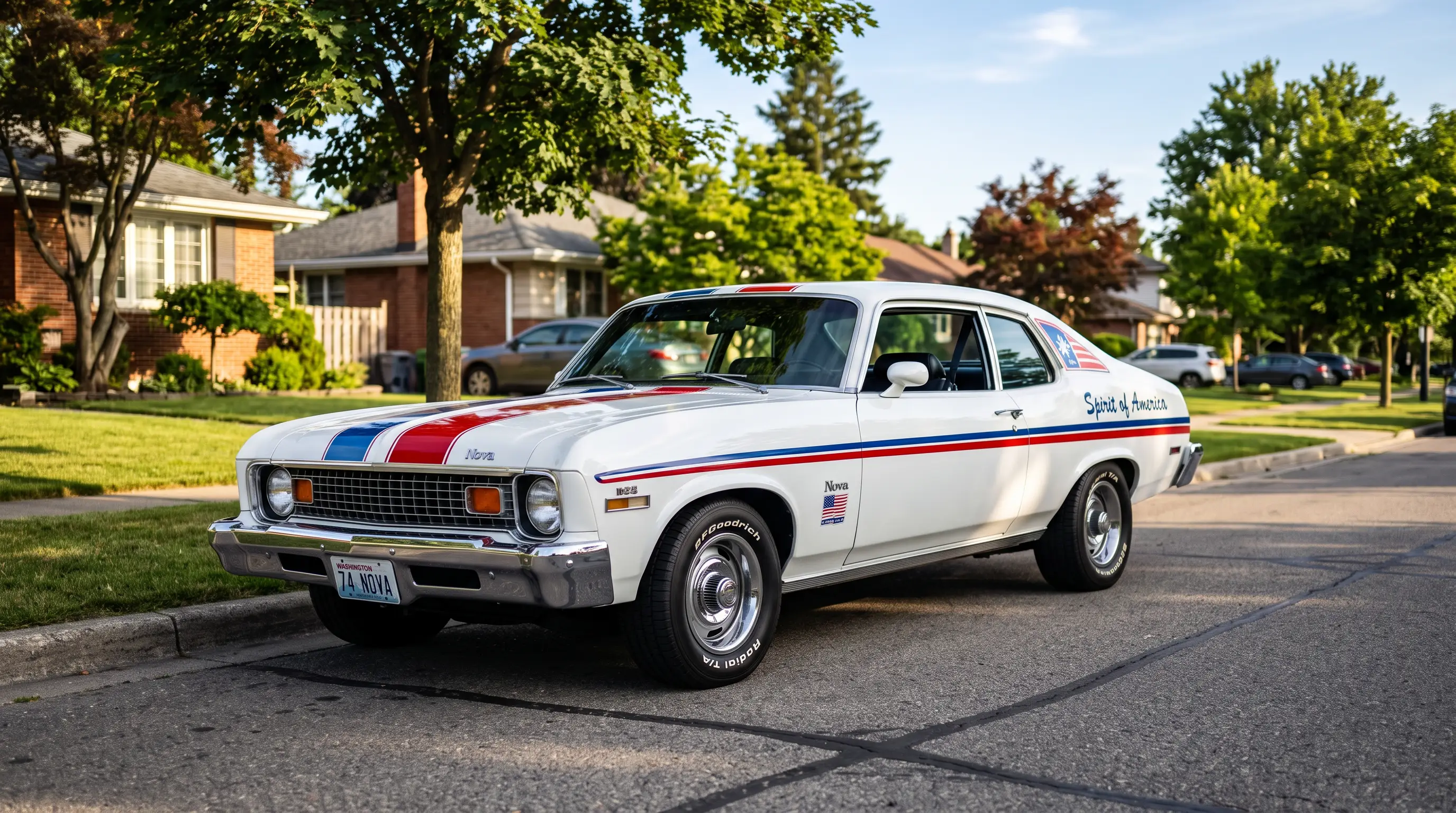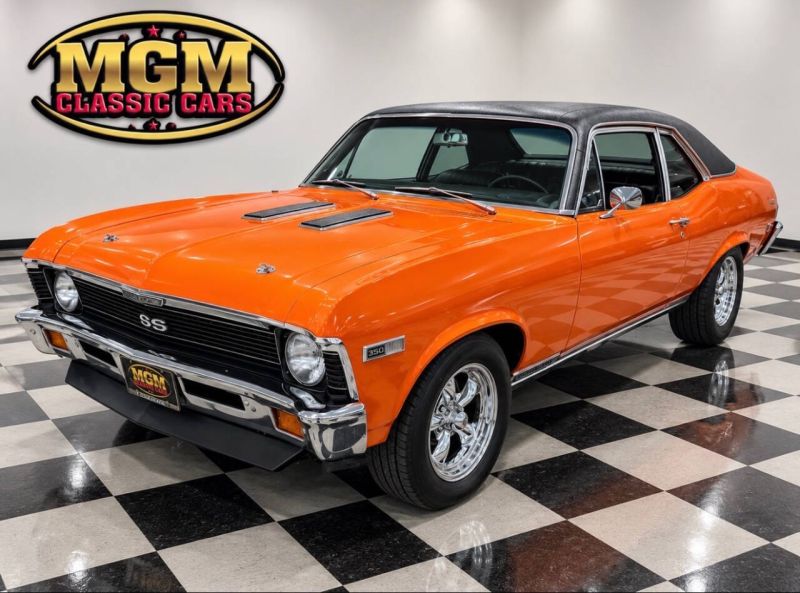
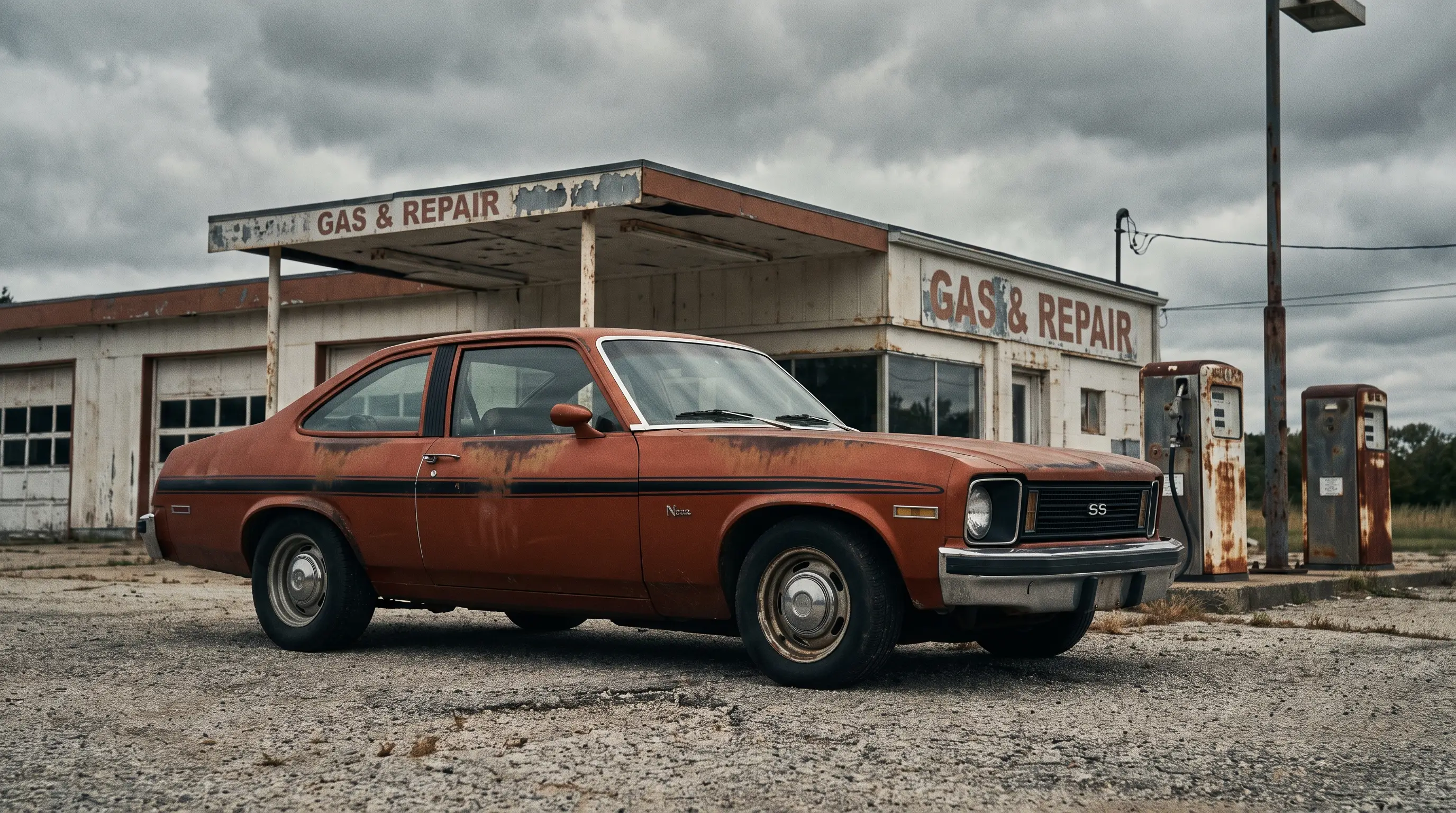
The nova ss 1970s badge is one of the more misunderstood option codes in Chevrolet's compact history, and the record on it is clearer than most people assume once you actually go looking at the build sheets instead of relying on memory. By the middle of the decade, the SS on a Nova no longer meant what it had meant on a 1968 or 1970 example. It meant an appearance and handling package, ordered on top of whatever engine the buyer had already chosen, in an era when emissions equipment and unleaded fuel requirements had already reshaped what Chevrolet's engineers could promise under the hood.
What "SS" actually bought a buyer by 1975
The factory paperwork for the mid-1970s Nova SS shows a package built around appearance and chassis content rather than a dedicated performance engine. A buyer got SS badging front and rear, black-out trim treatments, and access to the F41 sport suspension option along with styled wheels. What the buyer did not get, and what a lot of casual conversation still assumes, was a big-block or even a genuinely high-output small-block under the hood. The top available engine in these years was a 350 cubic-inch V8, and its net output had fallen a long way from the gross-rated figures Chevrolet published on the same displacement just a few years earlier: 145 net horsepower for 1975, rising to 165 net horsepower for 1976 once Chevrolet revised the calibration.
That gap between the name and the number under the hood is exactly why the period gets called the malaise era in the first place. It is not a knock on the cars so much as an honest description of what federal emissions standards, compression ratio reductions, and the switch to unleaded fuel did to every domestic manufacturer's output figures at once. The Nova SS was not uniquely weak. It was representative of where the whole industry sat.
The last years of the badge
Chevrolet carried the SS package on the fourth-gen Nova through the 1976 model year, after which the badge disappeared from the Nova lineup entirely. For 1977 through 1979, the final three years of Nova production before Chevrolet replaced it with the front-wheel-drive Citation, there was no SS option on the order sheet. Chevrolet leaned instead on trim packages like the Concours and the LN to keep the car feeling current, which tells you plainly where the company's priorities had shifted. Appearance and comfort content were carrying the lineup. Performance badges were not.
That two-year window, 1975 and 1976, is a narrow one for anyone trying to document a genuine SS from this stretch, and it means the population of surviving cars is small compared to the earlier muscle-era SS Novas built in the late 1960s and very early 1970s.
| Model year | SS availability | Top engine offered |
|---|---|---|
| 1975 | Appearance and handling package | 350 cubic-inch V8 |
| 1976 | Final year of the SS package | 350 cubic-inch V8 |
| 1977-1979 | Not offered | N/A, no SS package |
Reading a build sheet before trusting a badge
Because the SS was an option package and not a separate model with its own VIN designation, a car can wear SS badges today without any factory documentation to back the claim, and the reverse is also true: a genuine SS can lose its badges over decades of ownership and get mistaken for a plain Nova. Confirming a real 1975 or 1976 SS means going to the build sheet, the dealer invoice if it survives, or the trim tag rather than trusting emblems alone. This is not a car segment where an emblem should ever be the final word.
Buyers researching one of these cars should also be careful about carrying specification numbers across model years. A 350 in a 1975 Nova and a 350 in a 1976 Nova are not guaranteed to share an identical rating, since Chevrolet adjusted calibrations and compression as emissions requirements tightened year over year. Treat every figure as specific to its exact model year until a factory source confirms otherwise.
"People want the SS from this era to be a secret sleeper, and I understand the appeal, but the paperwork doesn't support it. It was a well-executed appearance and handling package sold in a difficult couple of years for the whole industry, and it deserves to be understood on those terms rather than measured against a 1970 that came from an entirely different regulatory world."
— Tom Ramirez
What the F41 suspension actually meant
The F41 option is worth its own explanation, since it is the part of the SS package that actually delivers on the badge's reputation even when the engine does not. F41 brought firmer springs, revised shock valving, and a larger front stabilizer bar than the standard Nova received, and on a car this light the difference in handling is noticeable even by modern standards. It is a suspension package built for a driver who wanted the car to change direction with some confidence, not a driver chasing a stoplight.
Buyers researching a period SS should confirm F41 the same way they confirm everything else on these cars, through the option code on the paperwork rather than by feel alone, since the springs and bushings on a fifty-year-old car have usually softened enough that a tired standard suspension and a tired F41 suspension can feel closer to each other than either one felt from the factory.
Why the malaise-era SS still matters
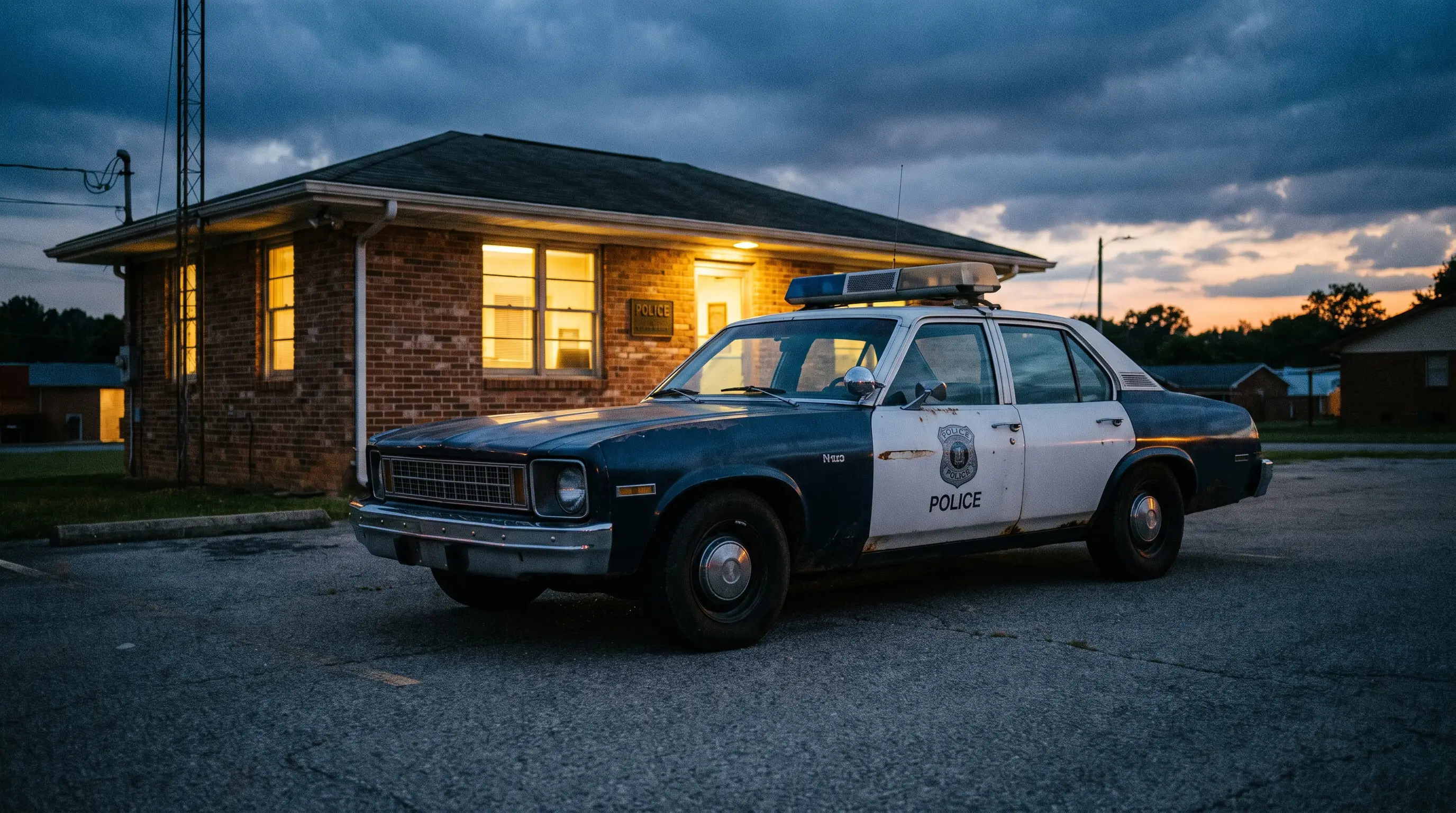
Collector interest in these two model years has grown precisely because they represent an honest snapshot of a transitional moment, a Chevrolet compact still wearing a performance badge while the company worked out how to build cars under an entirely new set of federal rules. A documented 1975 or 1976 SS, complete with its F41 suspension components and correct badging, is a legitimate and increasingly scarce piece of that transition, even if its horsepower figure will never impress anyone chasing a muscle-car number from a decade earlier. For more on how Chevrolet used the Nova platform in specialized roles during this same period, keep reading the series on the factory police package built alongside these SS cars.