
The Nova SS has spent five decades being the car nobody circled at the swap meet, and that's exactly what makes it interesting from a market standpoint. It's a compact body with big-block power available in certain years, wearing a shape close enough to a base Nova that plenty of buyers, then and now, walked right past it. If you haven't read how the Nova SS earned its name, the short version is that Chevrolet built a genuinely quick car inside a deliberately plain wrapper, and that combination has aged into one of the more interesting value stories in the muscle car segment.
Car Features
7 min read
The Nova SS as Sleeper Legend
The Nova SS built a genuine sleeper reputation on big-block power in a plain body, yet auction data shows the market still prices it below comparable siblings.
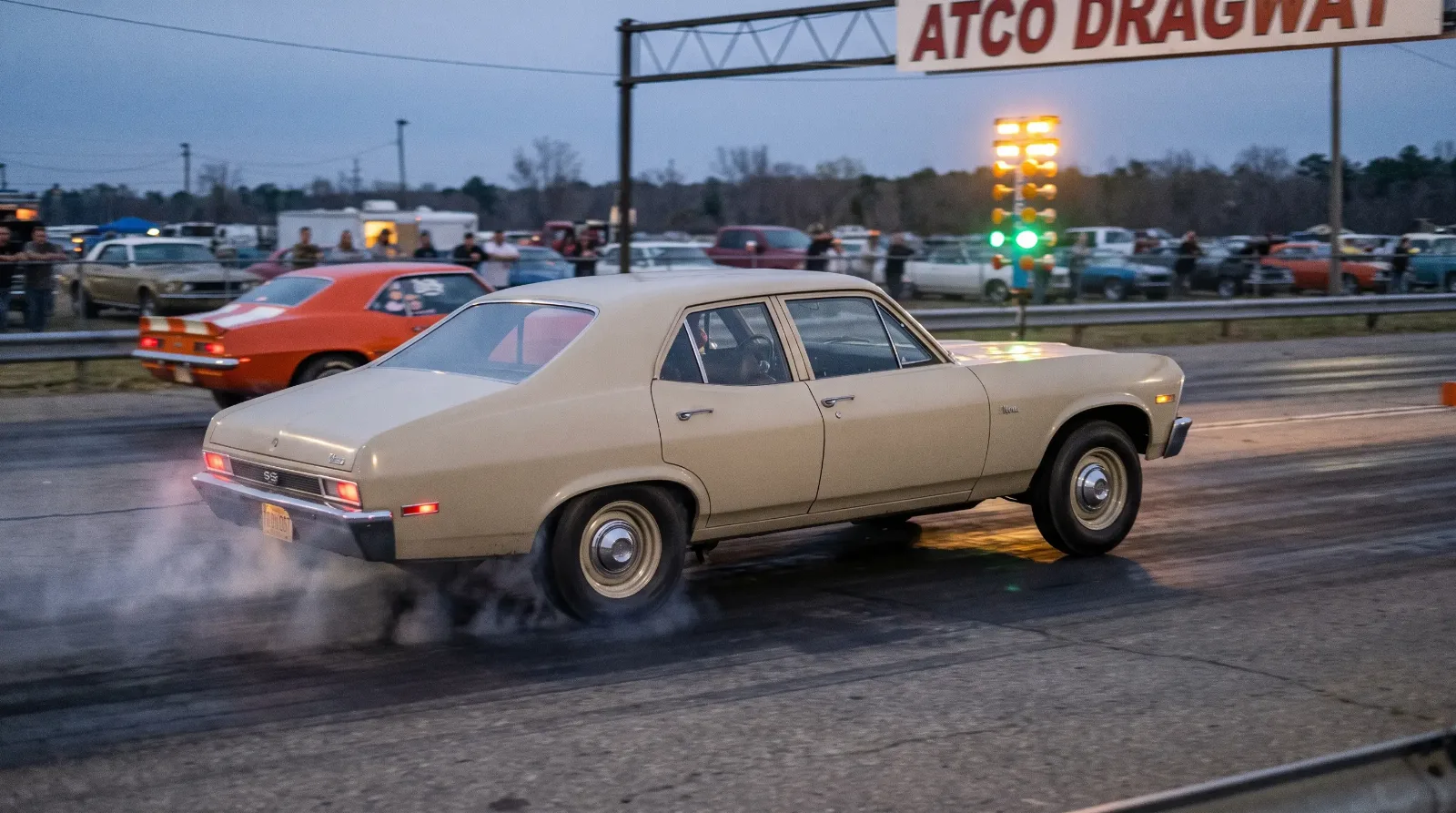
The sleeper reputation is earned, not marketing
"Sleeper" gets thrown around loosely in this hobby, usually attached to anything with an unassuming look and a decent engine. The Nova SS earns the label on stricter terms. From 1968 through 1972, Chevrolet offered big-block power in a body that, without the badges, could pass for a grandmother's grocery-getter. A 396-equipped Nova SS shares almost nothing visually with the flared, scooped, striped muscle cars people picture when they think "1970 Chevrolet performance." That mismatch between appearance and capability is the entire premise of the sleeper category, and it's why period drag strip stories about Novas surprising Camaros and Chevelles off the line have real staying power in the collector conversation. Car and Driver ran a 1968 L78 396 Nova to 60 mph in 5.9 seconds with a 14.5-second quarter-mile, and Hot Rod's 1969 test of the same engine turned a 13.87-second quarter at over 105 mph, numbers that plenty of contemporary sports cars couldn't touch.
What the data shows is that this reputation hasn't fully translated into pricing parity with its siblings, and that gap is the actual story for anyone thinking about buying one.
What the auction numbers actually say
Compare a documented big-block Nova SS to a comparably equipped 1970 Chevelle SS at recent auctions and the Nova consistently brings less money, often by a meaningful margin, even when the mechanical package is nearly identical. Part of that is simple brand recognition. Chevelle SS and Camaro SS carry decades of magazine covers and pop culture weight that the Nova never got, despite offering similar or, in some configurations, better power-to-weight numbers because of the lighter compact body. Documented, numbers-matching big-block Novas from this era have traded in a wide band depending on condition and options. A numbers-matching 1970 Nova SS L78 with documented low mileage did set a record at $275,000 at a recent Mecum sale, but that same year and engine combination is far more commonly seen selling well below six figures, and buyers who track these sales closely will notice that spread is wider than it is for Chevelle SS cars of the same vintage, which tells you the Nova market is less mature and less consistently valued.
That inconsistency is an opportunity if you're buying, and a risk if you're selling into a soft comp set. A car with clean documentation, matching numbers, and known ownership history will sell at the top of that band. A car missing paperwork sells at the bottom, sometimes well below what the mechanical package alone would suggest it's worth.
Which years and engines carry the premium
Not every Nova SS sits in the same tier, and buyers who lump them all together miss the real spread. The big-block cars, particularly those built with the larger displacement options, sit well above the small-block SS cars in almost every recorded sale, and that gap is wider than the gap between comparable small-block and big-block Chevelles. That's another sign of an inefficient market. The premium should track the mechanical difference consistently across models, and in the Nova's case it tends to swing more sharply based on which specific auction the car happens to cross, rather than settling into a predictable band the way better-tracked models do.
| Configuration | Relative market position | What drives the premium |
|---|---|---|
| Small-block SS, base trim | Entry point of the segment | Correct badges, clean body, honest mileage |
| Big-block SS, documented | Strong premium over small-block | Numbers-matching drivetrain, build sheet, low production count |
| Big-block SS, undocumented | Discounted relative to documented cars | Missing paperwork despite correct mechanical package |
That middle row is where the real money sits, and it's also the row with the thinnest supply of genuinely verifiable cars.
Why the market hasn't caught up yet
A few things keep the Nova SS from closing the value gap with its bigger siblings, and none of them are about the car's actual capability. First, parts and restoration knowledge for Chevelle and Camaro have a deeper, more established support network, which lowers the risk for a buyer taking on a project. Second, the compact Nova body doesn't photograph the same way a Chevelle SS does for auction marketing, and auction houses know that presentation drives bidding as much as spec sheets do. Third, and this is the one that matters most for anyone buying now rather than waiting, the documentation trail on Nova SS cars is thinner across the board. Fewer owners bothered keeping build sheets and window stickers on what was, at the time, considered a budget performance car rather than a flagship. That scarcity of paper trail suppresses prices on undocumented cars regardless of how strong the mechanical package underneath actually is.
None of that changes the underlying math on power-to-weight. It just means the market is pricing perception ahead of substance, which is exactly the kind of gap that closes eventually once enough buyers notice it.
"I've watched documented big-block Novas sell for less than a comparable Chevelle with a weaker options package, purely because the Chevelle name carries more weight at the podium. That's a pricing inefficiency, not a statement about which car is actually quicker. Buyers who understand the difference are the ones who end up with the better deal five years from now."
David Mercer
What this means if you're buying
If you're shopping this segment with an eye toward long-term value rather than just a fun weekend car, the Nova SS is worth serious consideration precisely because it's underpriced relative to its performance credentials. The catch is documentation. A car with a verified build sheet, matching numbers, and a traceable ownership chain is the one that will actually appreciate as the broader market slowly recognizes the value gap. A car without that paperwork is a bigger gamble, no matter how good the engine sounds on a test drive. For a different angle on how these cars get evaluated and what separates a real one from a re-badged imitation, another angle on this same silo is worth a read before you go shopping. And if you want the full picture on where the Nova fits inside Chevrolet's broader lineup history, Chevrolet's Nova history lays out the context that explains why this car never got the marketing push its siblings did.
For buyers actively looking, browsing a classic Nova SS for sale listing with documentation intact is the single best move you can make in this segment right now. The undervaluation won't last forever, and the cars with paperwork are the ones that will move first when the broader market corrects.
Sources and notes
- Curbside Classic: 1969 Nova SS 396 period road test
- Classic Industries: 1970 Nova SS record sale at Mecum
- Hagerty Valuation Tools: 1969 Chevelle SS 396
- SS 396 Chevelle/Camaro/Nova Registry: models sold
- Steve's Nova Site: Nova SS L78 396 production numbers
- Wikipedia: Chevrolet Chevelle production history
Related Reading
Have a
Chevrolet Nova
for Sale?
Reach thousands of serious classic car collectors across the US.
Sell It Here →
Are You a Classic Car Dealer?
List your full inventory and connect with targeted classic car buyers.
Join as a Dealer →

About the author
David Mercer
Classic car market analyst with two decades of experience tracking collector car valuations, auction results, and investment trends.
Related Listings - Chevrolet Nova
Comments
Be the first to comment on this article.