Somebody at a swap meet in Bowling Green tried to tell me the 1976 Cadillac Seville and the Chevrolet Nova had nothing to do with each other. He'd heard the Seville was "all its own car," a hand-built statement piece with no relation to anything wearing a bowtie. I let him finish, then I asked him who built the chassis. That's usually where these arguments end, because the record settles it and the record says the Seville rode on a heavily reworked version of the same X-body architecture that underpinned the Nova.
The Nova X-body connection is one of those facts that sounds implausible until you see the paperwork, and then it sounds obvious. GM did not build a Cadillac from a blank sheet in the mid-1970s. They took a platform they already knew, extended it, refined it, and dressed it in a way nobody outside Cadillac's engineering group would have guessed at a glance.
The platform everybody shared
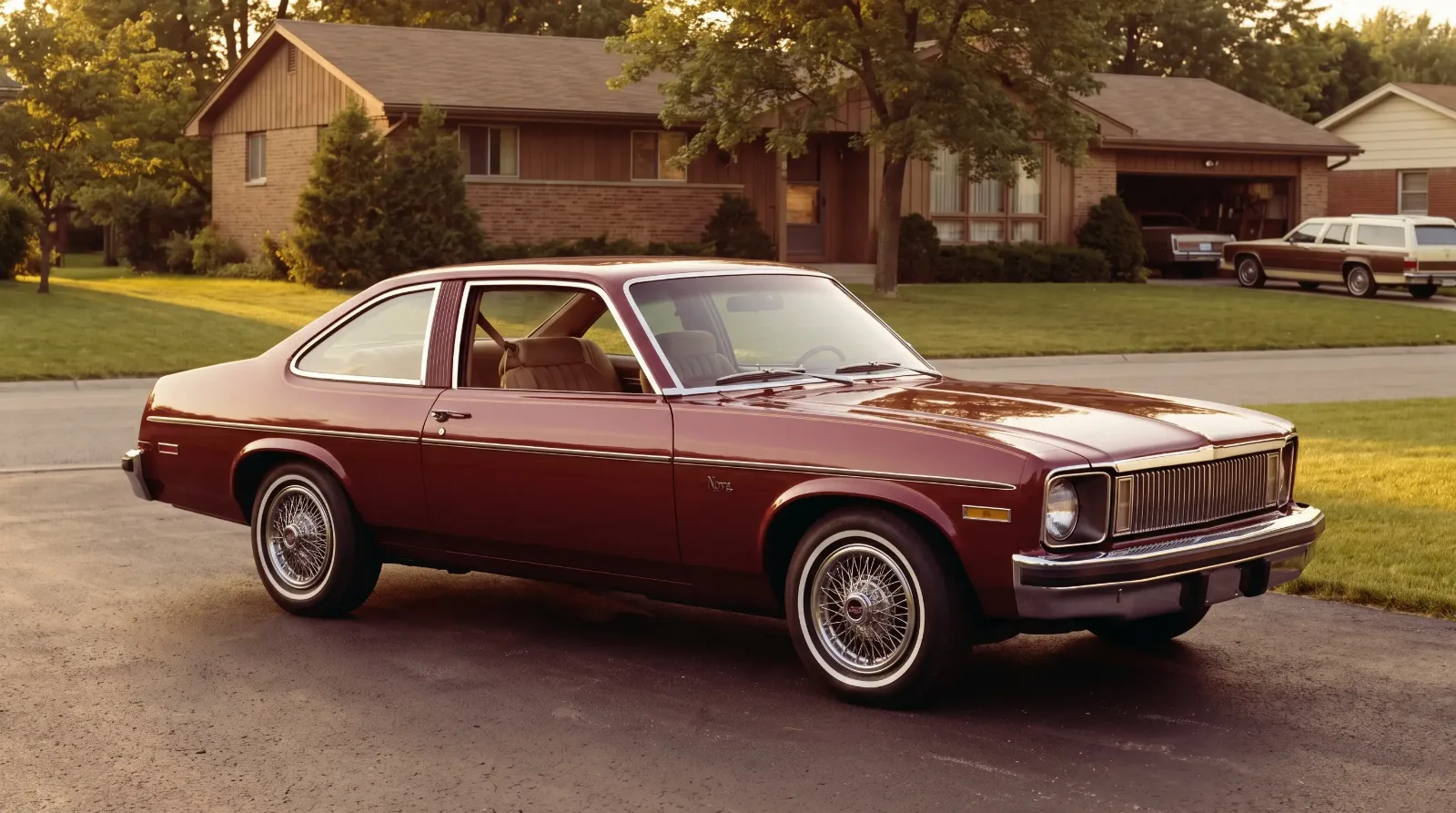
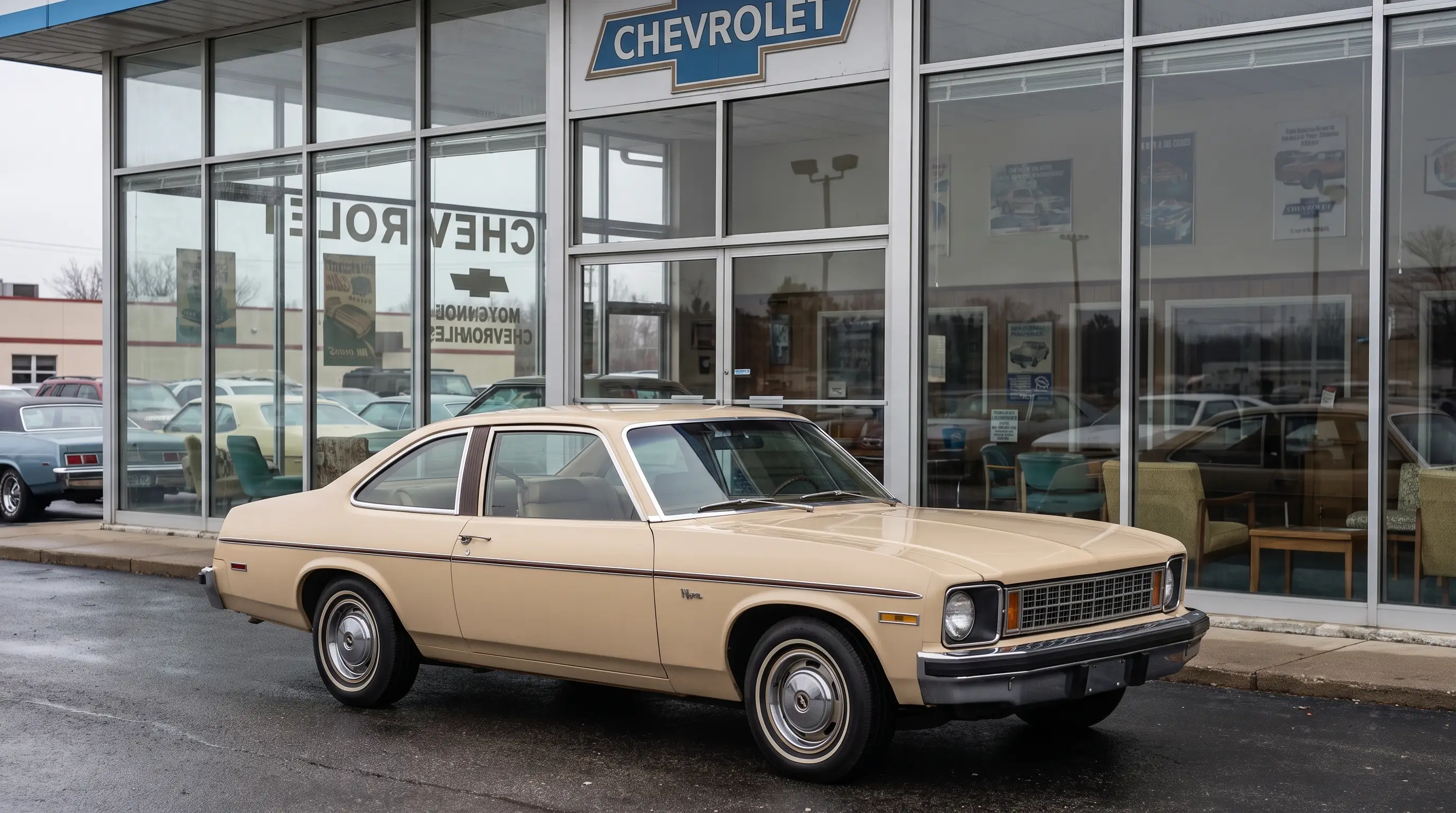
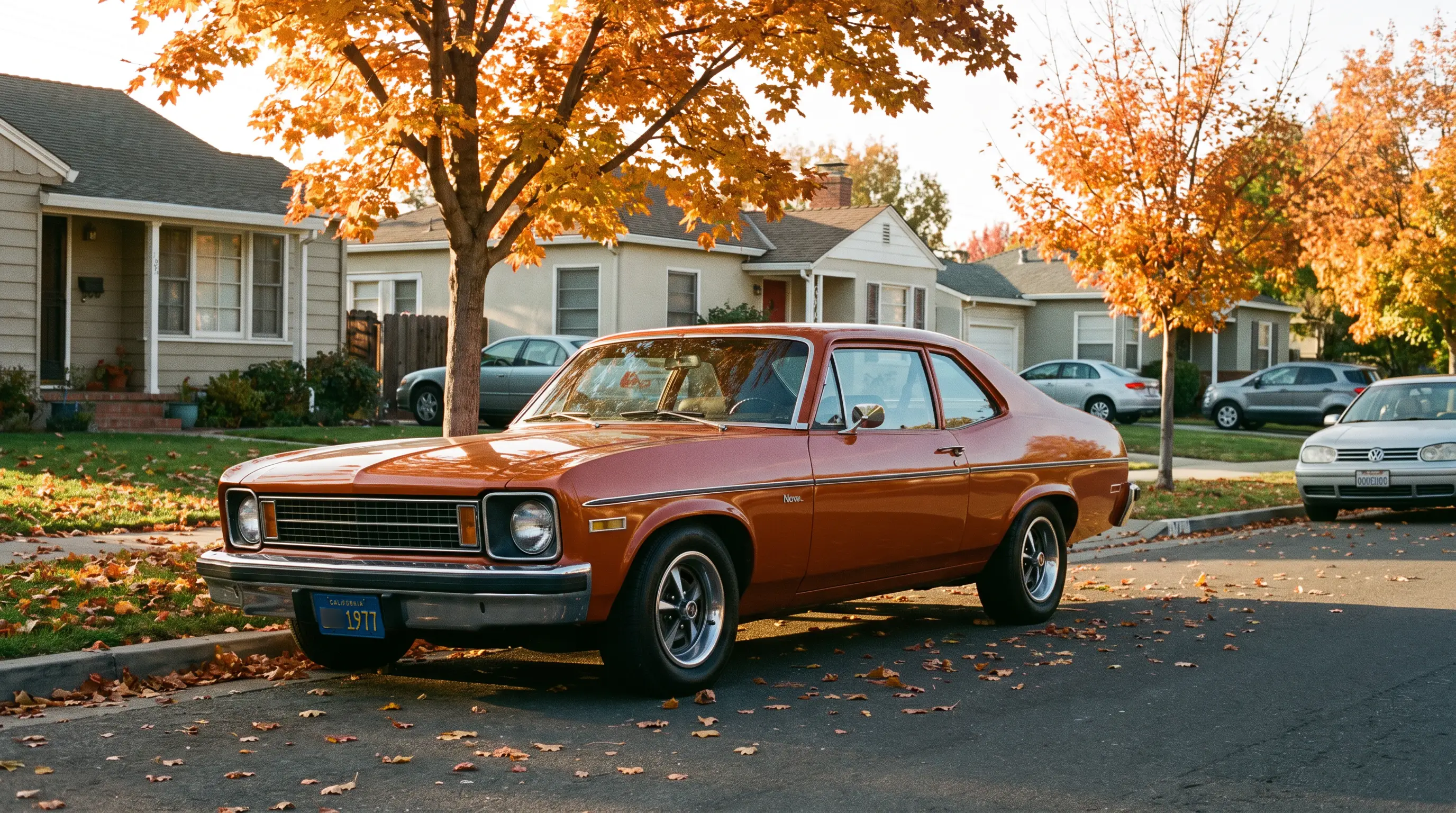
By the mid-1970s, the X-body was GM's compact workhorse. The Nova rode on it. So did the Pontiac Ventura, the Oldsmobile Omega, and the Buick Skylark. Four divisions, one basic architecture, four different personalities layered on top. That's how GM did business in this era, and it's why longtime Nova people are used to the "badge engineering" conversation before they've even finished their coffee.
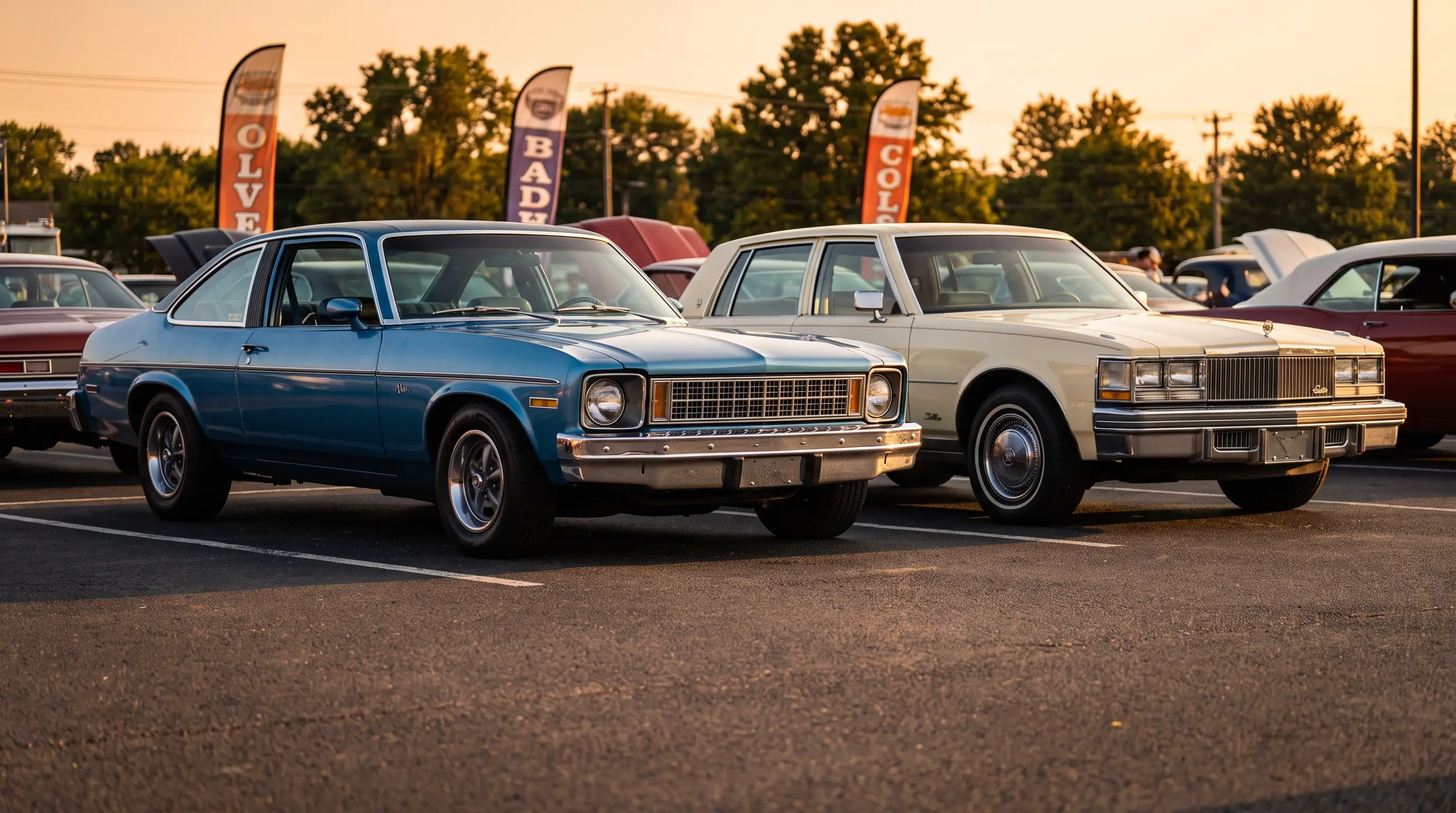
What most folks don't clock is that Cadillac reached into the same parts bin for the 1976 Seville. Cadillac's engineers took the X-body's basic structure, lengthened the wheelbase, revised the suspension geometry substantially, and fitted their own drivetrain and trim. The result did not look like a Nova, did not drive like a Nova, and certainly did not price like a Nova, launching at a list price of roughly $12,479, more than Cadillac's own Eldorado convertible carried at the time. But underneath the sheet metal, the family resemblance was real, and it was no secret inside GM. It was a documented engineering decision, not a rumor somebody made up at a car show.
Why Cadillac made that call
Cadillac needed a smaller, tighter, more efficient flagship to answer the import luxury sedans that were starting to poach American buyers, cars like the Mercedes-Benz S-Class that offered less bulk and more precision than the traditional land yacht. Building an all-new platform from scratch for a single model would have been expensive and slow. Starting from the X-body gave Cadillac's engineers a proven structure they could stretch and refine rather than invent, and it let them get the Seville to market on a schedule the accountants could live with.
That's not a knock on the Seville. If anything, it's a credit to how far GM's engineers pushed that platform. A car that started life underneath a family sedan ended up wearing a Cadillac crest and competing, at least on paper, with the best import sedans of the era. That takes real engineering, not just a fresh grille and some extra chrome.
Under the skin: what actually carried over
The specifics matter here, because "shared platform" gets thrown around loosely and it means something more precise in this case. The basic unibody structure, the cowl architecture, and core suspension mounting points trace back to the X-body engineering that Chevrolet, Pontiac, Oldsmobile, and Buick were already running on the Nova, Ventura, Omega, and Skylark. Cadillac's engineers took that starting point and reworked the wheelbase, retuned the springs and dampers for a heavier, more isolated ride, and fitted subframe and steering changes that had no direct equivalent on a Nova coupe. None of that erases the shared origin. It just means Cadillac did the hard, expensive work of making a compact platform behave like a flagship, which is exactly the kind of engineering effort that tends to get forgotten once the marketing department finishes polishing the story.
This is also why parts people who work on both cars will tell you the overlap is real but limited. Certain suspension bushings, some steering components, and structural design principles cross over in ways a good mechanic recognizes immediately. Trim, interior architecture, and drivetrain do not cross over at all. Cadillac's engineers were selective about what they borrowed, which is a smarter way to read this story than either extreme, the "totally unrelated" camp or the "it's just a dressed-up Nova" camp. Both of those miss what actually happened on the engineering side.
How the two cars actually differed
| Element | Nova (X-body) | Seville (stretched X-body) |
|---|---|---|
| Wheelbase | 111 inches, standard X-body length | 114.3 inches, a 3.3-inch stretch concentrated behind the B-pillar |
| Suspension tuning | Compact family car calibration | Substantially revised for a luxury ride and handling target |
| Trim and finish | Nova / Concours levels | Full Cadillac interior and exterior trim program |
| Market position | Compact family car | Cadillac's answer to import luxury sedans |
The argument that never quite dies
I've watched this debate happen at more shows than I can count. Somebody insists the Seville is untouchable, above the fray, a Cadillac through and through with nothing borrowed from a compact Chevrolet. Somebody else pulls out an old magazine feature or a service manual reference and settles it in about thirty seconds. The Seville's underpinnings trace to the X-body family, full stop. That doesn't make the Seville less impressive. It makes the engineering story more interesting, because it shows what GM's people could do with a platform they already had on the shelf.
Read the late Nova story if you want the fuller picture of where the Nova sat in this generation, and then take a look at a related deep-dive that gets into what these cars are actually worth to collectors today. Between the two, you get the whole arc: a shared platform, one badge that got the compact treatment and one that got dressed up as a flagship.
"Every time somebody tells me the Seville has nothing to do with the Nova, I ask them to find me the paperwork that says otherwise. Nobody ever has, because it doesn't exist."
— Wayne Coburn
What this means at a car show
Next time somebody wants to argue the point, don't get defensive about either car. The Nova doesn't need to borrow prestige from the Seville, and the Seville doesn't lose anything by sharing DNA with a compact. What the connection actually proves is that GM's engineers, working under real budget and schedule pressure, could take one well-sorted platform and stretch it into two completely different market positions. That's not a scandal. That's the whole story of how American manufacturers survived the 1970s, and the X-body family is one of the better examples of it actually working.