
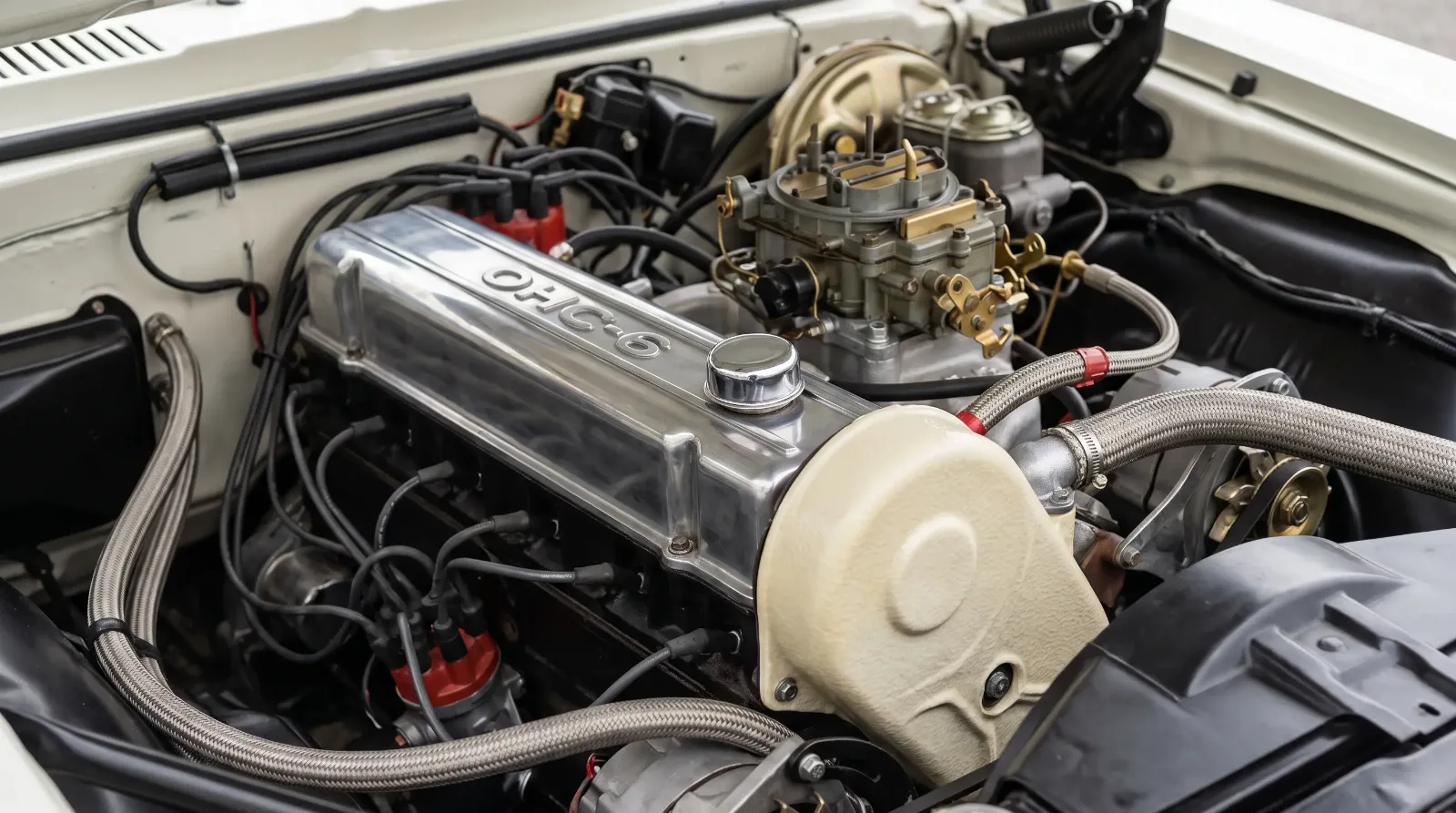
The pontiac ohc six is the engine nobody expected from Pontiac in 1966. Six cylinders, an overhead cam, and a rubber timing belt on a domestic production car. That belt alone made it the first American engine to run a cam that way. Everything else about it was just as unusual, and most of it never got the credit it earned before Pontiac walked away from the idea three years later.
Car Features
6 min read
The OHC-6 Sprint
Pontiac's belt-driven overhead cam six ran three years in the Firebird, and the four-barrel Sprint 6 version made a six-cylinder worth cross-shopping against a V8.
What made the OHC-6 different
Start with the belt. Every other American six or eight in 1966 ran a chain or gears to spin the camshaft. Pontiac's engineers, working under John DeLorean's product team, put a fiberglass-reinforced rubber belt on the front of a 230 cubic inch inline six and called it done. It was quiet, cheap to build once tooled, and it let the cam sit up on the head where an overhead cam belongs instead of buried in the block.
The base engine ran a single-barrel carburetor and made a claimed 165 hp, which is not a number that gets anyone's attention. That was never the point of the base version. The point was proving the OHC layout could survive daily use on a Tempest or a Le Mans without the belt shredding itself at 70,000 miles. It did. That part of the story is the real engineering win, even though nobody talks about it.
Pontiac's engineers also had to solve a problem nobody outside the drafting room ever saw: keeping belt tension consistent across a temperature range that ran from a cold Michigan morning to a July highway run. A loose belt skips teeth and throws valve timing off. A belt pulled too tight wears out early and can load the cam bearings unevenly. The tensioner assembly Pontiac settled on was simple, spring-loaded, and, by most accounts, more durable than the skeptics inside the company expected. That is not a small accomplishment for a completely new drivetrain layout built on a production timeline.
The Sprint 6 is the one that matters
Bolt a Rochester Quadrajet four-barrel onto that head, add a hotter cam profile, and you get the Sprint 6. Pontiac rated it at 207 hp for 1966, rising to 215 hp in 1967, which put a six-cylinder within shouting distance of a two-barrel small-block V8 on paper. That is the number that made this engine interesting, and it is the number Pontiac's own brochures leaned on hardest.
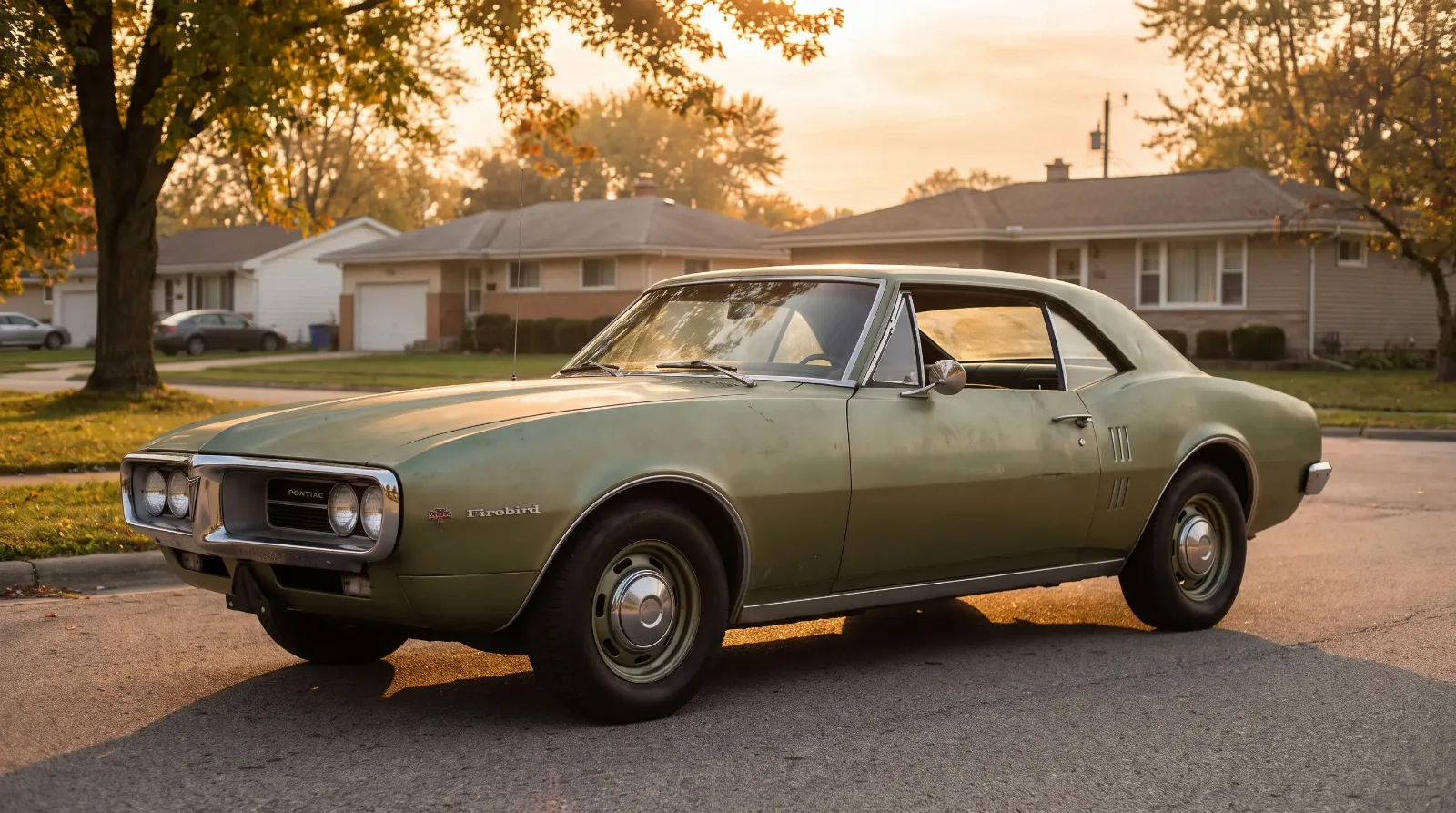
Firebird buyers could order the Sprint 6 from 1967 through 1969, and it is the engine option that separates a genuinely unusual Firebird from every other six-cylinder economy car parked next to it at a show. Most people walk past a base Firebird six without a second look. A Sprint 6 badge changes that conversation, assuming the badge and the carburetor still match what left the factory.
Pontiac's own road tests at the time made a point of comparing the Sprint 6 favorably against the base 326 V8, and on paper the numbers were close enough to matter. Weight distribution was the real difference. A six over the front axle is lighter than a V8 in the same spot, and several period reviewers noted the Sprint 6 Firebird turned into corners a touch more willingly than its V8 stablemates. That is not a claim that holds up against a genuinely quick 400 cubic inch car, but it explains why the Sprint 6 found a small, loyal following among buyers who cared more about balance than raw output.
| Spec | Base OHC-6 | Sprint 6 |
|---|---|---|
| Displacement | 230 cid (1966-67), 250 cid (1968-69) | Same displacement, hotter cam |
| Carburetor | Single-barrel Rochester Monojet | Rochester Quadrajet four-barrel |
| Rated output | 165 hp | 207 hp (1966), 215 hp (1967-69) |
| Cam drive | Fiberglass-reinforced rubber belt | Same belt design |
| Years in Firebird | 1967-1969 | 1967-1969 |
Why it disappeared after three years
Here is the blunt version. The OHC-6 cost more to build than a Chevrolet-sourced inline six, and it did not sell V8s. Pontiac's whole business in the late 1960s ran on V8 volume, and a clever six-cylinder that occasionally embarrassed a two-barrel small-block was not helping that math. Once emissions rules tightened at the start of the 1970s and the belt-driven cam needed retooling to meet them, Pontiac cut its losses. 1969 was the last year for the OHC-6 in any form.
That is a short life for an engine this interesting, and it is why so few survive today in unmolested condition. Parts dried up fast once Pontiac stopped supporting the line, and the timing belt itself, the engine's signature feature, is also its biggest long-term liability. Rubber belts perish. Original Sprint 6 owners either replaced that belt on a schedule or found out the hard way what happens when a belt snaps mid-drive.
None of that means the OHC-6 failed as an engineering exercise. It means it failed as a business case inside a division built to sell V8s at volume. Those are two different kinds of failure, and conflating them is how the OHC-6 ended up dismissed as a curiosity instead of remembered as one of Pontiac's more ambitious mainstream production decisions of the decade.
What this means for buyers today
A Sprint 6 Firebird is not a car you buy for straight-line speed. It is a car you buy because it is a genuinely uncommon variant with a documented engineering story behind it, one that most Firebird buyers have never heard explained correctly. The base OHC-6 is a curiosity. The Sprint 6 is a legitimate piece of Pontiac's most inventive era, sitting one option box away from every 1967 to 1969 Firebird brochure most people skip past on their way to the GTO section.
Anyone shopping one needs to verify three things before paying a premium: original carburetor, original cam belt hardware or a documented modern replacement, and a build sheet or trim tag that actually confirms Sprint 6 rather than a base six with a four-barrel bolted on later. The engine bay numbers do not lie, but the seller's memory sometimes does.
"People hear six-cylinder and stop listening. That belt-driven cam was doing something no other engine on a Pontiac lot was doing, and the Sprint 6 backed it with a four-barrel that actually mattered."
Dan Reeves
How it fits Pontiac's bigger engine picture
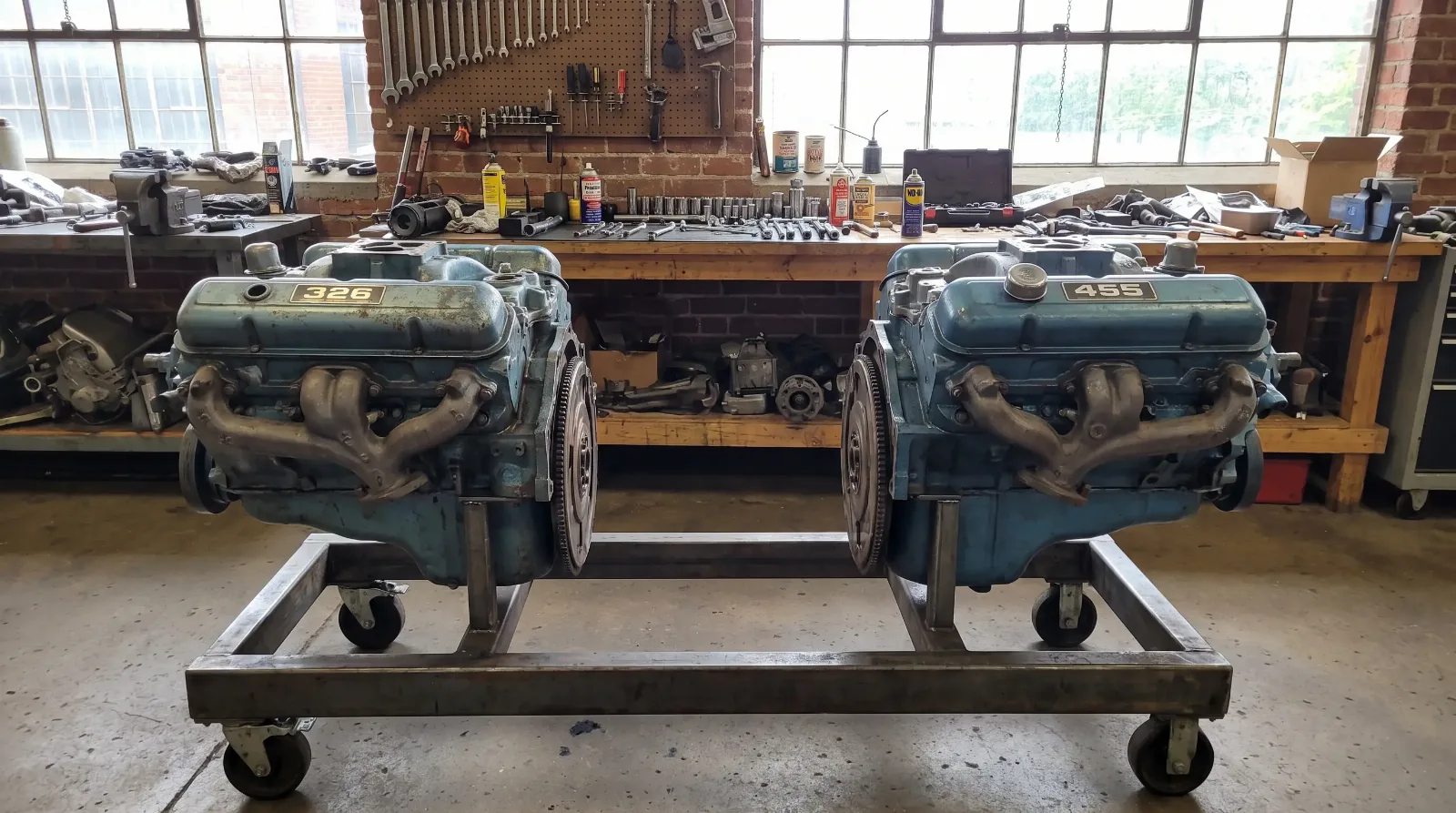
The OHC-6 was Pontiac's outlier, a six built by a division that made its name on V8s. Understanding where it sits requires some context on Pontiac's V8 world, since the small-block Pontiac V8s that shared engine bay space with the Sprint 6 were the real sales volume and the real performance story for most of this era. For anyone tracing how Pontiac's displacement choices evolved through the small-block years, a related deep-dive lays out the 326 and 350 side of that same period.
Three model years, one belt-driven cam, and a four-barrel option that made a six-cylinder worth cross-shopping against a V8. That is the whole OHC-6 story, and it deserved a longer run than Pontiac gave it.
Sources and notes
- Wikipedia: Pontiac straight-6 engine
- Hagerty: Pontiac's Sprint Six alternate muscle-car multiverse
- Old Cars Weekly: The Six-cylinder Firebird Sprint
- HotCars: Pontiac OHC Six, Detroit's Quiet European Heresy
- Mac's Motor City Garage: Inside the 1966 Pontiac OHC 6
- MotoGallery: 1966-1969 Pontiac Tempest/LeMans Sprint OHC-6 Guide
Related Reading
Have a
Pontiac Firebird
for Sale?
Reach thousands of serious classic car collectors across the US.
Sell It Here →
Are You a Classic Car Dealer?
List your full inventory and connect with targeted classic car buyers.
Join as a Dealer →

About the author
Dan Reeves
Performance engine builder from North Carolina's motorsports corridor, focused on swaps, forced induction and making real, repeatable power.
Related Listings - Pontiac Firebird




Comments
Be the first to comment on this article.