
Swap a 400 for a 455 in a Pontiac and the motor mounts line up. Swap a Chevy small block for a big block and you're rebuilding half the front clip. That difference isn't luck. Pontiac engine design from 1955 all the way into the early 1980s ran on one architecture, one external envelope, one set of bolt patterns, no matter whether the displacement badge on the fender said 326 or 455. Most owners never think about it. Every mechanic who's worked on more than one Pontiac notices it fast.
Car Features
6 min read
Pontiac's One-Block Design Philosophy
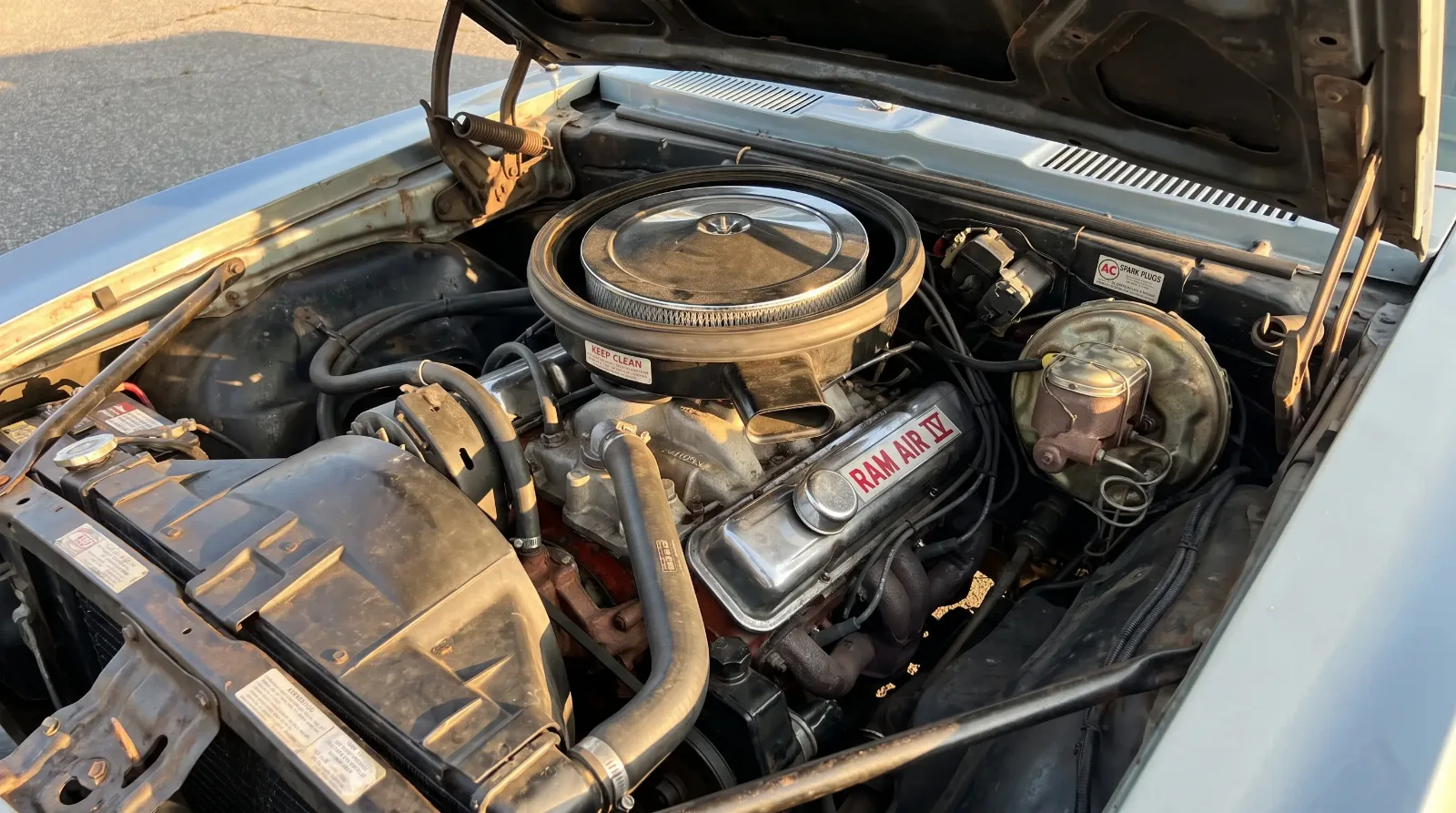
Pontiac ran one V8 architecture from the 326 through the 455, sharing external dimensions and bellhousing patterns instead of building separate small block and big block families like Chevrolet did.
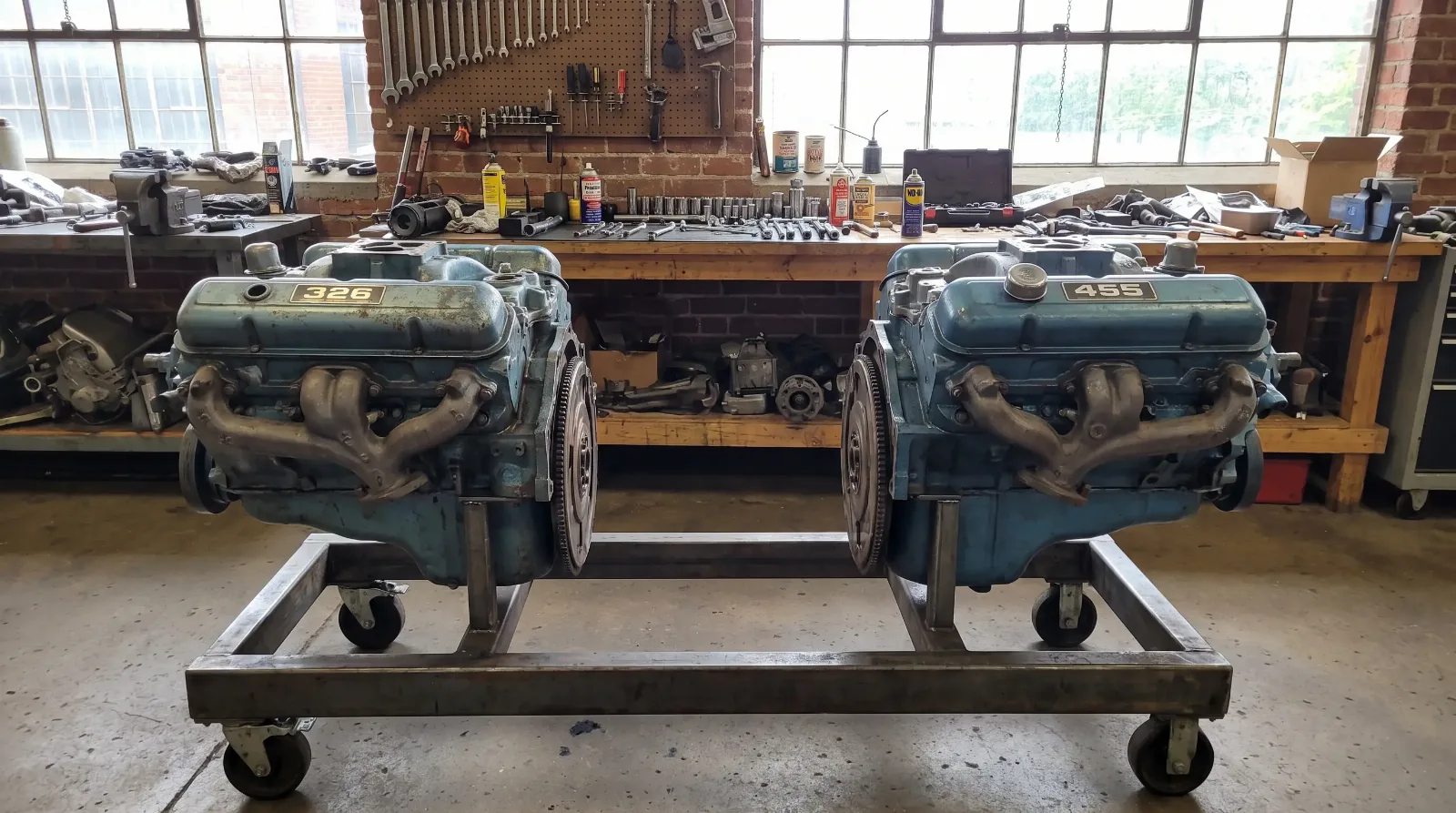
One block, not two families
Chevrolet ran a small block and a big block as genuinely separate engine families, different external dimensions, different motor mount locations, different bellhousing bolt patterns in some configurations. Pontiac didn't bother. Every Pontiac V8 from the 326 up through the 455 shares the same basic external dimensions, the same deck height, the same bellhousing pattern, the same motor mount locations. Pontiac got there by changing bore and stroke inside a common block casting family instead of designing a second, heavier architecture for the bigger engines.
That's the whole trick. A 400 and a 455 aren't different engines wearing different displacement badges. They're the same basic architecture bored and stroked to different numbers. A guy who's rebuilt a 350 already understands most of what he needs to know about rebuilding a 455. The tooling is close enough, the specs are close enough, and the parts often cross over in ways that would never happen between a small block and big block Chevy.
Why Pontiac did it this way
Cost is the honest answer. Tooling up one architecture and stretching it across a full displacement range is cheaper than engineering and tooling two separate families the way Chevrolet did. It also simplified everything downstream: engine plants, parts inventory, dealer service departments, and machine shops all dealt with one basic set of specs instead of two. Pontiac wasn't chasing an engineering ideal here. It was running a business, and one architecture covering 326 cubic inches through 455 cubic inches meant fewer unique parts numbers and fewer headaches on the production line.
That decision was made in the 1950s, well before the muscle car years put real demands on the top end of the range, and it stuck for over two decades because it kept working. Once a manufacturing plant is tooled around one set of dimensions, there's little incentive to start over just because a later engine needs to make more power. Bore and stroke changes are relatively cheap. A whole new architecture is not.
The tradeoff showed up at the extremes. A single architecture stretched from a mid-size 326 up to a torque-monster 455 means neither end of the range is optimized the way a purpose-built engine would be. Pontiac accepted that tradeoff because the manufacturing simplicity was worth more to the company than squeezing out the last few percent of efficiency at either end.
What this means for a guy working on his own car
Parts availability is the practical payoff. If you're rebuilding a Firebird's 400 and can't find a specific part, there's a decent chance the equivalent 350 or 455 part fits, or fits with minor modification. That's not true across most other GM divisions' engine families. It also means engine swaps within the Pontiac family are straightforward compared to the aftermarket gymnastics some other makes require. Dropping a 455 into a car that came with a 350 is mostly a bolt-in job, not a fabrication project.
"I've had guys convinced their 455 was some separate heavy-duty engine because it's the big one. It's the same architecture as the 350 sitting next to it on the bench. Bigger bore, longer stroke, same bones."
Mike Sullivan
Where the shared architecture actually shows up on the bench
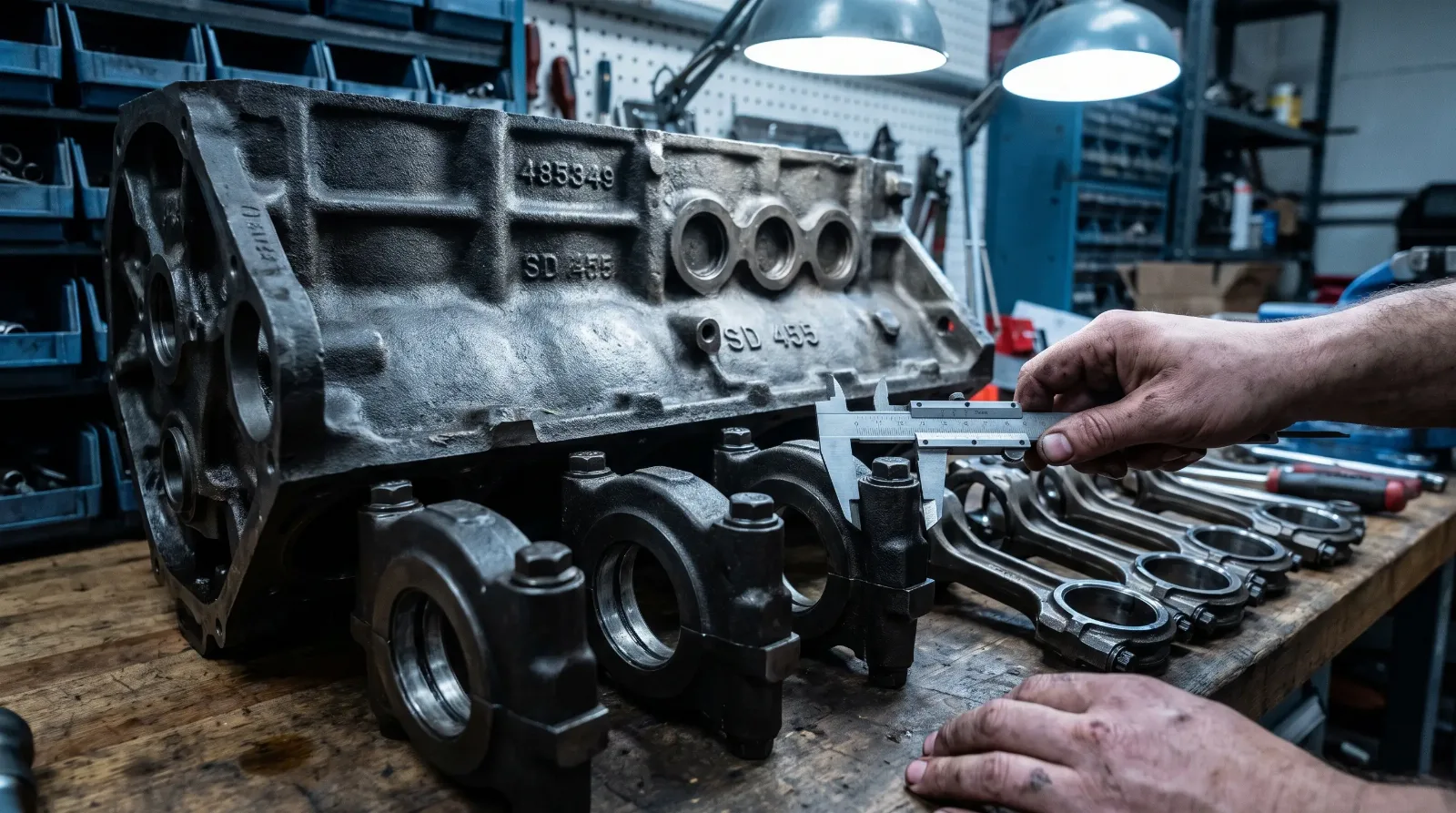
Pull a valve cover off a 350 and a 455 side by side and the family resemblance is obvious before you measure anything. Bolt pattern for the rocker covers, water pump bolt spacing, timing cover shape, all close enough that you're not hunting for different gaskets and different brackets every time the displacement changes. Distributor drive, oil pump drive, and even a lot of the accessory bracket hardware carry across the range with little to no modification.
The one place this shared-architecture approach runs into a real limit is at the small end of the lineup. Late in the run, Pontiac needed a lighter, more efficient small V8 and built the 301 (and the short-lived 265) on a genuinely shorter-deck block rather than stretching the 326-to-455 architecture down that far. That engine gets less love from anyone who's actually worked on one, and it does not share the same parts interchange with the 326-455 family the way those engines share with each other. It is the exception that proves how much the rest of the lineup depended on one common design.
Where this fits in the bigger Firebird picture
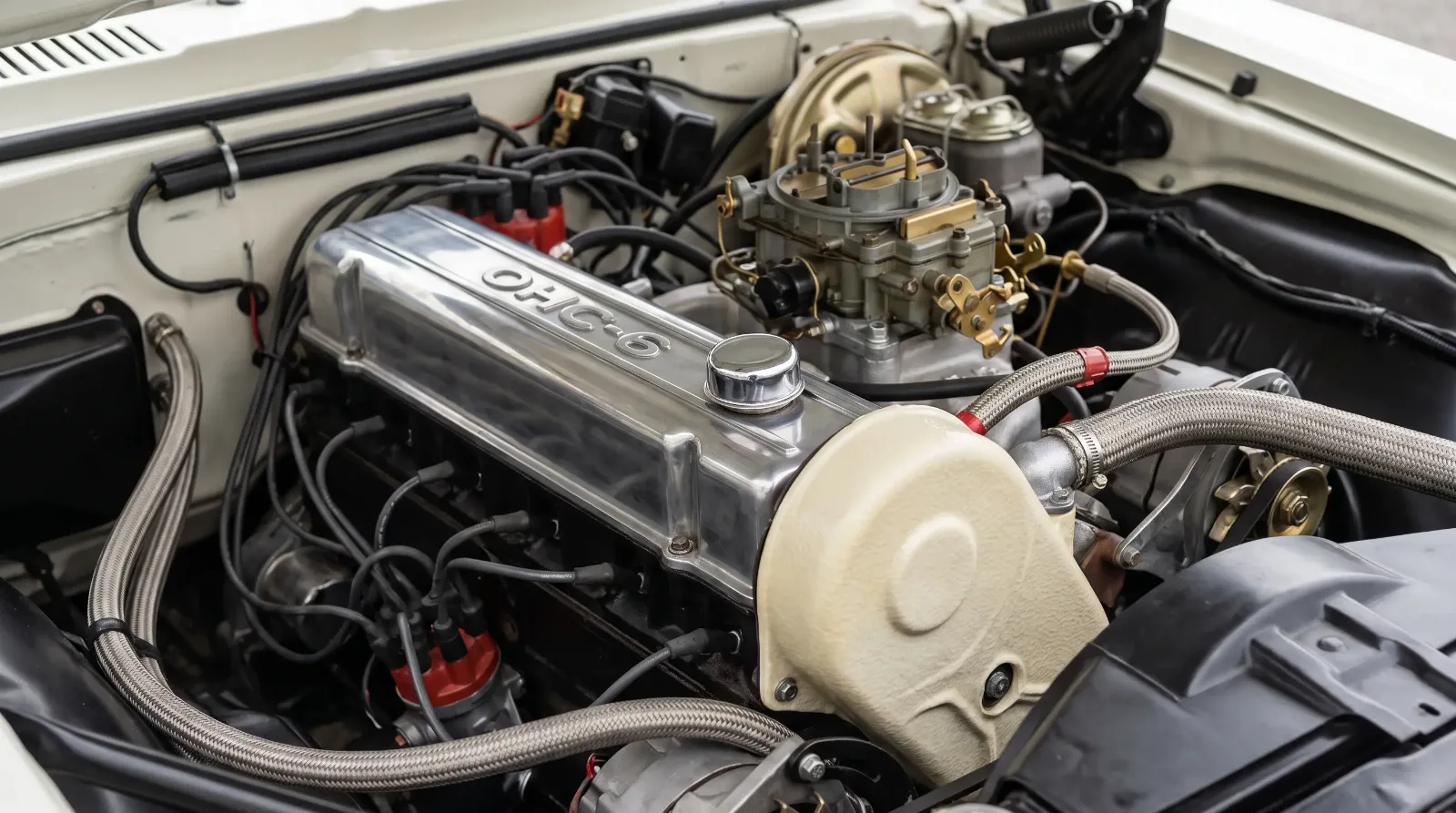
This one-architecture approach is the backbone running underneath everything else covered in Pontiac's V8 world, from the base engines up through the high-output variants. It's not the flashy part of Pontiac engine design, nobody put "shared architecture" on a hood scoop, but it's the reason parts hunting and engine swaps on these cars are less painful than they could have been. For a completely different approach Pontiac took to engine design in the same era, another angle worth reading is the overhead cam six, a genuinely separate design philosophy running parallel to the V8 family the whole time. And if you want the full arc of how these engines fit into the car itself, our Firebird retrospective covers that ground.
Sources and notes
Related Reading
Have a
Pontiac Firebird
for Sale?
Reach thousands of serious classic car collectors across the US.
Sell It Here →
Are You a Classic Car Dealer?
List your full inventory and connect with targeted classic car buyers.
Join as a Dealer →
#pontiac firebird
#engine swaps
#pontiac v8
#pontiac 455
#Pontiac engine design
#engine architecture

About the author
Mike Sullivan
Detroit-area muscle car enthusiast and restoration specialist with three decades of hands-on experience working on American iron.
Related Listings - Pontiac Firebird

Comments
Be the first to comment on this article.