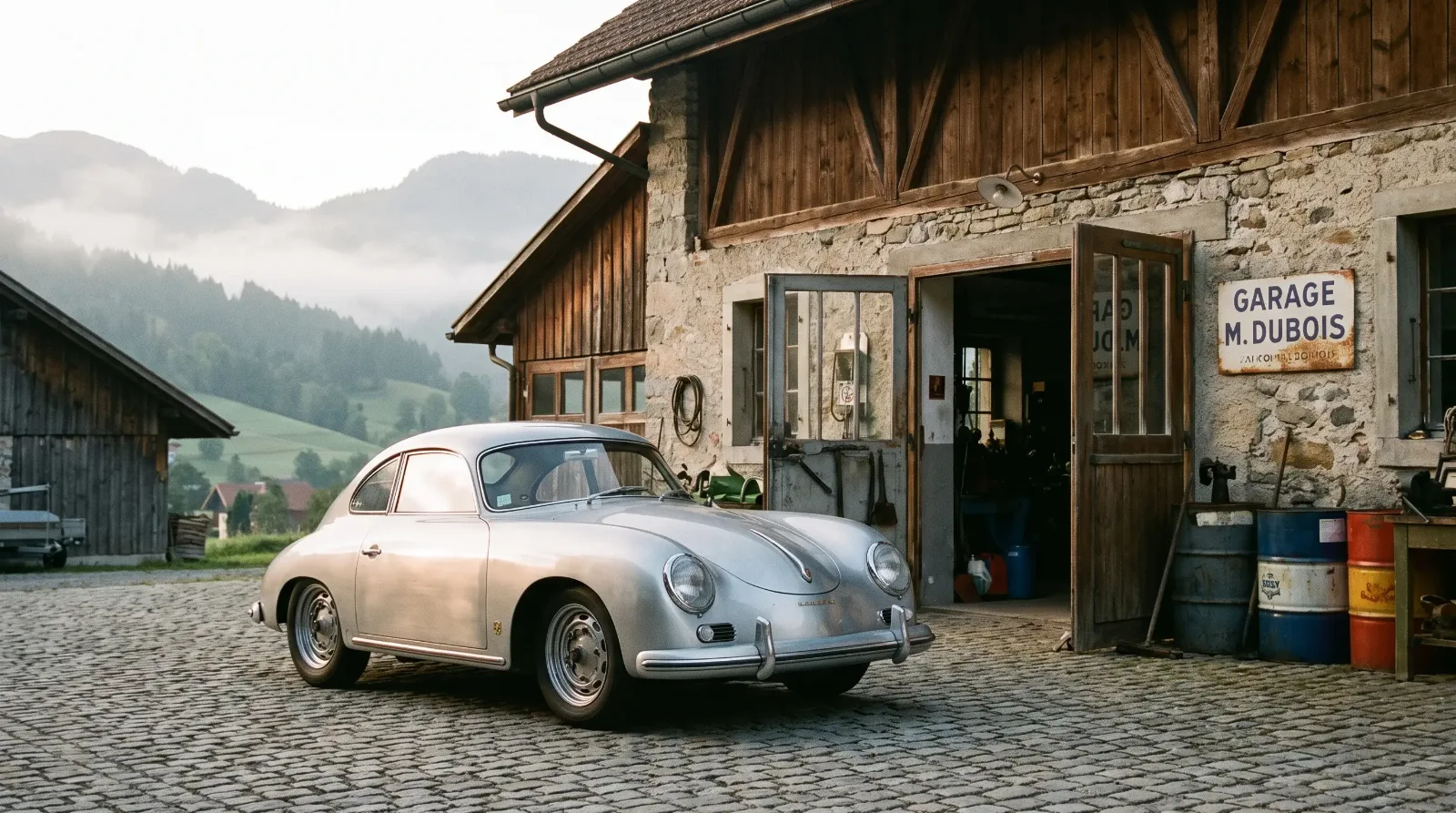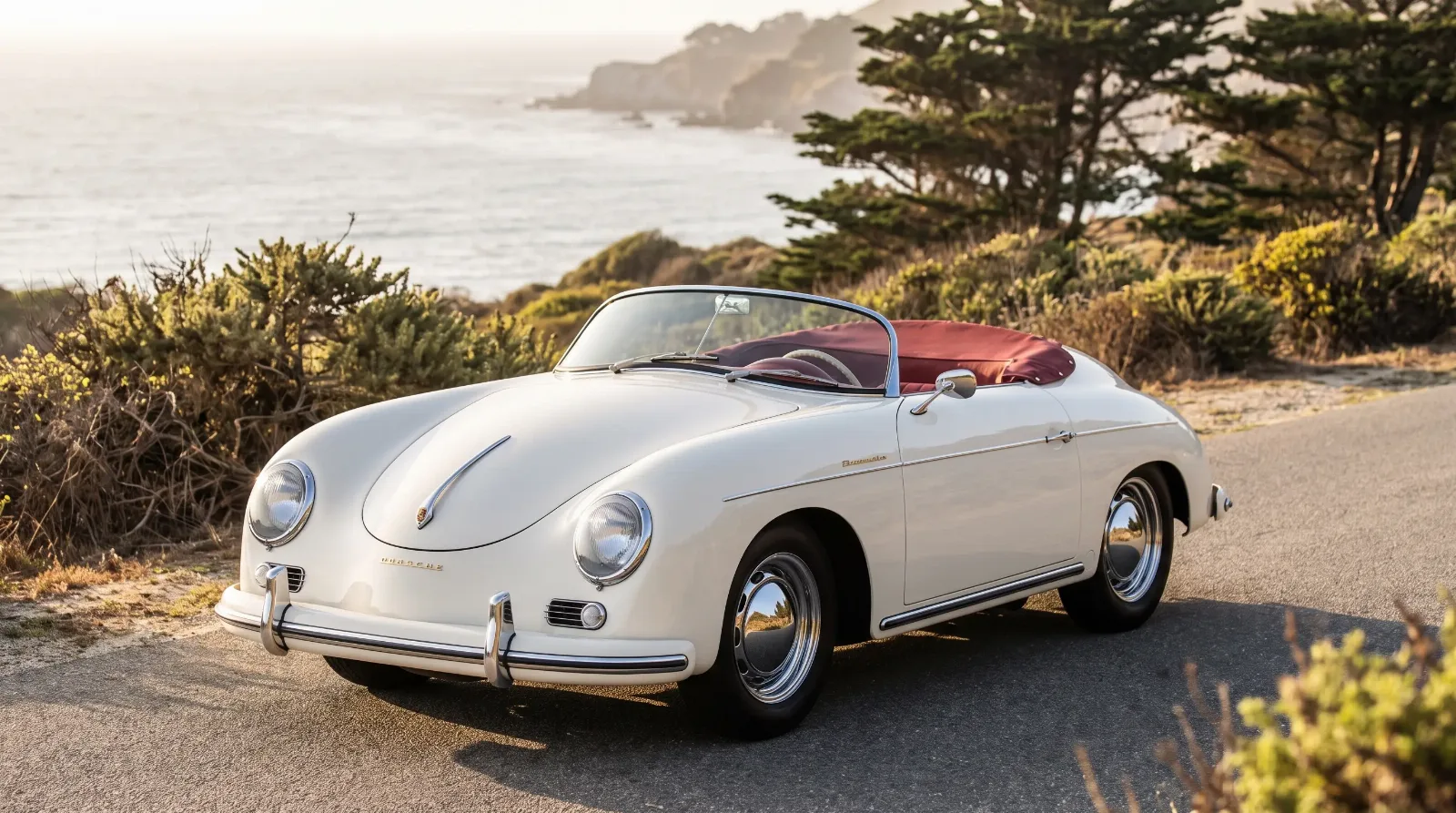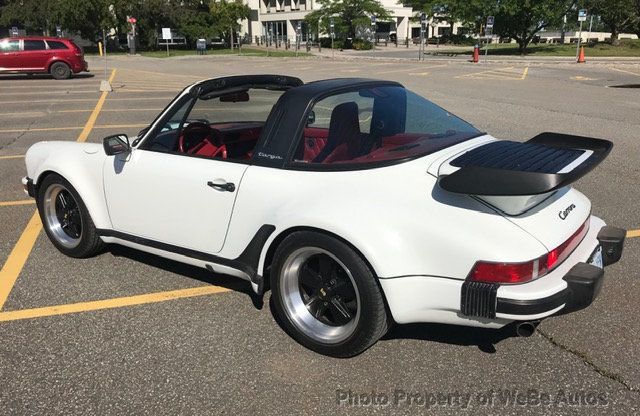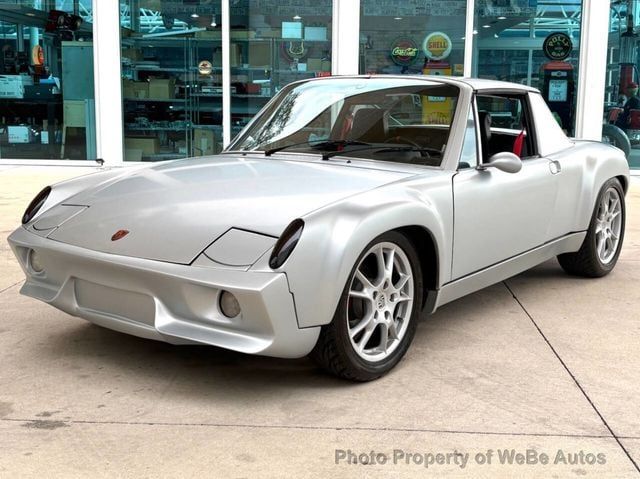
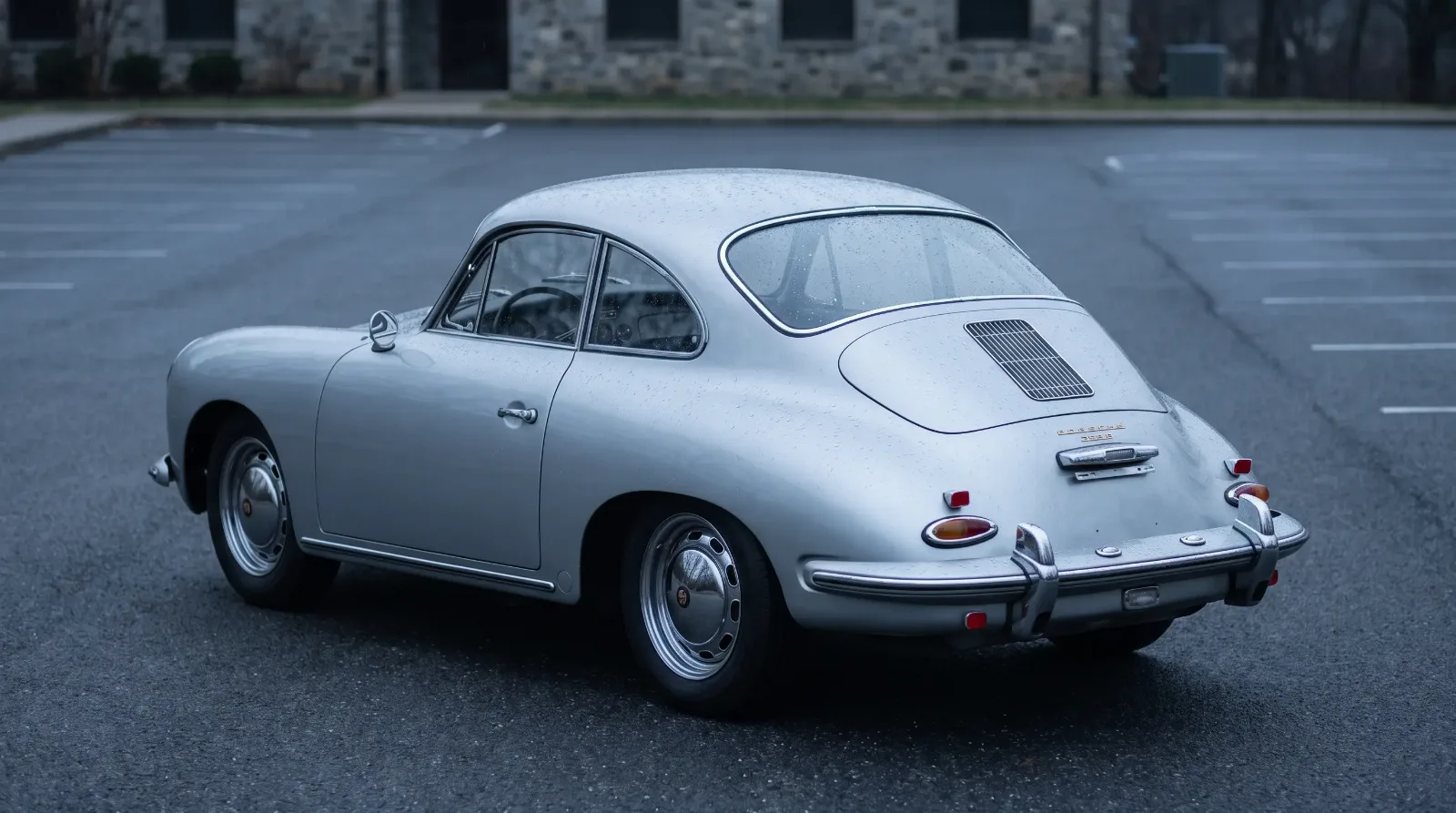
Of every body style Porsche put on the 356 chassis, the notchback is the one most owners have never seen in person. It is a fixed-roof coupe built for only a few seasons in the early 1960s, and it solves a packaging problem the standard fastback coupe never fully addressed: what happens to headroom and trunk access when you keep the roofline low but still want a usable rear seat and a separate lid over the front luggage bay.
What "notchback" actually means on a 356
The standard 356 coupe is a fastback: the roofline sweeps down in one continuous curve from the base of the windshield to the tail, which looks clean but eats into rear headroom and forces a shallow, sloped rear window. The notchback breaks that curve. Its roof stays higher and more level over the rear seats before dropping in a distinct step, or "notch," to a more upright rear window and a squared-off decklid. The result reads almost like a different car from three-quarter rear, even though the doors, glass, and mechanicals underneath are shared with the standard coupe.
Porsche did not invent this shape for the 356 out of styling preference. It came from Karmann, the coachbuilder that had already been producing steel 356 coupe bodies alongside Reutter, and it was aimed squarely at buyers who found the fastback's rear quarters cramped.
Why Karmann built it this way
By the early 1960s, on the 356B built to the T5 and T6 specifications, Porsche was fielding enough feedback about rear headroom that a fix made engineering sense even on a low-volume model. The notchback's higher roofline over the rear seats added real inches for anyone sitting back there, and the separated trunk lid meant the front luggage compartment no longer shared a single sloped panel with the rear window area, simplifying access and improving seal quality around the trunk opening. Karmann built these coupes on the same T5 and T6 platforms it was already producing standard coupes on, which kept tooling and assembly changes to a minimum even though the outer skin differed substantially aft of the doors.
The engineering trade-offs: headroom, trunk access, and drag
Nothing on a car is free, and the notchback's extra headroom came with a small aerodynamic penalty. A more upright rear window and a taller roofline over the tail increase frontal area toward the back of the car and disrupt the smooth taper that helped the standard fastback slip through the air efficiently for its era. On a car making 60 to 90 horsepower depending on engine code, from the base 1600 up to the 1600 Super 90, that penalty was not trivial, though Porsche never marketed the notchback as a performance variant. It was pitched as the practical body style, the one for owners who wanted a 356's driving character without giving up rear-seat space or fighting a shallow trunk lid every time they loaded luggage.
| Feature | Standard coupe (fastback) | Notchback coupe |
|---|---|---|
| Roofline | Continuous sweep to tail | Stepped, higher over rear seats |
| Rear window | Shallow, steeply raked | More upright, larger glass area |
| Trunk lid | Shares slope with rear glass area | Separate, more upright decklid |
| Body builder | Reutter and Karmann | Karmann only |
| Relative production volume | Standard, high volume | Low volume, short run: 1,048 T5 cars in 1961, 99 T6 cars in 1962 |
How rare it stayed, and why
The notchback never became a mainstream option. Buyers who wanted the 356 as a sporting coupe generally preferred the fastback's lighter, more integrated look, and the notchback's short production window on the T5 and T6 cars meant it never had the volume to build its own following the way the Speedster or the cabriolet did. That short run is exactly why it draws attention now. A body style built for two or three seasons on a platform that was itself a niche product leaves very few surviving examples, and fewer still that have not been modified or damaged over sixty years of ownership.
There is also a market consequence to that scarcity that has nothing to do with performance. Because so few notchbacks survive in unmodified form, restorers looking for reference material on trim details, seal profiles, or the correct decklid hinge geometry often have only a handful of documented cars to compare against, rather than the dozens of well-photographed fastback coupes available for the same model years. That makes provenance research slower and more dependent on factory build sheets and body tags than it would be for the standard coupe, where parts interchange and reference photos are abundant.
"The notchback is a case study in how one packaging decision, adding roughly two inches of headroom, cascades into a different trunk lid, a different rear window, and a measurably different drag profile. Nothing about it is arbitrary. Every line change traces back to a specific complaint from a specific owner base. That is why I find it more interesting than the fastback, honestly. The fastback is the car Porsche wanted to build. The notchback is the car buyers asked for."
— Emily Chen
Spotting a genuine notchback today
Identifying a real notchback starts with the roofline profile from the side, not the badge or the interior, since the mechanical specification underneath rarely differs from a standard coupe of the same model year. The step in the roof, the upright rear glass, and the separate decklid are the tells, and because Karmann built all of them, body tag research should point consistently to that coachbuilder rather than Reutter. Anyone tracing this platform back to [where Porsche began] will find the notchback sitting at the far practical end of a lineup that otherwise prized lightness and low frontal area above almost everything else. From here, [the next story in this set] moves from packaging engineering to competition, tracing how the same platform's more conventional coupes and roadsters became giant-killers on European and American circuits.
Sources and notes
- 1961 Porsche 356B Karmann Notchback Coupe - Rennlist
- Porsche 356 B 1600 (1959-1963) - Stuttcars
- Porsche 356 B 1600 Super 90 (1959-1963) - Stuttcars
- 1962 Porsche 356 B T6 Notchback Karmann Coupe - Classic Driver
- 1962 Porsche 356 B T6 1600 S Karmann Notchback Coupe - Daniel Schmitt & Co.
- Porsche 356 - Wikipedia