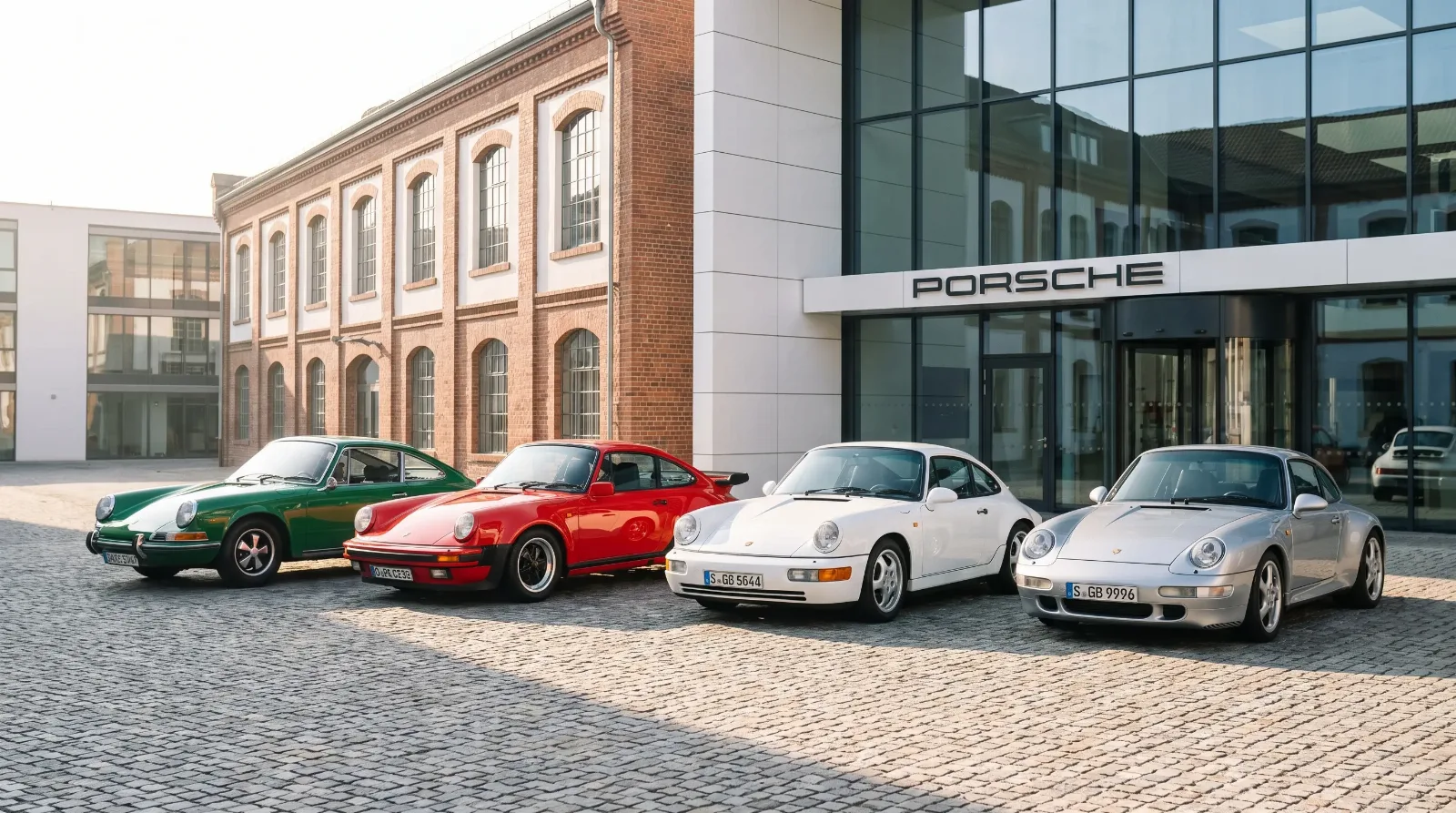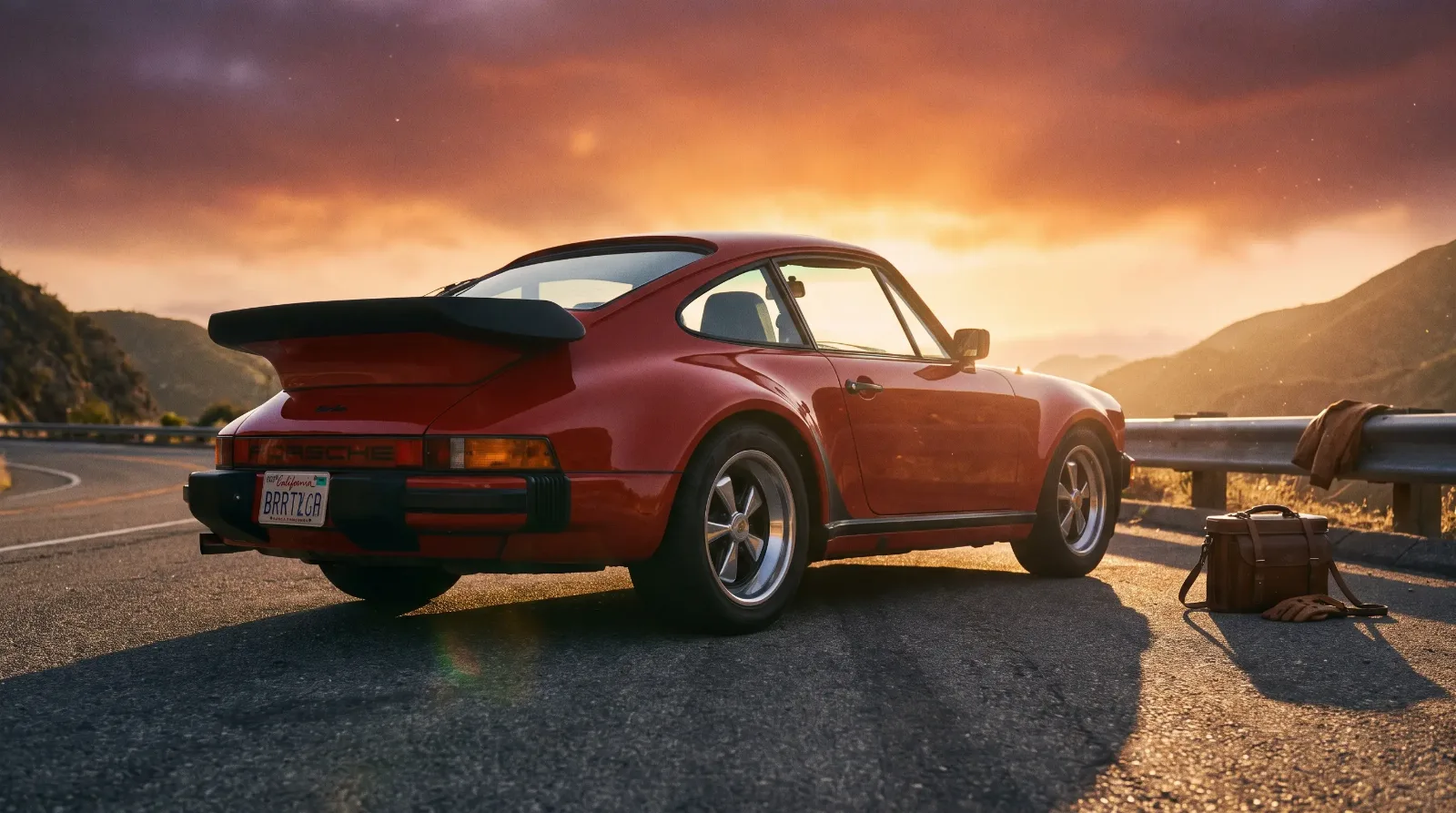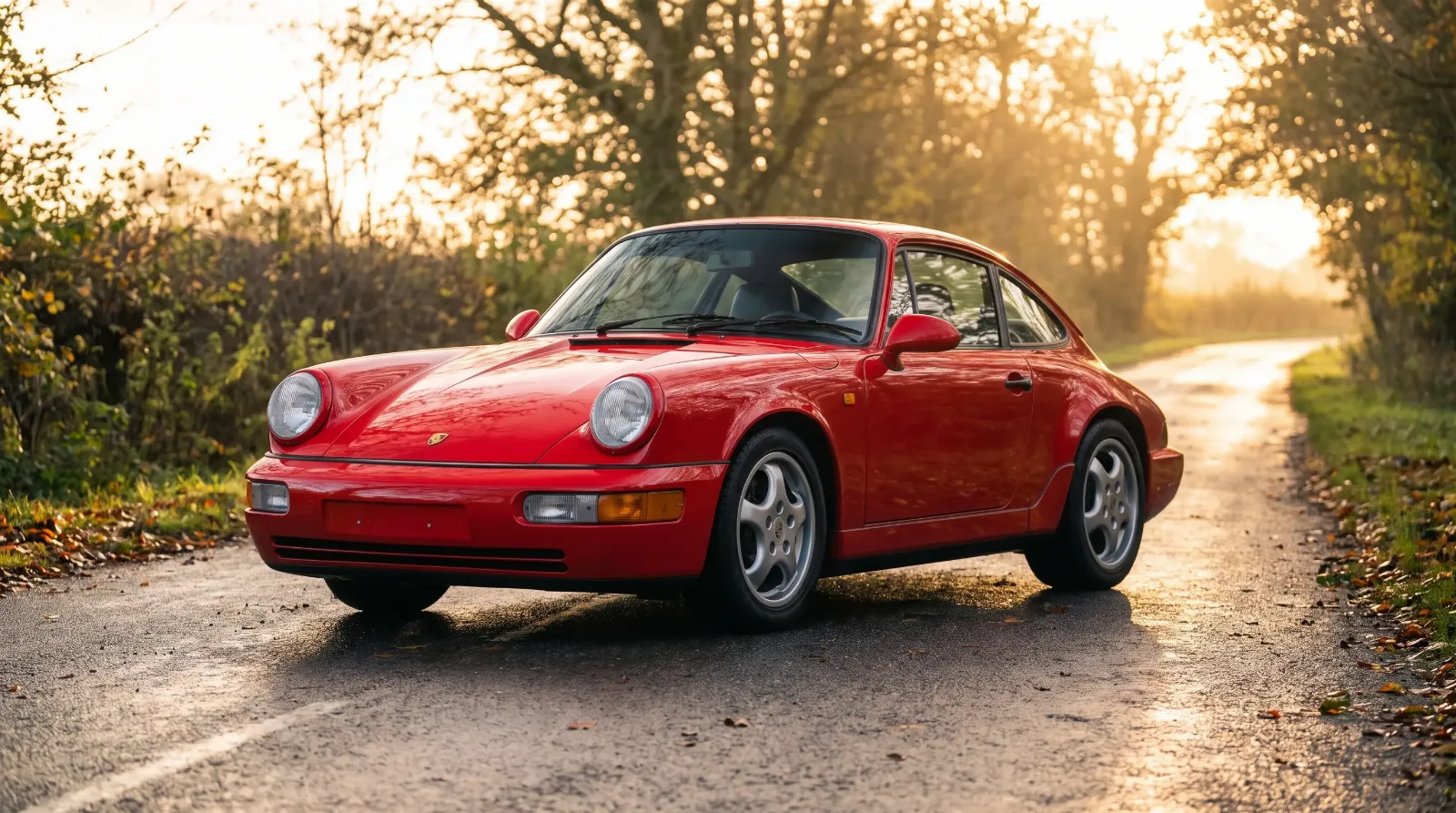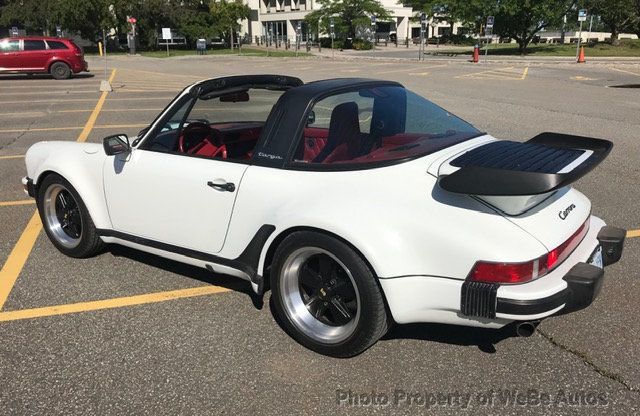
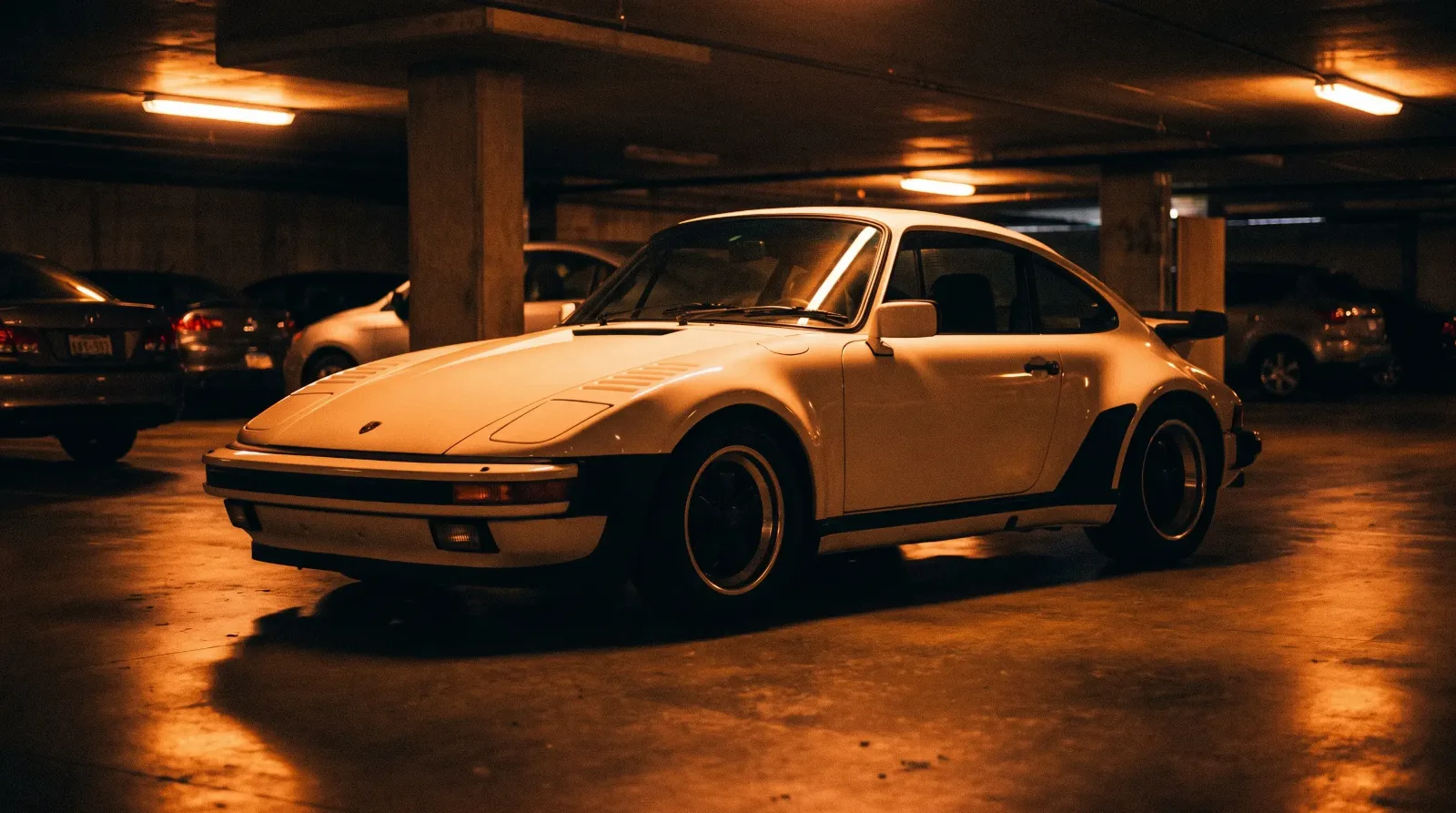
There is a photograph that keeps turning up at Porsche gatherings from Long Island to Laguna Beach: a white 930 Turbo, nose sloped like a wedge, headlights folded flush into the fenders, parked outside a nightclub sometime in the mid 1980s. Nobody remembers whose car it was. Everybody remembers what it was. That car, or one very much like it, is why the porsche 911 slant nose still gets people leaning over a fence at a concours d'elegance instead of walking past.
The slantnose, known at the factory as the Flachbau, started life as a race car detail and ended up as one of the strangest, most expensive options Porsche ever offered on a street car. It did not come from a designer's sketchpad in Stuttgart looking for something new to sell. It came from the track, and then from a handful of customers who wanted their road car to look like it belonged there.
Where the flat nose actually came from
Porsche's 935 race cars needed to cheat the air. Through the late 1970s, engineers reshaped the nose of the 935 into a low, sloped front end with headlights recessed into the front fenders, a configuration that cut drag and let the car sit lower without scraping through corners. It worked on the circuit. It also looked unmistakable, and that combination of function and menace is what got customers asking Porsche's Sonderwunschprogramm, the special wishes department, whether they could have the same thing on a car they could drive to dinner.
Porsche said yes, eventually, and by the early 1980s the factory was building slantnose 911s to special order, based on the 930 Turbo body. The nose was reshaped, the pop-up headlights were sourced and adapted, the front fender vents were added for brake cooling, and in most cases the rear fender flares were widened to match. None of this was cheap. A slantnose commission from the factory added roughly half again to the price of the donor Turbo, around $23,000 on top of a 1987 US-spec Turbo, and Porsche was candid that it wasn't building the option to make money on volume. It was building it because certain customers were going to have one built regardless, and better it happen under Porsche's own roof with Porsche's own quality control than at some outside coachbuilder's shop.
"The Flachbau never made sense as a business case, and that's exactly why it worked as a piece of theater. Porsche built it because the customer wanted the race car's face on their street car, full stop, and for a certain kind of buyer in the eighties, that was worth writing a very large check."
— Patrick Walsh
What you actually got for the money
A factory slantnose conversion touched more of the car than most owners expect. The front fenders were entirely different pieces, hand finished to blend the new nose line into the existing body. The headlights, hidden until switched on, were a mechanical assembly borrowed and adapted, not a simple bolt-on part. Turn signals moved into the front fascia. The front fender vents behind the wheel arches were functional, feeding air to the front brakes, which mattered because a Turbo pushed hard enough to need it. Buyers frequently ordered the wider "Turbo-look" rear flares to match, along with the whale tail or tea tray spoiler, so the finished car read as a complete package rather than a nose job on an otherwise standard Turbo.
Underneath the new sheet metal, the mechanical package stayed largely what you'd find on a contemporary 930 Turbo: the 3.3 liter turbocharged flat six, rated around 300 hp in European trim (330 hp on the top-spec Flachbau SE variant, and less in US emissions-compliant form), four-speed transaxle, and the suspension tuning that made the early Turbo both quick and a genuine handful if you got greedy with the throttle mid corner. The slantnose was cosmetic surgery on a car that was already serious. That distinction mattered to purists then and still matters to buyers now.
Not every slantnose came from Zuffenhausen
Because the factory conversion was slow, expensive, and order-only, a cottage industry of tuning houses built their own versions of the look, and this is where the slantnose story gets complicated for anyone shopping one today. Outside shops offered flat nose conversions using fiberglass or aftermarket steel panels, sometimes on cars that were never Turbos to begin with, and quality varied enormously from shop to shop. Some of that work was excellent. Some of it was a fender flare kit and a prayer. The gap between a documented factory Flachbau and a car wearing a slantnose kit is, in practical terms, the gap between a six figure collector car and a fun weekend project.
That is the single most important thing to understand if you are looking at one of these for sale rather than just admiring one at a show. Factory build sheets, Kardex documentation from Porsche, and consistent panel gaps and fit are what separate a genuine Sonderwunschprogramm car from a well done tribute. Buyers who skip that homework tend to regret it later, usually right around resale.
| Detail | Factory Flachbau |
|---|---|
| Donor chassis | 930 Turbo (most common), occasionally naturally aspirated 911 variants |
| Program | Sonderwunschprogramm (special wishes) |
| Headlights | Pop-up, fender mounted, flush closed |
| Era offered | Custom orders from the early 1980s; catalog option (M505/M506) from 1987 through 1989 |
| Typical extra cost | Roughly half again the price of a standard Turbo (about $23,000 extra in the US for 1987) |
Why the look still lands
Design trends from the 1980s do not all age well, and plenty of period styling cues on cars from that decade have quietly become punchlines. The slantnose never fell into that category, and I think it's because the shape was never trying to be fashionable. It was trying to be fast, or at least to look like it belonged to something that was, and cars built around function tend to outlast cars built around trend. Park a slantnose next to almost anything else from 1985 and the 911 still reads as purposeful rather than dated.
It also helps that the slantnose arrived at a moment when the 911 itself was under real threat internally. Porsche's own engineers were pushing hard for the front engine 928 to eventually replace the 911 altogether, and the standard air-cooled car's future was genuinely uncertain through much of the decade covered in the air-cooled 911 story. The Flachbau, expensive and low volume as it was, kept the 911 in the conversation as something Porsche's wealthiest customers were still willing to pay a premium to personalize. That is not nothing for a model line that some executives inside the company assumed was on its way out.
Buying and living with one today
Values on documented factory slantnose Turbos have climbed well past those of standard 930s, and the gap between a verified car and an undocumented conversion has only widened as buyers get more educated. If you're shopping, start with the paperwork: a Porsche Certificate of Authenticity or factory Kardex record referencing the special order, matching chassis and body numbers, and a service history that doesn't have a suspicious gap right around when someone might have quietly had the nose swapped. Panel fit matters too. Factory work closes up tight and consistent; aftermarket conversions often show it in the shut lines around the headlight buckets after a few decades of use.
None of that paperwork chase makes the car less fun to actually drive, and the mechanical experience underneath the bodywork is still a 930 Turbo, turbo lag and all, which is its own kind of education for anyone who learned to drive on modern power delivery. For a broader look at how this generation of car fits into Porsche's history, another angle on the same car is worth reading, since the model that replaced the 930 era took the 911 in a very different direction, one built around modernizing the platform rather than dressing it up for the show circuit.
Sources and notes
- Porsche: Discover the Porsche 930 Turbo Slantnose
- Stuttcars: Porsche 911 Turbo 3.3 SE Flachbau (930), 1981 to 1989
- Stuttcars: Porsche 911 Turbo 3.3 (930) Specifications and Performance
- Classic Driver: Mansour Ojjeh's unique Porsche 935 Street
- Wikipedia: Porsche 911 (930)
- Elferspot: Porsche 930 Turbo Slantnose M505/506