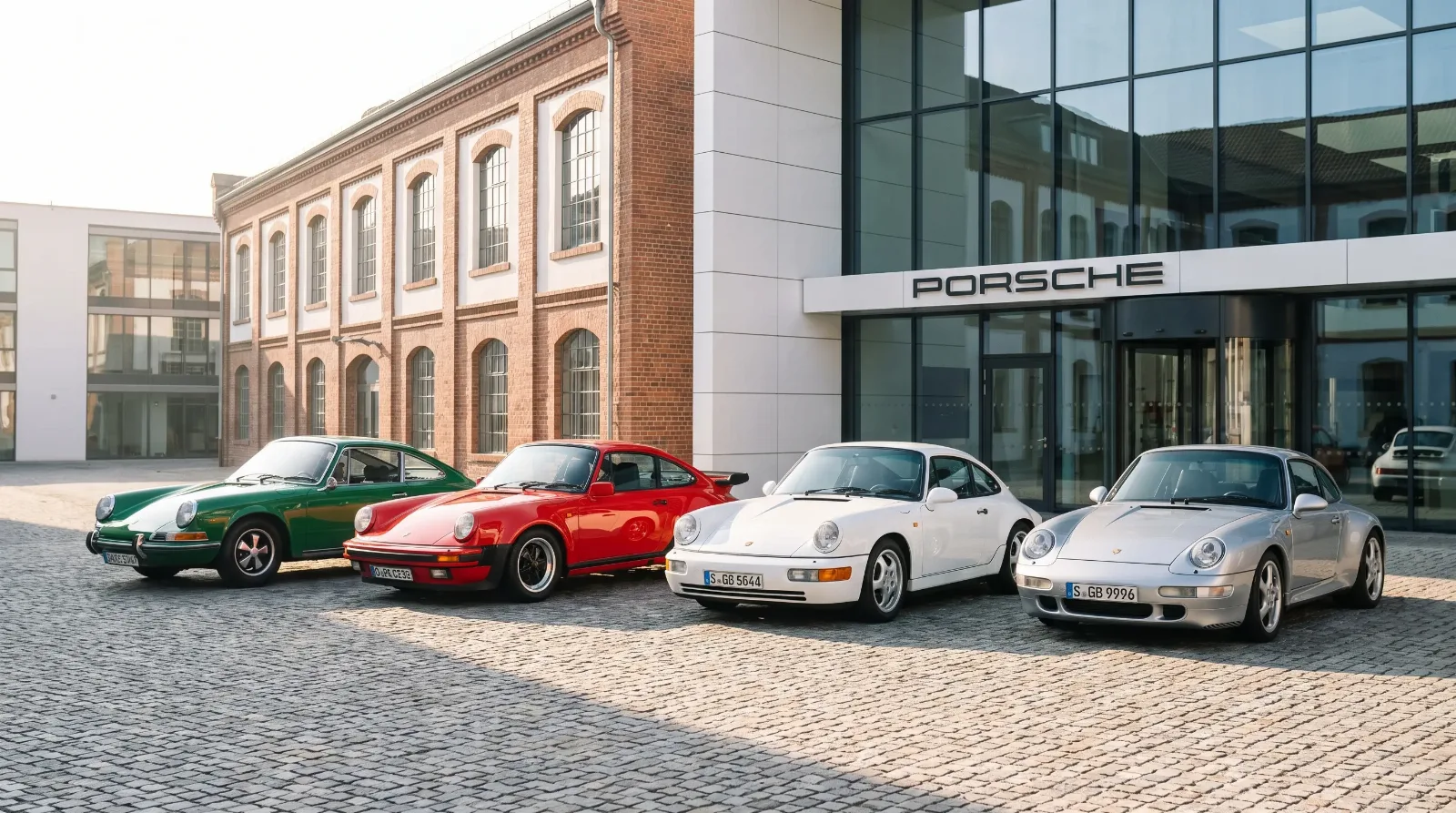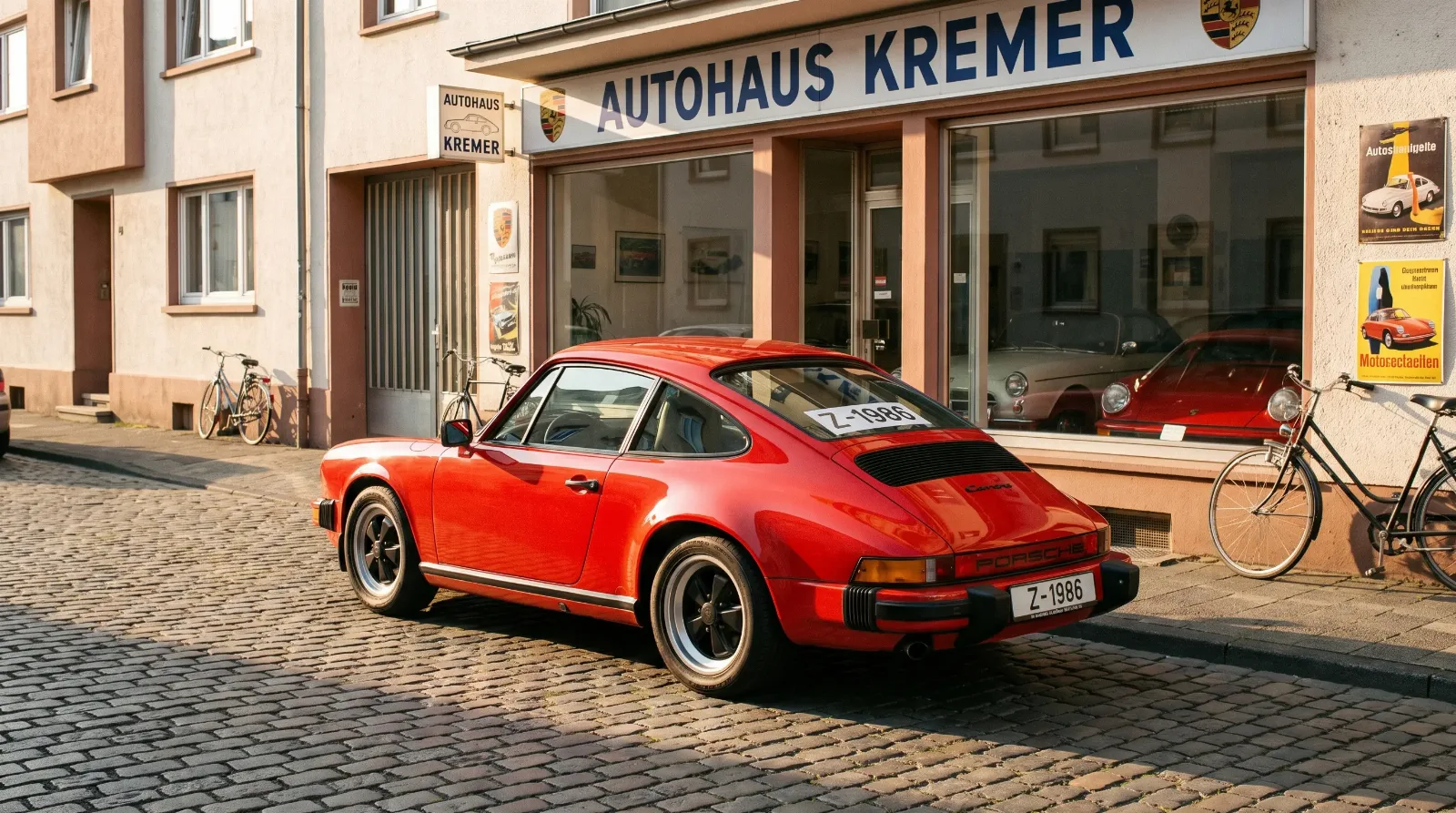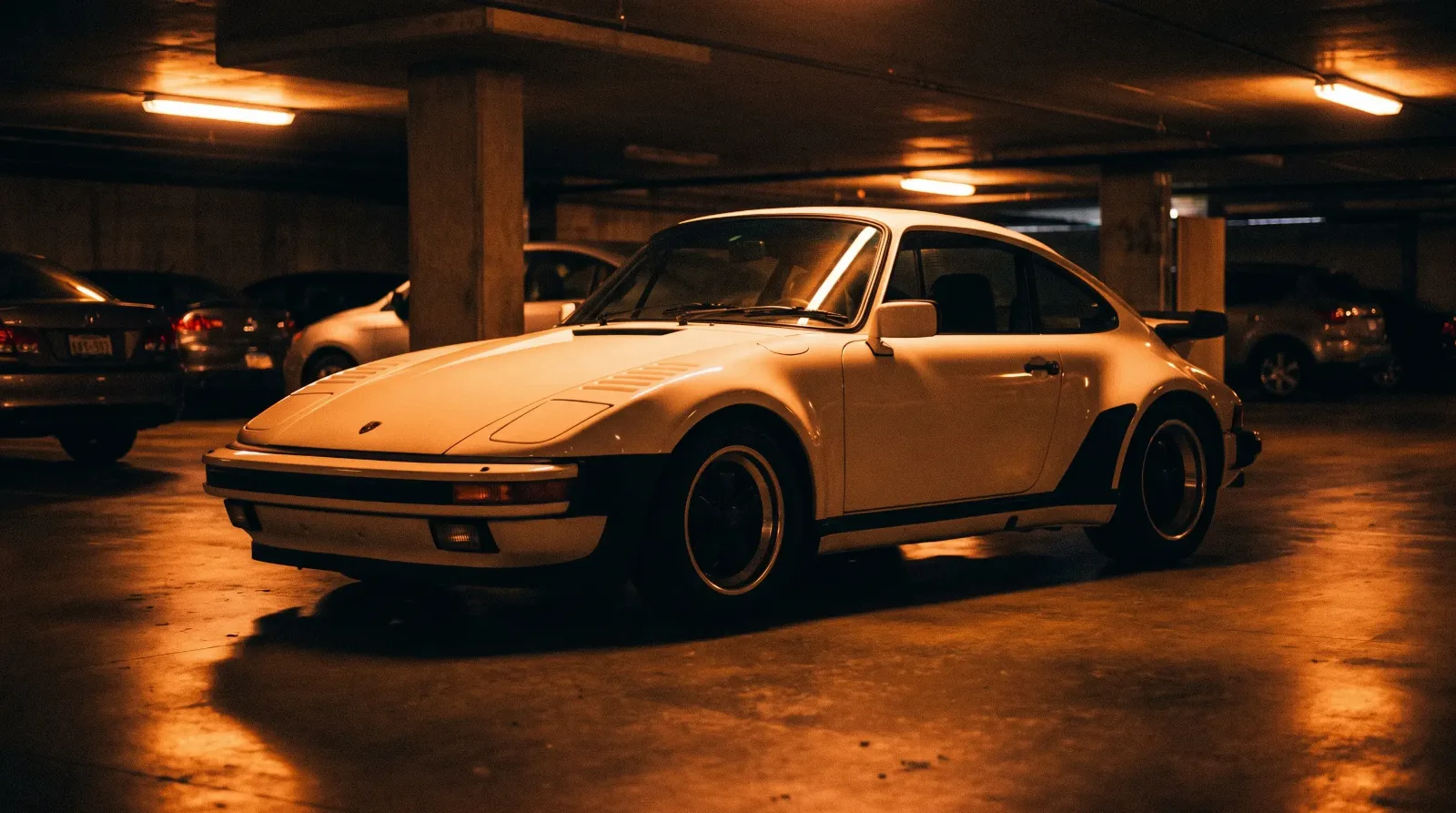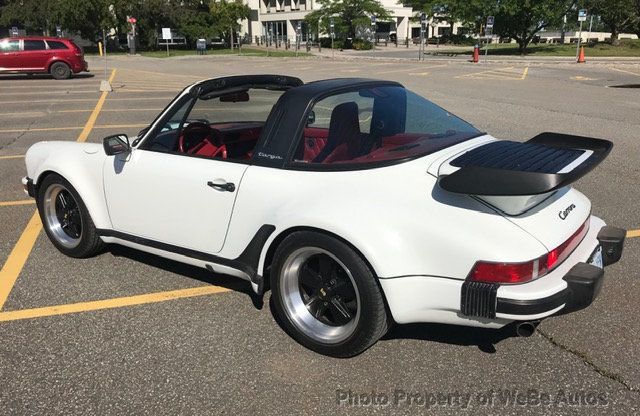
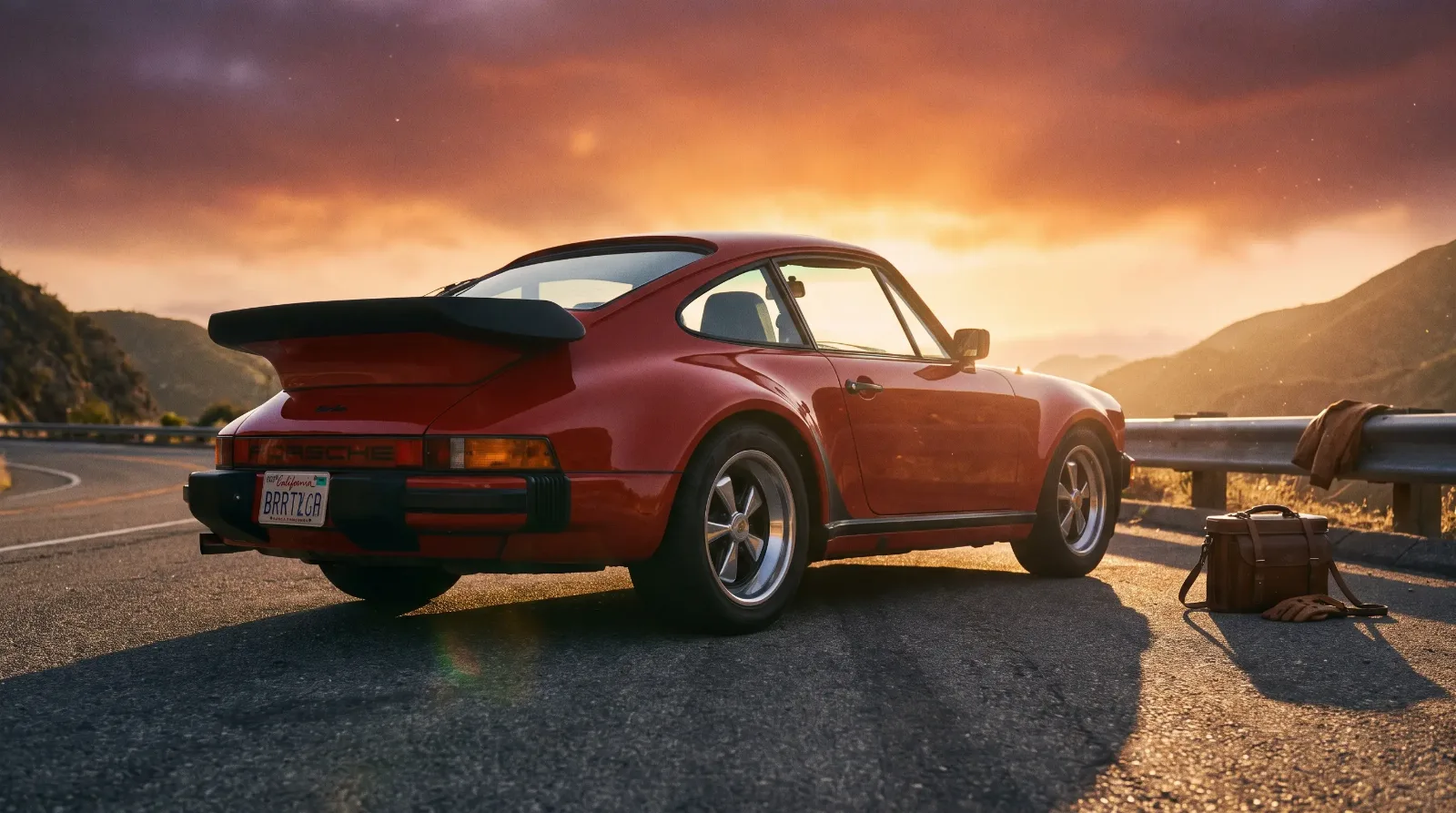
Every enthusiast circle has one car that gets brought up in a hushed, slightly reverent tone, usually by someone who has never actually driven it. For a long stretch of the 1980s, that car was the Porsche 930 Turbo. The nickname did most of the talking: the Widowmaker. It is the kind of reputation that gets exaggerated over decades of bar-stool retelling, and also the kind that, in this particular case, was not entirely wrong.
The 930 Turbo was Porsche's first turbocharged 911, and for years it was also the fastest production car most people could actually walk into a dealership and buy. It earned its legend honestly, through genuine speed and a genuine willingness to bite drivers who underestimated it.
How Porsche ended up building it
Turbocharging arrived at Porsche largely through motorsport. The company had been experimenting with forced induction on its racing programs through the early 1970s, and by mid-decade the technology had matured enough, and proven itself durable enough, to consider putting it in a road car. The result debuted for the 1975 model year as the 911 Turbo, known internally by its chassis code, 930, which became the name most enthusiasts still use for it today.
It was an audacious move for the era. Turbo lag was a poorly understood problem in the mid-1970s, and putting that much unpredictable power behind the rear axle of a car already known for its tail-happy weight distribution was, by any conventional engineering logic, a risk. Porsche built it anyway, sold it in limited numbers at a steep price, and watched it become the car every other 911 in the lineup was measured against.
The 930's arrival also changed how Porsche marketed its entire range. Suddenly every other 911 in the catalog, the SC included, existed in relation to this one, positioned as the sensible choice next to the car that made no apologies for being extreme. Dealers reported that customers who could never afford a 930 still wanted to sit in one, and the car's presence in a showroom did more for Porsche's image in that period than almost anything else the company built.
The engine and the reputation it earned
The early 930 arrived with a 3.0 liter turbocharged flat six producing around 260 hp, a genuinely enormous figure for a road car of that period. By 1978, Porsche enlarged the engine to 3.3 liters and added an intercooler, pushing output to roughly 300 PS (about 296 hp) on European-spec cars, though US-market versions produced noticeably less at first because of emissions equipment, before creeping back up through the 1980s. Straight-line performance was startling for the time. The problem, and the part that built the Widowmaker name, was what happened in the corners.
The single-turbo setup of that era delivered its power in a distinct, delayed surge rather than a linear build. A driver could turn into a corner, feel comfortably in control, apply throttle, and then discover, a beat later than expected, that the rear of the car had suddenly gained a great deal more power than the front tires were prepared to manage. Combined with the 911's inherently rearward weight bias, the result could snap from understeer to violent oversteer with very little warning for a driver unfamiliar with the car's habits. That was not folklore. It was documented, well understood by Porsche's own engineers, and part of why period road tests so consistently paired their praise for the car's speed with genuine warnings about respect for its limits.
| Model years | Engine | Output (approx.) |
|---|---|---|
| 1975-1977 | 3.0 liter turbocharged flat six | ~260 hp |
| 1978-1989 | 3.3 liter turbocharged flat six, intercooled | ~300 hp |
Living with the legend today
Modern 930 owners will tell you the widowmaker stories are true, but incomplete. Yes, the car punishes a careless or aggressive right foot mid-corner. It is also, driven with the patience and respect it demands, one of the most rewarding classic Porsches to own, a car that makes an attentive driver feel like they have earned every mile. The trick, as one longtime owner put it to me at a track day a few years ago, is to stop thinking of the turbo lag as a flaw and start thinking of it as a conversation the car is having with you, one that punishes you only if you stop listening.
Values have climbed steadily as buyers who grew up hearing the nickname finally reached the point in life where they could afford to find out for themselves what the fuss was about. Early 3.0 liter cars in solid, unmolested condition and later, more powerful 3.3 liter examples both command real money today, with well-documented cars in original specification generally commanding the strongest prices. Cars that have been heavily modified for more power, ironically, tend to sell for less than clean, original examples, since buyers shopping this particular legend usually want the real, unpredictable thing rather than someone else's attempt to tame it.
"Nobody who actually owns one of these long term calls it a widowmaker anymore. They call it demanding. There's a difference, and it only takes about a thousand miles behind the wheel to learn it."
— Patrick Walsh
Where it fits in the bigger picture
The 930 did not exist in isolation. It sat at the top of a lineup that included the more forgiving SC and, later, the Carrera 3.2, and its reputation only makes sense in that context, as the deliberately extreme edge of a much broader story. For the fuller arc of that story, how the 911 became an icon traces the shape back to its origins and forward through every generation that followed.
The 930 also spawned one of the most divisive design variants in Porsche history, the flared, sloped-nose special order cars that chased a very different kind of attention. For a companion piece on that particular chapter, the slantnose story is worth reading next. It is, in its own way, an even stranger legend than the Widowmaker itself.