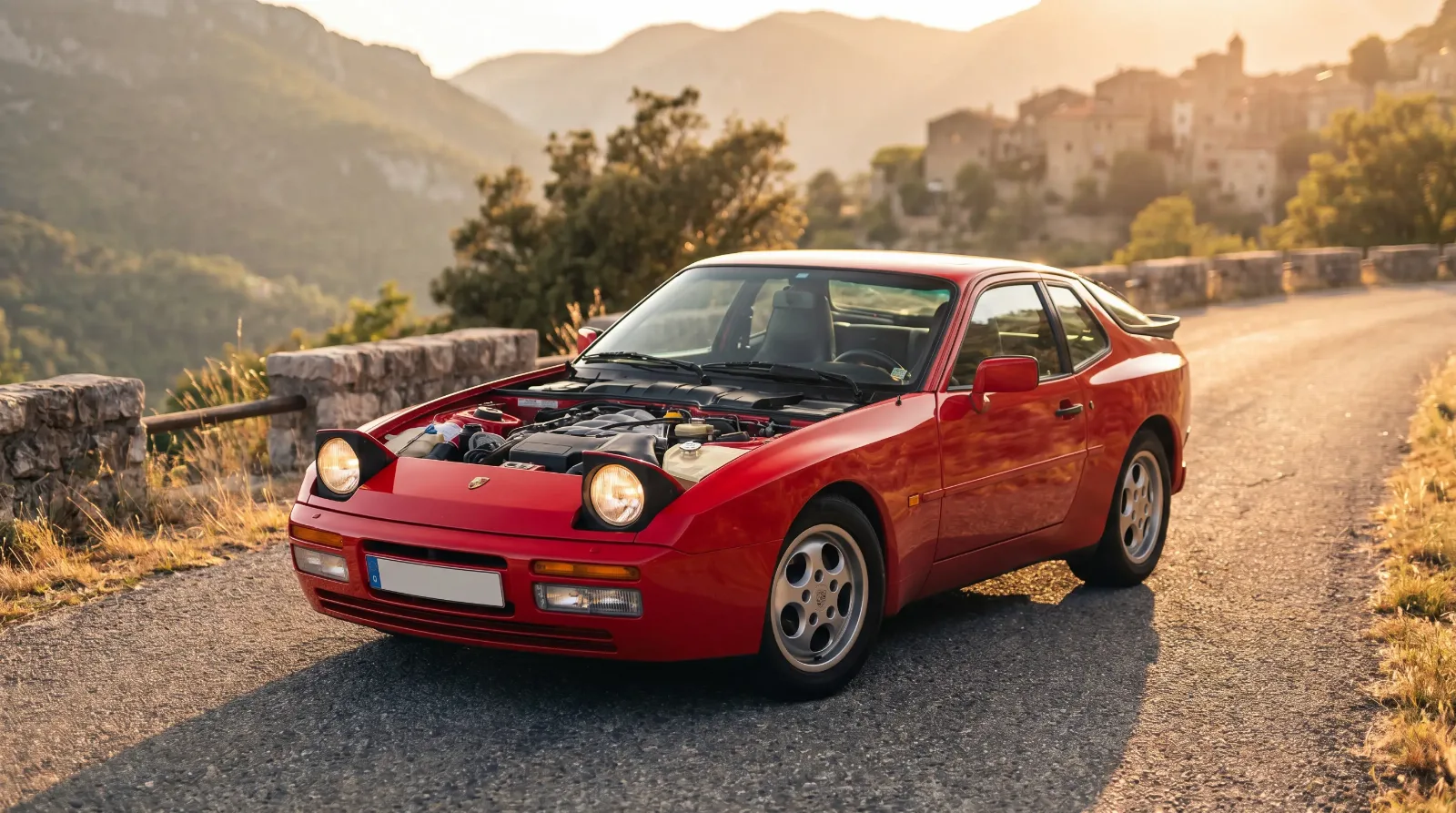
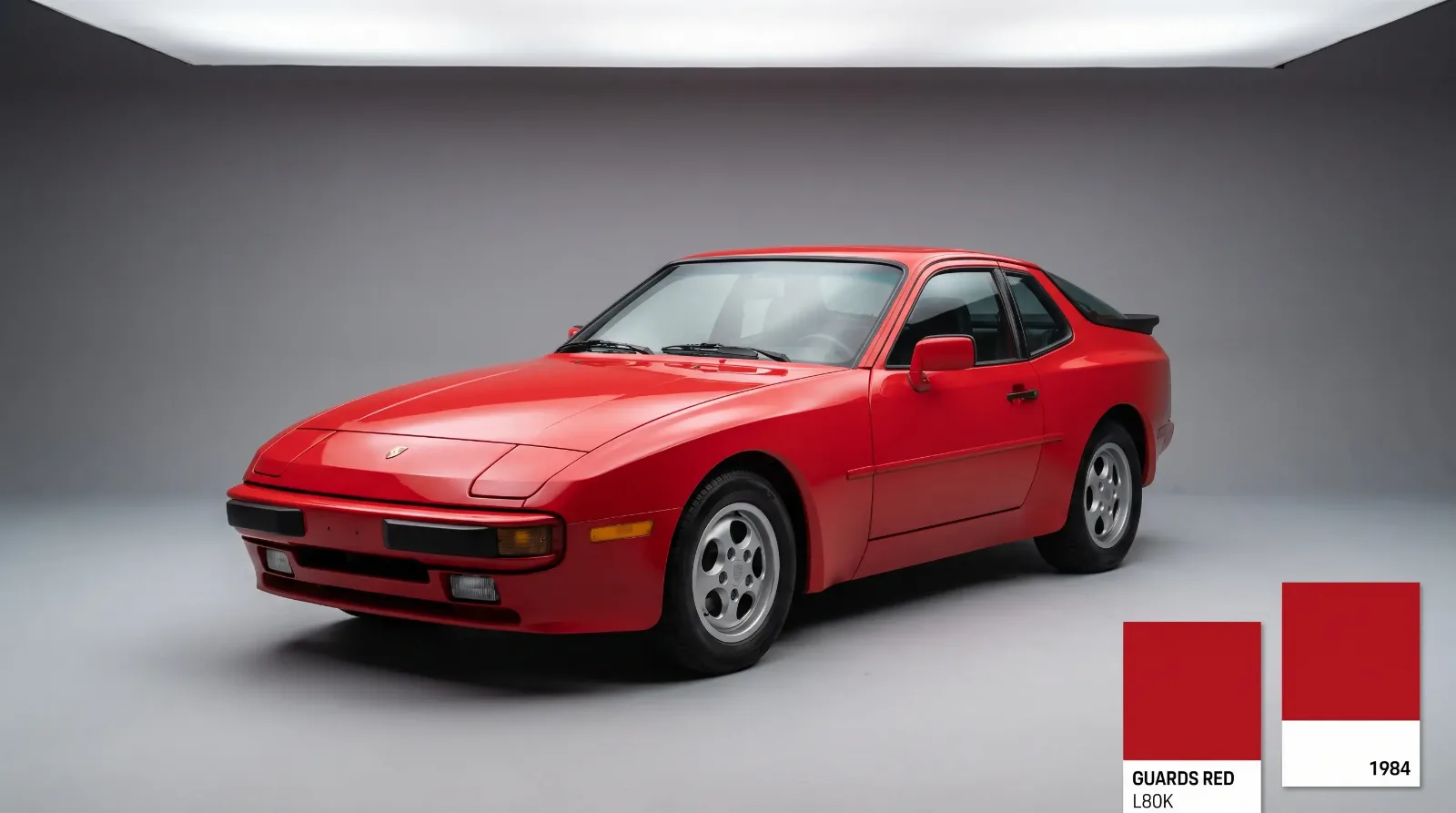
Guards red porsche paint sold more 944s than any brochure line ever did. Pull up a hundred period photos of the front-engine cars parked outside dealerships in 1983, and the red ones jump out first. That is not nostalgia talking. It is what the color was built to do.
Guards red is not a color, it's a decision
Porsche's paint code for guards red on the 944 was M3A (also seen as 027, and later as 80K toward the end of the decade), and it was never marketed as a mood or a lifestyle. It was a factory option that cost real money on the order sheet, and dealers pushed it because it moved cars off the lot faster than the browns and tans everyone associates with the era. The 944 launched in 1982 as the car that had to prove the front-engine, transaxle layout was not a detour from what Porsche was supposed to be. Guards red was the visual argument. Loud enough to say sports car, disciplined enough to say German engineering, not American excess.
I have looked at enough build sheets to know the pattern holds across markets. US-spec 944s in guards red outnumber the silver and black cars in most regional club rosters I have seen, and that is not an accident of what survived. It is what people ordered.
The number worth sitting with is how consistent that ordering pattern is across body styles. Coupes, the later cabriolets, base cars and Turbos all show the same lean toward red on dealer lots photographed for period newspaper ads. Nobody coordinated that across regions. It happened because the sales staff pushed the color that closed deals, and guards red closed deals.
The number that actually matters: paint cost versus resale lift
Here is the part enthusiasts skip past. Guards red on a 944 was a factory option, not free, and it typically added a modest premium over the standard colors. Decades later that premium has flipped into a resale advantage. Clean, documented guards red 944s consistently draw more attention in private sale listings and auction results than the same car in Meteor Grey Metallic or Cassis Red Metallic, the two colors people confuse it with constantly.
Confusing those three costs buyers money. Guards red is a solid color, no metallic flake, applied straight and bright. Cassis is a metallic maroon-leaning red that reads completely differently under sunlight. If a listing says "red 944" and does not specify the code, assume nothing and ask for the paint tag.
Solid colors like guards red are also cheaper and easier to repair correctly than metallics. There is no flake orientation to match, no clear coat blend to chase across a panel line. That is a practical reason body shops like working on these cars, and it is part of why a repaint on a guards red 944 can still look factory-correct if the shop knew what they were doing. Metallic repaints go wrong far more often, because matching flake density under different light is a skill most shops do not practice enough to be good at.
| Color name | Paint code | Finish | Common confusion |
|---|---|---|---|
| Guards Red | M3A (027 / 80K) | Solid, non-metallic | Mistaken for Cassis Red |
| Cassis Red Metallic | L80D | Metallic | Mistaken for Guards Red in photos |
| Meteor Grey Metallic | LY7Z | Metallic | Often listed simply as "grey" |
Why it shows up so much in the transaxle lineup specifically
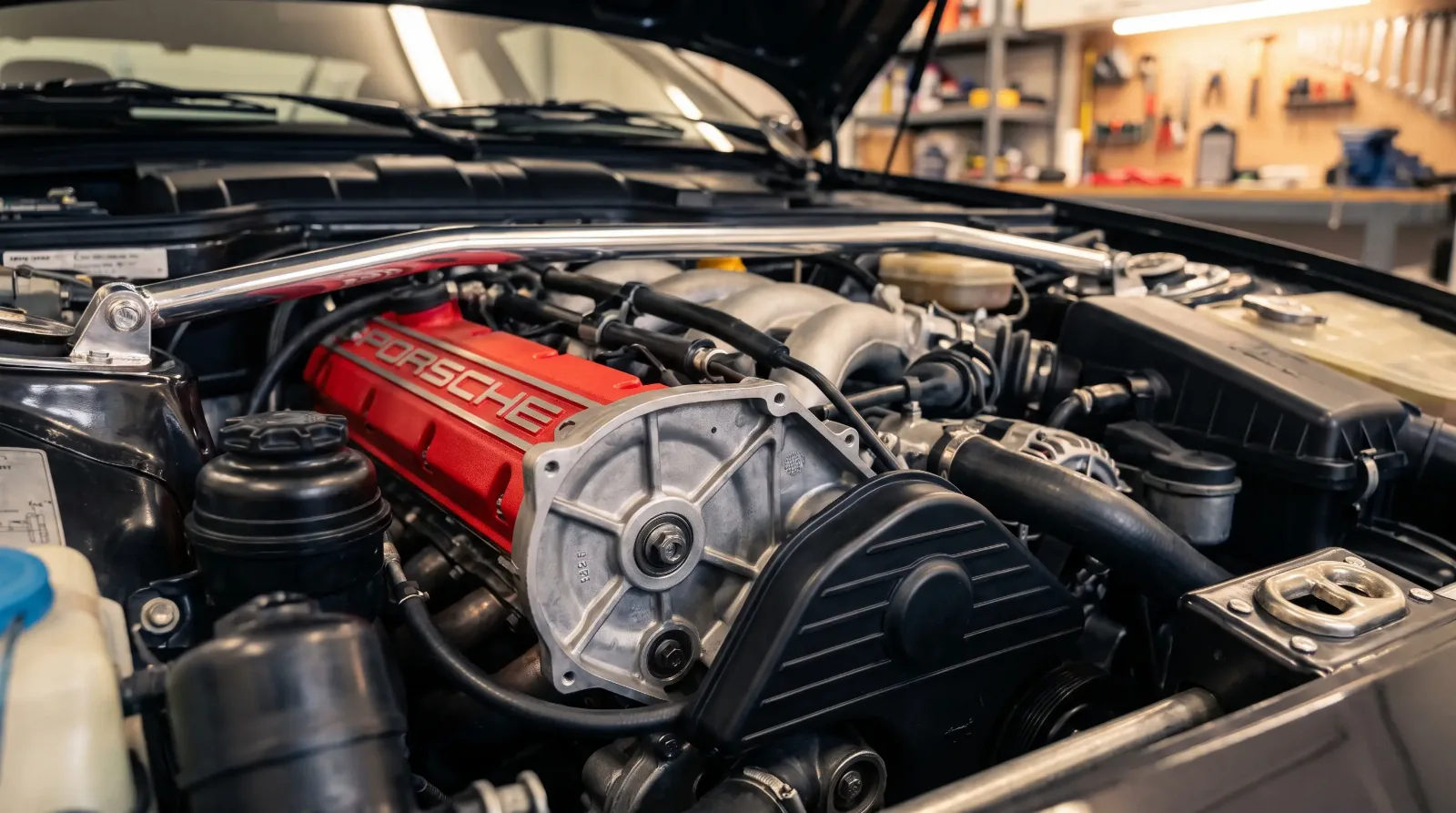
The 944 needed to sell people on a formula the 911 crowd already doubted. Front engine, rear transaxle, water-cooled, a big four-cylinder instead of a flat-six. That is a lot of "not a real Porsche" to argue against in a showroom, and I covered exactly how that argument played out in the 944 story. Guards red did some of the persuading before a single test drive happened. It signaled performance intent without needing the six-cylinder badge to back it up.
The color choice tracks with how aggressively Porsche marketed the 944 Turbo and 944 S2 later in the decade. Turbo brochures leaned on red more than any other color in the lineup photography, and that is not a coincidence of what a photographer had in the studio that day. It is deliberate positioning.
Look at the timing too. The 944 Turbo arrived in 1985 in Europe (reaching US buyers as a 1986 model) with a power figure that finally silenced the "it's just a 924 with a bigger badge" crowd, and the press cars sent out for road tests skewed red more often than any other single color. That is not marketing by accident. A magazine road test photo runs in black and white as often as color in that era, but even in black and white a solid red reproduces with more contrast and punch than a metallic grey. Someone in Stuttgart understood that before anyone wrote it down as strategy.
Buying one now: what actually holds value
An original guards red car with matching interior and no repaint is worth chasing over a repainted example, even a well-done one. Paint code stamps on the door jamb and the parts sticker in the trunk should match. Repaints happen for good reasons, accident repair, rust remediation, and a quality repaint is not a dealbreaker. But a documented original finish commands more money, full stop, and always will in this market.
"People ask me why a 40-year-old paint code still moves the needle on price. Because it is one of the few things on a used car you cannot fake convincingly. Either the tag matches the panel or it doesn't."
— Dan Reeves
The verdict on the aesthetic itself
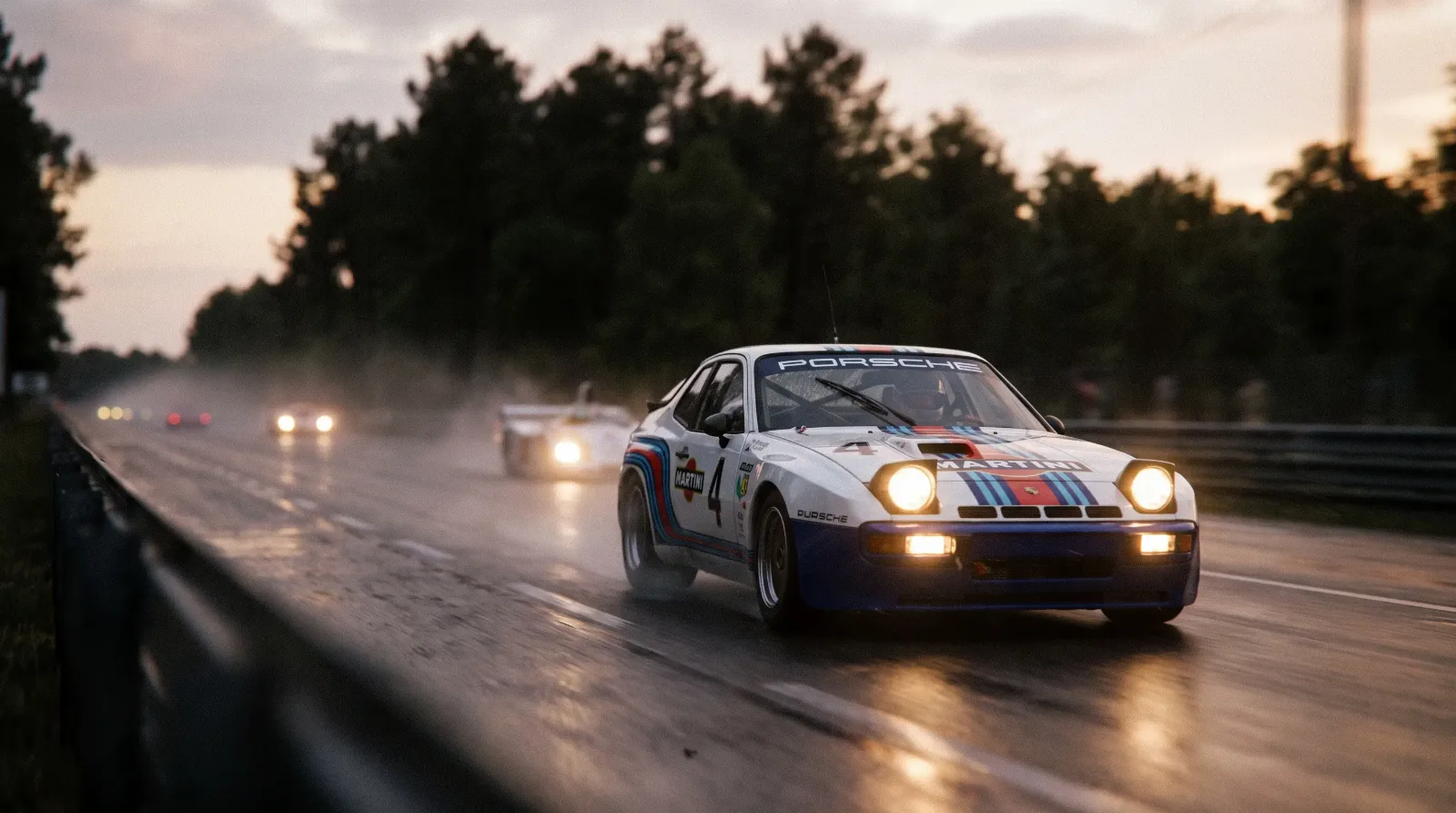
Guards red did not become the defining color of 1980s Porsche by accident, and it did not stay relevant because collectors are sentimental. It stayed relevant because it is a color that photographs honestly, ages without going chalky the way some metallics do, and tells a buyer something true about how the car was positioned when new. For a deeper look at how the 944 and its 924 sibling built an entire racing case for that positioning, a related deep-dive covers the competition record that backed up the marketing.
Buy the color for what it documents, not for how it looks in a driveway photo. The two usually line up anyway.