
Put a Porsche 959 next to a Ferrari F40 and you are not looking at two competitors so much as two different answers to the same question: what does a car company build when it has nothing left to prove and everything left to prove at the same time. Porsche answered with control. Ferrari answered with less of everything that wasn't speed. Both cars arrived within a year of each other in the mid-1980s, both were built in numbers small enough to matter today, and both are still cited in the same breath thirty-plus years later, which is itself a form of appraisal.
Car Features
6 min read
959 vs Ferrari F40: The Rivalry
The Porsche 959 and Ferrari F40 answered the same 1980s question in opposite ways. Here is how that rivalry plays out in today's collector market.
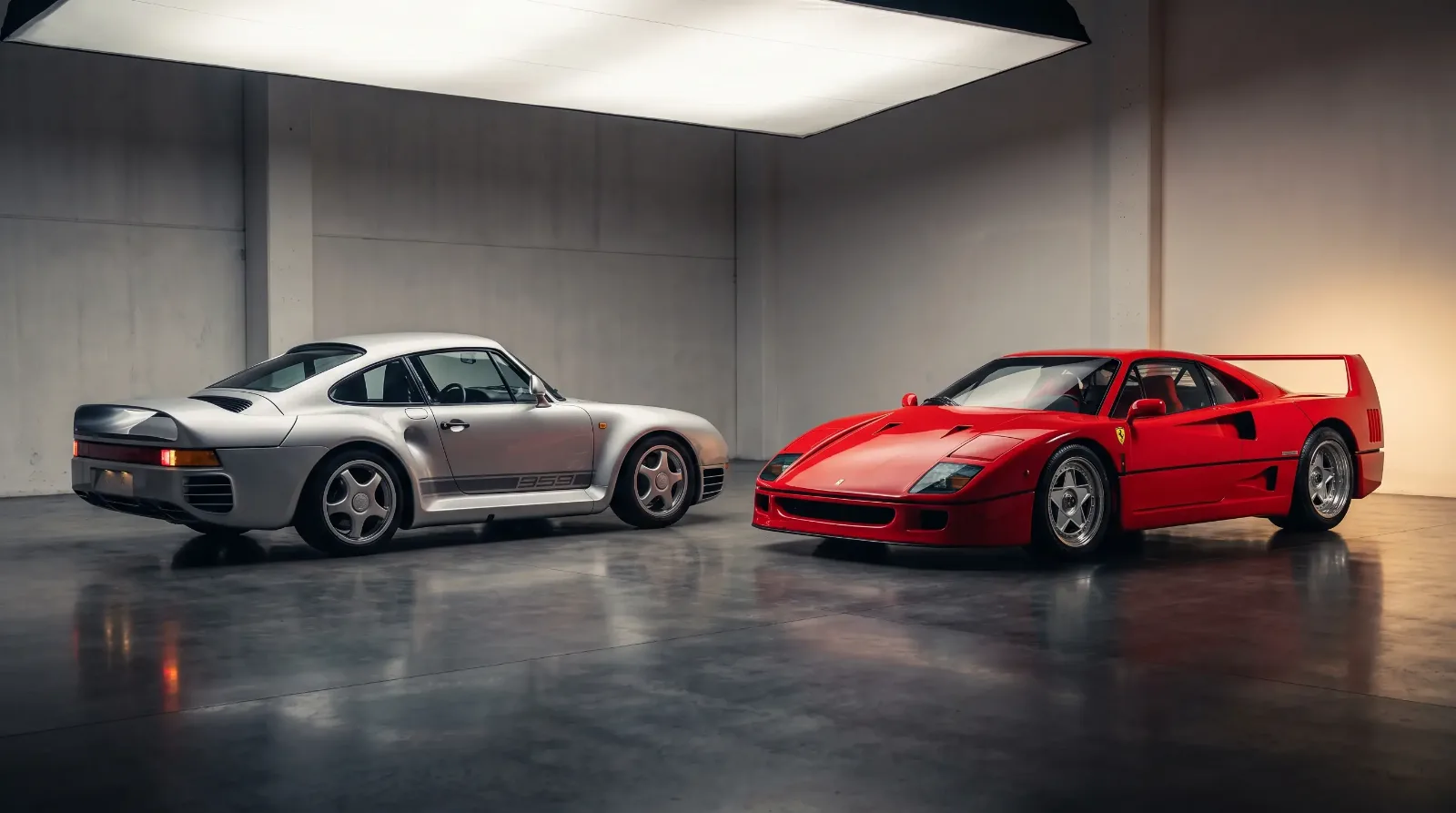
Two philosophies built into steel and carbon
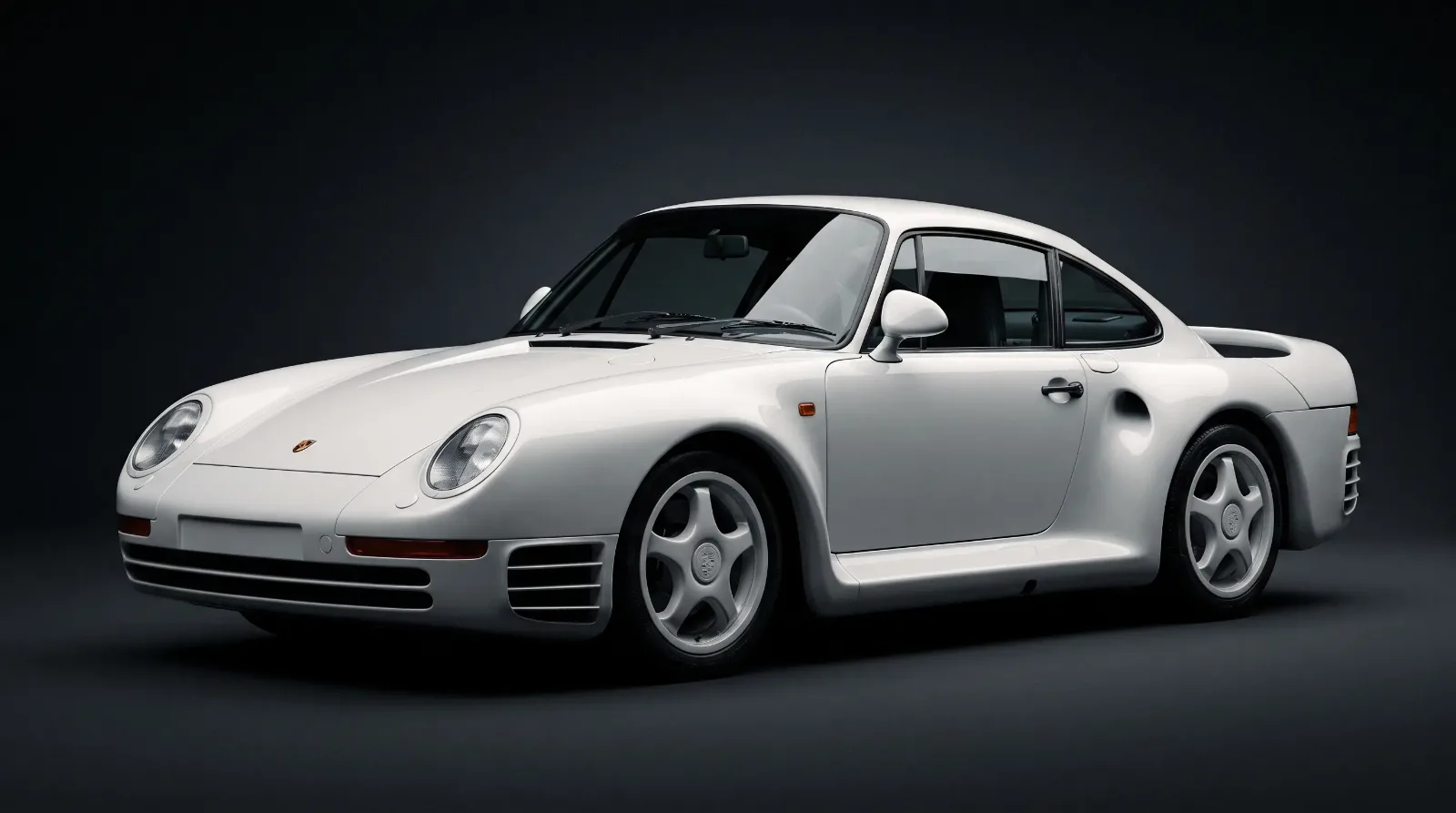
The 959 carried computer-managed all-wheel drive, adjustable ride height, and a level of interior finish that made it usable as a daily proposition, at least in Komfort spec. The F40, launched in 1987 as a celebration of Ferrari's fortieth anniversary, stripped out sound deadening, carpet, and even door handles in favor of pull cords, chasing weight savings the way the 959 chased control. Where Porsche solved the traction problem with electronics, Ferrari solved it by leaving it largely unsolved and asking the driver to manage a twin-turbo V8 through a five-speed manual and rear wheels alone.
Neither approach was wrong. They simply reflect what each company believed a supercar buyer wanted in 1987, and reading the reviews from that period tells you plenty about how differently the two brands were positioned even then.
The numbers that actually matter
Ferrari quoted the F40's twin-turbo V8 at 478 PS (471 hp) against the 959's 450 PS (444 hp), and Ferrari's claimed top speed sat a touch above the Porsche's as well, 201 mph versus the 959's 197 mph. On paper Ferrari wins the drag race stat sheet. In practice, the 959's all-wheel drive meant it could deploy its power in more conditions than the F40 could deploy its own, which is exactly the kind of nuance a straight-line spec comparison erases.
| Spec | Porsche 959 | Ferrari F40 |
|---|---|---|
| Engine | 2.85L twin-turbo flat-six | 2.9L twin-turbo V8 |
| Power | 450 PS (444 hp) | 478 PS (471 hp) |
| Drivetrain | Computer-managed AWD | Rear-wheel drive |
| Top speed | 197 mph | 201 mph |
| Character | Controlled, usable | Raw, driver-managed |
What the market actually rewards
Ask any appraiser which car holds value better and you will get a hedge, because both do, for different reasons. The 959 rewards documentation. Buyers pay a premium for a verified service history on the AWD system and ride-height hardware, and they discount hard for anything ambiguous. The F40 rewards originality of a different kind: unmodified examples, matching data plates, and freedom from the aftermarket turbo and exhaust upgrades that were common in period and that collectors now actively want reversed. A modified F40 that was once someone's pride and joy in 1995 is often a liability at auction in the present, not an asset.
Neither car has had a spectacular boom-bust swing the way some 1980s exotics did in the mid-2010s speculative run. Both cooled somewhat after that period peaked, and both have settled into a steadier band since, which if anything makes them easier cars to appraise honestly than something whipsawed by short-term hype.
Where the two cars genuinely diverge is liquidity. F40s changed hands often enough during the 1990s and 2000s that there is a longer public sales record to lean on, which gives an appraiser more comparable data points to anchor an estimate. 959s traded less frequently, partly because so many owners kept them for decades once the specialist maintenance relationship was established, and a thinner trading history means each individual sale carries more weight in setting the next asking price. A buyer chasing a 959 should expect to wait longer for the right car to surface, and a seller should expect fewer bidders competing for it, which cuts both ways depending on which side of the transaction you are on.
The case for buying one over the other
If usability matters to you even a little, the 959 is the more forgiving purchase, provided you accept the specialist maintenance burden that comes with its electronics. If you want the rawer, more mechanical experience and are comfortable with a car that demands more from the driver in return for a purer connection to the road, the F40 is the honest choice. Neither is the wrong answer. What is a mistake is buying either car assuming it will behave like a modern supercar with a classic badge on it. It will not, and it should not.
Ownership costs diverge in ways buyers underestimate going in. The 959's specialist network is thin globally, and a service that would take an afternoon on a standard air-cooled 911 can stretch into weeks while parts are sourced or fabricated. The F40's mechanicals are comparatively simpler, closer to a conventional performance car of the era, but its bodywork is Kevlar and composite panels that are unforgiving to repair badly and expensive to repair well. Neither car punishes ignorance cheaply.
Insurance and storage considerations track the same split. A 959 owner is generally paying for agreed-value coverage tied to a documented, low-mileage example, with the insurer wanting to see the same service paperwork an appraiser wants to see. An F40 owner faces similar scrutiny but with more attention paid to whether the car has ever been track driven hard, since the F40's competition heritage means plenty of examples saw real circuit use in period, and that history matters enormously to what a given car is worth today.
"People ask me which one to buy like there's a correct answer. There isn't. There's a correct answer for the buyer standing in front of me, and it depends entirely on whether they want the car to help them or to test them."
Marcus Feld
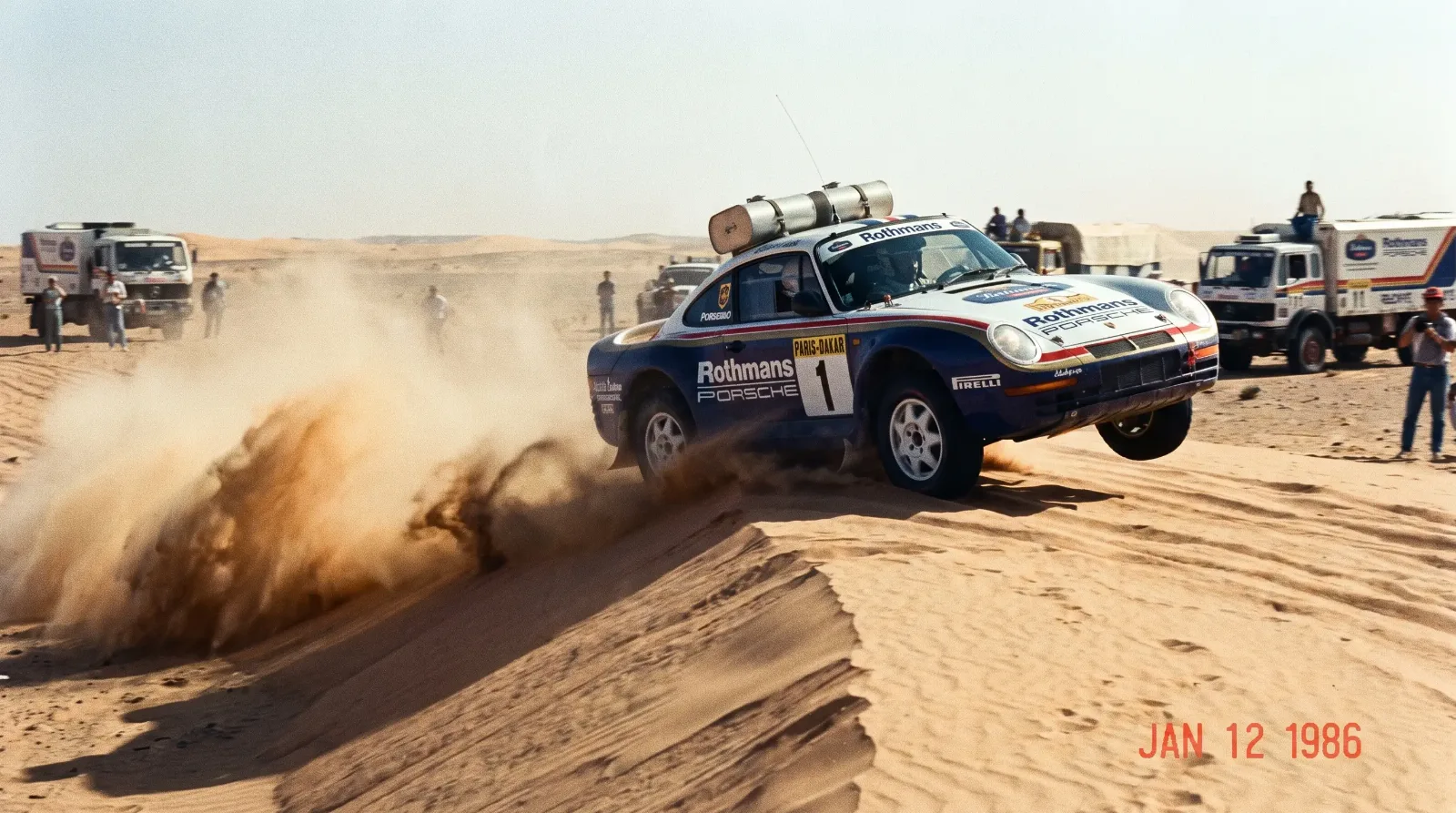
For the fuller context on why Porsche built the 959 in the first place, the 959 and the halo cars covers the homologation rules driving both companies toward these extremes. And if the rivalry angle has you wanting more of the same car from a different direction, keep reading the series for the rally-raid version that took the same underpinnings somewhere the F40 never went.
Sources and notes
Related Reading
Have a
Porsche
for Sale?
Reach thousands of serious classic car collectors across the US.
Sell It Here →
Are You a Classic Car Dealer?
List your full inventory and connect with targeted classic car buyers.
Join as a Dealer →
#Porsche 959
#homologation cars
#classic Porsche values
#Ferrari F40
#supercar rivalry
#1980s supercars

About the author
Marcus Feld
Accredited collector-car appraiser who reads the market through hammer prices, condition tiers and risk.
Related Listings - Porsche




Comments
Be the first to comment on this article.