
The Porsche 959 is the car that makes appraisers uncomfortable, in a good way. Most "supercar from the future" claims age badly. This one didn't. Built between 1986 and 1988 in numbers barely into the hundreds, the 959 arrived with a sequential twin-turbo flat-six, computer-managed all-wheel drive, and a ride-height system nobody else was shipping on a road car. The marketing line called it a preview of the twenty-first century. Three decades on, the claim mostly holds, and the price holds with it.
Car Features
6 min read
The 959: The Supercar From the Future
The Porsche 959 arrived in 1986 with twin-turbo power and computer-managed all-wheel drive. Here is what actually sets its value today.
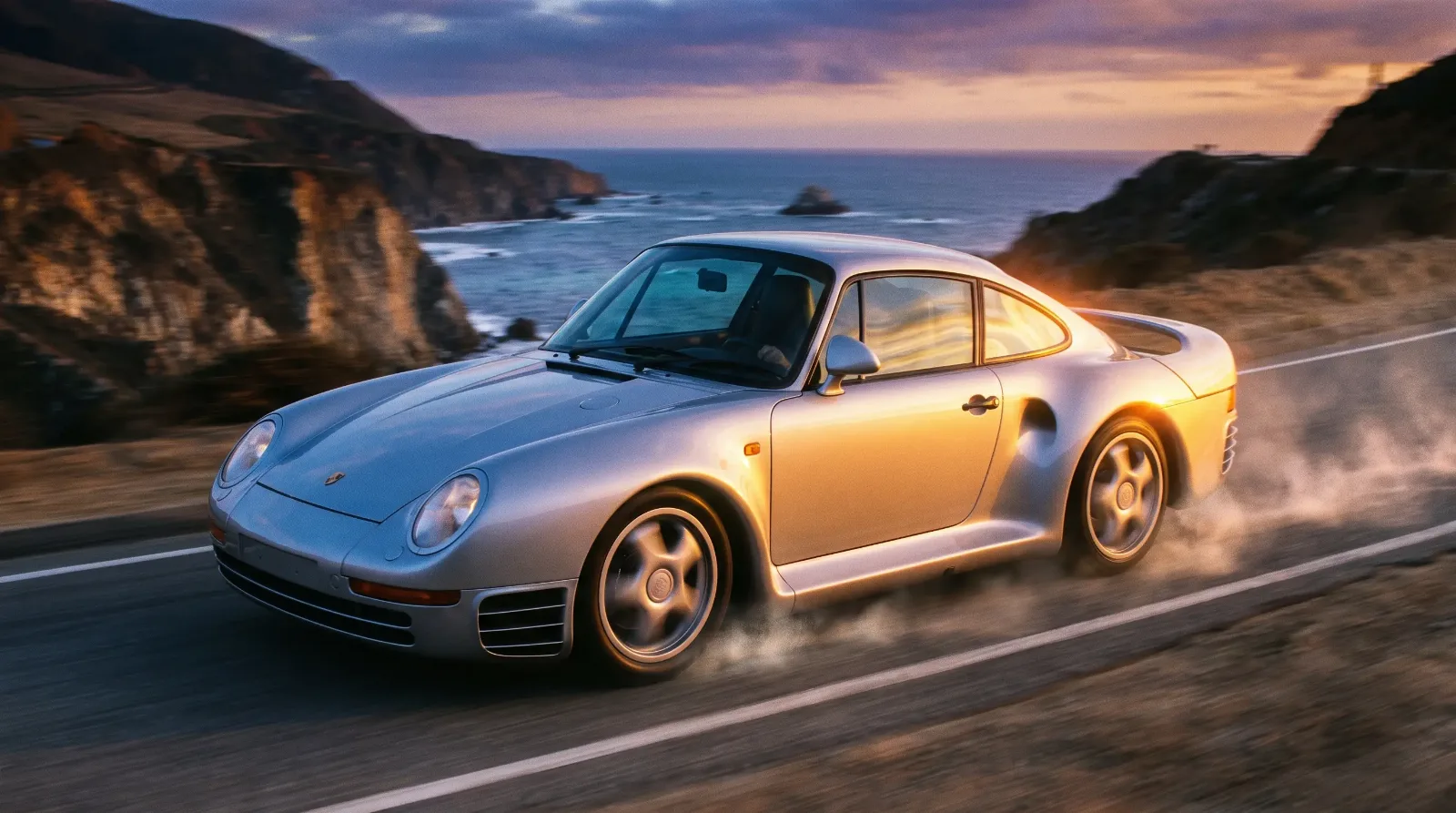
What made the 959 different from anything else in 1986
Strip away the halo-car mythology and the 959 is a heavily reengineered 911 wearing a wider body. The core, though, was genuinely new. A 2.85-liter flat-six ran sequential twin turbochargers, one spooling at low revs and a second joining above 4,000 rpm to smooth the power delivery. Porsche quoted 444 hp (331 kW), a number that in 1986 sat well clear of anything else road-legal and short of full race spec.
The bigger claim to fame is the all-wheel-drive system, badged PSK, which could vary torque split between front and rear depending on load and driver input, with settings for dry, wet, ice, and traction conditions. That is not a marketing footnote. It is the reason the 959 could put down power that would have overwhelmed a rear-drive chassis of the period, and it is the direct ancestor of every all-wheel-drive 911 Porsche has sold since.
The numbers a buyer actually needs
Quoted performance was 0-60 mph in roughly 3.6 seconds and a top speed of 197 mph, figures that made it the fastest production car on sale at launch. What matters more to a value discussion is what did not survive contact with reality: complexity. The magnesium wheels, the hydropneumatic ride-height adjustment, the dual-clutch-free six-speed with an ultra-low "G" gear for off-road starts, all of it needs specialist knowledge to maintain, and there are very few shops on any continent who have that knowledge in depth.
| Spec | Figure |
|---|---|
| Engine | 2.85L twin-turbo flat-six |
| Power | 444 hp (331 kW) |
| Drivetrain | Computer-managed AWD (PSK) |
| 0-60 mph | ~3.6 sec |
| Top speed | 197 mph |
| Production run | 1986-1988, 337 units total including prototypes |
Why rarity alone does not set the price
Low production numbers get quoted constantly and mean less than buyers assume. What actually moves a 959 at auction is documentation of the specific mechanical history: has the AWD system been serviced by someone who understands it, is the ride-height system functional or disconnected, does the car have a paper trail back to its first owner. A 959 with gaps in that record is a different asset than one without, even if both look identical in photos. I have seen cars pulled from sale rather than let go at a discount, because the consignor understood that a documented example would clear a stronger number twelve months later.
There is also a split between the Komfort and Sport trims that buyers routinely underweight. The Komfort cars carried more sound deadening, power windows, and a softer general character, while Sport-spec cars dropped weight and stiffened the ride for a more focused feel. Neither is objectively the better collector car, but the two do not sell at identical multiples, and a buyer quoting one price off a general "959 values" search without specifying which trim is working from an incomplete number.
Condition reports on 959s that fail to sell tend to share a pattern: undocumented engine-out work, a ride-height system that has been bypassed rather than repaired, or a PSK unit replaced with a non-original part because the correct one was unavailable at the time. None of those are disqualifying on their own. They are, however, exactly the kind of detail that separates a strong hammer price from a car that gets passed in and quietly re-offered six months later at a lower estimate.
Read the full Porsche guide for how the 959 sits inside the wider Porsche story, from the 356 through to the water-cooled era.
The ownership case, honestly stated
Buying a 959 is not a hobby purchase in the way a 911 SC is a hobby purchase. Parts sourcing alone can involve waiting on machined-to-order components, and any shop doing the work needs to actually understand the PSK control unit rather than treat it as a black box to be swapped and hoped for. That said, the car rewards the buyer who does the diligence. It has not gone through the boom-bust cycles that hit other 1980s exotics, largely because supply is so constrained that demand rarely gets ahead of it for long.
"The 959 is one of the rare cases where the hype from 1986 and the appraisal in the present actually agree with each other. That almost never happens."
Marcus Feld
Where the 959 fits for a buyer today
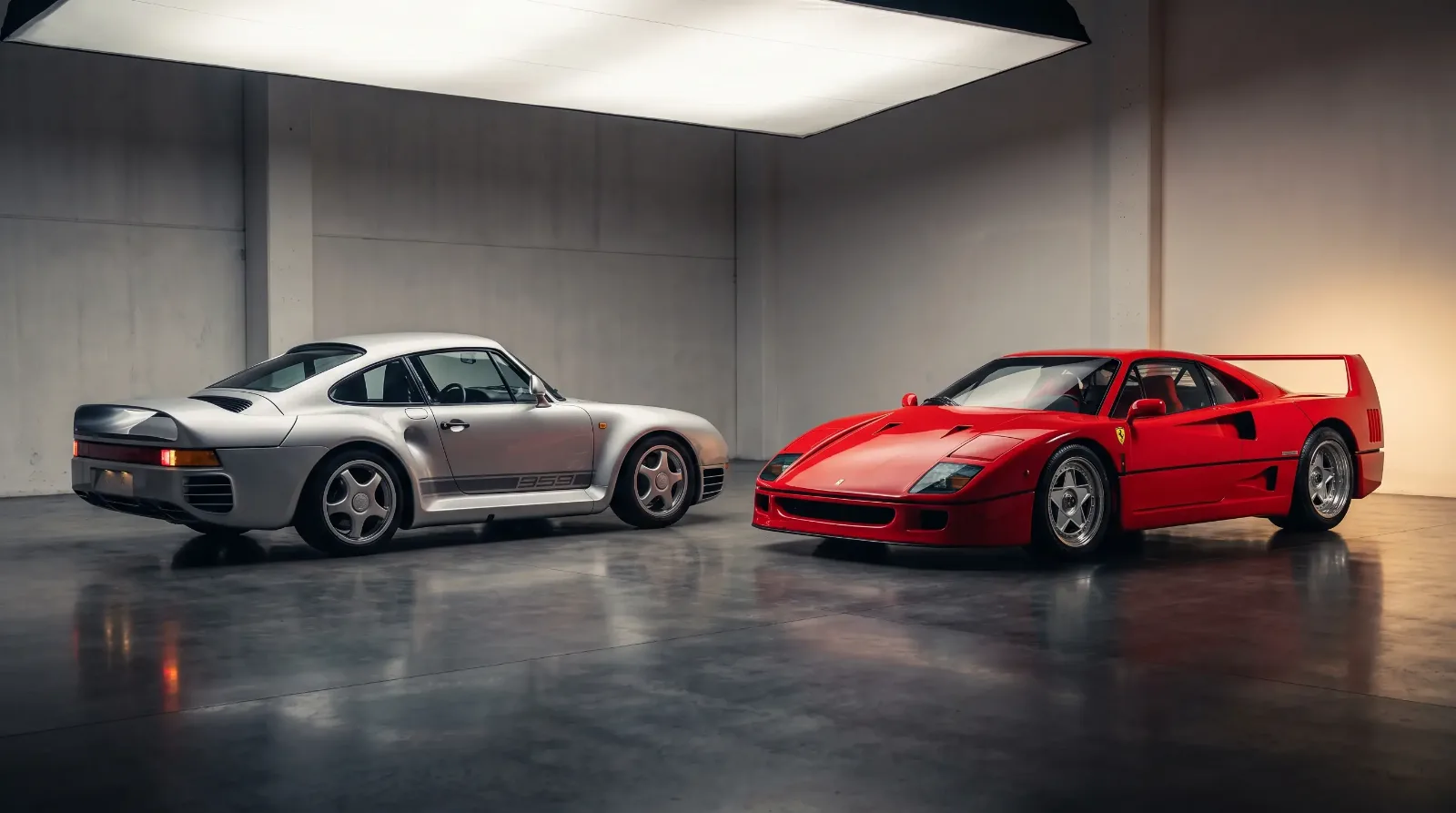
If you want the fuller picture of how this car sits against its direct rival, there is more from this chapter worth reading before you commit to a purchase decision. And for the broader context of the halo-car era Porsche built its reputation on, the 959 and the halo cars covers the homologation rules that made cars like this necessary in the first place.
For buyers actively shopping this tier of the market, current listings of exotic classic Porsches for sale are the place to start, provided you go in with the documentation checklist above already in hand rather than working it out after the deposit is down.
Sources and notes
Related Reading
Have a
Porsche
for Sale?
Reach thousands of serious classic car collectors across the US.
Sell It Here →
Are You a Classic Car Dealer?
List your full inventory and connect with targeted classic car buyers.
Join as a Dealer →
#Porsche 959
#1980s Porsche
#Porsche supercar
#homologation cars
#classic Porsche values
#AWD Porsche

About the author
Marcus Feld
Accredited collector-car appraiser who reads the market through hammer prices, condition tiers and risk.
Related Listings - Porsche




Comments (1)
B
Bill Cassidy
1 month ago
Been watching this segment for two years waiting for prices to soften. Still waiting.