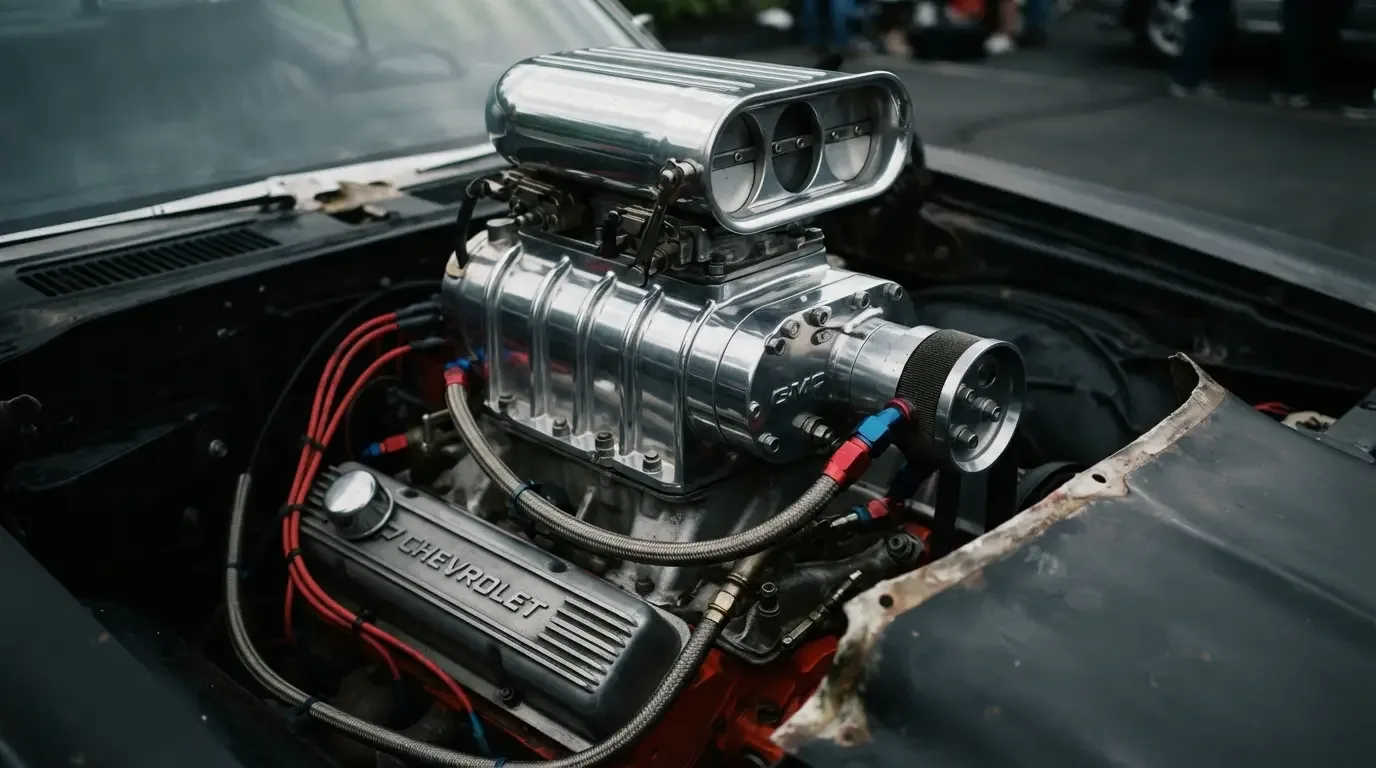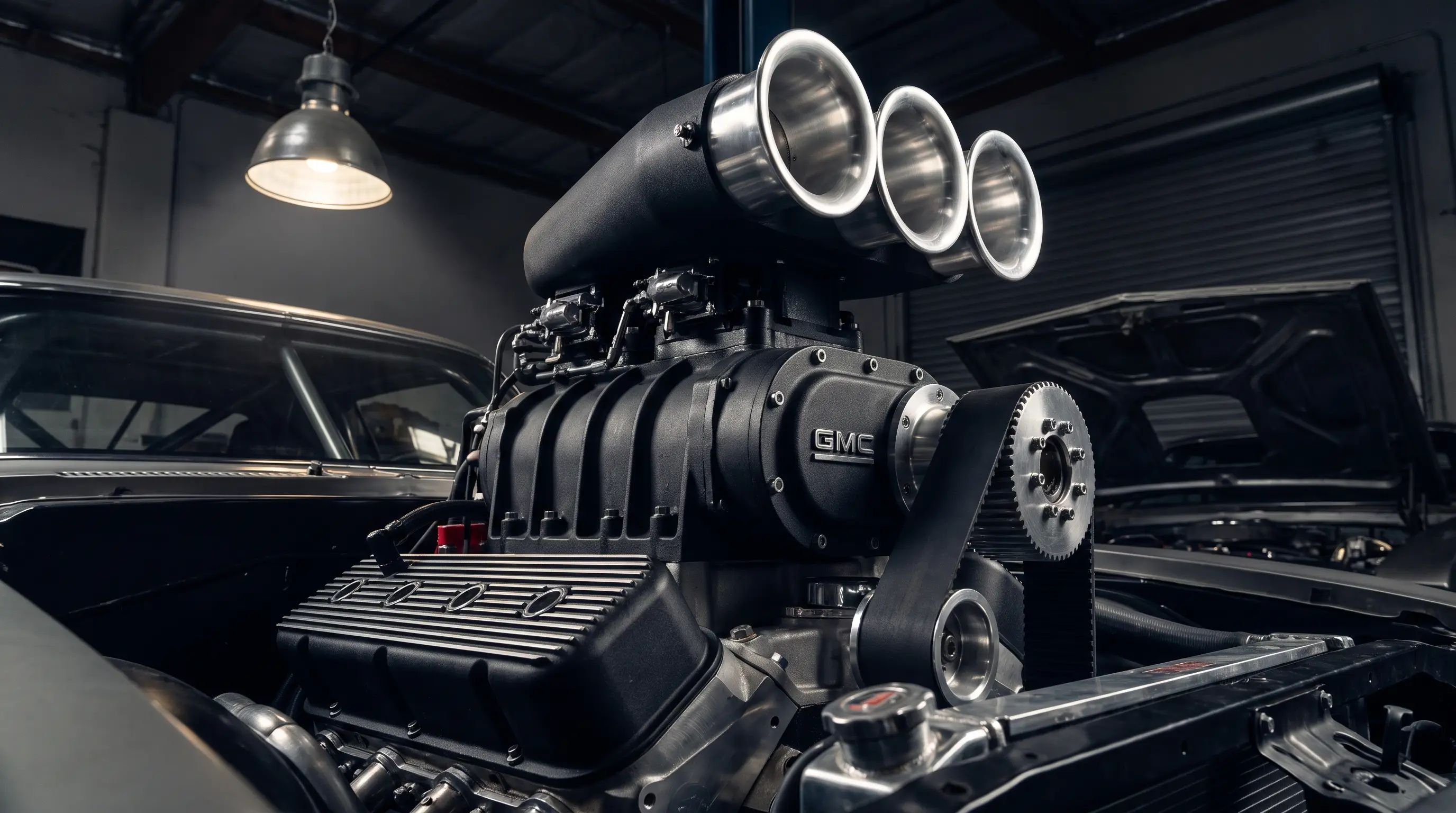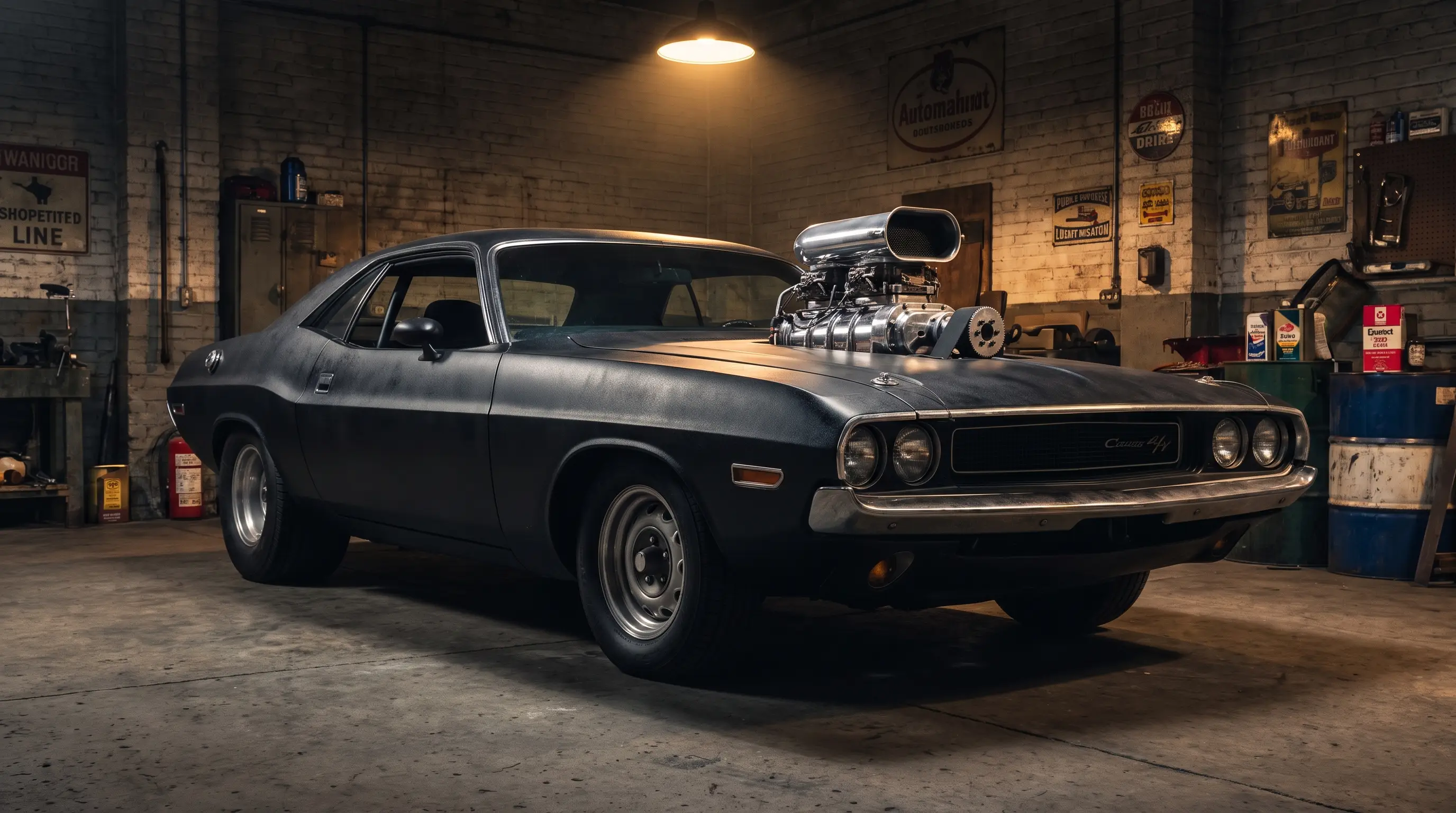
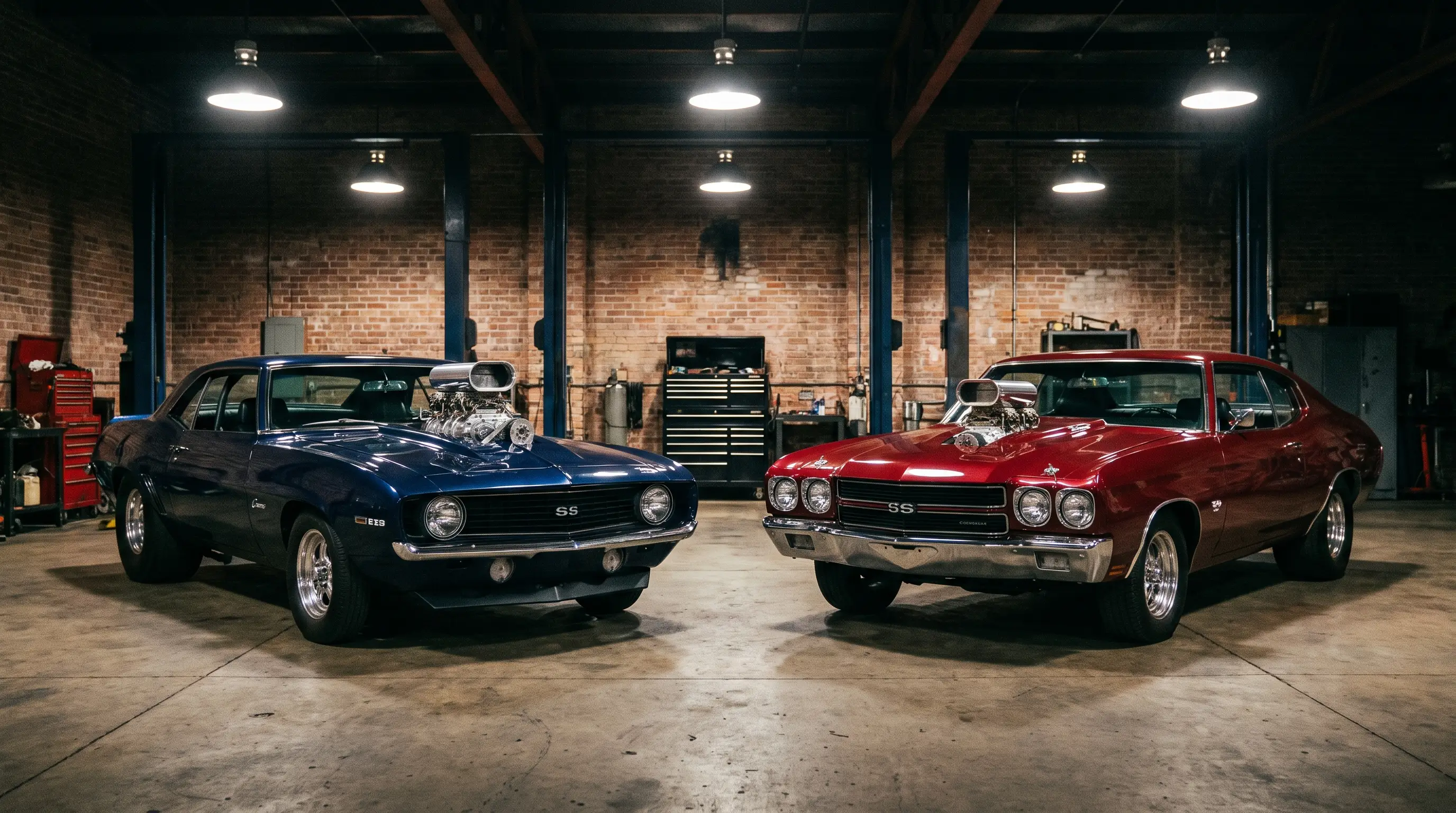
An 8-71 versus 6-71 blower argument settles quick once you know what each one is for. Both are GMC diesel-derived Roots superchargers, both became fixtures on Pro Street cars, and both do the same basic job of forcing more air into an engine than it could pull in on its own. The difference is scale, and scale changes everything about what engine and what budget each one makes sense on.
What actually separates the two
The numbers refer to displacement per rotation, six cylinders at 71 cubic inches for the smaller unit, eight cylinders at 71 cubic inches for the larger one. Physically bigger rotors mean the 8-71 moves noticeably more air per revolution than the 6-71, which translates into more potential boost on the same engine, provided the rest of the combination can handle it. That "provided" is doing a lot of work in that sentence, and it is the whole reason this comparison matters.
A 6-71 on a stock-based 454 big-block running modest boost is a proven, reliable street combination that thousands of Pro Street builders ran without drama. Bolt an 8-71 onto that same stock-based 454 and push similar boost levels, and you are now asking factory rods and a factory crank to handle cylinder pressures they were never designed for. The blower did not fail. The engine underneath it did.
| Factor | 6-71 | 8-71 |
|---|---|---|
| Airflow per rotation | Lower | Higher |
| Typical engine pairing | 350-454 ci, stock-based or mildly built | 454 ci and up, generally forged bottom end |
| Fuel system demand | Moderate | High, needs matched delivery |
| Cost to run correctly | Lower | Significantly higher |
Why the 6-71 stayed the more common choice
Money and reliability. A 6-71 setup could be built, tuned, and driven on the street without requiring every internal engine component to be upgraded past factory specification. That made it the practical choice for the average Pro Street builder working a home garage budget, not a professional race team budget. Read the background on how the 6-71 became the standard for a deeper look at why availability and cost drove that decision as much as raw performance did.
"An 8-71 looks meaner. A 6-71 gets you home. Most guys who tried to skip that lesson learned it the expensive way, with a rod through the block."
- Dan Reeves
Where the 8-71 earned its reputation
The 8-71 was never the wrong choice, it was just a bigger commitment. Builders chasing serious quarter-mile numbers, running forged pistons, aftermarket rods, and a stronger crank, could unlock real boost with an 8-71 that a 6-71 simply could not match on the same displacement. The visual statement mattered too. An 8-71 sitting on top of a big-block, wrapped in polished velocity stacks or a bug catcher scoop, is a bigger, meaner-looking piece of hardware, and Pro Street was never a movement that shied away from looking mean. Cars built specifically to turn heads at a show as much as run a number at the strip often went with the 8-71 purely for the visual impact, even when the extra boost was not strictly necessary.
Cost differences that shaped real-world decisions
Money separated these two choices as much as engineering did. A 6-71 setup, particularly built around a used, rebuilt core, could be assembled for a fraction of what a full 8-71 combination demanded once forged internals, a stronger fuel system, and often a beefed-up transmission and driveline were factored in. For a builder financing a Pro Street project out of pocket over several years, a series of smaller upgrades built around a 6-71 was simply more achievable than committing to the full expense of an 8-71 build all at once. That budget reality shaped the Pro Street scene more than any single engineering argument, and it is a big part of why 6-71 cars vastly outnumbered 8-71 cars at any given cruise night or car show throughout the era.
The 8-71 buyers tended to be builders who had already proven a combination with a smaller blower and were stepping up deliberately, chasing a specific number at the strip that the smaller unit could no longer deliver. That progression, starting modest and building toward a bigger commitment as budget and experience allowed, was a common path through the Pro Street scene rather than the exception.
What each size means for drivability
Boost curve character differs between the two sizes in a way that matters beyond raw numbers. A 6-71 running moderate boost on a well-matched engine tends to build power in a smoother, more progressive way as RPM climbs, which makes it easier to drive predictably on the street, particularly in stop-and-go traffic or when easing into a green light rather than dumping the clutch. An 8-71 running higher boost on a built engine tends to hit harder and later in the RPM range, which is exactly what a strip-focused build wants but can feel abrupt and less forgiving in daily street use. Builders who intended to actually drive their car regularly, rather than trailer it to shows and strip events, often found the 6-71's power delivery a better match for how the car would really be used.
Fuel economy, such as it was on any blown big-block, also favored the smaller unit. Neither combination was ever going to deliver reasonable mileage, but a 6-71 at moderate boost sipped less fuel than an 8-71 running higher boost on the same engine, a difference that mattered to builders who actually put miles on their cars rather than trailering them everywhere.
Making the actual decision
The honest answer for most builders came down to what the engine underneath could support. A stock-based short block belongs under a 6-71 running sensible boost. A forged, balanced, purpose-built short block can support an 8-71 and the power it unlocks. Trying to skip that step and bolt an 8-71 onto a stock bottom end because it looks better is how connecting rods end up on the pavement rather than in the engine. Builders who wanted the visual size of an 8-71 without the internal engine work sometimes compromised with a 6-71 case dressed up to look larger, a workaround that kept the reliability of the smaller unit while chasing some of the presence of the bigger one.
Anyone weighing this decision for their own project should also look at how the hood clearance and scoop design change between the two sizes, since a bigger blower needs a bigger hole cut and a different scoop geometry. Worth a look too is the full explanation of why that hood cut became necessary in the first place, regardless of which blower size sits underneath it.
For collectors and buyers today, a documented 8-71 setup on a period build generally commands more attention than a 6-71, simply because it represents a bigger financial and mechanical commitment from the original builder. Those looking to buy into that history rather than build it from scratch can shop classic Pro Street car listings where both configurations still turn up from time to time, each with its own story about why the original owner made that call.