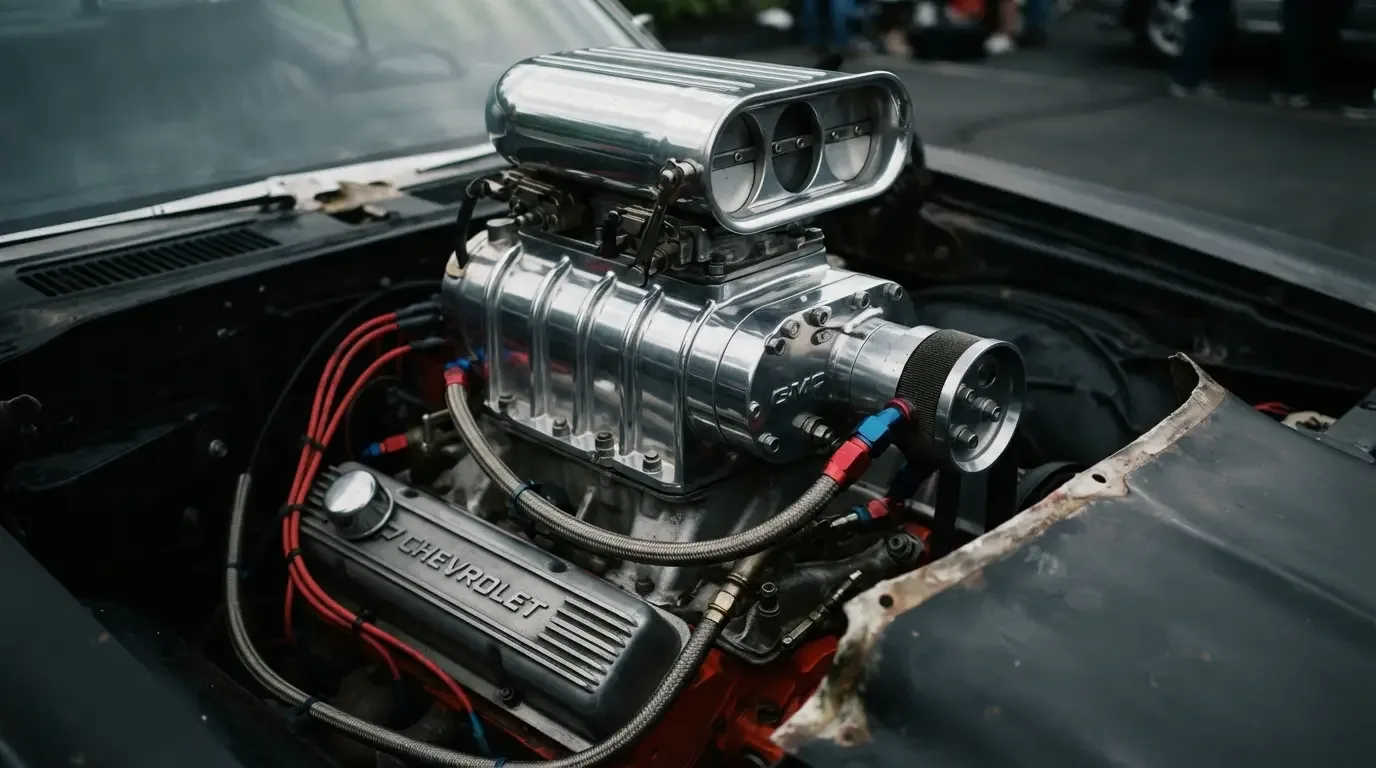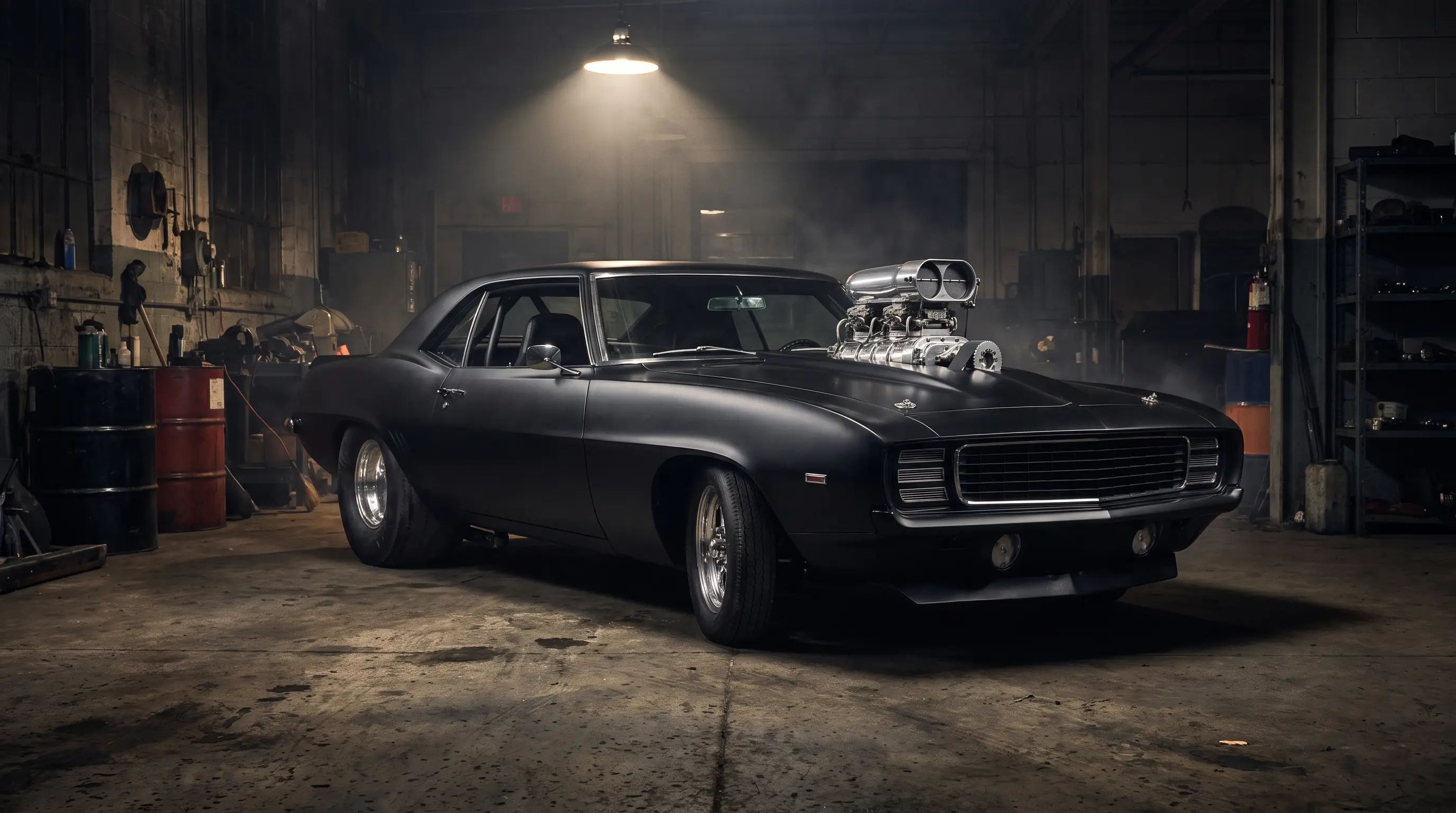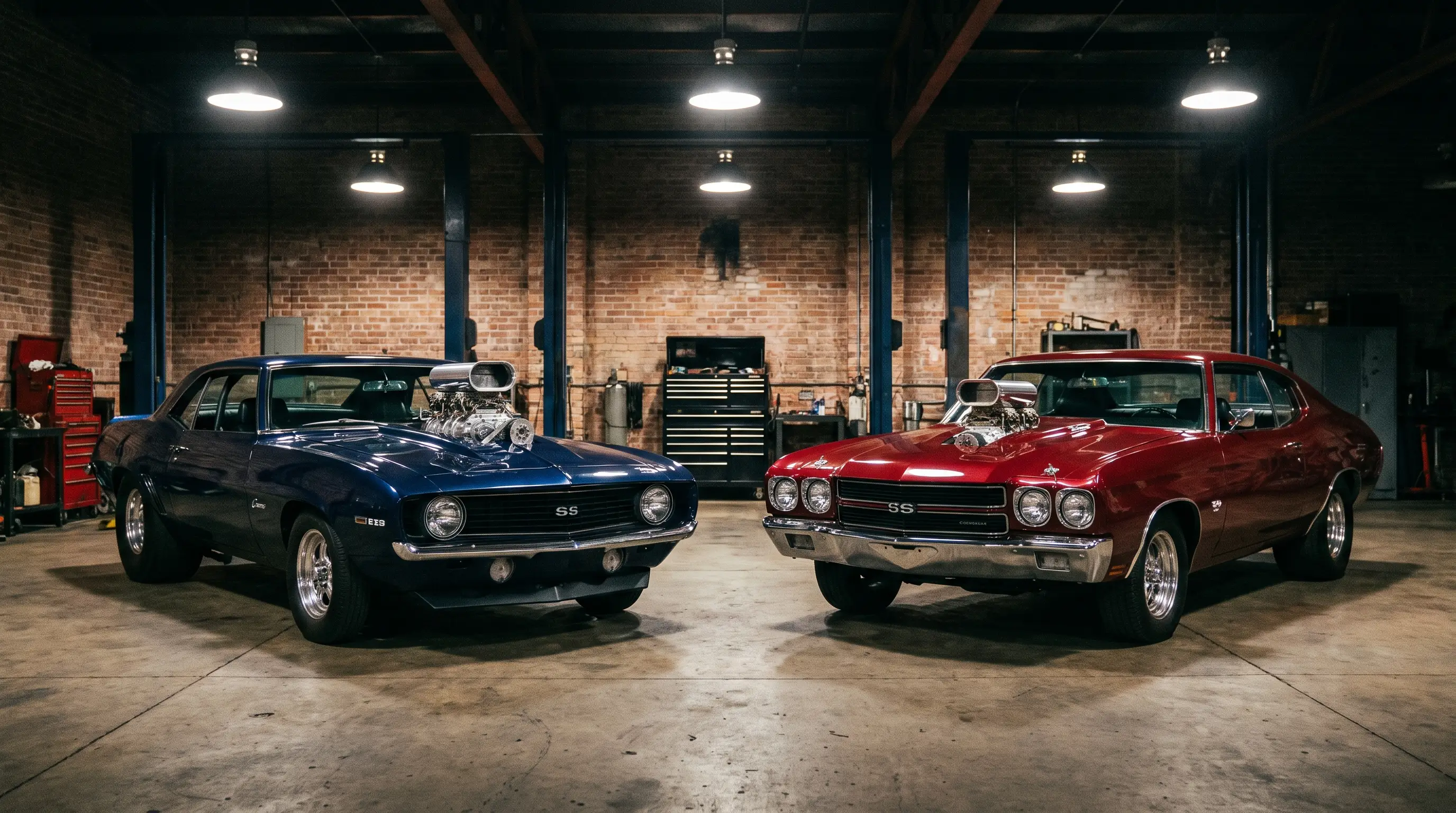
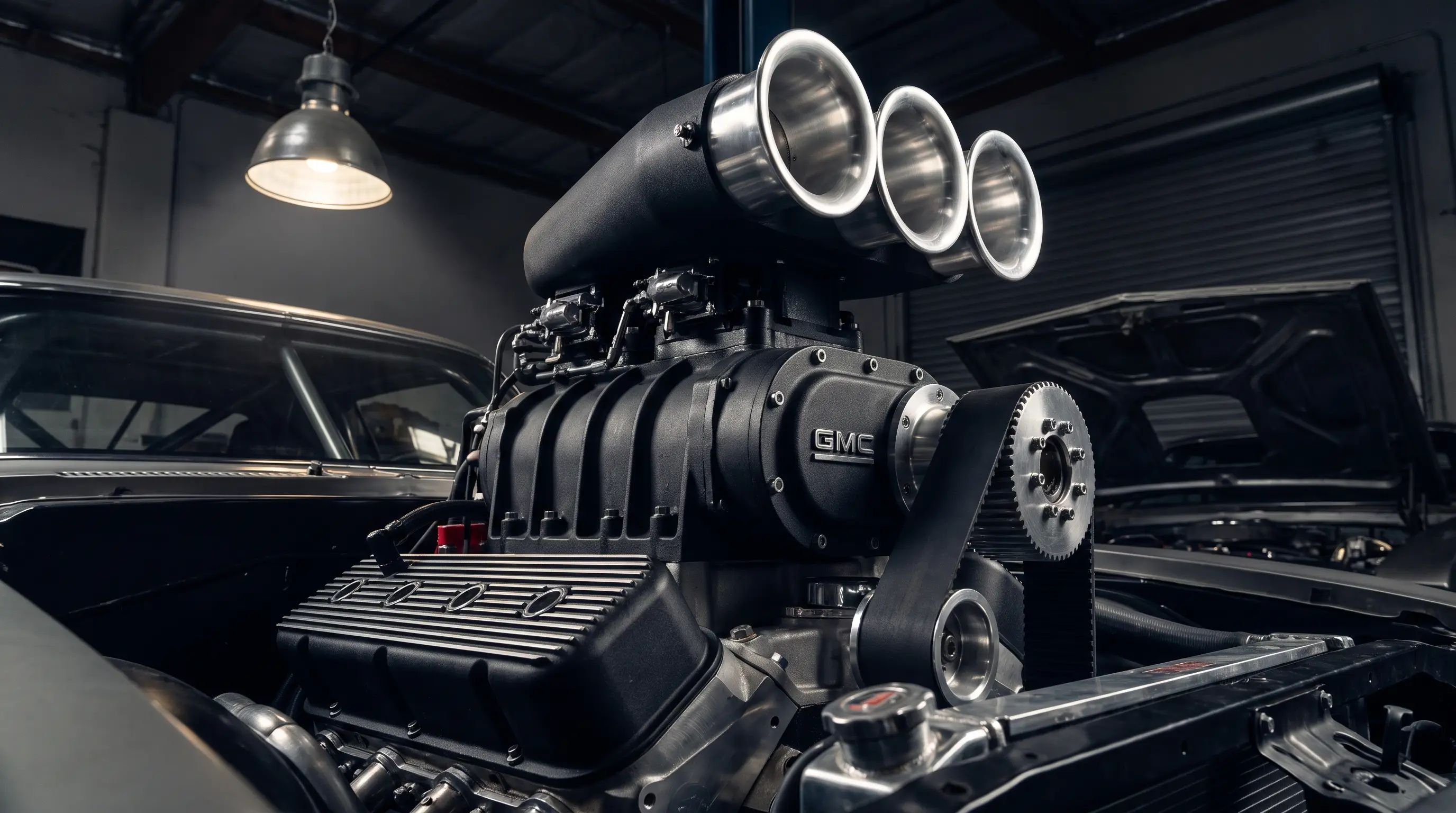
The GMC 6-71 supercharger did not start life as a performance part. It started as an industrial component built to move air through two-stroke diesel engines in trucks and buses, and it took a decade of racers repurposing surplus units before it became the defining piece of hardware on a Pro Street car. By the 1980s, no engine bay said "Pro Street" faster than a 6-71 poking through a hole cut in the hood.
Where the 6-71 actually came from
GMC built the 6-71 Roots-type blower to supply pressurized air to its Detroit Diesel two-stroke engines, which needed forced induction just to scavenge exhaust gases properly since they lacked a traditional four-stroke intake cycle. The "6-71" designation refers to displacement, six cylinders at 71 cubic inches each, which is a diesel engine naming convention that has nothing to do with horsepower. Drag racers in the late 1950s and early 1960s noticed these units sitting in truck salvage yards, cheap and rebuildable, and started adapting them to gasoline V8s with custom intake manifolds and pulley drives. By the time Pro Street emerged as a distinct movement in the late 1970s, the 6-71 was already a known quantity in racing circles.
Why it became the standard Pro Street choice
Size mattered here. The 6-71 was large enough to add real boost to a 350 to 454 cubic inch engine without being so oversized that it strained a stock-based bottom end past reasonable limits. An 8-71 could move more air, but it also demanded a stronger short block, better fuel delivery, and generally a more committed race build. For a builder trying to construct a car that could still be driven to a cruise night, the 6-71 hit a sweet spot of boost, reliability, and cost that made it the default choice rather than the exception.
Availability helped too. GMC diesel trucks were common enough that 6-71 units showed up regularly in salvage yards and swap meets throughout the 1970s and 1980s, and a healthy aftermarket grew up around rebuilding and modifying them specifically for automotive use. Companies like Weiand and B&M built dedicated intake manifolds and drive kits that made bolting a 6-71 onto a big-block a known, repeatable process rather than a one-off fabrication project.
| Spec | Detail |
|---|---|
| Original application | GMC/Detroit Diesel two-stroke truck and bus engines |
| Rotor type | Roots-type, two three-lobe rotors |
| Typical automotive pairing | 350-454 ci big-block or built small-block |
| Drive method | Belt-driven off the crankshaft, spins proportional to engine RPM |
What the 6-71 does to an engine's output
Bolted onto a healthy big-block with matched fuel delivery, a 6-71 running moderate boost of 5-9 psi could add several hundred horsepower over the naturally aspirated version of the same combination. That gain is why the blower became worth the visual sacrifice of cutting a hole in a perfectly good hood. The tradeoff was real: more boost meant more heat, more stress on head gaskets, and a genuine need for a fuel system built to match the airflow, not just a bigger carburetor bolted on as an afterthought. None of that stopped builders. If anything, the mechanical demands of running a 6-71 correctly became a point of pride, a way to separate a serious build from someone who just wanted the look.
"The 6-71 is honest hardware. It does exactly what the physics say it should, no more, no less, and that predictability is why it outlasted every other blower option on the street."
- Emily Chen
How the 6-71 shaped the rest of the engine build
Choosing a 6-71 was never an isolated decision. It set expectations for nearly every other part on the build sheet. Fuel delivery had to match the boost the blower could generate, which usually meant a dedicated blower carburetor setup or a mechanical injection system rather than a stock four-barrel carried over from a naturally aspirated combination. Head gaskets, fasteners, and in many cases the cylinder heads themselves needed to be upgraded to handle the added cylinder pressure, even at the relatively moderate boost levels a 6-71 typically ran. Builders who understood this treated the blower as the anchor point for the whole engine specification, working backward from what the 6-71 demanded rather than bolting it onto whatever engine happened to already be sitting in the car.
That discipline is part of why 6-71 setups from serious builders held up so well over decades of use, while poorly matched combinations from less careful builds often failed early and got a reputation for unreliability that had more to do with a mismatched supporting cast than the blower itself. The 6-71 was never the weak link in a properly specified build. It was usually the most durable part of the entire combination.
Rebuilding a 6-71 for automotive use
A blower pulled straight from a diesel truck yard was never ready to bolt onto a gasoline V8 without work. The rotors needed to be checked for wear and re-timed correctly, the bearings and seals typically needed replacement after years of industrial service, and the snout drive had to be adapted from the diesel truck's original configuration to whatever belt or gear drive system the automotive application called for. A cottage industry of specialists grew up around exactly this kind of rebuild work, and their expertise in properly clearancing and balancing a used industrial blower for high-RPM automotive service became a real and valued skill within the Pro Street community. A poorly rebuilt unit could lose boost efficiency or, worse, fail outright under load, so builders who wanted a 6-71 that would actually perform paid for that expertise rather than attempting the rebuild themselves.
Fresh aftermarket 6-71 cases eventually became available too, built new rather than pulled from a diesel truck, which solved the wear and provenance questions entirely for builders with the budget for one. But used, rebuilt GMC units remained common throughout the era simply because they were cheaper and the supply, at least early on, seemed nearly endless.
The 6-71 versus its bigger sibling
Builders who wanted more boost than a 6-71 could deliver usually stepped up to an 8-71, a decision that came with its own tradeoffs in cost, reliability demands, and how much engine the blower needed underneath it to make sense. For a full comparison of when each size makes sense, our complete history of Pro Street blowers walks through both options and the engines that typically carried them.
The 6-71 remains the blower most associated with the golden era of Pro Street, partly because it struck the right balance and partly because it was simply everywhere. Surviving cars from the period still show up with original 6-71 setups intact, and those units, when properly documented, add real value to a period-correct build. Anyone shopping the current market can find a classic Pro Street car that still runs the blower it left the builder's shop with, a detail that matters more to serious collectors than a fresh repaint ever will.