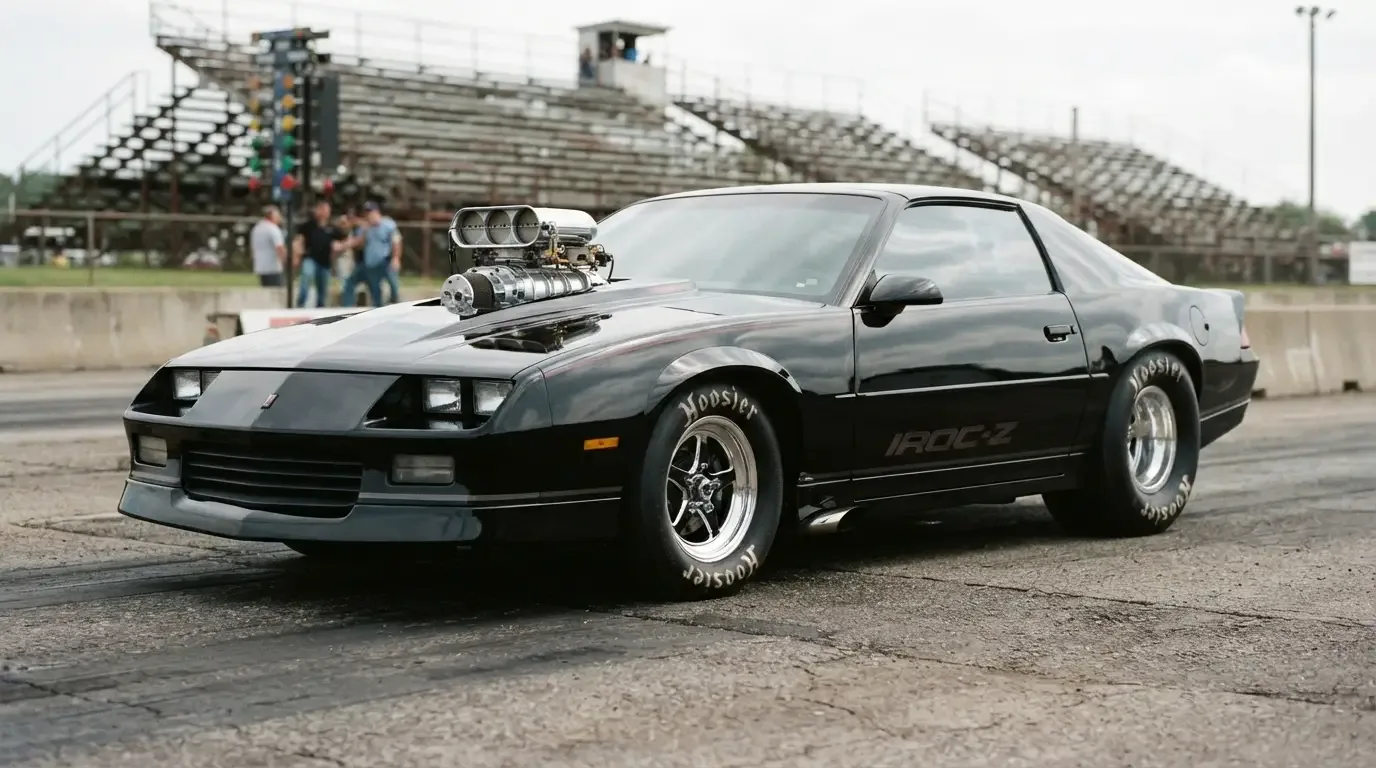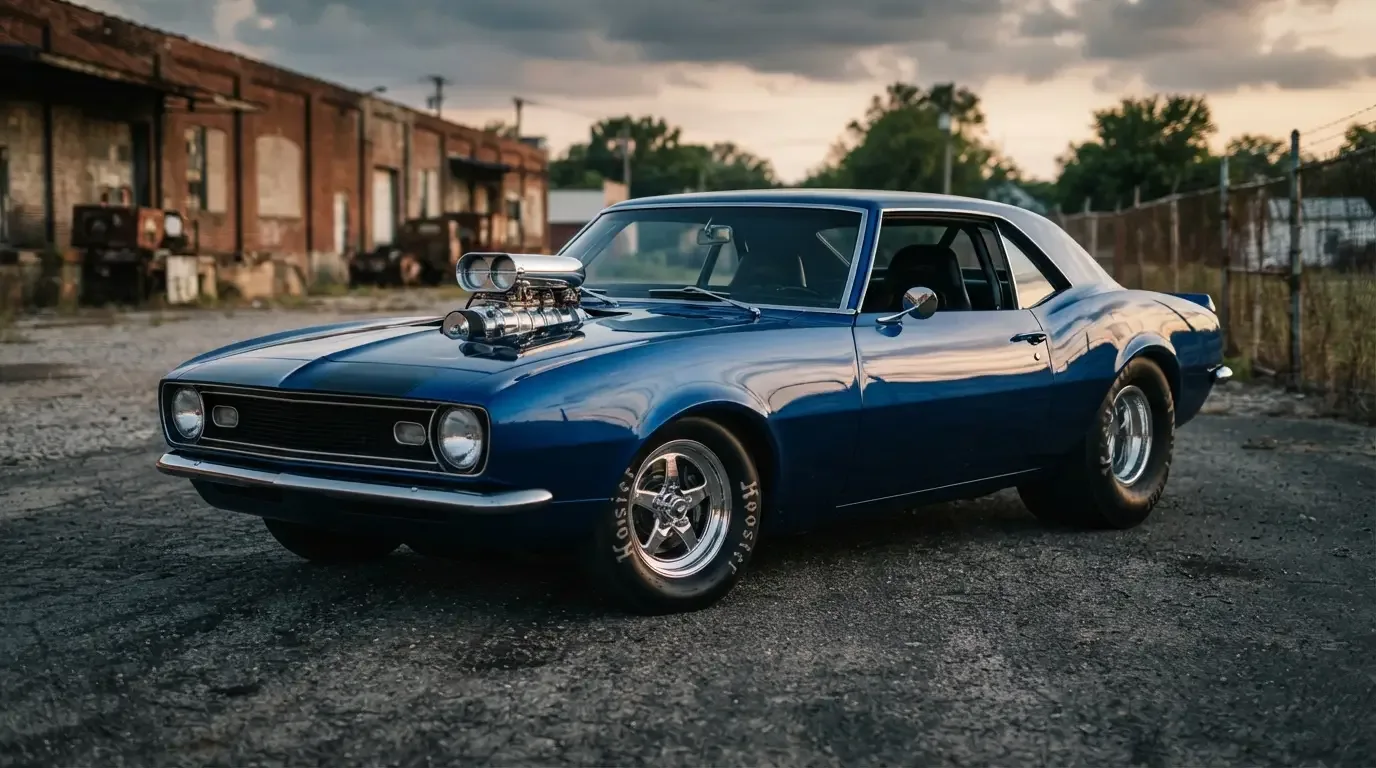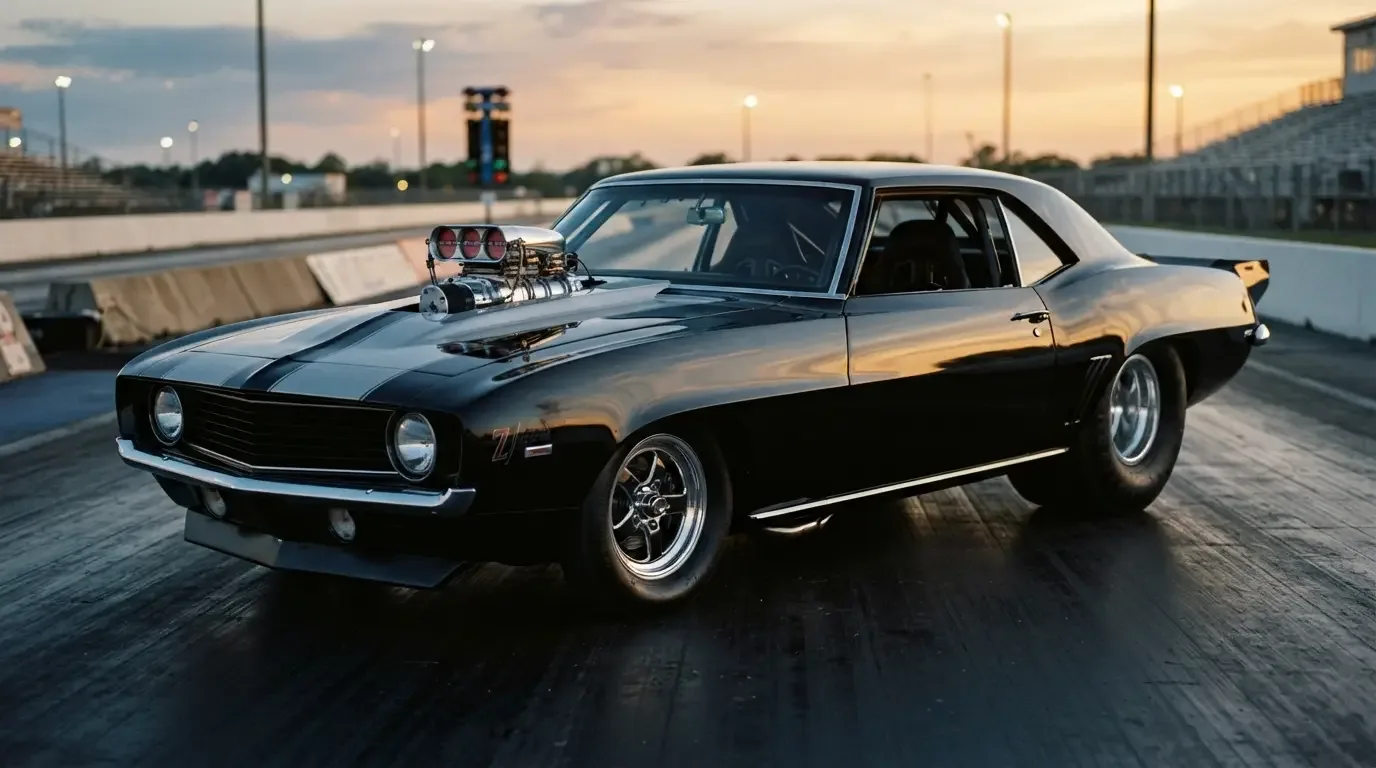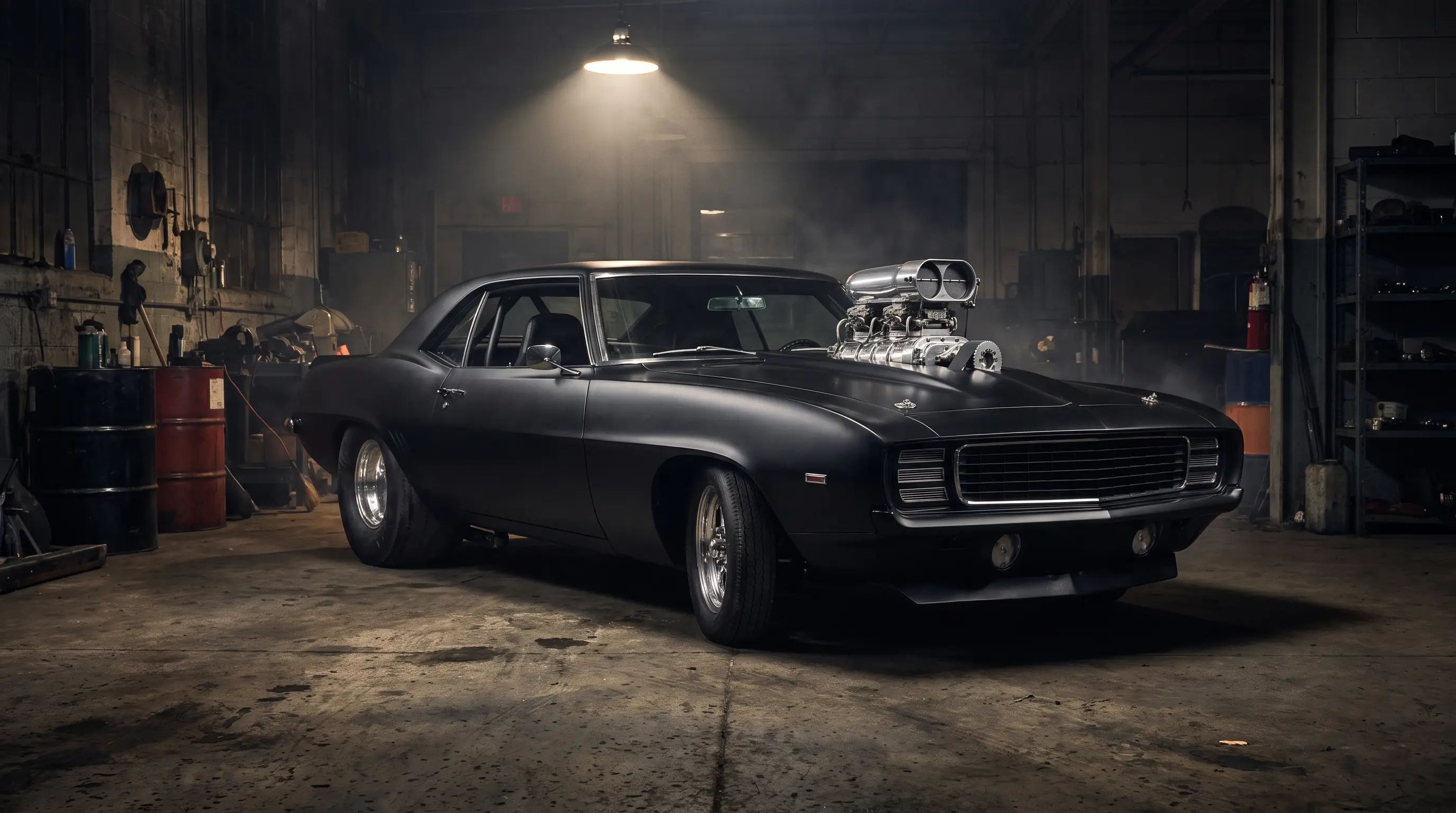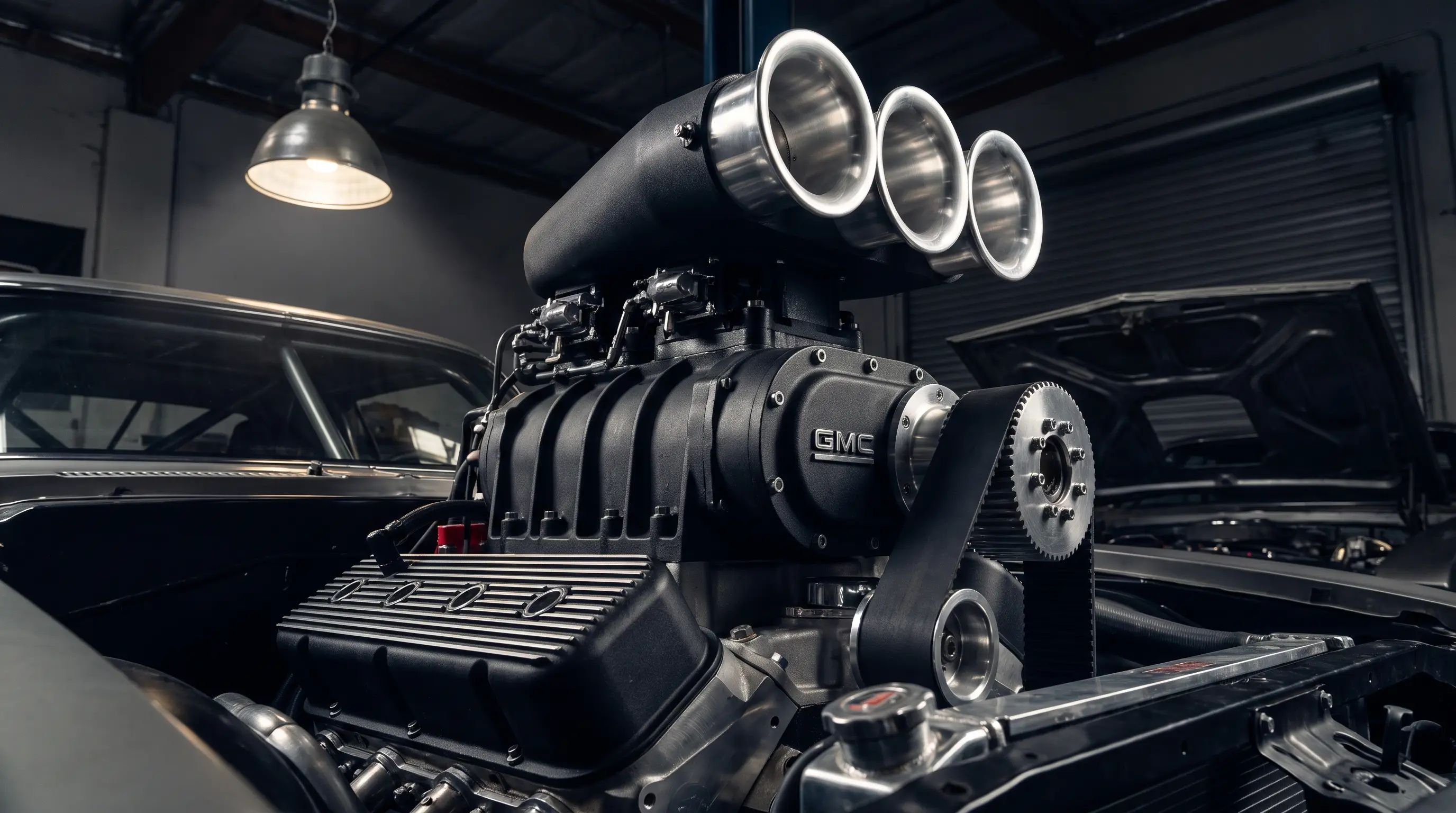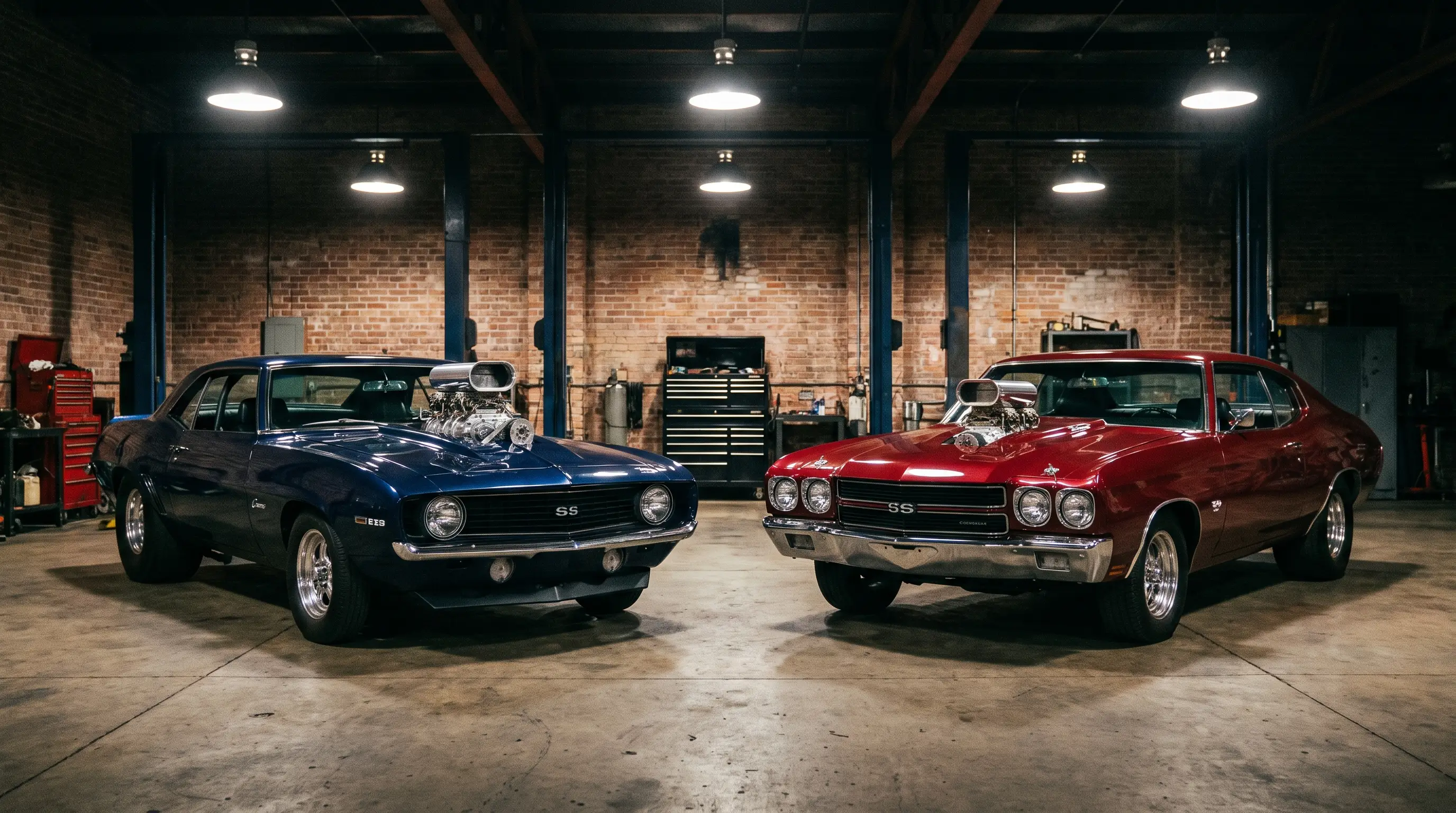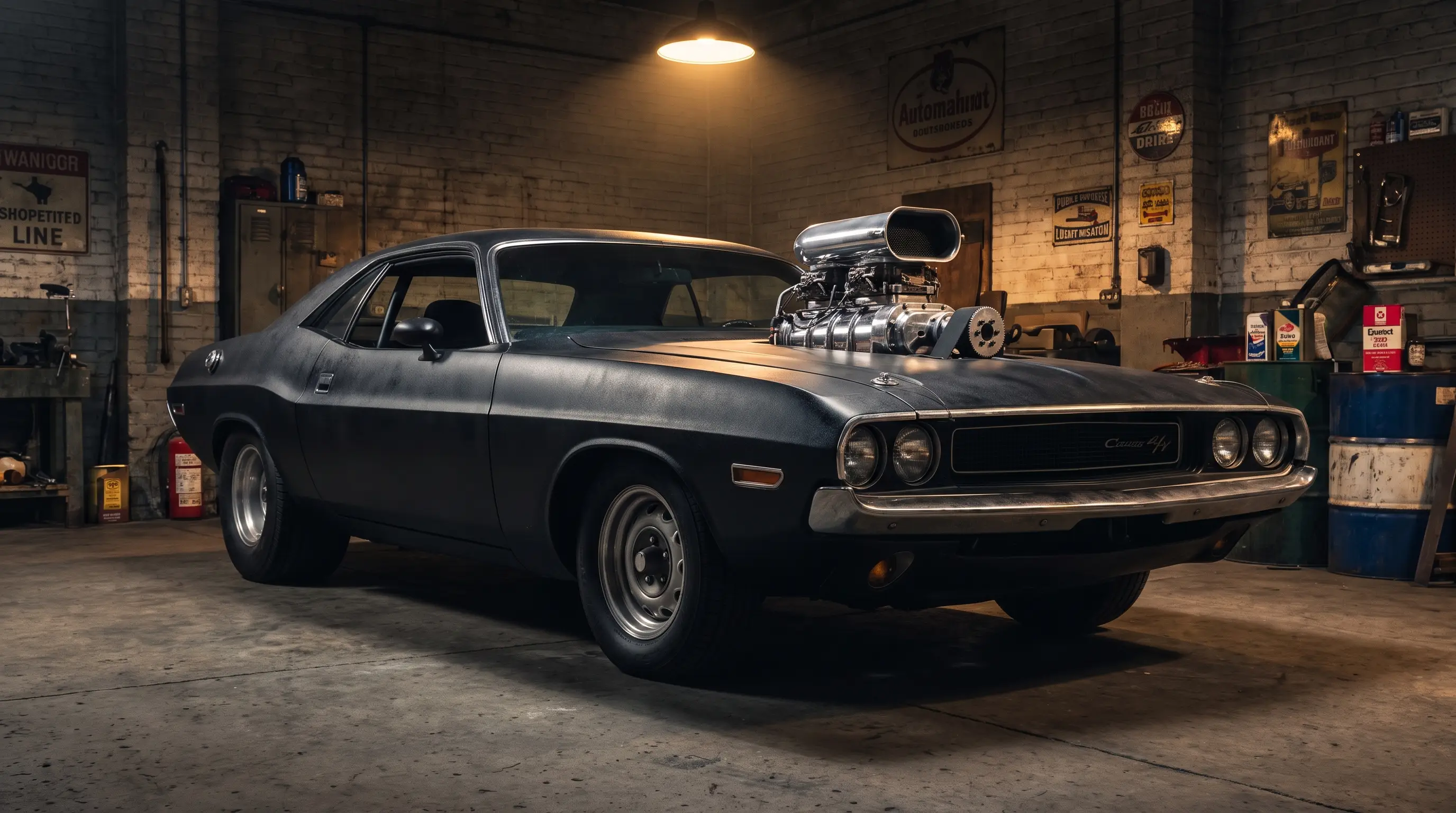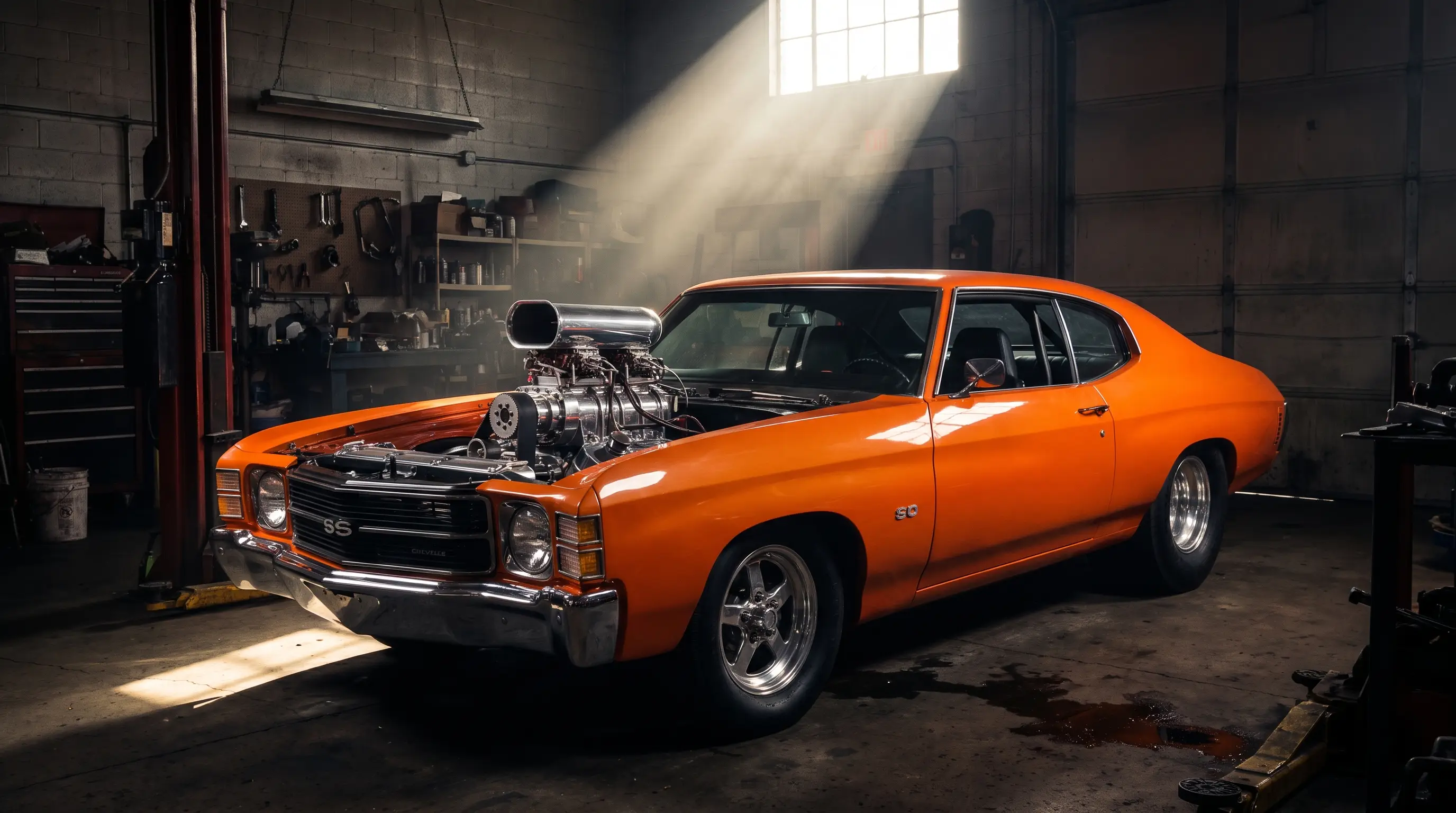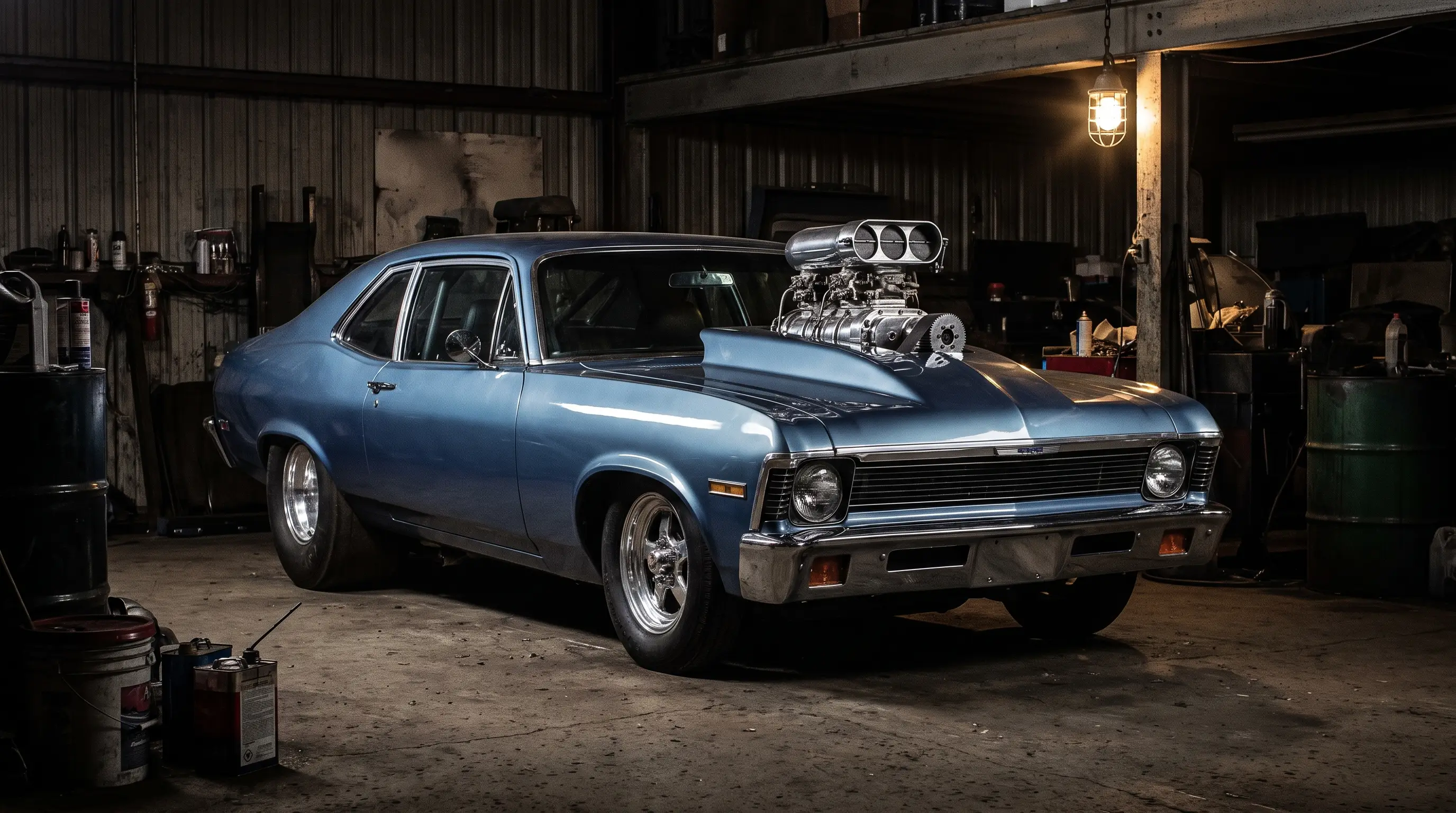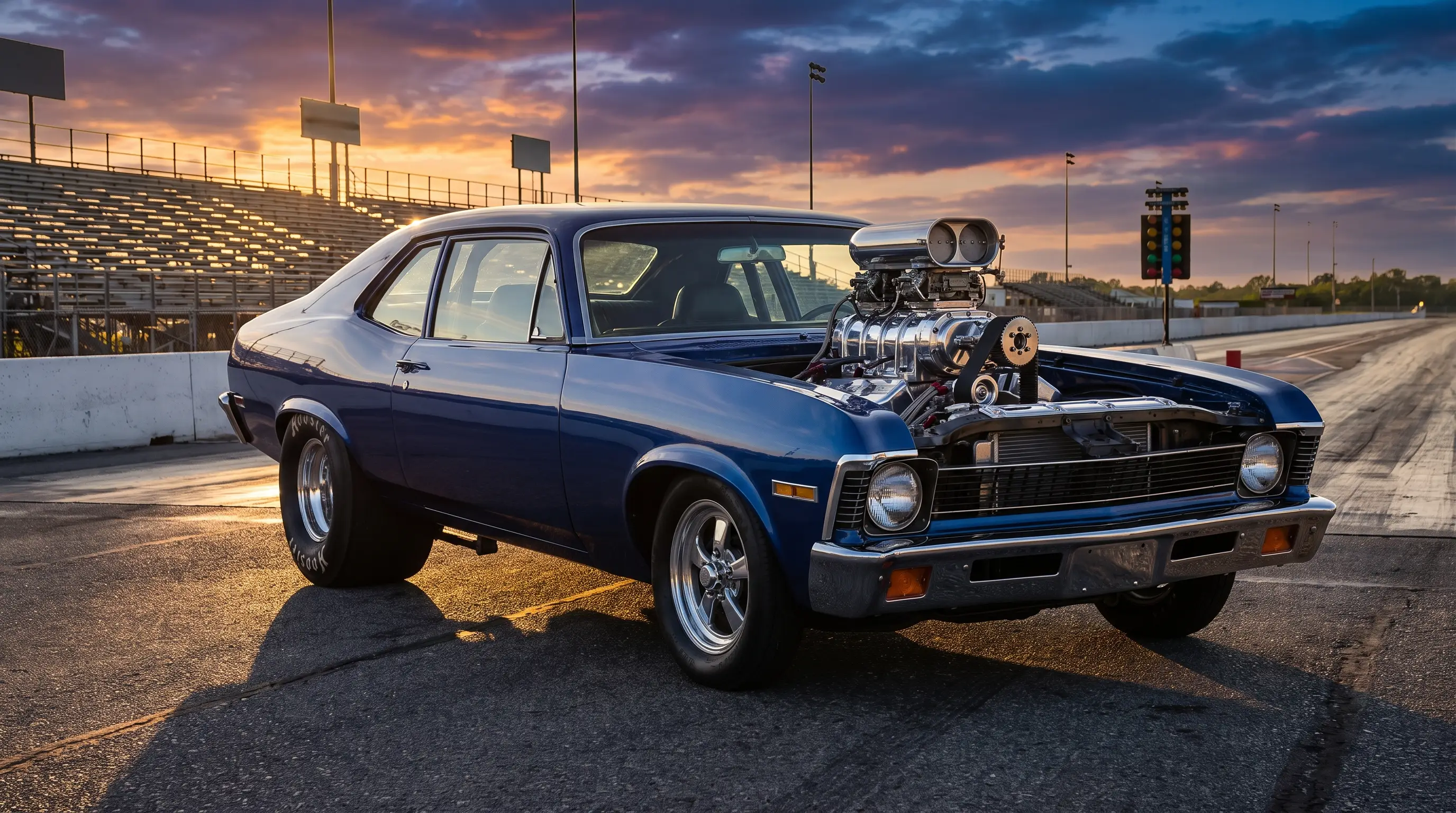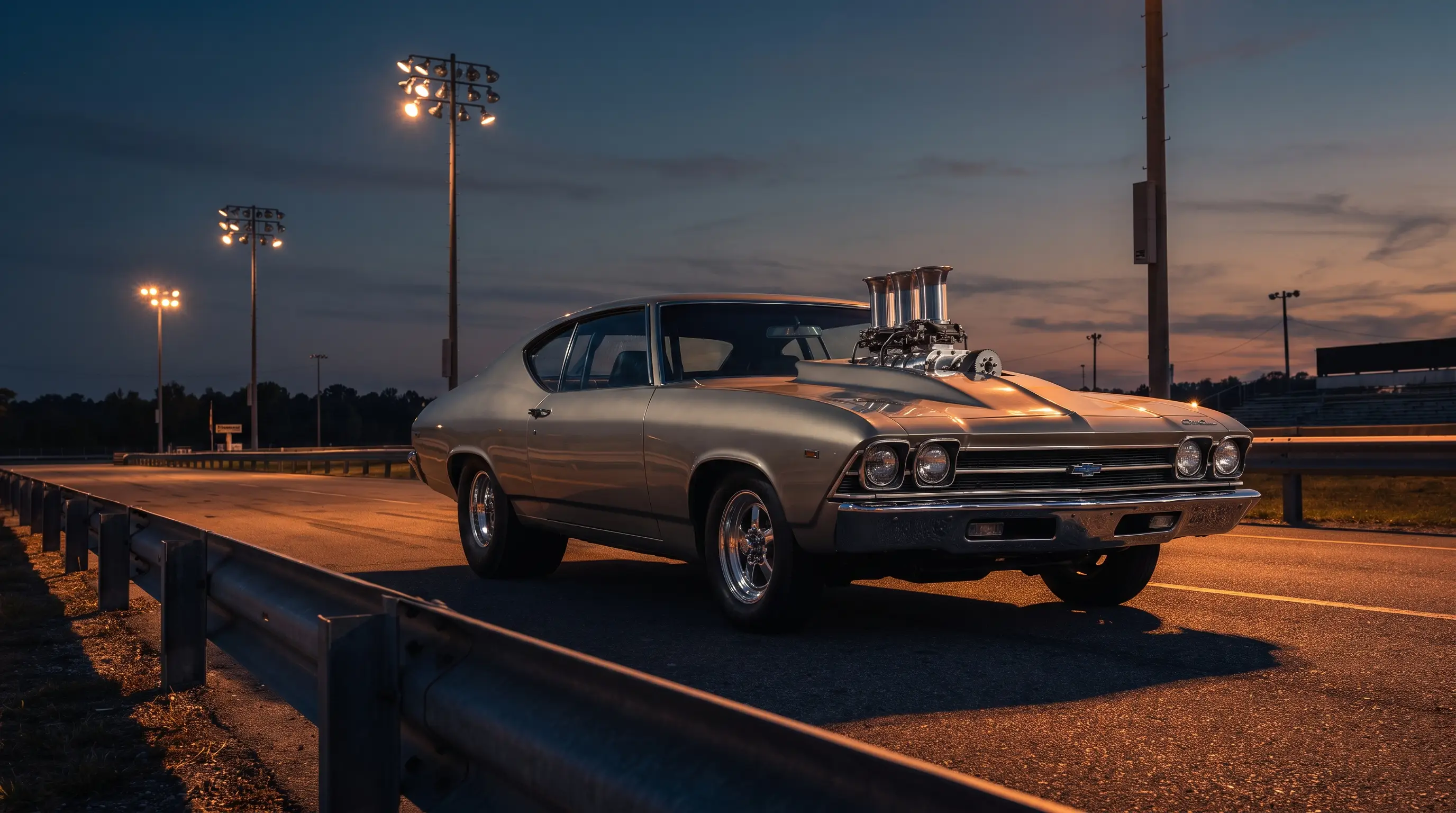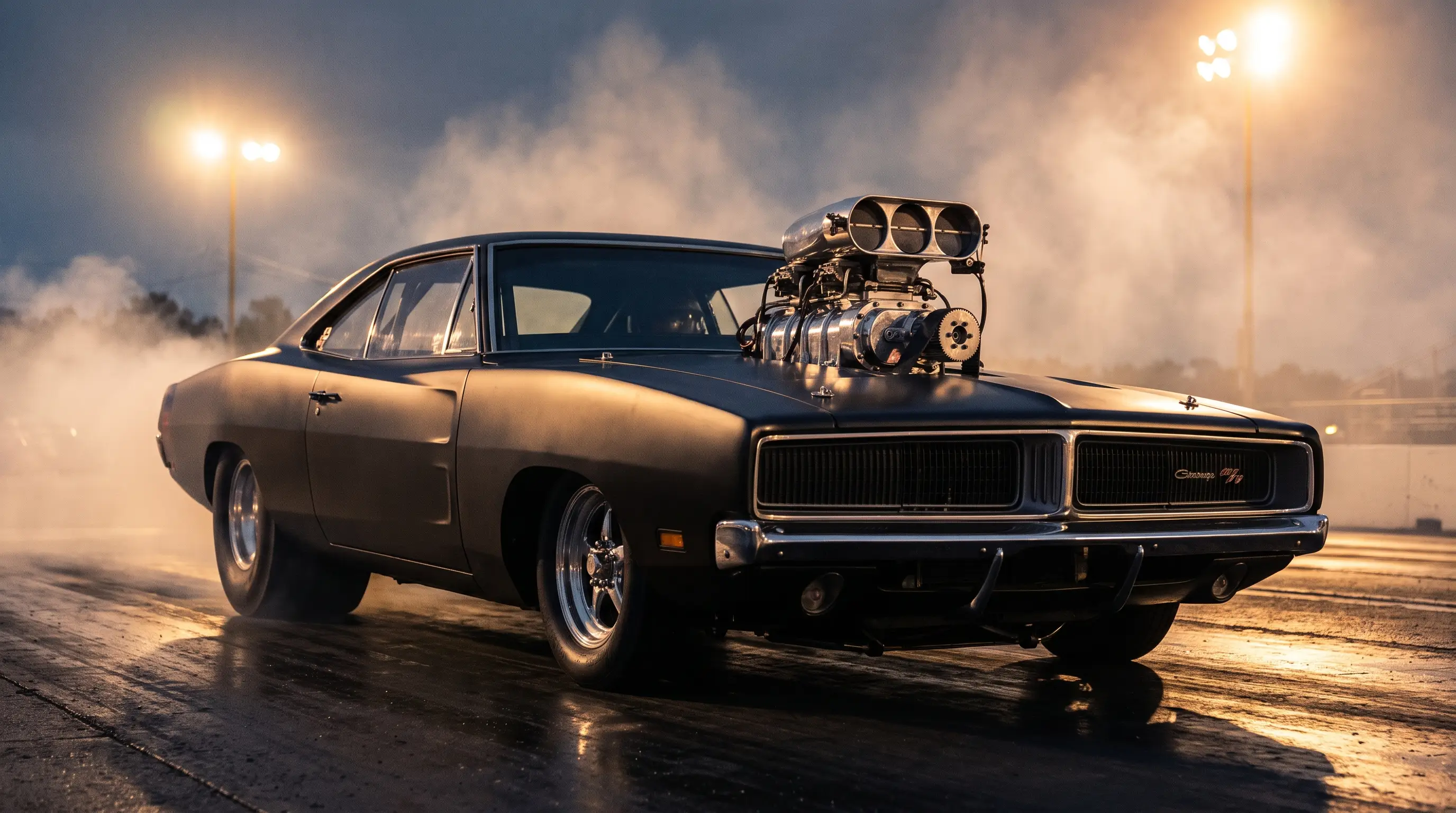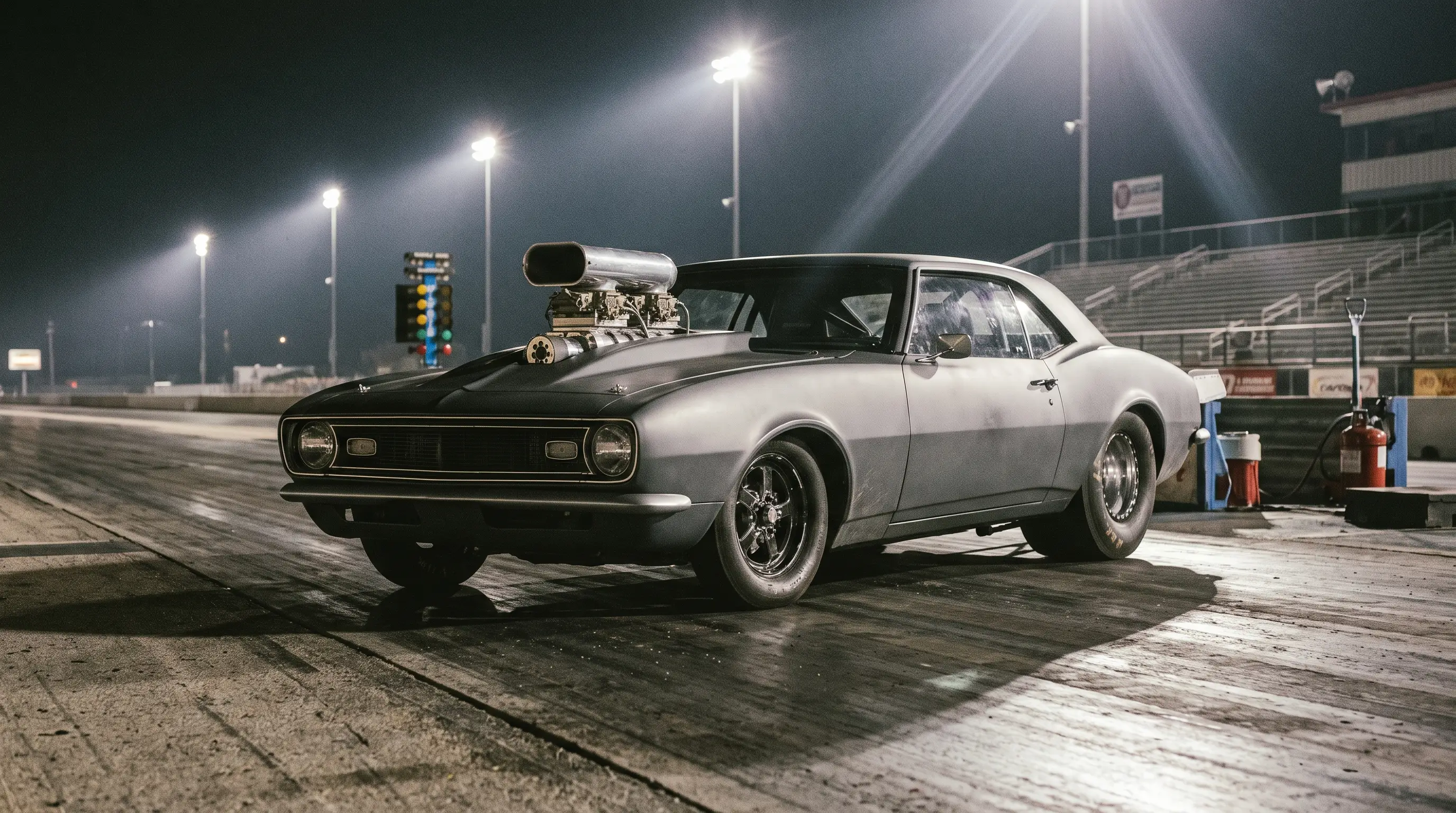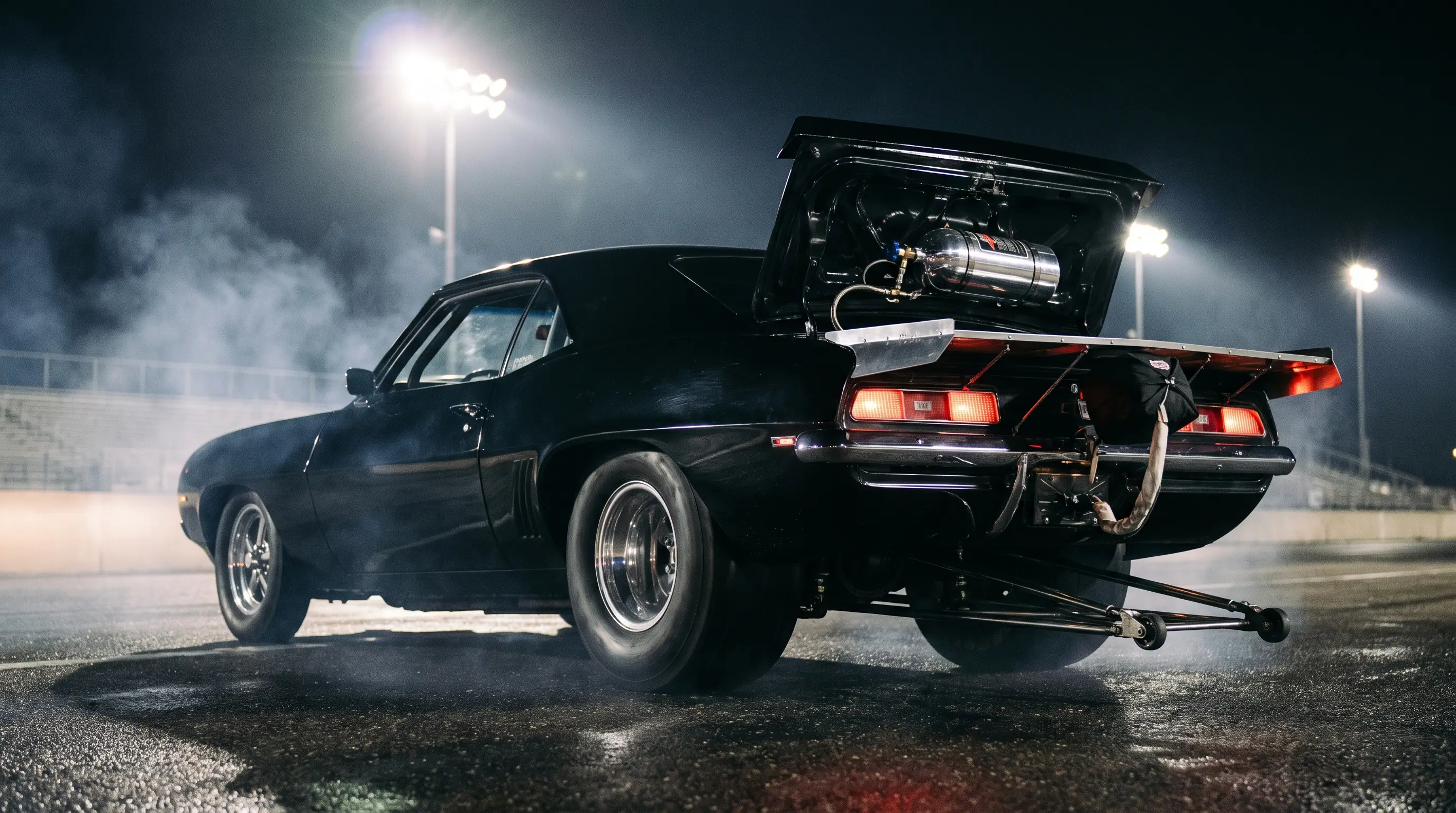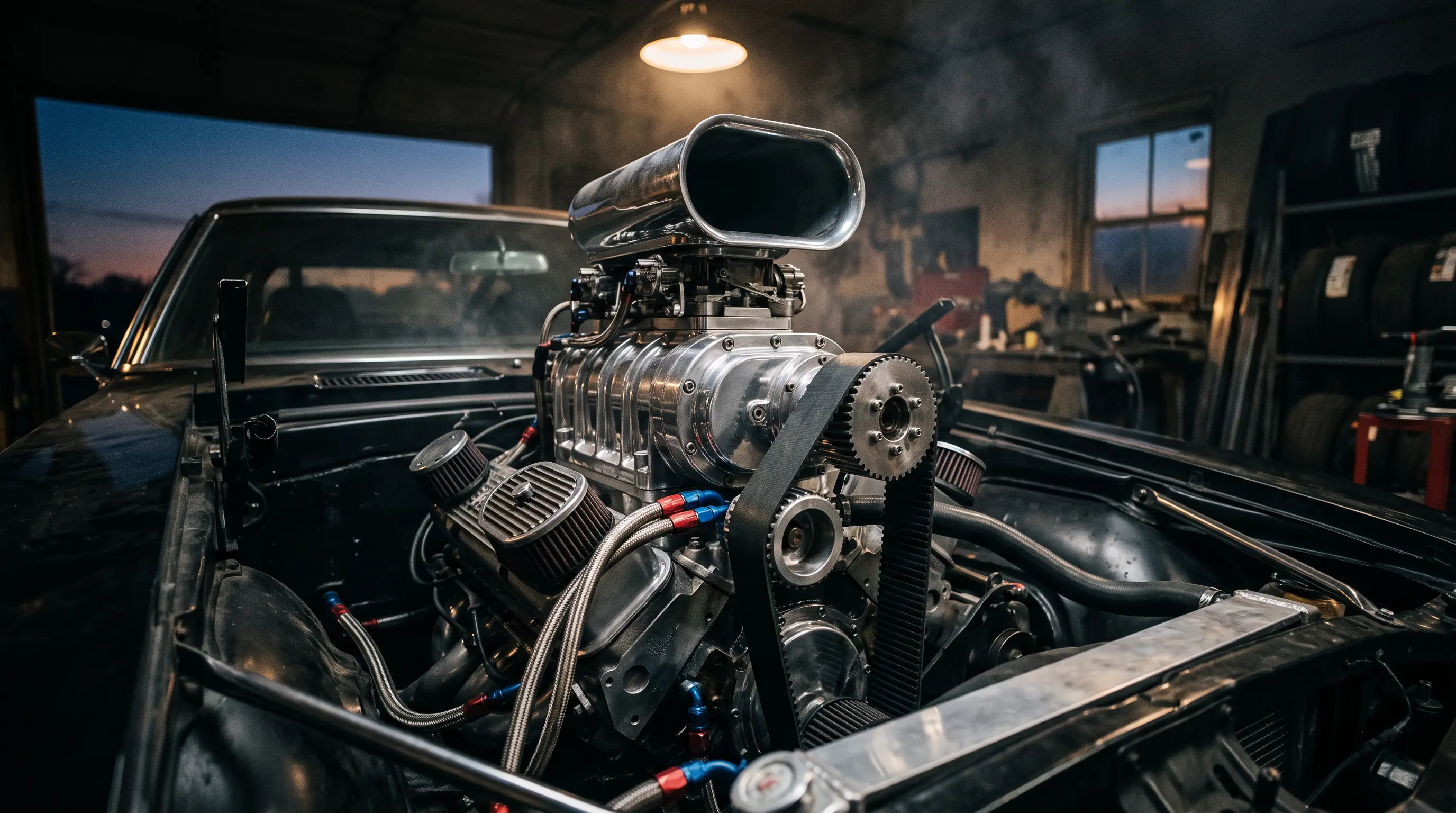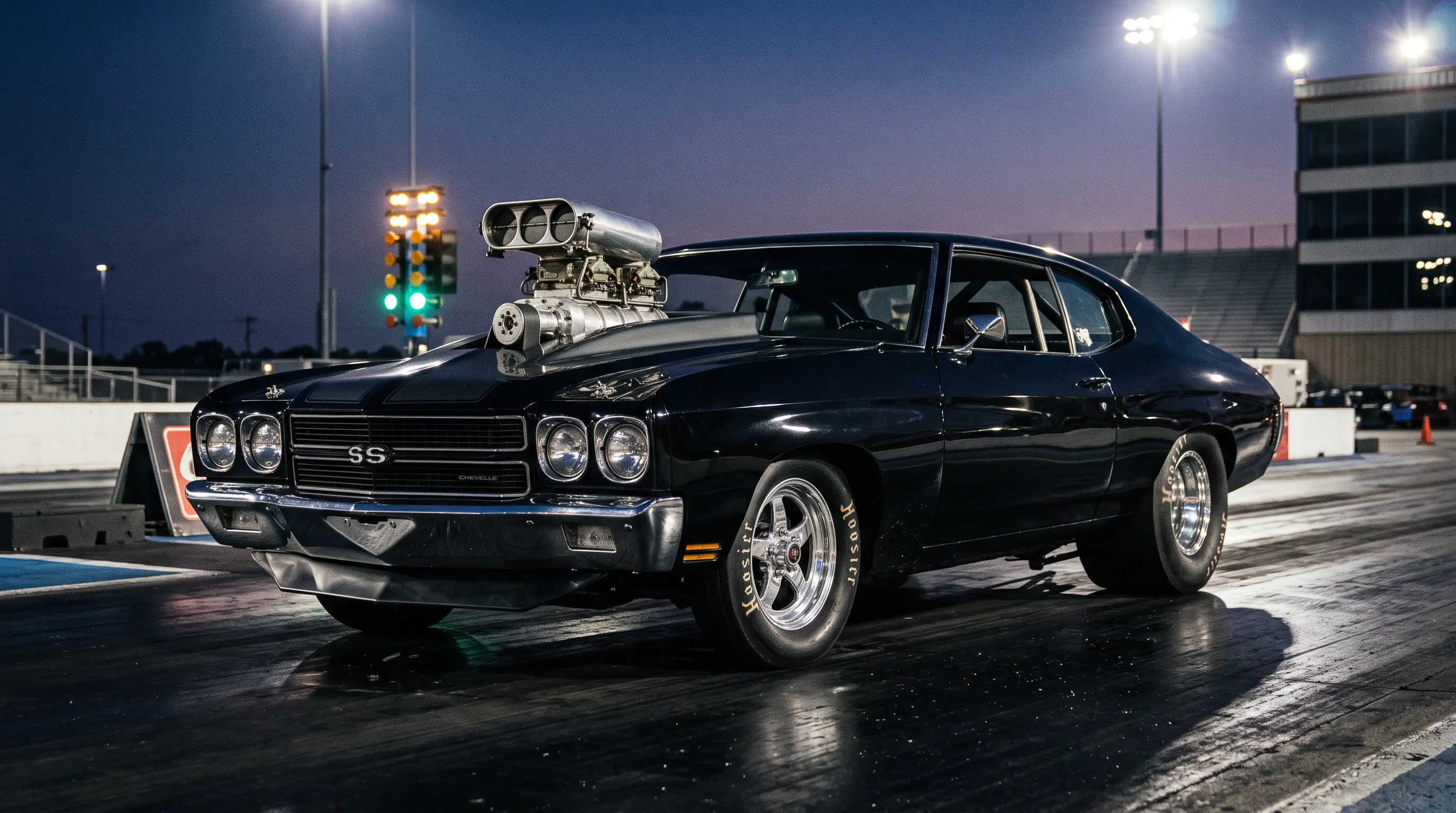
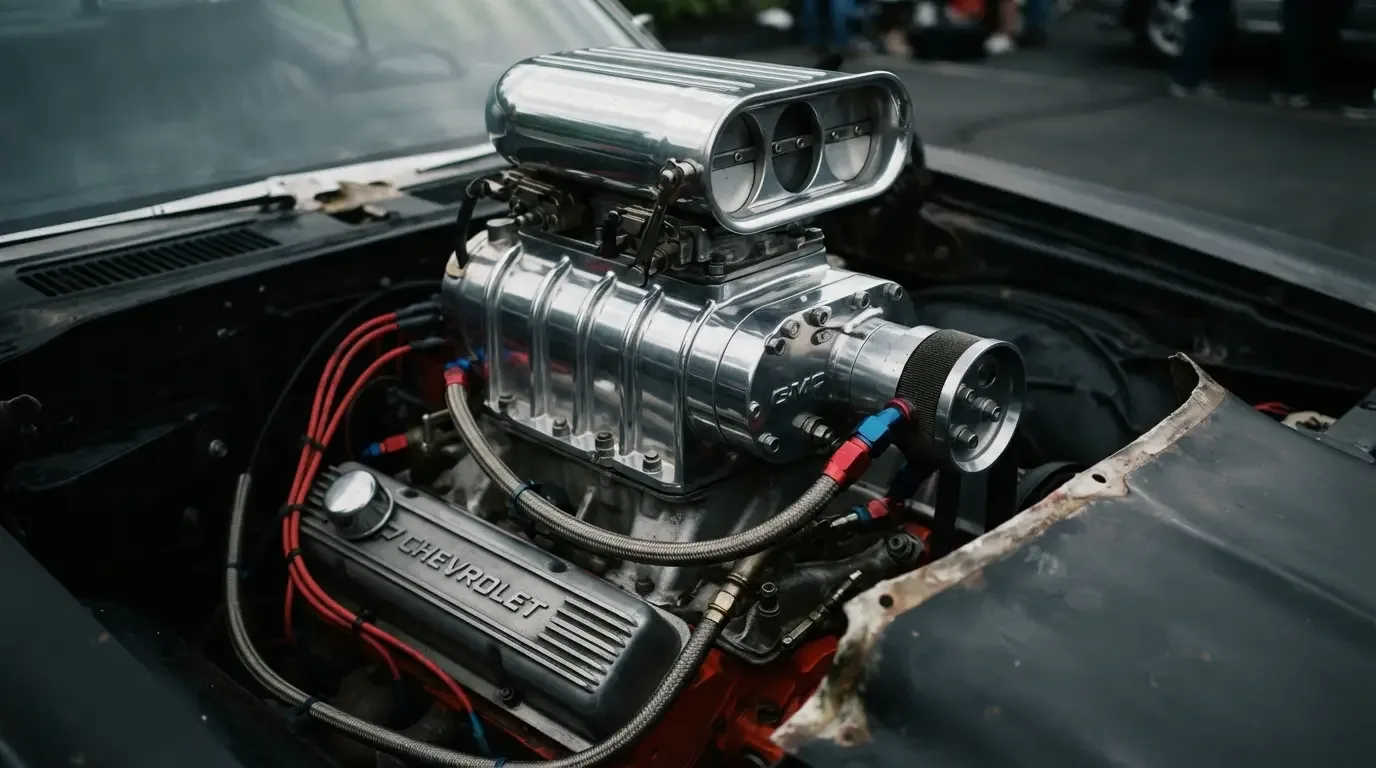
The Pro Street blower was never subtle, and that was the point. A polished GMC 6-71 case sitting on top of a big-block, poking through a hole cut in the hood, said everything the car needed to say before it moved an inch. It was a promise and a threat. It told you the owner had spent real money and had no interest in hiding it. Half the Pro Street look lived above the hood line, and the supercharger was the reason.
Let me be blunt about what that hardware actually was. Most of those blowers started life on a diesel engine. The Detroit Diesel 6-71 and 8-71 Roots-type superchargers were designed to scavenge two-stroke truck and marine engines, not to make a Chevelle terrifying. Drag racers figured out in the 1960s that the same air pump bolted onto a gas motor made a lot of extra power. By the time Pro Street took the idea to the street, the naming stuck. A 6-71 meant six cylinders of 71 cubic inches each on the original diesel, roughly 426 cubic inches of displacement per revolution. Nobody buying one for a street car cared about the diesel math. They cared that it looked like race equipment and sounded like the end of the world.
Why the blower sat on top instead of hiding
Function drove the styling here, which is rare. A Roots blower is physically tall. It bolts to an intake manifold, the manifold sits on the engine, and the whole stack pushes the drive snout up and forward. On a big-block already sitting high in an engine bay, there was nowhere for it to go but up and out. Builders had two choices. Cut the hood or run a scoop tall enough to clear the whole assembly. Both options became signatures.
The scoop mattered as much as the blower. A bugcatcher scoop, that squared-off twin-opening injector hat, became shorthand for a serious Pro Street car. It fed air to the mechanical fuel injection or the carburetors sitting on top of the case. It also doubled the visual height of an already tall engine. Stand a 1970 Nova next to a stocker and the blown car looked a foot taller under the hood. That silhouette is what people picture when they hear the term. If you want the full arc of how this movement started, our pro street cars history piece covers the roots.
Roots, centrifugal, and the sound each one made
Not every Pro Street car ran a Roots blower, but the Roots defined the sound. A Roots unit is a positive-displacement pump. Two meshing rotors shove a fixed volume of air with every turn, so boost comes on immediately and stays. The result is that hard mechanical whine layered over the exhaust, a sound you can identify from three blocks away. It is the noise most people mean when they say a car "has a blower."
Centrifugal superchargers were the other option, and they behaved differently. A centrifugal unit spins an impeller and builds boost with engine speed, so it makes its numbers at the top of the tach rather than off idle. Quieter, more efficient, less theatrical. Some Pro Street builders used them. Most did not, because Pro Street was theater. Turbochargers existed too, but through the 1980s golden era they were rarer on these cars. Twin-turbo builds became more common in the modern revival, when the technology got cheaper and more reliable.
Here is the honest comparison. A Roots blower is loud, laggy on efficiency, and hard on fuel. A centrifugal is smoother and makes more usable power per dollar. Pro Street picked the loud one on purpose. The whine and the hood-mounted hardware were the entire aesthetic argument. Efficiency was somebody else's problem.
The big-block underneath
The blower got the attention, but the engine under it did the work. Pro Street lived on big-blocks. Chevy 454s and stroked 496s. Ford 460s. Chrysler 440s and the occasional 426 Hemi for people with deep pockets and something to prove. These were tall, heavy, torque-rich engines that responded well to boost and looked correct with a supercharger bolted on top. A small-block could be blown, and plenty were, but the big-block was the default because it matched the visual mass of the whole build.
Power numbers from that era should be treated with suspicion. Owners quoted whatever sounded good at the cruise night. A streetable blown big-block making real, repeatable power was usually in the 600 to 800 hp range on pump gas, and a lot of the cars quoting four figures never saw a dyno. The point was rarely a timeslip. Many of the most photographed Pro Street cars ran a handful of passes, or none, and spent their lives at shows with the hood up. The blower was jewelry that happened to make boost.
What a period-correct blown build actually included
Strip the myth away and a real Pro Street blower motor was a system, not just a supercharger. The parts had to work together or the whole thing grenaded on the first hard launch.
| Component | Typical period spec | Why it mattered |
|---|---|---|
| Supercharger | 6-71 or 8-71 Roots | The visual and audible signature |
| Drive | Toothed belt off the crank | Set boost via pulley ratio |
| Induction | Bugcatcher scoop, dual carbs or mechanical injection | Fed air to the case |
| Short block | Forged pistons, steel crank | Survived cylinder pressure |
| Fuel | High-octane pump gas or race gas | Held off detonation under boost |
Boost was set mechanically. Change the ratio between the crank pulley and the blower pulley and you changed how fast the blower spun relative to the engine. Overdrive it and boost climbed. That was the tuning knob. No boost controller, no laptop, just a different set of pulleys and a lot of nerve.
How the blower shaped the whole car
The supercharger did not stay in the engine bay, philosophically. It set the tone for everything else. If you were going to run a blown big-block poking through the hood, the rest of the car had to match. That meant the narrowed rear, the tubs, the skinny front tires and the fat rears. A blower on an otherwise mild car looked wrong, and builders knew it. The whole Pro Street formula was internally consistent, and the supercharger was the anchor.
It also created the classic problem. A tall blower motor blocked forward vision and roasted the driver with underhood heat. Many of these cars were miserable to actually drive, which circles back to why so many lived at shows. The hardware that made the look also made the car impractical. Nobody building one was confused about that trade. If you want a build style that kept the muscle-car body but chased handling and drivability instead, that comparison is worth a look too.
There was a status ladder built into all of this, too, and everyone in the scene knew where they stood on it. A small blower on a small-block was entry level. A 6-71 on a big-block was serious. An 8-71, or a pair of blowers on a Hemi, put you at the top of the food chain at any cruise night. The size of the case and the displacement under it were a kind of currency. You could read a builder's budget and ambition off the top of the engine without asking a single question. That legibility was part of the appeal. The car announced its own rank.
The blower in the modern revival
The supercharger survived the movement's slump and came back with it. Modern Pro Street builders still run Roots blowers, and the visual language is unchanged. What changed is what hides underneath. A lot of current builds run modern fuel injection, better fuel systems, and stronger internals while keeping the classic bugcatcher-and-case look on top. The car reads as 1988 from ten feet away and runs like something built this decade up close.
Purists argue about this. Some say a modern EFI system under a show hat is cheating the aesthetic. Others point out that the cars now actually run, drive, and idle in traffic, which the originals often could not. Both sides have a point. The blower stayed the constant either way. It is the one component that has never left the formula, from the late-1970s roots through the golden era to the cars being finished right now.
"People obsess over the blower. I always look under it first. A polished case tells me what the owner wanted you to think. The short block tells me what he actually built."
- Dan Reeves
What it is worth watching for
If you are shopping, the blower is where sellers oversell. A supercharger is expensive and impressive, and it invites the assumption that the rest of the car matches. It often does not. The correct move is to treat the blower as one line item on a much longer list and price the car on the whole system: short block, fuel system, driveline, chassis work, and documentation. A period-correct blown Pro Street car with proof of what was done is a real object. A polished 6-71 on a mystery motor is a photograph.
The good ones are getting recognized again as the movement gets its historical due. When you find a build where the blower is backed by real engineering and a paper trail, you are looking at the thing itself, not the costume version. You can start comparing what is actually out there when you shop classic Pro Street car listings and see how the blown cars are priced against the naturally aspirated ones. The gap tells you a lot about how the market still reads that hardware on top of the hood.
The blower was always the loudest argument a Pro Street car could make. It still is. Just make sure the car can back up what the supercharger is claiming.