
For forty years running, a stretch of southern Illinois farmland turned into one of the biggest gatherings of tubbed, big tired muscle cars in the country every year, usually in late spring or early summer, and if you never made the drive to the Street Machine Nationals in DuQuoin, you missed the closest thing left to the original Pro Street scene at full volume. I've been going since I was a kid riding along with my old man, and the fairgrounds still smell the same way they did back then, cut grass, race fuel, and burnt rubber. The June 2026 edition marked the event's final run at DuQuoin State Fairgrounds after four decades there, with organizers relocating the show going forward.
Car Features
7 min read
The DuQuoin Street Machine Nationals
The Street Machine Nationals at DuQuoin remains one of the largest gatherings of tubbed, big-tired Pro Street cars in the country, pulling in every generation of the hobby.
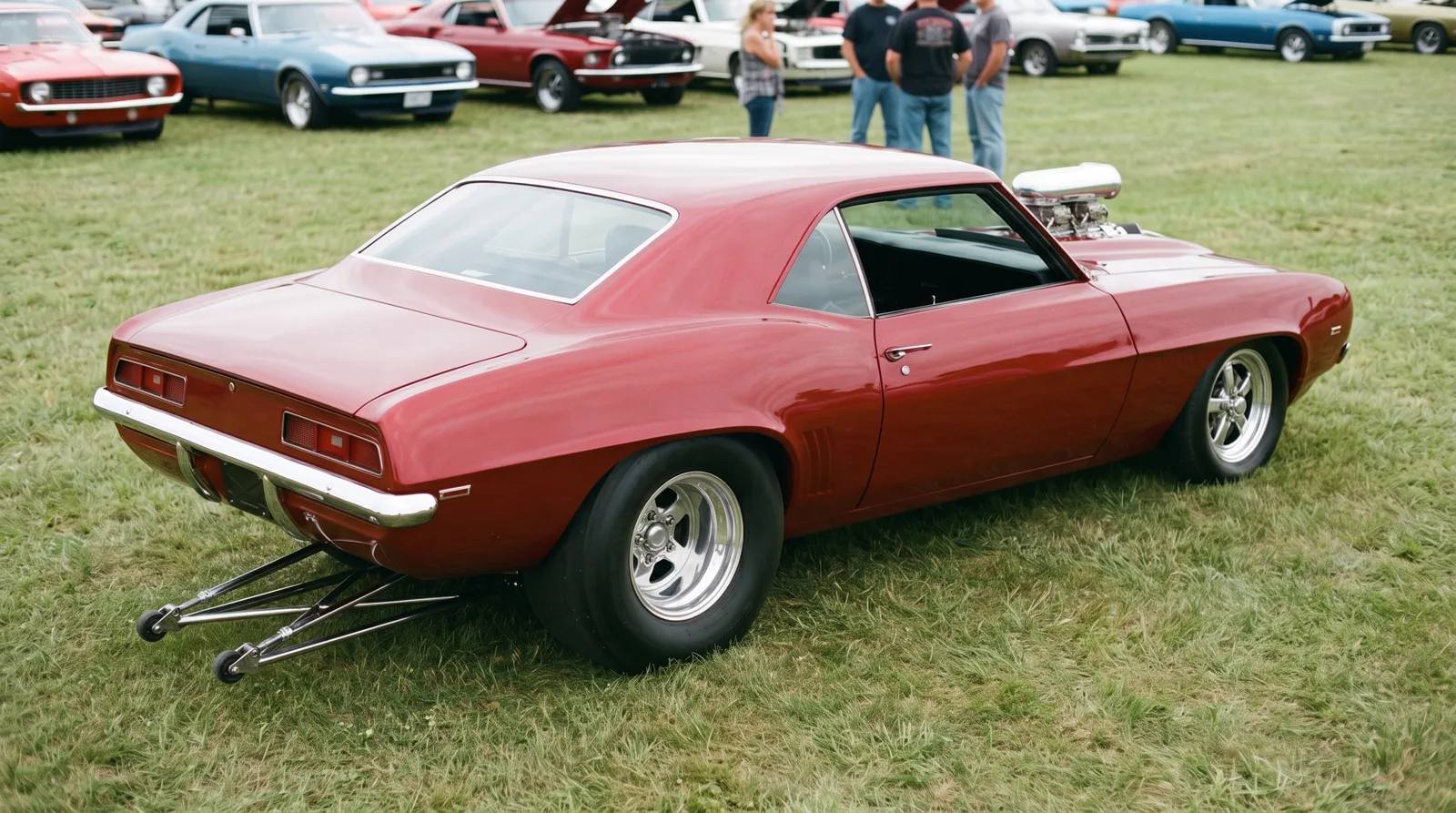
How a county fairground became a landmark event
The DuQuoin State Fairgrounds weren't built with car shows in mind, they were built for agricultural exhibitions and horse racing, but the wide open grounds and the half mile track turned out to be perfect for the kind of event street machine culture needed, room for thousands of cars to park, space for a proper drag strip staging area, and enough infrastructure already in place to handle a serious crowd without organizers having to build anything from scratch. The event grew from a regional gathering into a genuine national draw, pulling builders and spectators from well outside the Midwest specifically because there wasn't another show quite like it within reasonable driving distance for most of the country.
What actually happens on the grounds
Unlike a static car show where vehicles sit roped off for judging, DuQuoin has always leaned into the idea that these cars are meant to be driven hard, not just looked at. Burnout contests draw enormous crowds, with tire smoke rolling across the grounds thick enough to see from the highway. The drag strip runs all weekend, giving builders a chance to actually prove what their tubbed, narrowed creations can do rather than just displaying them. That combination, real competition alongside the show and shine side of things, is a big part of what separates DuQuoin from more sedate concours style events and keeps it feeling connected to Pro Street's drag racing roots.
A generational meeting point
What strikes me every year is how the crowd spans every generation of the hobby at once. You've got guys in their seventies who were building tubbed cars when the style was brand new, standing next to their grandkids who discovered the whole scene through a video online last winter. That mix doesn't happen by accident at DuQuoin the way it might at a smaller local show. The event has been running long enough, and consistently enough, that it's become a genuine tradition passed down within families and clubs, the kind of thing people planned their whole calendar around rather than just showing up if they happened to be free. For anyone wanting the fuller context of how the whole movement got to this point, read the background on the decades of history that led to gatherings like this one.
"You can read about Pro Street history all you want, but standing at DuQuoin during a burnout contest with hundreds of cars parked around you, that's when it actually clicks why this style mattered so much to so many people for so long."
- Wayne Coburn
The vendor and swap meet side
Beyond the cars themselves, the swap meet that runs alongside the show has become a destination in its own right. Builders hunting for hard to find parts, discontinued trim pieces, or new old stock components specific to the Pro Street era make the trip to DuQuoin specifically for the vendor rows, knowing they'll find things there that don't turn up easily through normal channels. It's the kind of resource that's especially valuable to builders working on retro, period correct projects, where sourcing the right part often matters as much as the fabrication work itself.
Why events like this matter for the current revival
As interest in Pro Street builds picked back up in recent years, long running events like DuQuoin benefited directly, seeing renewed attendance from younger builders discovering the style for the first time alongside the veterans who never stopped showing up. That mattered for the event's staying power right up to the end. Shows that rely entirely on an aging core audience eventually shrink as that audience ages out, but DuQuoin kept pulling in new faces even through the years when broader interest in the style had cooled elsewhere. That resilience says something about the event's standing within the community, and about the enduring pull of watching hundreds of tubbed, big tired cars gathered in one place at once, even as the organizers ultimately chose to move the Nationals to a new host site after 2026.
If a weekend at DuQuoin has you thinking about starting or adding to a build of your own, there's a real market to explore beyond the fairgrounds too, where you can find a classic Pro Street car ranging from finished show pieces to projects waiting for their first tub.
The judging that keeps standards honest
DuQuoin has never been purely about horsepower and noise. There's a serious judging component running alongside the burnout contests and drag strip action, with categories that reward build quality, attention to detail, and correctness within the Pro Street style specifically. Judges who've been evaluating cars at the event for years tend to be sticklers about proportions and stance, the same details that separate a car that genuinely nails the look from one that's close but slightly off. That judging standard has, in its own quiet way, helped keep the definition of what counts as a proper Pro Street build consistent across decades, even as the technology under the hood has shifted from carburetors to EFI to LS swaps. A car can run whatever drivetrain a builder chooses, but the fairgrounds judges still expect the fundamentals of the tub, the stance, and the tire proportions to be right.
What made the DuQuoin trip worth planning for
For anyone who made the trip, DuQuoin rewarded planning ahead. Camping filled up fast, the fairgrounds got genuinely crowded by Friday afternoon, and the swap meet vendors with the best selection tended to sell out of their most sought after parts early in the weekend. Longtime attendees generally recommended arriving Thursday if possible, both to beat the traffic and to have a full extra day to work the vendor rows before the weekend crowds descended. It was never a relaxed, casual show. It was a full weekend commitment, and that intensity is exactly what kept it central to the Pro Street calendar for as long as it lasted.
Every year I'd run into somebody making their first trip, usually a younger builder who found footage of a previous year's burnout contest online and decided they had to see it in person. They almost always said the same thing on the way out, that photos and video didn't prepare them for how big the event actually was once you were standing in the middle of it. That reaction, generation after generation, is the real reason DuQuoin stayed relevant through every shift the Pro Street style went through, from its original heyday to the quiet years to the current comeback, right up through its final weekend at the fairgrounds in June 2026. Some things were worth experiencing directly, and this was one of them.
Sources and notes
- KFVS12: Street Machine Nationals Announces Final Run in Du Quoin
- Street Machine Nationals: Du Quoin, IL Event Page
- WSIL: Street Machine Nationals Announces Final Event in DuQuoin After 40 Years
- The Southern: Street Machine Nationals Brings Thousands of Car Enthusiasts to Du Quoin
- City of Du Quoin, IL: Street Machine Nationals Event Listing
Related Reading
Have a
Classic Car
for Sale?
Reach thousands of serious classic car collectors across the US.
Sell It Here →
Selling a classic? Here's how: where to sell your classic car online
Are You a Classic Car Dealer?
List your full inventory and connect with targeted classic car buyers.
Join as a Dealer →

About the author
Wayne Coburn
Longtime Corvette owner, judge and club figure who knows the cars, the records and the people behind them.




Comments (1)
V
vettedad72
1 month ago
My kids still talk about the DuQuoin burnout smoke.