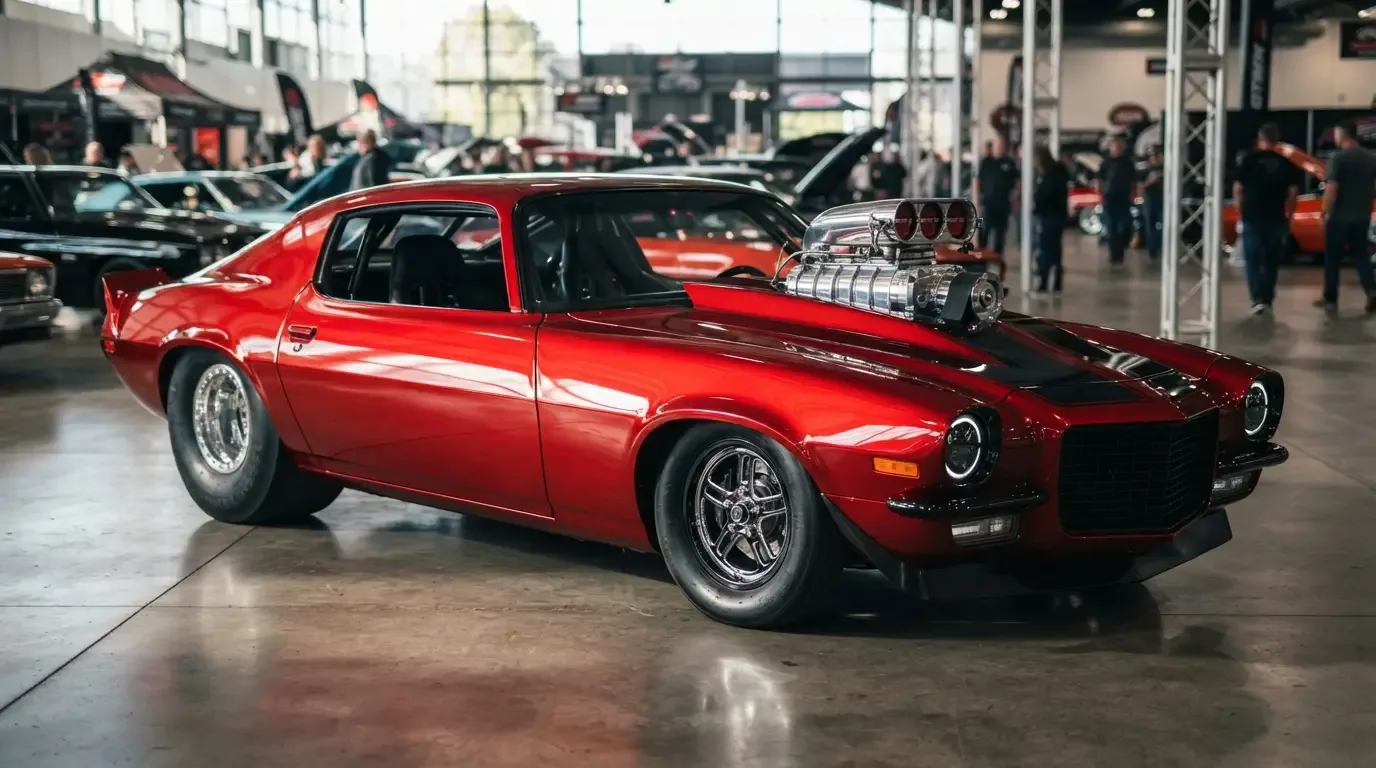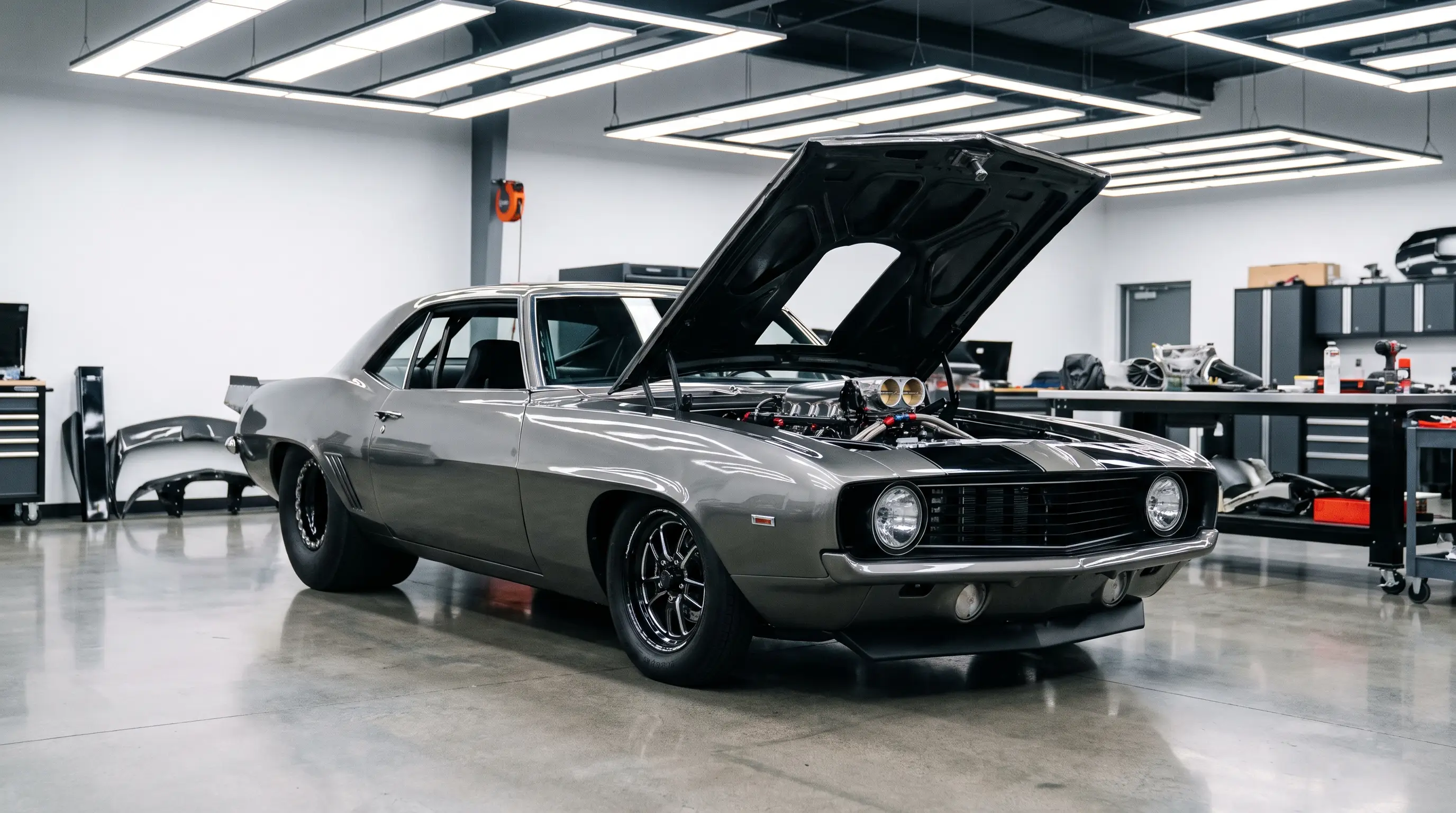
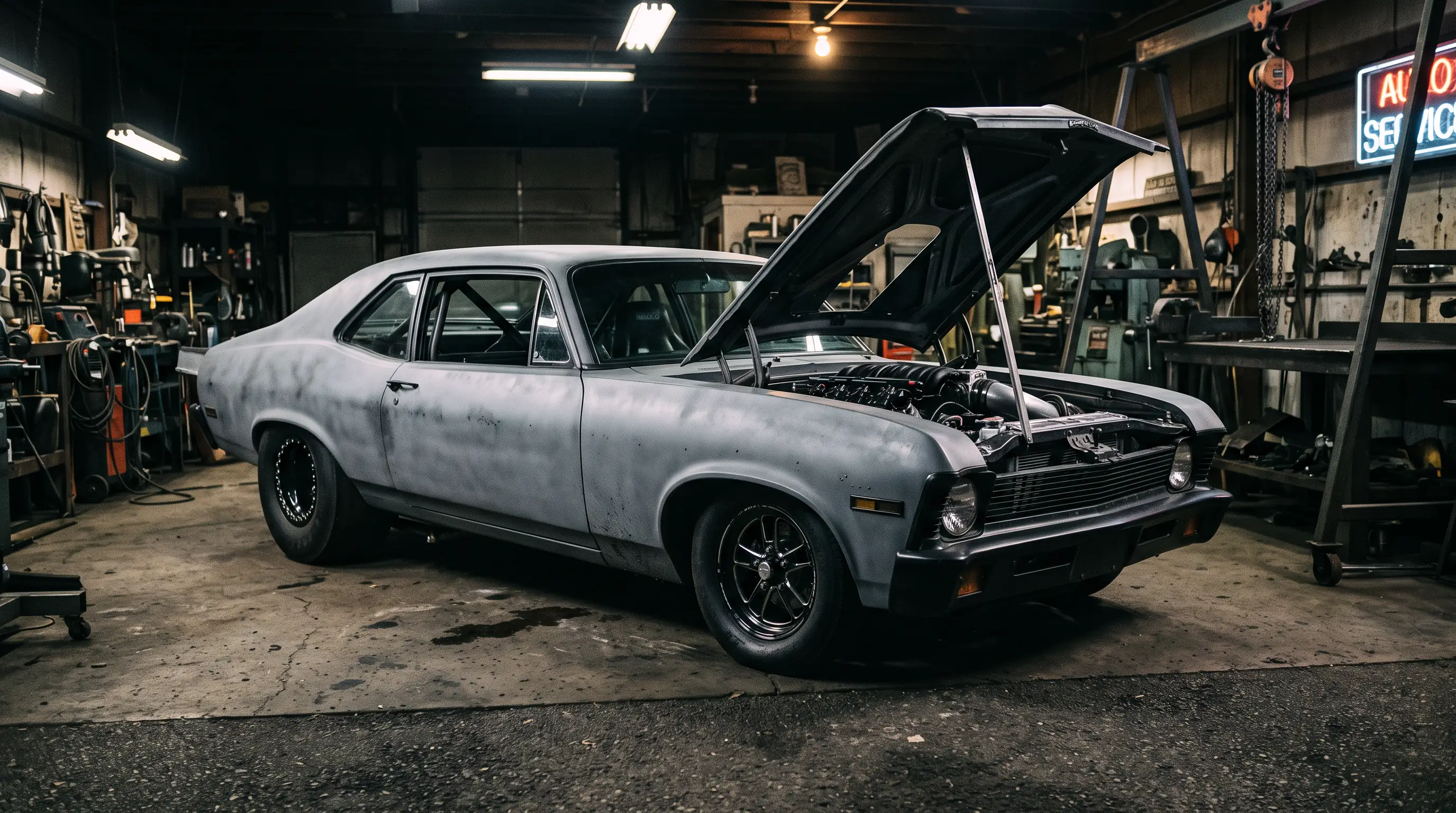
Pop the hood on half the tubbed muscle cars at a modern street machine show and you'll find the same basic engine architecture staring back at you, whether the car started life as a Chevelle, a Nova, or a full size Impala. LS pro street builds have become so common that at some shows they now outnumber the traditional big block builds the style was originally built around, and the reasons behind that shift are more practical than sentimental.
Why the LS platform took over
General Motors' LS engine family, produced across a huge range of trucks and cars from the late 1990s onward, hit a sweet spot that traditional big blocks from the muscle car era simply can't match. LS engines are lighter than a comparable displacement big block, more fuel efficient, easier to source in good condition from a wrecked truck or SUV, and capable of serious horsepower numbers even in relatively stock form. For a builder tubbing a car and trying to manage weight distribution over a narrowed rear end, a lighter engine up front is a genuine advantage, not just a convenience. Add in the sheer volume of aftermarket support built up over two and a half decades of LS popularity, and it's not hard to see why builders reach for one by default now.
What traditionalists find hard to accept
The resistance to LS engines in Pro Street builds runs deeper than the earlier carburetor versus EFI debate, because it touches on something closer to the identity of the car itself. A big block Chevy or a Hemi under the hood of a tubbed muscle car connects directly to the era the style came from. An LS engine, however capable, is a piece of technology that didn't exist when Pro Street was originally defined, and for builders who care about that lineage, dropping one into a period body can feel like a disconnect between the car's visual heritage and what's actually making it move. That criticism shows up constantly in comment sections and at shows, usually some version of the argument that a real Pro Street car should run the engine family it was built around. To understand why that lineage matters so much to some builders, our pro street revival retrospective covers the decades that established those expectations in the first place.
The practical case is hard to argue with
Whatever the sentimental objections, the practical case for LS swaps is strong. A used LS engine pulled from a wrecked truck often costs a fraction of what a comparable big block rebuild would run, and the aftermarket has produced motor mount kits, headers, and wiring harness solutions specifically designed to simplify dropping one into classic GM muscle car chassis. Fuel injection comes standard, solving the reliability question that carbureted big blocks still wrestle with. And the power potential is genuinely impressive, with even mild aftermarket builds capable of numbers that would have required serious big block work to match a generation ago. For a builder focused on drivability and value rather than historical purity, the calculation isn't close.
"I get why the old timers don't love it. But I can build a nine second car on an LS for less money than a rebuilt big block costs on its own, and it'll start every single morning without a fuss. That math wins for most people building on a budget."
- Patrick Walsh
How builders are splitting the difference
Not every builder treats this as an all or nothing choice. Some run an LS engine but dress the engine bay to visually echo a classic big block, using period style valve covers and air cleaner housings to soften the disconnect for traditionalists at shows. Others go the opposite direction entirely, embracing the modern engine openly with a clean, unapologetic LS presentation and letting the tubbed chassis and big rear tires carry the Pro Street identity on their own. Neither approach has fully won out as the standard, and that ongoing variety is itself part of what keeps the debate lively at every show where both styles show up parked next to each other.
Where this trend intersects with the wider revival
The rise of LS swapped builds hasn't happened in isolation. It's connected to the broader wave of renewed interest in tubbed, big tired muscle cars generally, and to the parallel rise of EFI adoption across the style. A related angle worth exploring is how regional events have adapted to this technological shift among competitors, and a related story covers one of the longest running gatherings where these debates play out in person every year.
For buyers trying to decide which side of this debate to land on themselves, there's no shortage of options either direction right now, with Pro Street cars for sale now including both fresh LS swapped builds and cars still running their original big block architecture for buyers who want to keep that connection to the era intact.
What LS swaps have done to the parts market
The sheer popularity of LS swaps across the hot rod and muscle car world generally, not just within Pro Street builds specifically, has created a robust and competitive aftermarket that benefits builders working on tubbed cars too. Motor mount kits, oil pan clearance solutions for tight engine bays, and transmission adapter plates that were once custom fabrication jobs are now off the shelf parts from multiple manufacturers competing on price and quality. That competition has driven costs down and quality up over the past decade, making an LS swap a more approachable project for a builder without extensive fabrication experience than it would have been when the trend first started gaining traction. It's a virtuous cycle. More swaps drove more parts development, and better parts availability keeps driving more swaps.
None of this fully settles the argument at car shows, and it probably never will. The people who believe a Pro Street car should carry the engine family the style was built around aren't wrong that something changes when a modern crate engine replaces a period correct big block. But the people running LS engines aren't wrong either that the resulting cars still deliver the exact visual drama, the tucked front tires, the massive rear rubber, the aggressive rake, that defined the style from the start. Both camps are, in their own way, chasing the same feeling. They just disagree on what's under the hood while they get there.
Sources and notes
- Wikipedia: General Motors LS-based small-block engine
- Corvette Story: 1997 C5 Corvette Introduced with LS1 Engine
- Hagerty: Pro Street's Greatest Builds Honored at 2024 Grand National Roadster Show
- Hot Rod Magazine Archive
- In The Garage Media: Defining Muscle Car Terms - Pro Touring, Pro Street & Street Freaks