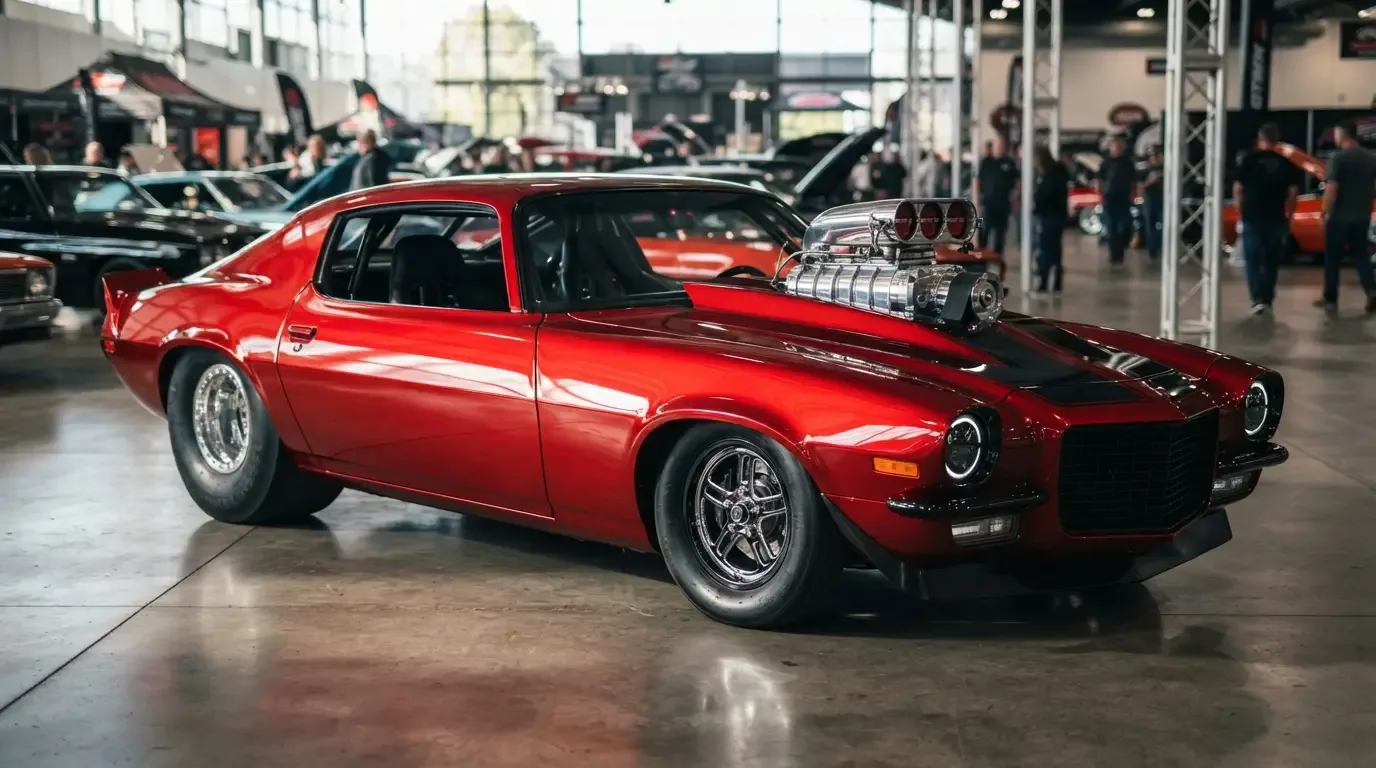
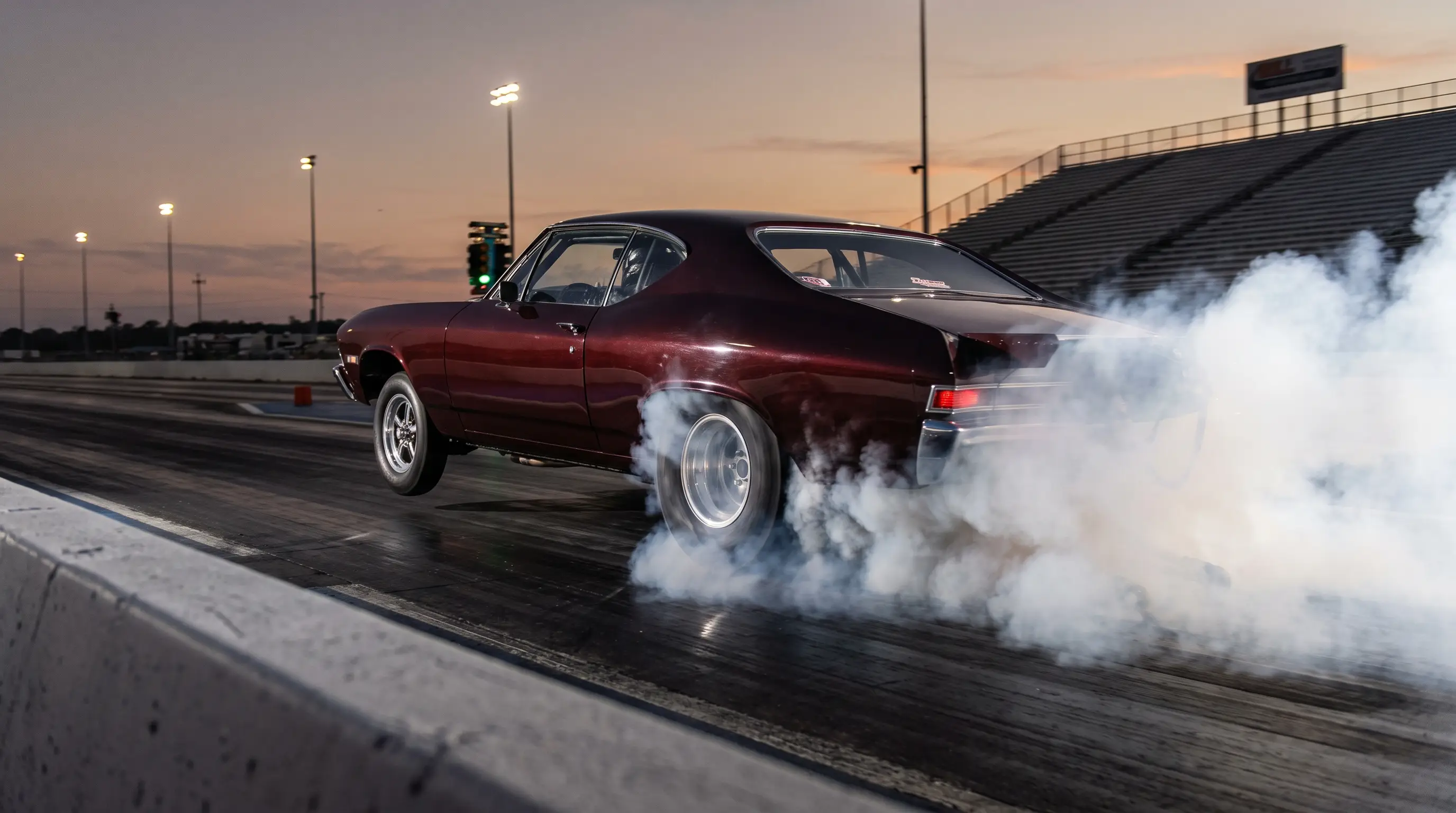
Hot Rod Drag Week is the closest thing the Pro Street world has to a proving ground. Five days, five tracks, one car, and no trailer allowed between stops. If a tubbed Nova or a big-tire Chevelle cannot drive itself down the interstate and still trap respectable numbers the next morning, it does not belong in the event. That single rule has done more to keep the Pro Street spirit honest than any magazine feature ever could.
Why a street-driven rule matters
Pro Street cars started as a compromise between a race car and something you could still drive to the parts store. Somewhere in the late 1990s and early 2000s, a lot of that got lost. Cars got trailered to the strip, backed off the ramps, and never saw a public road again. Drag Week showed up and put the street back in Pro Street.
The format is simple on paper. Competitors run a quarter mile at one track, then drive the car, under its own power, to the next track, sometimes two or three hundred miles away. Repeat for five days. No enclosed trailers. No support truck carrying a spare motor. If something breaks on the highway, you fix it in a gas station parking lot with whatever is in the trunk.
That rule filters out a lot of trailer queens fast. A car with a killer paint job and a stroker motor that cannot hold idle for forty-five minutes on the highway does not finish the week. The cars that do finish earn a kind of respect that a show trophy cannot buy.
The cars that actually show up
Walk the staging lanes at Drag Week and you will see a lot of what built the Pro Street look in the first place: tubbed Novas, Camaros, and Chevelles on skinny front tires and huge rear rubber, most of them running a small block or big block Chevy with a single four-barrel or a modest shot of nitrous. There are outliers, twin-turbo LS cars and Pro Mod-adjacent builds that trap deep into the 6-second range, but the heart of the event is still the same recipe that defined the movement forty years ago: big power, a stripped interior, and a driver willing to log real miles.
Class structure separates the cars by drivetrain and power adder, so a naturally aspirated small block is not lined up against a screw-blown big block for bragging rights. Even so, the leaderboard gets rewritten every year, and cars that finish mid-pack on elapsed time but survive all five days without a tow truck still leave with more credibility than a lot of static show entries.
What breaks, and why it matters
Ask anyone who has run Drag Week what they remember most and it is rarely the quickest pass. It is the transmission that let go on a rural highway at midnight, or the fuel pump that died forty miles from the next track with no cell signal. Those stories get told and retold because they are the whole point. A car engineered only for eleven seconds at the strip, with no thought given to cooling, charging, or basic driveability, gets exposed within the first two days.
Builders who take Drag Week seriously design differently from the start. They pick radiators sized for highway cruising in August heat, not just track duty. They run alternators that can keep up with electric fans and a stereo running for hours at a time. They carry basic tools and a couple of critical spare parts because AAA does not tow a car with slicks and no floor pans.
"You can build the fastest car in the parking lot and still not finish Drag Week. The event does not care about your dyno sheet. It cares whether your car starts on the fourth morning after four days of abuse."
- Mike Sullivan
The event's role in the Pro Street revival
Drag Week did not invent the street-driven ethic, but it gave it a stage again at a moment when Pro Street risked becoming a museum piece. Builders who grew up looking at magazine photos of tubbed cars from the 1980s found a modern outlet that demanded the same combination of horsepower and durability their heroes had to figure out with far less technology. For readers who want the whole picture on how that revival took shape beyond the drag strip, the broader Pro Street story fills in the rest.
The event also changed what "fast" means to a builder. A car that runs a 9-second pass but needs a fresh transmission afterward is not actually faster than a 10-second car that drives home under its own power and does it again the next morning. That shift in priorities pushed a generation of Pro Street builders toward smarter engineering rather than just bigger numbers.
Buying into the Drag Week legacy
Not every Pro Street car for sale today has a Drag Week résumé, but the ones that do carry a different kind of provenance. A documented finish, especially in the earlier years of the event, tells a buyer the car was built to a standard beyond a trailer-to-the-show-and-back existence. That history adds real value for collectors who care about function as much as looks.
For anyone chasing that combination of period-correct Pro Street style and a build sheet that can back up the claims, it is worth taking time to shop classic Pro Street car listings and read the fine print on each car's history. The ones with real road miles behind them, not just strip passes, tend to be the ones worth owning.
What the event teaches builders now
Every year the entry list gets a fresh batch of first-timers who show up with a car built purely for elapsed time and leave with a much longer list of priorities. Wiring gets simplified so a roadside fix does not require a laptop and a factory scan tool. Fuel systems get built with return lines and filters that can be swapped in a parking lot, not just at a home shop with a lift. None of that shows up in a magazine spread, but it shows up in whether the car makes it to the final track on day five.
There is also a quieter lesson in how these builders treat their cars once the event ends. A Pro Street car that survives Drag Week tends to get driven more afterward, not less. Owners who have already proven the car can handle four hundred miles a day in July heat stop babying it for the rest of the year. That change in mindset, treating a big-tire, big-power car as something to actually use, is arguably the event's biggest contribution to the culture. It pushed Pro Street away from being a static look and back toward being a driving discipline, the same discipline that defined the earliest builds coming out of home garages in the late 1970s.
Track promoters have noticed the shift too. Events that once catered almost exclusively to trailered race cars now set aside staging lanes and technical inspection specifically for street-driven entries, because organizers know those cars draw a crowd that cares about the story behind the build, not just the number on the timing slip. That crossover audience, part racer and part enthusiast, is exactly the audience Pro Street was built for in the first place.