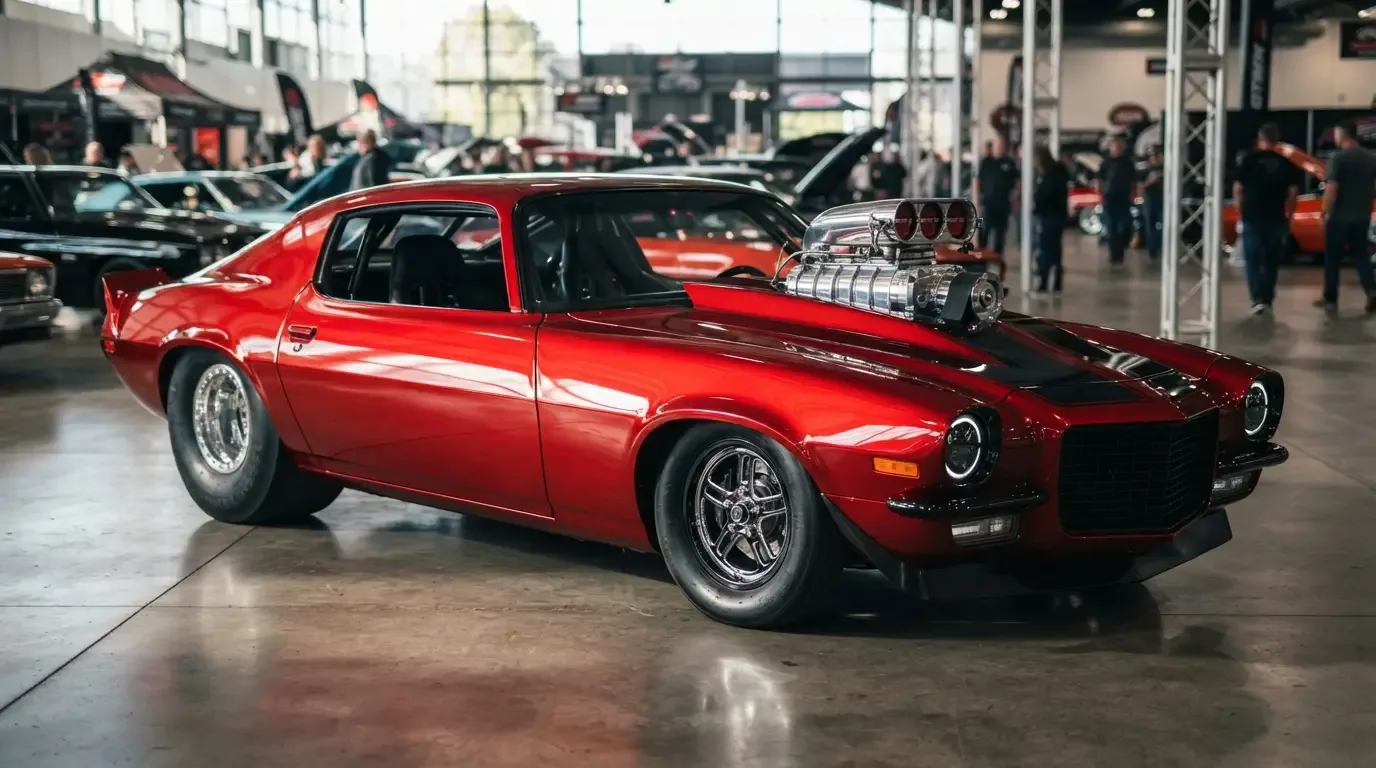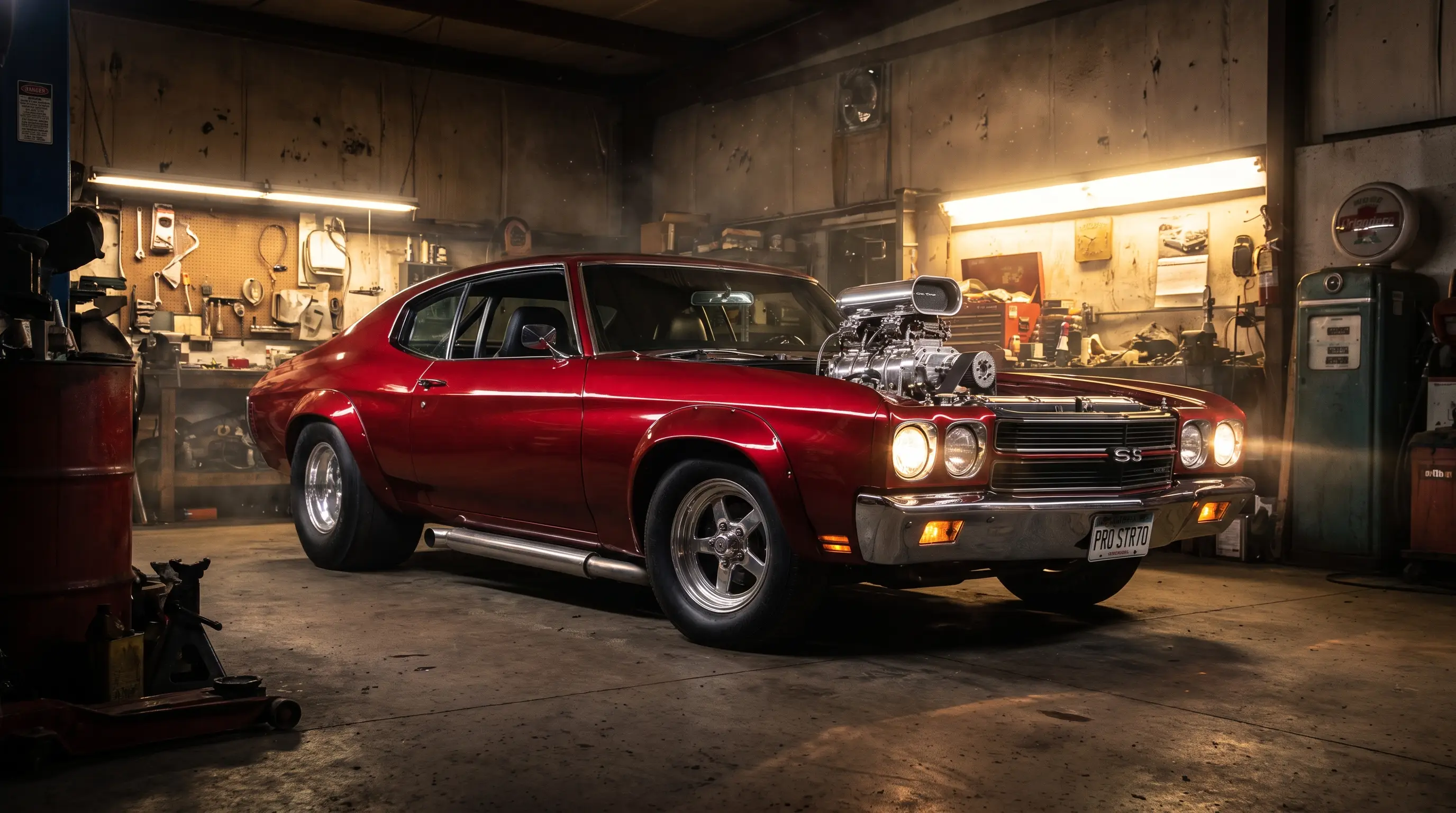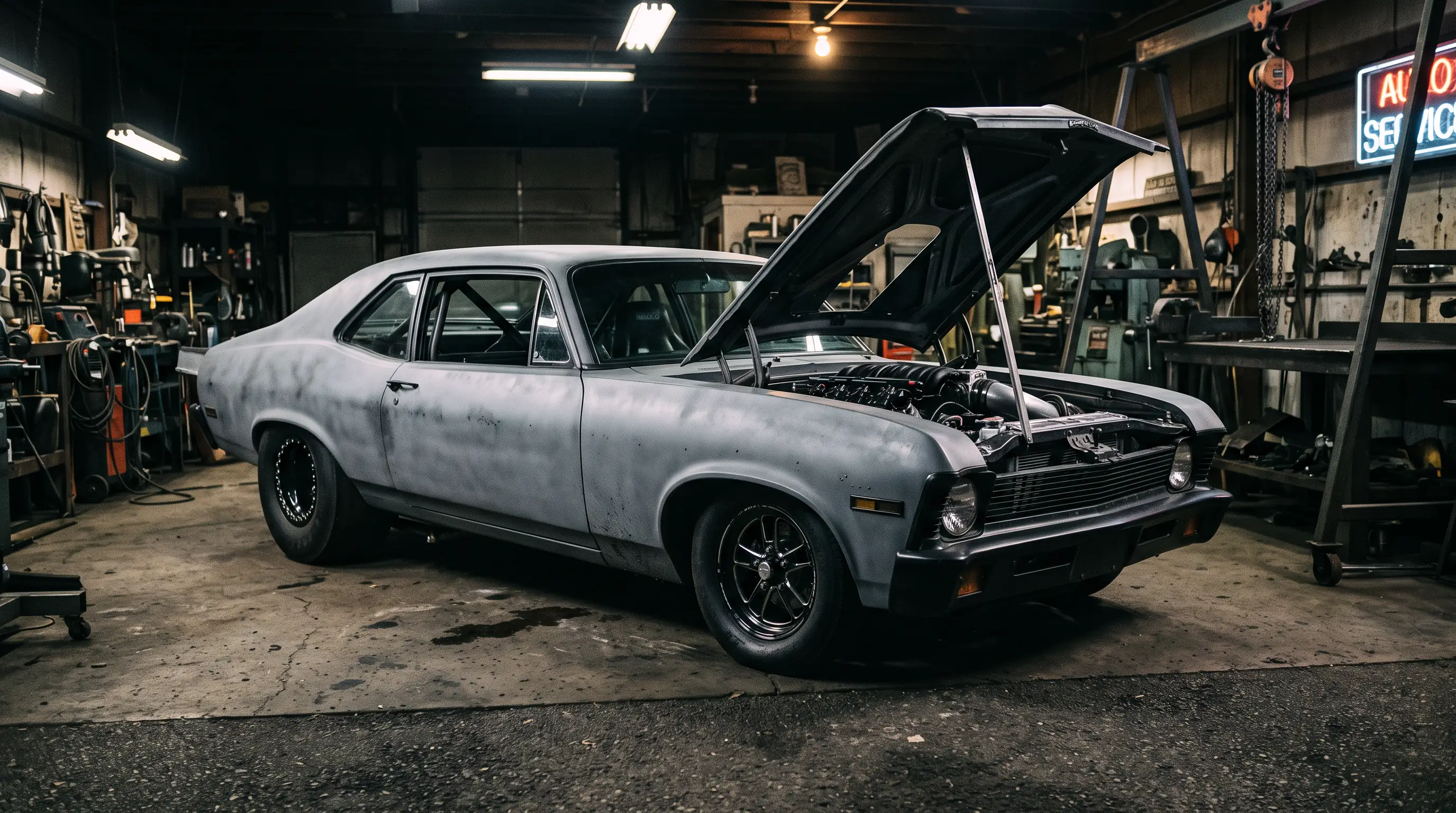
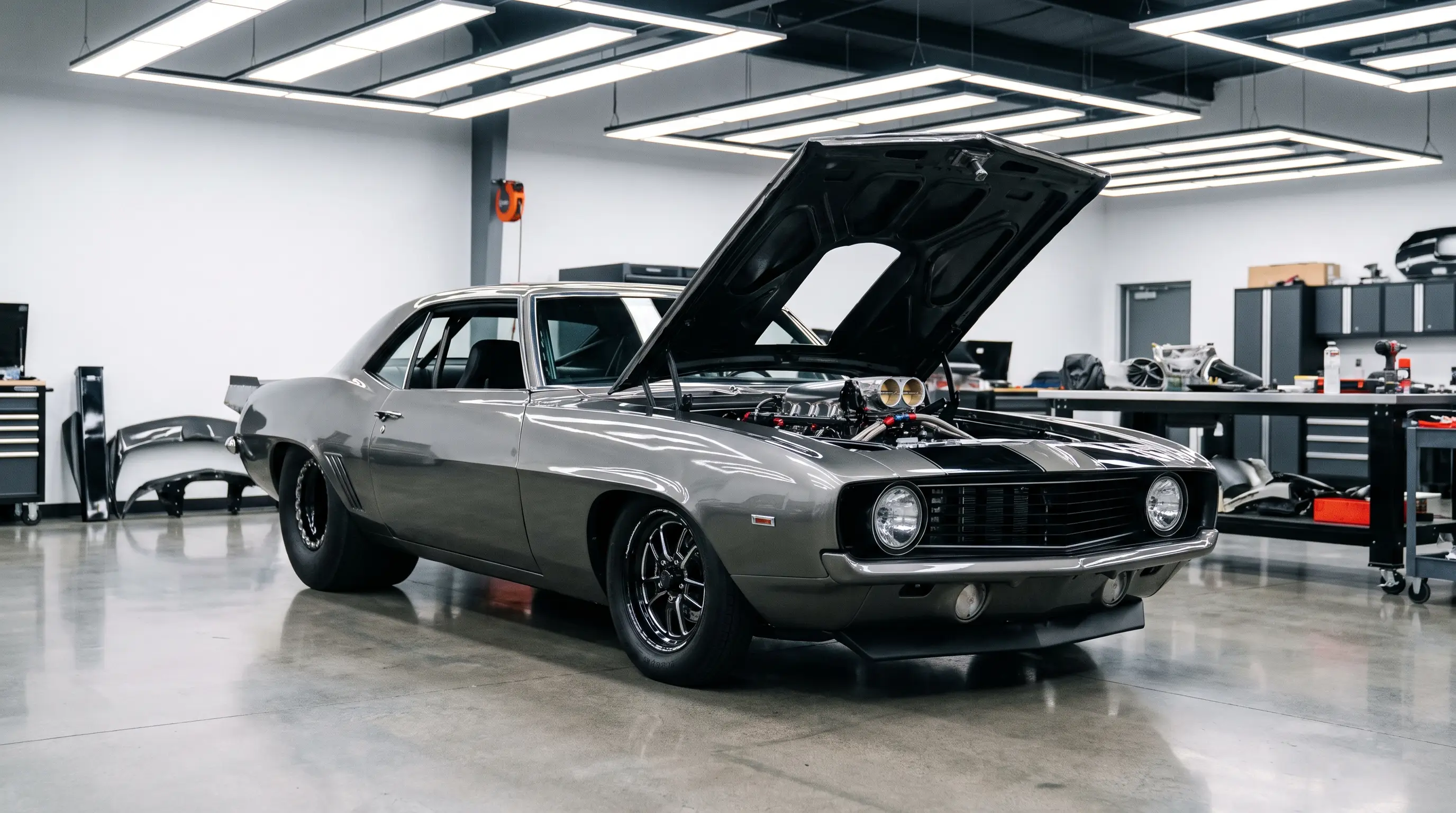
Ask ten guys building tubbed muscle cars whether a carburetor belongs under the hood and you'll get ten different opinions, sometimes from the same guy depending on which side of the argument he's had more coffee for. EFI pro street builds have become common enough now that the old debate has mostly settled into a truce, but it took a while to get there, and the two camps still needle each other at every show.
Where the resistance came from
Pro Street cars were built during an era when carburetors were simply what you had. There was no realistic alternative for a home builder chasing big horsepower on a budget, and the style's whole visual and mechanical identity got wrapped up in that era's technology, big Holley carburetors, mechanical fuel pumps, points or early electronic ignition. When fuel injection started showing up on hot rods and muscle car builds in a meaningful way during the 2000s, a lot of traditionalists saw it as a betrayal of what the style was supposed to represent. To them, a Pro Street car without a carburetor visible under the hood wasn't really a Pro Street car anymore, regardless of how the rest of the build looked.
What changed the calculation
Reliability is what eventually won a lot of skeptics over. A well tuned EFI system starts instantly regardless of temperature, doesn't need adjustment for altitude changes, and delivers more consistent fuel delivery under hard acceleration than most carburetors can manage without careful tuning. For builders who actually wanted to drive their cars regularly rather than trailer them to shows, that reliability mattered more than ideological purity about matching the original era's technology. There was also a practical emissions angle in some states, where EFI systems paired with catalytic converters made it easier to get a modified car through inspection than a carbureted setup with no emissions equipment at all.
How builders are blending old and new
The most common approach among current builders isn't choosing one camp entirely, it's finding a middle path. A tubbed 1969 Camaro might run a modern EFI intake and injectors hidden beneath a period correct looking air cleaner, preserving the visual language the style is known for while running technology that would have seemed like science fiction to the original builders. Others go the opposite direction, keeping the carburetor visible and functional but adding electronic ignition and a modern fuel pump to improve reliability without changing the fundamental fuel delivery system. Both approaches solve real problems, and which one a builder chooses usually comes down to how much they prioritize appearance at car shows versus year round drivability. For more on how this technology shift fits into the broader arc of the style's return, the full story traces the decades that led here.
"I ran carburetors for twenty five years because that's what you did. Switched to EFI on my own car six years ago and haven't touched a choke cable since. I still get grief for it at shows, and I still don't regret it."
- Mike Sullivan
The tuning difference matters more than people expect
One thing that surprises builders switching from carburetors to EFI for the first time is how different the tuning process actually is. A carburetor gets tuned mechanically, jets, needles, accelerator pump adjustments, all done by hand with feel and experience built up over years. An EFI system gets tuned through software, adjusting fuel maps and ignition timing on a laptop connected to the engine controller. Some old school builders who are excellent at carburetor tuning find the software side genuinely frustrating to learn, while others, especially younger builders who grew up comfortable with computers, pick it up faster than they ever mastered carburetor tuning. That skill gap has created a small but real market for tuners who specialize specifically in EFI setups for modified muscle cars, a specialty that barely existed when the original Pro Street era was in full swing.
Where things stand today
At this point, EFI pro street builds are common enough at shows that they rarely draw the kind of pointed criticism they used to. The debate hasn't disappeared entirely, and there's still a dedicated contingent that considers a carburetor non negotiable for anything claiming to be a true period style build, but the broader community has largely made peace with the idea that reliability and authenticity aren't mutually exclusive if a builder handles the visual details carefully. What used to be a genuine fault line in the hobby has settled into more of a personal preference, not unlike arguing over paint color.
For buyers weighing the tradeoffs themselves, there's real value in seeing both approaches side by side before deciding which fits your priorities, and you can browse classic Pro Street car listings that include both traditionally carbureted builds and modern EFI conversions currently on the market.
| Consideration | Carbureted setup | EFI setup |
|---|---|---|
| Cold start behavior | Requires priming, choke adjustment | Starts instantly at any temperature |
| Altitude compensation | Manual rejetting needed | Automatic through the engine controller |
| Tuning method | Mechanical, hands on adjustment | Software based, laptop and tuning maps |
| Period appearance | Matches original era look directly | Can be hidden under a traditional air cleaner |
| Emissions compliance | Harder to pass in stricter states | Easier when paired with a catalytic converter |
What this means for resale value
The fuel system choice has started showing up as a real factor in what buyers will pay, though not in the direction some traditionalists might expect. Cars advertised as reliable daily drivers with EFI often command a premium from buyers who want to actually use the car, while numbers matching or highly original carbureted builds appeal more to collectors focused on historical accuracy over usability. Sellers who understand which audience they're targeting tend to do better than those trying to market a car as appealing to both camps equally. A stealth EFI conversion, one that preserves the classic look while running modern injection underneath, often threads that needle best, since it can honestly be marketed to buyers on either side of the debate without misrepresenting what the car actually has under the hood.
The parts supply side has caught up
A decade ago, adapting a modern EFI system to fit under the low, tight hoodline of a Pro Street build often meant custom fabrication, cutting and modifying intake manifolds to clear a hood that was never designed with fuel injection in mind. That work is largely unnecessary now. Several aftermarket manufacturers produce EFI intake systems specifically profiled to clear low clearance hoods on classic muscle car platforms, and self learning engine controllers have made the tuning process far more approachable for builders without a background in software. What used to require either deep carburetor knowledge or a custom fabricated EFI solution has become, for most common platforms, closer to a bolt in proposition. That shift in parts availability is a big part of why EFI has gone from a niche choice to something close to a default option for anyone starting a fresh build today, even among builders who have no particular ideological stake in the carburetor versus injection debate.