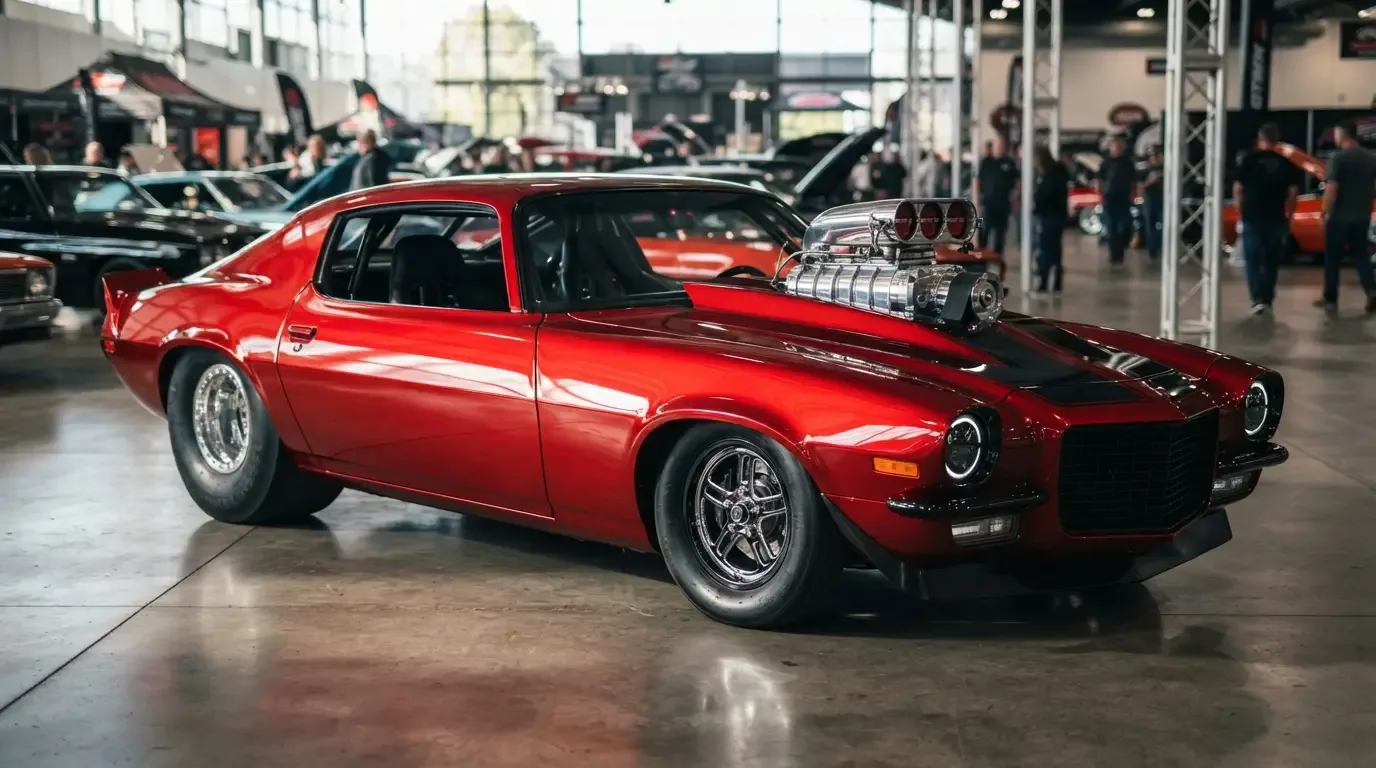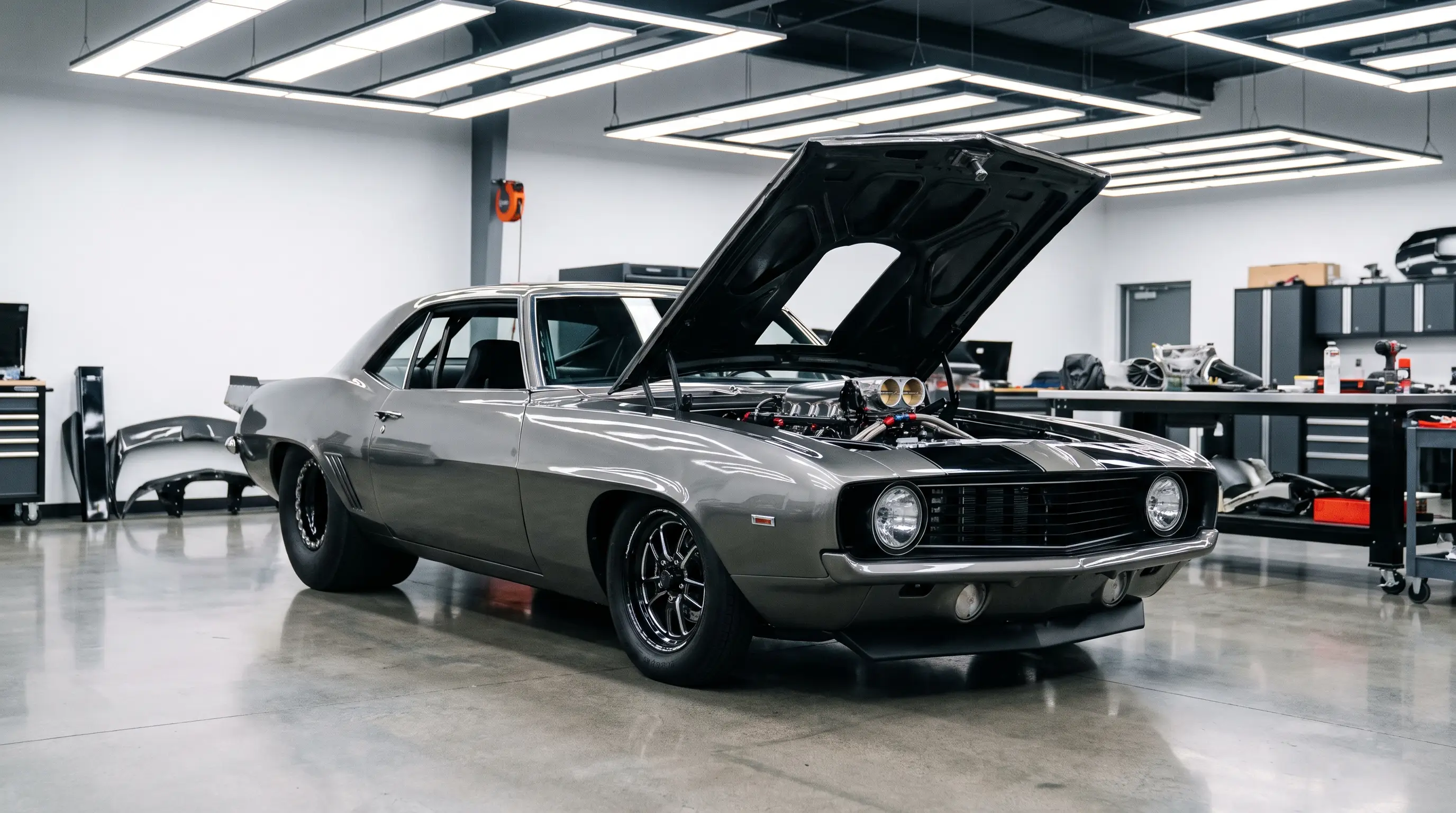
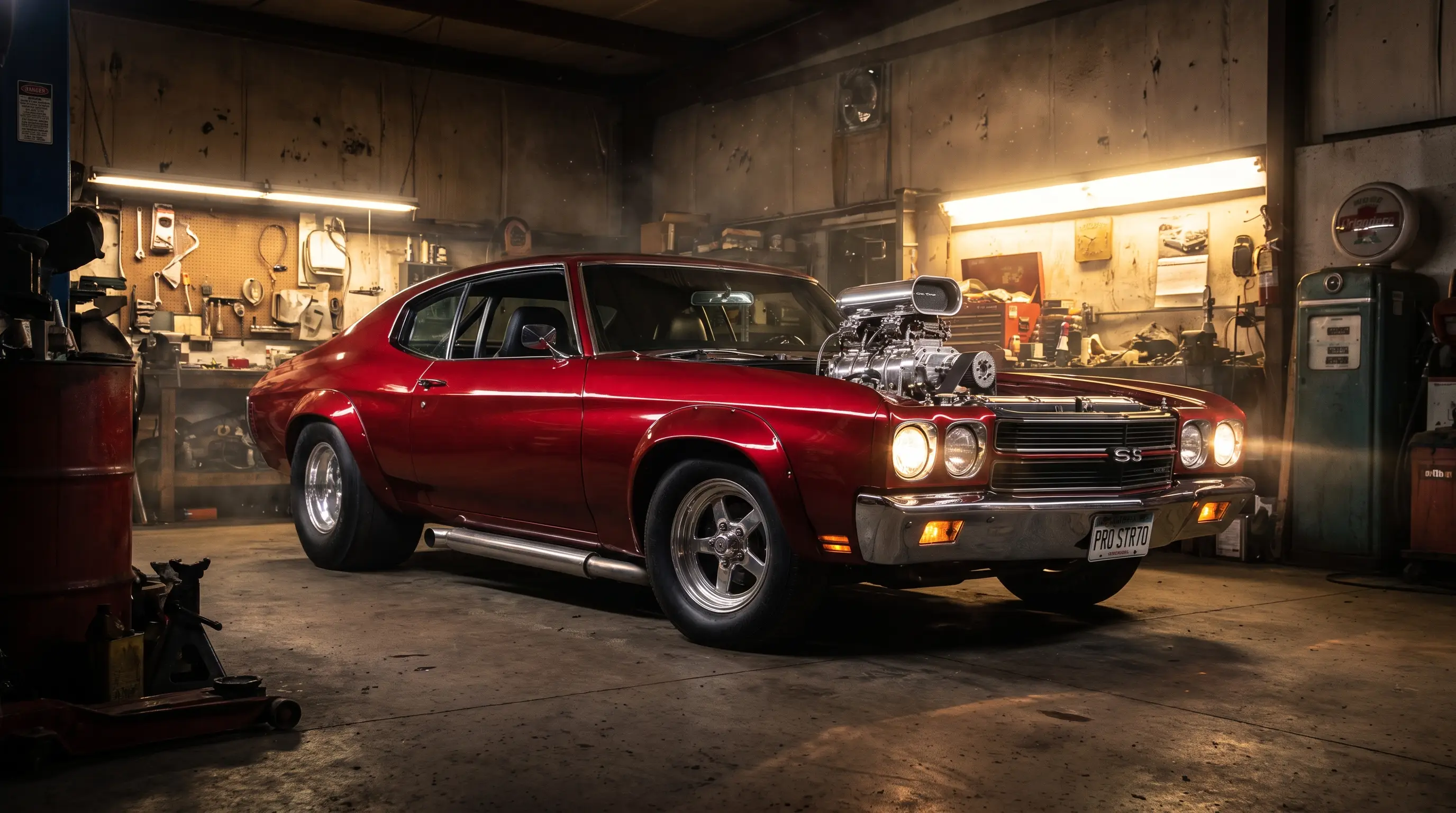
Ray, who's run the same little fabrication shop out of a pole barn since 1985, had a twenty two year old show up last spring asking him to teach her how to properly narrow a rear end for a tubbed 1970 Chevelle. He hadn't had anyone ask him that in a decade. Now he's got three young builders rotating through on weekends, and every one of them is chasing the same thing he chased forty years ago, a tucked front end and a wide rear stance sitting over the biggest tires that will fit.
A generation that skipped straight to the source
Young hot rod builders coming up now didn't grow up with Pro Street cars as the default style the way builders in the 1980s did. They found it the way people find most things now, through video, through forums, through older builders posting photos of cars they built decades ago. What's notable is that a lot of these newer builders skipped right past the trends that dominated the 2000s and 2010s, the clean pro touring look with big brakes and subtle stance, and went straight for the more dramatic, more polarizing tubbed look that older enthusiasts associate with the golden era. There's something almost contrarian about it, choosing the harder, more extreme style when plenty of easier paths exist.
Learning a skill that mostly lives in older heads
Tubbing a frame and narrowing a rear end correctly isn't something you learn from a single tutorial. It requires understanding how the changes affect suspension geometry, how much structural reinforcement a modified frame rail needs to stay safe, and how to keep everything square so the finished car actually drives straight instead of dog tracking down the road. Most of the people who know how to do this well learned it decades ago, either building their own cars or working in shops that specialized in it. That knowledge is not well documented in any single place, and a real gap has opened between what's easy to find online and what a builder actually needs to know to do the work safely.
Mentorship is filling the gap, informally
What's actually closing that knowledge gap isn't a course or a certification program, it's old fashioned mentorship happening at car clubs, swap meets, and small shops around the country. Builders who came up during the original era, often now in their sixties and seventies, are finding themselves in demand in a way they didn't expect. Some are taking on young apprentices formally. More often it's informal, a younger builder showing up at a shop with questions and sticking around long enough to actually learn by watching and doing. That kind of hands on transfer is slow and doesn't scale the way a video course would, but everyone involved seems to agree it's the only way the skill actually sticks. Anyone curious how this generational overlap fits into the bigger picture of the style's return can find where this started useful background on the decades that shaped both generations.
"I spent thirty years thinking nobody under forty cared how a rear end gets narrowed right. Turns out they just didn't have anyone around willing to show them. Once you show somebody once, they don't forget it."
- Wayne Coburn
Why the extreme look still resonates
There's a straightforward appeal to why younger builders are drawn to the full tubbed, big tired look rather than a subtler restomod approach. It's visually unmistakable in a way a lot of modern builds aren't. A pro touring car with an LS engine and big brakes can look, to an unfamiliar eye, like any other nicely done classic. A tubbed Pro Street car with a dramatic rake and massive rear tires reads instantly as something deliberate and extreme, and that visual boldness matters to a generation that discovered the style through short clips competing for attention against everything else on a phone screen. The style was built to be dramatic in person, at a drag strip or a car show, and it turns out that same drama translates well to a different kind of audience now.
What the next decade might look like
If the current pace of mentorship and interest continues, the skill set required to build these cars correctly has a real chance of surviving the retirement of the generation that originated it, something that looked far less certain ten years ago when interest in the style had genuinely faded. That's not guaranteed. Fabrication shops still close, and the specific expertise involved in tubbing and narrowing doesn't transfer instantly just because interest has picked back up. But the fact that shops like Ray's are seeing young builders show up asking the right questions is a meaningfully different situation than a decade ago, when a lot of that knowledge looked headed toward disappearing along with the people who held it.
For anyone inspired to start down this path themselves, buying an existing tubbed car and learning from studying how it was built is often a faster education than starting from a bare frame, and there's a real market of options if you're looking at a classic Pro Street car for sale as a starting point rather than a blank canvas.
The tools and materials gap has narrowed
One thing working in favor of young builders today that didn't exist for the previous generation is access. Fabrication equipment that used to require a well equipped commercial shop, tube benders, plasma cutters, decent welders, is now available at a price point an individual builder can reasonably afford. Online communities, whatever their limits when it comes to teaching hands on judgment, are excellent for sourcing hard to find parts, comparing notes on suppliers, and figuring out which reproduction components are actually worth buying versus which ones are better skipped in favor of hunting down originals. That combination, better tool access paired with informal mentorship for the judgment calls that tools alone can't teach, is arguably a better setup for learning this specific craft than existed even during the original golden era, when a lot of builders were figuring things out through pure trial and error with far less reference material available.
Clubs are actively recruiting younger members
Several long running street machine and hot rod clubs have noticed the demographic shift and started actively courting younger members rather than waiting for them to show up. Lower dues for members under a certain age, dedicated build nights where veteran members work alongside newcomers, and social media accounts run by younger club members specifically to reach an audience the older leadership couldn't have reached on their own are all becoming common. It's a pragmatic response to a real problem. Clubs that don't bring in younger members eventually stop existing, and the current wave of interest in tubbed, big tired builds has given a lot of these organizations their best recruiting opportunity in years.