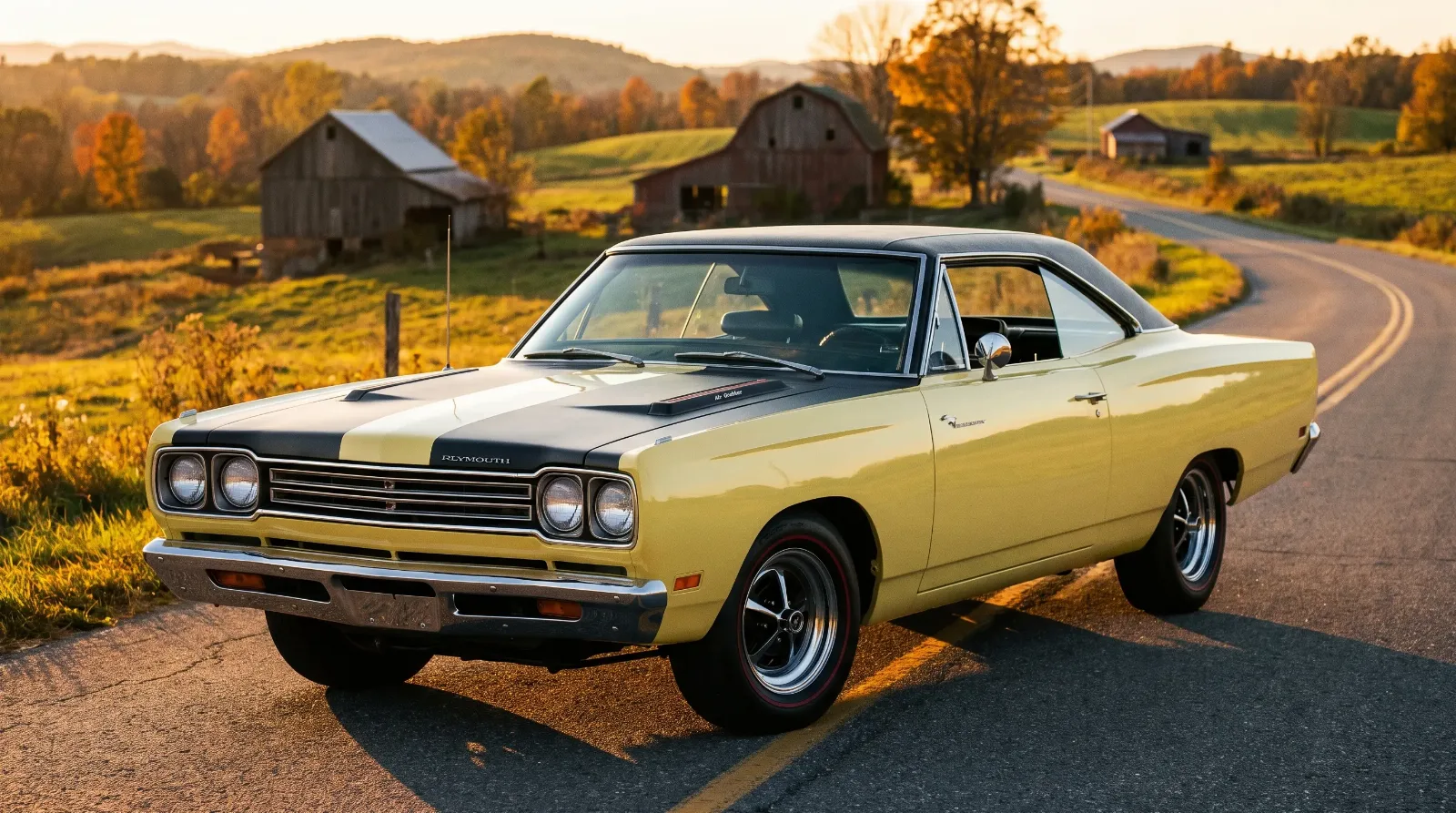
Every appraisal I write on a 1969 Road Runner value starts the same way, with a question the seller rarely wants asked. Not "how fast is it" or "how does it drive." The question is "what can you prove." Value in this segment is not really about the car sitting in the driveway. It is about the paper trail behind it, and the gap between a documented car and an undocumented one has only widened over the past decade.
The baseline number and what moves it
A solid, driver quality 383 four barrel hardtop in decent original or restored condition typically trades in the range of roughly $40,000 to $60,000 depending on region and documentation, based on recent auction and private sale activity. That is the floor for a real, correctly optioned car, not a project. From there, every variable adds or subtracts in predictable ways. Automatic versus four speed transmission matters less than people assume, since both had strong followings period correct to 1969. Body style matters more. Convertibles start from a materially higher baseline than hardtops given their scarcity, and that gap has widened rather than narrowed in recent seasons.
Engine option is the single largest lever on value. A documented 426 Hemi car moves into six figure territory almost automatically, provided the numbers hold up under scrutiny. The 440 Six Barrel, a mid year addition to the lineup, sits in a middle tier above the base 383 but below Hemi money, and it has become a favorite among appraisers precisely because it offers serious performance credibility without the eye watering price tag of the Hemi option.
Why documentation outweighs cosmetics in my appraisals
I have appraised cars with mediocre paint that outsold beautifully restored examples at the same auction, purely because the mediocre car had a broadcast sheet, a matching fender tag, and a clean title history back to the original selling dealer. Buyers in this market have gotten smart. A gorgeous respray can hide a replaced quarter panel or a clone drivetrain, and enough buyers have been burned that documentation now functions almost like a credit score for the car itself.
For readers who want the full context on how the model year came together, including production figures and the engine lineup, our 1969 plymouth road runner history lays out the background that any serious appraisal has to account for.
How condition grading actually works in practice
I use a simple internal framework when I walk around a car. Structural integrity first, meaning frame rails, torque boxes, and floor pans free of prior rust repair done poorly. Mechanical originality second, meaning the block, heads, and transmission match what the fender tag claims. Cosmetic condition comes third, which surprises a lot of sellers who assume a fresh paint job is the main event. It rarely is. I have walked away from beautifully painted cars because the structural inspection turned up filler in the torque boxes, a repair that quietly guts long term value no matter how good the paint looks under showroom lighting.
Interior condition factors in too, though it carries less weight than the drivetrain and body. A worn but original bench seat interior can actually appraise higher than a reupholstered one if the original material is intact enough to prove authenticity, since reproduction vinyl, however well made, is still a reproduction.
| Engine option | Approximate value tier |
|---|---|
| 383 four barrel (base) | Entry tier, most liquid segment of the market |
| 440 Six Barrel | Mid tier premium over base, strong performance credibility |
| 426 Hemi | Top tier, six figure territory when fully documented |
"I have never once regretted turning down a beautiful car with a shaky paper trail, and I have never once regretted paying a premium for a rough car with a clean one. Value in this hobby is a documentation problem wearing a paint job."
- Marcus Feld
Reading auction results without getting misled
Publicized hammer prices from major auction houses tend to skew toward the top of the market, since those are the cars worth televising. A buyer using headline auction results as their sole benchmark for a 1969 Road Runner value will consistently overestimate what a typical, non show quality car is actually worth. I recommend cross referencing several private sale platforms and regional club newsletters against the auction house numbers before forming an opinion on fair market value for a specific car.
Readers curious about the mechanical side of the story, including how the Six Barrel option came to exist mid year, should look at a related story covering that piece of the model's history in more depth.
What I tell clients before they buy
Get an independent inspection from someone with no financial interest in the sale, verify the fender tag against the actual equipment on the car, and budget for a pre purchase compression test on any engine claimed to be numbers matching. None of that is glamorous advice, but it is the difference between owning an appreciating asset and owning an expensive lesson. For buyers ready to act, current Runners for sale now span the full range from project cars to documented, show ready examples, and the price spread between them tells you almost everything about where the real risk sits in this market.
Where insurance and appraisal intersect
Agreed value insurance policies, standard practice for collector cars in this price range, require a written appraisal that most underwriters will not accept without supporting photos of the fender tag, engine casting numbers, and VIN stampings side by side. I have had clients push back on this requirement, thinking it excessive for a car they intend to drive occasionally rather than trailer to shows. My answer is always the same. The appraisal that satisfies your insurer is the same appraisal that protects your resale value, so there is no real argument for skipping the paperwork just because the car will see some road miles.
Storage and use patterns also factor into how I weight condition during an appraisal. A car that has spent thirty years in a climate controlled garage with occasional weekend drives will show differently than one used as a semi regular driver, and buyers should expect appraisers to note that distinction explicitly rather than treating all "good condition" claims as equivalent.
The honest bottom line on value
1969 Road Runner values have climbed steadily rather than spiking and correcting, which is itself a signal of a mature, well informed buyer base rather than speculative frenzy. That stability is good news for anyone buying to keep rather than flip. It also means shortcuts get punished. A car with gaps in its documentation will underperform its cosmetically identical, fully documented twin at every resale point down the line, and no amount of fresh paint changes that math.