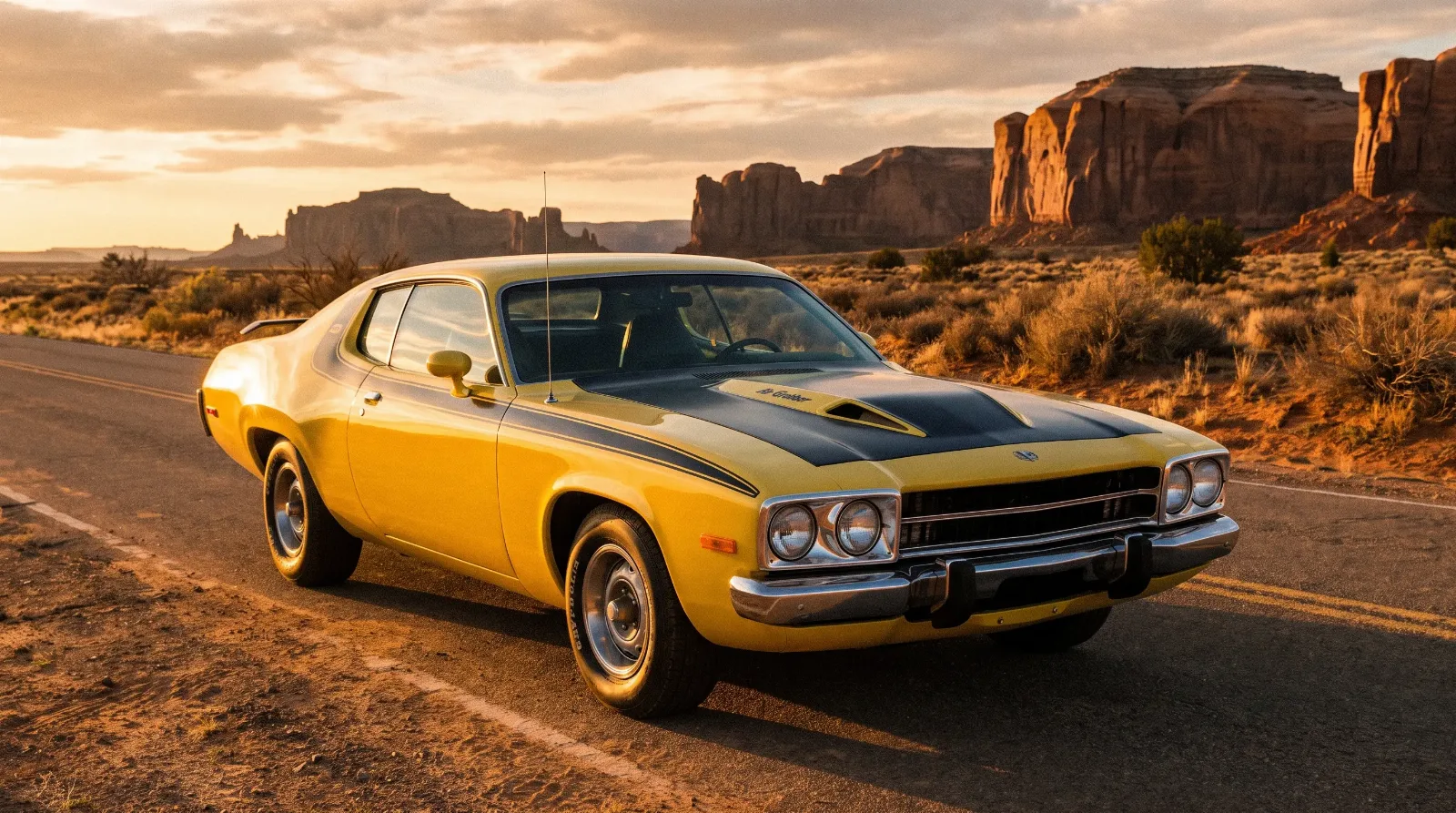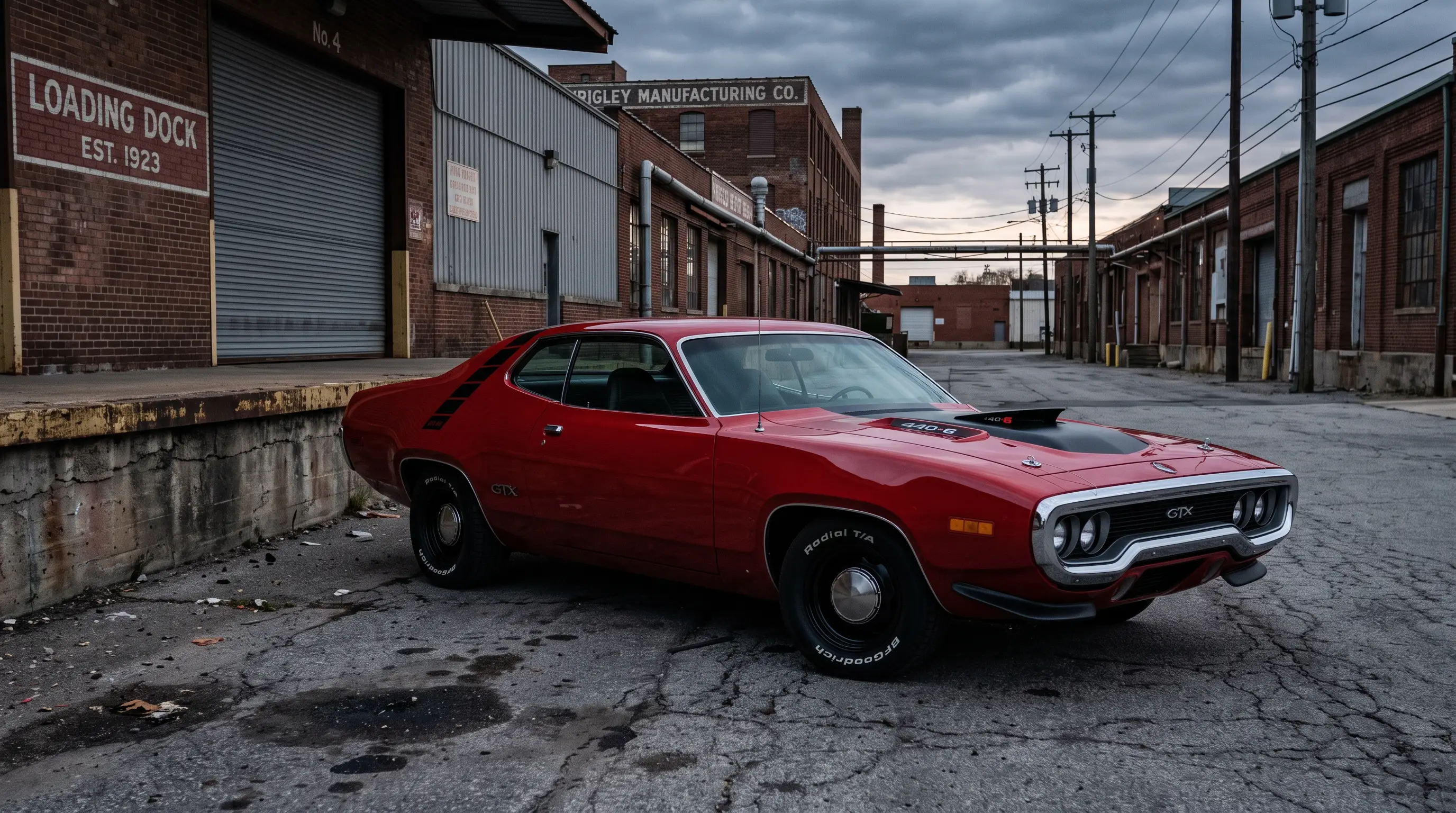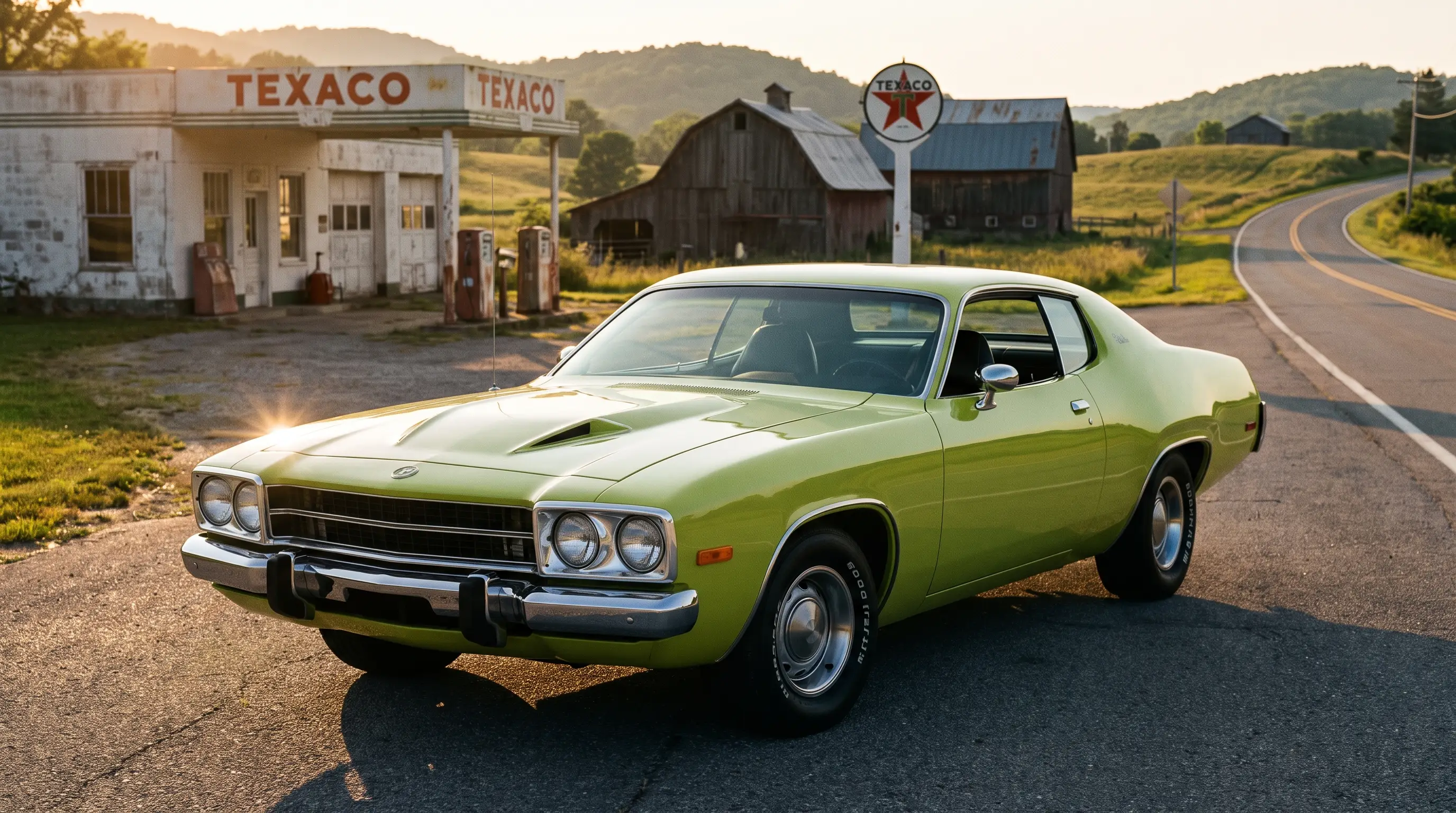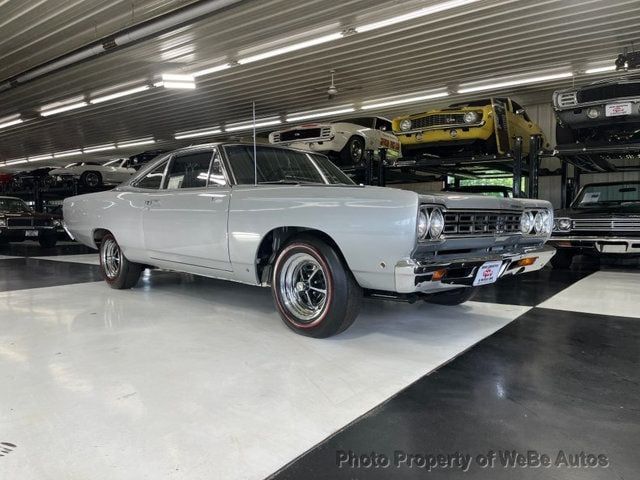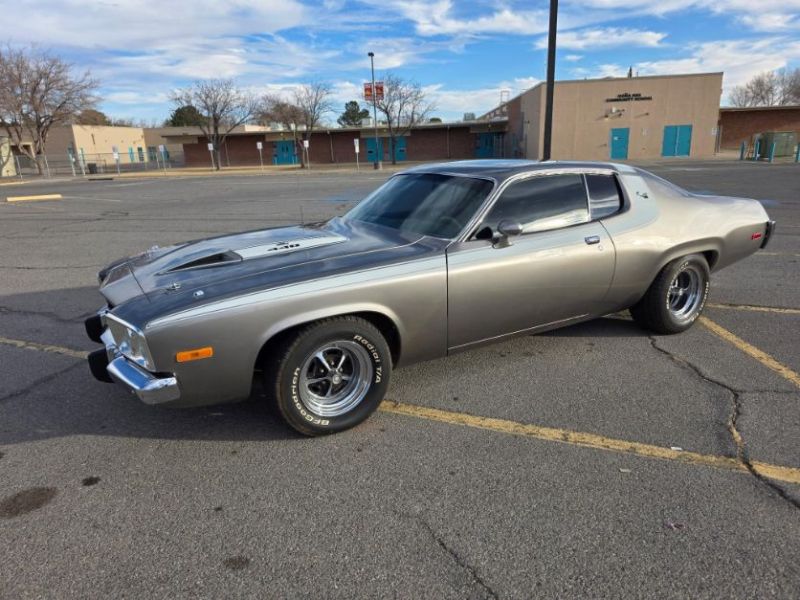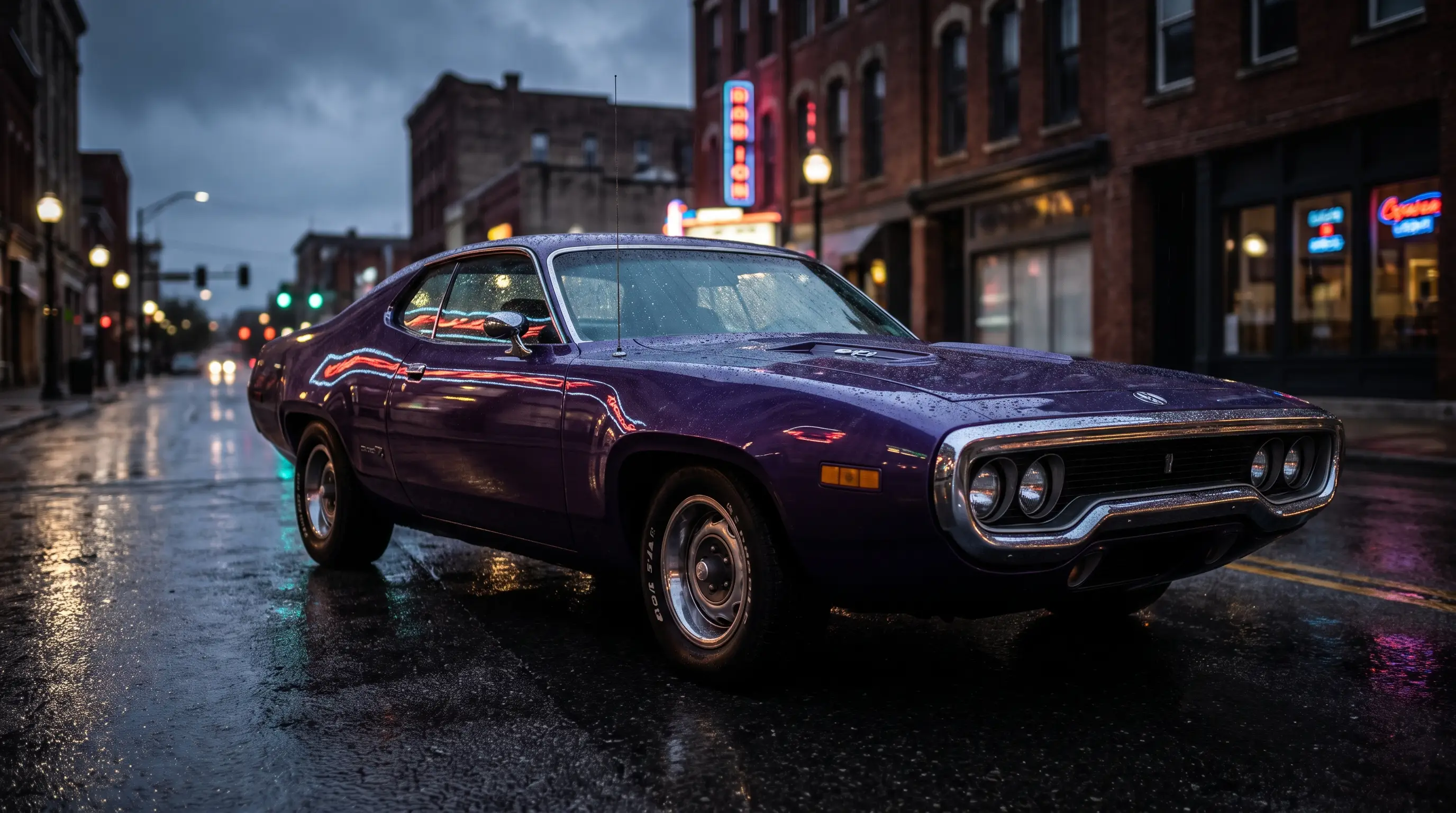
The 1971 Road Runner is the year Plymouth stopped pretending the muscle car needed to look like anything else on the lot. Where the 1968 through 1970 cars borrowed their shape from the Belvedere and Satellite lines around them, the 1971 Road Runner rode on an entirely new "fuselage" body, a design language that had already reshaped the full size Fury and was now handed down to the intermediate coupe. The change was not cosmetic tinkering. It was a full rethink of what a Chrysler B body was supposed to look like, and it landed on showroom floors at the exact moment the muscle car era began to run out of runway.
What "fuselage" actually meant
Chrysler's stylists borrowed the term from aircraft design, and it was more than marketing language. The fuselage look meant a body with rounded, barrel sided flanks, glass that curved into the sheet metal rather than sitting flush against a flat panel, and a beltline that swept without the hard creases of the previous generation. On the 1971 Road Runner this produced a car that looked wider and lower than its predecessor even though the wheelbase barely moved. The nose grew a split grille with a raised center divider, the taillights shrank into a narrow strip, and the whole car took on a heavier, more sculpted presence than the crisp, almost slab sided 1970 model it replaced.
Not every enthusiast loved it at the time. Some Mopar buyers who had grown attached to the boxier 1968 to 1970 shape thought the fuselage cars looked bloated, and sales figures backed up some of that skepticism. Plymouth built roughly 14,218 Road Runners for 1971, a steep drop from the more than 80,000 built in 1969, the model's all time production peak. Part of that decline was the fuselage restyle landing awkwardly with traditional buyers, part of it was rising insurance premiums on anything with a big block under the hood, and part of it was simply that the muscle car boom had crested and was already sliding down the other side.
The cartoon face and the horn that still worked
Plymouth kept the Road Runner's signature gimmick, the Warner Bros licensed cartoon bird on the fenders and the "beep beep" horn, even as the body around it changed completely. That detail mattered more than it sounds. The Road Runner had always sold itself as the budget muscle car with a sense of humor, a Belvedere stripped of chrome and options in exchange for a big engine and a low price, and keeping the cartoon branding on a much more expensive looking fuselage body was Plymouth's way of insisting the car had not lost its identity even as its silhouette changed dramatically.
Underneath the new skin, the mechanical recipe stayed familiar. The standard engine remained the 383 cubic inch V8, now rated at 300 horsepower under the tightening SAE gross ratings of the era, with the 340 small block, the 440 Six Barrel, and the mighty 426 Hemi all still available on the order sheet, though Hemi take rate had shrunk to a genuine handful of cars. A three speed manual was standard, with a four speed or Chrysler's TorqueFlite automatic optional. The GTX still existed as a separate nameplate that year, though 1971 would be its last as a standalone model before it folded into the Road Runner lineup for 1972, a shift covered in a related story on this topic.
A one year only shape
What makes the 1971 Road Runner distinct within Chrysler's fuselage era is that it was a one year body style for this nameplate. Plymouth revised the sheet metal again for 1972, softening some of the more extreme fuselage curves and adopting a single round headlight setup in place of the stacked units used in 1971. That means the 1971 car, with its split grille and heavier fenders, is visually its own thing, not simply the first of a three year run. Collectors who know the model well can spot a 1971 from fifty feet by the grille alone, and that one year only status has become part of its appeal among people assembling a complete run of early seventies Road Runners.
The 1971 model year also arrived with a genuine styling outlier in the lineup, a High Impact color palette that included shades like Tor Red, Lemon Twist, and In Violet, hues that leaned hard into the psychedelic end of Detroit's color chart. On a fuselage body with its rounder surfaces, those colors read differently than they had on the crisper 1970 cars, catching light across the curves in a way the factory clearly intended buyers to notice on the showroom floor.
"You can date a Mopar within a year just from the nose, and the 1971 Road Runner has one of the most distinctive front ends Chrysler ever put on a B body. It only lasted a single season, and that is exactly why it stands out in the factory record."
- Tom Ramirez
Why the fuselage year matters to the bigger story
Understanding 1971 in isolation only tells half the story. It is the pivot year between the boxier first generation Road Runner and the leaner, emissions constrained cars that followed through 1975. For the full arc of how the model moved from a stripped down budget racer in 1968 to a much heavier, more compliance driven coupe by the middle of the decade, read our 1971 plymouth road runner history, which traces the entire fuselage generation model year by model year. The 1971 car sits at the front of that story as the moment Plymouth traded the old Belvedere based shape for something genuinely new, right before external pressures started reshaping the car from the outside in.
Production numbers for the fuselage era Road Runner never recovered to their late sixties peak, and 1971 in particular sits as a transition year that current collectors are still working out how to value. Cars with the 440 Six Barrel or the rare Hemi option carry real premiums, while base 383 cars remain comparatively accessible for buyers who want the fuselage look without chasing the rarest drivetrains. If you are considering adding one to a garage, Runners for sale now is a reasonable place to start looking, since surviving 1971 cars in good condition do not sit on the market long once buyers recognize what they are looking at.
The 1971 Road Runner never gets the attention that the 1968 original or the Hemi cars from 1969 and 1970 receive, and that is a mistake. It is the year Plymouth proved the Road Runner concept, a fast, affordable, cartoon branded coupe, could survive a complete change of skin and still sell on its own terms, even as the market around it started to shift beneath its wheels.
Sources and notes
- Plymouth Road Runner - Wikipedia
- 1971 Plymouth B-Body Registry - Production Figures
- Automobile Catalog - 1971 Plymouth Road Runner 383 specs
- TopSpeed - V8 Icons Revisited: The 1971 Plymouth Road Runner
- Road Runner Nest - 1971 & 1972 Plymouth B-Body Sunroof Cars
- Conceptcarz - 1971 Plymouth Road Runner