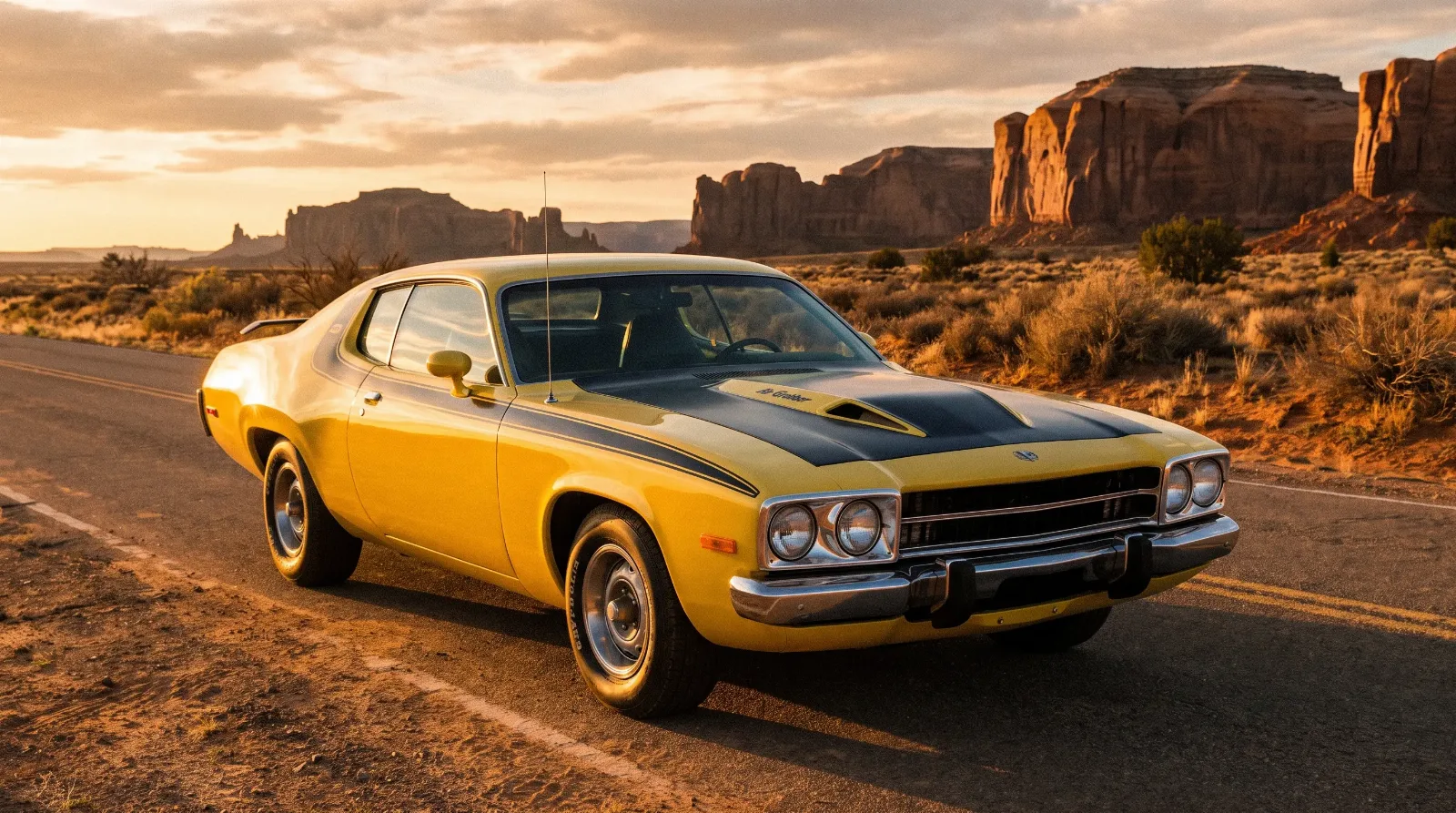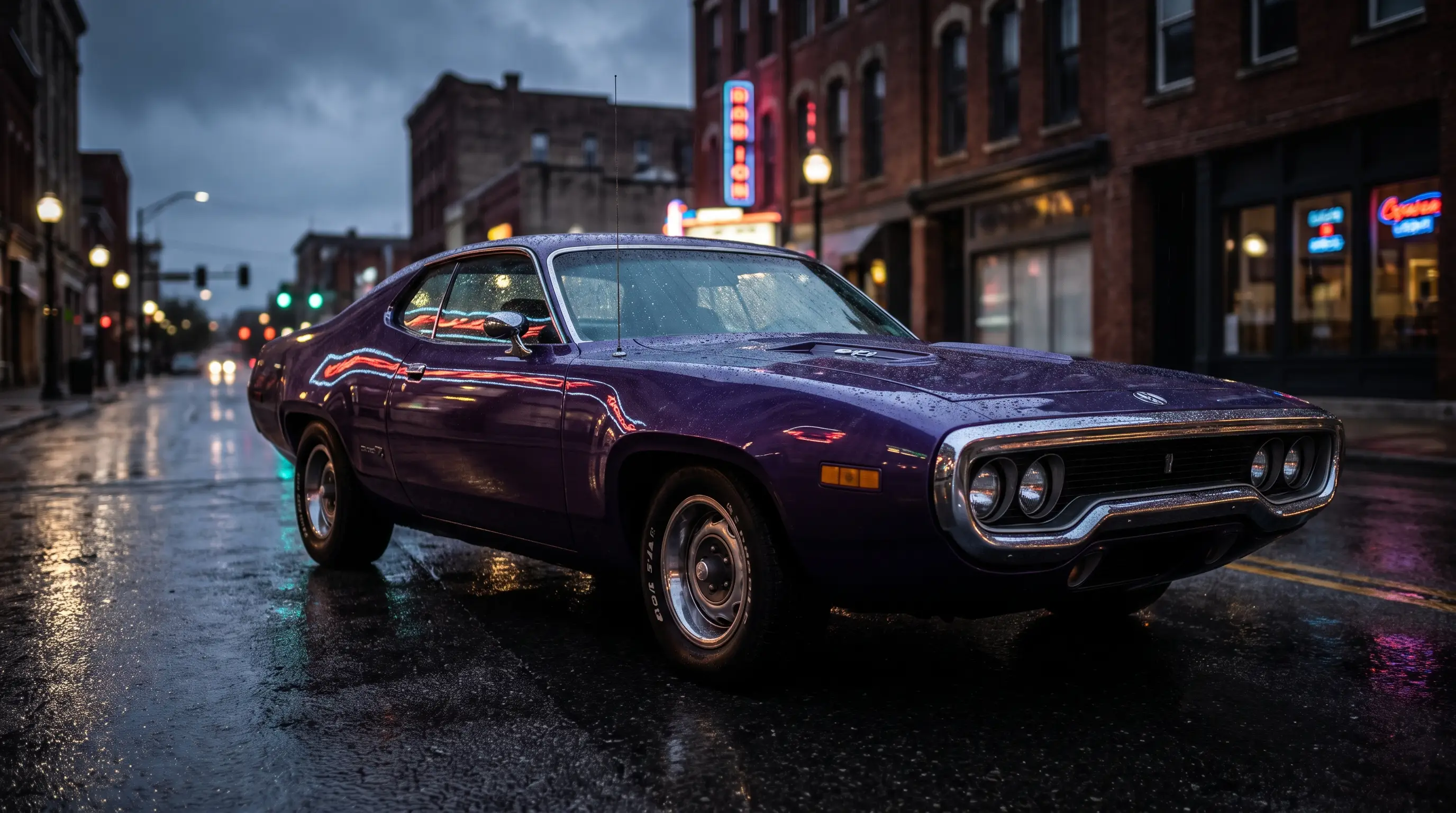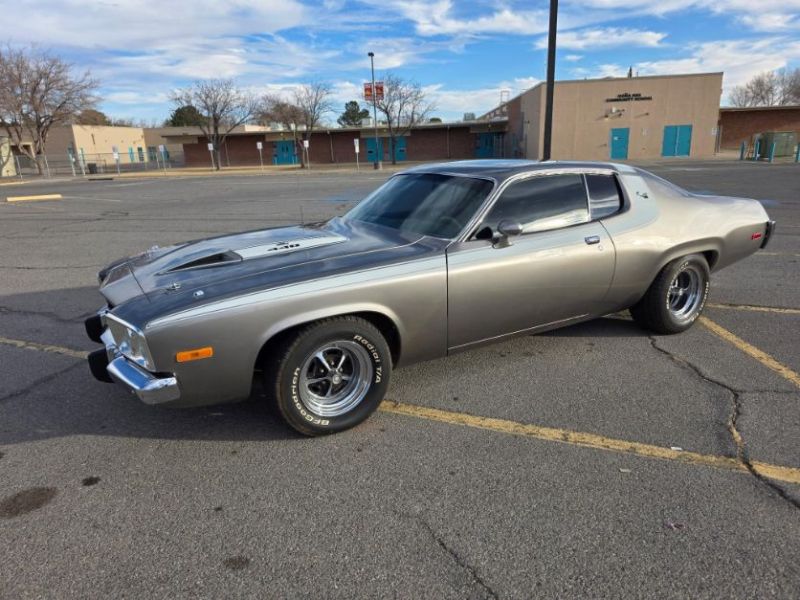
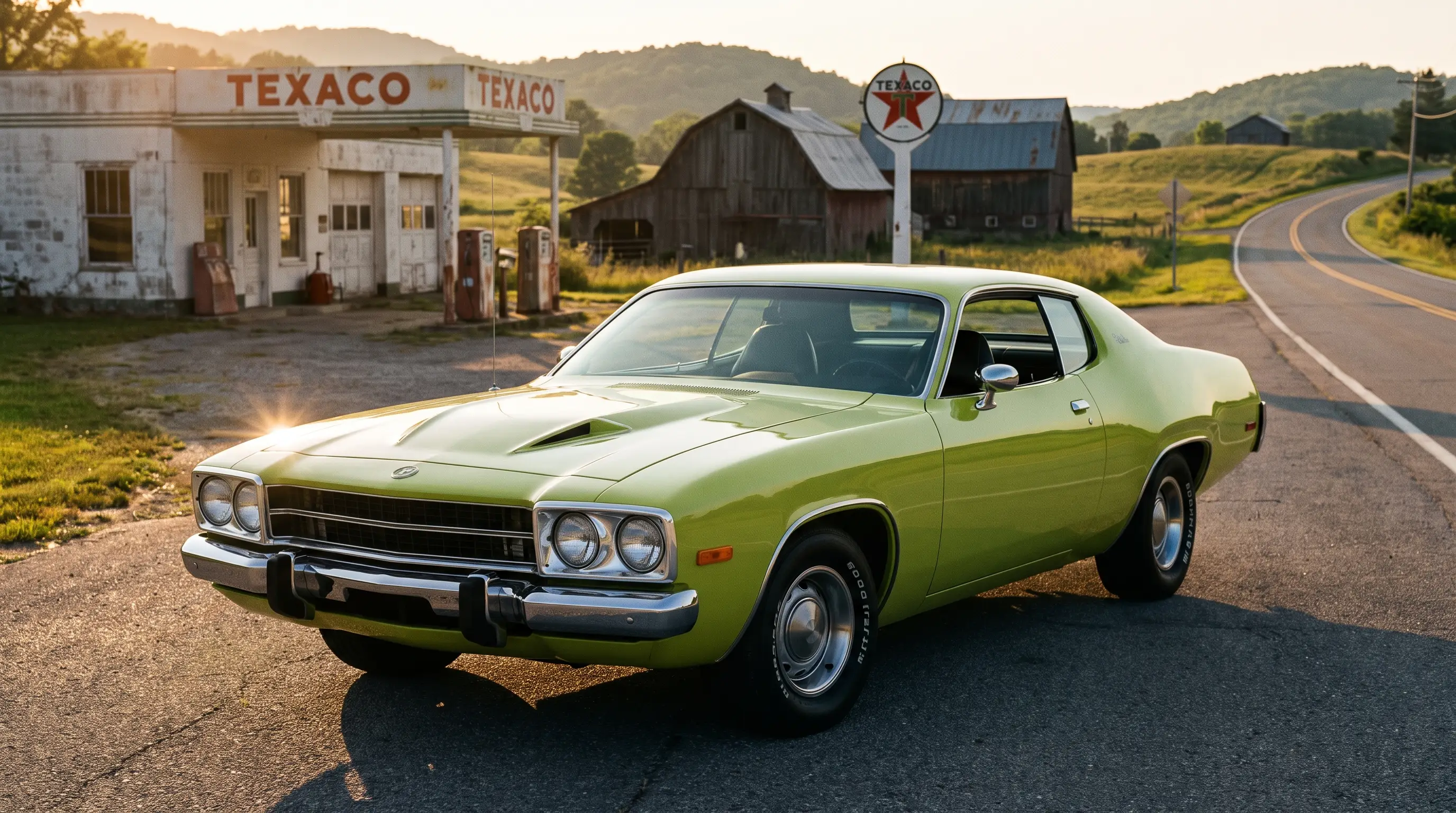
Every muscle car market has a discount aisle, and for the Plymouth Road Runner it is the 1972 through 1980 cars. These are the Road Runners built after the Hemi and the 440 Six Barrel left the option sheet, after insurance surcharges and net horsepower ratings reset what "performance" meant on a Chrysler showroom floor. They are also, dollar for dollar, some of the most underpriced classic Mopars a buyer can put in a garage today, and the gap between what they sell for and what the early cars command is worth understanding before anyone writes a check.
The number that sets the ceiling
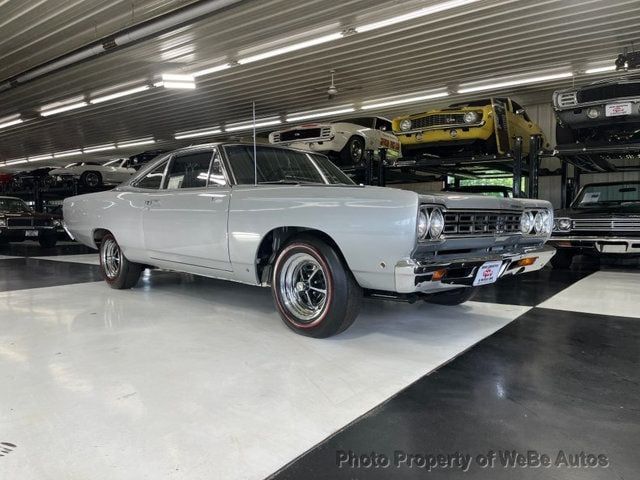
Start with the benchmark. A well-documented 1968 to 1971 Road Runner with a big-block or a Hemi routinely clears six figures at major auctions when the paperwork and numbers line up, and that ceiling has only pushed higher as buyers who grew up wanting these cars now have the money to chase them. That context matters because it is the number every later Road Runner gets measured against, fairly or not.
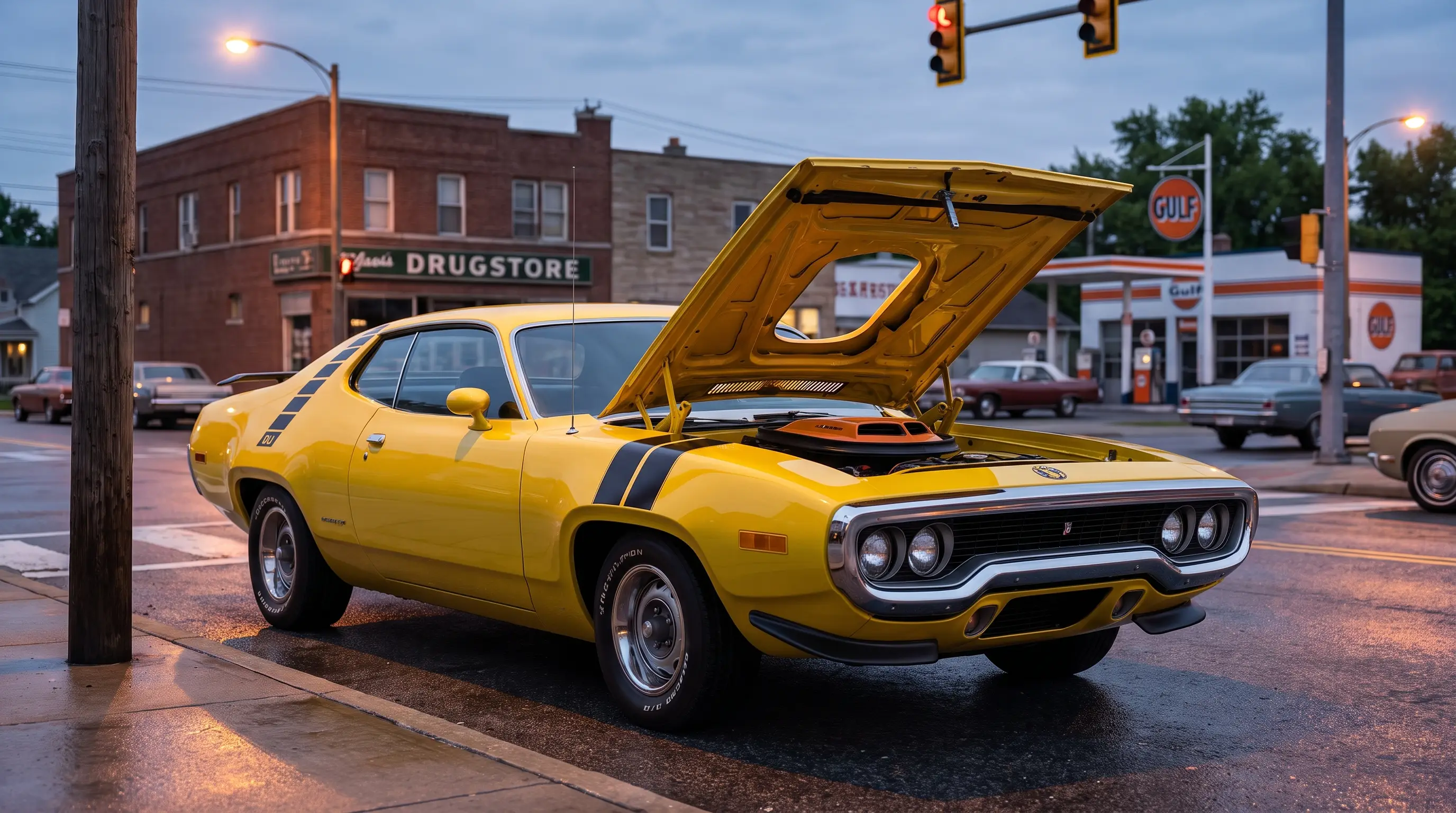
A 1972 road runner value tells a different story. A clean, running 1972 with the 440 four-barrel, the strongest option that year after the Hemi and 440 Six Barrel were dropped, typically trades in a much narrower and lower band, often well under half of what an early big-block car brings, even in comparable condition. That gap is not really about how the car drives. It is about what collectors have decided the badge is worth by production year, and that decision has been remarkably consistent for decades.
Why the gap exists
Part of it is simple mechanical fact. Net horsepower ratings adopted in 1972 made every engine look weaker on paper than the same basic hardware had looked a year earlier, even where the real-world loss was smaller than the numbers suggested. Emissions equipment, lower compression ratios for unleaded fuel, and the loss of the Hemi and 440 Six Barrel options all combined to make the early 1970s the visible turning point where the Road Runner stopped being the fastest thing in a Plymouth dealership and started being one of the better-looking mid-size cars on the lot.
Part of it is also cultural. Collector demand for muscle cars has always tracked as much on legend as on lap times, and the legend of the Road Runner was built almost entirely in 1968 through 1971. Cars built after that window inherited the name and, in many cases, a fair amount of the visual attitude, but not the same place in the story that enthusiasts tell each other.
| Model years | Top available engine | Typical collector positioning |
|---|---|---|
| 1968-1971 | 426 Hemi / 440 Six Barrel | Blue-chip, highest demand |
| 1972-1974 | 400 / 440 four-barrel | Mid-tier, undervalued relative to early cars |
| 1975 | 400 four-barrel | Transitional platform, thin collector base |
| 1976-1980 | 360 four-barrel | Entry-level, Volare-based appearance package |
What the later cars actually offer
A 1972 to 1974 Road Runner still rides on the same intermediate platform as the earlier cars, still carries real sheet metal and proportions that read as a muscle car from across a parking lot, and can still be optioned with a 440 four-barrel that moves with genuine authority even by net-rated standards. For a buyer who wants the shape, the badge, and a driving experience that feels closer to the golden years than the price tag would suggest, these years are close to the best value in the entire Road Runner lineage. Anyone who wants the 1971 plymouth road runner story in full should treat 1971 itself as the hinge year, the last one that combined the old engine range with the new fuselage body, which is exactly why cars from that single model year already command a premium over 1972.
1975 is its own transitional case, built on a platform shared with the Fury line as the Road Runner shifted from standalone muscle car to performance-flavored trim package. Collector interest in 1975 specifically remains thin, which keeps prices low but also keeps the pool of comparable sales small enough that valuations can swing more than in years with deeper trading history.
The Volare years: a different car entirely
From 1976 through 1980, the Road Runner name moved onto the compact Volare platform as an appearance and handling package, with a 360 cubic-inch four-barrel as the strongest available engine and horsepower figures that would have been unthinkable a decade earlier. These cars occupy the true bottom of the market. They are cheap to buy, cheap to run, and largely absent from major auction results, which makes pricing them more art than science. For a buyer purely chasing the name at the lowest possible entry cost, this is where that search ends. For a buyer who wants the car to still feel like a Road Runner in the way it drives, the 1972 to 1974 cars are the better answer.
"The early cars get the headlines, but the 1972 to 1974 Road Runners are where a real buyer with a real budget can still get an intermediate-platform Mopar with genuine presence for a fraction of Hemi money."
- David Mercer
Documentation still moves the needle
Even in the discount years, paperwork changes the price. A 1972 or 1973 Road Runner with its original fender tag, broadcast sheet, and clear ownership history will sell for meaningfully more than an identical-looking car with none of that, because the documentation is what lets a buyer confirm the engine and options are original rather than assembled later from parts. Given how few of these later cars survive with a full paper trail compared to the earlier, more heavily documented Hemi cars, a well-papered 1972 to 1974 example is scarcer, relative to its own model year, than most buyers assume.
Condition also carries more weight in this tier than it does at the very top of the market. A rough Hemi car can still sell on the strength of the engine code alone. A rough 400 or 440 car has no such safety net, so rust, mismatched paint, and interior wear translate directly into a lower number rather than getting absorbed by the desirability of the drivetrain.
The buy call
My take: a documented, rust-free 1972 to 1974 Road Runner with the 400 or 440 engine is a buy, not a speculation. The downside is limited because prices are already low relative to the car's size and presence, and the upside case is straightforward, this generation has been overlooked for so long that it has real room to close some of the gap with the early cars as buyers get priced further out of Hemi territory. The 1975 cars I would treat as a hold rather than a chase, since the thin trading history makes it harder to know what a fair price actually looks like. For anyone assembling a shortlist, it is worth scanning classic Runners on the market across several model years side by side rather than anchoring on one, and worth reading the full story of the nameplate before deciding which era actually fits the budget and the goal.