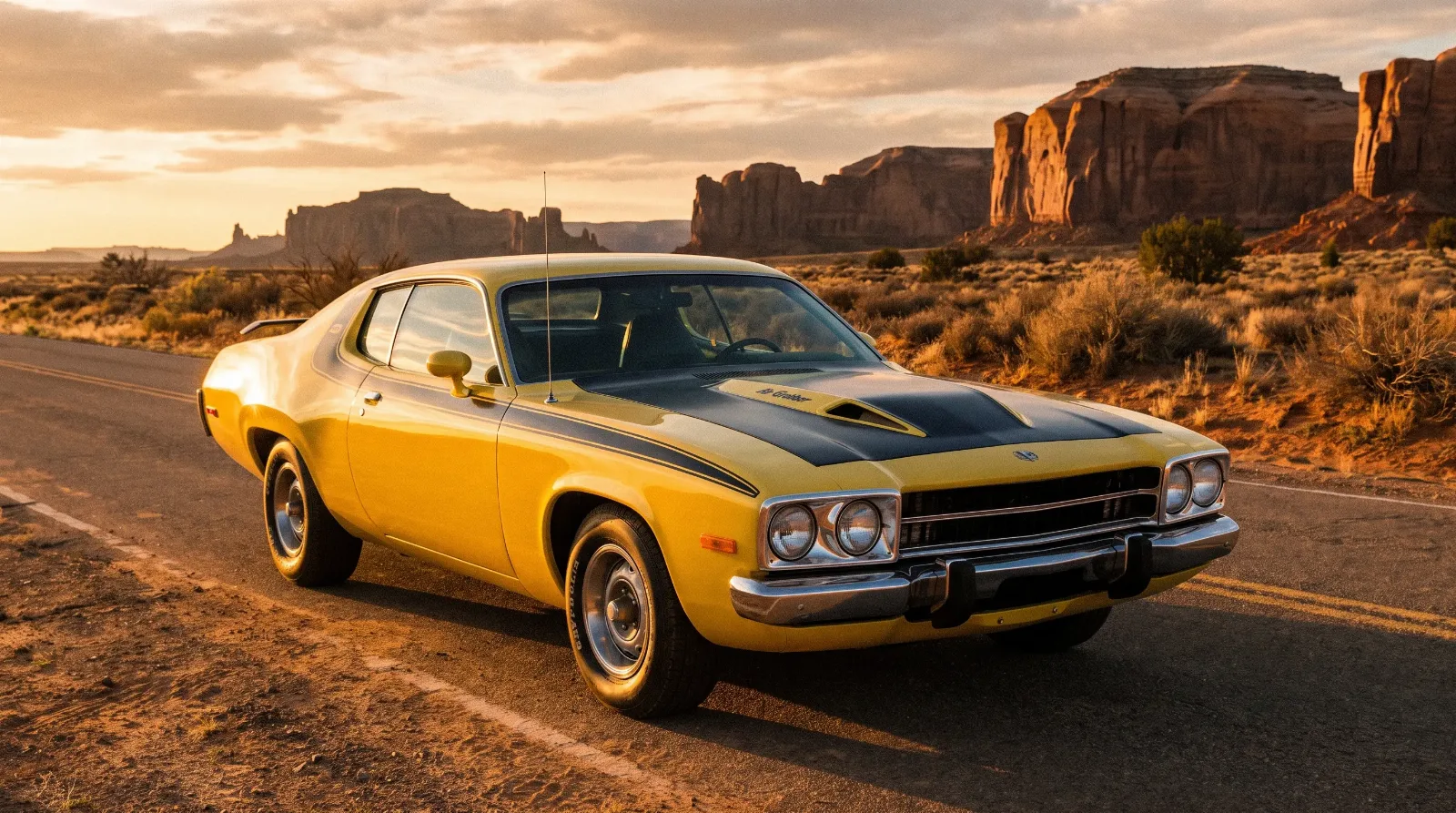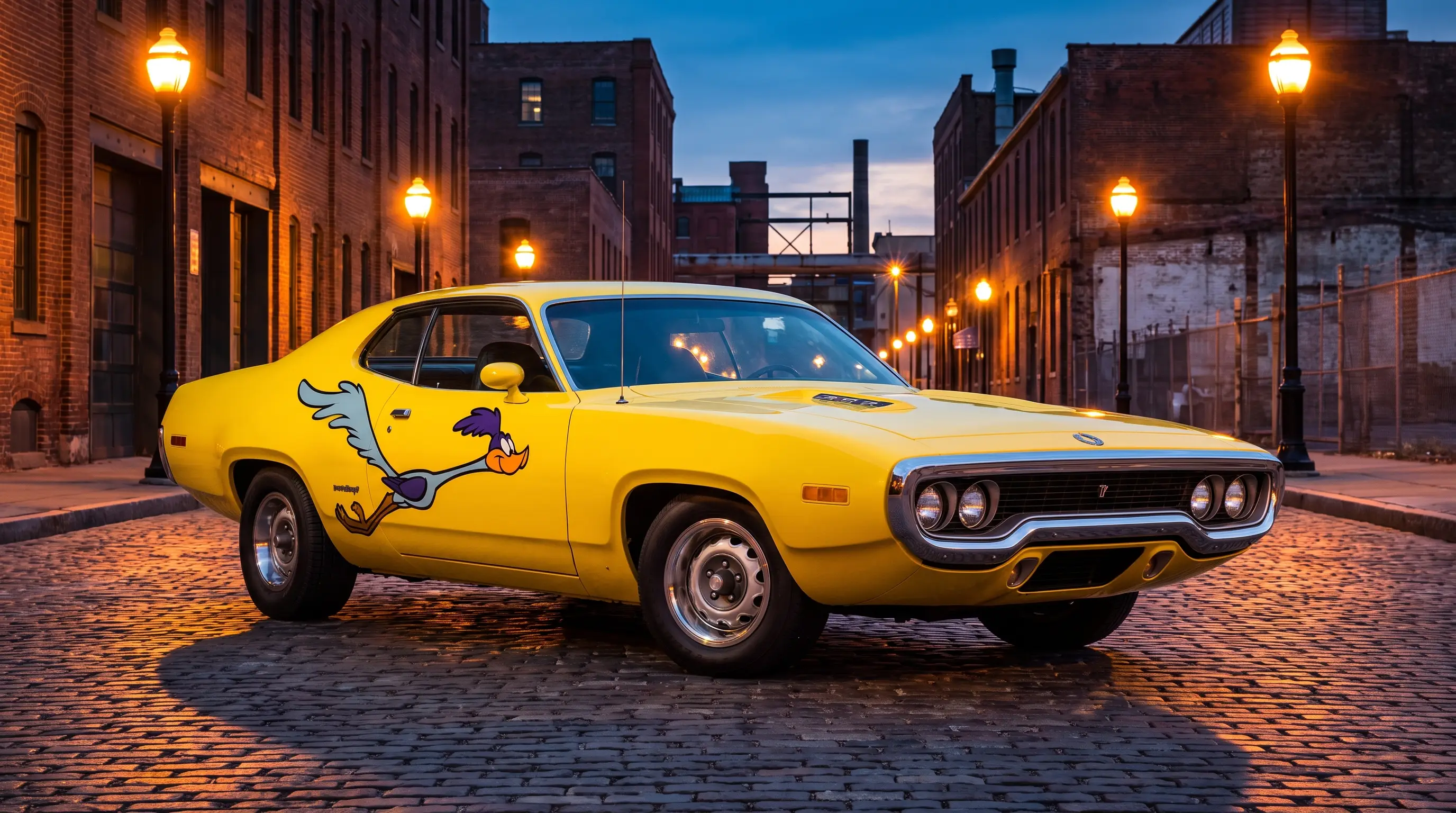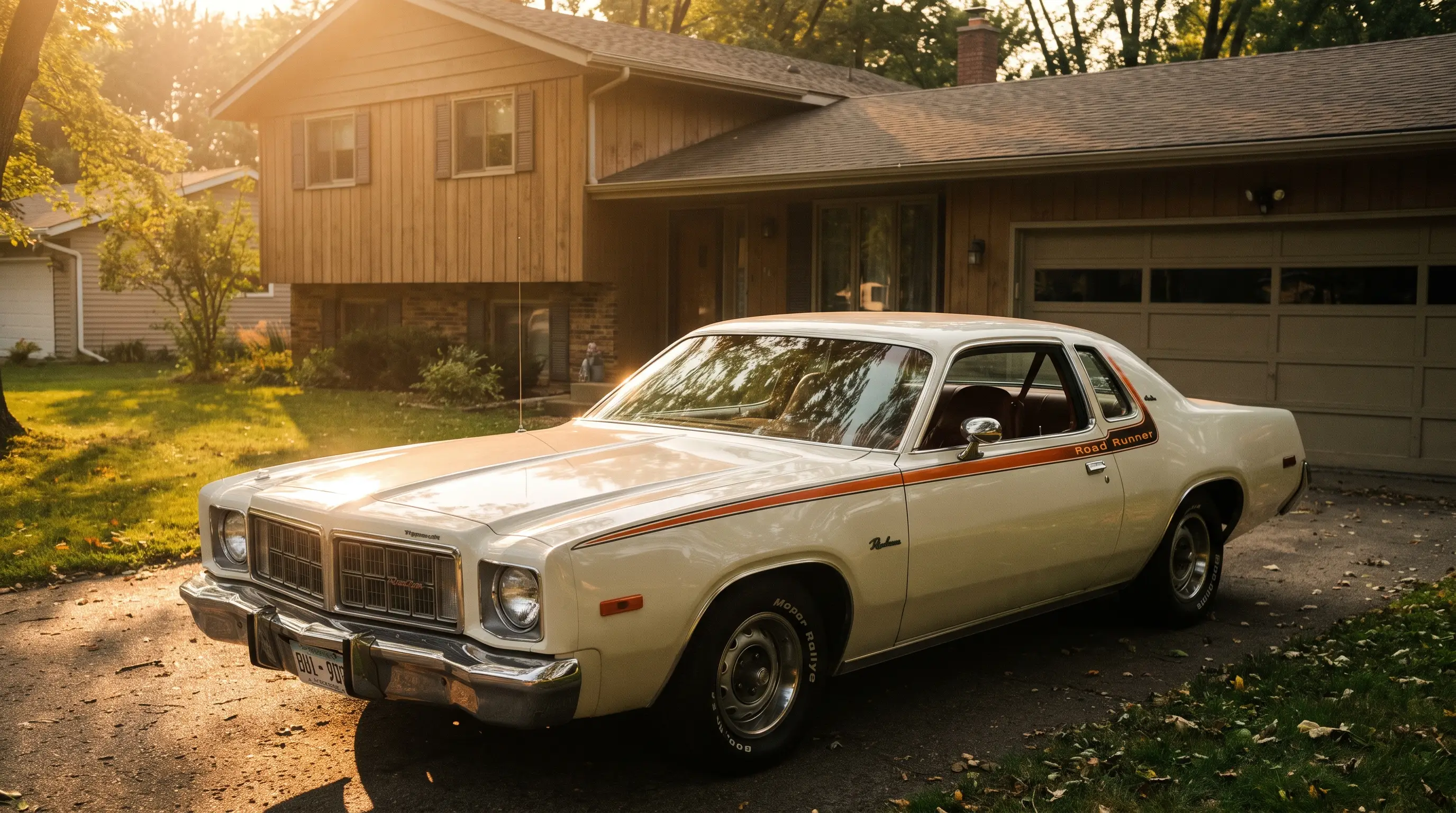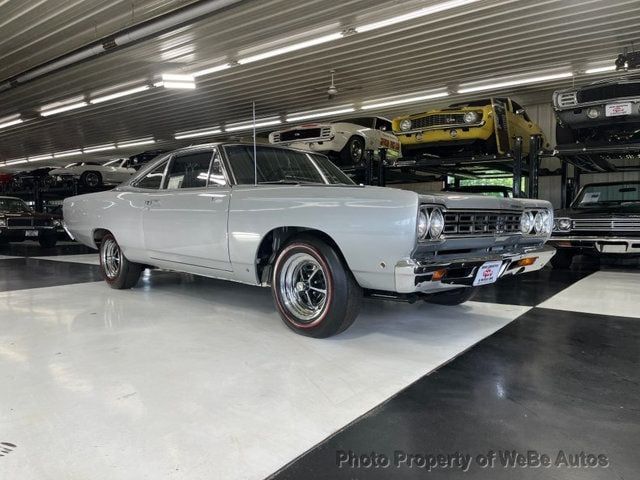
The 1973 Plymouth Road Runner marked the point where federal regulation stopped being a background concern for Chrysler's engineers and became the dominant force shaping the car. New bumper impact standards, tightening emissions rules, and a compression squeeze that had been building for several years all converged on the Road Runner at once, and the 1973 and 1974 model years absorbed the changes in a way that reshaped the car's proportions, its performance figures, and ultimately its reputation among buyers who remembered the earlier, more aggressive versions.
The bumper that changed the face of the car
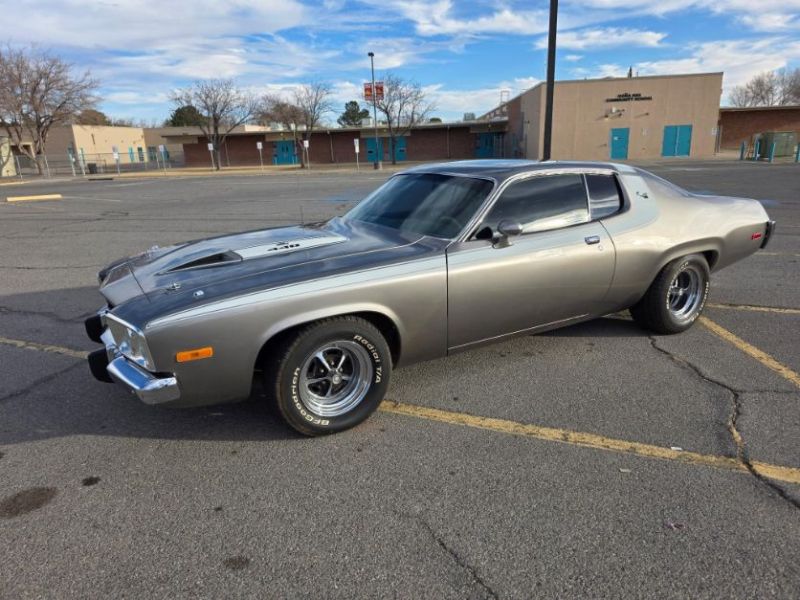
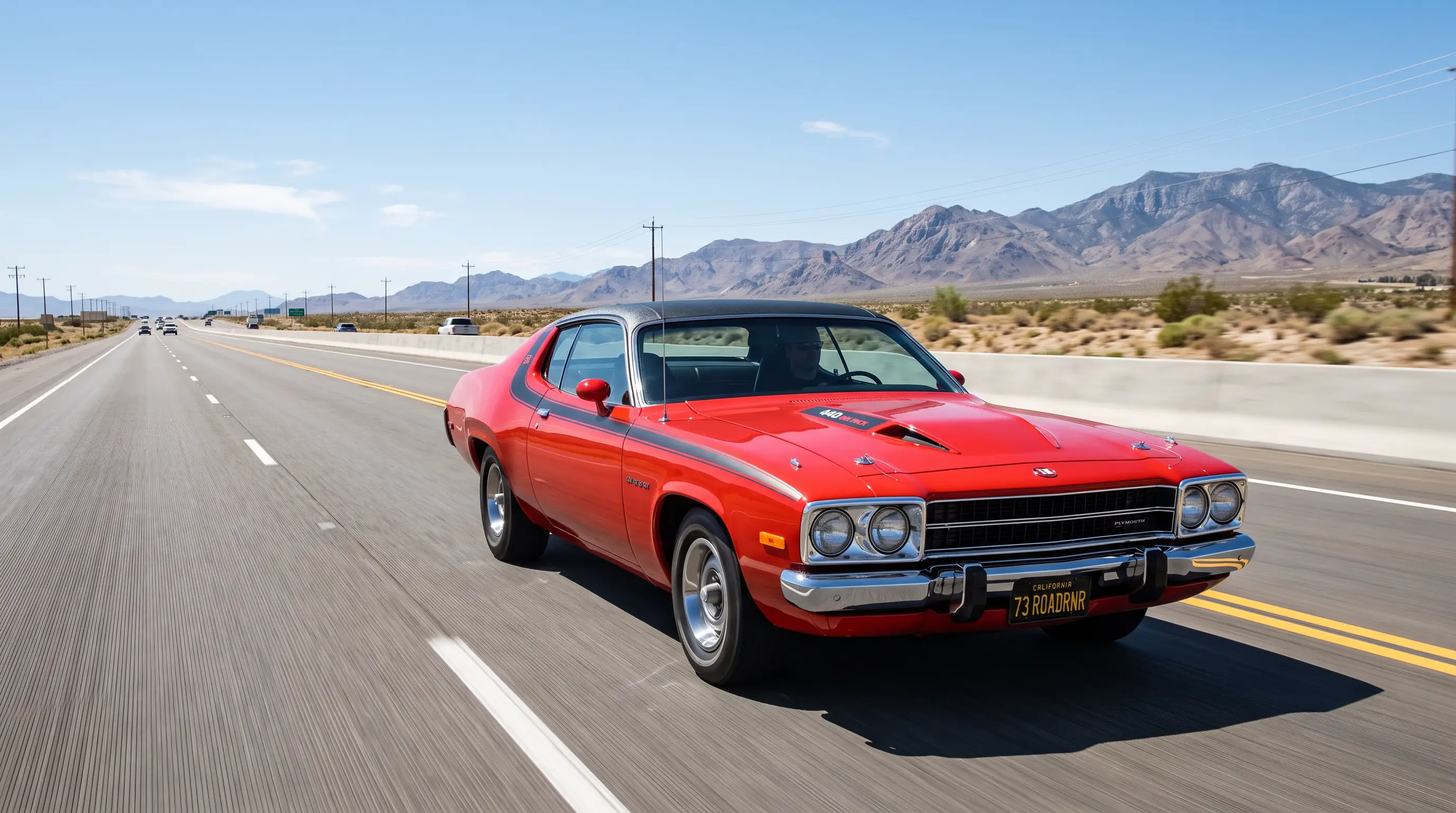
Federal regulation required all 1973 model year passenger cars to withstand a five mile per hour front impact without damage to safety related equipment, and Chrysler's engineers met that standard with a reinforced front bumper mounted on energy absorbing brackets that pushed the nose of the Road Runner out several inches beyond where it had sat in 1972. The rear bumper received similar reinforcement for 1974 when the standard extended to both ends of the car. The result was a Road Runner that looked noticeably heavier at the front than the 1971 and 1972 models, with a more substantial looking chrome bumper that some buyers at the time read as a step toward luxury car styling and others read simply as bulk added for compliance reasons rather than design intent.
The styling changes went beyond the bumpers. Plymouth revised the grille and taillight treatment for 1973, giving the car a slightly squared off appearance compared to the rounder fuselage look of 1971 and 1972, a shift that softened some of the more extreme curves without abandoning the fuselage body's basic architecture. The bird decal and horn remained standard Road Runner equipment through both years, still the clearest signal that Plymouth had not given up on the nameplate's identity even as the car around it kept changing shape to satisfy federal mandates.
What was left under the hood
Engine options for 1973 and 1974 continued the 340, 400, and 440 lineup carried over from 1972, though compression ratios dropped again as Chrysler prepared its engines to run reliably on the unleaded and low lead fuels becoming standard at the pump. The 440 Six Barrel, once the Road Runner's second most powerful engine behind the departed Hemi, was already gone by this point. Chrysler pulled the option in the fall of 1971 once it was clear the triple carburetor setup could not meet the tightening 1972 emissions standards, and only a handful of cars had slipped through with it before the cancellation. For 1973 and 1974 the big block lineup ran a single four barrel 440, rated at 280 net horsepower and paired exclusively with the TorqueFlite automatic, which was as strong as a Road Runner engine got in either of those two years.
None of this happened because Chrysler's engineers had lost interest in performance. Catalytic converters were still a year or two away for most Chrysler products, but the writing was on the wall, and engineers were already detuning engines to meet emissions targets that would only get stricter. A 1973 Road Runner buyer who wanted something close to the straight line performance of a 1970 car had fewer ways to get there, and the gap between what the car looked like it should do and what it actually delivered off the line widened noticeably compared to just a few years earlier.
Sales holding steadier than expected
Despite the compromises forced on the car, Road Runner production actually improved slightly during these two years compared to the low points of 1971 and 1972, with Plymouth building roughly 19,000 cars for 1973 and around 11,555 for 1974. Part of that recovery reflected a broader industry pattern, buyers were adjusting their expectations across the board as every domestic manufacturer wrestled with the same regulatory pressures, and a Road Runner that could not match a 1969 car in a straight line was still a competitive choice against contemporary rivals facing identical constraints. Plymouth also kept the Road Runner's price positioned as an accessible performance option relative to more heavily optioned competitors, which mattered as buyers grew more cost conscious through the middle of the decade.
"People look at a 1973 Road Runner and see the big bumper first, but the more interesting story is underneath it. Chrysler kept the same basic engine family running through years of tightening rules, and that took real engineering discipline, even if the horsepower numbers on the window sticker don't show it."
- Tom Ramirez
| Model year | Front bumper standard | Rear bumper standard | Approx. production |
|---|---|---|---|
| 1972 | Not federally mandated | Not federally mandated | Roughly 7,600 |
| 1973 | 5 mph front impact standard | Not yet mandated | Roughly 19,000 |
| 1974 | 5 mph front impact standard | 5 mph rear impact standard | Roughly 11,555 |
Placing 1973 and 1974 in the fuselage timeline
These two model years sit near the end of the fuselage generation's run, bridging the sharper 1971 and 1972 cars and the smaller, compact platform Road Runner that would arrive for 1975. Read where this started for the complete account of how the nameplate moved through this entire five year span, from the original fuselage restyle through the bumper mandates covered here and on to the final downsized model. The 1973 and 1974 cars often get treated as a footnote between more famous years, but they represent Chrysler engineers doing real work to keep a genuine muscle car nameplate alive through the toughest regulatory stretch the segment had yet faced.
Surviving examples from these two years remain comparatively affordable within the fuselage generation, in part because collector attention still gravitates toward the earlier, lighter bumper cars. That gap between historical significance and market price makes 1973 and 1974 an interesting window for buyers who want a genuine seventies muscle car without paying Hemi era premiums. Anyone shopping this segment can look at a classic Runner for sale and compare a 1973 or 1974 example directly against the more sought after early fuselage cars to see how much value the market still leaves on the table for these later years.
Interior trim and color options carried on much as they had in 1972, with cloth and vinyl combinations, optional bucket seats, and a console shifter still available for buyers who wanted a sportier cabin layout. What changed most was context. A 1973 buyer walking onto a Plymouth lot was choosing the Road Runner against a backdrop of rising fuel prices following the oil crisis late that year, a factor that would push the entire industry toward smaller, lighter cars within a few short seasons. The Road Runner's own move toward a compact platform for 1975 did not happen in a vacuum. It followed directly from the same pressures that had already reshaped the bumpers, the compression ratios, and the buyer expectations documented across the 1973 and 1974 model years.
Sources and notes
- Plymouth Road Runner - Wikipedia
- HotCars - Plymouth's Rare 440 Six-Pack That Collectors Missed
- autoevolution - 1972 Road Runner GTX, last factory 4-speed 440
- David's Classic Cars - 1974 Road Runner 400 4-speed, last year of 4-speed
- Road Runner Production Figures
- autoevolution - 1973 Plymouth Road Runner 4-speed survivor