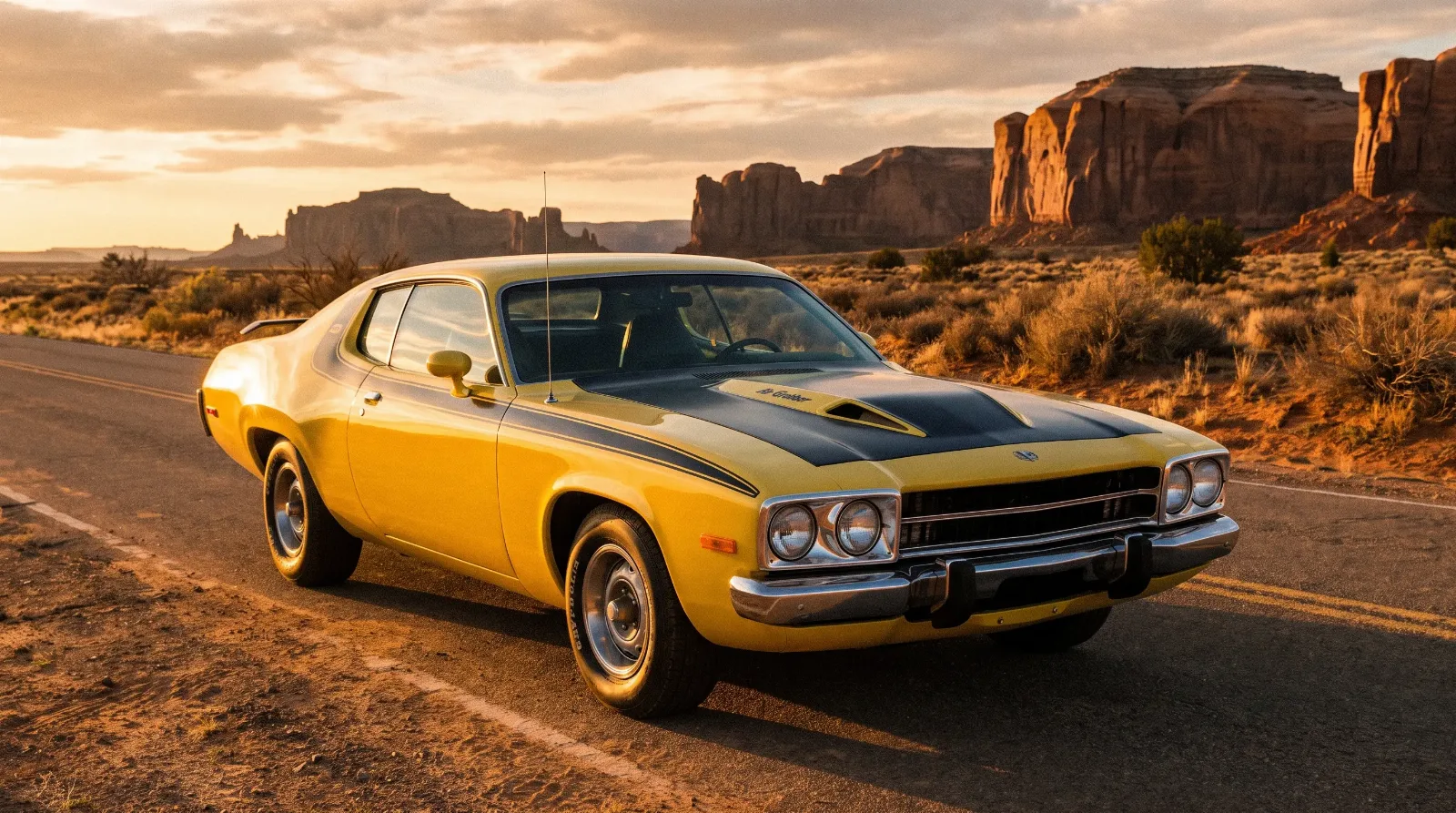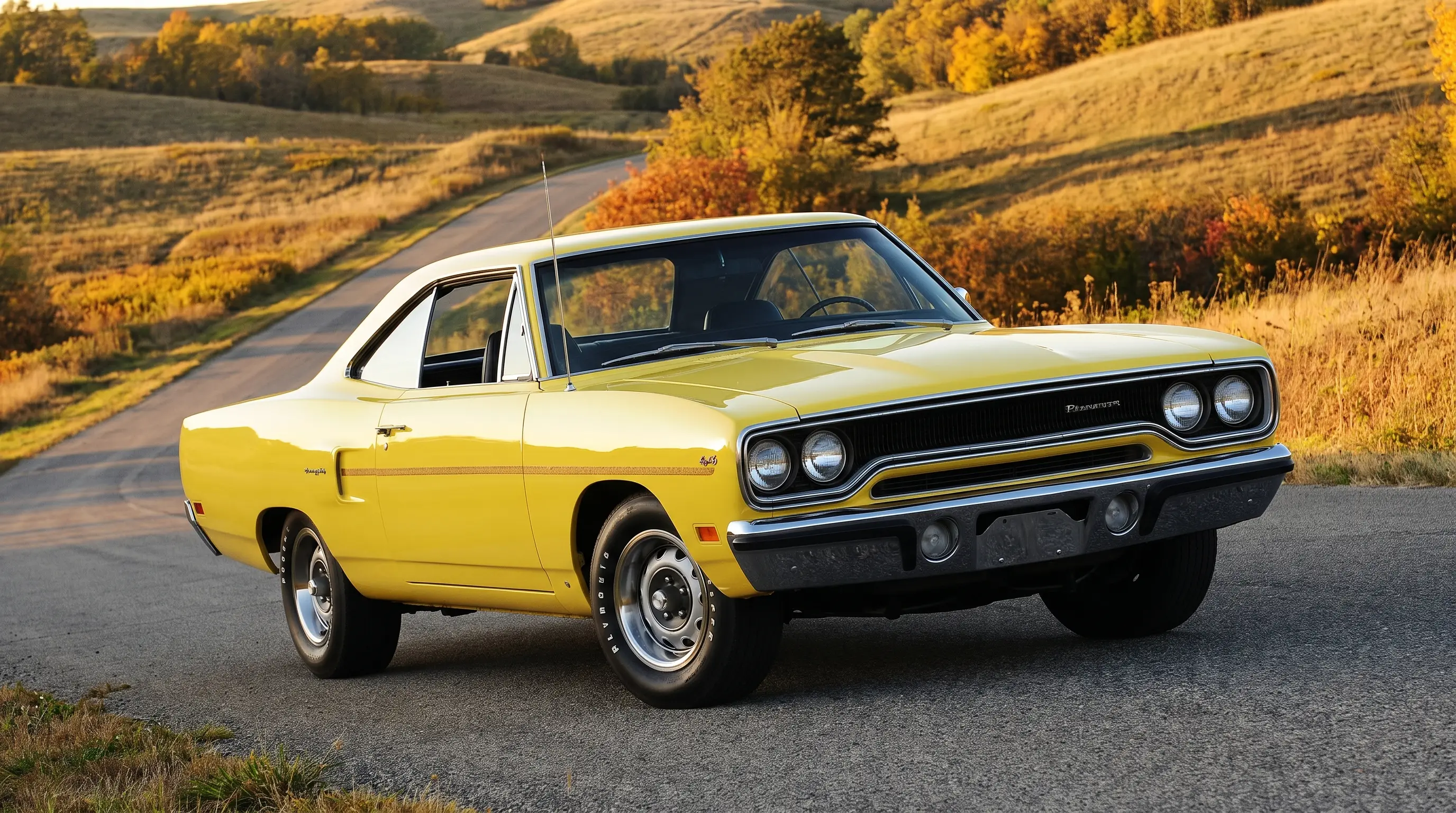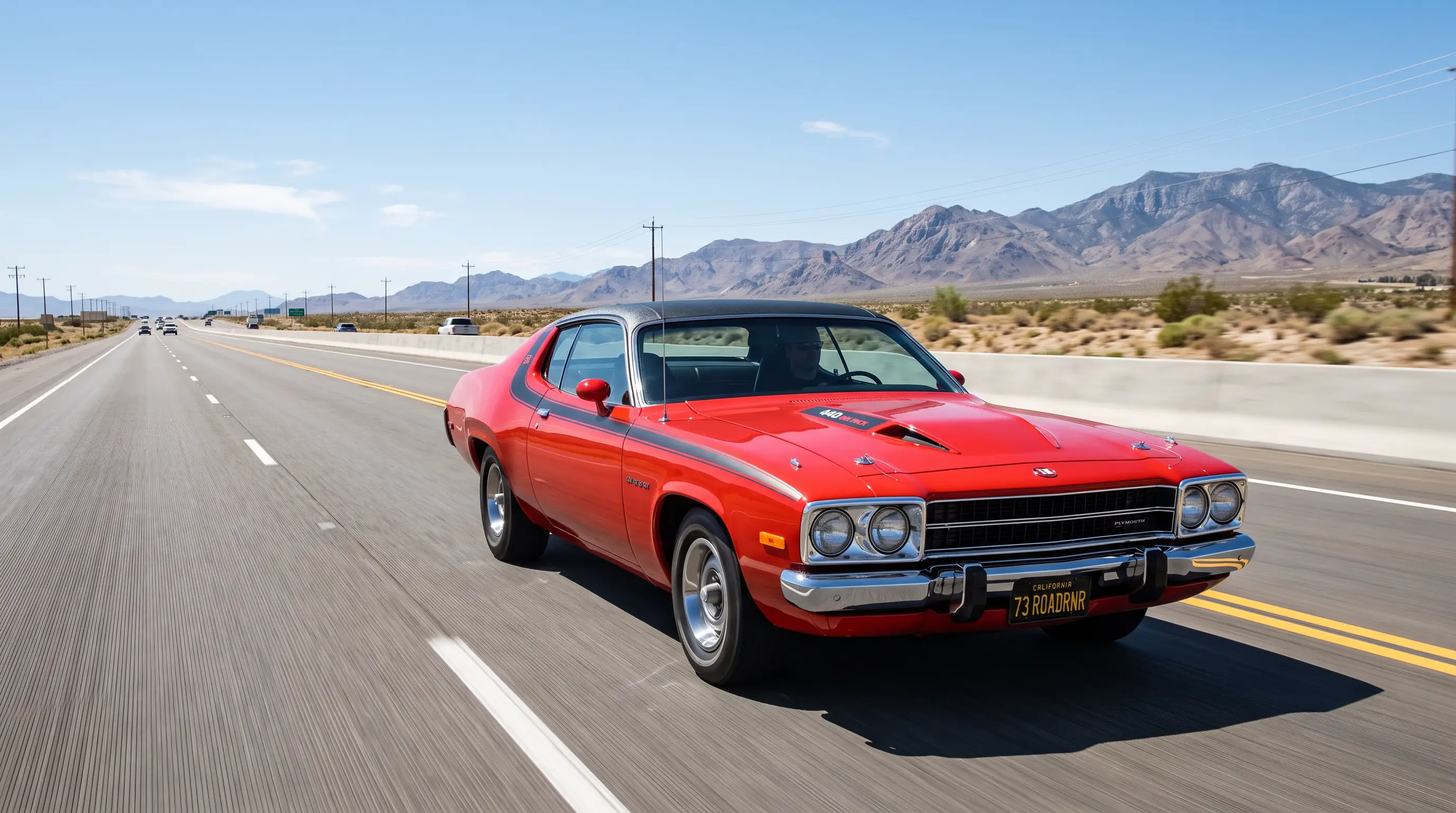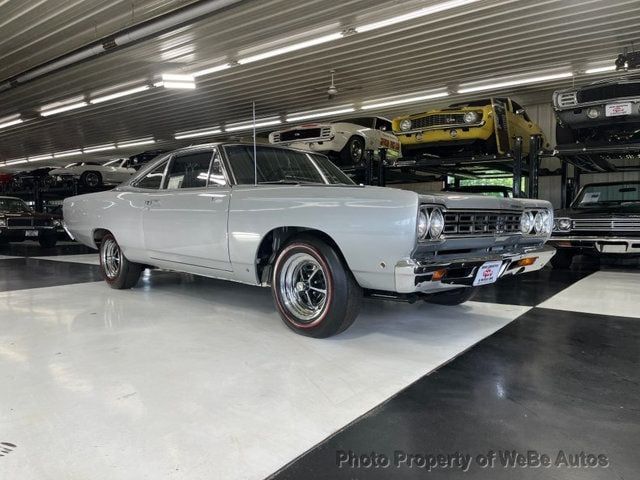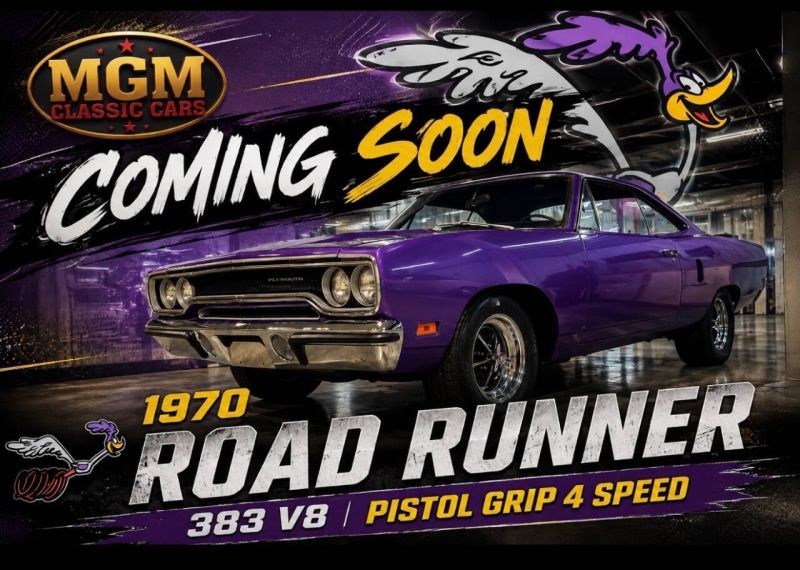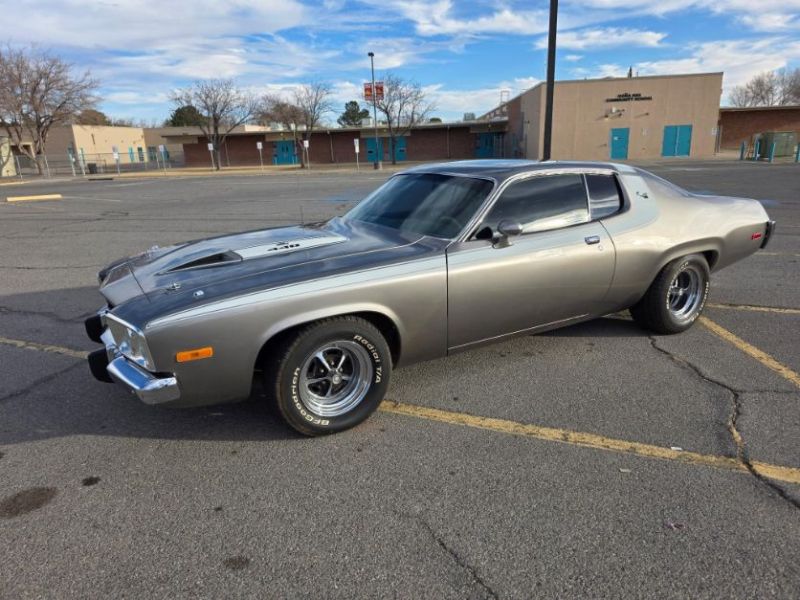
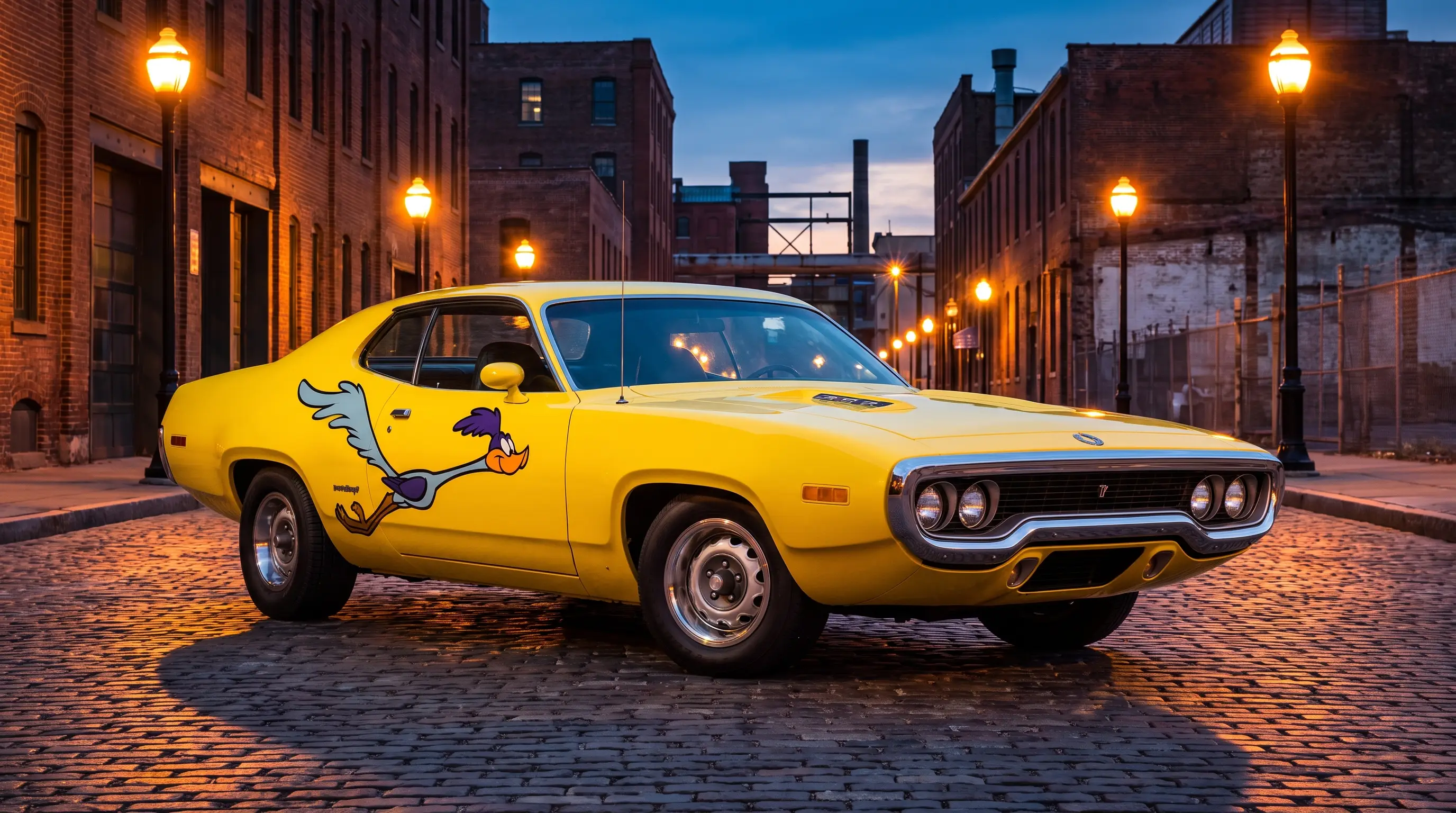
The 1972 Plymouth Road Runner arrived as a car reckoning with realities that had not existed when the nameplate launched in 1968. Insurance surcharges were biting into sales across the muscle car segment, the Environmental Protection Agency's new net horsepower measurement standard was about to make every engine on the order sheet look weaker on paper, and the 426 Hemi, the engine that had defined the Road Runner's outer limits, was gone from the passenger car lineup entirely. What Plymouth built instead was a car adjusting to a changed market while still trying to hold onto the identity that had made the Road Runner one of the best selling performance cars of its era.
A new face on a familiar body
Visually, the 1972 Road Runner refined the fuselage shape introduced the year before rather than replacing it outright. Where the 1971 car wore a split grille with stacked headlights, the 1972 model moved to a single round headlight arrangement set into a simpler, more unified grille opening, a change that softened some of the busier detailing from the previous year. The bird decal, the Road Runner's signature cartoon branding, remained prominent on the fenders, and the horn that mimicked the character's call stayed on the options list, a bit of continuity that mattered to a nameplate built around a sense of humor as much as horsepower.
Underneath, the biggest structural change for 1972 was the disappearance of the GTX as a standalone model. Plymouth folded it into the Road Runner as an options package, badged as Road Runner GTX, which meant a single nameplate now covered ground that had previously required two separate model listings. That consolidation reflected shrinking demand across the performance segment generally, not a retreat specific to the Road Runner, but it changed how a 1972 buyer configured a car from the ground up.
The engine lineup, and what net horsepower actually meant
The standard engine for 1972 remained the 340 cubic inch small block or the 383 cubic inch V8, depending on trim configuration, with the 400 cubic inch big block, a new displacement for the Road Runner, replacing the outgoing 383 in some applications, and the 440 available in four barrel form at the top of the regular order sheet. The 440 Six Barrel, meanwhile, was actually scheduled for 1972 production and then killed by Chrysler in mid production once it became clear the engine could not meet the year's emissions standards, meaning only a small handful of 1972 Road Runners, generally cited in the single digits, ever left the factory with it before the option was pulled. What changed dramatically for the engines that did stay on sale was how they were rated. The industry wide shift to SAE net horsepower measurement, which accounted for accessories, exhaust systems, and other real world losses rather than testing a bare engine on a stand, made every figure printed in Plymouth's 1972 brochure look considerably smaller than the equivalent 1971 number, even when the actual hardware underneath had changed only modestly. A buyer reading brochures side by side without understanding the measurement change could easily, and incorrectly, conclude Plymouth had gutted its engine lineup overnight.
| Engine | Displacement | Approx. net horsepower |
|---|---|---|
| 340 LA V8 | 340 cubic inches | Around 240 |
| 400 wedge V8 | 400 cubic inches | Around 255 |
| 440 Six Barrel V8 | 440 cubic inches | Around 330, canceled mid year, a handful built |
Production and what it says about the year
Plymouth built roughly 7,628 Road Runners for 1972, a figure that continued the steady decline from the model's 1969 peak of more than 80,000 units. That drop is not simply a story of a car falling out of fashion. Insurance underwriters had begun pricing policies specifically around big block displacement figures by this point, pushing budget conscious buyers toward smaller engines or away from performance nameplates entirely, and the broader muscle car category was contracting across every manufacturer at once, not just at Plymouth. Within that contraction, the Road Runner still outsold most of its direct competitors, a fact that speaks to how well the original 1968 formula, a bargain performance coupe with a memorable gimmick, had been built to survive a changing market.
Reading the 1972 model in isolation understates how much had shifted in a single year. For the fuller picture of how the car arrived at this point, more on the 1971 plymouth road runner covers the fuselage restyle and the GTX transition that set up everything happening under the hood by 1972. And for readers who want to trace the nameplate back to its origin, where this started lays out how a stripped down, cartoon branded Belvedere became one of the defining muscle cars of its decade in the first place.
"The 1972 car gets overlooked because the numbers on paper look smaller than 1970, but that is measurement, not decline. Pick up a period road test and you find a car that still moved with real authority, just rated more honestly than the cars that came before it."
- Sarah Whitfield
Where the 1972 sits in collector interest today
Among fuselage era Road Runners, the 1972 model occupies an underappreciated middle position. It lacks the Hemi option that gives 1969 and 1970 cars their headline value, and it lacks the one year only styling novelty of the 1971 model, but it also represents the last year before emissions regulations tightened further and compression dropped again across the board for 1973. That makes a well documented 1972 440 four barrel car, or in the rarest case one of the handful of genuine canceled option 440 Six Barrel cars that slipped through before Chrysler killed the package, a genuinely interesting proposition, real performance from an engine still built before the deepest compression cuts, wrapped in a body that had matured past the more polarizing early fuselage detailing. Buyers researching the model can find classic Runners on the market spanning this exact window, and a 1972 car in solid original condition remains one of the more approachable ways into fuselage era Mopar ownership without competing for the rarest, most expensive Hemi examples.
Interior and color choices for 1972 also reflected the shift underway. The wildest High Impact hues from the 1971 palette, shades like In Violet and Lemon Twist, thinned out considerably on the order sheet as Plymouth pulled back toward more conservative colors that would age better on dealer lots. Cloth and vinyl bench seats remained standard, with buckets and console shifters still available for buyers who wanted the sportier arrangement, and a Road Runner ordered with the right combination of options could still present as a genuinely upscale coupe despite the nameplate's budget performance roots. That range, from a nearly bare bones 340 car to a well equipped Road Runner GTX with air conditioning and a vinyl top, is part of what makes the 1972 model year interesting to document today, since two cars built the same year off the same body can look and feel like entirely different propositions depending on how the original buyer checked the option boxes.