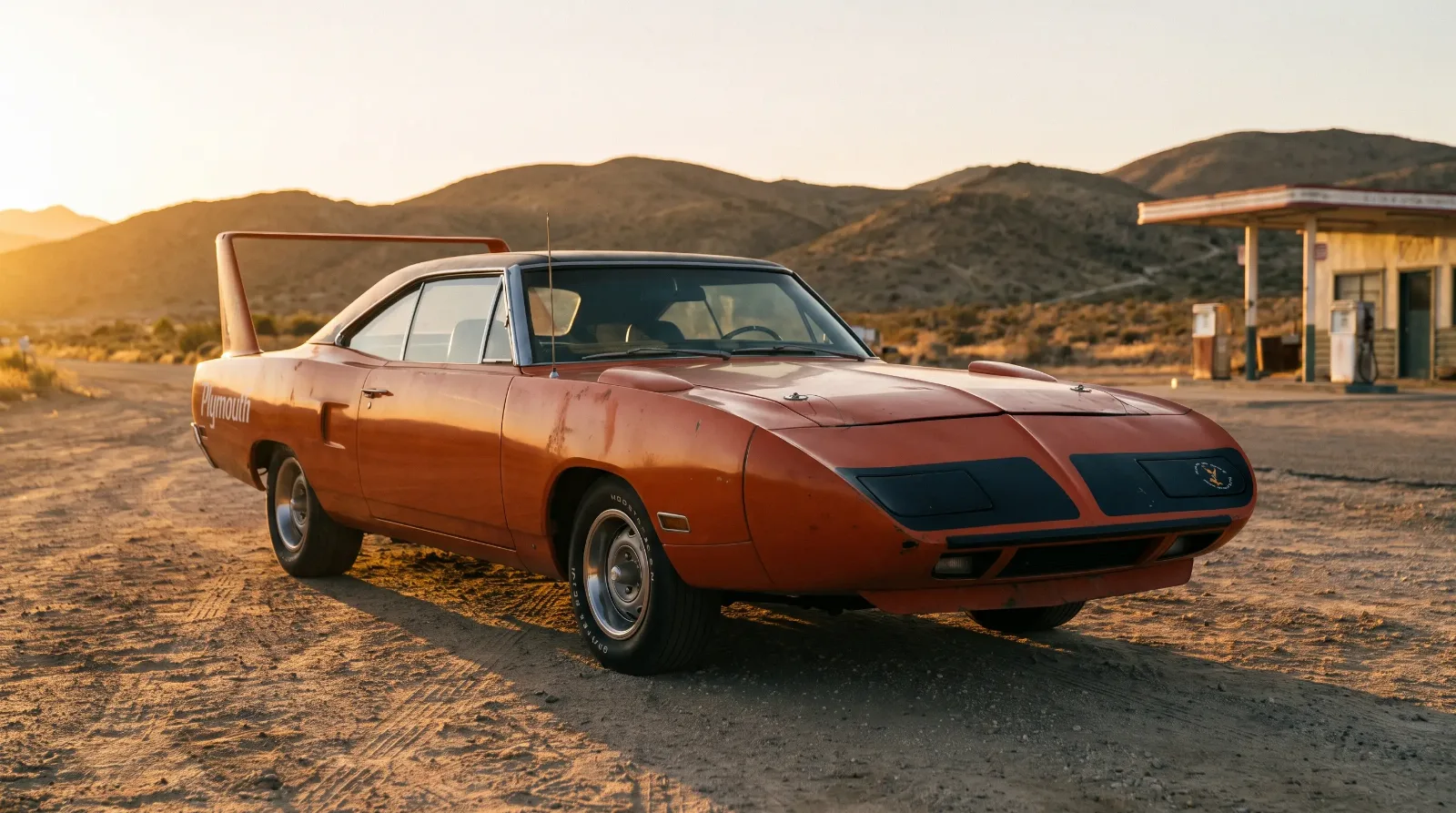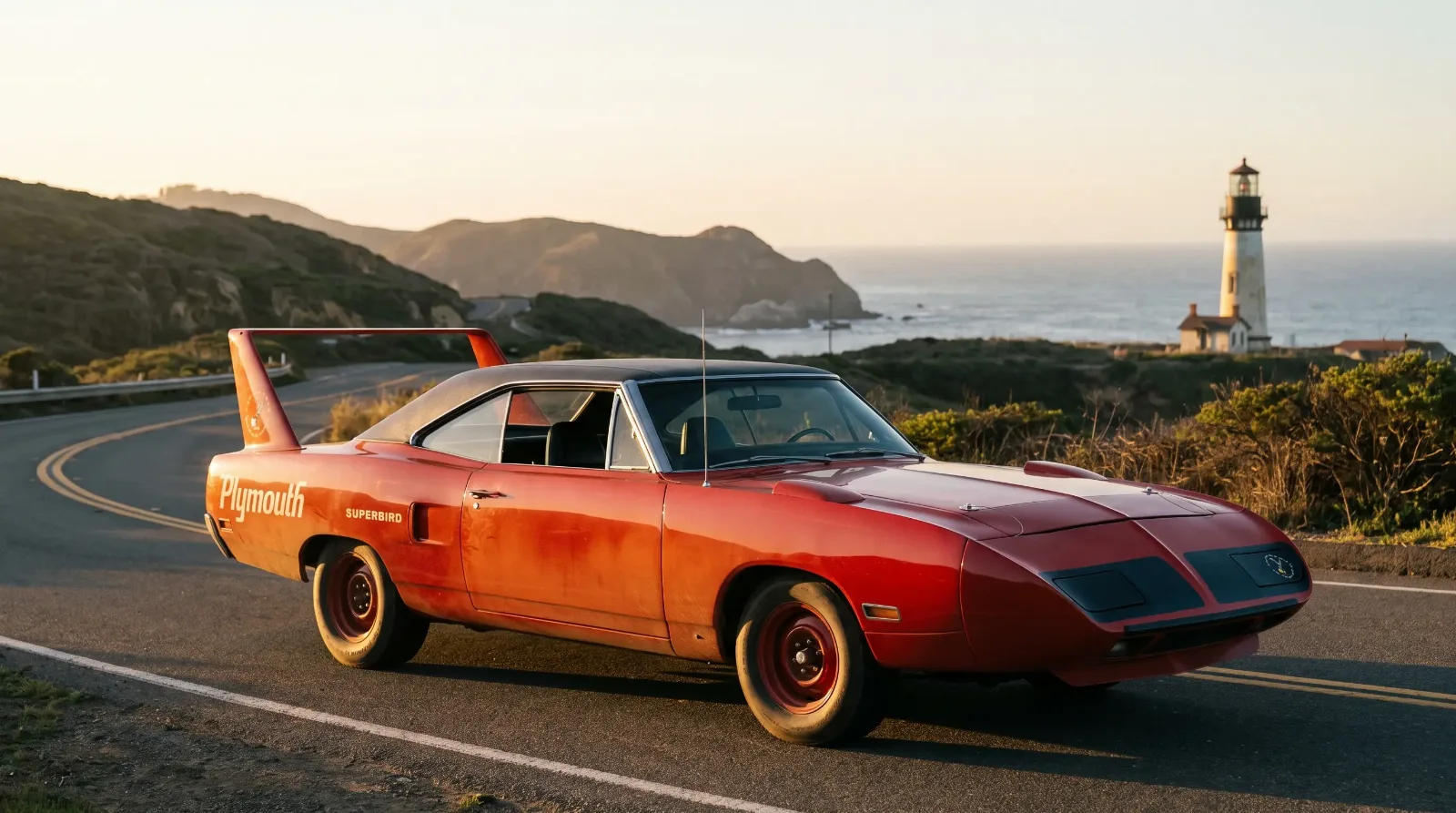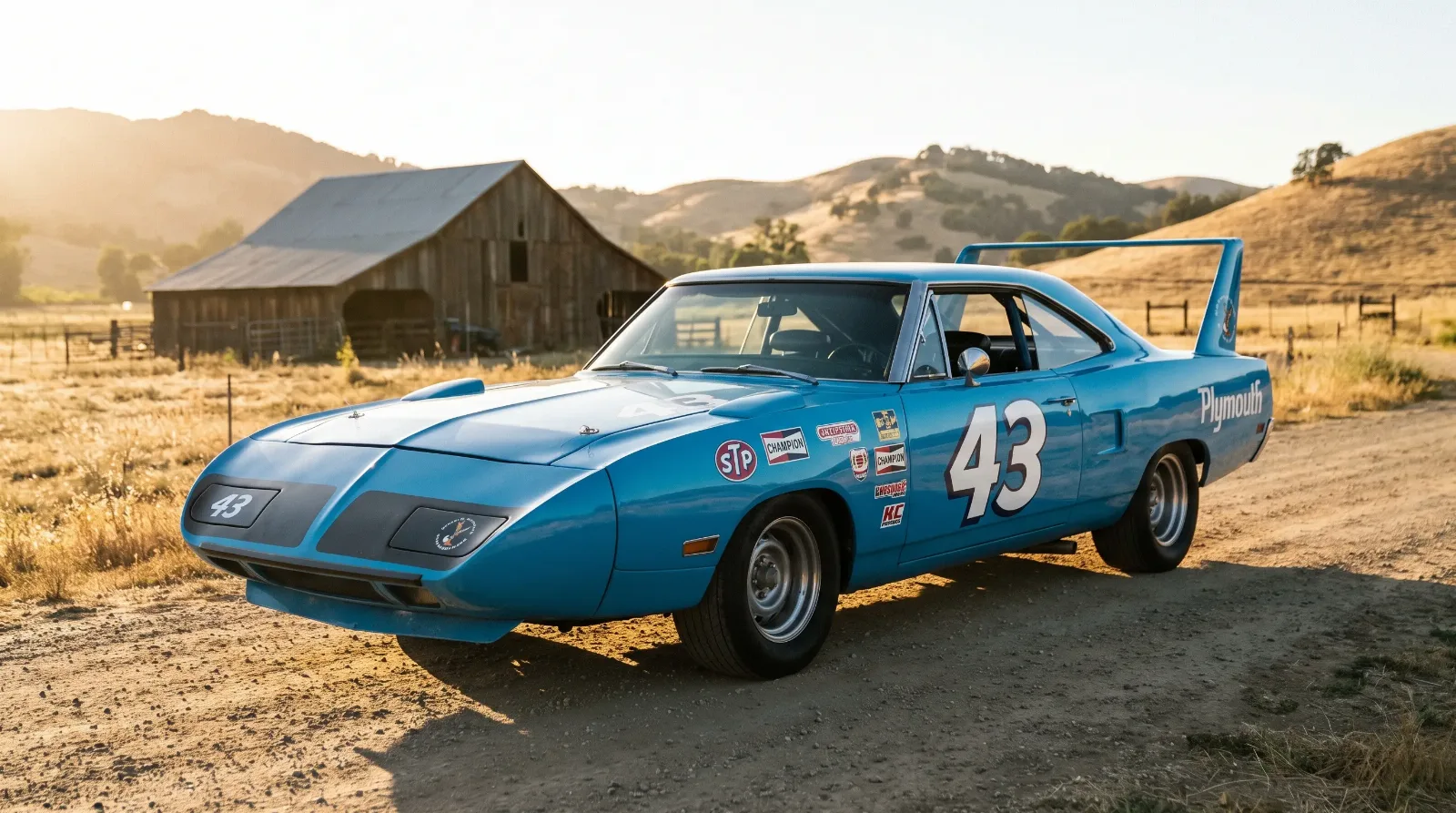
I once sat in a folding chair at a Mopar swap meet in Ohio listening to a man who claimed he sold new Superbirds off a Plymouth lot in 1970 tell a story that took twenty minutes to reach its point, and the point was this. Nobody at that dealership had any idea they were selling pieces of what people now call the nascar aero wars superbird era. They just knew the cars would not fit in a normal size garage and customers kept asking why Plymouth had put a wing on a Road Runner.
How the arms race actually started
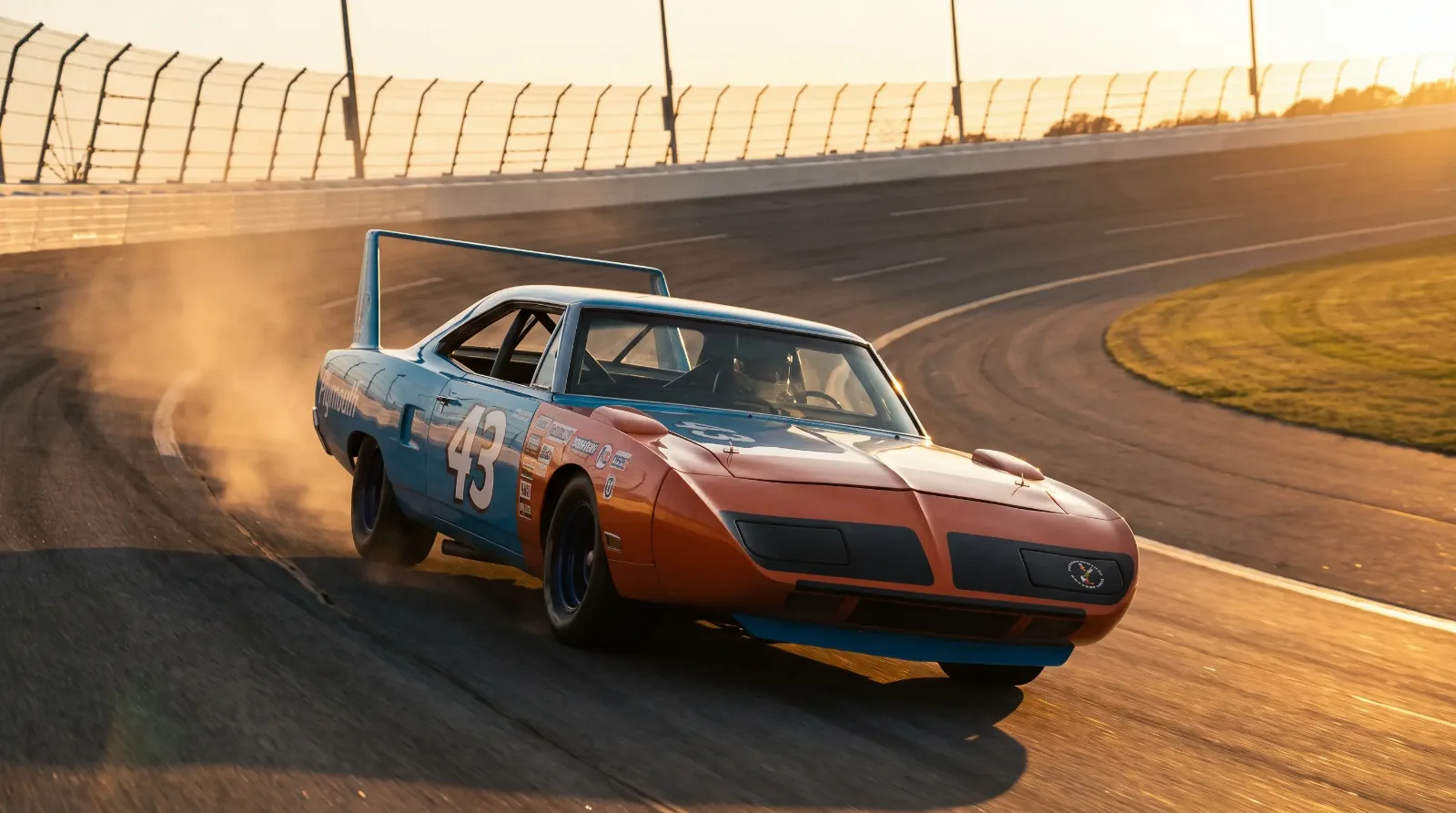
Ford fired the first real shot. The Torino Talladega and its Mercury cousin, the Cyclone Spoiler II, showed up with smoothed, extended noses purpose built to cut wind resistance on NASCAR's biggest superspeedways, and they started winning races Chrysler products had no business losing. Dodge answered first with the Charger Daytona, a car radical enough that it briefly made the standard Charger look conservative by comparison. Plymouth followed a model year later with the Superbird, built on the Road Runner rather than the more upscale Charger, because Plymouth needed a homologation special that matched its own model lineup.
What made this genuinely an arms race rather than a one off styling decision was how quickly it escalated. Each manufacturer's wind tunnel data pushed the next car's nose a little longer or its wing a little higher, and drivers on the superspeedway circuit started posting speeds that genuinely worried NASCAR's leadership about where things were headed if nobody stepped in.
The old timers and their conflicting memories
Ask five club members who actually attended these races in period what they remember most and you will get five different answers, and that is half the fun of chasing this history down at a swap meet instead of just reading it off a spec sheet. One fellow swears the sound of a Hemi powered winged car at full speed on a banked superspeedway is something no modern recording captures accurately. Another insists the wings themselves were mostly for show and the real advantage came from the nose cone alone, a claim wind tunnel data from the period actually backs up more than his friends want to admit.
What nobody disputes is the reaction from spectators. These cars looked like nothing else on a NASCAR oval before or since, and grandstands in 1969 and 1970 were reportedly packed with fans who came specifically to see the winged Mopars and their Ford rivals duke it out.
Why NASCAR finally pulled the plug
Speeds climbing past 200 miles per hour on ovals not originally designed with that kind of velocity in mind made safety a real and immediate concern for NASCAR's leadership, not just a rulebook technicality. Starting with the 1971 season, NASCAR restricted engine displacement for the aero bodied cars so severely that running one competitively no longer made sense, effectively legislating the entire winged car era out of existence in a single stroke. Manufacturers, already shifting budgets away from NASCAR homologation programs as insurance costs and safety concerns mounted across the industry, did not fight the rule change very hard.
That abrupt ending is part of why club members treat this window of history with such reverence. It was short, it was genuinely dangerous, and it produced cars that no manufacturer could build the same way again once the rules changed.
"Every swap meet I go to, somebody's got a photo of a winged car sitting at speed on a banked oval, and somebody else always has a story about how their uncle almost bought one new for practically nothing because dealers could not give them away. Those two stories, the glory on the track and the disaster in the showroom, are really the same story told from opposite ends."
- Wayne Coburn
What the swap meet crowd gets right that magazines miss
Reading a magazine article gives you dates and horsepower figures. Sitting with people who lived through it, or who bought these cars secondhand a few years later when the prices had cratered, gives you the texture. I have heard stories of teenagers buying discounted Superbirds for drag racing, ripping off the wing because it interfered with weight transfer off the line, then throwing the wing in a barn where it sat for decades until a restorer came looking for exactly that part. Those stories rarely make it into official histories, but they are just as much a part of how this era gets remembered within the club community.
For the full mechanical and competitive breakdown of how the Superbird itself came together, our complete history covers the car in more technical depth than any swap meet conversation ever manages.
Why this era still pulls a crowd decades later
Every major Mopar show I have attended in the last twenty years draws its biggest crowd around whichever winged car happens to be parked on the field that year, and the reaction from younger attendees who never saw these cars race is often more enthusiastic than from the old timers who did. There is something about a rule that got a manufacturer to build a street legal race car this extreme that still resonates, maybe more now than it did when NASCAR shut the whole thing down.
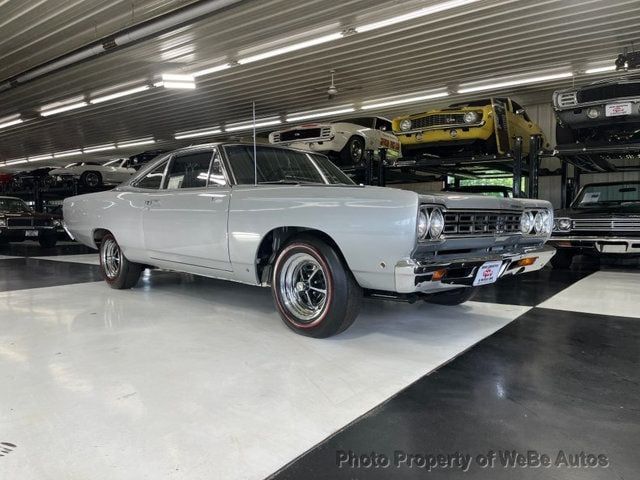
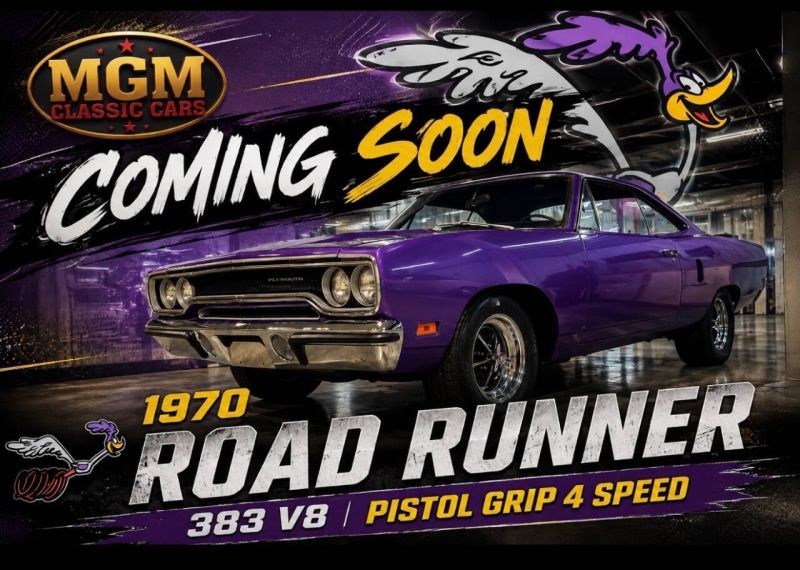
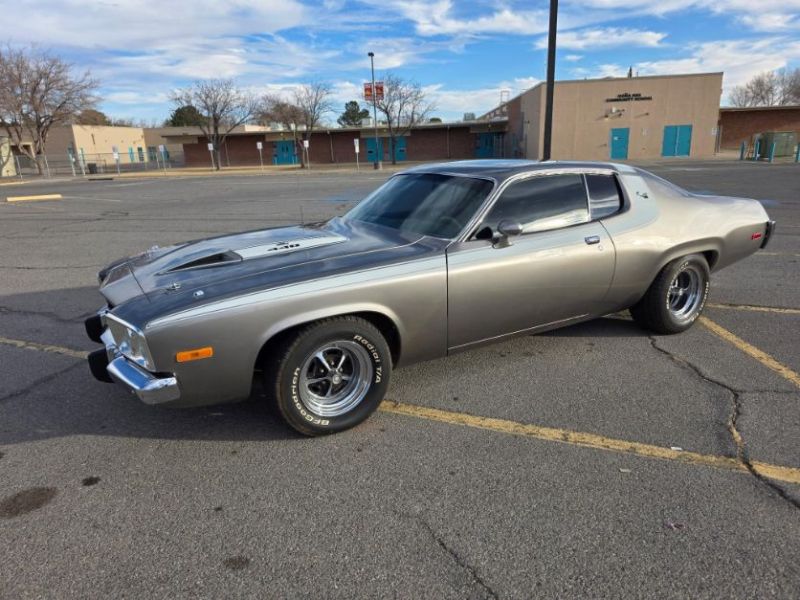
If that history has you thinking about owning a piece of it, plenty of buyers start with the more attainable standard Road Runner before working their way toward a winged car. You can find a classic Runner to begin that journey, and more than a few club members I know did exactly that before eventually landing their Superbird years later.
The rivalry lived beyond the racetrack too
Part of what kept this era alive in club memory is how personal the rivalry felt even away from the superspeedway. Ford loyalists and Mopar loyalists at local car shows in the early seventies apparently argued about aero cars the way some people argue about sports teams, and that friendly hostility has softened into something closer to mutual respect among the collectors who show up to the same events today. I have watched a Talladega owner and a Superbird owner spend an entire afternoon comparing notes on wind tunnel folklore, each one convinced their manufacturer's engineers had the smarter solution, neither one able to fully prove it decades later.
That is really what keeps this chapter of history interesting at the club level. The official record settles some arguments with hard numbers, but plenty of the debate that mattered to people who lived through it never got written down anywhere official, and it survives instead in exactly the kind of conversation that happens in a folding chair at a swap meet.
The lasting lesson from the aero wars
The aero wars produced some of the strangest, most purpose built cars Detroit ever sold to the public, born entirely from a rules fight between manufacturers desperate to win on Sunday. NASCAR ended it almost as quickly as it began, but the cars that survived that brief window have only grown more significant with time, and the stories still passed around at every swap meet I attend keep that history alive in a way no factory press release ever could.