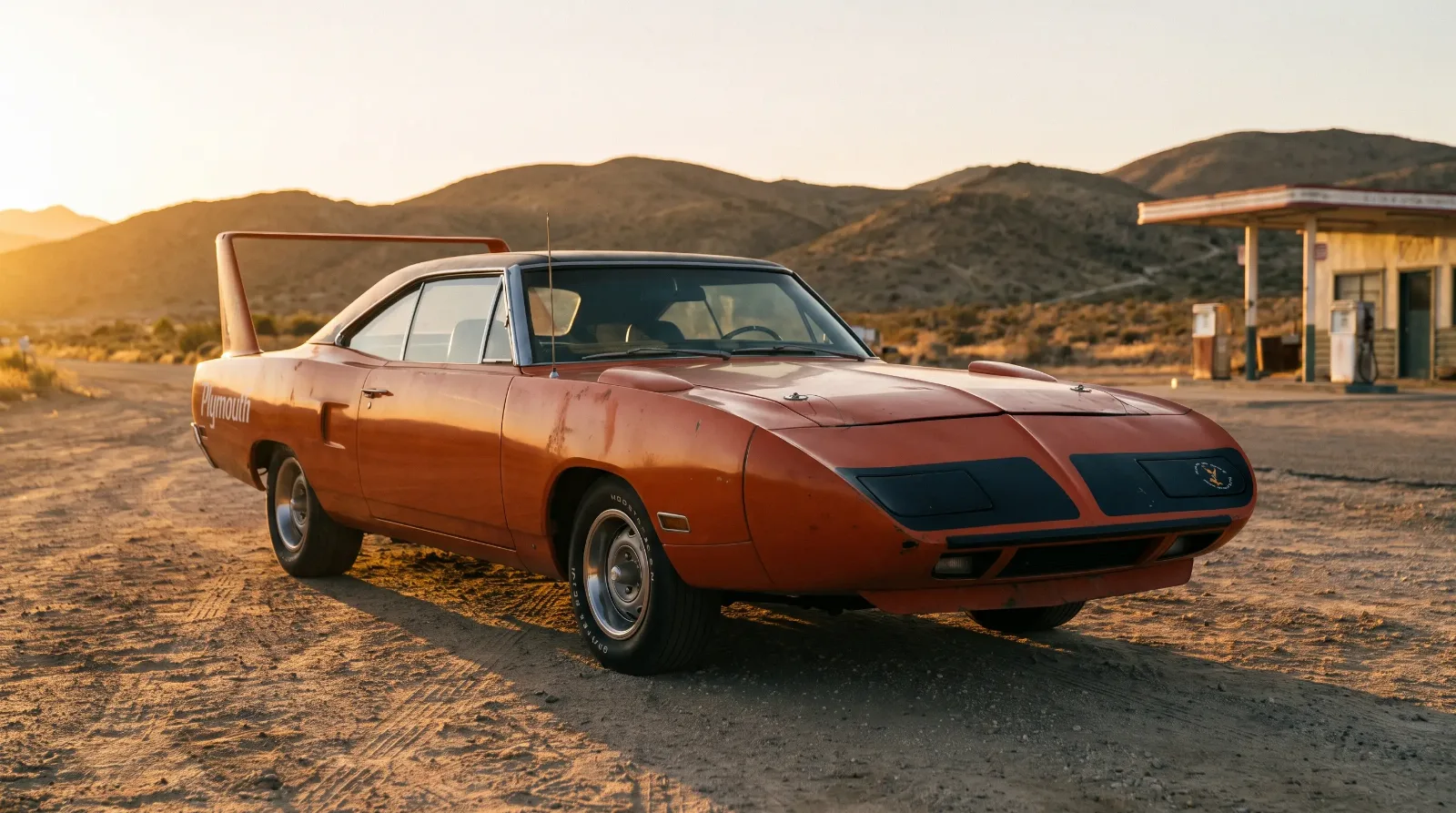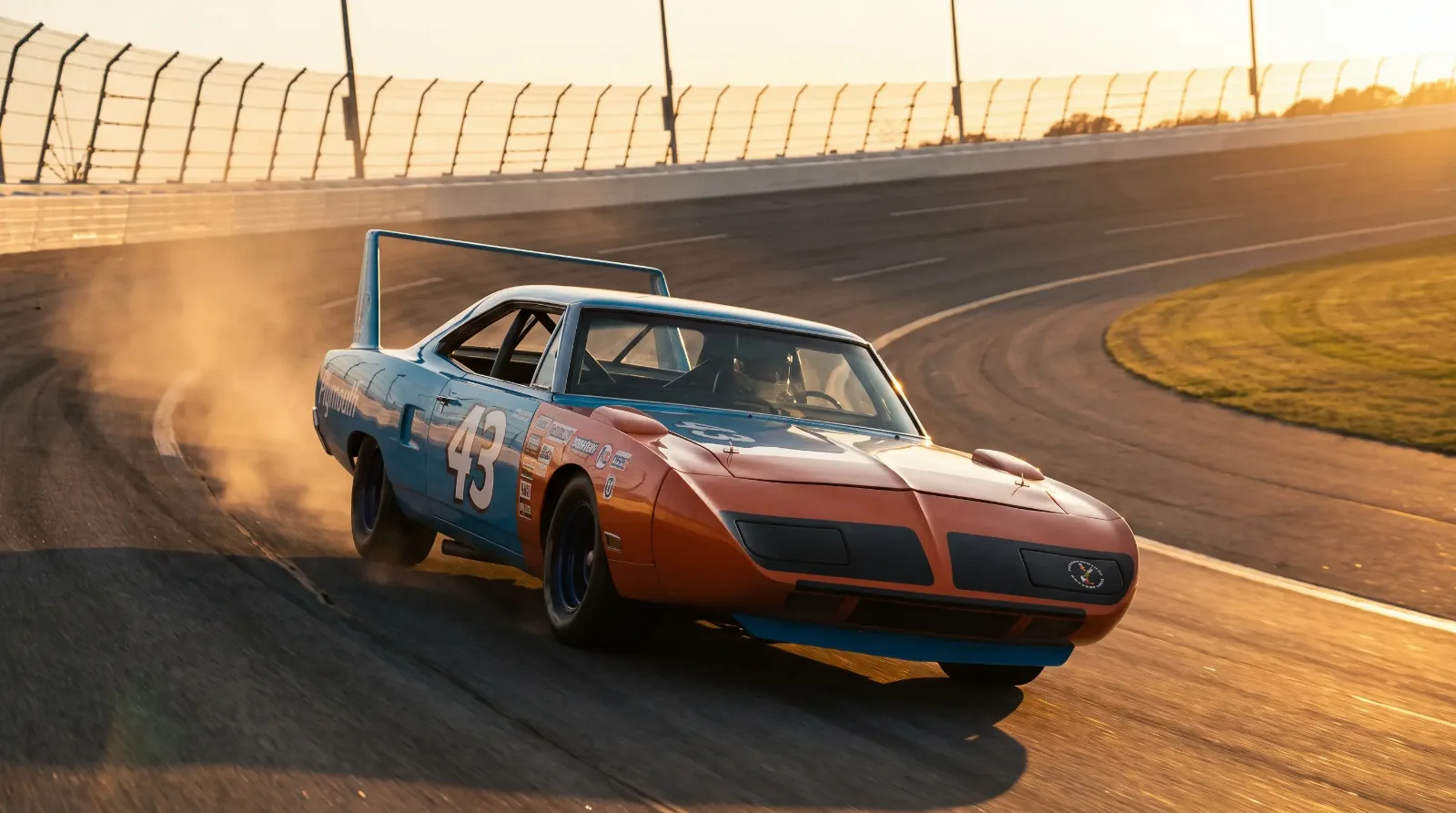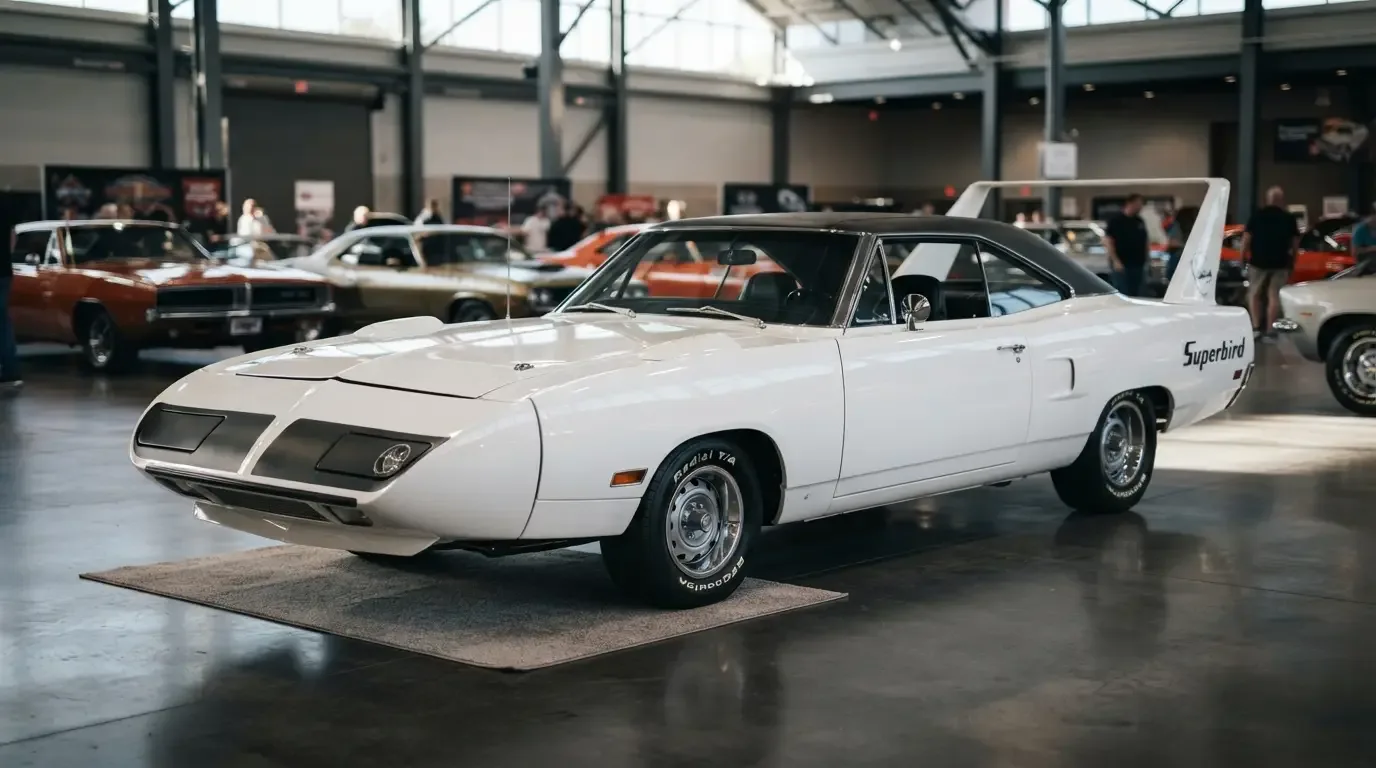
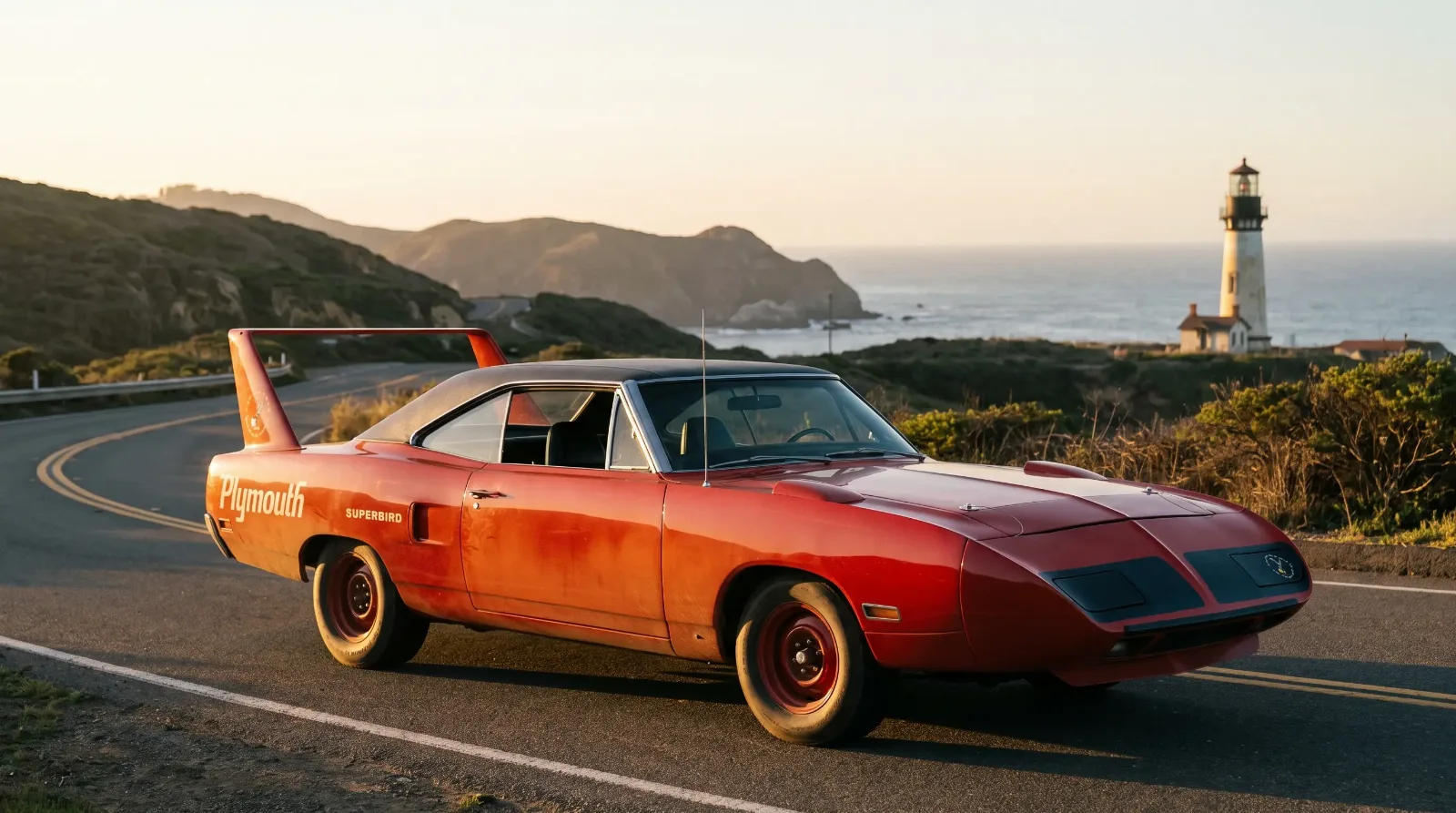
Plymouth built exactly one model year of the car that would define its performance legacy more than any other, and the 1970 plymouth superbird still looks like it arrived from a different decade than the Road Runner it was based on. The nose cone stretched nearly two feet beyond a standard Road Runner's front bumper. The wing towered nearly two feet above the trunk lid. Nothing else on a Chrysler dealer lot in 1970 looked remotely like it, and nothing else needed to, because the Superbird was never really built for the street. It was built to win a war Plymouth was losing on Sunday afternoons.
A homologation special born from desperation
NASCAR required manufacturers to sell a minimum production run of any car they wanted to race, and by 1970 that minimum had climbed high enough to force Plymouth's hand. Rival Ford had Fords and Mercurys with slippery aero bodies dominating superspeedway racing, and Plymouth's stock Road Runner, competitive as it was on shorter tracks, could not keep pace on the high banked ovals where top speed decided races. The Superbird existed to close that gap, and Plymouth built roughly 1,935 examples for public sale to satisfy the homologation rule, a number small enough that dealers reportedly struggled to move them at list price when the car first arrived.
That production shortfall, born of buyer indifference in period, is precisely why the car commands the numbers it does today. Few muscle cars illustrate the gap between contemporary reception and modern reverence as sharply as the Superbird does.
What actually made the aero package work
The nose cone was not decoration. Wind tunnel testing showed the standard Road Runner's blunt front end created enough drag and lift at speed to hurt both top end velocity and high speed stability, two things that mattered enormously on a track like Daytona. Plymouth's engineers, working from lessons learned on the related Dodge Charger Daytona program, extended the nose into a smooth, pointed profile that cut through the air far more efficiently.
The rear wing served a similar function, mounted high enough to sit in clean airflow above the turbulence generated by the roofline and trunk, generating real aerodynamic downforce at racing speeds rather than existing purely for show. Chrysler engineers reportedly chose the wing's specific height through wind tunnel testing rather than styling preference, though the exact rationale has become something of a legend in itself among historians who have tried to pin down the precise engineering justification.
Engine choices and what buyers actually ordered
Plymouth offered the Superbird with a 440 in either four barrel or Six Barrel configuration, along with the 426 Hemi for buyers chasing maximum output. The Hemi cars, always the rarest of the bunch, represent a small fraction of total production and carry values today that dwarf the more common 440 cars by a wide margin. Most buyers in period opted for the 440, a choice that made sense given the substantial price premium the Hemi commanded new and the reality that few owners were taking their Superbird anywhere near a racetrack.
For readers who want the complete background on how the Superbird program came together and how it performed once it hit the track, our plymouth superbird history covers the full arc of the car's single model year run.
Why NASCAR effectively legislated it out of existence
The Superbird's on track success proved almost too complete. Aero cars from Plymouth, Dodge, and Ford began dominating superspeedway events so thoroughly that NASCAR moved to restrict engine displacement for aero bodied cars starting in 1971, a rule change that made the whole winged car concept commercially and competitively pointless almost overnight. Plymouth built the Superbird for exactly one model year as a direct result, and no factory bodied winged Mopar ever returned to NASCAR competition after that.
The broader context behind that rule change, and why Chrysler and its rivals pushed aerodynamics as far as they did before NASCAR stepped in, is worth understanding on its own terms. A related story covers that competitive arms race in detail.
"The Superbird is the rare case where a car built purely to satisfy a rulebook technicality became more culturally significant than almost anything the manufacturer built with actual buyers in mind. Plymouth never intended to create an icon. They intended to win races, and the icon happened almost by accident."
- Tom Ramirez
How the car aged into legend
Dealers in 1970 discounted unsold Superbirds heavily, in some documented cases converting the nose cone and wing off entirely to move the car as a standard Road Runner, a practice that makes surviving original examples with factory documentation extraordinarily valuable today. Decades of NASCAR nostalgia, feature film appearances, and a shrinking surviving population have combined to push Superbird values into rarified territory, with documented Hemi cars regularly setting records at major collector car auctions.
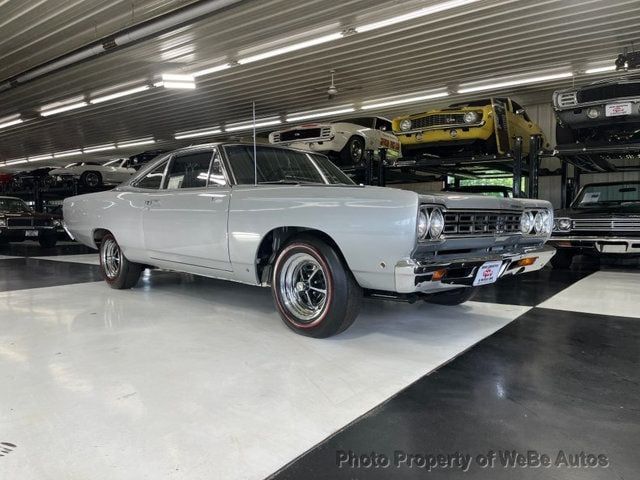
Buyers interested in the Road Runner platform the Superbird was built from can explore current Runners for sale now to see how the standard car's values compare against its winged, homologation special sibling.
Color choices and how dealers marketed a car nobody wanted at launch
Plymouth offered the Superbird in a range of high visibility colors, including several from the corporate high impact palette, in an apparent attempt to lean into the car's outrageous proportions rather than tone them down. Dealer advertising from the period leaned hard on NASCAR imagery, tying the street car directly to Richard Petty's on track success in an effort to move inventory that was, by most accounts, sitting on lots longer than Plymouth's sales division would have liked. Despite that marketing push, the car's sheer size and impracticality worked against it with everyday buyers who found the nose cone too long to fit in a standard garage and the wing too tall for many home carports.
That mismatch between marketing ambition and showroom reality is a familiar pattern in automotive history, but few examples are as visually stark as the Superbird's. A car engineered entirely around wind tunnel data and NASCAR rulebook minimums was always going to struggle as a mainstream sales proposition, and Plymouth's own dealer network understood that tension even as the factory kept building them to satisfy the homologation requirement.
Why the story still resonates
The Superbird represents a specific, unrepeatable moment when a manufacturer built a street car almost entirely to satisfy a racing rulebook, with styling so extreme that period buyers rejected it and only later generations came to understand what they were looking at. That gap between contemporary indifference and modern reverence is part of what makes the car's story compelling, and it is why the 1970 Superbird remains one of the most discussed single model year cars in American automotive history.