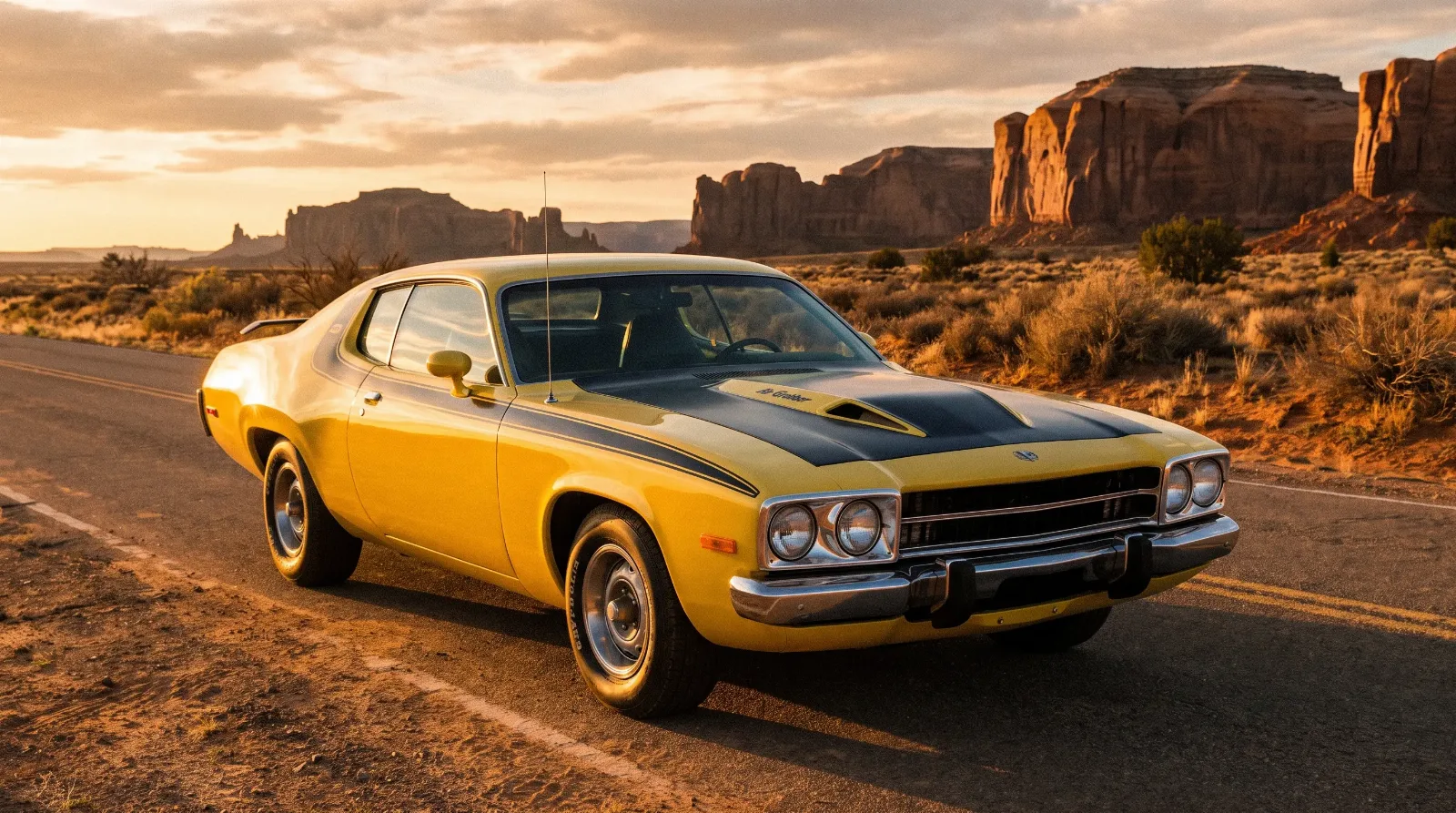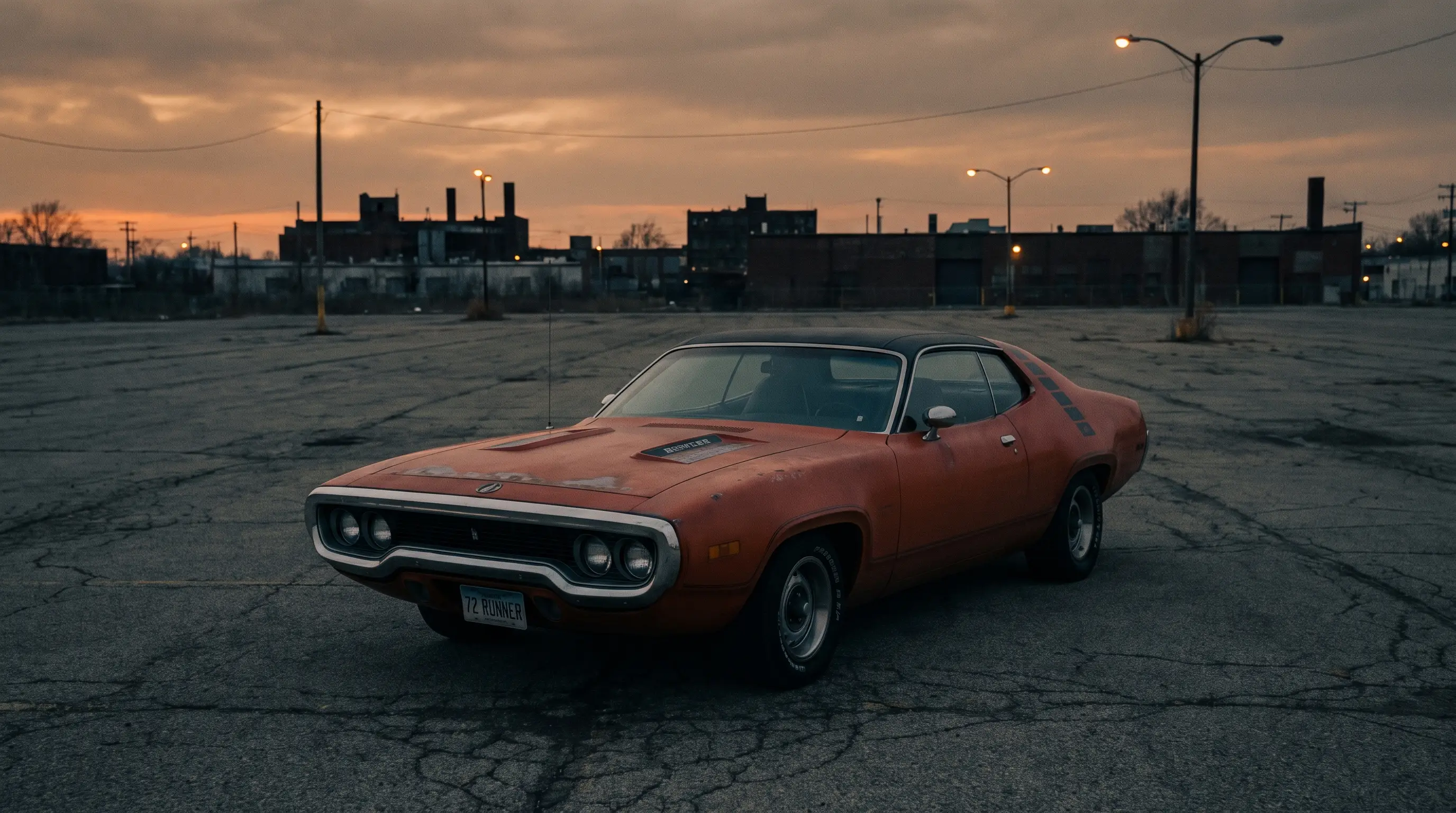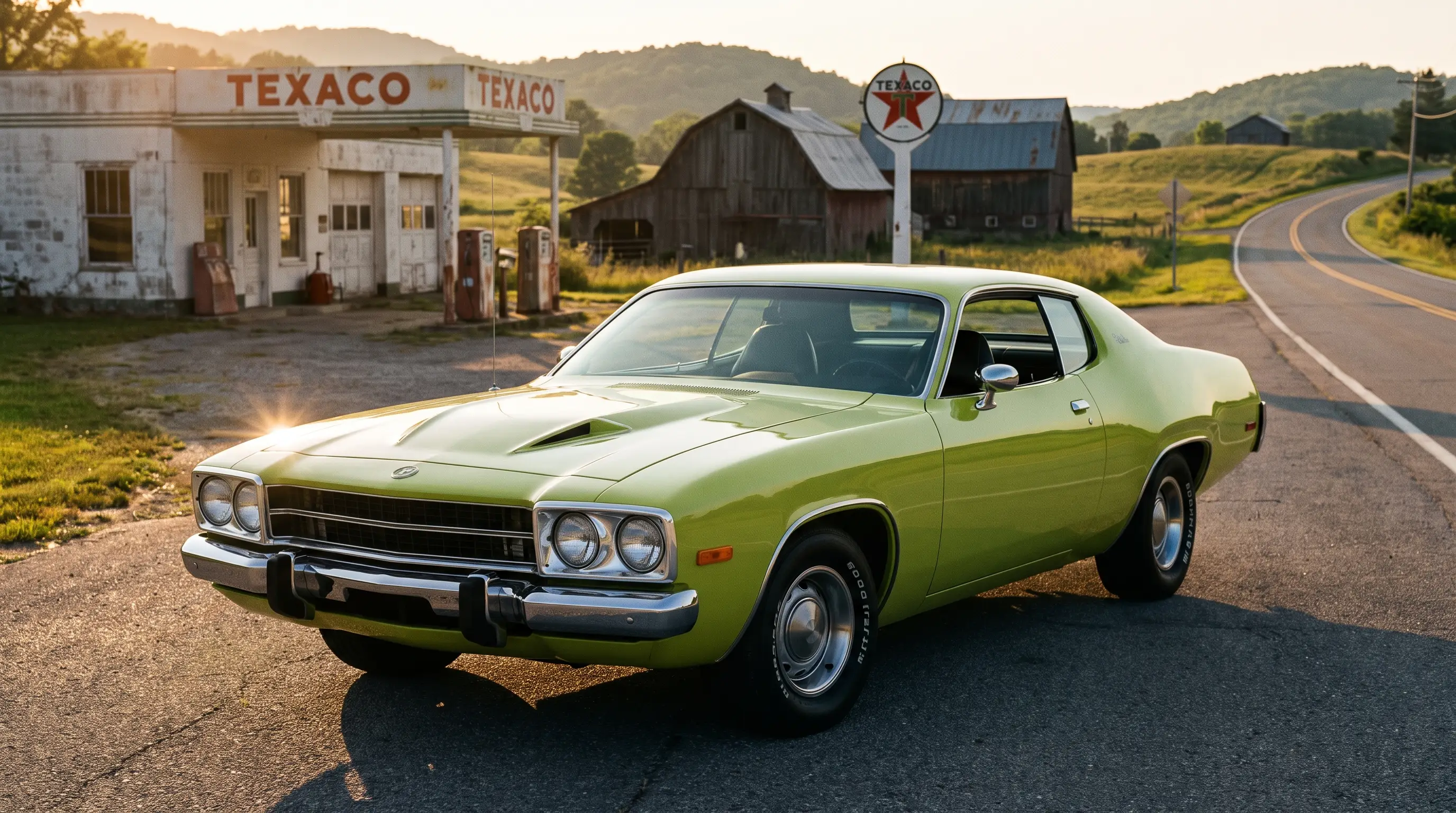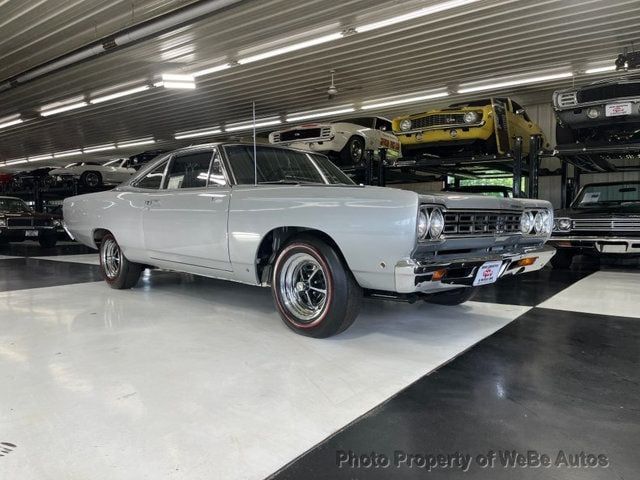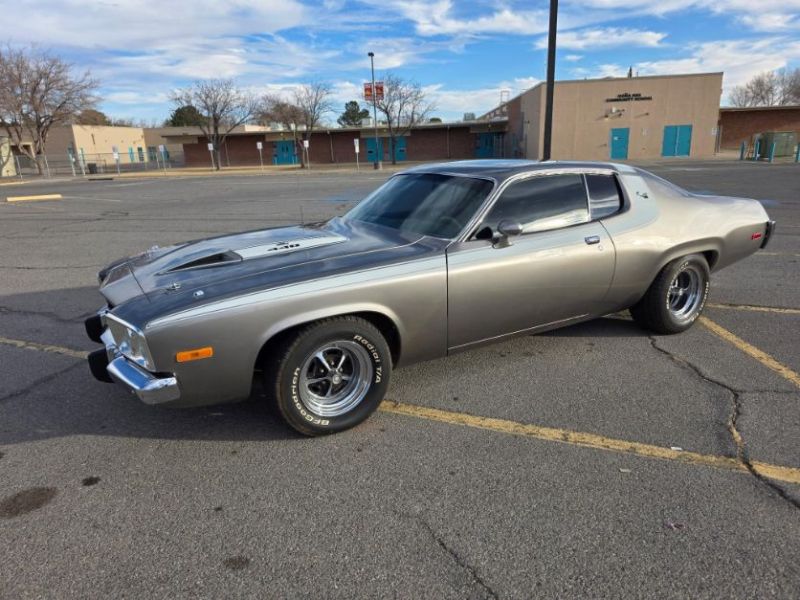
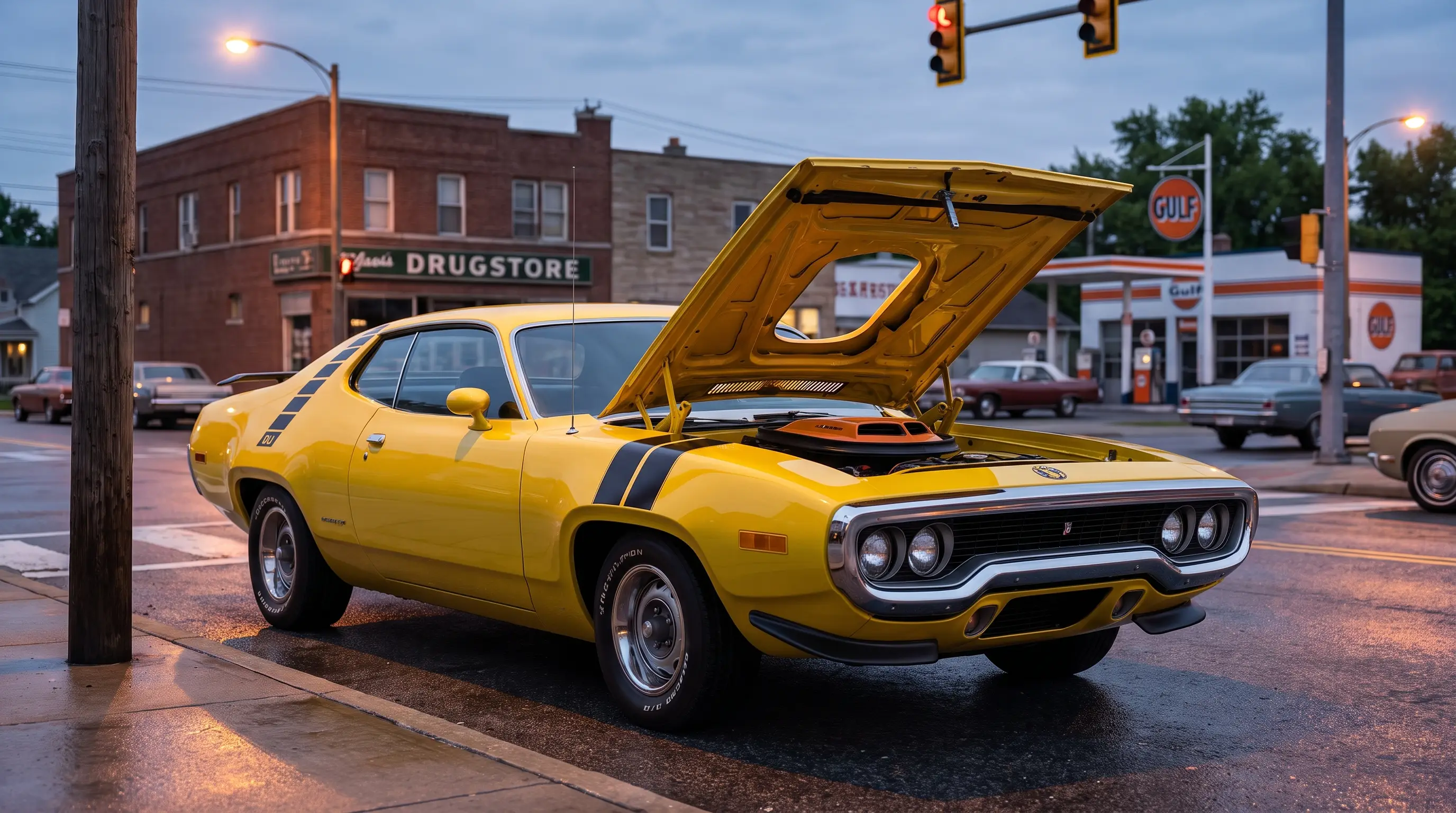
By 1971, the Plymouth Road Runner had a functional hood scoop with a name and a personality, and that scoop, the Air Grabber, was already living on borrowed time. It debuted in 1969 as a cable-operated setup, a fiberglass duct feeding twin vents that a dash-mounted lever could open or close by hand. For 1970, Plymouth swapped the lever for a vacuum servo that slowly raised a forward-facing scoop out of the hood on command, complete with shark-teeth decals at the opening. Two years later it was mostly a memory, and the story of how it went from performance hardware to a shrinking footnote says a lot about what happened to the whole muscle car era.
What the Air Grabber actually did
The concept was simple and, for once, not just marketing. Flip the dash switch, a vacuum actuator popped open a hinged panel at the base of the hood scoop, and the engine pulled cooler, denser outside air instead of hot air trapped under the hood. Plymouth was not inventing the idea. Cold-air induction had been around Detroit for years in various forms. What made the Air Grabber memorable was the theater of it: a driver could sit at a stoplight, thumb the switch, and watch the hood visibly open its mouth. Some years added a toothy graphic to the scoop opening, which did nothing for airflow and everything for showing off.
The exact horsepower gain from the Air Grabber system is the kind of number Plymouth never published cleanly, because the gain depended on ambient temperature, engine tune, and which carburetor sat underneath. What mattered to buyers was less the dyno sheet and more the fact that a factory car had a piece of hardware that behaved like it belonged on a race car.
1971: the last real year
1971 was the high point for the Air Grabber in terms of exposure. The Road Runner got its fuselage-styled redesign that year, a longer, wider body with a split grille, and the Air Grabber scoop sat right in the middle of that new hood as one of the few visual cues tying the car back to its 1968 origins. Buyers could still order it across a real spread of engines, from the 340 small-block up through the 440 Six Barrel and, for that one final season, the 426 Hemi. For a car built to be seen as much as driven, the Air Grabber in 1971 was doing exactly the job it was designed for.
It also marked the last year the Road Runner carried a genuine top-of-the-range performance engine lineup behind that scoop. Getting the whole picture on that model year means understanding that 1971 was simultaneously the most visually aggressive Road Runner yet built and the last one that could really back it up across the board.
1972: the quiet retreat
By 1972, the math around the Road Runner had changed. Insurance surcharges on high-output engines had been climbing for several years, and now compression ratios were dropping across the board to run on lower-octane, lower-lead fuel ahead of stricter emissions rules. The Hemi was gone from the option sheet entirely. The 440 Six Barrel was gone too. What remained was a 340 small-block, a new 400 cubic-inch engine built from the old 383 tooling, and a 440 four-barrel at the top.
The Air Grabber scoop itself did not disappear in 1972, but its functional purpose mattered less with every engine under it making less peak power than the year before. Plymouth kept offering hood scoops as styling elements on Road Runners well past this point, but the era where a hood scoop's vacuum door genuinely changed how the car ran was closing fast.
1973 to 1974: horsepower without the theater
The Road Runner soldiered on through 1973 and 1974 wearing the fuselage body a while longer, with the 318, 340, 400, and 440 engines rotating through the option sheet as the muscle car segment kept shrinking around it. Net horsepower ratings, adopted industry-wide starting in 1972, made the numbers on paper look even more modest than the real-world drop already was. Scoops remained on the hood in some form, but the dash switch and the theatrical flip-open door were increasingly a period detail rather than a functional necessity, since even wide-open engines were making a fraction of what they had in 1969 and 1970.
A buyer walking into a Plymouth showroom in 1974 could still order a Road Runner that looked fast standing still. Whether it delivered on that promise depended heavily on which engine box got checked, and by then none of the boxes read Hemi or Six Barrel anymore.
"People remember the Air Grabber as this wild race-car gimmick, but really it's a snapshot of Detroit trying to keep the performance story alive with less and less actual performance to sell."
- Dan Reeves
1975 and the platform shift
1975 brought a bigger structural change than any engine swap. The Road Runner moved off its old intermediate underpinnings and onto a platform shared with the Fury line, effectively becoming more of an appearance and handling package layered onto a mainstream Plymouth than a standalone muscle car nameplate. Scoops, stripes, and the Road Runner name carried over, but the Air Grabber as a distinct functional system with its own marketing identity had run its course by this point. The badge would keep going for years afterward on progressively smaller cars, but that is a separate story from the hood that used to open its mouth at a stoplight.
Why the late Air Grabber cars matter to collectors now
For collectors today, a documented 1970 or 1971 Road Runner with a working Air Grabber system, especially paired with one of the bigger engines, sits in a sweet spot: rare enough to matter, mechanically simple enough to keep functional, and visually distinctive in a way that later Road Runners generally are not. 1972 and later cars with scoops but without the same output behind them tend to trade at a real discount, which makes them an accessible way into the model for buyers who care more about the look and the badge than chasing a numbers-matching Hemi.
Condition of the vacuum actuator and door hinge matters more than most buyers expect. Decades of disuse tend to leave the flip-up door stuck shut or, worse, stuck open, and a scoop that no longer moves is a scoop that has quietly become a static styling piece regardless of what the option sheet originally promised. Sellers who can demonstrate the switch working are usually not exaggerating when they call the car complete.
There is also a documentation gap worth knowing about going in. Because the Air Grabber was tied to broadcast sheets and build codes rather than a separate stamped part, verifying that a given car left the factory with it, rather than gaining one later from a parts car or a reproduction kit, often comes down to paperwork rather than anything visible on the car itself. Buyers chasing originality should ask for that paperwork before they ask about paint.
Anyone assembling a search list around this generation should shop classic Runner listings with the engine code, not just the scoop, front and center, since two Road Runners with identical hoods can represent very different cars underneath.