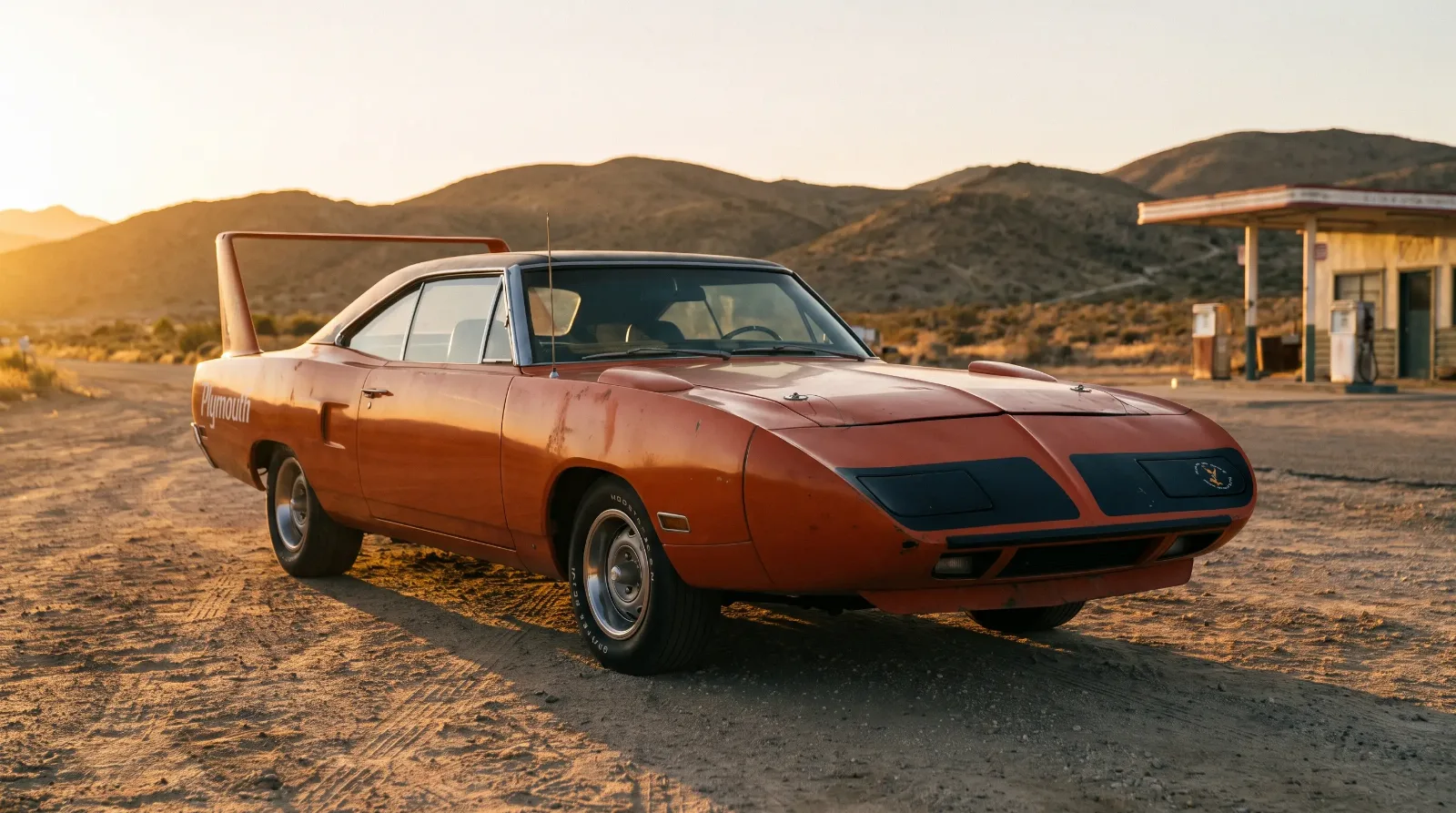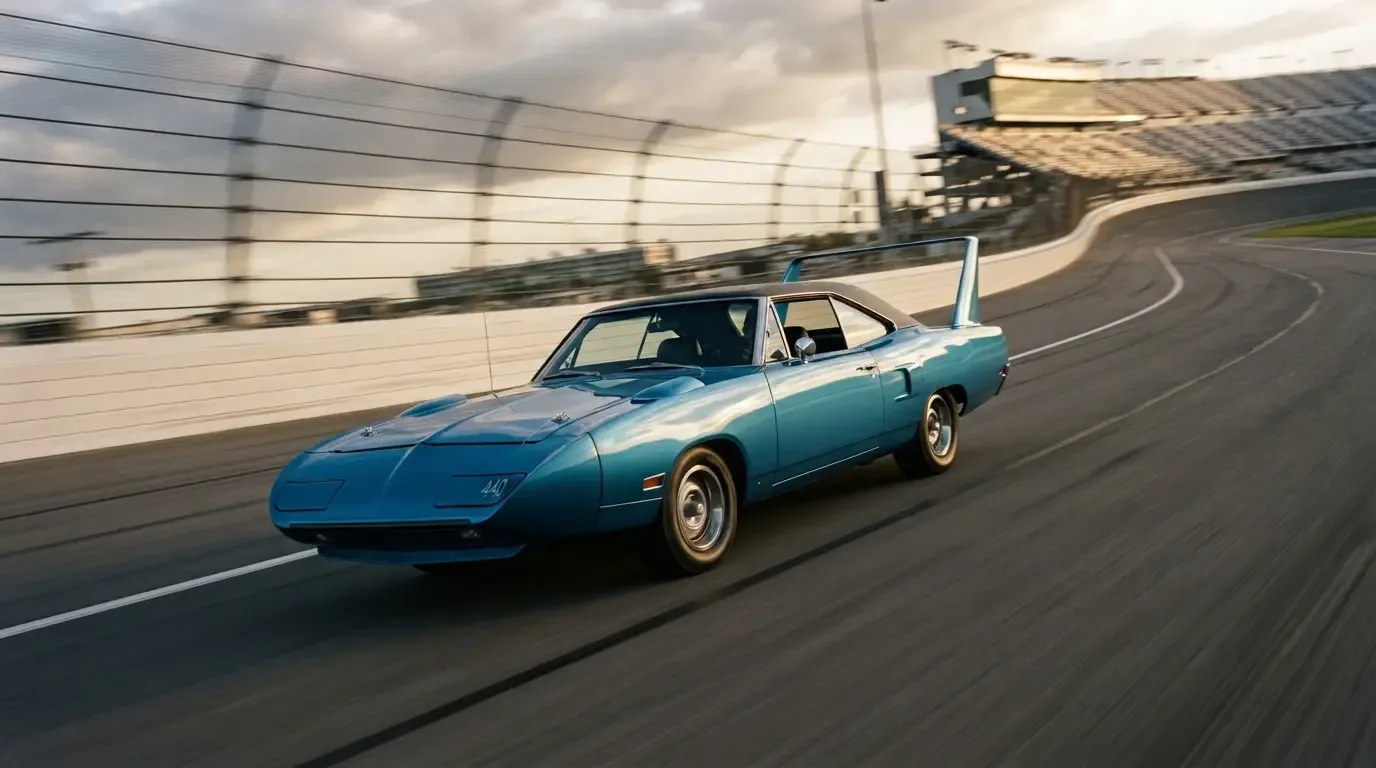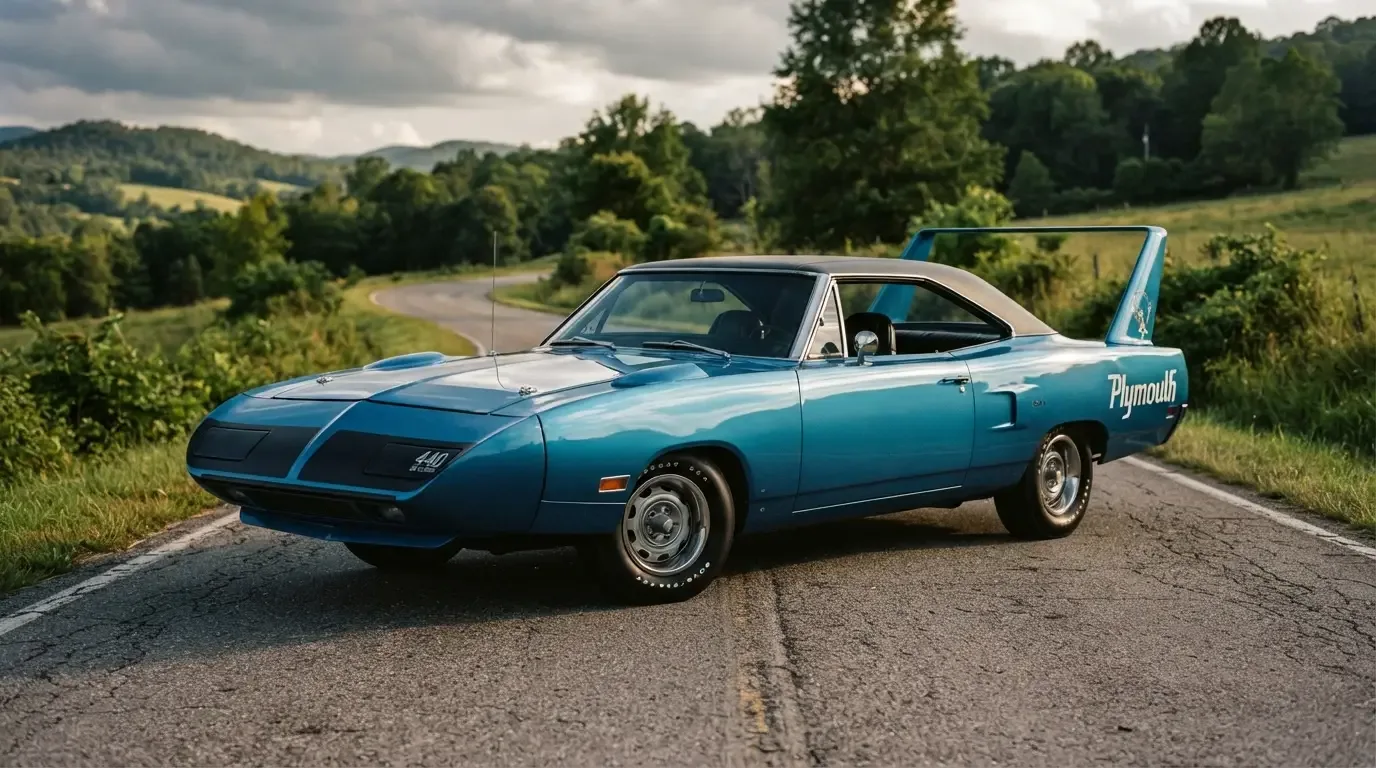
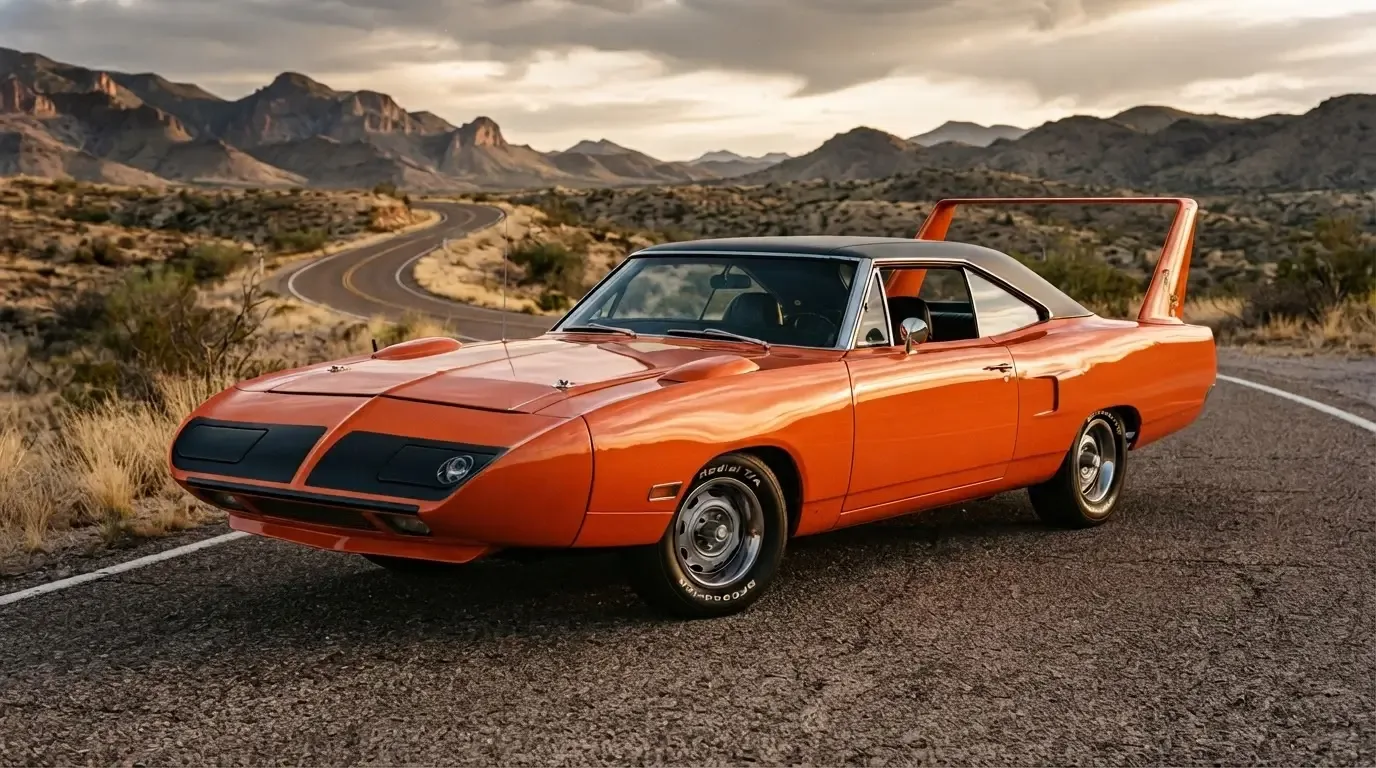
The Hemi Superbird is the car everyone thinks they know. Winged Plymouth. NASCAR homologation special. 1970 only. All true. But the number that actually matters is smaller than people expect, and it changes how you should think about buying one.
The engine, not the wing, is the story
Start with the motor. The 426 Hemi was rated at 425 horsepower in factory literature, a number most people in the hobby know is conservative by a wide margin. Real output on a good engine was higher, with dyno pulls on correctly built 426 Hemis routinely landing in the 480 to 500 horsepower range, depending on tune, exhaust, and rpm the pull was run to. That gap between advertised and actual power was standard practice across Detroit in 1970. Insurance companies set premiums off the brochure number, so nobody in Highland Park had an incentive to publish the truth.
Under the hood, the Hemi Superbird got the same 426 that powered the Hemi Road Runner and Hemi Barracuda that year. Dual four-barrel carburetors, solid lifters, a cross-ram intake with two separate air paths. It was not a detuned engine wearing a special badge. It was the full race-bred motor Chrysler had been running in NASCAR and drag racing since 1964, sold to the public with a warranty attached.
How rare is Hemi rare
Here is the number that punctures the hype. Plymouth built the Superbird for one model year to hit NASCAR's homologation minimum, and only a small slice of that total run left the factory with the 426 Hemi under the hood rather than the 440 in either four-barrel or Six Barrel form. Most buyers in 1970 chose the 440. It cost less, it insured cheaper, and it was nearly as quick in a straight line for a fraction of the running cost. The Hemi option was a small percentage of an already small production run, which is exactly why surviving cars with a documented, numbers-matching Hemi carry such a premium today.
| Spec | 1970 Hemi Superbird |
|---|---|
| Engine | 426 cubic inch Hemi V8, dual four-barrel |
| Advertised power | 425 hp (factory rating) |
| Transmission options | 4-speed manual or TorqueFlite automatic |
| Production year | 1970 only |
| Body distinction | Aero nose cone, flush rear glass, tall rear wing |
Why the Hemi cost more than horsepower
The Hemi option was not just an engine swap on the order form. It required a heavier-duty suspension, larger brakes, and a stouter driveshaft to handle the torque, all bundled into the option code. That pushed the sticker price up substantially over a base Superbird, and insurance underwriters treated a factory Hemi car as a different risk category entirely. A buyer walking into a Plymouth dealer in 1970 paid real money for the privilege of bragging rights, and plenty of them decided the 440 got them 90 percent of the performance for a lot less hassle at renewal time.
That buyer behavior is exactly why the Hemi cars are scarce now. Scarcity was not designed in from the factory. It was a market outcome. People voted with their checkbooks against the Hemi option in 1970, which is the opposite of what the car's current auction reputation would suggest.
"Everybody wants to talk about the wing. The wing is a rules trick. The number that actually separates a real Hemi Superbird from every other winged Plymouth is the fraction of the build sheet that checked that one expensive option box."
- Dan Reeves
What the Hemi actually felt like on the street
Numbers on a spec sheet do not capture what separated a Hemi from a 440 behind the wheel. The Hemi wanted rpm. Its solid lifter valvetrain and dual four-barrel carburetors made real power higher in the rev range than the 440's torquey low-end pull, which meant a Hemi Superbird driven gently around town felt almost lazy compared to its reputation. Get it past 3,500 rpm and the character changed completely. That was the trade a Hemi buyer made in 1970: a car that needed to be worked to deliver its advertised performance, in exchange for a top end no 440 could match once both cars were flat out on a straight piece of highway.
Owners who drove Hemi Superbirds daily, and some did, reported a rougher idle than a 440 car, a direct result of the solid lifter cam profile that made the engine so effective at high rpm. Cold starts took patience. Plug fouling at low-speed city driving was a known annoyance. None of that stopped buyers who wanted the engine from ordering it, but it explains part of why so many 1970 shoppers looked at the option list, weighed the daily friction against the extra output, and checked the 440 box instead.
What documentation actually proves
A genuine numbers-matching Hemi Superbird needs a broadcast sheet, a fender tag decoding to the correct engine code, and ideally a Chrysler build record confirming the drivetrain left the factory as delivered. Engine swaps happened for decades before anyone cared about originality, and a 440 car wearing Hemi badges is a different asset than a documented factory build. Buyers should verify before price, not after. If a seller cannot produce paperwork tying the VIN to the engine code, treat the asking price as a starting negotiation, not a fact.
For the broader Superbird picture, including how the wing and nose cone came to exist in the first place, our plymouth superbird retrospective covers the homologation background that explains why any of this bodywork exists at all. And if the Hemi's price tag is out of range, the 440 Six Barrel version is worth a look too. It shares the chassis and most of the driving experience for meaningfully less money, and a related story breaks down that option in detail.
How the market prices the difference
Auction results for documented Hemi Superbirds routinely sit well above comparable 440 cars, and the gap is not close. Part of that premium is scarcity. Part of it is the Hemi's standing as Chrysler's flagship engine of the entire muscle car era, a reputation built on drag strips and NASCAR ovals long before the Superbird existed. But a chunk of that premium is pure documentation risk pricing. Buyers pay more for a Hemi car with a clean paper trail because the alternative, a re-engined car dressed up to look original, carries real financial downside if it gets exposed at resale.
That is worth sitting with for a second. Two Superbirds can look identical from ten feet away, same paint, same wing, same nose cone, and sell for wildly different numbers because one has a broadcast sheet in a folder and the other has a seller's confident story. The engine bay does not settle the argument by itself. The paperwork does.
The bottom line for shoppers
The Hemi Superbird's reputation is built on a real engine and a genuinely small production count, not marketing. Verify the numbers before you get excited about the badge. The car earns its price when the paperwork backs it up, and it is just another well-optioned Superbird when it does not. If you want to see what is actually on the market right now across the model, Runners for sale now is a faster way to check current asking prices than trusting any single auction headline.